
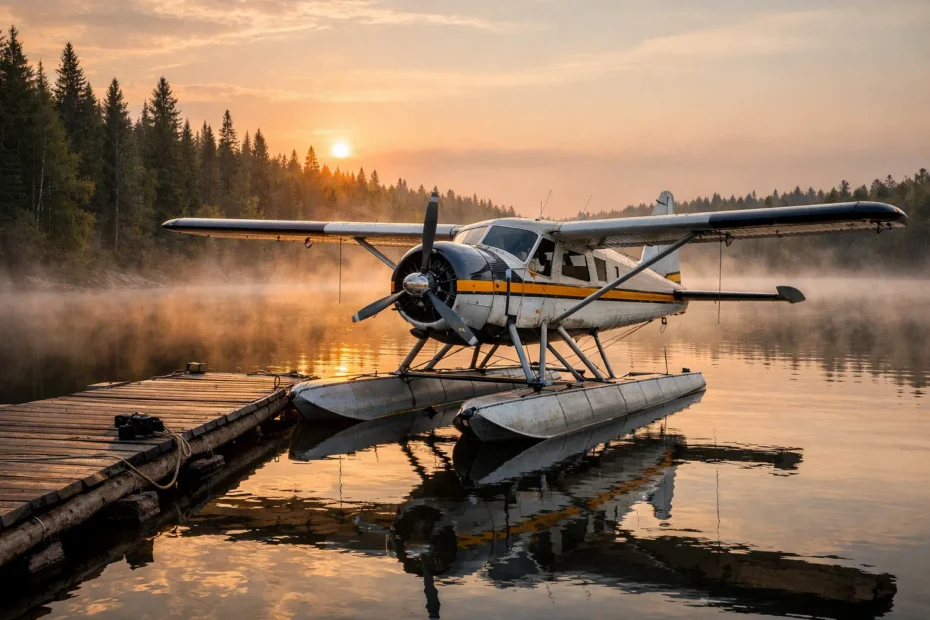
If you are researching Manitoba fly in fishing, you aren’t just looking for a vacation; you are planning an expedition into the last true wilderness. There is a specific feeling that hits you the moment the floatplane engine cuts out.
The roar of the De Havilland Otter fades, replaced instantly by a silence so deep it rings in your ears. You look down from the dock, and through ten feet of gin-clear water, you spot the white tip of a Walleye fin. That is when you know you have arrived.
As a guide who has spent decades navigating the Canadian Shield, I can tell you that Manitoba offers something the rest of the world has lost: untouched, low-pressure fisheries where a 40-inch Northern Pike isn’t a “fish of a lifetime”—it’s a Tuesday. But planning a trip of this magnitude requires more than just booking a flight. It requires strategy.
This guide is your blueprint. We are going to strip away the brochure talk and look at the real costs, the hidden logistics, and the specific seasonal tactics you need to land a Master Angler trophy.
Key Takeaways
- The “Fly-In” Difference: Access to waters that see fewer than 100 anglers a year means aggressive, uneducated fish.
- Budgeting Reality: The sticker price is just the start. Factor in gratuities (10-15%), alcohol, and overweight baggage fees.
- Seasonal Strategy: June is for shallow trophy Pike; August is for numbers of Walleye on deep reefs.
- Lodge Types: “American Plan” offers luxury and full service; “Housekeeping” offers autonomy and lower costs.
- Master Angler Standard: Manitoba’s official program sets the bar—28″ for Walleye, 41″ for Pike, 35″ for Lake Trout.
Why Choose Manitoba? The Land of 100,000 Lakes
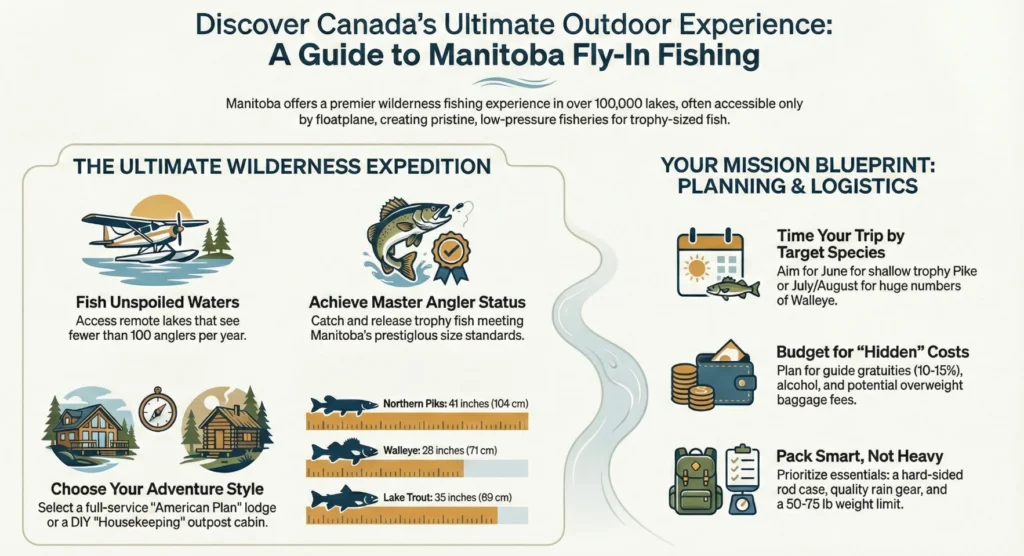
Manitoba isn’t just a province; it’s a massive aquatic labyrinth. With over 100,000 lakes, a huge portion of this territory is accessible only by air. This geographic isolation is the primary reason the fishing is world-class.
According to Travel Manitoba, the province hosts some of the most diverse freshwater fishing experiences on the continent, and the fish here simply don’t see lures.
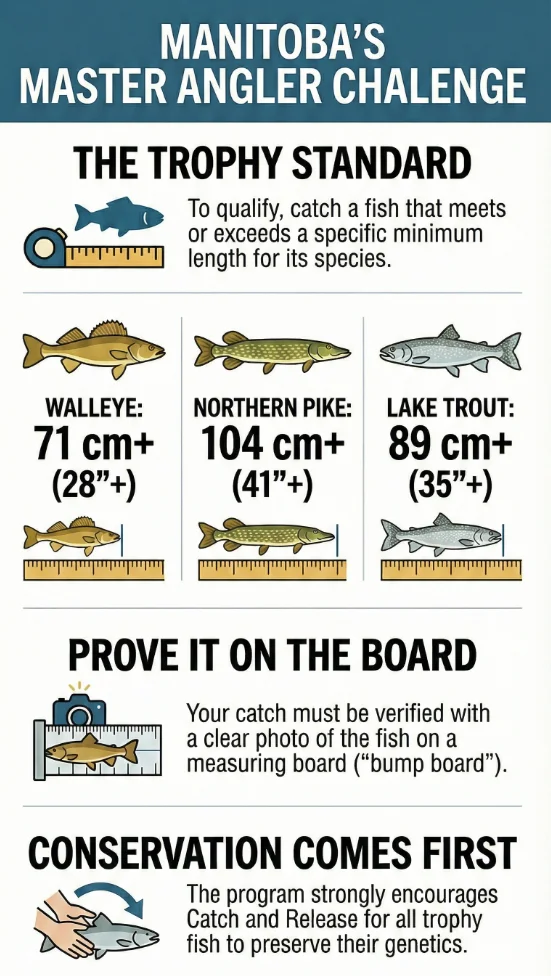
The province is also home to the Master Angler Program, the oldest and most prestigious angler recognition program in North America. It’s not just a patch; it’s a standard of excellence.
To qualify, you need to submit a photo of your catch against a measuring board (bump board). You must catch (and preferably release) fish meeting specific lengths:
- Walleye: 28 inches (71 cm)
- Northern Pike: 41 inches (104 cm)
- Lake Trout: 35 inches (89 cm)
When you fly into the boreal forest, you are entering a zone where these sizes are statistically probable, not just possible.
🌲 The Guide’s Log
I remember a trip up to a remote outpost near the Nunavut border a few years back. We had a guest, a Wall Street guy, wound tighter than a cheap spinning reel. He spent the first day checking his satellite phone every ten minutes. On the second morning, we motored into a shallow, weed-choked bay we call “The Aquarium.”
He cast a five-of-diamonds spoon, and the water just erupted. A 44-inch Northern hammered it so hard it nearly took the rod out of his hands. We spent twenty minutes fighting that fish. When we finally netted it, he sat back in the boat, hands shaking, and looked at the treeline. He didn’t check his phone for the rest of the week. That’s what Manitoba does to you. It resets your internal clock to ‘wild’.
The Best Manitoba Fly-In Lodges: A Comparison for Every Angler
Choosing a lodge is the hardest part of the process because they all look spectacular on Instagram. The trick is to match the lodge to your “Trip Persona.” Are you chasing a record? Are you bringing your kids? Do you want a chef, or do you want to fry your own fish?
If your crew is really booking for trophy pike first, use best northern pike lodges in Manitoba as your focused shortlist. It separates premium fly-ins, value trips, and easier-access options more cleanly than a broad fly-in roundup can.
Here is a breakdown of how the top operations stack up based on what you actually want.
Understanding the Plans
- American Plan: The full-service option. Includes all meals, daily maid service, boats, motors, and fuel. often includes guides. You show up, you fish, you eat.
- Housekeeping Plan: The DIY option. You get a cabin and a boat. You bring your own food (or fly it in), cook your own meals, and make your own bed. Great for groups who want total freedom and a lower price tag.
Lodge Comparison Table
| Lodge Category | Best For… | Typical Plan | Primary Species | Est. Price Range (USD) |
| The Trophy Hunter | Anglers focused 100% on Master Angler records. | American Plan (Guided) | Pike, Lake Trout | $4,500 – $6,500+ |
| The Family Trip | Beginners, mixed groups, and comfort seekers. | American Plan | Walleye, Pike | $3,000 – $4,500 |
| The Corporate Retreat | Large groups needing Wi-Fi, meeting space, and luxury. | American Plan (Luxury) | Walleye | $5,000+ |
| The Purist’s Outpost | Experienced groups seeking solitude and DIY adventure. | Housekeeping | Pike, Walleye | $1,500 – $2,500 |
The Trophy Hunter: Chasing Giants
If your goal is a 50-inch Pike or a 40-inch Lake Trout, look for lodges on Reindeer Lake or Nueltin Lake. These massive bodies of water hold the cold, deep structure required to grow ancient fish.
These lodges usually enforce strict catch-and-release policies (often single barbless hooks only), which preserves the genetics of these monster fish.
The Purist’s Outpost: The DIY Adventure
For many of us, the real dream is having a lake entirely to ourselves. Outpost camps offer this. You are flown to a cabin on a lake where you are the only humans for 50 miles.
- Pro Tip: Look for “modernized” outposts. The days of hauling buckets of water are fading. Many new outposts feature solar power, hot running water, and reliable showers.
Planning Your Trip: The Nitty-Gritty Logistics
This is where most first-timers get blindsided. You see the package price, but you don’t see the logistics required to make the trip happen.
The Real Budget: Hidden Costs
A $4,000 trip can easily become a $6,000 trip if you aren’t careful. Here is what is rarely included in the brochure price:
- Gratuities: It is standard to tip your guide and the lodge staff. Budget 10-15% of the trip cost. For a guide, $50-$100 per boat per day is common.
- Alcohol: Most fly-in lodges are in remote areas where alcohol cannot be purchased. You usually need to order it weeks in advance through the lodge or bring it yourself (eating into your weight limit). Warning: Drinking alcohol in a boat is illegal in Manitoba, just like driving a car. Save it for the cabin.
- Overweight Baggage: Floatplanes like the Beaver and Otter have strict weight safety limits. You are typically allowed 50 to 75 lbs total (gear + clothes). Exceeding this often incurs a steep per-pound fee, or worse, your gear gets left on the dock.
- Fishing Licenses: You must buy your Manitoba fishing license online before you fly.
When to Go: A Seasonal Breakdown
The “best time” depends entirely on what you want to catch.
- Late May / Early June (The Grand Slam): Ice-out. Giant Pike are in the shallow bays sunning themselves. Lake Trout are high in the water column. This is the best time for a mixed bag and trophy Pike on the fly.
- July (The Numbers Game): The weather is stable (less risk of flight delays). Walleye fishing is automatic—you can catch 100 fish a day on jigs. Pike move to weed beds.
- August (The Deep Bite): Big fish move deep. You need to know how to fish offshore reefs and structure. Lake Trout fishing requires downriggers or heavy jigs.
- September (The Turnover): As water cools, fish feed aggressively before winter. It’s beautiful, but weather can be unpredictable.
🍁 The Local Secret
Don’t overlook the “Cabbage.” In mid-summer, when everyone is jigging deep reefs for Walleye, motor over to the thickest, nastiest patch of broad-leaf cabbage weeds you can find in 8-10 feet of water. Pitch a large swimbait or a weedless spoon right into the pockets. This is where the Master Angler Pike hide during the heat of the day, ambushing smaller walleye. Most anglers are scared of the weeds—don’t be.
Getting Your Catch Home
Bringing home a box of pristine, cold-water Walleye fillets is a highlight of the trip, but it requires planning.
- At the Lodge: Ask the guides to vacuum seal your fish if possible. It prevents freezer burn. Freeze the fillets solid.
- The Cooler: Use a high-quality hard-sided cooler. Soft coolers often leak or don’t hold temp as well in the cargo hold.
Recommended: YETI Tundra 65 Cooler
This is the gold standard for fly-in trips. It’s tough enough for the cargo hold and keeps fish frozen solid for the entire journey home.
- No Ice: Do not pack loose ice. It melts, leaks, and ruins luggage. If your fish is frozen solid and the cooler is packed tight (fill gaps with newspaper or clothing), it will stay frozen for 24+ hours.
- Dry Ice: You are generally allowed up to 5.5 lbs (2.5 kg) of dry ice in checked baggage, but the package must be vented (not airtight) to allow carbon dioxide gas to escape. In my professional experience, solidly frozen fish packed tight in a high-quality cooler does not need dry ice for a flight home within North America.
Gear: What to Pack (And What to Leave)
Weight is your enemy. You cannot bring your entire tackle garage.
The Essentials
- Rod Case: A hard-sided “bazooka” style case is non-negotiable for protecting rods in the floatplane.
Recommended: Plano Airliner Telescoping Rod Case
Adjustable length and virtually crush-proof. This case protects up to 8 rods and handles the abuse of floatplane loading docks.
- Rods: Bring two. A 6’6″ Medium action for Walleye fishing and a 7’0″ Medium-Heavy for Northern Pike fishing.
- Reels: 2500 size for Walleye, 3000-4000 size for Pike. Spool the Pike reel with 30lb braid.
- Rain Gear: Buy the best Gore-Tex you can afford. If you are wet and cold in the bush, your trip is ruined.
- Medication: Bring any prescription meds in your carry-on, plus a backup supply.
Lure Selection
Don’t overthink it. Manitoba fish are aggressive.
- Walleye: 1/4 oz and 3/8 oz jigs (bright colors: chartreuse, pink, orange). Soft plastic minnows and twister tails.
- Pike: 5-of-Diamonds spoons (classic for a reason), large Spinnerbaits, and 6-inch swimbaits.
- Lake Trout: Heavy white tube jigs (1 oz) and large silver trolling spoons.
✅ The Pre-Trip Protocol
- Step 1: Check Your Passport. Ensure it is valid for at least 6 months past your return date. Border agents can deny entry if it’s expiring soon.
- Step 2: Weigh Your Gear. Two weeks before departure, weigh your fully packed duffel and rod case. If you are over the lodge’s limit (usually 50-70 lbs), start cutting. Leave the extra jeans; pack more socks.
- Step 3: Download Maps & Comm Plans. You won’t have cell service. Download offline maps of the lake (if available) or buy a topographic paper map. For safety, a satellite messenger is highly recommended.Guide’s Safety Pick: Garmin inReach Mini 2Compact, lightweight, and allows you to text home or trigger an SOS anywhere on the planet.Check Price on Amazon (Affiliate Link)
Conservation and the Future
The fishing in Manitoba is incredible because it is protected. The 2026 fishing regulations have introduced steeper fines for poaching and barbed hook violations. This isn’t just about following rules; it’s about respect. For the complete rules, always refer to the official Government of Manitoba Angling Guide.
- Barbless Hooks: Mandatory in most of Manitoba. Pinch your barbs down with pliers before you get on the boat. It makes releasing a 40-inch Pike safer for the fish—and for your fingers.
- Catch and Release: Keep the small Walleye (16-18 inches) for shore lunch. Let the big breeding females go. A replica mount looks better on your wall and lasts longer than a skin mount anyway.
For more details on sustainable practices, check out our guide on fly-in fishing adventures.
Expert Advice: Straight from the Dock
“The biggest mistake I see? People bringing too much tackle. You aren’t fishing for bass in Florida. You don’t need 40 colors of crankbaits. Bring a box of jigs, a box of spoons, and a box of plastics. Spend less time changing lures and more time with your line in the water.” — Gerry, Outpost Camp Operator, Northern Manitoba
“If you’re flying in for Lake Trout in August, don’t forget the vertical jig. Everyone wants to troll, but when those trout are sitting in 80 feet of water, dropping a 1-ounce white tube jig right on their nose triggers bites that trolling lures miss.” — Sarah, Head Guide, Kississing Lake
Manitoba Fly-In Fishing FAQ
How much does a fly-in fishing trip cost in Manitoba?
A typical package ranges from **$3,000 to $6,000 USD per person** for a 4-7 day trip. Outpost camps (DIY) are cheaper, often around **$1,500 – $2,500**, while luxury American Plan lodges can exceed $7,000. Remember to budget extra for flights to Winnipeg, hotels, and gratuities.
What is the best month for fishing in Manitoba?
June is widely considered the best overall month for shallow water action and trophy Pike. July offers the most consistent weather and high numbers of Walleye. September is excellent for big fish but carries a higher risk of cold, windy weather.
Can I bring my own boat?
Generally, no. For fly-in trips, the lodge provides the boats (typically 16-18ft aluminum boats with 20-40hp motors) because you cannot fly a boat in. If you want to use your own boat, you need to look at “drive-to” lodges, not fly-ins.
Do I need a passport to go fishing in Canada?
Yes. If you are entering Canada from the US or another country, a valid passport is required. Ensure it does not expire within 6 months of your travel dates.
Is catch and release mandatory?
It depends on the lake and the lodge. Many high-end trophy lodges have a strict catch-and-release policy for all trophy-sized fish, allowing you to keep only smaller fish for shore lunch. Always check the specific lodge rules and provincial regulations.