

Embark on an unforgettable Arctic adventure exploring the Best Fishing Spots in Nunavut. Discover top angling locations and diverse fish species.
- Use Fishing Spots in Nunavut to match destination, season, access, and budget to the kind of trip you actually want
- Check licences, local rules, travel logistics, weather, and booking windows before locking in dates
- Compare locations by practical fit: target species or activity, remoteness, services, safety, and backup options
Bottom line Fishing Spots in Nunavut becomes easier when you choose the destination around timing, access, rules, and your real trip style
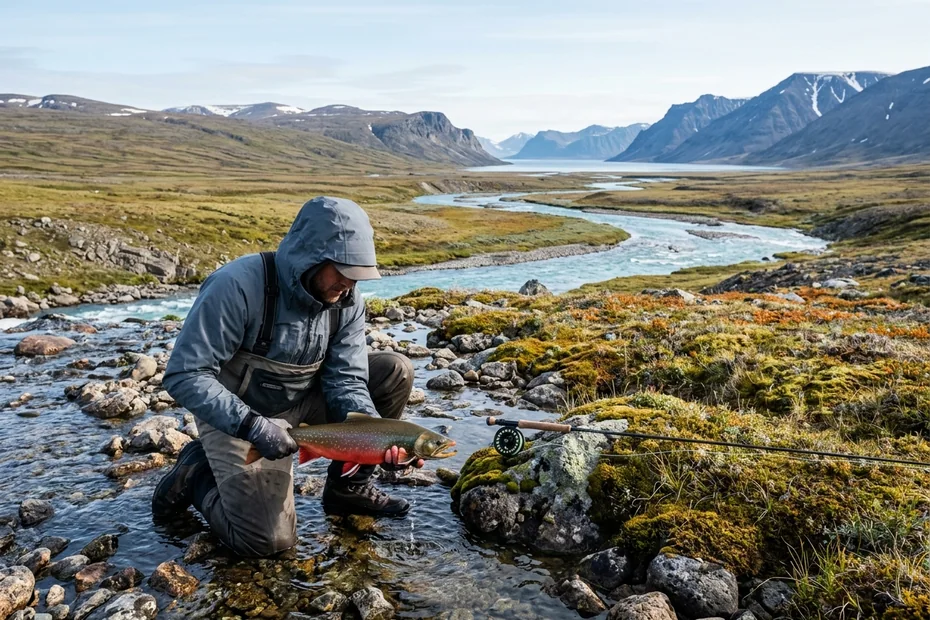
Fishing across Nunavut puts anglers onto wild treeless tundra rivers, glacial esker lakes, and tidal Arctic fjords holding sea-run Arctic char, giant lake trout, and sail-finned Arctic grayling far above Canada’s northern treeline.
Every major fishery in this eastern and central Arctic territory requires careful logistics months ahead of departure. Commercial flights connect regional hubs like Iqaluit, Rankin Inlet, Cambridge Bay, and Kugluktuk, while outlying fly-in char camps demand bush charters, tundra weather buffers, and strict compliance with statutory catch limits.
This 2026 Nunavut fishing guide breaks down top Arctic watersheds, target species calendars, exact statutory licence fees and river-specific possession quotas, essential cold-water tundra gear, and planning steps for first-time northern anglers.
Best Fishing Spots Across Nunavut’s Three Regions
Nunavut covers roughly one-fifth of Canada’s landmass across Kitikmeot, Kivalliq, and Qikiqtaaluk (Baffin) regions, highlighted for travelling anglers across Destination Nunavut outdoor experiences. Choosing the right water means balancing road-accessible community rivers against remote floatplane lakes holding trophy predators untouched by road traffic.
| Watershed / Spot | Region & Nearest Hub | Access Method | Target Species | Peak Open-Water Window |
|---|---|---|---|---|
| Sylvia Grinnell River | Qikiqtaaluk (Iqaluit) | Short truck road & foot trails from town | Sea-run Arctic char up to tidal estuary | Mid-July to early September |
| Tree River (Kogluktualuk) | Kitikmeot (Kugluktuk) | Licensed fly-in lodge charter east of Kugluktuk | World-class trophy sea-run Arctic char | Late July to August |
| Diana & Meliadine Rivers | Kivalliq (Rankin Inlet) | ATV trail, coastal boat, or local outfitter | Arctic char, coastal grayling streams | July through late August |
| Victoria Island / Greiner Lake | Kitikmeot (Cambridge Bay) | Community road/ATV & outfitter camps | Arctic char, large tundra lake trout | Ice fishing spring; open water July to August |
| Kazan & Dubawnt River Systems | Kivalliq Interior Tundra | Remote floatplane outfitter expedition | Trophy lake trout, Arctic grayling, pike | July to mid-August |
| Coppermine & Bloody Falls Area | Kitikmeot (Kugluktuk) | Local riverboat & guided outfitter runs | Arctic char, lake trout, Arctic grayling | Late June to early September |
Qikiqtaaluk (Baffin Island): Sylvia Grinnell & Coastal Fjord Estuaries
Iqaluit stands out as Nunavut’s most accessible introduction for road-less northern shore casting because Sylvia Grinnell Territorial Park sits minutes outside town. Anglers hike rocky granite outcrops directly beside churning white rapids below falls where surging tidal water lifts ocean char upward twice daily.
Beyond town roads, outer Cumberland Sound bays and Pangnirtung fjord mouths reward guided boat charters with bright coastal silver char cruising narrow rocky tide lines. Local Inuit guides navigate fast twenty-foot vertical tides safely, read shifting sea-ice pack edges, and time drifts around cold fjord mouths.
Kitikmeot & Kivalliq Tundra Lakes: Trophy Char, Trout & Grayling
Western Kitikmeot outfitter waters hold North America’s heaviest genetic strains of anadromous Arctic char inside famous glacial channels like the Tree River. Returning adults pack tremendous shoulder thickness feeding along Arctic Ocean kelp beds before ascending clean tundra boulder runs each August.
Inland barrens lakes scattered southward near Kazan, Dubawnt, and Kasba river basins never hold sea-run char migrations yet harbour giant freshwater lake trout exceeding twenty pounds. Clear gravel narrows discharging out of those deep tundra lakes teem simultaneously with eager Arctic grayling rising cleanly to small dry flies and micro spinners.
- Walk-in town option: Sylvia Grinnell beside Iqaluit offers world-class shoreline casting without charter bush planes, though rocky slick ledges demand studded wading soles.
- Coastal community bases: Rankin Inlet and Cambridge Bay pair scheduled jet flights with seasoned Inuit boat outfitters targeting nearby tidal estuaries and interior lake chains.
- Bucket-list fly-in lodges: Tree River and remote Kivalliq lake camps package charter aircraft, hearty meals, boats, and emergency satellite communications cleanly inside six-day blocks.
- Browse southern contrasts safely: Compare remote Arctic logistics against southern road-accessible hubs in our Canadian fishing spots directory before locking flights.
Nunavut 2026 Fishing Licences, Fees & Catch Quotas
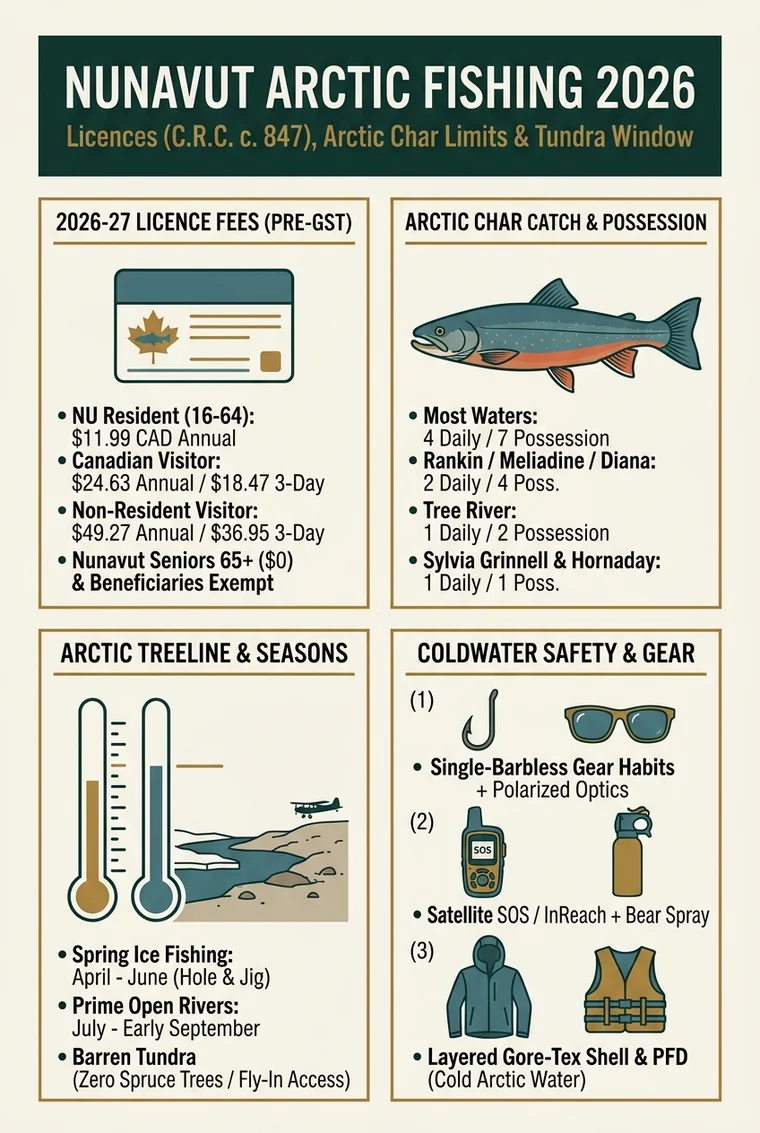
Sport fishing across Nunavut operates legally under the federal Northwest Territories Fishery Regulations (C.R.C., c. 847) continued under the Nunavut Act alongside co-management harvest rules. Territorial licensing schedules adjust statutory base fees annually via Consumer Price Index rules, tracked cleanly for travelling anglers via the 2026 to 2027 Nunavut licensing summary.
| Angler Residency Category | Licence Duration | Statutory Base (Sched. IV) | 2026 to 2027 CPI-Indexed Fee (Pre-GST) | Validity Notes |
|---|---|---|---|---|
| Nunavut Resident (Age 16 to 64) | Annual (Apr 1 to Mar 31) | $10.00 CAD | $11.99 CAD | Residents under 16 exempt; beneficiaries exempt under Nunavut Agreement |
| Canadian Resident Visitor (Age 16 to 64) | Annual | $20.00 CAD | $24.63 CAD | Includes all Canadian provinces & territories outside NU |
| Canadian Resident Visitor (Age 16 to 64) | 3-Day Short Term | $15.00 CAD | $18.47 CAD | Ideal for short Iqaluit business stopovers |
| NU / Canadian Senior (Age 65+) | Annual | Free | $0.00 CAD | Licence still required to carry on water even at zero fee |
| Non-Resident / International Visitor | Annual | $40.00 CAD | $49.27 CAD | Age 16+ foreign visitors fishing independently or with lodges |
| Non-Resident / International Visitor | 3-Day Short Term | $30.00 CAD | $36.95 CAD | Three consecutive calendar days selected at purchase |
Barbless Hooks, Live Bait Bans & Indigenous Land Permissions
Never transport live minnows, earthworms, or leeches across Nunavut tundra ecosystems; live fish bait is prohibited under territorial regulations to shield pristine cold-water char lakes from invasive organisms. Single barbless hooks are strongly recommended across every release camp and required on designated special-management streams. When hiking shore trails outside territorial parks, respect Inuit Owned Land boundaries and always confirm local community access protocols via your lodge or municipal hunters and trappers association.
Target Species Biology & Tundra Season Windows
Cold Arctic latitude concentrates open-water casting into an intense eight-week burst between late June ice break-up and September shoreline skim ice. Continuous twenty-hour midnight sun through July warms shallow gravel bays fast, fueling fierce insect hatches and relentless coastal char feeding before cold ocean water cools coastal flats.
Sea-Run Versus Landlocked Char Lifecycles
Anadromous Arctic char migrate down ice-cleared tundra rivers each June toward salty coastal bays teeming with capelin, shrimp, and sculpins, packing rapid weight over summer ocean weeks. Late July through August brings bright ocean fish surging upstream in brilliant silver and deep spawning orange shades, whereas interior lakes harbour smaller slow-growing landlocked char year round.
Trophy lake trout patrol cold surface ledges throughout July in Nunavut without retreating fifty feet deep like southern Ontario populations, putting ten-pound to thirty-pound char eaters directly in range of medium casting spoons along shallow boulder points.
Practical Tundra Tackle, Hardware & Cold-Weather Layering
Arctic fish grow big on protein-rich coastal forage rather than finicky bass plastics, yet fierce wind gusts across treeless lakes punish light flimsy rods and rusted split rings mercilessly. Carry compact four-piece travel spinning or nine-weight fly blanks sized strictly to fit rigid airline carry-on tubes.
- Upgrade factory spoon hooks immediately: Replace light wire trebles cleanly with forged single barbless Siwash hooks matched to bright pink, fluorescent red, silver, and copper 3/4-ounce to 1-ounce casting spoons.
- Spool stout abrasion-resistant braided mainlines: Pair smooth fifteen-pound or twenty-pound braid with a four-foot twelve-pound fluorocarbon or heavy monofilament shock leader that resists razor gravel bars.
- Dress for abrupt gale drops over exposed tundra: Even mid-July afternoons swing smoothly from sunny twelve degrees Celsius down into driving three-degree horizontal sleet; pack waterproof breathable bibs, wool base layers, and warm neoprene finger gloves every day.
- Keep insect headnets inside breast pockets: Brief windless July calms bring ferocious tundra blackflies and mosquitoes instantly across mossy shorelines.
Compare northern single-barbless hardware ethics and multi-jurisdiction travel checks using our Canadian fishing regulations hub and map packing weather windows inside Canada outdoor planning tools.
5-Step Arctic Fishing Logistics Checklist
Missed bush connections or forgotten bear-aware camp rules cost whole vacation days across sparse northern hubs. Work through these five steps thirty days ahead of flight check-in.
- Lock flights plus weather-buffer hotel nights: Book commercial Arctic jet tickets into Iqaluit, Rankin Inlet, or Cambridge Bay with one full extra cushion day before and after fly-out charter dates for sudden coastal fog delays.
- Verify your exact residency licence fee online or through licensed vendors: Obtain your 2026 Nunavut Sport Fishing Licence cleanly ahead of landing on shore and carry durable printed copies inside waterproof neck pouches.
- Swap trebles to forged single barbless hooks at home: Pinch barbs completely flat on every spoon, spinner, and streamer before packing airline tackle boxes so cold river releases run smoothly under wind chill.
- Confirm bear safety gear and cold-water PFD rules: Ask coastal boat guides and remote tent camps about electric fence camp boundaries, flare kits, and cold-water flotation jackets suited to zero-degree fjords.
- Plan ethical frozen catch transport ahead: If retaining one legal Arctic char on general waters, confirm commercial chest-freezer storage and airline waxed fish-box baggage fees cleanly with your outfitter beforehand.
Interactive Nunavut 2026 Licence & Arctic Char Limit Checker
Select your residency status, trip length, and target Nunavut watershed below to preview 2026 CPI-indexed licensing cost bands and statutory Schedule VI Arctic char limits.
Verified Arctic Char Casting Spoons & Polarized Tundra Optics
Proven tundra river hardware and protective glare-cutting eyewear verified for Arctic currents. Standard affiliate links open on Amazon.
CanadaFever participates in affiliate programs. We may earn a commission on qualifying purchases made through links on this page at no additional cost to you.
Blue Fox Pixiee 7/8-Ounce Nickel / Fluorescent Red Spoon
- Heavy brass profile punches effortlessly straight through stiff twenty-knot tundra river crosswinds
- High-contrast fluorescent red insert sparks immediate strike reflexes from cruising sea-run char
- Swappable split-ring eye adapts cleanly to single barbless Siwash hooks required by Arctic lodges
Dardevle Brass/Nickel Back 1-Ounce Red & White Spoon
- Iconic northern fluttering wiggle tracks cleanly across boulder drop-offs where big lake trout hold
- Heavy one-ounce plate sinks rapidly inside swift churning whitewater tailouts below Arctic falls
- Bright classic red-and-white flash stands out clearly through faint glacial river silt plumes
KastKing Skidaway Polarized Sport Sunglasses
- Eliminates bright twenty-hour Arctic sun glare off rippling clear gravel bars to sight cruising char
- Wrap-around frame protects eyes from drying northern gale gusts and blowing tundra river grit
- Amber or copper contrast tint reveals submerged slippery wading boulders sharply under glare
Understanding Bush Planes, Outfitter Packages & Winter Ice Seasons
Flying commercially into Nunavut accounts for only the opening leg of remote lodge adventures. Outlying camps along Victoria Island, Kazan narrows, or Tree River rely on Twin Otter and Caravan bush aircraft operating strictly under visual coastal weather ceilings. Packing inside soft duffel bags keeping total luggage strictly beneath strict bush-plane weight caps keeps charter loading fast without forcing painful tackle reductions on muddy airstrips.
Winter brings an equally celebrated chapter across Nunavut communities once thick shorefast sea ice and deep interior frozen lakes lock solid from November right through late May. Community families and guided visitors drill four-foot thick clear ice basins near Cambridge Bay, Pangnirtung, and Pond Inlet targeting thick late-spring char and massive tundra lake trout inside heated canvas tents before open-water melt returns.
- Split multi-piece rods inside tough PVC or Cordura tubes: Overhead commercial jet bins handle 28-inch compact four-piece cases smoothly without risking crushed ceramic rod guides on snowy tarmac transfers.
- Carry essential toiletries and backup meds inside carry-on daypacks: Weather diversions frequently pause regional cargo bags for forty-eight hours; keeping vital warm gloves, licence copies, and prescription supplies beside your seat saves entire opening days.
- Respect local community catch-sharing customs: Remote Arctic camps appreciate courteous guests who support Inuit food-security traditions rather than wasting unconsumed fillets along shore stones.
Tide Windows, River Casting Tactics & Arctic Wildlife Safety
Tidal sea-run Arctic char in Qikiqtaaluk and Hudson Bay rivers respond powerfully to ocean current shifts every six hours. During dead low tide along wide rocky river mouths like Sylvia Grinnell or Diana River, hungry fish frequently drop off into protected deeper basin pockets right outside surging rapids.
Once incoming salt tides lift ocean brine steadily back up over sunny shoreline kelp mats, fresh schools surge eagerly upward into waist-deep gravel chutes to ambush drifting shrimp and sculpins. Time key shore casts across the two hours building toward high slack tide and the two hours immediately following ebb reversals for fast back-to-back hookups.
Bear awareness remains essential along every salmonid estuary across Nunavut, since barren-ground grizzlies along Kitikmeot rivers and coastal polar bears near Baffin fjords patrol fish-rich runs regularly. Always wade with licensed community wildlife monitors outside municipal towns, store snacks inside sealed bear-proof canisters away from tent vestibules, and avoid discarding clean fish offal near foot trails.
| Calendar Window | Primary Water State | Top Nunavut Targets | Essential Gear Adjustments |
|---|---|---|---|
| April to Late May | Thick four-foot lake & landfast sea ice | Trophy landlocked lake trout & winter Arctic char | Power ice extensions, insulated tent shelters, heavy white tube jigs |
| Late June to Mid-July | Cold snowmelt break-up & descending smolt/char | Outgoing silver sea-run char & surface lake trout | Heavy 1-oz brass casting spoons, stout split rings, breathable dry shells |
| Late July to Late August | Peak ice-free midnight sun estuaries & clear pools | Prime upstream Arctic char, Arctic grayling, pike | Pink/fluorescent spoons, 8-wt sink-tip flies, headnets & barbless Siwash hooks |
| Early September | Frost mornings & cooling dark river flats | Brilliant crimson spawning char & deep lake trout | Neoprene wading gloves, polar fleece mids, slower deep pool swings |
Careful advance timing, durable single-hook spoons, and local guide partnerships turn remote northern logistics into smooth lifelong Arctic fishing memories across Canada’s vast northern territory.
Check out our Arctic char fishing manual for specialized sink-tip fly patterns, heavy current spool capacity recommendations, and northern river eddy casting angles before boarding twin-engine Arctic flights. Checking real-time forecast wind gusts along coastal fjords via our Canada outdoor planning tools helps boat skippers and shore anglers plan smoother daylight shifts throughout peak July and August midnight-sun periods.
Frequently Asked Questions & Official Sources
Can non-residents fish Sylvia Grinnell River near Iqaluit without a guide?
Yes. Visiting anglers holding valid Nunavut Sport Fishing Licences may walk shoreline trails inside Sylvia Grinnell Territorial Park independently, provided they adhere strictly to the watershed’s tight 1 daily and 1 possession Arctic char limit and stay off restricted private or archaeological lands.
What is the exact 2026 Nunavut fishing licence cost for Canadian visitors?
Summary tracking under CPI-indexed schedules places the 2026 to 2027 pre-GST Canadian non-resident visitor licence at $24.63 CAD annually or $18.47 CAD for three consecutive days, while international visitors pay $49.27 CAD annual or $36.95 CAD three-day. Nunavut and Canadian seniors aged 65+ qualify for $0 licences.
When is the absolute peak month for bright sea-run Arctic char in Nunavut?
Late July through late August delivers peak open-water volume across most major Qikiqtaaluk, Kivalliq, and Kitikmeot rivers. Mid-July offers aggressive ocean-silver fish climbing early estuaries under bright midnight sun, whereas late August produces unforgettable fire-orange spawning males resting inside clear boulder pools.
Are there forests or boat ramps at remote Nunavut fly-in lodges?
No. Almost all of Nunavut sits north of the Arctic treeline across exposed granite outcrops, mossy tundra plains, and gravel bars. Lodges launch rugged aluminum boats straight off protected gravel beaches rather than paved southern concrete boat ramps.
Can anglers use live minnows or powerbait paste in Nunavut waters?
Never use live fish bait anywhere in Nunavut; territorial fisheries regulations ban live bait fish completely to protect vulnerable cold-water ecosystems from non-native aquatic species introductions. Artificial metallic spoons, spinners, and streamers dominate legal open-water catching cleanly.
Official & Territorial Sources Checked (November 2026)
- Justice Laws Canada: Northwest Territories Fishery Regulations (C.R.C., c. 847, governs Nunavut)
- Destination Nunavut: Official Territory Fishing Experience Overview
- Nunavut 2026 to 2027 CPI-Indexed Fishing Licence Fee Summary (Secondary Reference)
- Fisheries and Oceans Canada: National Recreational Fisheries
- Fisheries and Oceans Canada: Arctic Char & Freshwater Species ID