
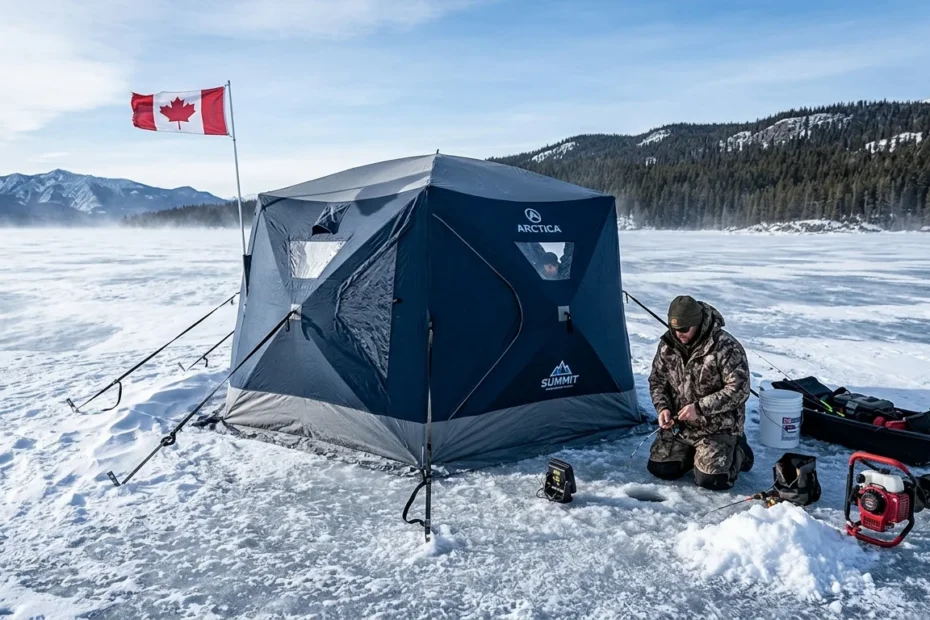
Best ice fishing shelter for windy lakes is not the biggest shelter on the market.
It is the shelter you can actually anchor fast, trust in exposed weather, and still fish comfortably when an open basin starts pushing hard across the ice.
That matters in Canada because wind is not a side issue on hardwater. On prairie lakes, shield-lake flats, and big open systems, wind changes setup speed, heat retention, safety, and whether you still want to be there after the first hour.
Key Takeaways
- For solo or two-person wind fishing, a flip-over shelter is usually the safest default.
- For two to three anglers who want more space, an insulated hub only makes sense if you are serious about anchors, tie-downs, and setup discipline.
- On windy Canadian lakes, anchor quality matters almost as much as shelter brand.
- If you fish exposed basins often, pay for insulation, stronger hubs, and a faster setup path before you pay for extra room.
If you only want the short answer, buy a wind-capable insulated flip-over if you fish solo or move a lot. Buy a stronger insulated hub only if you usually fish with help and can lock it down properly.
The Guide’s Log
Wind exposes bad shelter decisions fast. A portable shack can look perfect in a product photo, then turn into a headache the moment a broad, open lake starts moving snow sideways across the ice. That is when big interior space stops feeling like the main metric. What matters then is whether you can control the setup without wrestling fabric, whether the anchors bite when your gloves are stiff, and whether the shelter still feels stable enough that you want to keep fishing instead of packing up early. That problem matters more in Canada because so many hardwater trips happen on lakes with little natural cover. A shelter that is merely “fine” on a calm weekend can start feeling slow, floppy, or drafty once a prairie gust or open-lake crosswind shows up. Good buying decisions in this category are not about choosing the biggest footprint for the money. They are about choosing the fastest stable setup you can actually manage in real weather, with real gear, and with the kind of travel method you actually use.
Best Ice Fishing Shelter for Windy Lakes: Quick Picks
If you want the shortest buying summary, start here.
- Best overall for windy lakes: an insulated two-person flip-over shelter.
- Best for solo mobility: a one-person insulated flip-over.
- Best for two to three anglers: a strong insulated hub with a serious anchor kit.
- Best budget path: a simpler flip-over or compact hub, but only if you also upgrade the anchors.
- Best rule for wind: choose setup control first, interior size second.
In real Canadian wind, the main decision is not just hub versus flip-over. It is whether you need fast solo control or more room with more setup commitment.
Top Recommendation
Best Overall Pick for Most Buyers: Insulated 2-Person Flip-Over Shelter
If you want the cleanest wind-first answer, start with an insulated two-person flip-over. It is the strongest overall pick because it gives you faster deployment, better control during setup, and enough room for one angler to fish comfortably or two anglers to fish without turning every windy day into a fabric fight.
- Best for anglers who value setup speed and stability over maximum floor space
- Strong fit for windy prairie and shield-lake trips
- Smart default if you travel by ATV, snowmobile, or drag-sled system
As an Amazon Associate, we earn from qualifying purchases.
Amazon.com Picks
Build a Wind-Ready Ice Shelter Shortlist
Most buyers should think in three lanes: solo flip-over, two-person all-round flip-over, or insulated hub with a better anchor system. If you choose the lane first, the shopping gets easier.
Insulated 1-Person Flip-Overs
Best when you fish alone, move often, and need a shelter you can control fast in exposed wind.
See Category
Insulated 2-Person Flip-Overs
Best for anglers who want the strongest balance of room, warmth, and wind control on mobile hardwater trips.
See Category
Insulated Hub Shelters and Anchor Kits
Best when you want more fishing room and usually have enough help, time, and discipline to lock the shelter down correctly.
See Category
As an Amazon Associate, we earn from qualifying purchases.
| Shelter Type | Typical CAD Range | Best For | Why It Stands Out |
|---|---|---|---|
| 1-person insulated flip-over | About C$500-C$850 | Solo anglers on exposed lakes | Fastest path to wind control when you fish alone |
| 2-person insulated flip-over | About C$700-C$1,300 | Most serious windy-lake buyers | Best balance of stability, warmth, and workable room |
| Insulated hub shelter | About C$450-C$1,100 | Two to three anglers who want more interior room | More space per dollar if you can manage the setup properly |
| Budget non-insulated shelter | Often under C$450 | Occasional anglers in lighter weather | Cheaper up front, but weaker in true wind-and-cold conditions |
How to Choose the Best Ice Fishing Shelter for Windy Lakes
The biggest shelter-buying mistake is treating wind like a minor inconvenience instead of the main use case.
If you fish exposed lakes often, your shelter has to solve four problems well: setup control, heat retention, anchor security, and enough working room without becoming a sail.
- Choose a flip-over when you fish solo, move often, or want the cleanest wind-first setup path.
- Choose an insulated hub when room matters, but only if you can anchor it properly and usually have help.
- Choose insulation before you chase oversized floor plans.
- Choose better anchors even if the shelter itself stretches the budget.
The Local Secret
The hidden windy-lake truth is that many anglers do not actually need a bigger shelter. They need a shelter they can control faster with gloves on while the wind is already trying to make decisions for them.
Flip-Over vs Hub for Windy Lakes
This is the question that decides most purchases.
| Shelter Choice | Best Use | Best Move | Mistake to Avoid |
|---|---|---|---|
| 1-person flip-over | Solo mobile fishing | Prioritize control, speed, and tow efficiency | Buying too large and turning setup into a chore |
| 2-person flip-over | All-round windy-lake trips | Use when you want the strongest blend of room and stability | Assuming a hub is always the better upgrade |
| Insulated hub | Group fishing with time to set up properly | Pair it with better anchors and tie-down discipline | Trying to pop it open casually in big wind by yourself |
| Budget non-insulated option | Calmer days and lighter cold | Keep expectations realistic and upgrade anchors | Pretending it solves harsh wind because it was cheap |
Best Ice Shelter Picks by Use Case
If you buy by use case, the shortlist gets much cleaner.
- Best overall: insulated 2-person flip-over.
- Best for solo anglers: insulated 1-person flip-over.
- Best for room and comfort: insulated hub shelter with upgraded anchors.
- Best budget route: simpler shelter plus stronger anchors, not the cheapest big shelter you can find.
- Best for truly rough exposed lakes: smaller, faster, more controlled shelter systems win more often than oversized ones.
For CanadaFever readers, the main planning difference is this: if you fish ice fishing in canada as a roaming day pattern, buy control. If you fish more like a parked-up session with company, then more space starts making sense.
That is also why this page fits naturally beside complete guide to ice fishing in canada, ice fishing gear essentials, fishing tents and shelters, and beginner ice fishing.
Where This Fits in Your Hardwater System
A shelter only solves part of the problem. Windy-lake success also depends on transport method, auger efficiency, heater management, electronics layout, and whether you actually want to move during the day.
If you build the whole system cleanly, this guide should sit beside ice fishing with electronics advanced, ice fishing techniques, and trip patterns like deadsticking for winter walleye.
The Pre-Trip Protocol
- Step 1: Decide whether you are a solo-mobility angler or a stay-put comfort angler before you shop.
- Step 2: Budget for anchors and tie-downs at the same time as the shelter.
- Step 3: If the lake is usually windy, pay for insulation before you pay for extra square footage.
Before You Buy a Windy-Lake Shelter
Before You Buy
- Do not let extra room blind you to setup risk on open lakes.
- Anchors, insulation, and deployment speed matter more than spec-sheet hype.
- If you usually fish alone, start with a flip-over before you talk yourself into a big hub.
Best Ice Fishing Shelter for Windy Lakes FAQ
What is the best ice fishing shelter type for windy lakes?
For most buyers, an insulated flip-over is the strongest windy-lake choice because it is easier to control during setup and usually feels more manageable in exposed weather.
Are hub shelters bad for windy lakes?
Not necessarily. They can work well, but only if you anchor them properly and accept that they usually need more setup discipline than a flip-over in exposed wind.
Is an insulated shelter worth it for hard Canadian wind?
Usually yes. Wind and cold compound each other, so insulation often makes a more noticeable difference than buyers expect on long days.
What matters more in wind: shelter brand or anchors?
Both matter, but anchors are often the overlooked weak point. A decent shelter with a stronger anchor system can outperform a fancier shelter with poor tie-down control.
What size shelter is best for solo windy-lake fishing?
A one-person or compact two-person insulated flip-over is usually the cleanest answer because it gives enough comfort without turning setup into a fight.