

Canada-first guide to fishing tents and ice shelters, including hub vs flip-over setups, insulation, wind, transport, heater safety, provincial rules and gear picks.
- Match Fishing Tents and Ice Shelters in Canada to your water, season, boat size, and actual skill level instead of buying by specs alone
- Prioritize readable controls, durable construction, and Canada-relevant use cases before chasing premium features
- Use the guide to compare what matters in the field: setup time, reliability, safety, storage, and upgrade path
Bottom line The right Fishing Tents and Ice Shelters in Canada choice solves your real Canadian trip conditions without adding gear you will not use
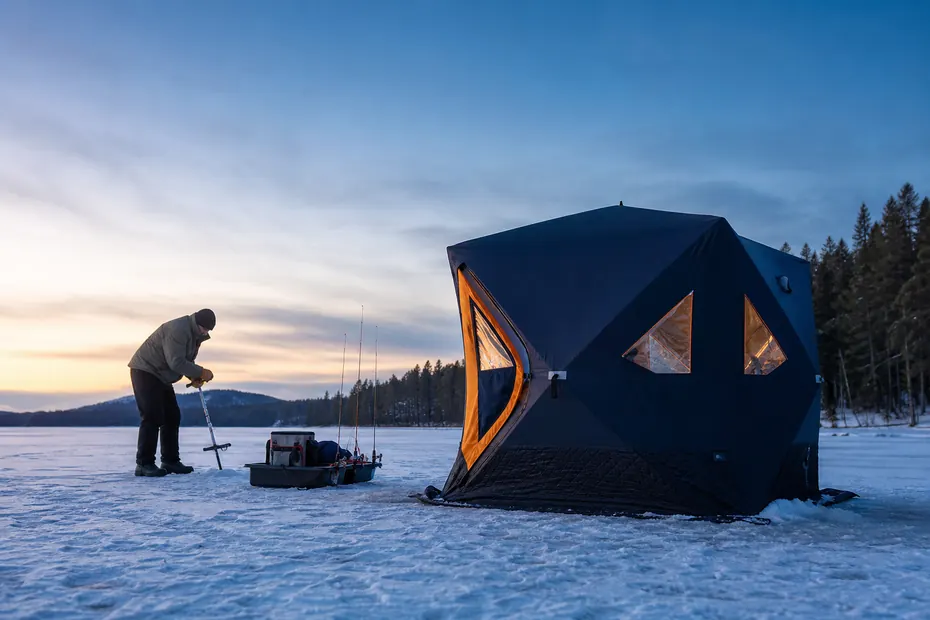
Fishing tents and ice shelters in Canada are not just comfort gear. The right setup helps you handle wind, cold, transport, visibility, kids, electronics, and changing provincial ice-hut rules without turning a simple fishing day into a heavy, unsafe project.
What fishing tent or shelter should you choose?
Most Canadian anglers should start with a portable insulated hub shelter if they fish with family or friends, and a flip-over shelter if they move often alone or with one partner. A windbreak or small day shelter can work for short mild trips, while heavy overnight-style tents belong in a separate winter-camping decision because heat, ventilation, ice movement, and local rules become more serious.
The best shelter is not the warmest one on paper. It is the one you can carry, anchor, heat safely, pack in the dark, dry at home, and use legally on the exact lake and province you plan to fish.
CanadaFever rule: choose the shelter after you know the trip style. A family perch day, a windy walleye run, a lake trout snowmobile trip, and a guided hut rental are four different shelter decisions.
Fishing tent and ice shelter selector
Canadian ice shelter fit scorecard
Use this no-script scorecard before shopping. It does not replace local ice checks, official hut rules, or manufacturer safety guidance, but it gives readers a Canada-specific decision asset they can scan, save, and compare against their own trip.
Family or group day: start with an insulated hub
Choose this path when space, warmth, kid management, chairs, electronics, and fewer moves matter more than speed.
Solo mobile day: start with a flip-over or sled setup
Choose this path when you expect to move often and can handle the full loaded weight without cutting corners on safety gear.
Windy lake: buy the anchor system, not just the shelter
Choose this path when exposure is the real problem. Extra anchors, skirt control, and setup order become the buying criteria.
First ice trip: rent or go guided before buying big
Choose this path when local ice knowledge, hut setup, licence questions, and safety support matter more than owning gear immediately.
Overnight idea: stop and verify before treating it as fishing gear
Choose this path only after camping rules, heat, carbon monoxide, fire, ice movement, rescue access, and local permission are verified.
Hub vs flip-over vs windbreak vs hot tent
| Shelter type | Best fit | Main advantage | Watch-outs in Canada |
|---|---|---|---|
| Insulated hub shelter | Families, two to four anglers, windy lakes, longer sits. | Room, warmth, flexible layout, easier kid and gear management. | Bulk, drying time, anchors, fabric area rules, and transport weight. |
| Non-insulated hub shelter | Milder days, budget setups, early gear kits. | Lighter and usually less bulky than insulated hubs. | Condensation, wind chill, less heat retention, more comfort limits. |
| Flip-over shelter | Mobile walleye, perch, lake trout, solo or two-person ice anglers. | Fast moves, integrated sled, strong mobility. | Less room, vehicle/sled storage, can be heavy with full kit. |
| Windbreak or compact day shelter | Short local trips, scouting, mild weather, early testing. | Simple, lighter, quick to deploy. | Limited warmth and poor protection in serious cold or wind. |
| Overnight-style hot tent | Experienced winter campers, where legal and conditions allow. | More camp-like comfort when planned properly. | Heat, CO, fire, park/camping rules, ice movement, and rescue risk. |
Canadian conditions that change the shelter choice
Anchors matter more than walls
A big shelter with weak anchoring is worse than a smaller shelter you can secure fast. Prioritize ice anchors, skirt control, guy lines, and a layout you can pitch with gloves on.
Insulation helps, but drying matters
Insulated fabric can reduce condensation and heat loss, but it also needs room to dry at home. Wet fabric packed frozen can shorten shelter life.
Carry weight decides usage
If the shelter is too heavy for your sled, vehicle, or walking route, you will leave it home. Match shelter size to your real access method.
Space beats speed
Family trips usually need extra floor space, a safer heater layout, chairs, snacks, spare mitts, and fewer moves. A hub often wins.
Plan holes and cables
Fish finders, flashers, cameras, batteries, and lights all need protected space. Keep walkways clear so lines, heaters, and cords do not tangle.
Think past the lake
Measure the packed shelter against your vehicle, garage, basement stairs, and drying area before buying.
Ice shelter rules can change by province
Fishing shelter rules are not the same across Canada. Ontario, Alberta, Saskatchewan, New Brunswick, parks, and local lake systems can treat huts, fabric tents, marking, overnight placement, and removal dates differently.
Ontario says ice hut registration can apply in specific Fisheries Management Zones and notes that some smaller fabric tents do not need registration. Alberta says shelters left on the ice longer than 24 hours must be labelled and removed by management-area deadlines. Saskatchewan warns that shelters must be marked and removed before provincial deadlines as ice deteriorates.
Do not use this page as a legal answer. Before leaving any structure on the ice, check the current province, lake, park, fishery notice, removal deadline, and local ice condition. Portable day shelters can still create rule, safety, and debris problems if used carelessly.
Heaters, carbon monoxide and ice safety
Heat is where comfort gear becomes risk gear. Health Canada warns that carbon monoxide has no smell, taste, or colour and can only be detected with a carbon monoxide alarm. Fuel-burning equipment, poorly vented heaters, blocked vents, and tents or enclosed spaces need serious caution.
Use only equipment designed for the environment, follow the manufacturer instructions, ventilate properly, carry a certified carbon monoxide alarm when combustion heat is part of the plan, and leave immediately for fresh air if an alarm sounds or anyone feels symptoms. No shelter, heater, or chart makes ice guaranteed safe.
For broader winter planning, use the CanadaFever ice fishing guide and the Ice Fishing Safety Readiness Checker.
Fishing tent and shelter gear worth comparing
CanadaFever may earn a commission from qualifying purchases or bookings at no extra cost to you. These are category-level research links, not performance guarantees or live price claims. Keep safety gear, official rules, and local conditions ahead of any product decision.
Insulated ice fishing shelters
Best first comparison for Canadian anglers who sit longer, fish with kids, or face wind and cold. Compare packed size, floor area, windows, skirt, and fabric weight.
Compare options on AmazonPortable hub shelters
A practical family and group category when you want space without a permanent shack. Check setup speed, anchor kit, carry bag, and packed length.
Compare options on AmazonFlip-over ice shelters
Strong fit for mobile anglers who move from mark to mark. Compare sled capacity, seat system, fabric, runner kit, and actual loaded weight.
Compare options on AmazonIce anchors and shelter accessories
Anchors, straps, runners, floor mats, repair tape, and lights can matter more than the shelter brand on windy Canadian lakes.
Compare options on AmazonCarbon monoxide alarms for shelter planning
If combustion heat is part of the plan, research certified CO alarms and follow Health Canada and manufacturer guidance.
Compare options on AmazonIce fishing sleds and transport gear
Shelter weight only matters after you add auger, rods, heater, electronics, bait, chairs, and safety gear.
Compare options on AmazonWhen renting a hut or booking a guided trip makes more sense
New ice anglers, visitors, families, and anyone unsure about local ice should consider a hut rental, lodge, or guided trip before buying a large shelter. Ask who checks the ice, who supplies the hut, what licence you need, what species are targeted, what heat is used, and what happens if conditions change.
Guided ice fishing trips in Canada
Useful for visitors who want a local operator, shelter setup, and destination context. Confirm licence, safety, species, and inclusions directly.
Browse trip optionsWinter fishing and outdoor experiences
A broader search path when the trip is part of a winter itinerary rather than a gear-buying mission.
Browse trip optionsIce fishing lodge planning
For overnight or remote trips, compare lodge and hut logistics before buying your own heavy setup.
Open ice fishing lodgesFAQ about fishing tents and ice shelters
Is an insulated ice shelter worth it in Canada?
Often, yes, if you fish in wind, cold, long sits, or family groups. It can reduce heat loss and condensation, but it adds weight, bulk, and drying time.
Should beginners buy a hub or flip-over shelter?
Beginners who fish with family or a group usually do better with a hub. Solo anglers who move often may prefer a flip-over, but only if they can handle the loaded weight.
Do ice fishing shelters need to be registered in Canada?
Sometimes. Rules vary by province, zone, size, material, how long the shelter is left on ice, and local waterbody rules. Check the current official source before leaving any shelter out.
Can you use a heater in an ice fishing tent?
Only use equipment designed for the situation and follow manufacturer and official safety guidance. Ventilation, clearances, certified carbon monoxide alarms, and emergency exit planning matter.
What is the biggest shelter-buying mistake?
Buying more shelter than you can transport, anchor, dry, and use safely. Packed size and real-world setup effort matter as much as floor space.
Official sources for ice shelters, rules and safety
CanadaFever gives planning guidance. Official province, federal, park, and local sources control final rules, deadlines, safety notices, and emergency guidance.
Ontario ice fishing and hut registration
Ontario explains ice fishing rules, hut registration, display requirements, removal timing, and ice safety reminders.
Open official sourceAlberta ice fishing shelters
My Wild Alberta explains ice fishing shelter labelling and removal rules for structures left on ice longer than 24 hours.
Open official sourceSaskatchewan shelter removal reminders
Government of Saskatchewan explains ice shelter removal deadlines, marking requirements, and deteriorating ice warnings.
Open official sourceHealth Canada carbon monoxide prevention
Health Canada explains carbon monoxide exposure prevention, alarms, fuel-burning equipment, and tent/camper caution.
Open official sourceHealth Canada tent requirements
Health Canada explains Canadian tent safety requirements, including fire-safety context for portable tents.
Open official source