

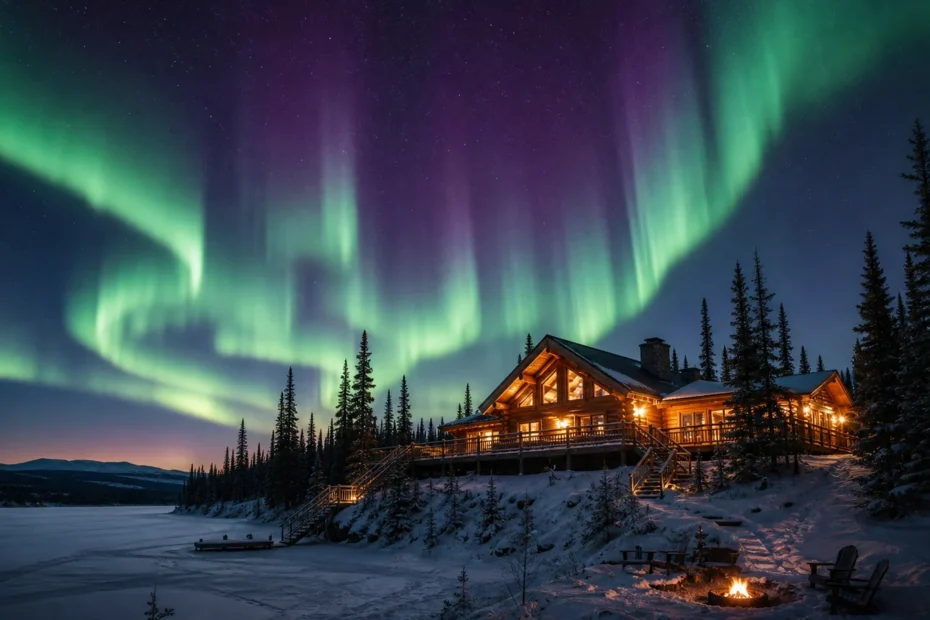
Plan Canada northern lights wilderness lodge trips with a science-first guide to Yukon, Northwest Territories, Churchill, aurora forecasts, dark skies, safety, pricing tiers, and photography readiness.
- Book 3 or more nights under or near the auroral oval instead of trusting a one-night aurora promise
- Choose NWT, Yukon, or Churchill by access style, dark-sky quality, comfort level, and winter safety systems
- Treat aurora viewing as solar activity plus local sky plus lodge safety, not as a guaranteed nightly show
Bottom line No wilderness lodge can guarantee northern lights; the best trip stacks dark location, clear local skies, multiple nights, and cold-weather safety planning
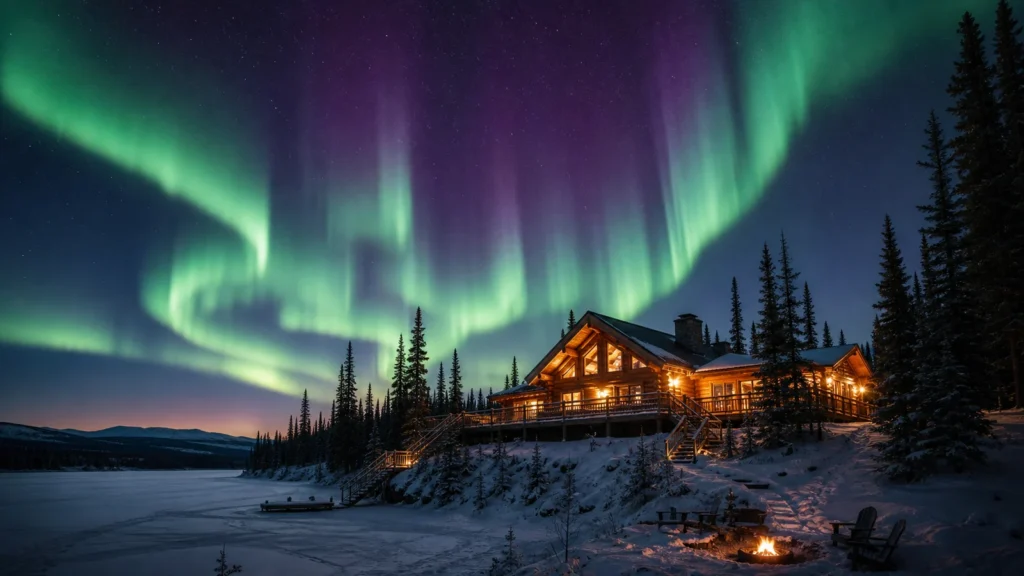
Northern lights and wilderness lodges in Canada are best planned as a science-aware, weather-aware expedition, not a simple hotel booking. The strongest trips usually combine three things: a lodge under or near the auroral oval, enough nights to wait through cloud cover, and safety systems for remote winter travel.
Travellers combining wildlife and northern skies can compare seasons and logistics in the Churchill polar bear and beluga tour guide.
Canada’s strongest aurora lodge regions are the Northwest Territories, Yukon, and Churchill in northern Manitoba. Each can deliver a different kind of trip: fly-in silence outside Yellowknife, road-accessible comfort near Whitehorse, or a sub-arctic wildlife-and-aurora itinerary around Hudson Bay.
Best overall strategy
- Book 3 or more nights instead of chasing a one-night display. Solar activity may be strong while local clouds still block the sky.
- Choose the region by access style: NWT for dark-sky fly-in lodges, Yukon for comfort and road-accessible wilderness, Churchill for winter wildlife plus aurora.
- Ask about safety before luxury: heated viewing areas, guide checks, emergency communication, backup power, and cold-rated clothing matter in remote winter conditions.
Do not book on aurora photos alone
The most expensive mistake is believing a lodge can guarantee the northern lights. A photo can be real and still be misleading: long exposures intensify colour, cloudless nights are selective, and a stunning image may say little about what a guest will see on a short stay.
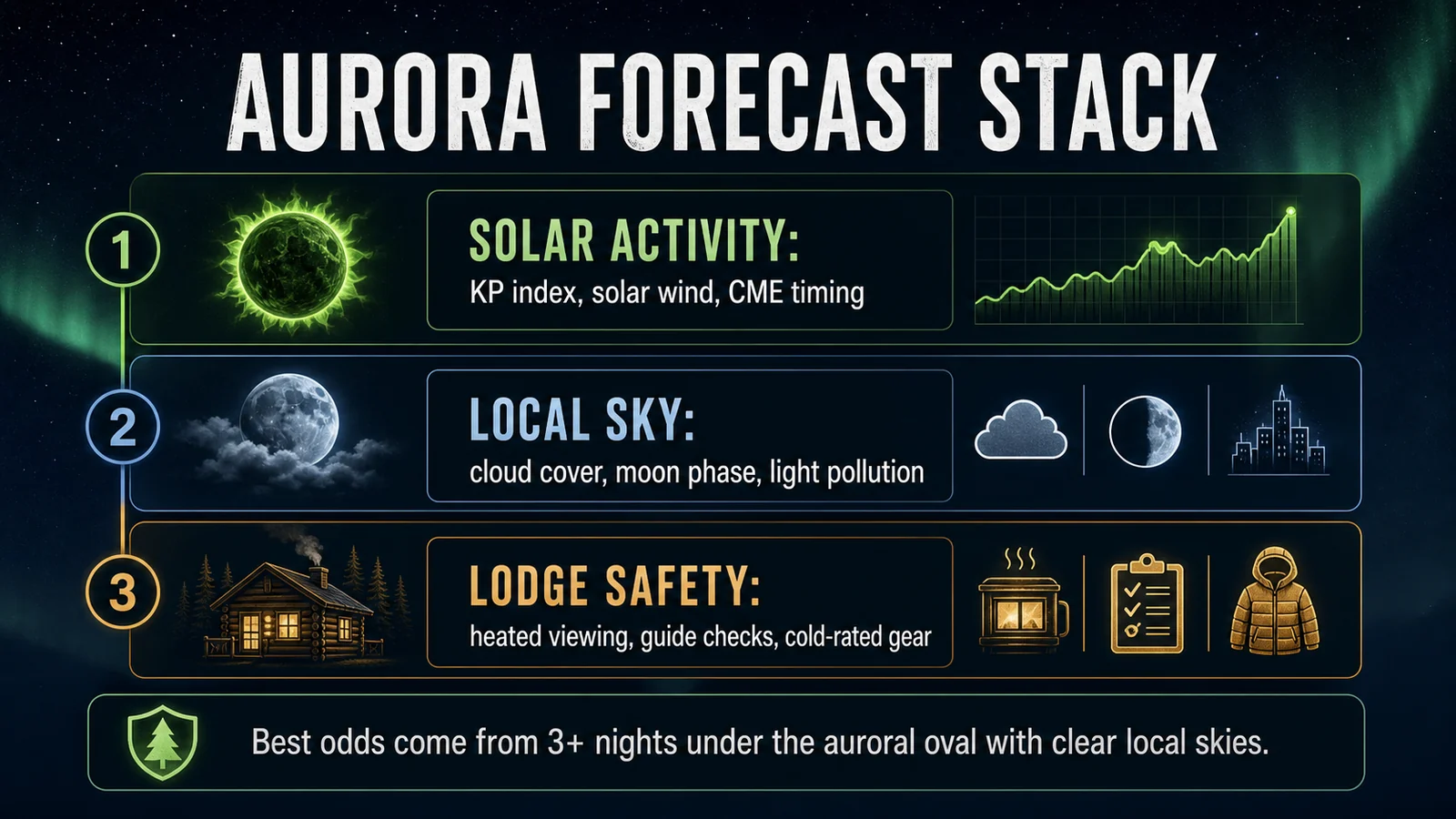
For planning, treat aurora viewing as a stack. You need solar activity, clear local sky, low light pollution, and a safe place to wait outside or near glass for several hours.
KP index and solar wind
The KP index helps describe geomagnetic activity, but northern lodges can see aurora at lower KP values than southern Canada because they sit closer to the auroral zone.
Cloud cover beats forecasts
A strong geomagnetic night can still be invisible under full cloud. Local microclimate and moon phase matter as much as the space-weather alert.
Comfort keeps you watching
Heated decks, wake-up alerts, warm glass viewing, guide checks, and safe paths make it easier to stay ready during long cold nights.
Best Canadian regions for northern lights lodges
Start by choosing the region. Then compare lodges inside that region by access, sky quality, safety systems, and the daytime experience you want.
| Region | Best fit | Why it works | Main trade-off |
|---|---|---|---|
| Northwest Territories Yellowknife, Blachford Lake, remote Canadian Shield | Luxury fly-in aurora lodges and dark-sky isolation | High-latitude location, limited light pollution outside town, strong aurora reputation, and easy flight gateway through Yellowknife. | Remote access can add charter cost, baggage limits, weather delays, and fewer flexible arrival options. |
| Yukon Whitehorse, Southern Lakes, wilderness chalets | Comfort seekers, photographers, and travellers who want road-accessible wilderness | Good balance of scenery, winter activities, glass chalets, hot springs or spa-style comfort, and aurora nights away from town glow. | Some properties sit closer to Whitehorse light domes, so exact location and viewing direction matter. |
| Churchill, Manitoba Hudson Bay sub-arctic | Travellers combining aurora with wildlife, tundra culture, and winter adventure | Strong northern latitude, distinctive sub-arctic setting, and packages that can pair northern lights with cold-weather wildlife experiences. | Weather and transport logistics can be more involved, and lodge style varies widely. |
The Canadian aurora lodge selector matrix
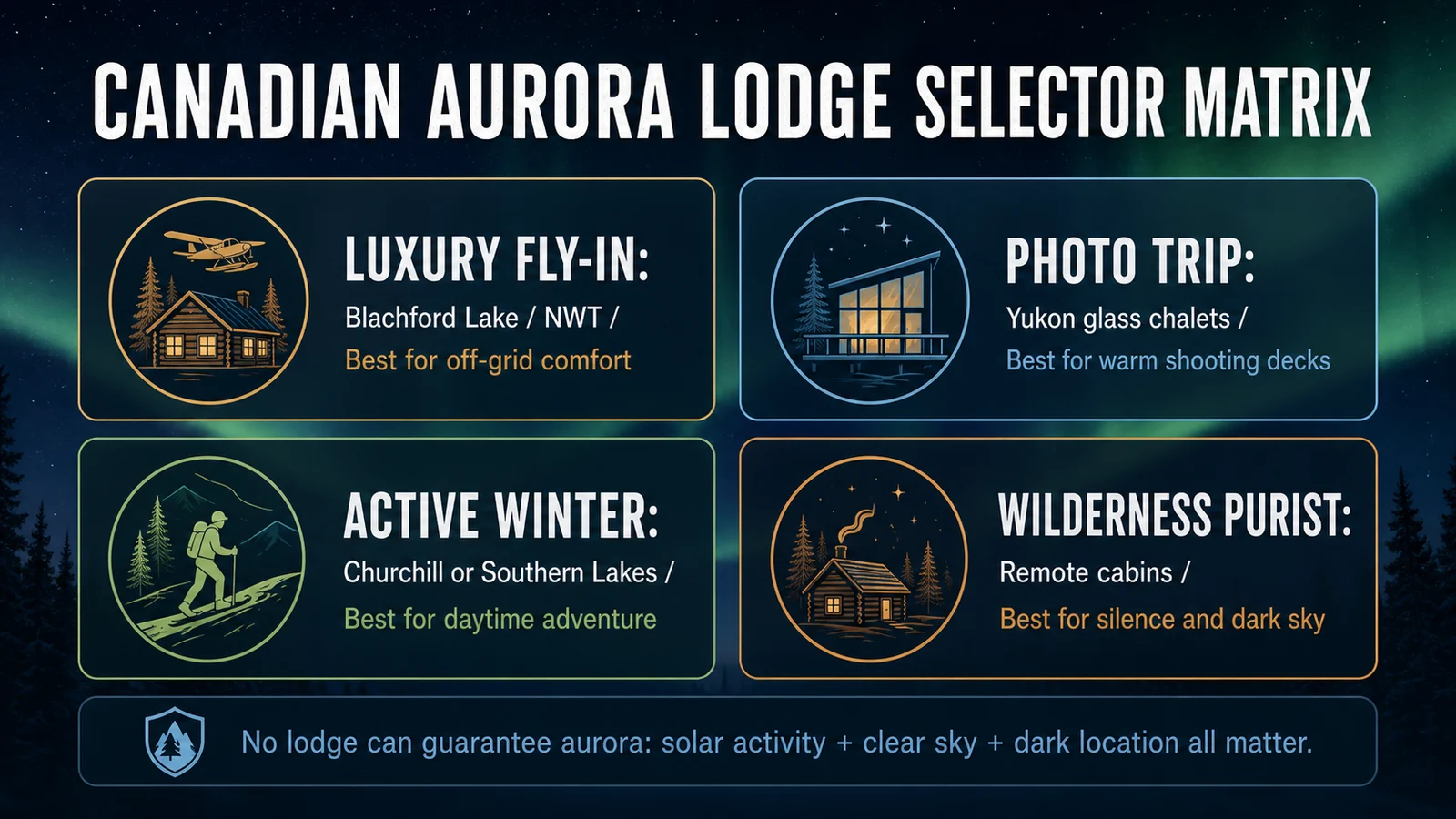
Use this matrix before checking availability. It keeps the decision practical and reduces the risk of paying for a lodge that is beautiful but wrong for your trip style.
| Traveller profile | Best lodge type | Must verify before booking | Why it fits |
|---|---|---|---|
| Luxury seeker | Fly-in wilderness lodge near Yellowknife or a remote NWT lake | Charter logistics, meal inclusions, heated viewing, wake-up policy, medevac and emergency communication. | Maximum silence, dark sky, and full-service comfort far from town light. |
| Photocentric traveller | Yukon lodge or glass chalet with clear northern horizons | Tripod rules, warm indoor shooting positions, lens-fog guidance, spare-battery charging, and foreground access. | Better comfort while waiting for long exposures and repeated sky checks. |
| Active adventurer | Road-accessible lodge with dog sledding, snowshoeing, ice fishing, or guided winter activities | Daytime activity schedule, clothing rentals, guide ratios, road transfer plan, and cancellation rules. | The trip still works even if one or two nights are cloudy. |
| Wilderness purist | Remote cabins or outpost-style lodges with minimal light pollution | Wood heat, backup power, satellite communication, food plan, winter road or air access, and self-rescue limits. | Total quiet and dark sky, but more responsibility and less service. |
Cold-weather safety warning
Winter aurora travel in northern Canada can involve temperatures below -30 C, wind, darkness, remote roads, and delayed transport. A premium lodge should be able to explain its safety systems clearly before you pay a deposit.
- Ask about heated viewing: indoor glass spaces, warming huts, fire pits, or vehicles reduce exposure risk.
- Confirm backup power: remote lodges should explain generator, battery, or communication redundancy.
- Check clothing support: some packages include parkas, boots, mitts, and snow pants; others expect you to arrive fully equipped.
- Understand medical access: remote fly-in trips should have a clear emergency plan, not vague reassurance.
How many nights should you book?
For serious aurora travel, one night is a gamble. Three nights is a more realistic minimum because it gives you room for clouds, late activity, moonlight, fatigue, and weather delays.
Autumn aurora vs winter aurora in Canada
| Season | Best for | Advantages | Watch-outs |
|---|---|---|---|
| Late summer to autumn roughly August to October | Reflections, photography, milder nights | Unfrozen lakes can create mirror reflections, clothing needs are easier, and travel can feel less severe. | Nights are shorter earlier in the season, bugs can still matter, and clouds or smoke can reduce clarity. |
| Deep winter roughly December to March | Long nights, snow scenes, classic lodge atmosphere | Long darkness windows, frozen-lake viewing, high-contrast foregrounds, and winter activity packages. | Extreme cold, more gear, higher safety requirements, and higher risk of travel disruption. |
| Spring shoulder roughly March to early April | More daylight plus remaining dark nights | Can balance warmer daytime travel with enough darkness for aurora watching. | Seasonal road, snow, and lodge schedules vary; confirm exact operating dates. |
Budget tiers: what you are really paying for
Prices change by season, package length, flights, taxes, and inclusions. Use these tiers as planning logic, not as a final quote.
Luxury fly-in lodge
Highest cost, but you are paying for isolation, meals, charter logistics, dark sky, guide systems, and remote infrastructure.
Premium road-accessible lodge
Often the best comfort-value balance: easier transfers, good rooms, warm viewing, and more flexibility around Whitehorse or similar gateways.
Cabins and self-guided stays
Lower nightly cost, but more responsibility for heat, food, transport, wake-up timing, safety, and sky-location scouting.
Arctic photography and readiness checklist
Run this checklist before packing camera gear for a remote aurora lodge.
Official sources to check before you book
Use official science and tourism sources alongside lodge marketing pages. They help you separate real trip planning from glossy aurora promises.
Related CanadaFever planning guides
Build the rest of the trip around region, wildlife, safety, and lodge logistics.
Fishing lodges in Canada
Compare remote access, package style, region, season, and lodge expectations.
Fly-in lodges
Understand aircraft limits, charter planning, payload, weather delays, and safety questions.
Wildlife viewing in Canada
Use the wildlife guide if your aurora itinerary includes bear, whale, bird, or tundra viewing.
Current bookable tour listings
Add a guided Yellowknife aurora tour to a lodge or city stay
These current Viator products suit travellers staying in Yellowknife who want transport away from city light. Compare movement between viewing sites, photography help, group size and cancellation terms. The aurora cannot be guaranteed.
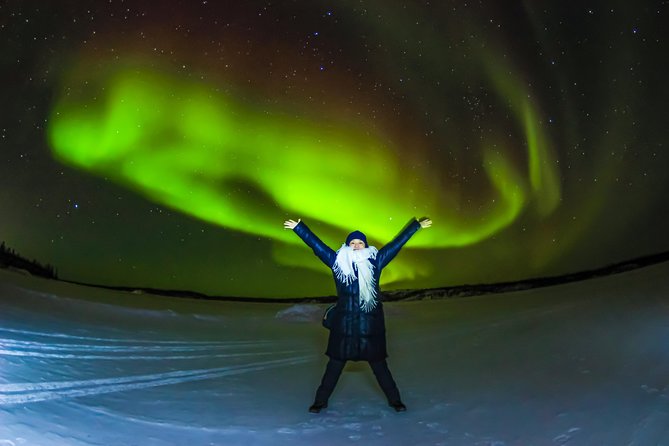
Yellowknife · Mobile aurora search
Northern Lights Searching Tour
A guided night that can move between viewing locations outside Yellowknife as cloud and light conditions change.
- Hotel pickup is listed
- Hot drinks and camera-setting help are included
- Best for travellers who value a mobile search strategy
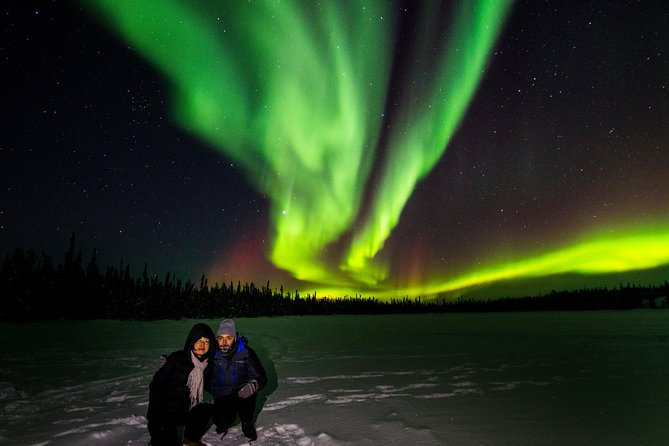
Yellowknife · Photos included
Northern Lights Tour with Photography
A longer coach-based option for travellers who want multiple viewing stops and professional photos included.
- Round-trip Yellowknife transport is listed
- Professional photos are included by the operator
- Read the non-refundable cancellation terms carefully
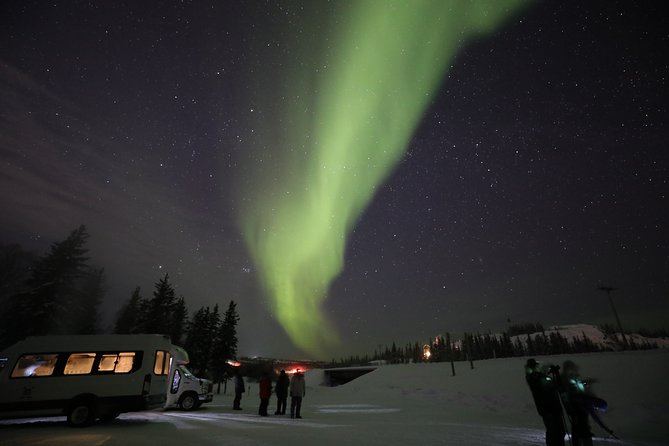
Yellowknife · Heated coach format
Deluxe Coach Aurora Viewing Tour
A comfort-oriented alternative for travellers who prefer a heated vehicle between outdoor viewing periods.
- Coach-based transport from Yellowknife
- Useful for cold-sensitive travellers
- Confirm pickup time, language and current inclusions
Affiliate disclosure: CanadaFever may earn a commission if you book through a sponsored Viator link, at no extra cost to you. Images come from the corresponding Viator experience listings. Availability, schedules and operator details can change; verify the exact listing, date and cancellation terms before booking.
FAQ: northern lights and wilderness lodges in Canada
Can a Canadian wilderness lodge guarantee the northern lights?
No. A lodge can improve your odds by offering dark skies, high-latitude access, warm viewing, wake-up alerts, and multi-night packages, but the aurora still depends on solar activity and local cloud cover.
Is the Northwest Territories or Yukon better for aurora lodges?
The Northwest Territories is often the better fit for dark-sky fly-in lodge trips around Yellowknife and remote lakes. Yukon is often better for road-accessible comfort, glass chalets, mountain scenery, and easier add-on activities from Whitehorse.
How many nights should I book for a northern lights lodge?
Three nights is the practical minimum for most serious aurora lodge trips. Four to five nights is better for photographers, luxury travellers, and anyone spending heavily on flights or remote access.
What is the KP index and why does it matter?
The KP index is a scale used to describe global geomagnetic activity. Higher numbers usually mean stronger aurora potential farther south, but northern Canadian lodge regions can see aurora at lower KP levels because they sit closer to the auroral zone.
What should I ask a lodge before booking a winter aurora trip?
Ask about heated viewing, wake-up alerts, clothing rentals, guide coverage, emergency communication, backup power, transfer delays, refund rules, and whether the viewing site is protected from local light pollution.