

Smallmouth Bass fishing in Canada guide with identification, habitat, seasonal patterns, gear, tactics, and official regulation checks.
- Use Smallmouth Bass Fishing in Canada to match species behaviour, habitat, season, and presentation to Canadian water conditions
- Check local regulations before fishing; limits, closures, bait rules, and licences can vary by province and waterbody
- Focus on practical setup: where to fish, what to cast or troll, how deep to work, and when to move
Bottom line Smallmouth Bass Fishing in Canada gets simpler when you pair current rules with the right habitat, timing, and presentation
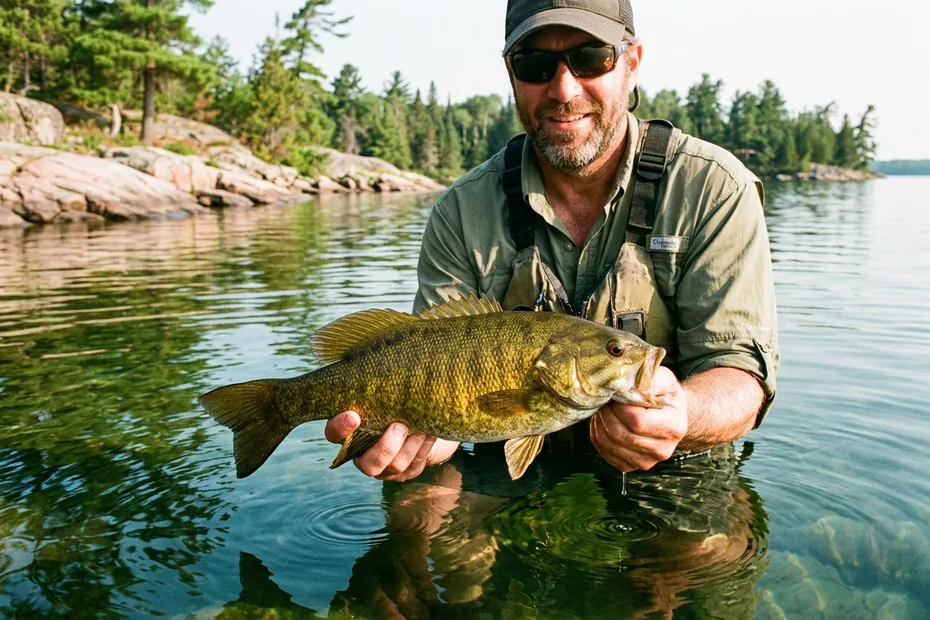
Smallmouth bass fishing ranks among the hardest-fighting freshwater thrills in Canada, pairing bronze-shouldered Shield lake brawlers with rocky river eddies that erupt in mid-air jumps seconds after setting the hook. Known scientifically as Micropterus dolomieu, Canadian bronzebacks thrive along windswept granite shoals, cobble river current seams, and crystal-clear zebra-mussel flats stretching from Manitoba’s Lake of the Woods through the Great Lakes and St. Lawrence River.
Northern growing seasons may shorten bass feeding windows compared to southern lakes, yet cold Shield habitat concentrates giant five-to-seven-pound fish tightly onto distinct rock humps, boulder spines, and crayfish gravel bars. Mastering Ned rigs, tube jigs, topwater poppers, and deep autumn dropshots turns intimidating miles of rocky water into clear high-percentage targets.
This manual belongs to our Fishing for Specific Species in Canada library and pairs directly with our Canada Outdoor Planning Tools for wind and season prep. Explore matched hardware inside our review of the best spinning reels for bass before rigging braided mainline.
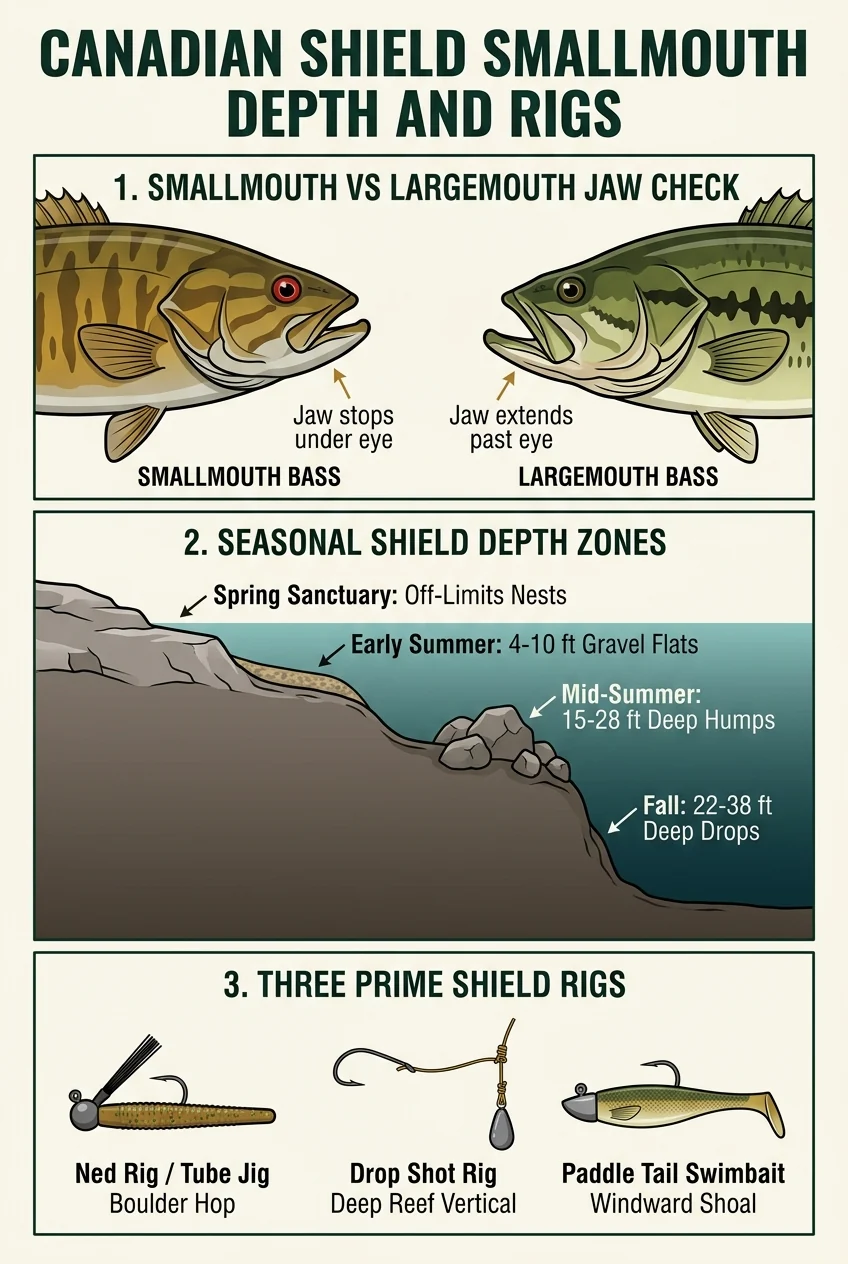
Open full-resolution smallmouth bass diagram (848×1264 WebP)
Biological Identification: Smallmouth vs Largemouth Bass
In mixed Ontario, Quebec, and Manitoba waters where smallmouth and largemouth bass overlap along cattail edges abutting granite rock points, clear color fades confuse anglers quickly. Clear-water bass turn pale silver-grey while dark bogwater bass turn near-black regardless of species.
Rely on mouth hinge geometry, dorsal notch curvature, and gill coloration with every fish closed cleanly at mouth level rather than trusting flank pattern alone.

Open 1024×559 smallmouth identification plate
Four Decisive Field Checks
- Jaw Alignment Under Eye: With mouth gently closed, draw a vertical line straight down from the rear edge of the eye; a smallmouth jaw stops flush beneath the pupil rather than sliding far past the eye socket.
- Shallow Dorsal Saddle: The front spiny dorsal fin slopes smoothly down into the soft rear fin without forming the deep separated V-valley clear on largemouth bass.
- Vertical Flank Bars: Dark brown or olive vertical bands stretch down bronze sides rather than forming one solid horizontal dark band along the midline.
- Check Scales & Red Iris: Tiny compact scales run along base soft dorsal rays, paired commonly with bright fiery crimson or amber-red eyes.
| Trait | Smallmouth Bass (Micropterus dolomieu) | Largemouth Bass (Micropterus salmoides) | Rock Bass (Ambloplites rupestris) |
|---|---|---|---|
| Upper Jaw Rear Tip | Stops straight under center or rear pupil | Extends clearly past back edge of eye socket | Stops near mid-eye; compact blunt snout |
| Flank Markings | 8 to 15 vertical bronze/olive bands (no horizontal strip) | Thick horizontal dark band from gill to tail | Neat horizontal rows of tiny black dots per scale |
| Dorsal Fin Notch | Shallow connected dip between spiny & soft fins | Deep V separation splitting dorsal section nearly in half | Single long continuous spine-to-soft fin without deep dip |
| Anal Fin Spines | 3 sharp hard leading spines | 3 hard leading spines | 5 to 6 distinct sharp anal spines (instant teller) |
| Primary Canadian Habitat | Granite Shield points, reefs, cool flowing cobble rivers | Shallow pad bays, woody log flats, dense weed edges | Shallow nearshore granite rocks and docks |
Young-of-year and juvenile Canadian smallmouth also display a vivid tri-colored tail pattern: bright orange near the base, a bold black vertical band across the middle, and crisp white along outer rear fin margins. Inspecting the center of the tongue gently with a wet fingertip reveals a tiny rough tooth patch on smallmouth that feels completely smooth on most pure-strain largemouth.
Granite Shield Humps, Windward Points, and River Current Seams
Across vast glacial Canadian Shield water like Georgian Bay or Lake of the Woods, smallmouth bass abandon sluggish bays soon after spring spawning finishes and gather in roving wolfpacks over rock-to-sand transitions. Watch onshore wind waves carefully: brisk afternoon breeze washing over shallow granite reef tops stirs up aquatic insects, emerald shiners, and crayfish into the sunlit mud line where heavy bass hunt fiercely.
Inside flowing rivers like the Ottawa, upper St. Lawrence, and Grand River, bronzebacks park right beside current creases flanking submerged bridge piers, midstream boulder pockets, and rocky gravel island tips.
| Season / Water Temp | Primary Structure Target | Core Prey Focus | Proven Lure Categories |
|---|---|---|---|
| Early Summer Opener (14 to 18 C) | Secondary rock points, shallow gravel bars (4 to 12 ft) | Crayfish emergence, small yellow perch, insects | Poppers, walking topwaters, suspending jerkbaits, 1/4 oz spinnerbaits |
| Midsummer Peak (19 to 24 C) | Mid-lake granite humps, deep island saddles (15 to 28 ft) | Round gobies (Great Lakes), rusty crayfish, smelt | 3.5-inch goby tubes, Ned rigs, 3.8-inch paddle-tail swimbaits |
| Early Autumn Transition (13 to 17 C) | Windward cobble points, fast drop-off funnels (10 to 25 ft) | Migrating emerald shiners and big lake baitfish | Suspending jerkbaits, spinnerbaits, mid-diving crankbaits |
| Late Fall Pre-Ice (5 to 11 C) | Deep gravel basins and steep canyon rock lips (28 to 45 ft) | Dormant crayfish and clustered cold bait schools | 3/8 oz dropshot minnows, metal blade baits, hair jigs |
When summer winds sweep steadily across a granite lake for two consecutive days, orient boat drifts directly onto windward shorelines rather than hiding immediately inside dead calm leeward bays. Incoming surf tumbles submerged zebra-mussel beds and dislodges crayfish out of crevices, pulling roving packs of three-to-five-pound bronzebacks tightly along wave-washed reef edges.
Finesse Tubes, Ned Rigs, Topwater Poppers, and Deep Dropshots
Pressured clear Canadian lakes reward natural muted forage colors and crisp bottom feel over gaudy over-sized lures. Keep your tackling kit streamlined around four versatile presentation blocks matching shallow wind ripples down to forty-foot late autumn ledges.
Crayfish Molts, Round Gobies, and Shield Forage Shifts
Feeding habits change across Canadian regions according to the primary forage packed around rocky shorelines and reefs. Along Great Lakes waters, Georgian Bay, and the St. Lawrence corridor, abundant bottom-dwelling round gobies transformed northern smallmouth growth rates, turning lean three-pounders into broad six-to-seven-pound giants anchored around ten-to-thirty-foot limestone shelves.
When smallmouth feed predominantly on sluggish bottom gobies or freshly molted soft-shelled northern crayfish during July and August, keep jig profiles muted brown, smoke-purple, dark amber, or chartreuse-belly goby green hugging directly within six inches of bottom boulders. Meanwhile, across inland boreal Shield lakes packed tightly with open-water emerald shiners, yellow perch, and ciscoes, windward points draw suspended surface schools smashing sleek silver jerkbaits, walking topwaters, and pearlescent paddle-tail swimbaits cleanly off reef saddles.
High-Confidence Smallmouth Lure Systems
- 3.5-inch Hollow Goby & Crayfish Tubes: Stuffed neatly with a 1/4 oz to 3/8 oz internal round-head jig in watermelon red, green pumpkin, or dark brown-smoke, snapped twice off bottom and glided smoothly onto granite plates.
- The Ned Rig (3-inch ElaZtech Stick on 1/8 to 1/4 oz Mushroom Head): Stands upright effortlessly among cobble crevices while trailing tentacles shiver subtly in tiny drift currents; unbeatable during calm clear mornings.
- Walk-the-Dog Topwaters & Poppers: Clear, bone-white, and ghost-perch topwater plugs fired across glass dawn Shield points pull jarring surface explosions even from fish rising effortlessly through fifteen feet of clear water.
- Deep Dropshot Rigs: Match 3-inch to 4-inch translucent smelt or goby soft plastics tied cleanly 14 inches above a 3/8 oz tungsten cylinder weight on 8 lb fluorocarbon whenever electronics display bass hugging deep 35-foot gravel shelves.
River Drift Fishing and Fly Rod Smallmouth Tactics
Floating or wading warm summer stretches along Ontario’s Grand River, Ottawa River boulder shoots, or New Brunswick gravel runs shines with either spinning jerkbaits or a crisp 7-wt fly rod. Popping deer-hair frogs and yellow-and-black foam sliders gently beside shoreline deadfalls pulls ferocious surface slams out of mid-current rock pockets.
When smallmouth slide down behind fast submerged ledges on high afternoon sun, swing olive wooly buggers, articulated Clouser Minnows, and bright chartreuse crayfish patterns on intermediate sink-tip fly lines straight across seam cushions. Quick erratic six-inch strips imitate darting crayfish fleeing exposed gravel bars right through feeding windows.
Verify casting weights and gear balance cleanly inside our main fishing gear and equipment guide, and sharpen clinch knots alongside drag tips inside fishing for beginners in Canada.
5-Step Safe Landing and Deep-Water Release Care
Play Jumping Bass Cleanly Without Slack Lines
Keep steady rod angle tension close to the hull rather than thrusting the rod straight up into midair leaps where open-mouthed headshakes sling heavy jig heads loose.
Scoop Cleanly With Smooth Coated Mesh Nets
Dip a spacious rubber-coated landing net ahead of a tired bronzeback and steer the head straight inside without pinning trebles against delicate gill plates.
Avoid Excessive High Air Lifting and Lip Twisting
Support heavy four-to-six-pound brood females cleanly beneath the pectoral chest while pinching the lower lip lightly. Never torque heavy bodies sideways strictly by the jawbone.
Check Tight Swim Bladders Carefully Below 30 Feet
Slow vertical lifts from deep 30-to-40-foot autumn ledges reduce pressure swings smoothly. Return healthy deep fish instantly into open lake water rather than confining them inside shallow sloshing livewells.
Hold Gently Into Surface Chop Until Strong Thrust
Support the bass upright beside the gunwale for a brief second until bright gills flush steadily and powerful tail kicks sweep cleanly back into rocky bottom contours.
Canada’s Premier Smallmouth Bass Lakes and River Corridors
Southern Ontario, the Ottawa Valley, the upper St. Lawrence corridor, and northwestern Shield giants anchor global smallmouth fishing reputations. Compare regional destination highlights inside our main directory on the best fishing spots in Canada or browse small-craft access waters in our kayak and canoe fishing guide.
- Lake Erie & Upper Niagara River: World-class Great Lakes forage drives thick football-shaped six-to-eight-pound fish stacking cleanly on rocky Canadian shoals from Port Colborne through Long Point and Pelee Island.
- St. Lawrence River & Thousand Islands: Endless current points, clear limestone shelves, and rich emerald shiner pods make Brockville, Gananoque, and Lake St. Francis unforgettable multi-season trophy factories.
- Georgian Bay & Lake Simcoe (Ontario): Clear deep Shield water around Parry Sound and Simcoe’s rocky mid-lake reefs yield consistent four-to-six-pound beauties rewarding sharp finesse jig and dropshot discipline.
- Lake of the Woods & Rainy Lake (Northwestern Ontario): Literally thousands of windswept granite islands, hidden narrows, and red-rock crayfish walls serve up steady topwater and jig bites with sparse midday boat traffic.
- Ottawa River & Quebec Outaouais Lakes: Broad river bends and Shield border reservoirs serve effortless shore, kayak, and aluminum boat access within short drives of Ottawa and Montreal.
Maritime Rivers, Winnipeg River Systems, and Kayak Tactics
Beyond central Ontario hubs, productive wild smallmouth populations thrive across Manitoba’s sprawling Winnipeg River hydro reservoirs near Kenora border lakes as well as warm slow-moving Maritime gravel reaches such as New Brunswick’s Saint John River and Oromocto tributaries. Broad rocky headponds holding current swirls beside hydro wing-dams concentrate aggressive fish throughout summer months where sparse boat traffic keeps topwater bites lively even at midday.
Paddle anglers running kayaks or lightweight aluminum canoes gain quiet tactical stealth slipping silently upwind of sunlit shallow cobble shelves without slapping trolling-motor props against hollow hulls. Carry one reliable bow drag chain or quick brush-anchor cleat alongside floating net lanyards so brisk crosswinds never blow you straight over unworked current eddies mid-fight.
Planning multi-day northern boat trips runs effortlessly alongside established waterfront operators featured in fishing lodges in Canada and all-inclusive fishing lodges in Canada.
Seasons, Closed Nesting Windows, and Possession Rules
In Canada, smallmouth bass populations rely heavily on strict spring bed protections while males fan eggs over shallow sunlit rock nests between mid-May and late June. Double check exact zone opener Saturdays across provincial boundary lines inside fishing regulations and licences in Canada before making early summer casts.
| Province / Water Zone | Typical Legal Season Window | Key Harvest & Slot Focus | Official Summary |
|---|---|---|---|
| Southern Ontario (FMZ 15 to 20) | 3rd or 4th Saturday in June to late November/December | Check specific Lake Erie / St. Lawrence aggregate bass limits | Ontario MNRF FMZ Tables |
| Northwestern Ontario (FMZ 4, 5, 6) | Seasonal year-round or July limits per specific water | Catch-and-release early June restrictions along Shield border waters | Ontario MNRF FMZ Tables |
| Quebec (St. Lawrence & Outaouais) | Mid-June through autumn freeze (varies by zone) | Daily 6-bass combined bass quotas; barbless conservation advisories | Quebec MELCCFP Zone Guide |
| Manitoba & Saskatchewan | Spring opener windows across Shield/Whiteshell waters | Conservative limits protecting slow-growing Winnipeg River giants | Manitoba / Sask Angler Guides |
When fishing deep autumn shelves between 28 and 45 feet in October, reel hooked fish steadily up to avoid rapid swim-bladder overexpansion. Keep needleless release tools handy rather than puncturing air sacs, and unhook healthy fish promptly over shaded boat edges so late-season females descend smoothly back into winter structure.
Canadian Smallmouth Structure & Lure Selector Tool
Selecting proper jig head weight and clear fluorocarbon diameters cleanly matches drift drag against rocky shorelines without snapping on granite boulders.
Interactive Canadian Smallmouth Bass Setup Calculator
Choose your Canadian water habitat, seasonal water stage, and sky clarity to reveal ideal mainline, fluorocarbon leader diameter, top bait profile, and boat handling notes.
Recommended Canadian Smallmouth Configuration:
Stay silent off calm granite points in gin-clear early light; translucent green-pumpkin tones avoid spooking cruising fish.
Recommended Smallmouth Bass Swimbaits and Line Hardware
Clear northern granite lakes quickly shred brittle lines; rugged braided mainline paired with translucent fluorocarbon leaders and proven swimbaits converts deep-water nibbles cleanly.
CanadaFever participates in affiliate programs. We may earn a commission on qualifying purchases made through links on this page at no additional cost to you.
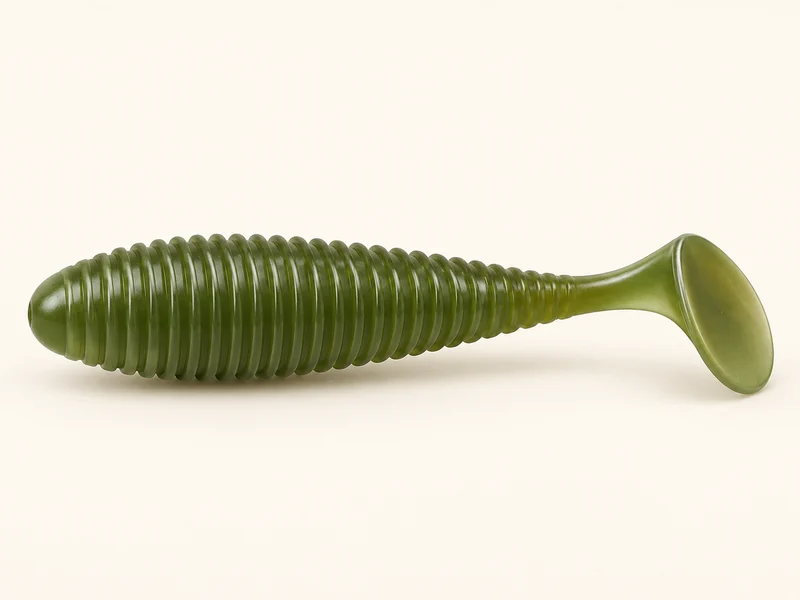
Reference illustration – check exact variant on Amazon.
Keitech FAT Swing Impact Swimbait (4.8-inch)
- Supple ribbed tail kicks smoothly even at snail-slow autumn retrieve speeds across deep Shield shelves.
- Balanced salt-injected profile keeps the bait running upright without spinning sideways on weighted jig heads.
- Covers wide mid-lake reefs cleanly to pull wandering smallmouth packs up off rocky structures.
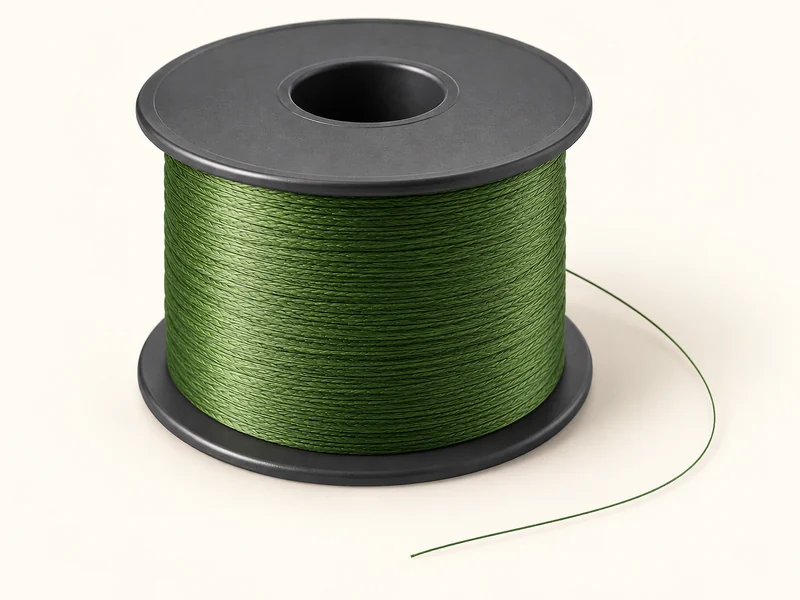
Reference illustration – check exact variant on Amazon.
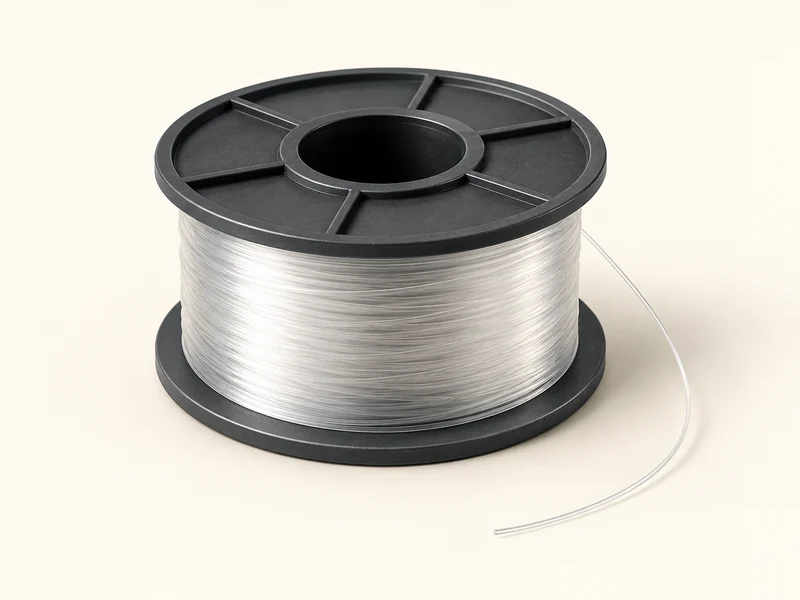
Sufix 832 Advanced Superline Braid (20 lb, 150 yd)
- Zero line stretch lets anglers feel faint cold-water dropshot bites cleanly down at 35-foot depth marks.
- Smooth 8-carrier weave launches light Ned jigs and topwaters well ahead of drifting boats.
- Compact diameter cuts smoothly down steep St. Lawrence river current walls without bowing wide.
Reference illustration – check exact variant on Amazon.
Seaguar Red Label Fluorocarbon Line (12 lb, 200 yd)
- Nearly invisible refractive properties hide leader ties over clear Georgian Bay and St. Lawrence flats.
- Tough outer shield resists jagged zebra mussel colonies and sharp rock edges along deep ledges.
- Pairs easily with braided mainlines via compact double-uni or FG knots for crisp casting glides.
Additional Verified Smallmouth Gear Categories on Amazon:
Compare Bass Finesse Tube & Ned Kits • Browse Medium Spinning Rod Combos • Review Tackle Organizers & Pliers
Frequently Asked Questions About Canadian Smallmouth Bass Fishing
How can I immediately distinguish a smallmouth from a largemouth bass?
Shut the bass mouth gently and check the rear upper jaw alignment: on a smallmouth bass, the jaw hinge ends straight beneath the eye rather than reaching behind it. Smallmouth also feature faint vertical bronze bars along their flanks rather than one thick horizontal black stripe.
When does smallmouth bass season open across Ontario and Quebec?
Most southern Ontario zones and southwestern Quebec regions open on the third or fourth Saturday of June after spring bed nesting completes safely. Check provincial regional tables annually because northwestern lakes occasionally follow separate early or mid-summer opening brackets.
What are the best lure colors for Canadian Shield smallmouth bass?
Natural green pumpkin, watermelon, dark brown crayfish smoke, and pearl-white emerald shiner tones work consistently well in clear Shield lakes. Switch slightly toward chartreuse-highlighted tube skirts or bone topwaters under windy cloudy skies or stained tannic water.
How deep do Canadian smallmouth bass move in late autumn?
As surface water falls under 11 C across October, northern bronzebacks slide down steeply into 25-to-45-foot deep rocky basins and canyon channel ledges holding winter crayfish and deep smelt schools. Vertical dropshots, heavy blade baits, and slow swimbaits excel down there.
Do smallmouth bass survive cold Canadian winters under lake ice?
Yes. Smallmouth settle into sluggish wintering groups pressed closely inside deep sheltered boulder crevices or rocky drop-offs between 25 and 50 feet where bottom temperatures hover steadily near 4 C beneath thick winter ice.
Should you keep heavy 5-pound smallmouth bass for the frying pan?
Slow northern growth requires 10 to 14 years for a Canadian bronzeback to reach five pounds or heavier. Release trophy brood fish swiftly at boat-side and harvest abundant 12-to-14-inch mid-sized fish sparingly instead wherever legal limits apply.
Official Canadian Fisheries Resources and Related Guides
Confirm zone-specific opening Saturdays, possession counts, and non-resident licensing directly via official Canadian databases before starting out:
- Fisheries and Oceans Canada (DFO): Aquatic Species Identification Guide
- Ontario Ministry of Natural Resources: Ontario Fishing Regulations Summary
- Government of Alberta: Official Game Fish Species Directory
- Related CanadaFever Guides: Fishing for Specific Species in Canada · Canada Outdoor Planning Tools · Best Spinning Reel for Bass · Fishing Gear and Equipment · Fishing for Beginners in Canada · Fishing Regulations and Licences in Canada · Best Fishing Spots in Canada · Kayak and Canoe Fishing in Canada · Fishing Lodges in Canada · All-Inclusive Fishing Lodges Canada