
Choose polarized fishing sunglasses for Canada by lens colour, fit, coverage, material and conditions from rivers to open water.
- Best all-round tint: grey for bright open conditions and natural colour perception.
- Best mixed-light direction: copper or amber can improve perceived contrast around weed, rock and changing cloud.
- Fit before colour: the frame should block side glare without touching eyelashes or creating pressure points.
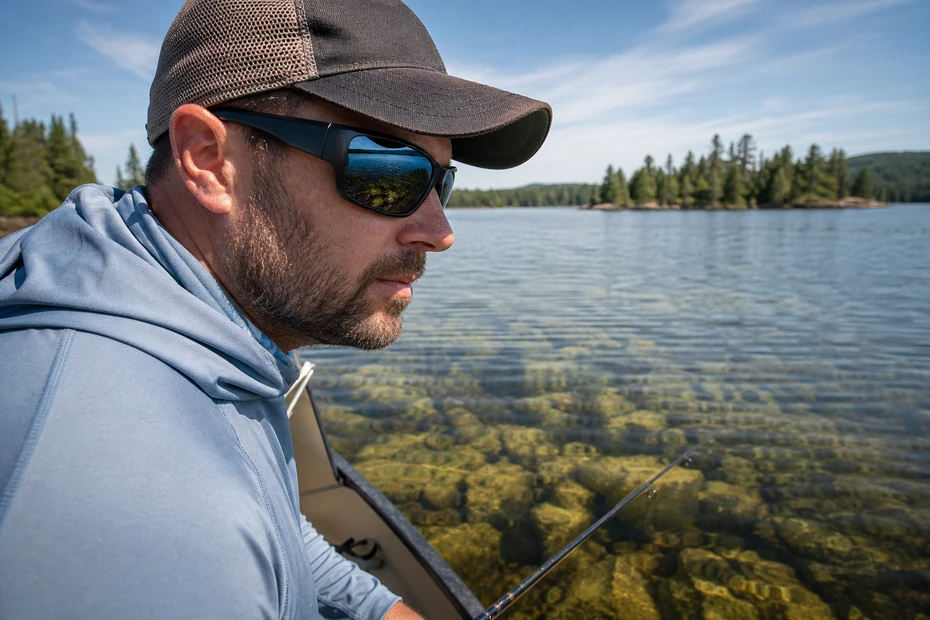
The best polarized fishing sunglasses Canada anglers can choose combine verified UV protection, effective glare control and a frame that stays aligned during a long day. Lens colour matters, but fit and coverage decide whether light leaks around the frame and whether the glasses slide when wet.
This guide matches grey, copper, yellow and mirrored lens directions to Canadian fishing conditions, then explains glass versus polycarbonate, prescription options and the simple fit tests that prevent an expensive mistake.
Key Takeaways
- Best all-round tint: grey for bright open conditions and natural colour perception.
- Best mixed-light direction: copper or amber can improve perceived contrast around weed, rock and changing cloud.
- Fit before colour: the frame should block side glare without touching eyelashes or creating pressure points.
- Check UV protection separately: a dark or mirrored lens is not proof of adequate UV protection.
- Secure them: use a retainer and protective case around boats, current and rough portages.
Polarization can reduce surface glare, but it cannot correct a frame that leaks light at the temples or a lens colour that is too dark for the day.
🌲 The Guide’s Log
When I compare fishing sunglasses, I picture the moment the sun disappears behind broken cloud. A lens that felt comfortable on open water can suddenly become too dark to read a knot, see a wet rock or track a lure beside the boat. Then the sun returns, glare spreads across the lake and a light lens can feel inadequate. That swing is common in Canada, where a single day may move from bright open water to shaded riverbank, forested shoreline and evening ramp. The useful pair is not the one with the loudest mirror. It is the pair that fits close enough to manage side light, stays stable when the face is damp and keeps the angler from constantly removing it. I also separate polarization from UV protection. Polarization is about reflected glare; UV protection is a different claim that should be verified from trustworthy product information. Lens material adds another trade-off. Glass can offer excellent optical clarity but adds weight and can be a poor match for impact-prone use. Polycarbonate is lighter and commonly chosen when durability and comfort matter, though coating quality still affects scratches and clarity. My buying sequence is fit, verified protection, lens tint, material and only then style. If the glasses fail the first two, the remaining features are decoration.
Best Polarized Fishing Sunglasses Canada: Lens Quick Picks
Use the normal fishing environment, not a single vacation photo. The open water in our best fishing spots in Canada guide creates different glare than the shaded streams in the fly-fishing destinations guide.
| Normal condition | Lens direction | Why | Watch for |
|---|---|---|---|
| Bright open lakes | Grey or grey-based mirror | Controls brightness while keeping colours relatively neutral | Too dark at dawn or under heavy cloud |
| Mixed sun and cloud | Copper or amber | Can improve perceived contrast around structure | Colour shift may feel strong to some users |
| Shaded rivers and forest | Lighter amber or yellow direction | More usable light in shade | Must still provide verified UV protection |
| Big-water glare | Grey or copper with suitable mirror and side coverage | Combines brightness control with reflected-light management | Mirror alone is not polarization or UV proof |
| All-day single-pair use | Medium-transmission grey or copper | Balances changing light better than an extreme tint | Fit and comfort still decide wear time |
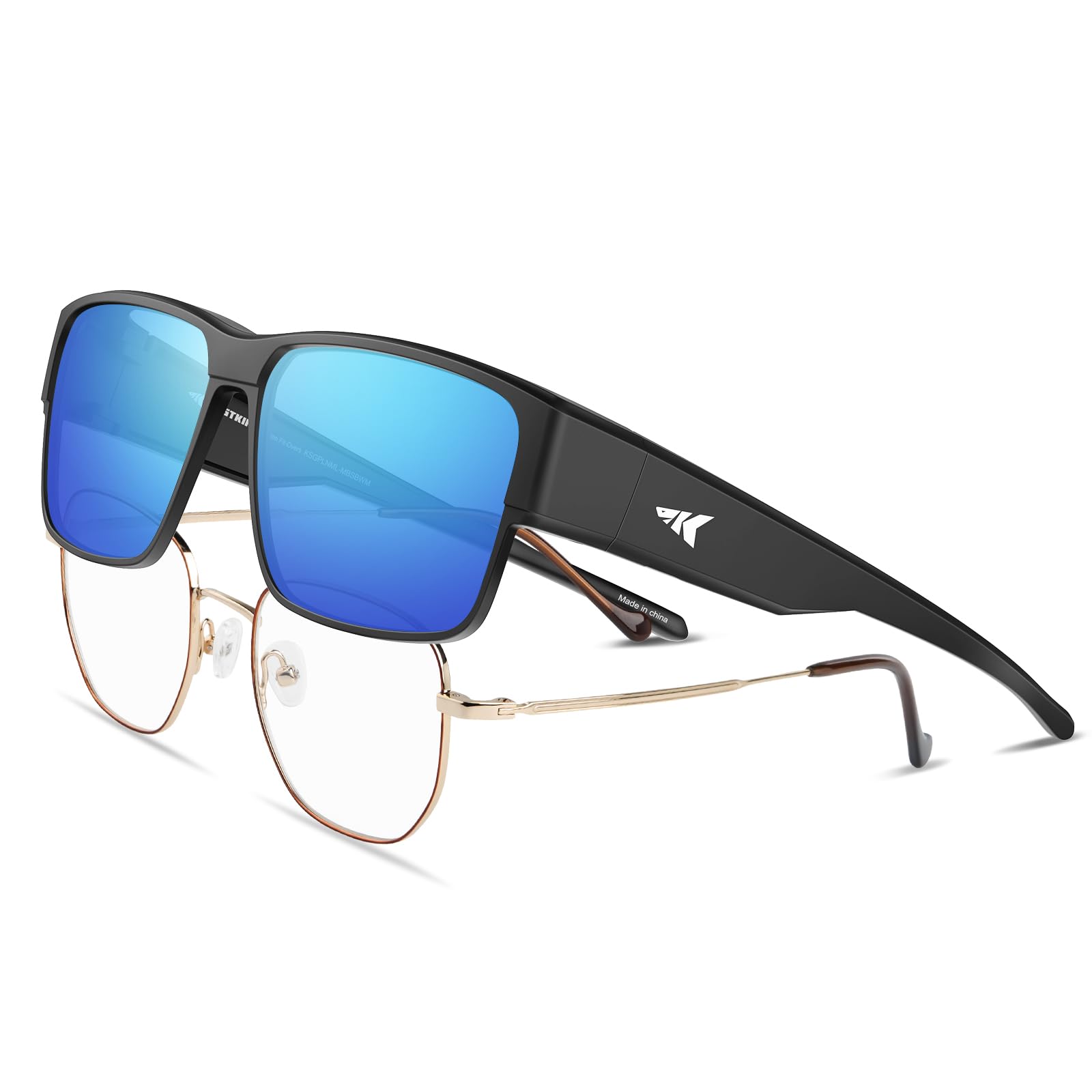
CanadaFever top pick
KastKing Skidaway polarized sunglasses
A practical value-oriented starting point with multiple lens options for anglers who want wraparound coverage without stepping immediately into premium glass lenses.
- Choose lens colour for your normal light, not frame colour alone
- Check bridge and temple fit before relying on them all day
- Use a retainer and hard case around boats and portages
Verify the current listing, size or configuration before ordering.
Affiliate disclosure: As an Amazon Associate, CanadaFever earns from qualifying purchases at no extra cost to you.
What Polarization Does—and Does Not Do
Polarization controls reflected glare
Light reflected from flat surfaces such as water becomes strongly oriented. A polarized filter blocks much of that reflected glare, which can make the surface easier to look through and reduce squinting.
The effect is most obvious when the sun angle creates a broad sheet of glare. It can help anglers see weed edges, shallow rock, fish movement and obstacles, but water clarity, surface texture and viewing angle still matter.
UV protection is a separate requirement
Health Canada advises choosing sunglasses with effective UVA and UVB protection and notes that darkness is not a reliable indicator. Review the federal sunglasses safety guidance and verify the product’s protection information.
Do not assume that polarization, mirror coating or a dark tint proves the UV claim. Buy from a source that identifies the protective standard or percentage clearly.
Polarization can affect screens
Some LCD screens appear dim, coloured or black at certain head angles when viewed through polarized lenses. Test the fish finder, phone and vehicle display you actually use.
🍁 The Local Secret
Bring your hat to the fitting. A curved brim changes how overhead light reaches the lens and can interfere with tall frames. The best frame-hat combination often controls glare better than choosing a more extreme mirror colour in isolation.
Lens Colour by Canadian Fishing Condition
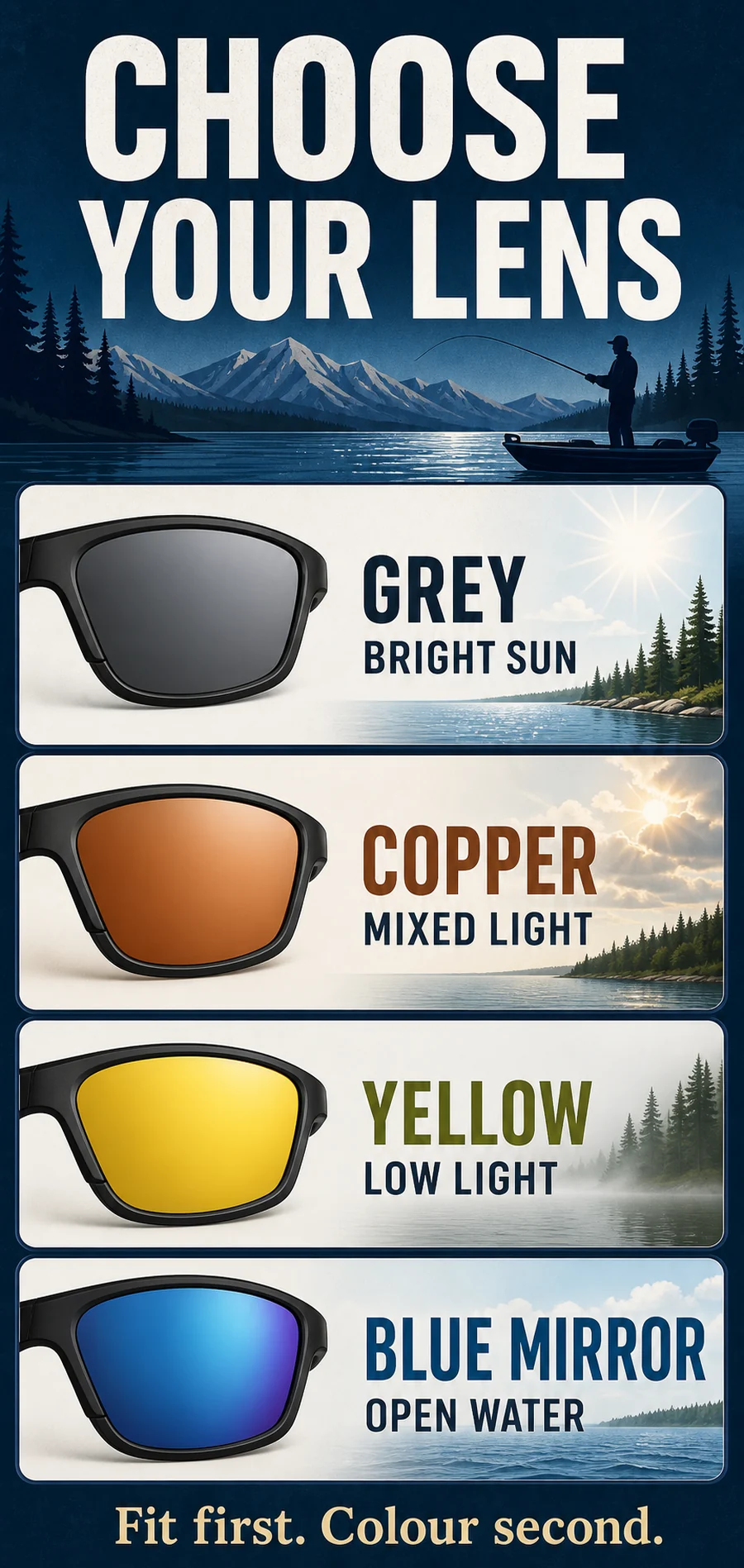
Grey for bright, open water
Grey is the safest all-round direction when brightness is the main problem and you prefer relatively natural colour. It suits exposed lakes, long summer days and boat travel.
Copper or amber for structure and changing light
Copper and amber lenses filter more blue light and can make some edges appear more distinct. Many anglers prefer them around weed, rock, riverbanks and variable cloud.
Yellow and light amber for low light
A lighter lens may be easier to wear at dawn, under forest canopy or in dark weather. It is not a substitute for clear safety eyewear, and the UV protection still needs independent verification.
Blue or green mirrors change the outer surface, not the whole buying logic
Mirror coatings can reduce light reaching the eyes and are often paired with a base tint. Read the product specification to learn the base colour; two blue-mirror lenses can look similar outside but behave differently.
| Feature | Strong fit | Trade-off |
|---|---|---|
| Glass lens | Maximum optical clarity and scratch resistance | More weight and different impact behaviour |
| Polycarbonate lens | Light weight and impact-conscious use | Coatings and optical quality vary |
| Hydrophobic coating | Spray, rain and frequent cleaning | Needs correct care to preserve performance |
| Wraparound frame | Side-glare control and boat use | Can fog without airflow |
| Interchangeable lenses | Wide light range with one frame | More parts to carry and change |
Fit: The Most Underrated Performance Feature
- Bridge stays centred without pinching
- Temples grip without pressure behind the ears
- Lower rim does not touch cheeks when smiling
- Lenses do not contact eyelashes
- Frame blocks side light while allowing enough airflow
- Hat brim and hood do not push the frame down
Kayak anglers should test the glasses with their fishing PFD, hood and hat. For long open-water days, pair eye protection with the weather planning in our fishing rain-gear guide.
Prescription, Safety and Care
Prescription options
Prescription polarized lenses give the cleanest correction when made for the frame and intended use. Clip-ons and fit-over designs cost less but can add reflections, weight and pressure.
Ask an optician about lens material, wrap compensation and whether your prescription works with a strongly curved fishing frame.
Impact and hook risk
Ordinary sunglasses are not automatically certified safety eyewear. If your fishing or work creates a meaningful impact risk, choose eyewear with the relevant protective rating and use safe hook-handling habits.
This article is general information, not medical or occupational-safety advice. Follow advice from a qualified eye-care professional when you have an eye condition, prescription need or prior injury.
Clean without destroying coatings
Rinse salt, sand and grit before wiping. Use the maker-approved cleaner and a clean microfibre cloth. Store the glasses in a rigid case so tackle, pliers and boat hardware cannot scratch the lenses.
Final Buying Checklist
- Verified UVA and UVB protection from trustworthy product information
- Polarization confirmed, not inferred from tint
- Lens colour matched to normal light
- Frame tested with hat, hood and PFD
- Fish finder and phone screen checked at several angles
- Retainer and rigid case included in the plan
- Prescription or impact-rating needs resolved before purchase
Fly anglers can connect the lens choice to water type in our beginner fly-fishing guide and fly-fishing techniques guide. Boat anglers can use fish finders and electronics to test screen compatibility before committing to a lens.
Compare the strongest alternatives by use case
These picks solve different problems. Match the product to your actual conditions instead of treating one model as universally best.
Compare polarized fishing sunglasses on Amazon.com →
Affiliate disclosure: Qualified purchases may earn CanadaFever a commission. Product availability and configurations can change.
✅ The Pre-Trip Protocol
- Step 1: Put on the hat, hood and PFD used on normal trips, then test frame stability and side coverage.
- Step 2: Verify UV protection and polarization from the product information; do not infer them from lens darkness.
- Step 3: Check the lens against your fish finder and phone, then add a retainer and hard case before launch.
Best Polarized Fishing Sunglasses Canada: Frequently Asked Questions
What colour polarized lens is best for fishing?
Grey is a dependable bright-light choice. Copper or amber often suits mixed light and structure. Lighter amber or yellow can help in shade, provided UV protection is verified.
Are blue-mirror lenses best for open water?
They can reduce brightness on exposed water, but the base tint, fit, polarization and verified UV protection matter more than mirror colour alone.
Do polarized sunglasses protect against UV?
Polarization and UV protection are separate features. Choose sunglasses that explicitly state effective UVA and UVB protection from a trustworthy source.
Are glass lenses better than polycarbonate?
Glass often delivers excellent clarity and scratch resistance. Polycarbonate is lighter and commonly chosen where impact and all-day comfort matter. Fit and coating quality remain important.
Why does my fish finder look dark through polarized lenses?
The display and lens filters can interact, making an LCD dim or black at certain angles. Test the exact screen and rotate your head before buying.
Bottom line: Choose fit and verified UV protection first, polarization second and tint third. Grey is the most straightforward bright-water choice, while copper or amber often handles variable Canadian light more comfortably.