
Compare trail cameras for Canadian cold, cellular coverage, battery life, no-glow flash, trigger speed, storage and responsible placement.
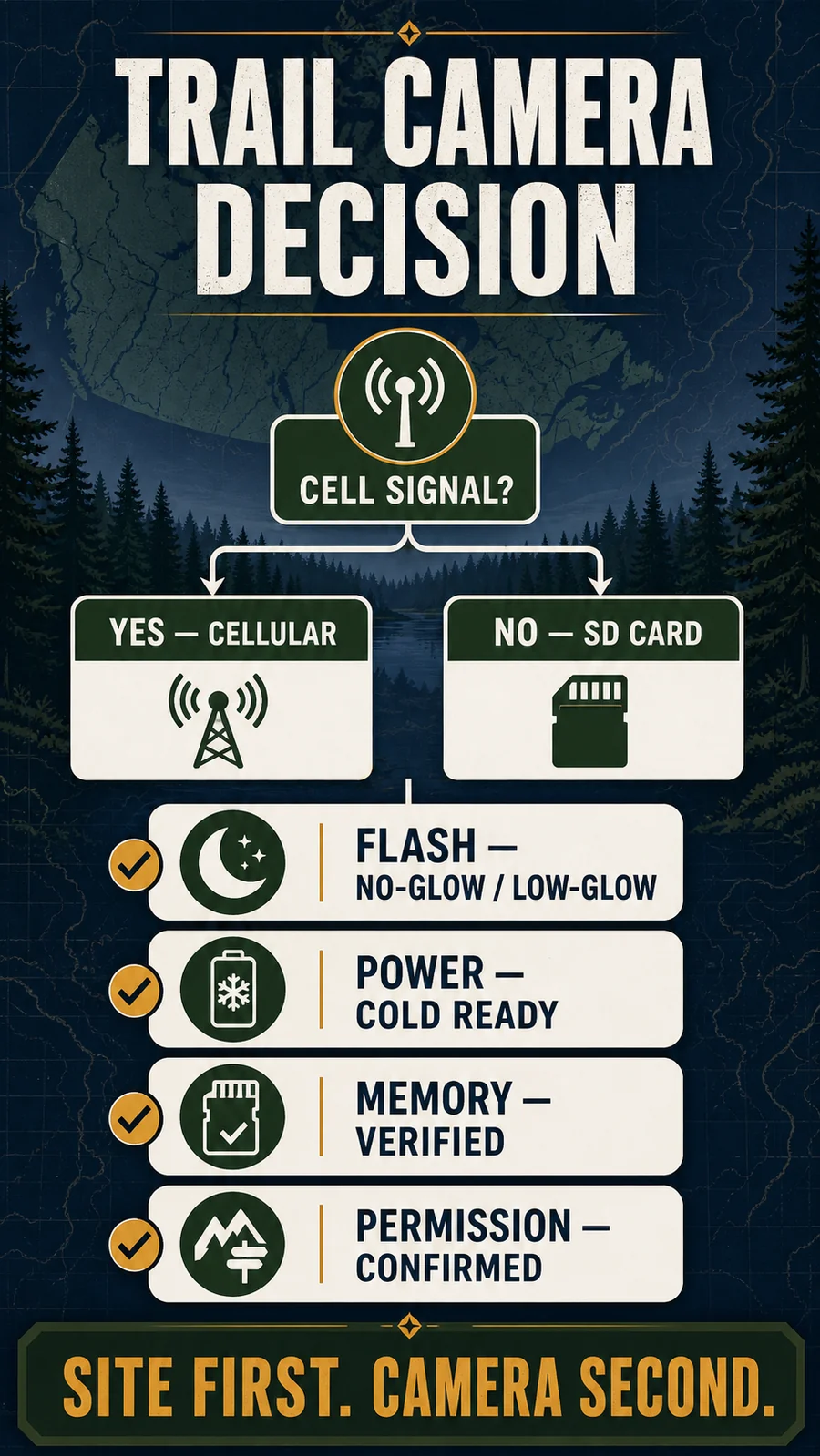
- Choose cellular first or last: confirm real carrier coverage before paying for a connected model.
- Cold power is a system: battery chemistry, settings and visit frequency determine winter runtime.
- Flash type changes visibility: no-glow is discreet; low-glow often offers stronger illumination.
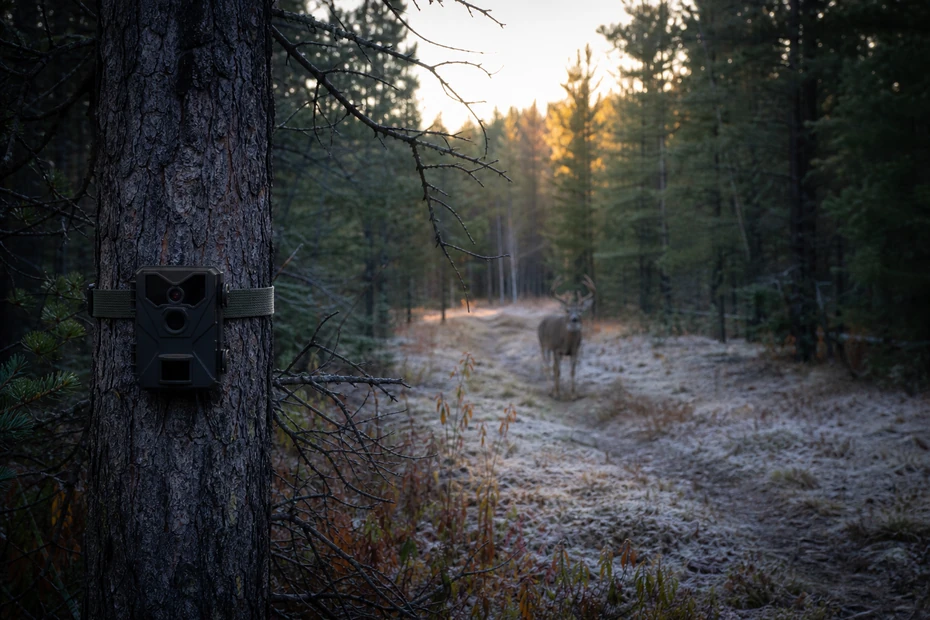
The best trail cameras Canada users can choose are cameras matched to cellular coverage, winter power, flash visibility and the purpose of the set. A cellular camera is useful only where its carrier signal and data plan work; a no-glow local-storage camera may be better for a remote crossing that can be checked responsibly.
This guide focuses on dependable field decisions rather than inflated megapixel claims, and it includes privacy, land-permission and wildlife-disturbance checks.
Key Takeaways
- Choose cellular first or last: confirm real carrier coverage before paying for a connected model.
- Cold power is a system: battery chemistry, settings and visit frequency determine winter runtime.
- Flash type changes visibility: no-glow is discreet; low-glow often offers stronger illumination.
- Megapixels do not prove detail: lens, sensor, focus and compression matter.
- Permission and privacy are mandatory: know whose land, trail and image you are monitoring.
Define the job—inventory, security, scouting or wildlife observation—then choose connection and flash type. Resolution belongs much later in the sequence.
🌲 The Guide’s Log
A trail-camera failure is rarely dramatic. More often, the card contains hundreds of empty frames, the batteries faded during the first cold snap, the camera pointed above the animal’s shoulder, or the cellular plan never had enough signal to upload reliably. Those quiet failures are why I begin with the site rather than the camera. I stand where the camera will sit and look at sunrise, sunset, moving branches, snow depth and the likely path of an animal. I check whether the unit can be mounted solidly without damaging the tree and whether retrieving it would disturb bedding cover. For cellular models, one signal bar on a phone is not proof that the camera’s chosen carrier will transmit consistently. I want an actual coverage test at camera height. I also reduce settings before winter. Long video clips, rapid bursts and frequent uploads turn an acceptable battery system into a maintenance problem. The useful camera is the one that stays in the field, records the needed event and can be serviced without constant intrusion. Finally, I treat every frame as potentially sensitive. Cameras can capture people, vehicles and private activity. Landowner permission, public-land rules and respectful placement are not optional extras. The best image is not worth a privacy conflict or unnecessary wildlife pressure.
Best Trail Cameras Canada: Quick Picks by Use
Connect scouting decisions to our hunting in Canada hub and current provincial rules. For non-hunting observation, use the same low-disturbance discipline.
| Use case | Connection | Flash direction | Priority |
|---|---|---|---|
| Remote inventory with signal | Cellular | No-glow or low-glow | Carrier match and data plan |
| Remote inventory without signal | SD card | No-glow | Battery life and card capacity |
| Trail junction | Either | Low-glow | Fast recovery and correct aim |
| Security around access point | Cellular if permitted | No-glow | Timely alert and privacy-safe placement |
| Winter wildlife observation | Usually SD card | No-glow | Cold power and snow-height planning |
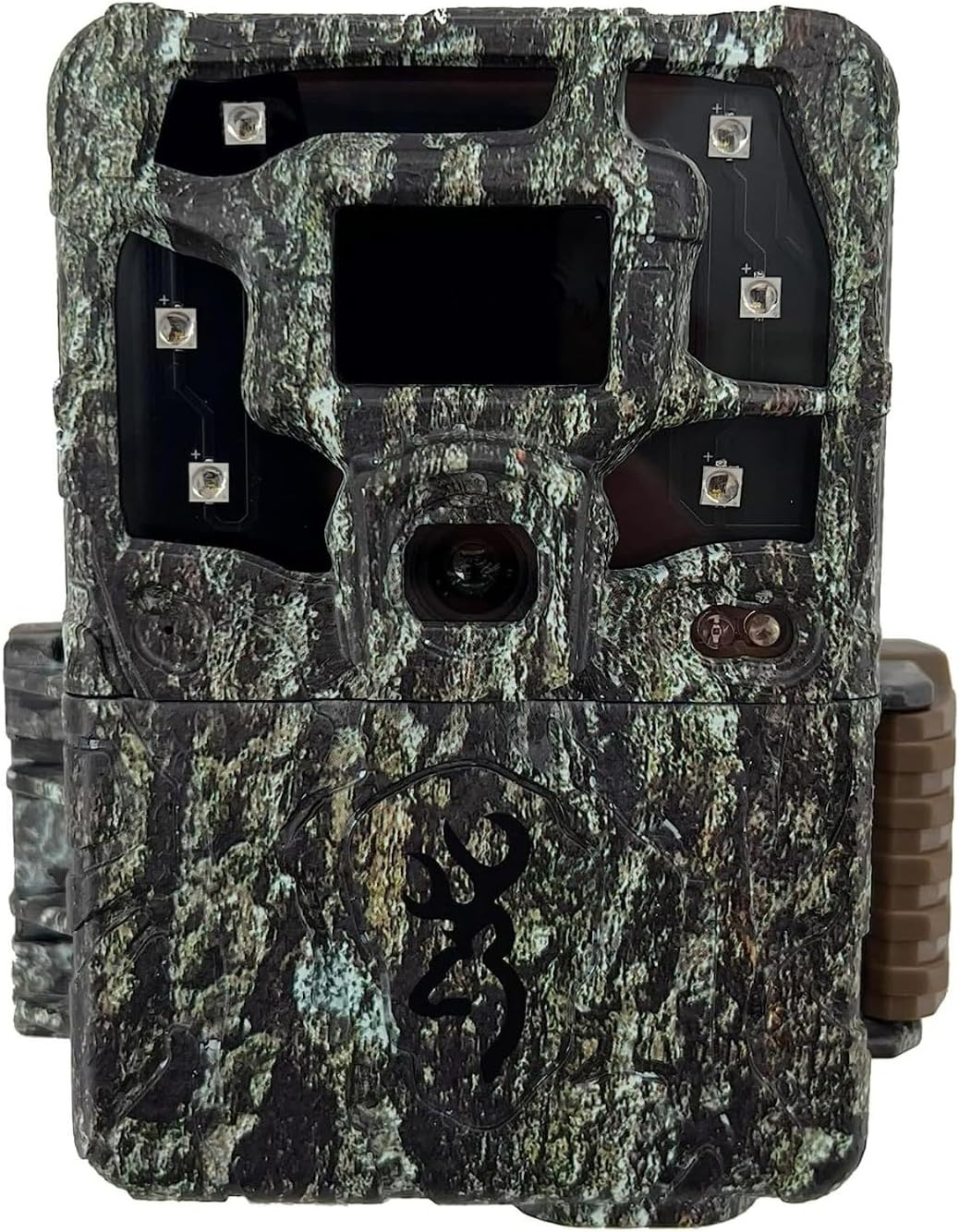
CanadaFever top pick
Browning Strike Force Pro X 1080
A non-cellular reference pick for buyers who prioritize straightforward SD-card capture, compact field placement and a proven camera form factor.
- Best where regular responsible card checks are practical
- No monthly data plan or carrier match required
- Confirm flash, memory-card and power specifications on the exact listing
Verify the current listing and exact configuration before ordering.
Affiliate disclosure: As an Amazon Associate, CanadaFever earns from qualifying purchases at no extra cost to you.
Compare the wider category
Compare cellular carrier, flash type, memory support and winter power. Listing families often mix several camera versions.
Compare trail cameras on Amazon.com →
Availability and configurations can change. Match the exact listing to the decision criteria in this guide.
Cellular, Wi-Fi or SD Card: Choose the Connection
Cellular cameras
A cellular camera uses a mobile network to send images or alerts. It reduces site visits, which can lower disturbance, but adds a subscription, signal dependency and account setup. Confirm the embedded carrier options and Canadian plan terms.
Wi-Fi and Bluetooth are not remote cellular service
Wi-Fi or Bluetooth often helps configure a camera or retrieve images nearby. It does not mean the unit will send photos from a distant forest to your home. Read the range and connection description carefully.
SD-card cameras remain practical
Local storage is simple, predictable and independent of a data plan. It works well where visits are easy and permitted. Use two compatible cards so one can be swapped quickly while the other is reviewed away from the site.
Cold-Weather Power and Reliable Capture
Battery chemistry and settings
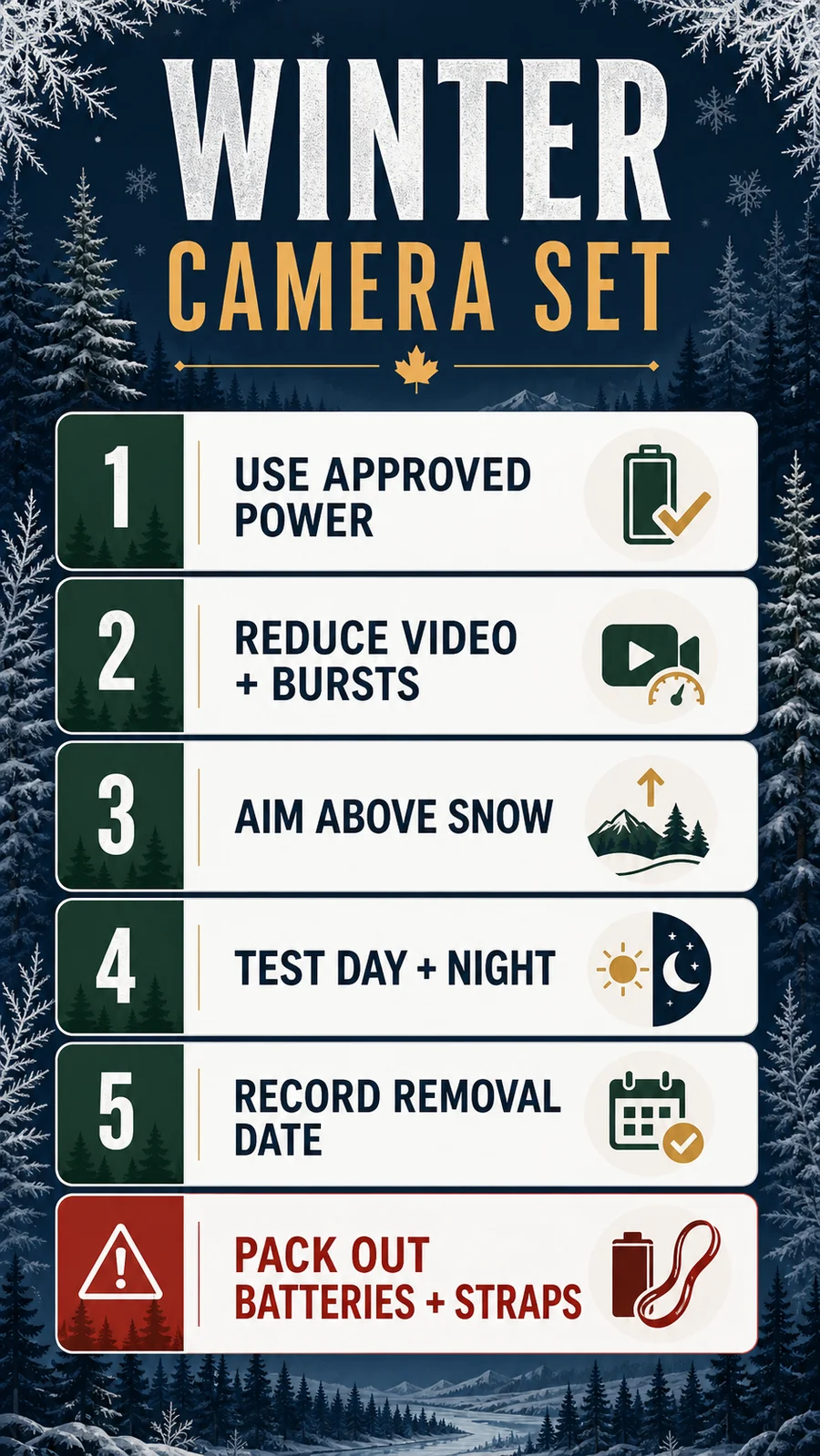
Cold reduces available battery performance, and cellular uploads add load. Use only power options approved by the manufacturer. Lithium primary cells may perform better in cold than alkaline in many devices, but rechargeable packs and external systems require exact compatibility.
Trigger speed versus recovery time
Trigger speed affects the first frame; recovery time controls how quickly the camera can capture again. A fast trigger with slow recovery can miss a following animal. Place the camera farther from a fast perpendicular trail or aim slightly down the approach.
Video and burst settings cost energy
Long clips, high burst counts and frequent cellular uploads consume power and storage. Begin conservatively, review the result, then add capture intensity only when it solves a real identification need.
| Specification | What it really affects | Question to ask |
|---|---|---|
| Cellular network | Upload reliability and subscription | Which Canadian carrier and plan does this exact model use? |
| Flash type | Visibility and night image reach | No-glow, low-glow or white flash? |
| Detection/recovery | Whether sequential animals are captured | How quickly can it record again? |
| Power options | Winter service interval | Which batteries or external pack are approved? |
| Memory support | Local retention and video capacity | What card type and maximum size are supported? |
Flash, Image Quality and Placement
No-glow versus low-glow
No-glow infrared flash is difficult for people and wildlife to see, which suits discreet placements. Low-glow emitters show a faint red light but can produce stronger illumination or range. White flash delivers colour at night but is highly visible.
Ignore headline megapixels alone
Many cameras interpolate files beyond native sensor resolution. Judge focus, motion blur, night exposure, detection zone and compression. A smaller clean file can identify an animal better than a large smeared one.
Aim for the route, not the postcard
Mount securely around chest height for large game, then adjust for species and terrain. Avoid direct sunrise, waving grass and reflective water. Anticipate winter snow depth so the lens does not end up pointing at a drift.
🍁 The Local Secret
Place a temporary marker where winter snow is likely to settle and revisit after the first meaningful snowfall. A camera perfectly aimed in October can spend January photographing a bright snowbank.
Permission, Privacy and Field Maintenance
Know the land and the rule
Get explicit landowner permission on private land and check the current provincial, territorial, park or municipal rules for public land. Some jurisdictions restrict cameras, bait, placement dates or use for hunting. Use the Canadian hunting-season guide only as orientation, then verify the current official regulation.
Protect privacy
Do not aim at homes, camps, roads or areas where people reasonably expect privacy. Minimize capture of identifiable people and handle files securely. If a trail is shared, relocate rather than treating accidental surveillance as normal.
Service without leaving a mess
Label contact information where appropriate, use non-damaging mounts, remove every strap and lock, and pack out failed batteries. Pair scouting with the trip discipline in our hunting binoculars guide, hunting gear hub and bear-safety guide.
✅ The Pre-Trip Protocol
- Step 1: Confirm land permission, camera rules, privacy-safe direction and carrier coverage.
- Step 2: Format a compatible memory card, install approved power and set time, date and conservative capture settings.
- Step 3: Test-walk the detection zone, review day and night frames, then record the location and removal date.
Best Trail Cameras Canada: Frequently Asked Questions
Are cellular trail cameras worth it in Canada?
They are worth it where the camera’s supported carrier has reliable coverage and reduced site visits matter. Without signal, a good SD-card camera is the better tool.
Do trail cameras work in Canadian winter?
Many do, but runtime and LCD behaviour can decline. Use approved cold-capable power, conservative settings and a realistic service plan.
Is no-glow better than low-glow?
No-glow is more discreet. Low-glow can provide stronger night illumination. Choose based on visibility, range and site sensitivity.
How high should a trail camera be mounted?
Chest height is a common starting point for deer-sized animals, but slope, species, distance and snow depth can require adjustment. Test-walk every set.
Can I place a trail camera on public land?
Rules vary by jurisdiction and land manager. Check the current official regulation for the exact land and intended use before placement.
Bottom line: Choose cellular only after a real coverage check; otherwise prioritize reliable SD storage, approved cold-weather power, the right flash type and a privacy-safe placement.