

Choose fly rods and reels for Canadian trout, bass, salmon and pike by line weight, water size, fly size, action, drag and travel needs.
- Best trout default: a 9-foot 5-weight balances learning, dry flies, nymphs and modest streamers.
- Choose for the fly: large wind-resistant flies often require more line weight than fish size alone suggests.
- The line matters as much as the rod: match the rod, reel and line designation carefully.
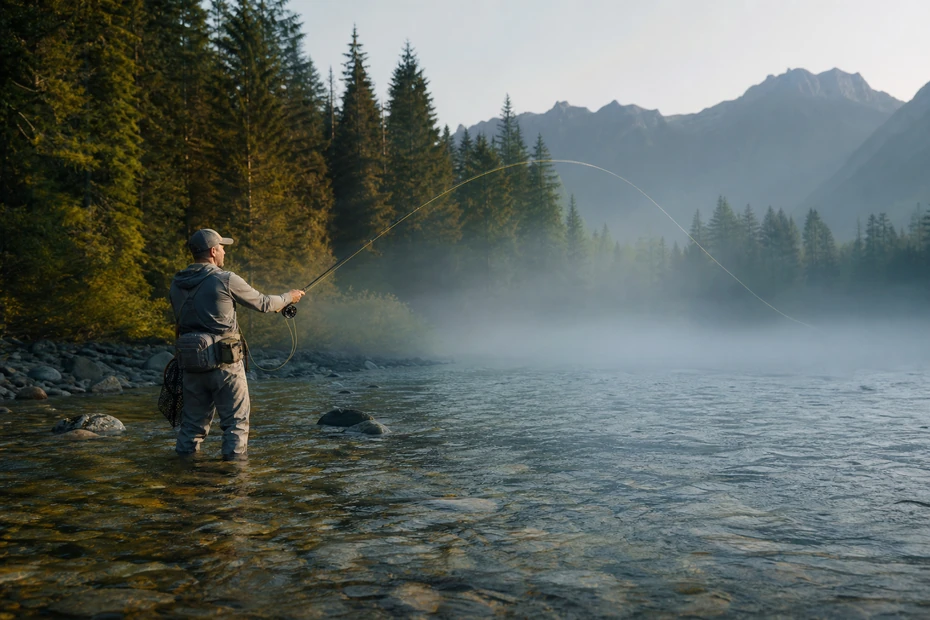
The best fly rods and reels Canada anglers can choose are outfits matched to fly size, water, wind and target species. A nine-foot five-weight remains the most useful trout starting point, but it is not a pike rod, a Great Lakes salmon rod or the ideal tool for tiny wooded streams.
This guide helps you choose line weight, length, action and reel capacity as a complete outfit, with Canadian travel and cold-water realities included.
Key Takeaways
- Best trout default: a 9-foot 5-weight balances learning, dry flies, nymphs and modest streamers.
- Choose for the fly: large wind-resistant flies often require more line weight than fish size alone suggests.
- The line matters as much as the rod: match the rod, reel and line designation carefully.
- Reel drag matters more for powerful fish: trout reels can be simple; salmon, pike and saltwater loads demand capacity and control.
- Buy a balanced outfit: an expensive rod cannot rescue the wrong line or insufficient backing.
Start with the largest normal fly and the water that must be covered. Those two facts usually settle the weight before brand comparisons begin.
🌲 The Guide’s Log
When I help someone choose a first fly outfit, I ask to see the flies, not a list of dream species. A size 16 dry fly on a sheltered trout river asks very little of a rod. A weighted streamer, pike fly or indicator rig in a crosswind asks much more, even if the fish has not changed. That is why the nine-foot five-weight is such a useful default and such a poor universal answer. It handles a broad range of trout work and gives a learner enough line mass to feel the cast, but it runs out of authority with oversized flies and heavy wind. I also treat the fly line as a core component, not a disposable accessory. A well-matched line can make an accessible rod feel coherent; a mismatched line can make a premium rod frustrating. Reel spending follows the fish. For small trout, reliable construction and line storage may matter more than an elaborate drag. For salmon, steelhead, pike or saltwater use, drag startup, capacity, corrosion resistance and spare-spool planning become central. Finally, I imagine the trip: airline tubes, rental vehicles, portages, cold hands and a wet reel placed into a case too early. A four-piece rod and a ventilated, protective travel system often deliver more real value in Canada than a marginal increase in blank performance.
Best Fly Rods and Reels Canada: Quick Picks by Water
Use this as a starting lane, then connect it to our beginner fly-fishing guide and Canadian fly-fishing destinations.
| Water and target | Starting outfit | Typical fly demand | Main trade-off |
|---|---|---|---|
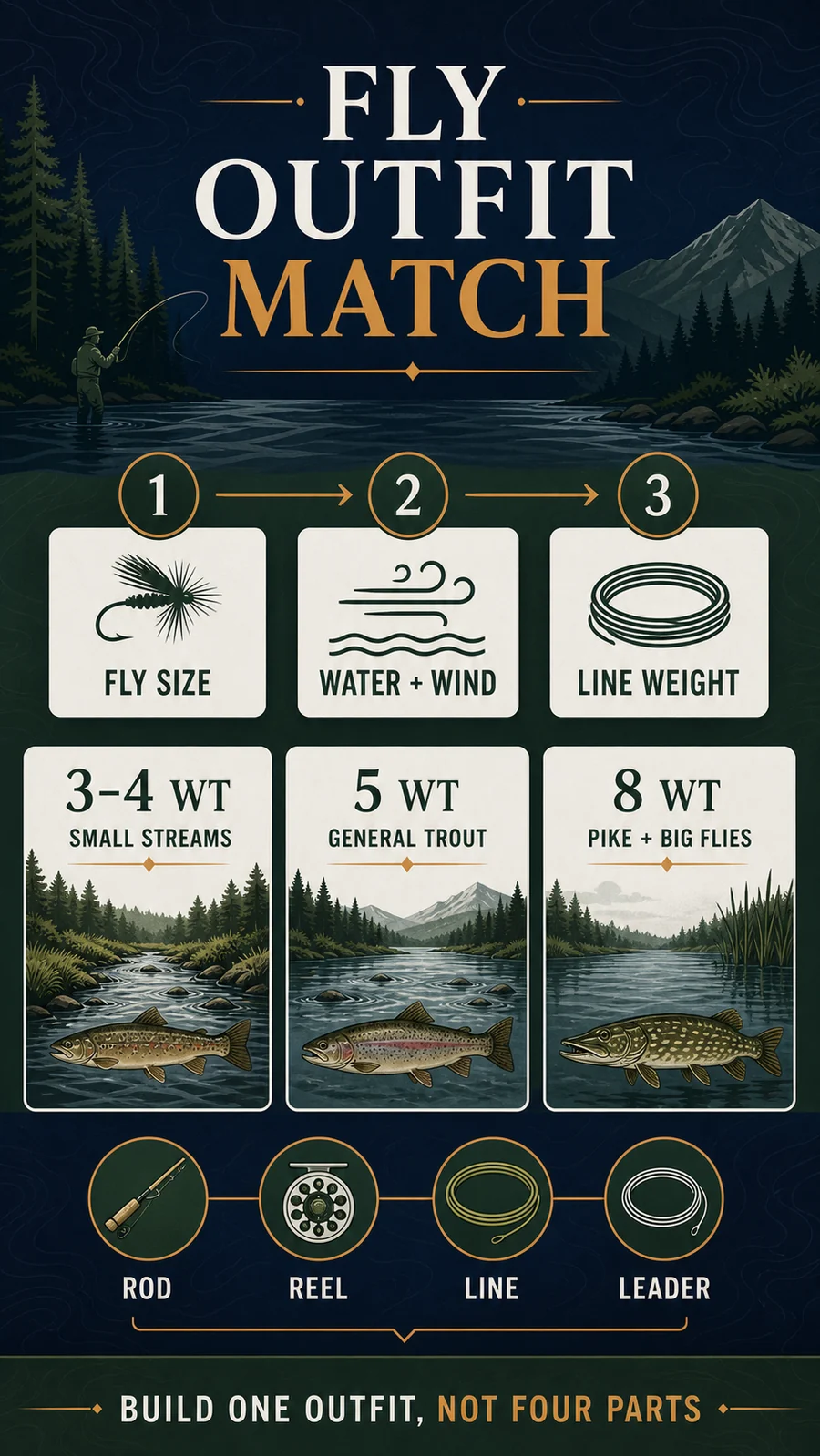
| Small trout streams | 7–8.5 ft, 3–4 wt | Small dries and light nymphs | Delicate and compact, less reach and wind authority |
| General trout rivers and lakes | 9 ft, 5 wt | Dries, nymphs and modest streamers | Best all-round lane, not for very large flies |
| Large trout rivers and bass | 9 ft, 6 wt | Heavier rigs and streamers | More authority, less delicacy |
| Pike and large bass flies | 9 ft, 8 wt | Large, wind-resistant flies | Better turnover with more fatigue |
| Salmon or steelhead | 8–10 wt or suitable two-hand system | Heavy flies, current and powerful fish | Specialized line, reel and technique needs |

CanadaFever top pick
Orvis Clearwater Fly Rod Outfit
A complete outfit reference for buyers who want rod, reel, line and backing selected as a system, with multiple configurations for different water.
- Select the exact line weight and length for the intended species
- Confirm whether the chosen variant includes every listed outfit component
- Use the five-weight lane for general trout, not oversized pike or salmon flies
Verify the current listing and exact configuration before ordering.
Affiliate disclosure: As an Amazon Associate, CanadaFever earns from qualifying purchases at no extra cost to you.
Compare the wider category
Shared listings can contain several line weights. Verify the selected rod length, reel and line before ordering.
Compare fly rod and reel outfits on Amazon.com →
Availability and configurations can change. Match the exact listing to the decision criteria in this guide.
Choose Line Weight from Fly Size and Wind
The fly must turn over
Line weight supplies the mass that carries leader and fly. A larger, heavier or more wind-resistant fly needs more authority than a tiny dry. Fish size affects fighting requirements, but the cast often sets the minimum practical weight.
Water size changes reach and control
A small wooded creek rewards a compact rod and light presentation. A broad Alberta river, windy lake or coastal estuary rewards reach and line mass. Bank vegetation, wading depth and prevailing wind matter as much as map width.
The five-weight default
A nine-foot five-weight covers a large share of Canadian trout fishing. It handles dry flies, indicator nymphing and modest streamers without becoming overly specialized. Move lighter for small protected water and heavier for bigger flies, wind or powerful fish.
Rod Action, Length and Piece Count
Moderate versus fast action
Moderate actions bend deeper and can help a learner feel the rod load. Faster actions recover quickly and can carry line in wind, but they may demand cleaner timing. Marketing labels vary, so compare actual casting feel where possible.
Nine feet is useful, not mandatory
Nine feet offers reach for mending and line control. Shorter rods fit brushy streams; longer single-hand rods help some lake and nymphing tactics. Two-hand rods are a separate system with their own line designations.
Four-piece rods travel well
A four-piece rod is easier to fly with, store and carry into remote water. Check ferrules during the day and use a hard tube. Our fly-in lodge guide explains why baggage limits belong in gear planning.
| Component | General trout starting point | When to change |
|---|---|---|
| Rod | 9 ft 5 wt, four piece | Smaller brushy water or larger flies/fish |
| Reel | Balanced 4/5 or 5/6 size | More backing and drag for powerful fish |
| Line | Weight-forward floating 5 wt | Depth, wind or specialty casting need |
| Leader | Tapered trout leader matched to fly | Pike bite protection or salmon strength |
| Travel | Hard tube and ventilated reel storage | Airline or remote baggage constraints |
Match the Reel, Line and Leader
Reel capacity and drag
The reel must hold the intended line plus enough backing without crowding. For small trout, smooth basic function may be enough. For salmon, steelhead, pike and saltwater, consistent drag, capacity and corrosion resistance deserve more budget.
Line profiles are technique tools
Weight-forward floating line is the cleanest general starting point. Sink tips, full sinking lines and specialty tapers solve particular depth and fly-turnover problems. Do not buy a specialty line before the normal presentation is clear.
Leaders complete the system
Leader length and strength must suit water clarity, fly size and fish. Pike require bite-resistant material. Regulations may restrict tackle or methods, so check the province and water before tying the final leader.
🍁 The Local Secret
Spend enough on the fly line to make the outfit coherent. Many disappointing first setups are not bad rods; they are decent rods paired with a generic line that does not load predictably at normal fishing distance.
Canada-Specific Buying and Safety Checks
Cold water changes risk
Wading in cold rivers carries real consequences. Use an appropriate belt, footwear and layers, understand current, and turn around before stability becomes uncertain. The fishing rain-gear guide helps integrate shells without treating them as flotation.
Check licences and local rules
Licence, season, gear and species rules vary by province and water. Start with our fishing in Canada hub, then verify the current official regulations for the exact destination.
Final outfit test
Assemble the rod, reel and line; cast the normal fly or a safe practice substitute; confirm backing capacity and drag direction; then pack the outfit as it will travel. Add polarized eye protection from our fishing sunglasses guide.
✅ The Pre-Trip Protocol
- Step 1: Confirm licence, season, access, water temperature and wading risk.
- Step 2: Match rod, reel and line designations, then test-cast the largest normal fly safely.
- Step 3: Dry the line and reel before storage and protect the rod in a hard tube during travel.
Best Fly Rods and Reels Canada: Frequently Asked Questions
What fly rod weight is best for Canadian trout?
A nine-foot five-weight is the most versatile starting point for many trout rivers and lakes. Use lighter outfits for small streams and heavier outfits for large flies or wind.
Do fly rod and reel weights have to match?
They should be compatible. Use the rod and line designation as the core match, then choose a reel that balances the rod and holds the line plus backing.
Is a fast-action rod best for beginners?
Not automatically. Fast rods can handle wind and longer casts, while moderate actions may make loading easier to feel. Casting style and normal distance matter.
Do I need an expensive fly reel for trout?
Usually not. Reliable construction and correct capacity may be enough for smaller trout. Drag quality and capacity become more important for salmon, steelhead, pike and saltwater.
Can one fly rod handle trout and pike?
A five-weight can handle trout but is a poor match for large pike flies. An eight-weight is a more practical pike direction and requires suitable line, leader and reel capacity.
Bottom line: For general Canadian trout fishing, start with a four-piece nine-foot five-weight outfit and a good weight-forward floating line; move away from it only when the normal fly, wind or fish clearly demands another weight.