

Compare cold-weather fishing gloves for wet gear, frequent rigging and outdoor ice fishing. Three task-based picks, fit checks and honest tradeoffs.
- Wet tasks: Glacier Glove Ice Bay is our starting point for sealed neoprene construction.
- Frequent rigging in relatively mild, dry cold: KastKing Mountain Mist provides fold-back fingertips.
- Outdoor ice-fishing work and waiting: Striker Attack adds synthetic insulation and a waterproof/breathable insert.
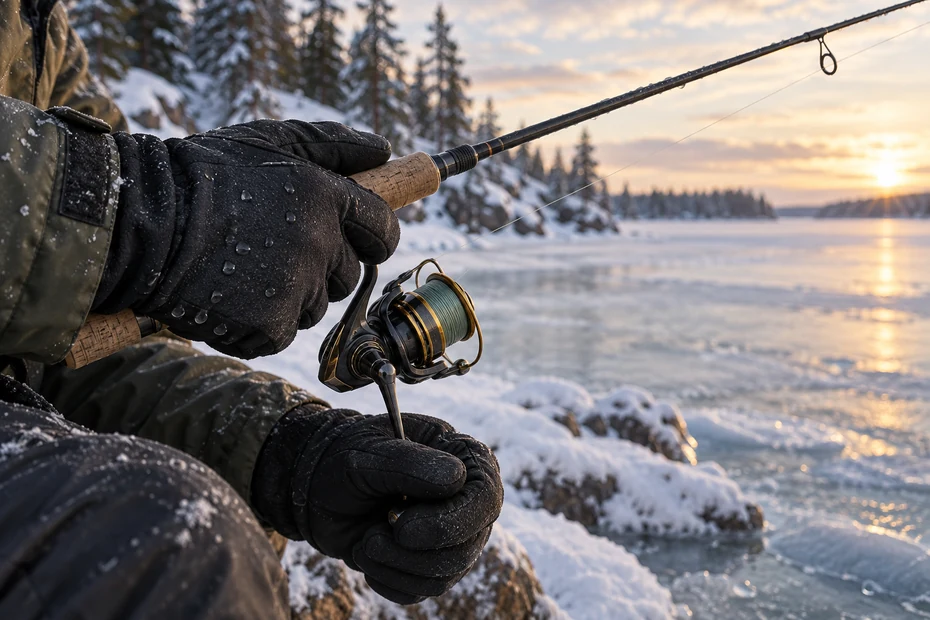
The best fishing gloves for cold weather match the job your hands do: keeping water out, working tiny tackle, or staying covered while you wait. A sealed neoprene glove, a convertible glove and an insulated winter glove solve different problems.
Compare three specific Amazon US options for Great Lakes boat trips, Canadian ice fishing and cold river sessions. Start with how often your hands get wet and how often you need bare fingertips.
Key takeaways
- Wet tasks: Glacier Glove Ice Bay is our starting point for sealed neoprene construction.
- Frequent rigging in relatively mild, dry cold: KastKing Mountain Mist provides fold-back fingertips.
- Outdoor ice-fishing work and waiting: Striker Attack adds synthetic insulation and a waterproof/breathable insert.
- Long exposed sessions: plan a dry backup and warming breaks; no glove here comes with a verified safe temperature limit.
As an Amazon Associate, CanadaFever earns from qualifying purchases. Product links go to Amazon.com. Check the selected size, seller, delivery and return terms before ordering.
Best fishing gloves for cold weather: choose by task
If you are buying one pair, start with your most common failure: soaked fingers, awkward knot tying or cold hands during inactivity. If two of those happen regularly, a two-pair system may be more useful than a more expensive compromise.
| Pick / best fit | Why compare it | Main compromise |
|---|---|---|
| Glacier Ice Bay Wet gear work | 2mm fleece-lined neoprene; glued and blind-stitched seams; textured seamless palm | Covered fingertips reduce fine line feel; cuff remains an entry point |
| KastKing Mountain Mist Frequent rigging in dry cold | Fold-back fingertips; fleece lining; textured palm; touchscreen-oriented design | Finger openings and mixed materials make it a poor choice for deliberate immersion |
| Striker Attack Exposed ice-fishing tasks | 150g 3M Thinsulate insulation; Hipora waterproof/breathable insert; adjustable neoprene cuff | Insulation adds bulk; full fingers still need removing for some precision tasks |
Shop the shortlist
Compare each glove’s fit and limitations, then check the exact offer on Amazon.com.

Glacier Glove Ice Bay
- Fleece-lined 2mm neoprene with glued and blind-stitched seams
- Full fingers and a textured seamless palm for covered wet tasks
- Choose for water management; check fit and keep the cuff above water
Consider before buying: Covered fingertips reduce fine line feel; this is not a verified extreme-cold warmth pick.
Check options on Amazon : Glacier Glove Ice BayAmazon.com · Choose the exact model and variant

KastKing Mountain Mist
- Fold-back fingertips give direct access to line and tackle
- Fleece lining and neoprene/microfiber palm balance coverage with control
- Compare for mostly dry sessions; do not use as sealed immersion gloves
Consider before buying: Finger openings compromise coverage and water protection. Exact finger-slot counts conflict across listing/manufacturer copy; confirm selected variant photos.
Check options on Amazon : KastKing Mountain MistAmazon.com · Choose the exact model and variant

Striker Attack
- 150g 3M Thinsulate insulation for covered winter tasks
- Hipora waterproof/breathable insert and adjustable neoprene cuff
- Compare for outdoor gear work; expect reduced fine-tackle feel
Consider before buying: Full-finger insulation adds bulk; a mitten system may suit long inactive exposure better. No safe temperature rating verified.
Check options on Amazon : Striker AttackAmazon.com · Choose the exact model and variant
Our default for repeated wet tasks is Ice Bay. That does not make it the warmest glove for sitting outside. For outdoor waiting, compare the insulated Striker; for frequent knots, compare the convertible KastKing.
How we made the shortlist
The picks differ in construction and the tasks each design can reasonably support. Manufacturer specifications and the linked Amazon US listings provide the product details.
This is a research-based buying guide, not a CanadaFever hands-on test. We have not measured warmth, leak resistance, grip strength or drying time. Our best-for labels are editorial judgments based on construction; they are not laboratory rankings.
Research checked October 1, 2026. Listing identity was verified for the linked ASINs, but price, seller, stock and delivery can change. Waterproof descriptions below are manufacturer claims, not guarantees from CanadaFever.
Waterproof, water-resistant and windproof mean different things
A waterproof palm does not make a whole glove waterproof. The back, seams, finger openings and cuff all matter. This distinction is especially useful when shopping for an ice-fishing setup in Canada or a cold, wet boat trip.
Sealed neoprene: prioritize the water barrier
Ice Bay uses full-finger neoprene with sealed construction. That makes it our most straightforward wet-task option: handling wet rope, a landing-net handle or other gear while keeping the fingers covered.
However, a short cuff is an open boundary. Water entering over the wrist bypasses the glove material, and damage or worn seams can change performance. Do not confuse a waterproof construction claim with permission to reach deeply into cold water.
Convertible fingers: prioritize access to line and tackle
Mountain Mist lets you uncover fingertips without removing the whole glove. That is a useful design for tying leader connections or pinching a small hook while the rest of the hand stays covered.
The openings also create a route for water and wind. KastKing describes a waterproof back, but the mixed palm construction and finger access make this a dry-cold dexterity choice in our comparison. We would not buy it as a sealed immersion glove.
Insulated membrane gloves: prioritize covered winter work
Striker Attack combines synthetic insulation with a waterproof/breathable insert. It belongs on the shortlist when setting up gear, walking between locations and waiting outdoors matter more than constant knot tying.
A breathable insert does not mean hands cannot sweat. Activity, fit and moisture inside the lining still affect comfort. Nor does a quantity of insulation provide a safe temperature rating: grams identify insulation specifications, not a universal warmth score.
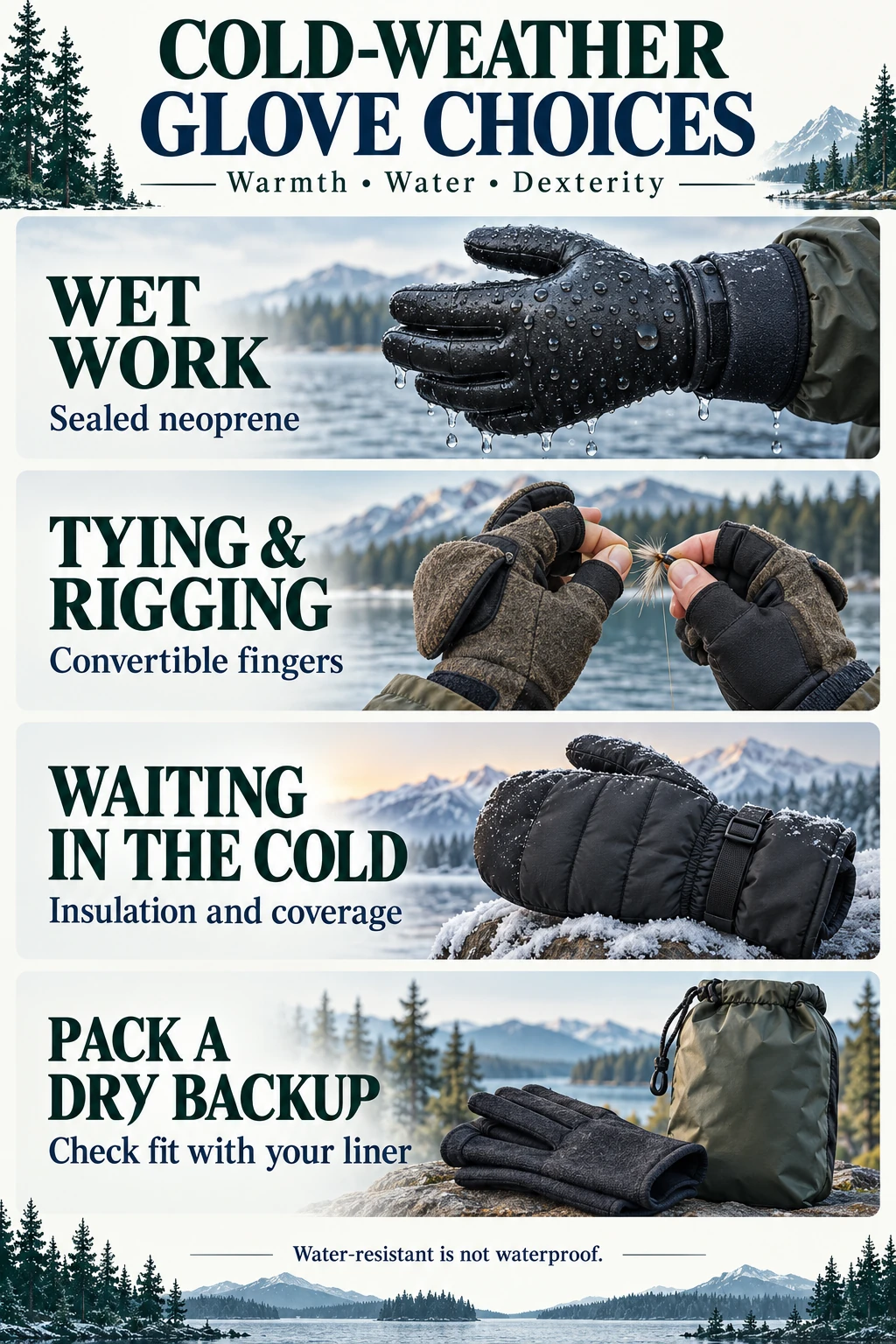
Three recommendations—and who should skip each
Glacier Glove Ice Bay: best for repeated wet gear handling
The strongest reason to choose Ice Bay is its uncomplicated sealed design. It covers every fingertip; the manufacturer specifies fleece-lined 2mm neoprene, glued and blind-stitched seams, and a textured seamless palm.
That construction is a sensible match for wet equipment tasks where you can keep the cuff above the water. The palm texture gives a reason to compare it for a slick net handle, but it is not evidence of a measured grip advantage over every competing glove.
Choose it when: water ingress is the problem you want to solve, and most of your work can be done with covered fingers. It can also be the wet-work pair alongside a warmer dry pair.
Skip it when: your day depends on repeated fine knots, or you want one glove to handle long periods of inactive exposure. Two millimetres of neoprene is a material specification, not a claim that this pair suits every Canadian winter.
Before ordering: the linked listing was retrieved as Black/Large. Use your measurement to select the appropriate variant; do not assume that is your size. See Glacier’s Ice Bay construction and care guidance.
Best fishing gloves for cold weather and frequent rigging: KastKing Mountain Mist
Consider Mountain Mist if you often switch between the reel, leader and phone. Its fold-back fingertips reduce the need to remove the whole glove for precision work.
The glove has fleece lining and a neoprene/microfiber palm with a grip pattern. KastKing also describes touchscreen-compatible fingertip material. Phone responsiveness can vary with device, screen protector, fit and moisture, so check it with your own device.
Choose it when: conditions are relatively mild, your hands mostly stay dry and short bursts of exposed-finger work are part of the routine. It is a reasonable type to compare for cold-season brown-trout fishing, provided access and local seasons permit the trip.
Skip it when: you expect repeated soaking, slush exposure or long outdoor waits with the fingers uncovered. A flip-back feature solves access; it cannot preserve covered-finger warmth while open.
Before ordering: the verified link is the Blackout/X-Large listing. Check the selected size rather than buying your usual clothing size. Manufacturer and listing copy disagree on the exact count of opening fingertips; confirm the photographs for your selected variant. See KastKing’s Mountain Mist details.
Striker Attack: best for insulated outdoor ice-fishing work
Consider Attack if you want an insulated glove that keeps your fingers covered while you handle winter gear. The manufacturer specifies 150g 3M Thinsulate insulation, a Hipora waterproof/breathable insert, a synthetic suede palm and an adjustable neoprene cuff.
It is the insulated alternative to the lighter convertible glove. The extra material between your hand and the handle may suit sled or auger work while making small terminal tackle awkward.
Choose it when: most of your time is covered-hand work outdoors, with occasional precision tasks done during a sheltered break. It can serve as the main outdoor pair in a system that reserves a thinner pair for rigging.
Skip it when: fine fly handling or repeated tiny knots is the main job. For long inactive waits, also compare a properly fitted insulated mitten system rather than assuming a five-finger glove is your only choice.
Before ordering: the verified Amazon listing is Black/Large, manufacturer part number 2210904. Check your jacket-cuff overlap and the selected size. Striker’s official glove comparison explains where Attack sits among its insulated gloves and mitts.
Build the handwear system around your session
The following are planning scenarios, not temperature certifications. Weather, wind, duration, activity and individual cold tolerance determine whether the setup is adequate.
| Your session | Starting approach | Change the plan if… |
|---|---|---|
| Cold river fishing; frequent lure changes | Convertible glove for short precision tasks; covered dry pair for breaks | Fingertips cannot rewarm promptly or the working glove gets wet |
| Boat fishing; wet ropes and equipment | Sealed neoprene working pair; dry insulated backup | Water reaches the cuff or you spend more time waiting than handling gear |
| Moving between ice holes; carrying equipment | Insulated full-finger glove; avoid sweating into the lining | Hands become damp during the walk or fit restricts grip |
| Long exposed waiting | Compare insulated mittens, wind shelter and regular warming breaks | The plan relies on open fingertips or on a light glove alone |
| Rigging inside a shelter | A dexterity-oriented pair for tackle; warmer covered pair ready for outside | You cannot operate essential equipment after returning outdoors |
Check fit with a rod, reel and jacket
Measure hand circumference at the knuckles following the selected brand’s instructions. Glacier specifies a flat hand, fingers together and thumb excluded. Use each model’s chart; a Large from one brand may not match another.
Test these movements before removing tags or taking the glove fishing:
- Close your hand around your actual rod handle without pulling hard across the knuckles.
- Turn the reel handle, open the bail or operate the thumb bar, as appropriate.
- Reach the drag adjustment and handle a tool with the fingers covered.
- Fasten the jacket and glove cuffs together; check for a gap when reaching forward.
- Open and close any finger flaps with the opposite hand gloved.
A tight glove is not automatically a warmer fit. Excess space at the fingertips can also reduce control. If you need a liner, test the complete combination instead of choosing an arbitrary size up.
Pair this check with our fishing-rod selection guide. A handle comfortable in bare hands can feel different once insulation surrounds it.
Women’s sizes and small hands
Fit comes from hand measurements and finger proportions, not a men’s or women’s label alone. Look for a chart that covers your circumference, then check finger length and cuff security in the physical pair.
If a unisex model leaves excessive fingertip space, choose a better-fitting model rather than accepting poor control. Buying a smaller circumference cannot fix every proportion mismatch.
Keep fish handling separate from gear grip
A textured palm suited to a wet handle is not automatically appropriate for a fish you intend to release. Choose a low-handling release process first; do not use a glove’s grip as a reason to hold a fish harder.
Ontario’s catch-and-release guidance recommends clean wet hands or non-abrasive gloves, minimal handling and, where possible, unhooking fish in the water. Keep tools ready so you can work promptly.
For a Canadian trip, check the applicable fishing regulations and licence requirements for your water and species. This glove comparison does not establish whether fishing or retaining fish is permitted.
The practical aim is less handling, not a tougher grasp. A suitable landing net and accessible pliers belong in the broader fishing gear system.
Manage moisture before buying more insulation
Start with dry gloves and keep the backup in a dry bag or separate sealed compartment. Wet working gloves stored beside the spare defeat the purpose of carrying two pairs.
After the session, inspect seams, fingertip panels and closures. Follow the manufacturer’s care instructions and allow the inside to dry before storage. Glacier specifies gentle hand washing in cold water with mild soap, drying in a ventilated area and no machine drying.
Do not put gloves directly against a heater to speed the process unless their instructions permit it. Drying and repair methods vary by material and model.
Good technique also shortens exposed-hand tasks. Organizing hooks and leaders before leaving helps; our advanced fishing techniques guide places equipment decisions within the wider fishing plan.
Cold warning signs override the gear plan
No glove recommendation makes cold exposure safe. Check the forecast, wind and current alerts; use shelter and warming breaks, and change the plan when hands are becoming cold or difficult to use.
Environment and Climate Change Canada’s wind-chill guidance advises checking extremities for numbness or whiteness and staying dry. Do not use numbness as a test of whether a glove is working.
This is general gear guidance, not medical or emergency advice. Follow current official safety guidance and manufacturer instructions. Glove condition, moisture, fit and exposure can change performance.
Before you place the order
Choose Ice Bay when repeated wet gear tasks dominate; Mountain Mist when fingertip access dominates; Attack when insulated outdoor work dominates. If long inactive exposure is the real concern, expand the comparison to mittens and shelter before buying.
Cold-weather fishing gloves: frequently asked questions
Are neoprene gloves the warmest choice for ice fishing?
Not automatically. Sealed neoprene can make sense for wet tasks, but thickness, lining, fit and activity matter. An insulated mitten system may be more suitable for long inactive exposure. None of the three picks has a verified safe temperature limit in this guide.
Can I tie fishing knots while wearing winter gloves?
It depends on the knot, line diameter and glove fit. Convertible fingertips give direct contact for precision work, while full-finger gloves reduce feel. Try your usual knot at home with the actual glove and keep exposed-finger work brief outdoors.
Are fishing gloves with finger slits waterproof?
The surrounding fabric may resist water, but openings interrupt the barrier. Do not treat a waterproof-back claim as proof of a sealed whole glove. For deliberate wet tasks, compare full-finger sealed construction and keep the cuff above the water.
Should I buy a larger size to fit a liner?
Use the model’s chart, then test the glove with the intended liner. Automatically sizing up can leave loose fingertips and reduce control; staying too small can restrict movement. The complete combination should let you grip the rod without strain.
Can I use these gloves to hold fish for catch and release?
Do not assume a textured equipment-grip glove is suitable for fish contact. Follow the relevant fish-handling guidance, use clean wet hands or non-abrasive gloves where appropriate, minimize handling and keep fish in the water whenever possible.