

Brown Trout fishing in Canada guide with identification, habitat, seasonal patterns, gear, tactics, and official regulation checks.
- Use Brown Trout Fishing in Canada to match species behaviour, habitat, season, and presentation to Canadian water conditions
- Check local regulations before fishing; limits, closures, bait rules, and licences can vary by province and waterbody
- Focus on practical setup: where to fish, what to cast or troll, how deep to work, and when to move
Bottom line Brown Trout Fishing in Canada gets simpler when you pair current rules with the right habitat, timing, and presentation
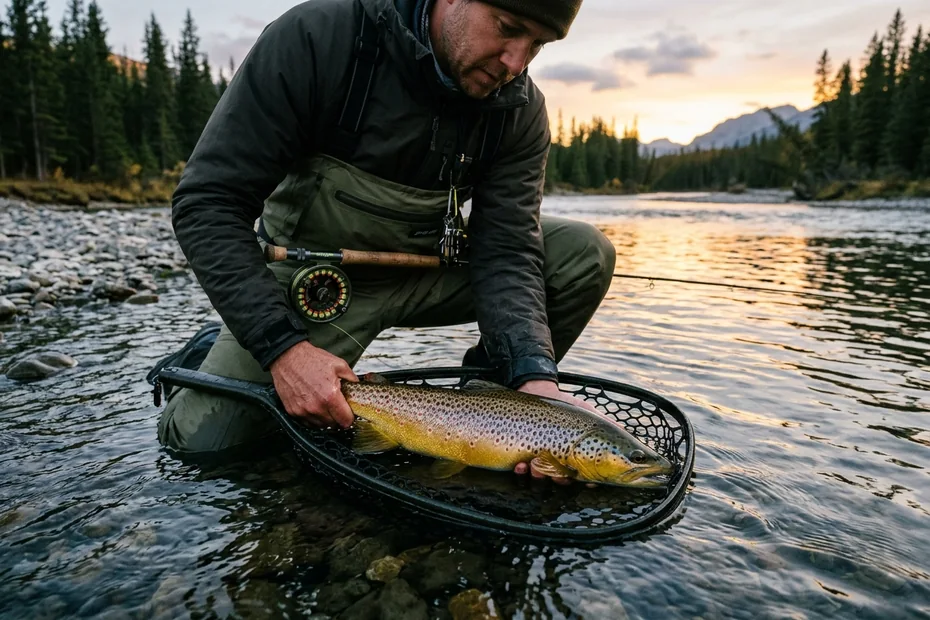
Brown trout fishing in Canada demands more stealth, bank patience, and low-light timing than almost any other river salmonid, turning veteran anglers into dawn and dusk specialists across southern Ontario tailwaters, Quebec limestone creeks, Alberta’s Bow River, and Maritime estuaries. Known scientifically as Salmo trutta, the European brown thrives inside warily fished Canadian pools where wary trophy fish grow past ten pounds while ignoring careless midday shadow drifts.
Unlike naive stocked rainbows hitting noisy surface spoons at noon, mature Canadian brown trout slide deeply underneath log jams, undercut clay shelves, and darkened boulder crevices once clear morning sun touches riffles. Outfitting a light drift rig or streamer sink-tip line properly lets you tempt nocturnal ambushers out of cold pocket runs without slapping heavy line across glassy slicks.
This manual belongs to our Fishing for Specific Species in Canada resource and links cleanly with Canada Outdoor Planning Tools for hatching flow tables and dusk weather prep.
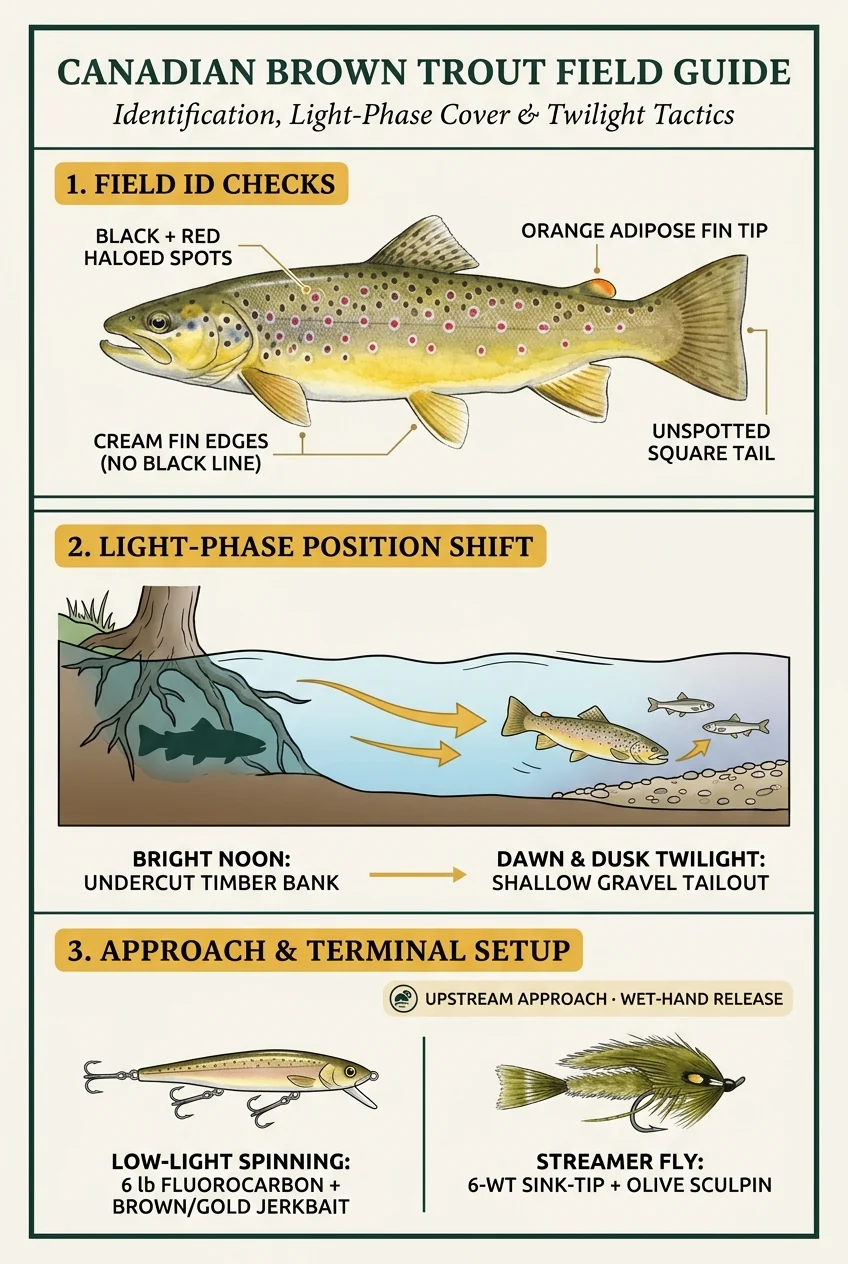
Open full-resolution brown trout field diagram (WebP)
Biological Identification: Separating Brown Trout, Brook Trout, and Atlantic Salmon
Along Lake Ontario tributaries, Maritime estuaries, and eastern Quebec rivers where brown trout overlap directly with juvenile Atlantic salmon, lake-run rainbow trout, and resident brook trout, confusing golden or bright silver phase fish happens easily. Lake-run brown trout exiting cool Great Lakes or ocean salt return with muted mirror-silver flanks that partially wash out bright orange halo spots until spawning colors deepen.
Always rely on caudal tail wrist width, tail spotting density, and gill-plate vomer teeth anatomy inside cool net water rather than squinting casually at flank brightness.

Open 1024×559 brown trout identification plate
Five Instant Field Checks
- Virtually Unspotted Square Tail: Unlike rainbow trout whose tails are packed with tiny black dots, adult brown trout keep crisp nearly clean tails marked occasionally by a few scattered spots strictly along top edges.
- Thick Muscular Tail Wrist: The caudal peduncle directly ahead of the tail feels broad and thick in hand rather than tapering cleanly into a narrow notched waist like Atlantic salmon.
- Orange Adipose Fin Tint: Check the small soft fin ahead of the tail; most brown trout carry clear orange or pale red speckling right on the tip.
- Dark & Red Haloed Spots: Golden olive flanks show dark brown X marks above pale rings paired with bright orange-red circles along mid-body scales.
- Clean Pale Lower Fins: Pectoral and pelvic margins trim white or cream without carrying the ink-black backing band diagnostic of brook trout.
| Anatomy Check | Brown Trout (Salmo trutta) | Brook Trout (Salvelinus fontinalis) | Atlantic Salmon (Salmo salar) | Rainbow Trout (O. mykiss) |
|---|---|---|---|---|
| Tail Shape & Spots | Blunt square edge; almost spotless | Square edge; mottled dark wave bars | Forked crisp V-notch; spotless | Shallow fork/square; heavily spotted everywhere |
| Flank Markings | Dark X spots and orange dots in pale halos | Red spots inside bright blue halos plus back worms | Crisp dark X spots above lateral midline | Fine black spots plus rose-pink side stripe |
| Maxillary Jaw Reach | Extends cleanly past rear rim of eye on adults | Reaches squarely past rear margin of eye | Short jaw ending beneath rear eye border | Reaches evenly to back border of eye |
| Lower Fin Margins | Cream or pale amber without black line | Bright snow white framed by crisp black line | Pale silver-grey lacking bright white rim | Light pink-grey with faint pale tips |
| Canadian Distribution | ON, QC, AB Bow River, Maritimes coastal runs | Native Eastern/Central Canada + stocked West | Maritime coastal estuaries & QC rivers | BC native + Great Lakes, AB, ON, Maritimes |
Undercut Clay Shelves, Tailwater Seams, and Nocturnal Hunting Windows
Brown trout hold tight survival instincts baked cleanly into territorial river hierarchies across Canada. The single largest trophy brown inside any half-mile stretch almost always claims the deepest slack shadow directly beside rapid food conveyor belts: underneath sunken cedar tree crowns, beneath undercut clay meadow banks, or inside deep hydraulic pillow cushions pressed ahead of submerged bridge piers.
Bright sunny afternoons lock these cautious predators immobile deep beneath cover. Once low overcast rainstorms dim water glare or twilight steals color from gravel banks, heavy browns drop swiftly tail-first onto open shallow gravel tails to ambush emerging stoneflies, drifting minnows, and night-wandering sculpins.
| Season / Water Temp | Core River & Tailwater Zone | Lake / Shoreline Zone | Primary Forage Driver |
|---|---|---|---|
| Early Spring (4 to 9 C) | Deep slow tailouts below dam walls and warm side creeks | Great Lakes rocky pier mouths and warm power-plant outflow bays | Smelt schools, leeches, sculpins, blue-winged olives |
| Late Spring / Early Summer (10 to 16 C) | Gravel riffle pockets, grass-lined cutbanks, mid-channel boulders | Nearshore 8 to 22 ft harbor cobbles at first light | Caddisflies, yellow stoneflies, crayfish, brown-back minnows |
| Peak Summer Heat (17 to 20 C) | Deep shadowed log-jams, cold groundwater spring trickles at dusk | Suspended 35 to 60 ft deep over cool offshore structure | Hexagenia mayflies, terrestrial hoppers, nocturnal mice & shiner pods |
| Autumn Pre-Spawn (5 to 11 C) | Transition gravel runs, bridge ledges, tributary mouth pools | Lake Ontario & Erie feeder river stage bays ahead of runoff | Territorial strikes at sculpins, articulated streamers, drifted eggs |
Suspending Jerkbaits, Articulated Streamers, and Stealth Casting
Big Canadian brown trout hunt like saltwater snook or freshwater pike once twilight dims overhead glare. Instead of delicately sipping size 18 dry midges forever, three-pound-plus browns crush meaty minnow imitations, slender natural-finish crankbaits, and weighted sculpin streamers swung aggressively directly past shaded log pockets.
High-Confidence Spinning and Fly Strategies
- Slender Minnow Plugs & Jerkbaits: Natural brown-trout, silver-black, and gold-shiner 2.5 to 4-inch suspending minnow plugs twitched sharply across deep cutbank runs trigger explosive daylight or cloudy ambush bites. Swap bottom trebles cleanly whenever single barbless rules apply.
- Inline Spinners & Compact Spoons: Hammered brass, gold-red, or copper size 2 spinners quartered upstream along deep timber lanes flutter past shaded undercut seams before snags grab hooks.
- Weighted Articulated & Muddler Streamers: Cast black, olive, or tan-and-white sculpin flies cleanly onto far cutbanks via 6-wt to 7-wt sink-tip rigs, stripping abruptly with rhythmic sharp strips as current sweeps across tailout shelves.
- Technical Dead-Drift Nymphs & Dry Flies: During sunny midday Baetis or evening caddis emerges along southern Ontario creeks, lengthen tapered leaders carefully out to 10 to 12 feet of 5X fluorocarbon to erase splash lines overhead.
Spring Great Lakes Pier Casting and Nocturnal Mousing
Across Lake Ontario harbors from Port Hope to St. Catharines and Lake Michigan border harbors, chilly March and April meltwater plumes pull heavy pelagic brown trout tight within forty feet of gravel piers and warm outflow channels. Cast compact 3/8 oz silver-black or chartreuse crankbaits and fluttering spoons parallel to rocky breakwater edges just as sunrise frost melts off shoreline ice.
Back on inland southern Ontario limestone streams during steamy June evenings, nocturnal surface hunting erupts when giant Hexagenia mayflies and deer-hair mice cross glassy dark tailouts. Rig sturdy 8 lb fluorocarbon tippet on a crisp 6-wt rod, pitch unweighted foam mice snug against cutbank sod edges past sundown, and swim the fly in slow noisy V-wakes across silent pools until heavy surface boils erupt.
Even during rainy September afternoons ahead of autumn spawn runs, working slow articulated sculpins tight along inside eddies beside gravel tailouts converts sluggish summer shadows into fierce territorial chases without crowding delicate redds later in October.
Match rod action and drag settings via our fishing gear and equipment overview, check kayak drift tactics inside kayak and canoe fishing in Canada, and tighten light-line knot practices using fishing for beginners in Canada.
Reading river clarity after summer rain helps you pick between natural drift patterns and louder flash baits. Slightly off-colour tailwaters below gravel riffles often push large brown trout right against undercut sod banks where minnows seek slower refuge. Casting quartering upstream allows a sinking plug or tungsten jig to tick bottom stones without snagging mid-channel timber.
Warm late-afternoon sun pushes mature browns tight into deep boulder eddies along Ontario limestone rivers and Alberta foothills streams. Switching from bright daytime spinners to matte sculpin patterns matches evening bottom feeding once canyon shadows cross the main run. Keep a quiet wading cadence on slick sandstone ledges because crunching gravel sends wary fish out of shallow feeding lanes before your first cast lands.
Check local tributary closures each autumn because provincial conservation zones frequently protect staging redds along smaller gravel creeks from late September through November. Adjusting single barbless hook size early keeps incidental undersized trout healthy for quick water-level releases in cold currents.
5-Step Stealth and Cold-Water Landing Protocol
Silence Boots Against Loose River Cobbles
Grinding heavy wading cleats together sends acoustic shockwaves straight into deep log caves thirty yards downstream. Walk quietly along sandy outer banks before stepping gently onto rocky river shelves.
Keep False Casts Short and Clear Over Timber
Repeated whip-like shadows flashing across calm pools clamp wary adult brown trout tight down onto riverbed stones for an hour. Place clean single water-loaded roll casts or quiet upstream pitches right away.
Set Low Sideways Pressure Away From Submerged Roots
Once a heavy brown turns straight back toward tangled cedar snags, sweep your rod sideways near water level to force the fish out into open mid-river gravel current before clearing hooks.
Scoop With Broad Rubber Mesh Inside Quiet Slack Edges
Slide a rubberized net straight underneath tired fish resting along quiet shallow pocket curves rather than sliding heavy golden flanks across hot dry gravel flats.
Handle Gently Without Leaving Redds or Air-Held Gills
Back single barbless points out inside cool submerged water and support beneath pectoral fins upstream until strong kicks propel the trout swiftly back beneath shaded cover.
Premier Canadian Brown Trout Waters Across Provinces
Brown trout were introduced historically from Europe across fertile cold-water corridors in central, prairie, and Atlantic Canada, forming thriving self-sustaining wild populations from Ontario limestone spring creeks westward through Alberta foothills. Survey regional access highlights across our main directory for best fishing spots in Canada.
- Bow River Tailwater (Alberta): Flowing cold glacial runoff straight past Calgary toward Carseland, wide riffles and sweeping willow cutbanks shelter thick heavy brown trout averaging 18 to 24 inches stalking sculpins and stonefly nymphs.
- Grand River Tailwater (Ontario): Stretching below Belwood Lake near Fergus and Elora into Glen Morris, cool dam-regulated current nurtures robust stonefly and caddis clouds pulling nocturnal trophy risers up through calm evening limestone pools.
- Great Lakes Mouths & Tributaries (Saugeen, Bronte, Ganaraska): Crisp spring nearshore casting around piers along Lake Ontario and late-autumn river ascents produce chunky silvery Great Lakes browns often tipping six to fourteen pounds.
- Eastern Townships & Chaudiere Creeks (Quebec): Pastoral Appalachian limestone valleys south of the St. Lawrence River keep thriving spring-fed stream browns beneath shaded farmland banks and cobble weirs.
- Maritime Coastal Runs (Nova Scotia & Newfoundland): Select Cape Breton and Avalon estuaries harbor bright sea-run browns crossing shallow coastal mussel bars alongside Atlantic brook trout salters during spring and late summer tides.
Anglers bundling boat drifts and river camps into longer summer itineraries can compare reliable accommodations inside fishing lodges in Canada and all-inclusive fishing lodges in Canada.
Autumn Spawning Windows, Catch Limits, and Single-Hook Zones
Unlike rainbow trout spawning in spring snowmelt, Canadian brown trout pair up cleanly over shallow stream gravel runs between mid-October and late November just before river ice forms. Protecting brooding autumn pairs keeps fragile natural stream reproduction strong without artificial stocking dependency. Always check regional zone seasons inside fishing regulations and licences in Canada prior to autumn bank outings.
| Region / Province | Core Season Mechanics | Trophy & Limit Focus | Official Authority |
|---|---|---|---|
| Alberta (Bow River Zone) | Open year-round below Calgary Bearspaw Dam (verify specific reaches) | Zero bait & strict catch-and-release protections on main Bow corridor | Alberta Sportfishing Regulations |
| Southern Ontario Streams | Last Saturday in April to September 30 (extended late-season river sections vary) | Special Grand River tailwater zero-retention catch-and-release stretches | Ontario MNRF FMZ Regulations |
| Great Lakes Open Water | Open year-round across much of Lake Ontario & Lake Erie | Aggregate trout/salmon retention limits; watch sanctuary river mouths | Ontario MNRF FMZ Tables |
| Quebec & Atlantic Waters | Late April spring opener through early September (zone dependent) | Sea-run coastal rules vary sharply alongside scheduled Atlantic salmon zones | Provincial Angling Guides |
Light-Phase & Brown Trout Setup Calculator
Light intensity drives every feeding burst across clear brown trout tailwaters. Dialing leader diameter, lure color tone, and retrieve timing precisely to current brightness prevents spooking wary multi-year adults.
Interactive Canadian Brown Trout Light & Setup Calculator
Choose your river environment, overhead light window, and gear preference to inspect tailored leader tips, pattern picks, retrieve posture, and ethical spawning checks.
Recommended Brown Trout Setup:
Target shallow tailout pebbles during dim twilight minutes before big browns settle underneath deep undercut willow shelves.
Recommended Brown Trout Leaders, Lines, and Release Hardware
Clear water shyness forces brown trout anglers toward invisible fluorocarbon tippets, supple light monofilament spools, and narrow pliers fitted for quick in-water unhookings.
CanadaFever participates in affiliate programs. We may earn a commission on qualifying purchases made through links on this page at no additional cost to you.
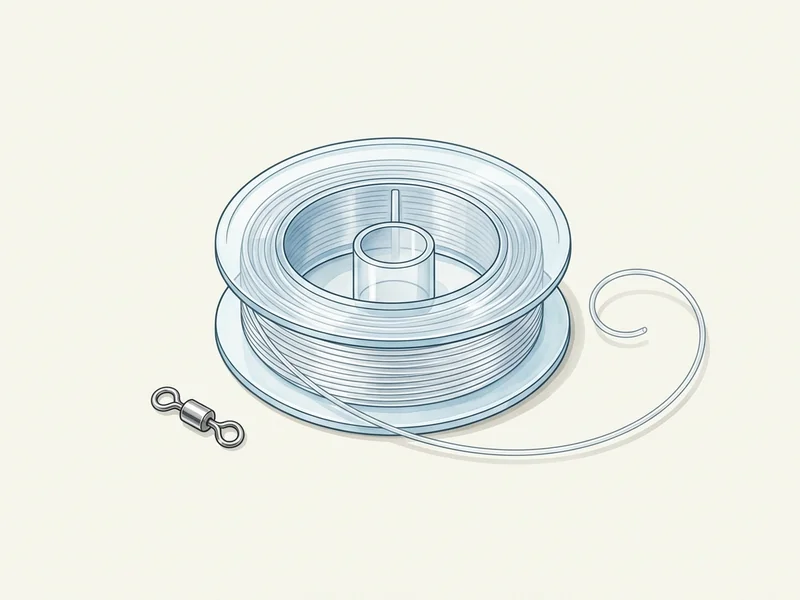
Reference illustration – check exact variant on Amazon.
Seaguar Red Label Fluorocarbon Line (12 lb / Full Spools)
- Refractive index disappears neatly along clear spring creeks when pitching slender plugs or deep nymph drops.
- Hard outer coating guards against submerged log bark and sharp Bow River cobbles during fighting surges.
- Sinks smoothly underneath bright surface film instead of casting thick glaring shadows overhead.
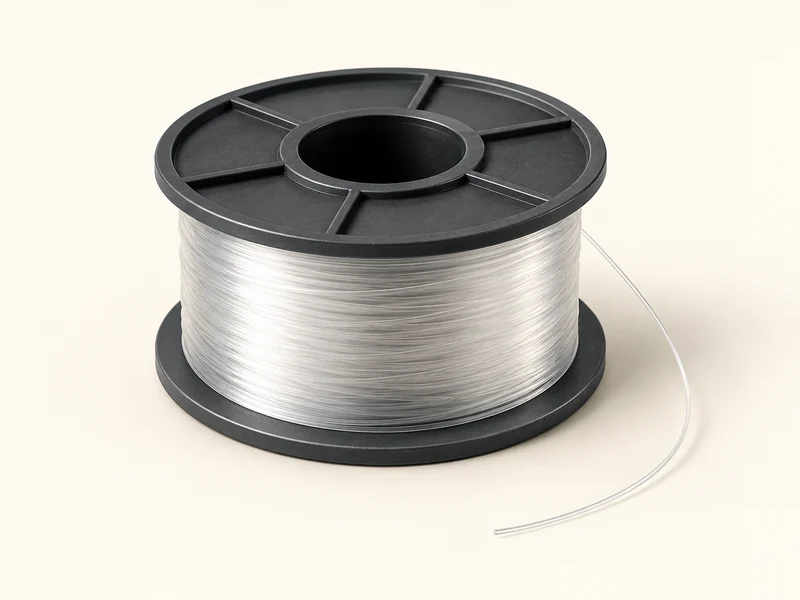
Reference illustration – check exact variant on Amazon.
Berkley Trilene XL Monofilament (8 lb Test, Clear)
- Smooth limp profile launches light 1/8 oz floating plugs straight into narrow timber pocket openings.
- Balanced stretch absorbs heavy twisting headshakes cleanly when trophy browns roll in tight eddies.
- Low-memory coil release limits frustrating wind knots during misty dusk creek retrieves.
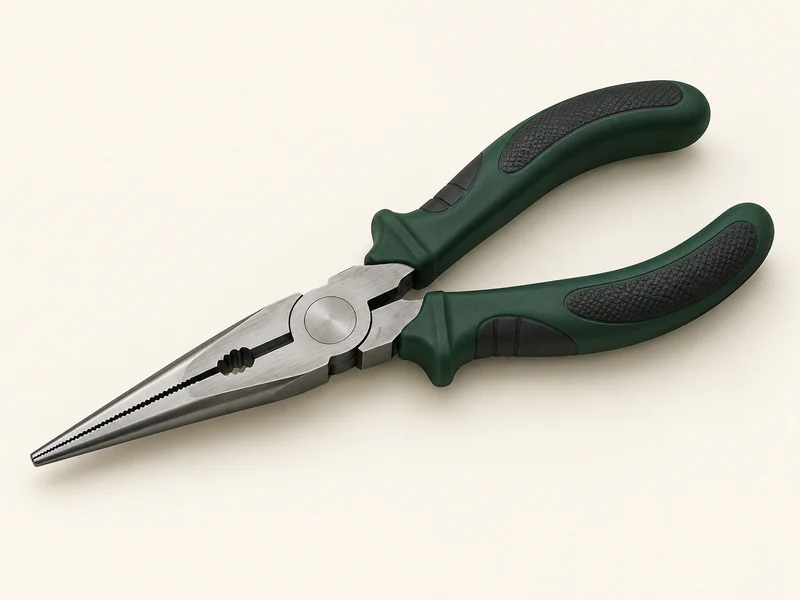
Reference illustration – check exact variant on Amazon.
Rapala 6½-inch Fisherman’s Pliers
- Compact pointed steel jaws unhook stubborn jerkbait points cleanly while keeping heavy trout underwater.
- Flat crushing face flattens tiny treble barbs swiftly before entering strict barbless tailwater sanctuaries.
- Weather-resistant grips latch securely on chilly morning wade belts without weighing vests down.
Additional Verified Brown Trout Gear Categories on Amazon:
Compare Trout & Salmon Casting Spoons • Browse Salmon & Trout Rubber Nets • Review Fluorocarbon Leader Spools
Frequently Asked Questions About Canadian Brown Trout Fishing
Are brown trout native to Canadian lakes and rivers?
No. Salmo trutta originated across Europe and was carefully stocked into cool Canadian watersheds starting in the late nineteenth century, thriving widely across Ontario limestone streams, Quebec tailwaters, Alberta’s Bow corridor, and select Atlantic estuaries.
Why do adult brown trout feed best at dusk, dawn, or on rainy days?
Strong midday sun makes cautious large browns vulnerable to overhead ospreys and bald eagles along clear shallow pools. Dim evening shade and soft overcast cloud ceilings let dominant fish leave bank log hides freely to hunt exposed minnows and insects.
How do you distinguish a lake-run silver brown trout from an Atlantic salmon?
Inspect the tail shape and wrist thickness first: brown trout carry blunt square tails paired with thick wrists and slightly larger mouths extending past the eye center, whereas Atlantic salmon show sleek narrow waists leading into forked crisp V-notched tails.
What water temperatures keep Canadian brown trout healthy and active?
Brown trout feed aggressively between 10 C and 17 C, tolerating mild afternoon warmth slightly better than delicate native brook trout. Once summer water passes 20 C, suspend catch-and-release river targeting so stressed large adults recover safely in spring seeps.
What are top artificial lures and flies for aggressive river brown trout?
Weighted sculpin streamers in olive or black, foam mouse flies skated across quiet evening eddies, 2.5-to-4-inch brown-gold minnow plugs, and compact hammered brass spinners pull consistent ambush strikes from bank-hugging predators.
When do Canadian brown trout dig gravel redds to spawn?
Brown trout spawn across cool Canadian gravel tailouts during mid-October through late November before winter ice covers pools. Always stay off pale clean scoured riverbed patches and respect closed sanctuary reaches during autumn migration months.
Official Canadian Fisheries Resources and Related Guides
Managing Tippet Reflection and Current Drag
Micro-drag kills clear-stream brown trout presentations far faster than imperfect fly feather shades. Anytime swift central currents catch thin belly loops of fly line or spinning mono faster than your drift lure beside a slow bank eddy, the unnatural sideways pull skates patterns off course instantly.
Throw clean upstream reach mends the instant flies touch water above a target boulder, keep rod tips held up off surging currents, and step gently to lighter 5X clear fluorocarbon leaders along spring creeks pressured steadily all summer. Small details separating quiet drifts from tight wakes consistently double daily trout contacts.
Confirm seasonal zone tables, sanctuary closures, and catch-and-release tailwater limits via official provincial and federal pages:
- Fisheries and Oceans Canada (DFO): Aquatic Species Identification Guide
- Government of Alberta: Official Game Fish Species Directory
- Ontario Ministry of Natural Resources: Ontario Fishing Regulations Summary
- Related CanadaFever Guides: Fishing for Specific Species in Canada · Canada Outdoor Planning Tools · Fishing Gear and Equipment · Fishing for Beginners in Canada · Fishing Regulations and Licences in Canada · Best Fishing Spots in Canada · Kayak and Canoe Fishing in Canada · Fishing Lodges in Canada · All-Inclusive Fishing Lodges Canada