

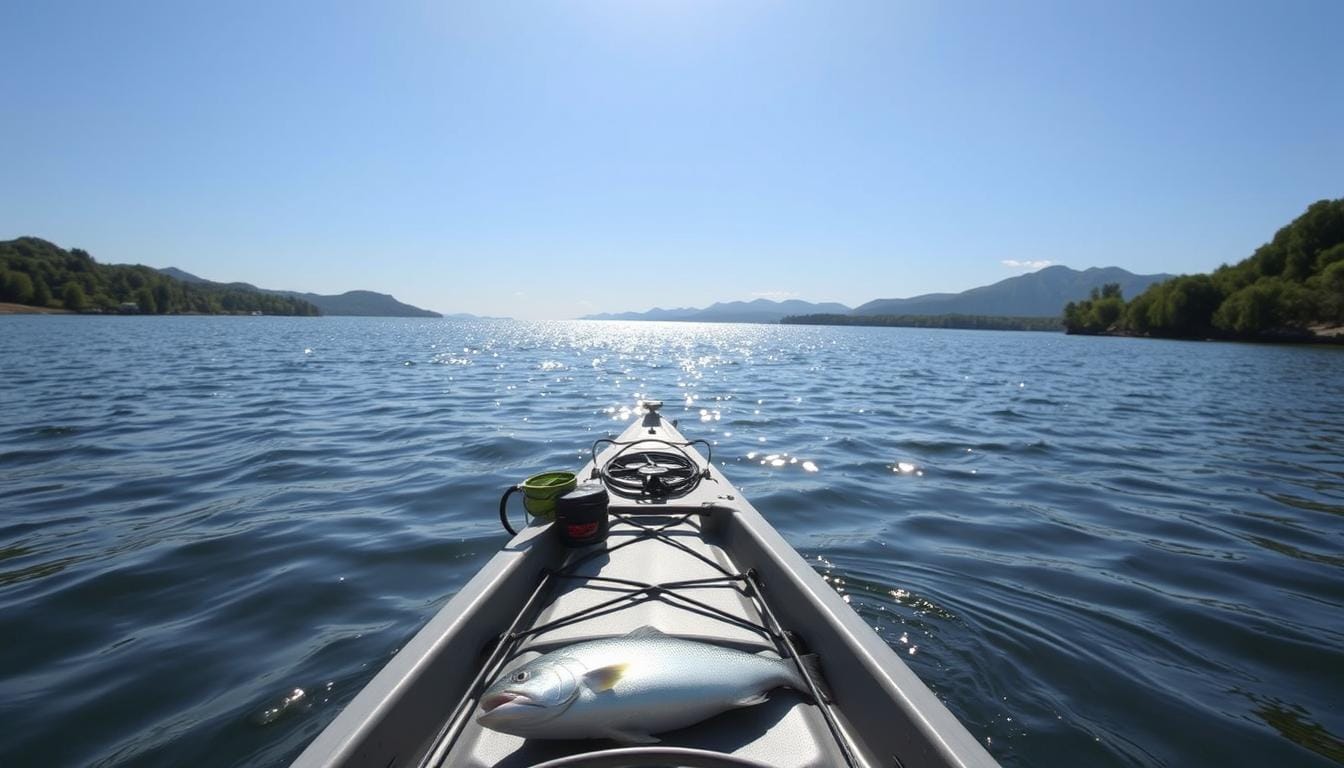
Master the art of drift fishing from a kayak with our expert tips and proven techniques. Learn how to maximize your catch while enjoying the serene Canadian waters.
- Match Drift Fishing from a Kayak to your water, season, boat size, and actual skill level instead of buying by specs alone
- Prioritize readable controls, durable construction, and Canada-relevant use cases before chasing premium features
- Use the guide to compare what matters in the field: setup time, reliability, safety, storage, and upgrade path
Bottom line The right Drift Fishing from a Kayak choice solves your real Canadian trip conditions without adding gear you will not use
Key Takeaways
- Drift Socks: Create water drag using a funnel-shaped drift sock to slow down your kayak’s drift speed in high winds.
- Anchor Trolley Control: Use an anchor trolley to route your drift sock line to the bow or stern, keeping your hull aligned parallel to your drift.
- Presentation Depth: Keep your bait vertical. High drift speeds pull lures away from the bottom; slow down to stay in the strike zone.
- Watch the Current Seams: River drifting requires reading water. Target boundaries where fast water meets slow pools.
🌪️ Kayak Drift Speed & Drag Calculator ⛵
Calculate wind drag to check if a drift sock is required for bottom bait contact.
Drift fishing is one of the most effective ways to locate fish on large lakes or slow-moving rivers. By allowing the wind or current to slowly carry your kayak across flats, drops, or weed edges, you cover a massive amount of water. This technique is highly productive for targeting schooling species like walleye, perch, smallmouth bass, and suspended trout.
However, drift fishing from a kayak has a major obstacle: kayaks are lightweight and float high on the water, acting like plastic sails. Even a light breeze can push your kayak too quickly. When your drift speed exceeds 1.5 mph, it becomes impossible to keep your baits near the bottom, and your presentation rises out of the strike zone. Understanding speed control, drift socks, and anchor trolleys is essential. Let’s look at the master drift fishing strategies for 2026.
1. The Role of the Drift Sock
A **drift sock** (or sea anchor) is a cone-shaped nylon funnel deployed in the water. As your kayak drifts, water enters the wide opening and is constricted, creating drag. This acts as a drag brake, slowing your drift speed by up to 50%. A 24-inch drift sock is the perfect size for standard 12-to-14 foot fishing kayaks, allowing you to slow down to an ideal crawling drift of 0.6 to 1.0 mph in wind gusts up to 15 knots.
2. The Anchor Trolley: Safe Towing Control
Deploying a drift sock directly from the side gunwale of your kayak is dangerous. The wind pressure will pull the side of the kayak down, reducing stability and risking a flip. Always secure your drift sock tether to a **track-mounted anchor trolley system**. This allows you to slide the tether point to the absolute stern or bow of your kayak, ensuring your boat drifts straight and level with the wind vector.
3. Maintaining Bottom Contact (Vertical Presentation)
The secret to drift fishing is keeping your bait close to the bottom where fish are feeding. If your line angle is 45 degrees, your jig is too high. You want your line to remain as vertical as possible (under 15 degrees). If your line begins to scope out, increase your jig head weight (e.g., from 1/8 oz to 1/4 oz or 3/8 oz) or adjust your drift sock to slow down.
Drift Control Gear
Vetted, top-rated products that are highly recommended for Canadian paddlers and anglers.

Lindy Fisherman Series Drift Sock (24-inch)
Funnel-shaped heavy-duty coated nylon sock that creates drag to slow kayak drift in high winds. Folds flat and dries quickly.
- Wind Drift Control: Creates heavy hydrodynamic drag to slow your drift in high winds, keeping you in the strike zone longer.
- Vessel Stabilization: Helps keep your kayak or canoe oriented safely into the wind, preventing side-swiping by waves.
- Quick-Dry Material: Made from durable, coated marine-grade nylon that dries quickly and folds flat for easy, compact storage.

Complete Folding Grapnel Anchor Kit (3.5 lb)
3.5 lb folding grapnel anchor kit with 50 feet of rope, a marker buoy, and a durable storage bag. Essential for lock-in position.
- Reliable Holding Power: 3.5 lb folding grapnel anchor holds securely in rocky, weedy, or sandy lake bottoms.
- Full Marine-Grade Kit: Includes 50 feet of high-strength line, a marker buoy, a snap hook, and a padded storage bag.
- Collapsible Design: Tines fold flush against the shaft, locking securely in place for compact, rattle-free storage.

KastKing Floating Landing Net
Floating rubberized landing net with high-vis accents. Soft rubber coating protects fish scales and prevents hook snags during drift landing.
- Floating Frame: Buoyant, lightweight frame floats on the surface if dropped, ensuring easy retrieval during chaotic catches.
- Snag-Free Rubber Mesh: Soft rubber coating protects the fish’s scales and prevent hooks from getting tangled in the mesh.
- High-Vis Accents: Neon green details make it easy to locate in low light or muddy water conditions.
Affiliate Disclaimer: As an Amazon Associate, CanadaFever earns commissions from qualifying purchases. This supports our free outdoor guides at no extra cost to you.
🌍 Explore Guided Fishing Trips in Canada
Want to fast-track your success on the water? Book a professional local guide through Viator to find the best spots, learn advanced paddling techniques, and hook into trophy fish.
*CanadaFever is a Viator Partner (ID: P00210641). We may earn a commission if you book through our links, at no extra cost to you.*
What is a drift sock and how does it work on a kayak?
A drift sock is a cone-shaped fabric bag deployed in the water behind your kayak. It creates drag by restricting water flow, slowing down your wind-induced drift speed so you can keep your baits in the strike zone longer.
How do you rig a drift sock using an anchor trolley?
Attach the drift sock tether to the ring of your anchor trolley. Slide the trolley all the way to the stern or bow of your kayak. This keeps the drag force aligned with the hull’s longitudinal axis, preventing tipping.
What is the ideal wind speed for kayak drift fishing?
Winds between 5 and 12 knots are ideal. They create enough drift to cover water without creating large, dangerous whitecap waves that threaten sit-on-top kayak stability.