

Learn how to fish a chatterbait by matching retrieve, trailer, depth and cover to Canadian largemouth and smallmouth conditions.
- Make sure the blade starts immediately after the cast
- Run the bait over or beside cover instead of plowing through everything
- Change speed and rod angle to control depth before changing colour
Bottom line Hold the blade at the intended depth, then change speed, rod angle or trailer one variable at a time.
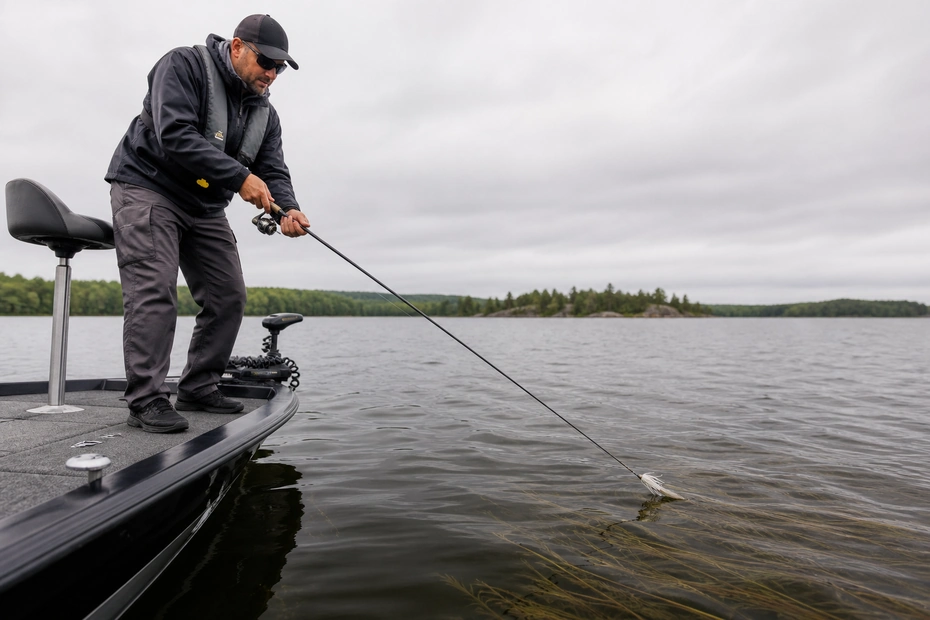
How to fish a chatterbait for bass starts with one signal: can you feel the blade working at the depth where the fish should be?
The lure combines vibration, flash and a jig-like profile, but its value is not “maximum noise.” It is the ability to cover water while staying close to grass, rock and shallow cover.
Quick Answer
- Make sure the blade starts immediately after the cast.
- Run the bait over or beside cover instead of plowing through everything.
- Change speed and rod angle to control depth before changing colour.
- Use a trailer that supports the intended depth and profile.
Use this guide beside CanadaFever’s bass fishing techniques and largemouth bass fishing. Those pages provide the wider species or technique context; this one stays focused on the decisions that make how to fish a chatterbait for bass work.
How How to fish a chatterbait for bass Actually Works
The blade creates resistance and vibration as the lure moves. That feedback tells you whether it is running cleanly, fouled or stalled.
Rod position changes the path. A higher tip helps lift over grass; a lower tip keeps the bait down and makes the retrieve more direct.
The trailer affects lift, profile and stability. A bulky kicking trailer can raise the bait; a streamlined trailer often tracks deeper and cleaner.
Pick a lane before changing colour or trailer. Rod angle and retrieve speed should keep the blade just above cover instead of wandering through all three depths.
The Guide’s Log
When I edit a technique guide, I picture a stained Canadian largemouth bay where submerged grass tops out just below the surface. That picture forces a better question than “What bait should I use?” It asks what the fish can see, where the presentation must travel and what the angler can control from cast to landing.
The common failure in this situation is reeling at one speed until the lure buries in grass. It feels active, but it hides the real problem. A lure can be moving perfectly and still be outside the fish’s lane, entering from the wrong direction or attached to a setup that cannot communicate what happens next.
The correction is raising the rod, snapping the bait clean after light contact and slowing only in open pockets. That creates a repeatable test. If the fish responds, keep the useful variable. If it does not, change one thing and observe again instead of emptying the tackle box.
I also want the method to survive ordinary field pressure: a wind shift, one snag, cold fingers, fading light or a boat that drifts a little faster than expected. A useful system has a visible baseline and one quick reset. It does not depend on perfect conditions or a lucky first cast.
The field lesson is simple: contact is useful only when the lure can recover immediately. That is the standard used throughout this guide. It is an editorial field framework, not a claim that one formula replaces local knowledge, current regulations or conditions on the day.
Build the Setup Around the Job
Tackle should solve the presentation rather than dominate it. CanadaFever’s baitcaster combo guide and topwater lures for Canadian bass help with the broader equipment and progression choices.
| Component | Best decision | Mistake to avoid |
|---|---|---|
| Rod | Moderate power delivery with control | Extra-fast setup that tears hooks free |
| Line | Matched to cover and water clarity | Light line in pike-heavy grass |
| Trailer | Profile that matches depth goal | Adding bulk without checking lift |
| Knot | Strong, compact connection | Damaged line beside the blade/head |
Read the Spot Before You Make the Presentation
Start with places that give the method a defined lane: the top of submerged grass; inside turns and points on a weedline. Then test stained-water rock transitions; shallow wood with a clear retrieve lane when the first locations do not produce a useful response.
Do not fish the label on the map. Break the spot into an entry point, strike lane and exit. That keeps the bait in useful water longer and shows whether the method is failing or the cast simply missed the zone.
The Local Secret
The best cast often runs parallel to a weed edge rather than straight across it. The lure stays in the strike zone longer and you can tell exactly when it touches grass.
How to fish a chatterbait for bass: The Repeatable Sequence
How to fish a chatterbait for bass — Step 1: Start the blade with a quick turn of the reel
Make the first move deliberately and use it to establish a baseline.
Step 2: Set rod height for the cover top
Watch the line, lure and fish response before adding another input.
Step 3: Use a steady retrieve until contact or a pocket
This is where most bites or useful rejections occur; keep the movement measurable.
Step 4: Add one acceleration, pause or snap—then return to control
End the sequence on purpose, record what changed and reposition when the lane is spent.
Adjust to Conditions Without Starting Over
| Condition | Best adjustment | Mistake to avoid |
|---|---|---|
| Stained water | Steady vibration near cover | Burning above the fish |
| Clear water | Natural profile; longer cast | Oversized contrast everywhere |
| Submerged grass | Tick tops and clear the blade | Grinding through stems |
| Cold front | Slower, controlled path | Assuming more vibration is always better |
The table is a reset tool. Change one variable, give it enough casts to create evidence, then keep or reject the adjustment. Random lure rotation produces activity but very little learning.
A Short Practice Plan That Produces Evidence
Practice 1: Make start the blade with a quick turn of the reel
Start where the behaviour is visible and the consequence of a mistake is low. Use the top of submerged grass as the first reference, or reproduce the same geometry beside the boat, from shore or on open practice ground when casting is the skill. The objective is not a fish. It is a clean baseline you can recognize again.
Practice 2: Repeat the key control
Repeat this action deliberately: Set rod height for the cover top. Keep the setup, target and timing the same for several attempts. Consistency makes a small error obvious; constant novelty hides it.
Practice 3: Change one variable
Use stained water as the first test condition and apply this adjustment: steady vibration near cover. Do not change colour, weight, depth and location together. One controlled change shows whether the method is improving or merely becoming different.
Practice 4: Finish with a move rule
End the drill by following the final sequence cue: Add one acceleration, pause or snap—then return to control. A move rule protects the day from stubbornness. It also turns an unproductive location into useful evidence because you know what was tested before leaving.
When This Method Is the Wrong Choice
No technique deserves every cast. Switch or reposition when cold front makes the presentation less controllable, when the setup cannot reach the fish without unnecessary snagging or handling risk, or when regulations close the species, water or tackle option.
- Choose a simpler presentation when you cannot tell what the lure or rig is doing.
- Change location when repeated fish responses stop producing new information.
- Stop when weather, ice, light, fatigue or fish-care conditions cross the limit set before the trip.
Canadian Rules, Safety and Fish Care
Bass seasons and combined limits vary by Fisheries Management Zone. In waters with northern pike or muskie, inspect line frequently and choose handling gear that protects both fish and angler.
For the wider legal framework, use the current fishing regulations. For handling and trip decisions beyond this one method, continue with advanced fishing techniques.
This article is general information, not legal or professional safety advice. Rules and conditions change. Follow current official guidance, manufacturer instructions and local closures, and stop when safe fish handling or travel is doubtful.
Common Mistakes and the Fastest Correction
- Failing to confirm the blade started
- Using one rod angle for every depth
- Choosing a trailer without checking lift
- Dragging through grass without clearing the blade
- Setting the hook on vibration loss before reeling into pressure
The fastest correction is rarely a complete rebuild. Return to the first uncertain decision—position, depth, angle or connection—then make one clean test.
The Pre-Trip Protocol
- Step 1: Confirm the exact water, season, tackle rules, weather and access.
- Step 2: Tie or rig one baseline setup and test it where you can see how it behaves.
- Step 3: Choose one target, one adjustment rule and one clear reason to move.
Practical gear match
A Purpose-Built Option for This Technique

Vibrating-jig match
Z-Man ChatterBait Elite EVO 1/2 oz
A direct vibrating-jig reference for practicing blade startup, depth control and contact-based retrieves with the one-variable method in this guide.
- Use the listed 1/2-ounce version only where its depth and speed fit the water.
- Match trailer bulk to the lift, fall and profile you need.
- Inspect the blade connection, skirt and hook point after cover contact.
Affiliate disclosure: CanadaFever may earn a small commission from qualifying purchases at no extra cost to you. Amazon.com links use OneLink for supported regions. Check the current listing for the exact model and included components.
FAQ About how to fish a chatterbait for bass
How fast should I retrieve a chatterbait?
Fast enough to keep the blade working at the target depth. Adjust speed and rod angle together.
What trailer should I use?
Choose a streamlined trailer for depth and stability or a bulkier one when you deliberately want lift and a larger profile.
Can I fish a chatterbait in clear water?
Yes. Longer casts, natural colours and a controlled retrieve can make it less intrusive.
Why does my chatterbait run sideways?
Check the trailer rigging, blade/head alignment and whether debris is fouling the lure.
When should I set the hook?
Keep reeling until weight develops, then sweep firmly. Reacting to every vibration change creates false hooksets.
Make the Next Cast Explain Something
The best version of how to fish a chatterbait for bass is not the most complicated one. It is the version that reaches the right lane, communicates what is happening and gives you a clear next decision.
Verify the water, protect the fish and keep the experiment simple enough that the next cast can teach you something.