

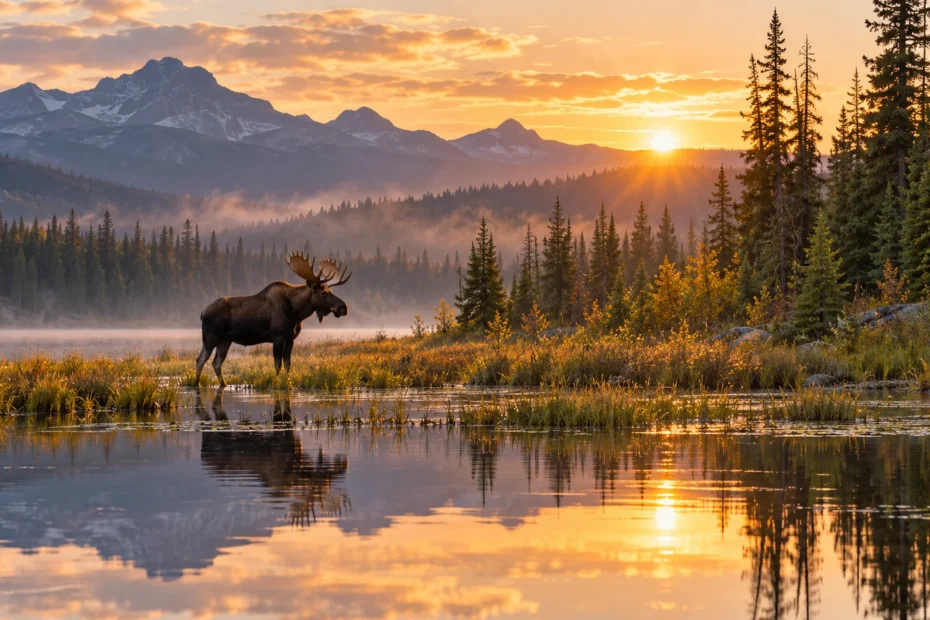
Explore the best Moose Viewing Spots across Canada, from remote wilderness areas to accessible national parks. Encounter majestic moose in their natural habitat.
- Plan Moose Viewing Spots Across Canada around legal seasons, land access, firearm or bow rules, and current provincial or federal requirements
- Scout habitat, weather, travel routes, and animal movement before you commit to a field setup
- Keep safety, identification, permission, and retrieval plans clear before the hunt starts
Bottom line Moose Viewing Spots Across Canada works best when legality, scouting, and safety are settled before tactics or gear choices
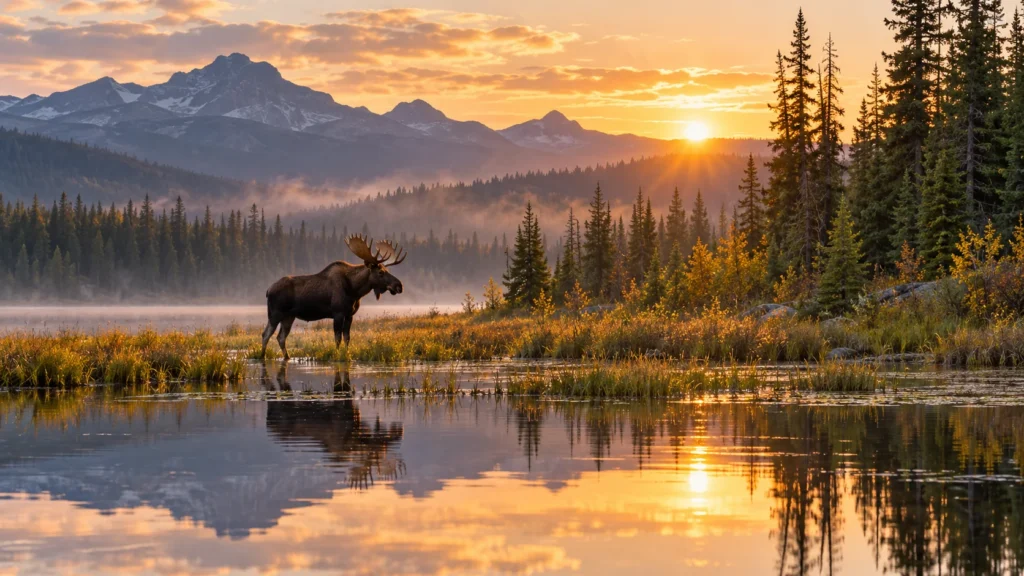
Moose viewing in Canada is possible in many forest and wetland regions, but a good habitat is not a guaranteed sighting. Choose a legal viewing area, check current access and weather, and observe from a distance. Spring roadside viewing can be rewarding in places such as Algonquin Provincial Park; it also demands particular care around traffic and wildlife.
Where to see moose in Canada
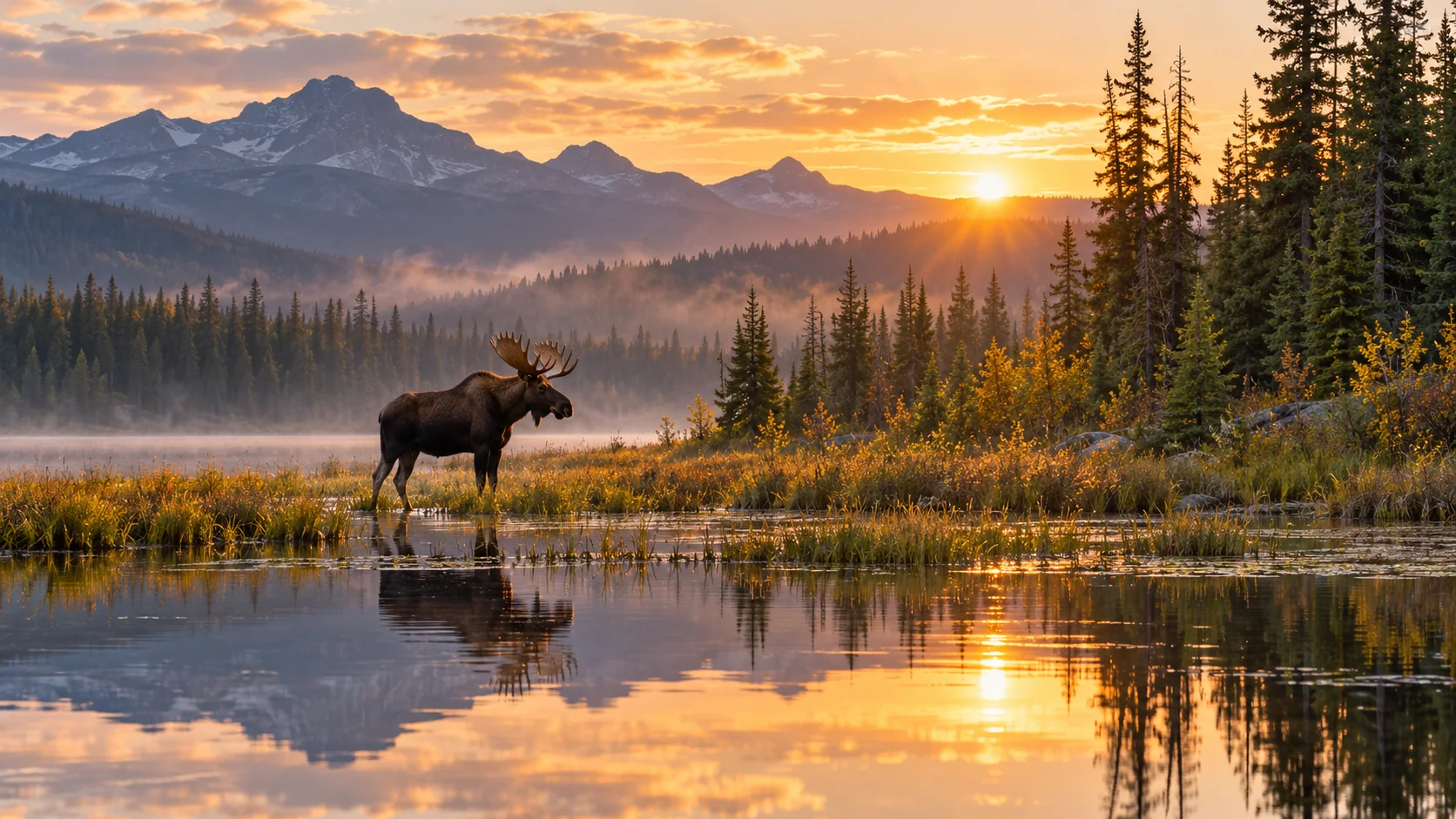
Moose use different habitats across a broad range. Wetlands, forest edges and roadside openings can be useful places to look, but a place name alone cannot tell you whether an animal will appear. Begin with the park or land manager’s information, then check what is open on your dates.
| Place | What to investigate | Planning constraint |
|---|---|---|
| Algonquin Provincial Park, Ontario | Spring roadside viewing along Highway 60 | Traffic and stopping safely; never approach |
| Gros Morne National Park, Newfoundland and Labrador | Forest and wetland areas, including documented moose habitat | Check trail conditions and seasonal park notices |
| Jasper National Park, Alberta | Park wildlife viewing and current closures | Specific roadside wildlife restrictions apply |
| Mainland British Columbia | Suitable moose habitat and park access in the region you choose | Do not assume an island location is a normal moose-viewing destination |
These are planning starting points, not a ranking or a promise of an encounter. If a wildlife sighting is central to your trip, build in alternative activities and allow time for weather or access changes.
Algonquin: a spring roadside opportunity
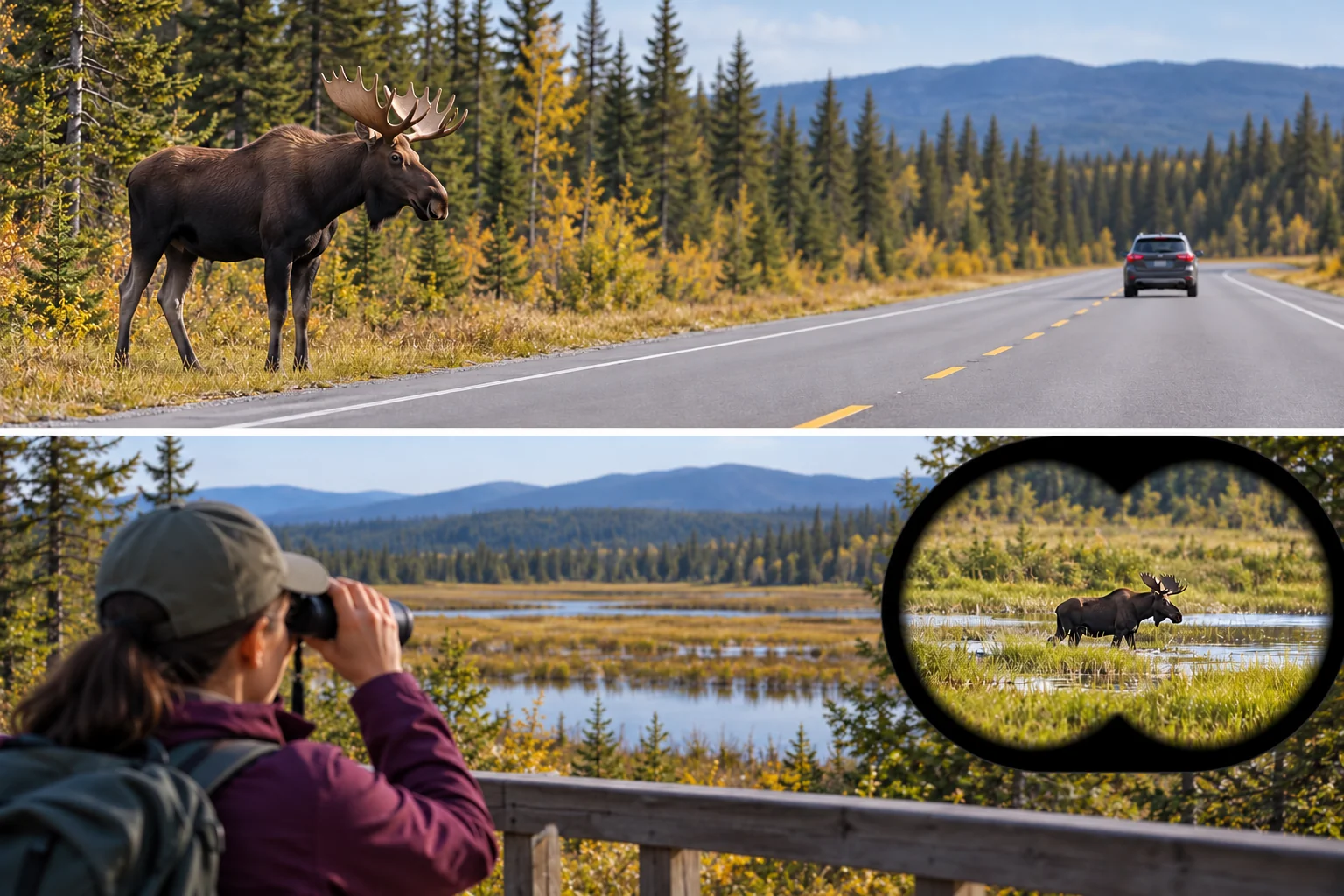
The Friends of Algonquin Park describes spring as a favourable time to see moose near Highway 60, where winter road salt can attract them to ditches. Drive slowly and stay alert: a moose can be difficult to see, and wildlife on a road is a collision risk. Pull off the travelled road only where it is legal and safe; do not create a traffic hazard for a picture.
Gros Morne: plan around the park
Parks Canada notes moose in its Long Range hiker preparation guide. Its advice is to avoid approaching and remain aware of an animal’s escape route. Check the park’s current alerts before visiting, especially when seasonal management or trail restrictions may affect a planned route.
Mainland BC: choose the region carefully
Moose are found on the British Columbia mainland. A historical BC government habitat account describes moose as absent from Vancouver Island at the time. For a concrete mainland lead, BC Parks identifies Buckinghorse River Wayside Park as a place where visitors may see moose. Check access and conditions before travelling; sightings are not guaranteed.
Choose a viewing plan that fits the place
Viewing options differ between a national park, a provincial park and a highway corridor. Start by asking whether the activity you want is available at the time of your visit: an open day-use area with a viewing platform is a different plan from a long hike or a roadside drive. Check the land manager’s page for opening hours, entry or parking requirements, trail notices and closures. A scenic image in a search result does not establish where you may park or walk.
For Algonquin, the Highway 60 corridor gives a visitor a concrete area to research. The park describes a spring roadside pattern, not an invitation to drive slowly in traffic while looking away from the road. A passenger can watch while the driver concentrates on the road. Identify permitted pullouts ahead of time and keep moving if a stop is occupied, unsafe or would obstruct others. Never cross a busy road to get closer to a moose.
In Gros Morne, match the plan to the trail and season. A published reference to moose habitat does not make a demanding backcountry route suitable for every visitor. Check the route length, current conditions and the park’s advice before choosing a hike. Give wildlife a wide route away, and turn around if a moose occupies a narrow path and you cannot pass without approaching.
For Jasper, check the applicable roadside bulletin and any updated closure for your visit. The 2026 example in the safety section has a defined area and expiry date. A park’s specific restriction can be narrower or more detailed than advice for another destination; check the exact place instead of copying a number from a social post.
For Buckinghorse River Wayside Park in northern mainland BC, check road conditions, park access and services. Vehicle access is seasonal and the park notes no winter vehicle access; verify the gate status and current advisories before travelling. Treat the park’s wildlife description as a reason to plan a respectful stop, not a promise of a moose.
When is the best time to see moose?
Spring can be a useful period for roadside viewing in Algonquin, but weather and wildlife behaviour vary by location and year. Early morning or evening may fit a viewing plan, yet lower light can make moose difficult for drivers to see. Keep your speed and attention appropriate to the road; do not rely on a particular hour as a guarantee.
Season also changes the safety context. Parks Canada’s Gros Morne guide notes that cows may be protective around calves in spring and early summer, while bulls can be more aggressive during the fall rut. Give every moose space in any season and avoid separating animals from one another.
Watch safely and keep wildlife moving
- Use binoculars or a longer lens instead of walking toward a moose.
- Do not feed wildlife, surround it, separate a cow from a calf or block its route away.
- Keep children close and pets controlled according to the rules for the place; move away if the animal changes behaviour.
- On roads, prioritize traffic and stop only where legal and safe. A wildlife gathering can quickly obstruct other drivers.
Rules can be more specific in individual parks. In Jasper’s 2026 roadside wildlife bulletin, restrictions apply within 400 metres of roads and vehicle-use areas: people must not deliberately approach, remain, watch or engage in an activity within 30 metres of a moose unless completely inside a legally positioned vehicle. The bulletin also prohibits interfering with wildlife movement or creating a hazardous condition. This example is dated through December 31, 2026; check current notices for your actual visit and do not treat it as a universal Canada-wide rule.
Use an observation point without approaching
Before taking out a camera, assess the whole scene: the animal’s direction, other people, traffic, the edge of the path and a clear way to leave. Choose a place where you can remain well away and do not have to cross the animal’s path. If there is no suitable legal position, continue on or turn back. Do not use an occupied pullout as a reason to park in a travel lane.
- Pause at a distance. Use binoculars to check what you can see from the place you already occupy. A moose that looks toward you is not an invitation to approach.
- Look for an exit. Ensure the animal can move away without being surrounded by people, cars or pets. If visitors begin to gather, leave space rather than joining a circle around it.
- Watch behaviour. If the animal appears agitated, changes direction because of people or has a calf nearby, increase distance and leave. Give all wildlife room even when behaviour seems calm.
- End the encounter early. Put the camera away before moving and leave by the same safe route when possible. A short observation from a distance gives the animal room to move.
Magnification changes what you see, not the actual distance. Set binoculars while facing a stationary object, then bring them to your eyes without walking forward. If you wear glasses, check eye relief and the fit of the eyecups. When sharing equipment with children, establish where everyone will stand before an animal appears and keep the group together.
Wildlife photographs can conceal how a scene was made. A tightly cropped image may appear close even when taken with a long lens, and a picture cannot tell you whether a vehicle was safely parked or the encounter complied with local rules. Do not copy a photographer’s apparent position from a single image.
Plan a moose-viewing trip in three steps
- Choose a documented location and check the land manager’s current alerts, access, rules and any fees.
- Pick a safe, legal observation option and pack binoculars, weather-appropriate clothing and water.
- Set a backup activity and enough travel time. If conditions or wildlife behaviour make the stop unsafe, leave and try another time.
Useful viewing kit
- Binoculars or a camera lens that supports distance.
- Layers suitable for the forecast and a way to carry water.
- Offline route details and park alerts checked before leaving reception.
Review weather and road conditions immediately before travelling. Remote access, opening dates and temporary closures can change; the official park source for your destination is more useful than a fixed itinerary in an old article.
Plan for weather, traffic and a day without a sighting
Estimate time left at your viewing area
Enter your available time, round-trip driving and time for other planned stops in hours. This subtracts your own estimates; it does not assess daylight, weather, access, regulations or a safe return.
If driving and other stops leave no time, revise the trip rather than assuming you can extend your return. Real conditions may shorten the time further.
Low light can make wildlife harder to see from a moving vehicle. If you choose an early or late outing, plan the return drive as carefully as the viewing window. Keep headlights and speed appropriate to conditions, scan for wildlife near the road and leave extra time for a safe return. Fog, rain and glare can change visibility quickly; a plan based on last week's conditions is only a starting point.
At a wetland overlook, conditions may mean standing still in wind or rain. Pack layers that work for the forecast, water, any needed medication and a way to navigate without a signal. Check accessible routes and washroom availability before departure if those details matter to your group. Wet boards, uneven ground and insects can affect how long an observation point remains comfortable.
For a family trip, agree on simple rules before leaving the vehicle or trailhead: stay with the group, leave animals an escape route, never offer food and return immediately when asked. Keep pets under control and follow the specific park's leash and access requirements. A pet can attract a wildlife response even if it is quiet; do not take one close to an animal for a photograph.
A visitor-centre stop, a short permitted walk or a scenic drive can be a useful alternative when viewing conditions are poor. Check the opening status and route rather than relying on a fixed itinerary. If you see a moose only briefly, note the place broadly without publishing sensitive location details that could encourage crowding. If you see none, a day spent learning the habitat is still a worthwhile trip.
Questions to ask before booking a wildlife tour
A guided outing can help with transport and local interpretation, but it cannot promise a wild animal. Ask the operator which park or route is involved, the pickup location, total duration and how much of the activity takes place in a vehicle. Check what the published price includes, the cancellation terms and whether the route suits your group's mobility needs. Wildlife encounters, weather and access are variable.
Ask how the guide handles a roadside sighting, what happens if an animal approaches and whether the operator follows the land manager's rules. A good answer should put traffic and animal space before a close photograph. If a provider advertises a specific animal, confirm whether that is a possible sighting rather than a guarantee, and read current trip details before paying.
For an example of a broader guided wildlife outing in the region, see the Jasper evening wildlife tour listing on Viator. Operator Maligne Adventures describes guided Jasper wildlife tours; this listing is a general wildlife outing, not a promise of moose. CanadaFever may earn a commission from qualifying bookings at no additional cost to you; dates, pickup, accessibility, terms and price should be checked on the listing before booking.
A guided wildlife outing in Jasper
Affiliate links: We may earn a commission when you book through these links, at no extra cost to you. Check current dates, prices and terms on Viator.
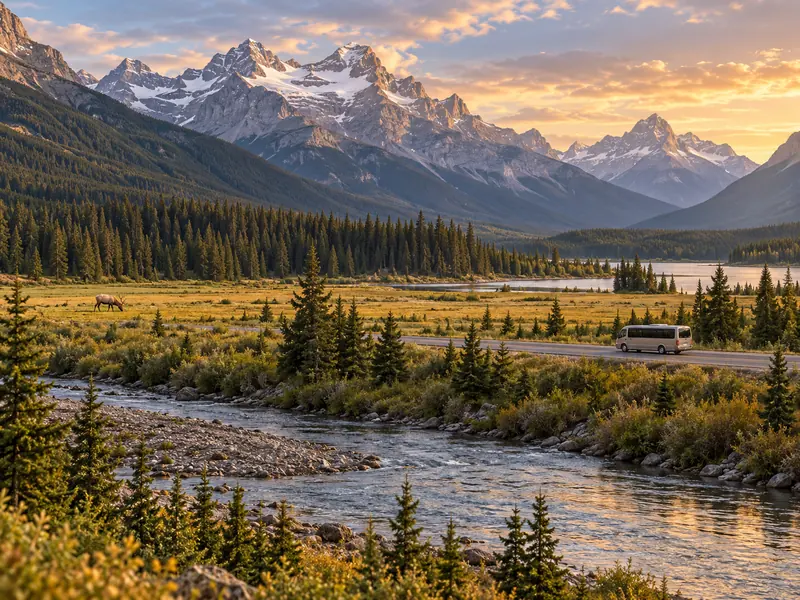
Jasper, Alberta
Jasper Evening Wildlife Tour
- Approximately three to four hours exploring Jasper National Park by minibus.
- Driver-guide commentary about the park and its wildlife.
- Pickup from selected Jasper locations; confirm the meeting arrangement for your accommodation.
Check your departure time, pickup, accessibility and current terms. Wildlife sightings vary.
Binoculars and a tracking reference
Affiliate links: We may earn a commission from qualifying purchases, at no extra cost to you. We have not field-tested these items. Check the selected model, current price and delivery options on Amazon.
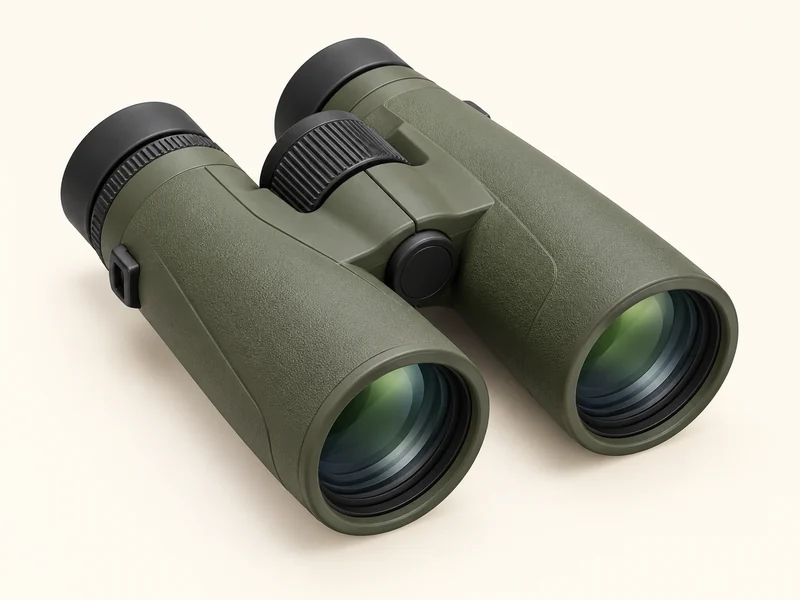
For viewing at a distance
Nikon PROSTAFF P3 8x42 Binoculars
- Eight-times magnification with 42 mm objective lenses.
- Rubber-armoured housing listed as waterproof and fogproof.
- Check eye relief with your glasses and the weight you want to carry.
Binoculars do not establish that you are far enough from wildlife under local rules. Compare carrying weight, fit and eye relief.
For viewing at a distance
Celestron Nature DX 8x42 Binoculars
- Eight-times magnification and 42 mm objective lenses.
- Phase-coated BaK-4 prisms and fully multi-coated optics.
- Compare fit, eye relief and carrying weight before choosing outdoor binoculars.
Check the selected version and dimensions, and try a comfortable grip. Keep the distance required by the destination's wildlife rules.

For further reading
Peterson Field Guide to Animal Tracks, Third Edition
- An animal-track reference for comparing signs found outdoors.
- Third-edition Peterson guide for study before and after a walk.
- Use several track and habitat clues; one unclear print is not a firm identification.
Compare signs later, away from the animal. A track does not guarantee a sighting or justify following wildlife; leave uncertain signs unidentified.
Common questions about moose viewing
Where can I see moose in Canada?
Documented habitats include parts of Ontario, Newfoundland and Labrador, Alberta and mainland British Columbia. Choose a specific accessible site and check the land manager’s current information; none guarantees a sighting.
Is the island west of mainland BC a usual moose-viewing destination?
It is not an ordinary moose-viewing destination. The BC government habitat account identifies mainland range; select a documented mainland location instead.
Is there one safe distance for every Canadian park?
Rules vary. Jasper has a specific dated roadside restriction; check the current rules for your park and leave more space whenever the animal or setting requires it.
What should I do if a moose approaches?
Give it room and back away slowly. The Gros Morne guide describes warning signs and advises seeking protection behind a large tree or rock if a moose charges.
Is a roadside sighting safe to photograph?
Only if you can stop legally and safely without blocking traffic or disturbing wildlife. If there is no safe place, continue driving.
Keep planning
For a broader Canadian outdoor itinerary, explore the destination guide and check the current park or provincial source before travelling. A sighting is a possibility, not a promise.