

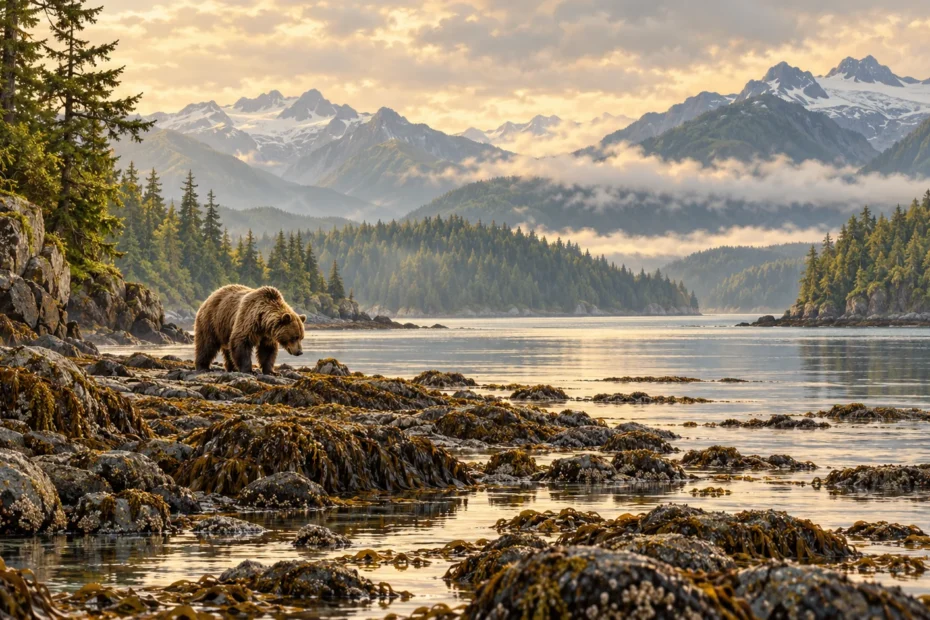
Churchill is the classic choice for polar bears, while the British Columbia coast offers guided trips for grizzlies and shoreline black bears. Both can deliver extraordinary wildlife encounters, but they involve very different journeys, seasons and budgets. Choose the species and type of trip first, then check access, weather and the operator before paying a deposit.
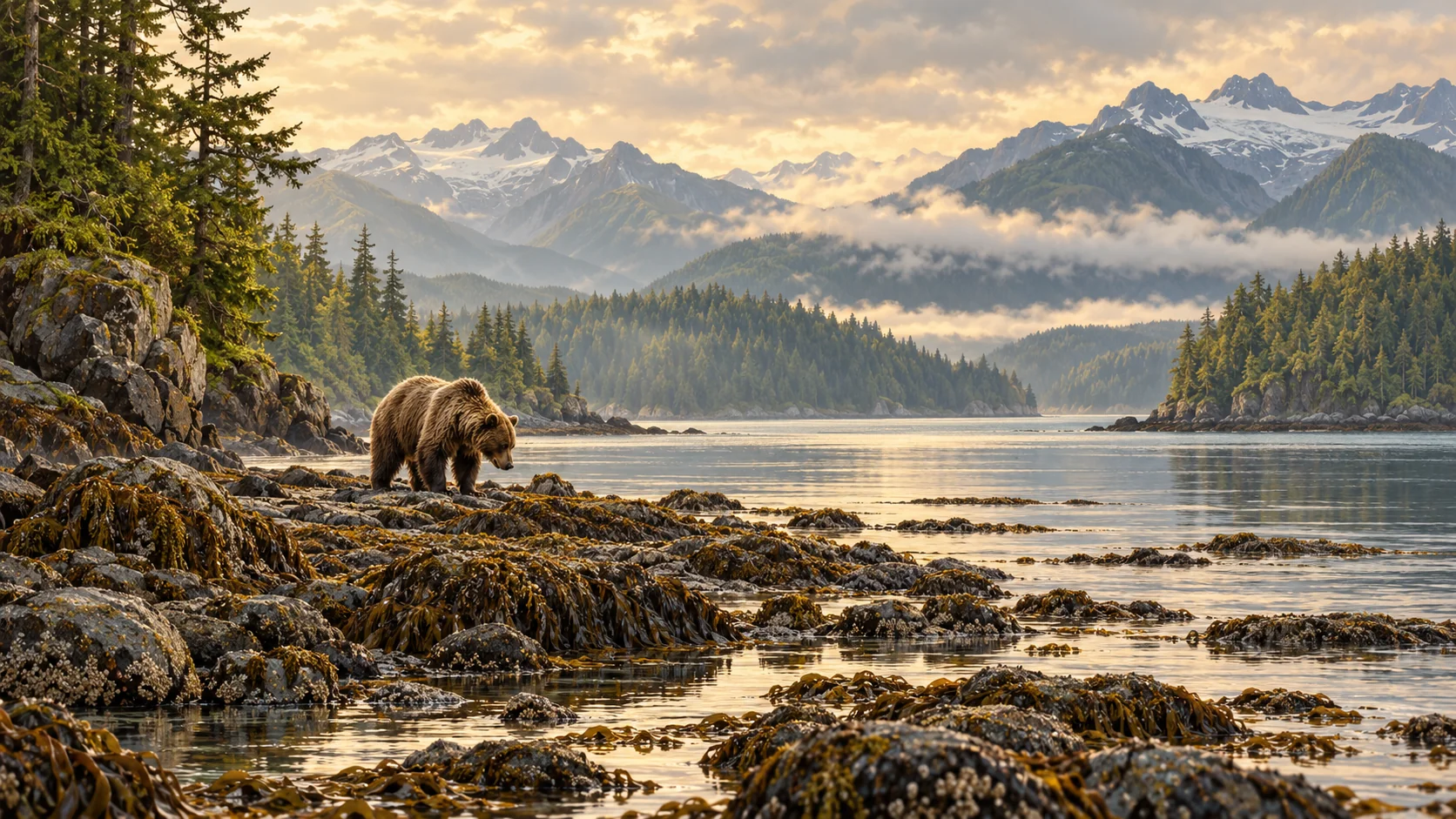
Compare the main bear viewing options
| Place | Bear and setting | Typical planning window | Travel and main tradeoff |
|---|---|---|---|
| Churchill, Manitoba | Polar bears around western Hudson Bay | Fall, especially October–November | Fly or take the train; remote lodging and tours need advance planning. |
| Bute Inlet, B.C. | Wild grizzlies in a coastal river system | Late summer and fall; check the operator's dates | Depart Campbell River by boat; a long day and higher tour cost. |
| Tofino, B.C. | Black bears foraging along the coast | Operator seasons vary; the cited Whale Centre tour lists April–October | Tides determine departure timing; a shorter boat trip, with weather and sea conditions to consider. |
| Banff and mountain parks | Black bears and grizzlies may occur | Spring to fall, with closures and weather affecting access | A bear is not a scheduled attraction; follow park rules and keep moving. |
| Kicking Horse, near Golden, B.C. | A resident grizzly in an enclosed refuge | Seasonal; check the current refuge and tour schedule | A managed rescue setting, clearly different from watching a wild bear. |
Use this comparison to narrow the trip, not to rank sighting odds. The right choice depends on the species, your appetite for travel, mobility and whether a full day on a boat is enjoyable for your group.
Churchill: polar bears on Hudson Bay
In autumn, polar bears gather along western Hudson Bay as they wait for sea ice to form. Parks Canada's Churchill-area planning information identifies October and November as the main polar-bear tourism season. Animals move with the weather and sea ice, so leave room for uncertainty.
Getting there: Churchill has no road connection. Parks Canada describes scheduled flights and rail service in its Wapusk travel information. Build in time for connections and possible weather disruption, and verify the current flight or train schedule with the carrier. A rail itinerary can be an appealing part of the trip, but it is not a substitute for a tour booking once you arrive.
Churchill and Wapusk National Park are not interchangeable. Some Churchill-area wildlife trips take place outside the national park. Wapusk is a remote protected area without roads; its visitor page says visitors must arrange transport by aircraft with a licensed operator, while the directions page describes access mainly through licensed operators. Ask exactly where the proposed trip goes and confirm its current permissions with Parks Canada and the operator. Do not assume a tundra vehicle outing enters Wapusk.
Polar bears can be present around town as well as on the tundra. Parks Canada's Churchill safety guidance advises visitors to take local warnings seriously. Ask your accommodation how to move around town and how to reach your departure point. Venturing along the shore or away from town calls for local guidance; an animal visible near a road is not an invitation to approach.
Best for: Travellers whose priority is a polar bear and who can budget for a remote trip. Ask whether lodging, meals, local transfers and the actual viewing day are included; a headline package price may cover only some of them.
Bute Inlet: guided grizzly viewing from Campbell River
Campbell River, on Vancouver Island, is a departure point for boat trips to mainland coastal inlets. Bute Inlet is on the mainland coast: the boat journey is part of the day, not a short walk from a Vancouver Island town. An Indigenous-led trip can also add cultural interpretation, although the programme and host differ by operator.
The Great Bears of Bute listing describes an approximately eight-to-nine-hour experience supplied by Homalco Wildlife & Cultural Tours, with a Campbell River meeting point, boat travel, time at Orford Bay, lunch and interpretation. Check the date-specific itinerary, physical requirements and cancellation terms before booking. The operator and community set the viewing arrangements; do not interpret a listed river as an invitation to find a private access route.
Expect a substantial portion of the day on the water. Compare a covered boat, available washroom, boarding arrangements and motion sensitivity, not just the maximum number of guests. Ask whether the land portion uses stairs, vehicles or an observation platform and how much walking is involved. Conditions, bear activity and access permissions can change the plan.
For a second kind of coastal experience, operators also depart for Toba Inlet. Campbell River Whale Watching describes a seasonal, full-day trip with a covered boat and Klahoose First Nation guides for the land-based component. When checked on October 30, 2026, its page displayed conflicting starting and seasonal rates. Ask the operator for a written quote that identifies the date, party, included fees and GST before comparing it with another tour.
Tofino: black bears and the low tide
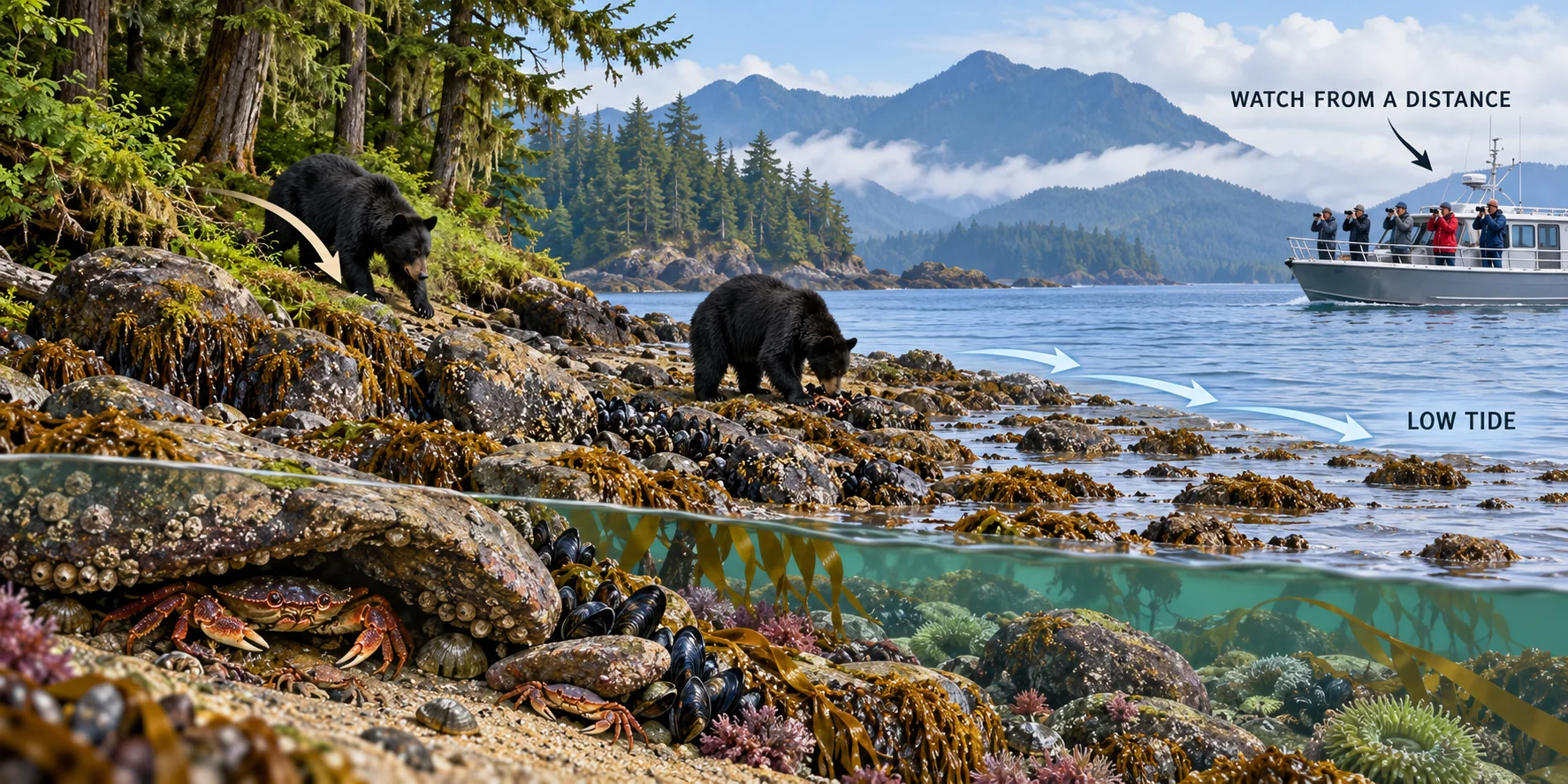
A black bear trip from Tofino can fit into a shorter west-coast itinerary. Around Clayoquot Sound, operators use boats to look toward the shore at low tide, when bears may turn over rocks while foraging. The connection is useful for planning: tide times move, so departure times can change from day to day. A good tide still may bring no sighting.
The Whale Centre lists an open-boat outing of about 2.5 hours and an April–October season. Its published example rate was CA$169 per adult before applicable taxes and fees, checked October 30, 2026. Confirm the current year and date rather than assuming that rate remains available. Other operators offer covered boats; ask about age, height, mobility and weather policies before choosing a vessel.
Choose this when: Your group wants a shorter guided wildlife trip and is comfortable on the water. Ask if the boat is open or covered, what is supplied for rain and cold, and how much advance check-in is required. If your main goal is a grizzly, a coastal black bear trip is a different product: ask about the target species before booking.
The Rockies: enjoy wildlife without making a roadside encounter the goal
Banff and other mountain parks protect habitat used by bears, but a park visit is not a timed bear-viewing show. Parks Canada explains how to watch wildlife responsibly in its mountain-park guidance. Obey closures, stay in your vehicle when wildlife is near the road, and do not stop where doing so creates a traffic hazard. Never feed an animal or attempt to draw it closer.
On trails, check current notices at the visitor centre and understand the route before leaving. Carry bear spray where appropriate, know how to use it and follow the park's current advice. Our bear spray guide covers choosing and carrying it. A bear viewed from far away can change direction quickly; give it space and a route to move away. A photograph is not worth disrupting the animal or putting other visitors at risk.
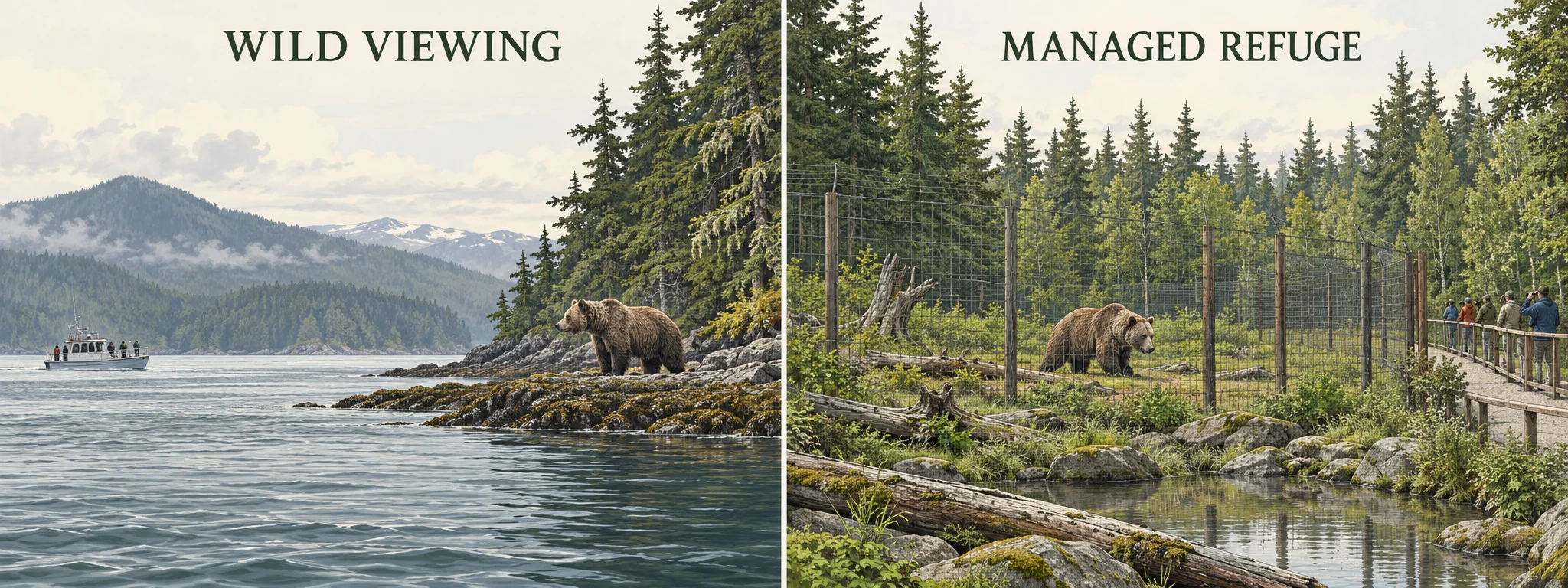
A managed refuge is a different experience
Kicking Horse Mountain Resort near Golden has a grizzly bear refuge. A Viator day trip from Banff describes a visit to the enclosed refuge and scenic stops in Yoho. The resident bear is a rescued bear in a managed habitat, not a wild sighting. The listing also warns that seasonal itineraries can change. This distinction matters if your priority is observing free-ranging wildlife; if predictable access and interpretation matter more, a refuge may suit your group.
When to go: match the animal to the trip
There is no single best bear-viewing month for all of Canada. The trip decision starts with the species and the place:
- Polar bears near Churchill: Parks Canada identifies October and November as the main tourism season; weather and sea-ice conditions affect trips.
- Coastal grizzlies: Ask an operator about its exact season and river access. Toba Inlet's cited operator lists late August to mid-October; this is that operator's window, not a province-wide wildlife calendar.
- Coastal black bears: Tofino operators schedule around tides and offer seasonal departures. Ask for the tide-based departure time and the relevant year's calendar.
- Mountain parks: Bears may be encountered at various times in the active season. Local closures, food availability and weather affect what is safe and open.
Avoid filling the whole itinerary with non-refundable connections. Allow a buffer around a boat day or remote flight, and ask whether an operator offers a different departure or refund if weather prevents travel. Ask separately what happens if the trip runs but no bear is seen: a weather cancellation and a no-sighting policy are not necessarily the same thing.
How much should you budget?
The examples above show why comparing headline prices alone is misleading: an approximately 2.5-hour Tofino black bear outing is not equivalent to a full-day boat-and-land grizzly trip to a remote inlet. Churchill requires an additional remote transport and lodging decision. Prices change, and the listed amounts are examples, not current quotes for your party.
Build your own comparison using the same categories for each option:
- Travel to the departure point: Flights, rail, ferry or car rental, parking and transfers.
- Accommodation: Nights needed before and after the tour, including a possible weather buffer.
- Tour price: Number of travellers, taxes, fuel or conservation fees, and any equipment fee.
- What is included: Meals, transport on the day, guide, interpretation and access fees.
- Changes and cancellations: Deposit schedule, refund deadline, weather policy and insurance terms.
For example, the Whale Centre's CA$169 adult rate excludes applicable taxes and fees. The Toba operator's page gives inconsistent prices, so request a date-specific written total. The Tofino rate does not include your travel to Vancouver Island, accommodation or an assumed gratuity. A family or private charter may be priced differently from an adult seat.
Two specific experiences to compare
Affiliate disclosure: CanadaFever may earn a commission if you book through the links below, at no extra cost to you. Details and availability can change; confirm the final offer on Viator.
Great Bears of Bute — Homalco Wildlife & Cultural Tours
Departs: Campbell River, British Columbia. Experience: Approximately 8–9 hours; the listing describes a boat journey, Orford Bay, lunch and Homalco cultural interpretation. This is a wild grizzly-viewing trip. Guests must be able to manage stairs and the listing says it is not wheelchair accessible; check current requirements and the conditions for your group. The listing has conflicting group-size statements, so ask the supplier rather than assuming a capacity.
A coastal grizzly-viewing trip
Affiliate links: We may earn a commission when you book through these links, at no extra cost to you. Check current dates, prices and terms on Viator.
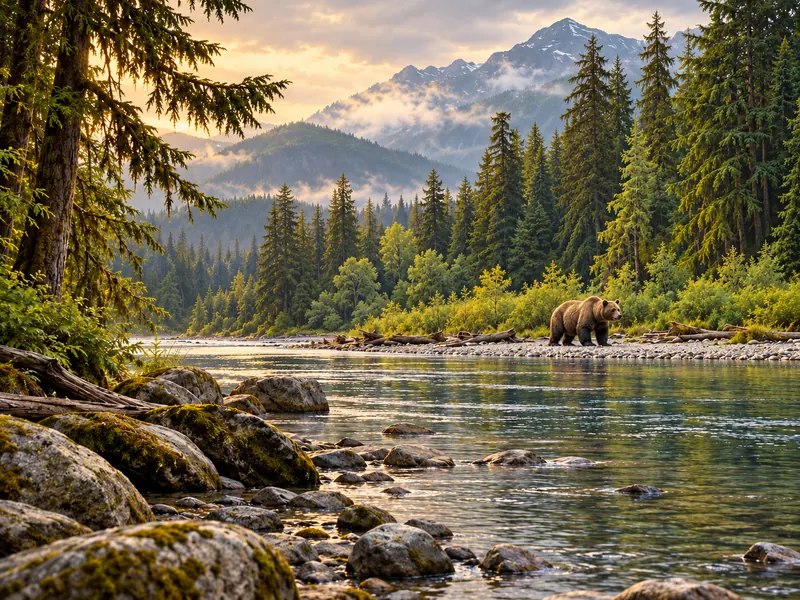
Campbell River departure / Bute Inlet, British Columbia
Great Bears of Bute: Grizzly Bear Viewing & Indigenous Cultural Tour
- Depart from Campbell River for a Bute-area wild-bear viewing excursion.
- Homalco-guided cultural interpretation accompanies the coastal wildlife outing.
- Allow approximately eight to nine hours and confirm the seasonal itinerary.
Check meeting arrangements, mobility requirements and weather terms. Wild bear sightings are not guaranteed.
Check Bute bear-viewing dates on ViatorDiscover Grizzly Bears from Banff — Discover Banff Tours
Departs: Banff, Alberta. Experience: Approximately 10 hours; this day trip includes return transport, a chairlift and a visit to the Kicking Horse grizzly refuge near Golden, with scenic stops in Yoho. The grizzly is a rescued resident in a managed enclosure, not a wild sighting. The listing says it is not wheelchair accessible and the seasonal itinerary can change; check the specific date, lift operation and current terms before booking.
A grizzly-refuge day trip from Banff
Affiliate links: We may earn a commission when you book through these links, at no extra cost to you. Check current dates, prices and terms on Viator.
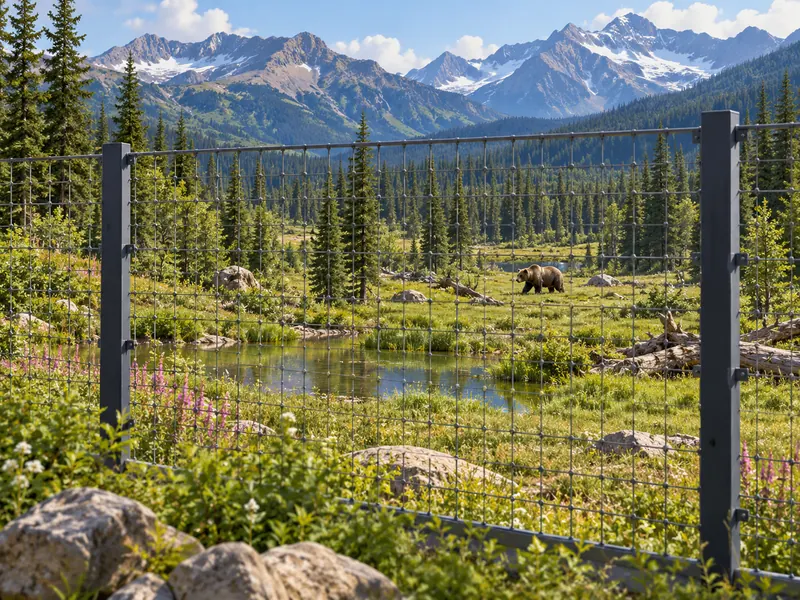
Banff departure / Yoho National Park / Kicking Horse refuge, British Columbia
Grizzly refuge and Yoho day trip from Banff
- Visit resident bear Boo inside the enclosed Grizzly Bear Refuge at Kicking Horse.
- A day trip from Banff combining the refuge with sightseeing in Yoho National Park.
- Return transport is listed; confirm the current lift and itinerary inclusions.
This is a refuge visit. Check seasonal dates and date-specific itinerary details before booking.
Check Banff refuge-tour dates on ViatorThese experiences serve different purposes: Bute is a wild viewing trip by boat, while the Banff itinerary visits a managed refuge. Neither promises that an animal will be visible at a particular moment. Check the date, total price and current inclusions directly.
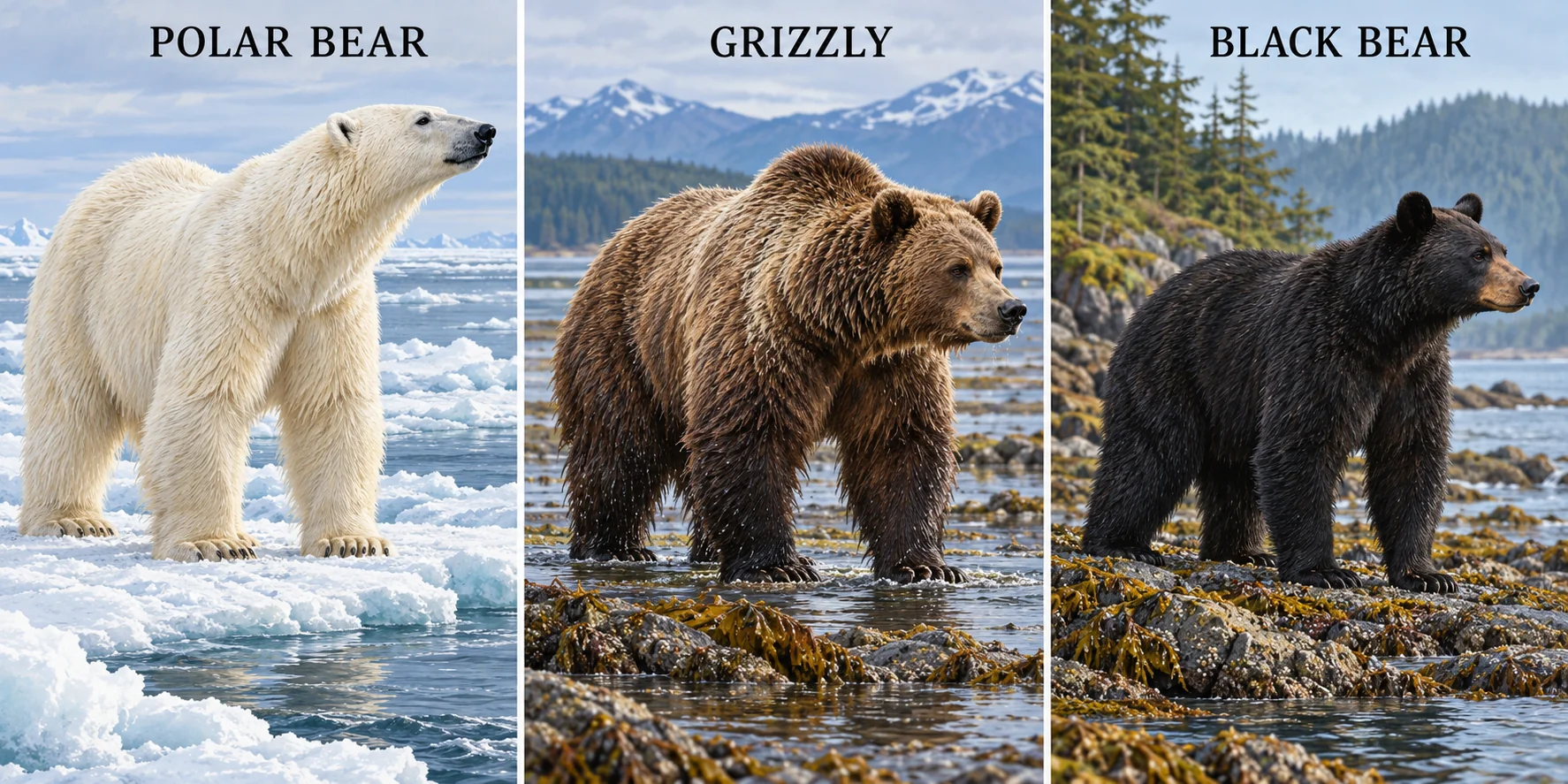
Identify the bear without relying on colour alone
A black bear may be brown, cinnamon or even pale; colour by itself is a poor identification method. A grizzly commonly shows a prominent shoulder hump and a more concave facial profile, while a black bear usually has a straighter profile and lacks that prominent hump. Polar bears have a long neck and pale coat, though lighting can alter how the fur looks. Use several features and the location, and leave the final identification to an experienced local guide when uncertain. Parks Canada's bear basics provides a starting comparison.
All three deserve space. A bear that appears calm is still a wild animal. Do not follow it for a better angle, place yourself between an adult and a cub, or move toward a carcass. The guide's decision to withdraw is part of responsible viewing, not a missed opportunity to negotiate a closer look.
For more choices, see our Canadian bear watching adventures guide and wildlife articles.
Before you book: questions that reveal the real trip
- Where is the meeting point, and is the viewing area actually inside a national park or in a different management area?
- Which species is the trip designed to observe, and does it visit wild habitat or a managed refuge?
- Who owns and operates the tour, and who leads interpretation on the land?
- What are the physical demands: steps, docks, boat transfer, walking and washroom access?
- What does the final price include, and what happens for weather cancellations or a trip without sightings?
- How does the operator respond if an animal approaches, and what local rules or permits apply?
Read the actual itinerary and cancellation conditions. A responsible operator should be able to explain how it respects local communities and wildlife, while being honest that conditions determine what happens on the day.
Frequently asked questions
Where can I see polar bears in Canada?
Churchill, Manitoba, is a well-known gateway for fall polar-bear viewing. Travel is by air or rail, and the exact tour area may be outside Wapusk National Park. Confirm the itinerary and current conditions with the operator.
Can I drive to Churchill?
No. Parks Canada states that there is no road access to Churchill. Check current air and rail service before booking the rest of your trip.
Are all bear tours around Campbell River on Vancouver Island?
They may depart from Vancouver Island but travel by boat to mainland inlets. Read the itinerary and meeting point: a listing category does not necessarily identify where the boat departs or where viewing occurs.
Is a grizzly bear refuge a wild bear sighting?
No. A refuge can house a rescued bear in a managed enclosure. Wild viewing means the animal is free-ranging, and a sighting cannot be guaranteed.
How close should I get to a bear?
Keep your distance and follow current park rules and your guide's instructions. Do not approach for a photograph or try to cause a reaction. Distance requirements vary by jurisdiction and situation.
Can I guarantee a bear sighting?
No. An operator may offer a raincheck or other policy, but that does not guarantee an animal will appear on a specific departure. Read the exact terms before booking.