

Compare Ontario pheasant-preserve packages, shared guide fees, licence documents and cancellation terms. Estimate your group's starting cost.
- Start with the current official rules for Pheasant Hunting Preserves Ontario; seasons, permits, and limits can change by province or management zone
- Check the date, location, species, and licence requirements before using any checklist or trip plan
- Use the guide to spot practical risks: closures, gear restrictions, local exceptions, and proof you may need in the field
Bottom line Pheasant Hunting Preserves Ontario is safest when you verify the current official rule first, then plan gear, timing, and travel around that rule
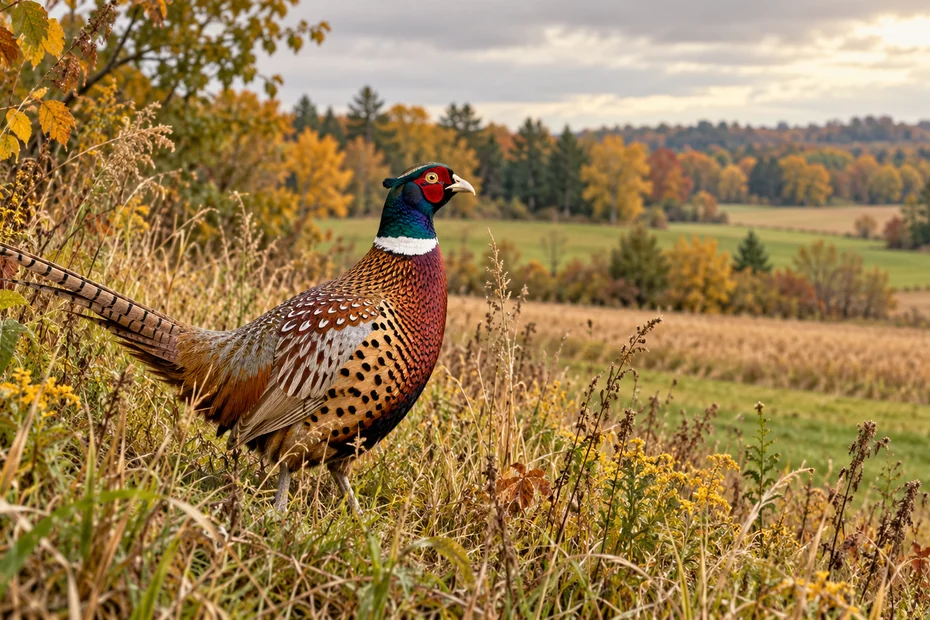
Ontario pheasant hunting preserves offer different outings. One published offer starts with four pheasants per hunter and a separate guide charge; another bundles ten birds with guiding and other services. Compare the whole booking, then check the documents and arrangements for a licensed preserve.
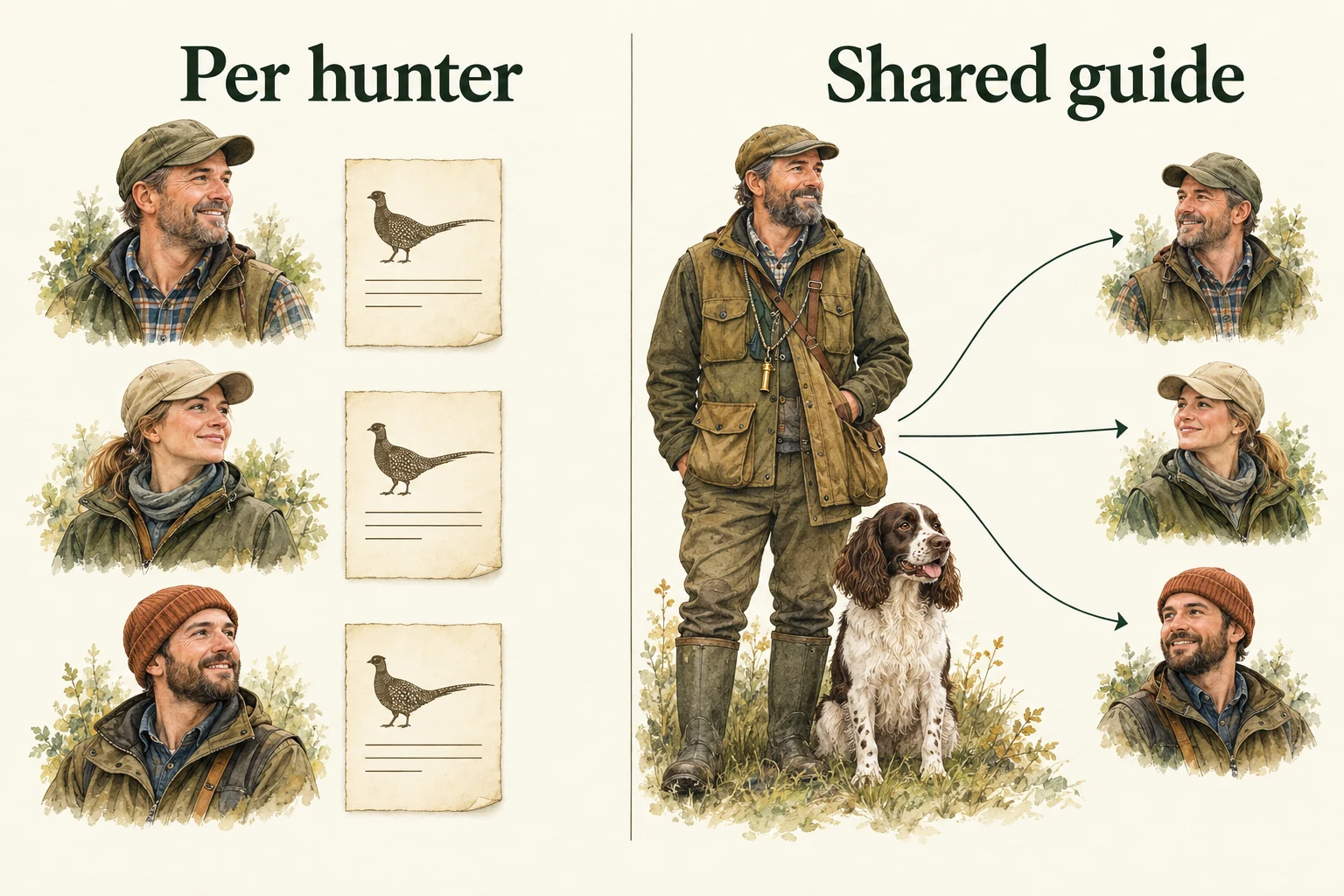
Choose a booking that fits your group
A licensed game bird hunting preserve has a specific regulatory status. An ordinary farm, a bird supplier and a private field with released pheasants are not interchangeable descriptions. Ask whether the activity is on the licensed preserve and which species its licence covers. This matters more than whether a website calls the outing a preserve hunt.
A bird-package model usually makes the starting allocation easy to see. It can leave you to arrange guiding, dog services and other details separately. A bundled outing collects more of those services into one advertised price. Compare the work included with the services your party needs.
For a first visit, find out who leads the session and what experience participants must already have. A guide can explain that property’s procedures and handle the dog, but a paid place is not a substitute for hunter education. An experienced friend should not promise that a newcomer can participate before the operator has checked their documents.
- New preserve visitors: ask about the briefing, walking conditions and who stays with the party.
- Hunters bringing a dog: obtain approval for that dog and clarify whether the booking changes.
- Mixed parties: distinguish hunters from observers and ask whether companions are permitted.
Ontario permits ring-necked pheasant hunting throughout the year on a licensed preserve, by arrangement with the operator. That is a legal framework, not a year-round business-hours promise. Bird’s Eye View, for example, describes an operating period from late August to late April, subject to weather and supply. A winter visit and a warm autumn visit can also have very different walking conditions. For a separate wild-bird outing, our upland bird hunting guide introduces the broader activity; check the applicable species and local rules separately.
Published Ontario pheasant preserve prices
These are two operator examples checked on 30 October 2026, not a provincial average or a ranking based on visits. All amounts below are Canadian dollars. Bird’s Eye View labels its schedule 2026/2027; Hearn’s page does not label a season. Confirm the applicable dates and any tax or extra charge in your written quotation.
| Operator and location | Published half-day or session offer | Important difference |
|---|---|---|
| Bird’s Eye View, Baltimore, Northumberland County | Four-pheasant minimum: $110 per hunter; additional pheasants $25 each. | Guide and dog are separate: $100 for one to four hunters for up to three hours. |
| Hearn Hunting & Fishing Lodge, Harrow | Half day: $1,025 for one person; $650 each for two; $525 each for three; $463 each for four. | Ten birds per hunter, guide and dog, cleaning/packaging, a light meal and listed clay-target activity are bundled. |
The $110 starting figure and the $1,025 solo package buy different things. For the smaller bird-package example, one hunter adding the listed guide starts at $210. Four hunters taking four birds each would start at $540 for the party, or $135 each. Those figures include the same $100 shared guide charge; they do not include unspecified additions.
Bird allocation is another large difference. Four hunters with a four-bird allocation account for sixteen birds in the booking. Four hunters with ten each account for forty. Ask what that allocation means operationally, how extras are agreed and how any unused allocation is treated. It is not a promise that you will encounter or take home that number.
Hearn lists bird cleaning and packaging and a light breakfast or lunch in its half-day offer. Check those inclusions against your actual itinerary, rather than treating a longer list as automatically better value. A group that wants a simple field visit may value services differently from a group organizing a hosted occasion.
Compare written totals that use the same participant count and planned allocation. Then mark the differences you cannot make equivalent: session length, food, cleaning, dog service and travel. Dividing the price by the number of birds alone hides those differences and still says nothing about the quality of the field experience.
A closer comparison: ten pheasants per hunter
To compare the advertised allocations more closely, start with ten pheasants per hunter on each side. At Bird’s Eye View, four birds cost $110 and six additional birds add $150. That gives a $260 bird package per hunter before the shared guide. A solo booking with that allocation and the listed guide would therefore start at $360; two hunters would start at $620 together, or $310 each.
For four hunters, the same calculation is four times $260 plus $100: $1,140 for the group, or $285 each. Hearn’s published four-person half-day figure is $1,852, or $463 each, with its listed bundled services. This matches the bird allocation; the other inclusions and schedule still differ.
The $712 gap between those four-person examples is not a measured saving for an equivalent product. Before choosing, ask what cleaning, food, the session and guiding would cost or involve in each actual booking. A group that needs those services may reach a different decision from one bringing an experienced dog and arranging its own meal. Use the numbers to compare the offers, rather than to rank the businesses by price alone.
Estimate the bird-package group bill
This calculator uses Bird’s Eye View’s posted 2026/2027 pure-pheasant schedule: $110 per person for four birds, $25 for each extra bird, plus one $100 guide-and-dog service for one to four hunters for up to three hours. It excludes tax and unlisted extras. It cannot establish availability or replace a quote.
The calculator needs JavaScript. For four birds each with the shared guide: one hunter $210 total; two $320; three $430; four $540. These are arithmetic examples before tax or unlisted extras.
Documents: the preserve exemption has conditions
The Ontario hunting summary’s preserve section calls for a valid Outdoors Card and hunter accreditation, such as a licence summary showing that accreditation. Hunters using a gun also need proof of firearm accreditation. Present the required documentation to the owner or operator before hunting.
Section 97.1 of Ontario Regulation 665/98 provides a conditional exemption from a separate licence to hunt the relevant birds on a game bird hunting preserve. It is not permission to hunt on any private property. The operator’s preserve licence must cover the species concerned.
An Outdoors Card used for fishing does not, by itself, show that the holder meets the hunting accreditation requirement. Check the accreditation record rather than discovering a missing document at reception. If you trained elsewhere or are visiting from outside Ontario, ask the ministry which proof is accepted for your circumstances; do not assume a familiar-looking foreign card is equivalent.
Ontario’s private-land bird-release guidance describes a different arrangement, including a small-game licence requirement. It does not turn a leased field into a licensed preserve. Use the current regulation for a private-release plan instead of borrowing the preserve exemption.
Federal firearm possession, transport and supervision requirements are separate from the provincial preserve booking. Verify the requirements that apply to you before travel. The operator should explain its documentation process, but a confirmation email is not legal authorization. For a broader hunting trip, our Ontario hunting licence guide helps organize the questions; official rules govern.
Plan the visit around the actual property
Ask for the meeting address and arrival time separately from the session’s advertised start. Checking paperwork, meeting the guide and putting on suitable clothing can take time. Do not use a road-map pin for the business as permission to enter whichever nearby field looks suitable.
- Before leaving: confirm the party, documents, access directions, weather decision and operator’s equipment policy.
- At reception: review the agreed package and identify the person leading the session.
- Before entering the field: listen to the on-site briefing and ask about any instruction you do not understand.
- Before departure: settle agreed extras and collect the required bird statement if taking pheasants away.
Describe mobility needs in practical terms. Ask about uneven ground, wet grass, standing water, rest opportunities and distance from the parking area. A description such as “suitable for beginners” says little about walking difficulty. If someone may need to stop early, settle how they return and whether the rest of the group can continue.
Discuss high-visibility clothing, footwear and eye and hearing protection with the operator. Our hunting gear guide can help organize the clothing and personal-equipment questions. Bring layers that allow comfortable movement in the expected weather. Our waterproof hunting boot guide discusses footwear choices. A muddy path may call for different footwear from a dry field; a photograph taken in September does not describe the surface on a February date.
The guide’s signals, property boundaries and handling procedures belong in the actual briefing. Keep attention on the person responsible for the group and ask for an explanation before acting on an unfamiliar instruction. Reading a general guide cannot replace accredited training or the operator’s assessment of the day’s conditions.
Dogs and mixed bird allocations
If bringing your own dog, describe its training and get the operator’s agreement before booking. Ask whether it works alone or alongside a guide’s dog, where it can rest and drink, and what happens if it cannot continue. An invitation to bring a dog does not settle how multiple dogs or visiting companions will be managed.
Keep non-hunting observers in the discussion. A person joining for company still affects group size and the briefing. Ask who may accompany the party, what clothing is required and whether the advertised maximum counts only hunters or everybody present. Do not add a companion at the meeting place without checking.
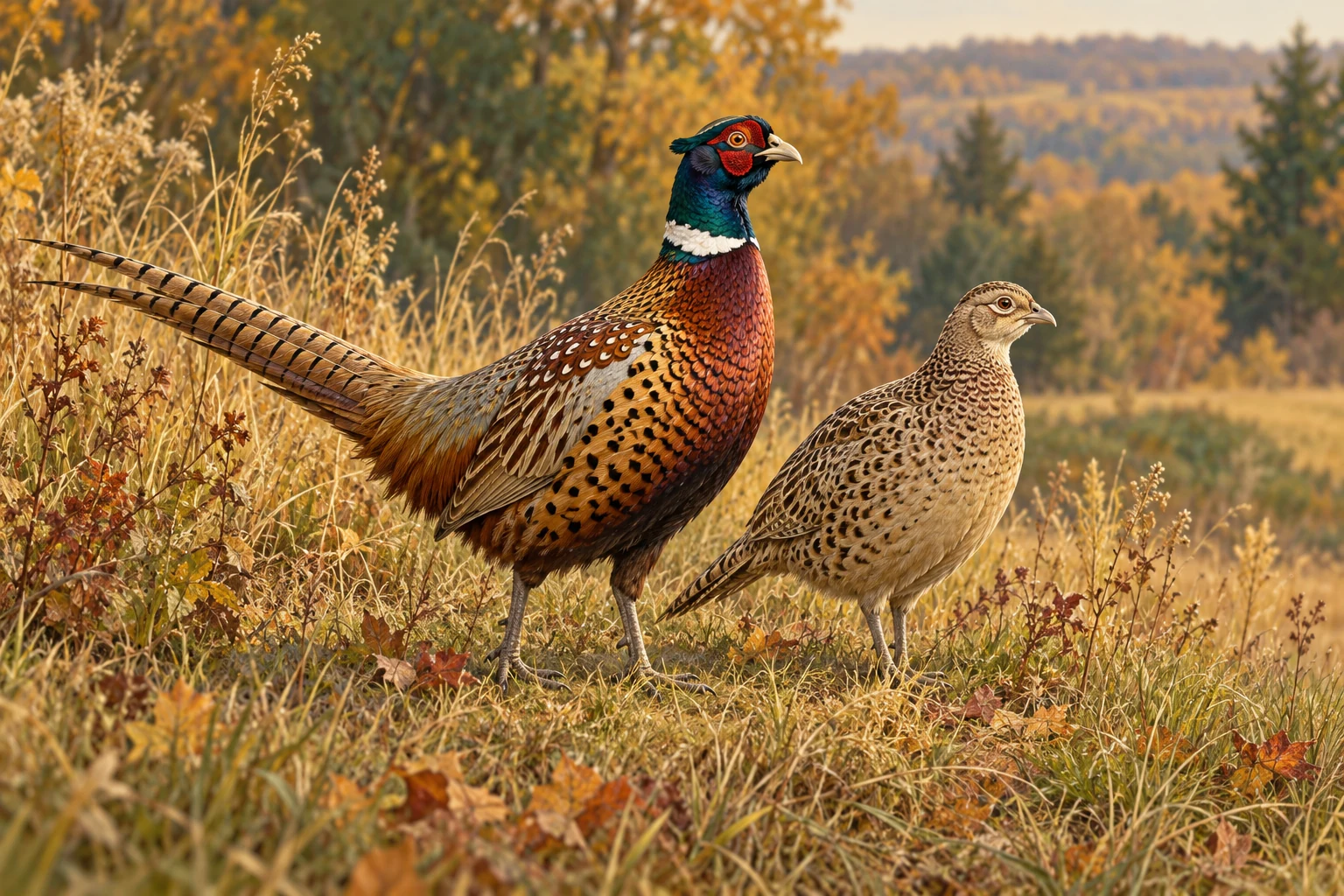
Clarify the species in a mixed booking as well. An operator may list pheasants, chukar and quail with different minimums and availability. The calculator above only covers the stated pure-pheasant option. Swapping species or combining allocations needs a new quotation, not a guess based on the lowest advertised per-bird price.
Taking pheasants home: keep the operator’s statement
Under section 99 of the provincial regulation, obtain the operator’s required statement before removing game birds from the preserve. It records the name and address of the preserve, the name and address of the person entitled to remove the birds, the date and species/count. Keep it for as long as any described bird remains in your possession and produce it to a conservation officer on request.
Agree who receives which birds before the paperwork is prepared. Cleaning and packaging are separate practical services, not a replacement for that record. Check the written statement while still at the preserve, when an incorrect name or count is easier to resolve with the operator.
Plan the journey home as part of the outing. Ask when the birds will be ready, whether cleaning is included and what the provider recommends bringing for transport. Avoid an itinerary that assumes an immediate departure if processing happens after the field session. If the party continues to another province or crosses a border, check the destination’s applicable requirements separately.
Check the deposit and payment deadline
Bird’s Eye View says a 25% deposit may be required for large hunts or bookings more than three weeks ahead. It also says payment is due in full before the hunt starts, credit cards are not accepted, and an e-transfer should be received the day before. Check the agreed method and deadline when confirming the date, especially if one friend is collecting the group’s payments.
A deposit and a per-person price can look deceptively similar. Suppose the operator confirms a $540 group quote as the deposit basis and requests 25%. That would be a $135 group deposit, leaving $405 on that stated basis. It would not mean that every participant had paid their share. This is an arithmetic example; the operator must confirm the actual quote, tax treatment and deposit requirement.
Keep the booking reference, receipt and remaining balance together. Agree who is the contact if the date or party changes, and check whether an alteration changes the quote or deposit. A collection of individual bank transfers between friends is not a substitute for the provider’s confirmation of what has been paid.
Guide’s Log: a weather credit can leave a hotel bill
For a hypothetical Friday outing on 20 November, I would put the accommodation deadline and the preserve’s weather review on the same calendar. Suppose an independently booked hotel allows free cancellation only until 17 November. Bird’s Eye View says weather-related cancellations can be reviewed the day before a hunt. In this example, that review would fall on 19 November, after the hypothetical hotel’s deadline.
The business says inclement-weather changes receive a credit and a new date rather than a refund. A credit keeps value with that provider; it does not reimburse a separate room or guarantee that every friend can attend the replacement date. I would find out who holds the credit if one person pays for the party.
That gap would affect my choice of accommodation, even if the hunt itself looked affordable. I would compare flexible lodging, a day trip or accepting the possible room cost. I would also ask how a replacement date is arranged and whether the same party size must return.
The dates and hotel policy are invented for this worked example. The preserve weather policy comes from its published terms. The useful comparison is between separate businesses’ actual deadlines. Save each policy with the reservation so the person organizing the trip is not left reconstructing it from a group chat.
Hearing protection to discuss with the preserve
Affiliate links: We may earn a commission from qualifying purchases, at no extra cost to you. We have not field-tested these items. Check the selected model, current price and delivery options on Amazon.
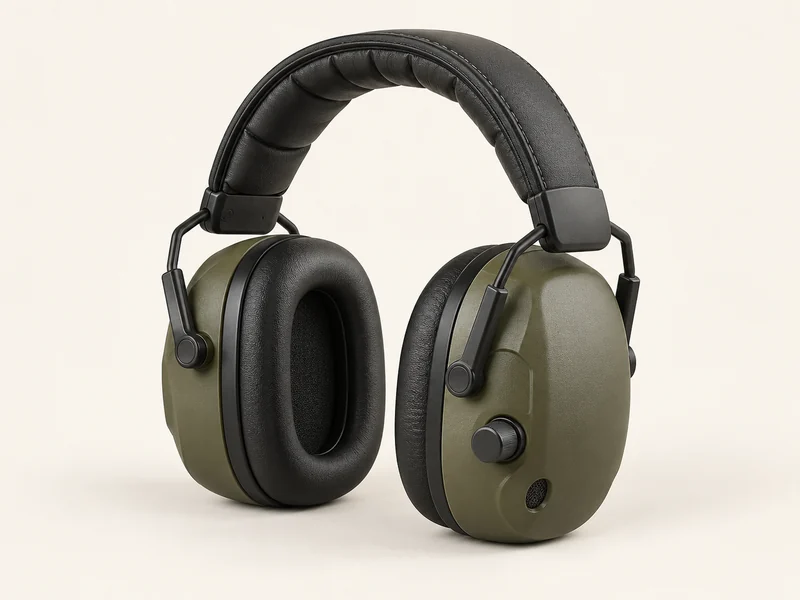
For discussing hearing protection
Howard Leight Impact Sport R-01526 Earmuffs
- Electronic earmuff with manufacturer-listed NRR 22 dB.
- Folding design for storage and transport.
- Check the protective seal with your glasses; the laboratory rating is not personal protection assurance.
Electronic amplification supports hearing ordinary sounds; a proper protective seal is still needed. Check fit with your eye protection and clothing, and confirm the model, instructions and suitability with your operator.
Product and care sources: CCOHS hearing-protector guidance · Manufacturer’s model and specifications
Frequently asked questions
Do I need a small-game licence at an Ontario pheasant preserve?
Section 97.1 provides a conditional preserve exemption. You still need the required valid Outdoors Card and hunter accreditation, plus firearm accreditation where applicable. Confirm that the activity is on a licensed preserve and that its licence covers the species.
Can I hunt pheasants at a preserve all year?
Ontario permits ring-necked pheasant hunting year-round on licensed preserves by arrangement. Each business has its own opening dates, supply and weather constraints. A legal year-round framework does not mean a particular business is open every month.
Is the guide charged per hunter?
It depends on the offer. Bird’s Eye View’s posted 2026/2027 guide-and-dog service is $100 for one to four hunters for up to three hours. Its bird package is per hunter. Hearn bundles guide and dog in the cited half-day package.
Does the bird allocation guarantee my harvest?
No. Ask what the allocation means and how the operator handles extras or an interrupted session. An advertised bird count is not a guarantee of encounters, shots or birds taken home.
What paperwork accompanies birds taken home?
Obtain the operator’s required statement before removing game birds. It records the preserve, entitled person, date and species/count. Keep it while any described bird remains in your possession; see section 99 of the current provincial regulation.