
Choose the best fishing rain gear for Canada by rain type, boat exposure, breathability, jacket and bib fit, layering and safety.
- Best all-day system: waterproof breathable jacket plus bibs with sealed seams and room for layers.
- Best boat priority: secure hood, high bib coverage, protected front closure and cuffs that seal around gloves.
- Best budget strategy: buy a sound shell first and manage warmth with separate layers.
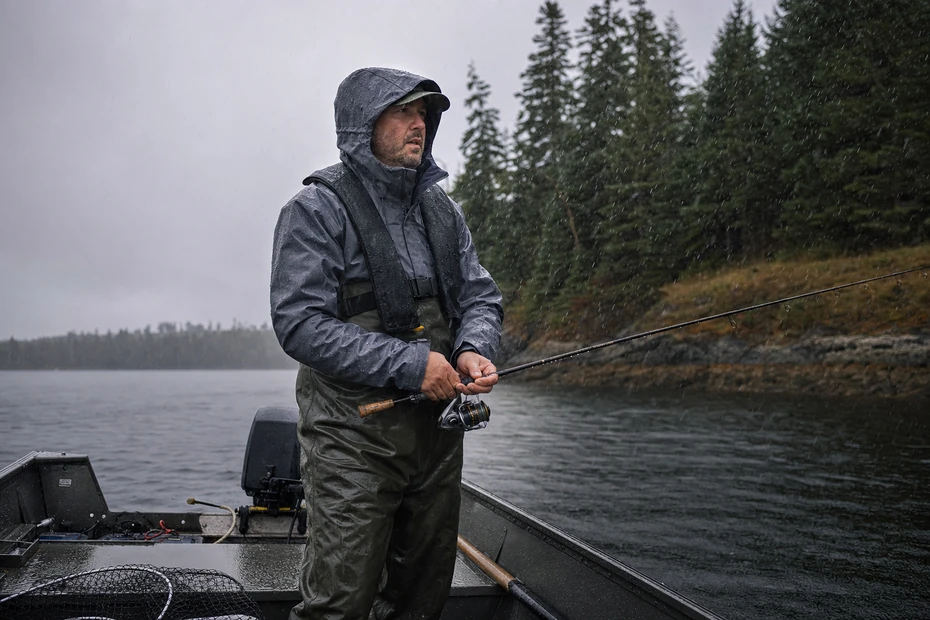
The best fishing rain gear Canada anglers can wear keeps water out without trapping so much sweat that the layers underneath become wet. That balance changes between a warm shore shower, an all-day Great Lakes run and near-freezing rain on a northern lake.
This guide compares shell types, jackets, bibs and emergency rain layers by actual fishing use. It also shows how to test hood vision, cuffs, seat coverage and casting mobility before a storm exposes the weak point.
Key Takeaways
- Best all-day system: waterproof breathable jacket plus bibs with sealed seams and room for layers.
- Best boat priority: secure hood, high bib coverage, protected front closure and cuffs that seal around gloves.
- Best budget strategy: buy a sound shell first and manage warmth with separate layers.
- Packable backup: a light poncho or suit can save a fair-weather trip, but it is not the same as a storm-ready boat system.
- Safety comes first: rain gear must not replace or obstruct the correct lifejacket or PFD.
Waterproof ratings are useful, but they do not tell you whether rain will run down your neck while watching a rod tip or whether the bib will bind when you kneel beside a fish.
🌲 The Guide’s Log
When I judge rain gear for fishing, I ignore the first ten minutes. Almost any shell feels convincing when it is clean, cool and dry. The honest test starts after an hour of casting, sitting on a wet seat, reaching into storage and turning repeatedly to watch a line. Water finds the hood opening, sleeve cuff, front zipper and gap between jacket and trousers. Sweat finds the lower back, elbows and chest. A shell that is technically waterproof can still leave the angler cold if the fit crushes insulation, the hood blocks side vision or the cuffs channel water into gloves. I picture three Canadian rain days: a warm July shower from shore, a cold October wind on an open lake and a long damp run where spray arrives from below as often as rain arrives from above. They need different answers. The July angler needs ventilation and packability. The October boat angler needs full bib coverage, a stable hood and room for a wicking base plus insulation. The long-run angler needs durable seat and knee areas. My default is a modular system. Use the shell to stop weather, separate layers to manage temperature and a proper PFD to manage immersion risk. That approach is easier to repair, easier to adapt and more honest than asking one insulated rain suit to work in every season.
Best Fishing Rain Gear Canada: Match the System to the Trip
Weather changes fishing behaviour as well as comfort. Our guide to whether fish bite in the rain covers tactics, while this page solves the clothing decision.
| Trip condition | Best shell direction | Layering priority | Mistake to avoid |
|---|---|---|---|
| Warm shore showers | Light waterproof breathable jacket or compact backup | Thin wicking base | Heavy insulated suit that overheats |
| Open-boat rain and spray | Jacket plus high bibs | Wicking base with adaptable mid-layer | Low-waist rain pants that expose the back |
| Cold shoulder-season rain | Durable shell with storm hood and bibs | Moisture control plus real insulation | Cotton layers that stay cold when wet |
| Remote trip | Serviceable shell plus repair kit and backup | Multiple thin layers | Depending on one delicate garment |
| Ice and slush | Purpose-built cold-weather outer system | Insulation and flotation considerations | Treating summer rain gear as an ice suit |

CanadaFever top pick
FROGG TOGGS Ultra-Lite2 rain poncho
A compact emergency layer for a day pack or small craft when the forecast is fair but a shower remains possible.
- Best used as a lightweight backup rather than an all-day open-boat shell
- Loose coverage can layer quickly over ordinary clothing
- Secure loose fabric around hooks, wind and moving boat equipment
Verify the current listing, size or configuration before ordering.
Affiliate disclosure: As an Amazon Associate, CanadaFever earns from qualifying purchases at no extra cost to you.
Choose Shell Construction by Exposure
Waterproof breathable laminates for active fishing
Breathable shells are the most versatile choice for casting, walking and mixed temperatures. Performance still depends on seam sealing, face-fabric condition, ventilation and the difference between the warm humid air inside and the weather outside.
A three-layer shell generally feels more structured and protects the waterproof membrane between fabric layers. Lighter constructions can pack smaller but may need more care around hooks, boat hardware and rough seats.
Non-breathable coated gear for hard spray and low activity
Commercial-style coated rain gear can be extremely effective against sustained water, spray and fish slime. The trade-off is internal moisture. It works best when physical output is moderate and ventilation is possible.
Emergency rainwear belongs in the backup category
A compact poncho or inexpensive suit earns a place in a tackle bag because something is better than a cotton hoodie in a sudden shower. It should not be confused with a fitted, durable jacket-and-bib system for cold wind or high-speed boat travel.
🍁 The Local Secret
Test the hood while looking down at a rod tip and then over both shoulders. A hood can appear perfect in a mirror but block peripheral vision when you turn toward another boat, a wave or a partner landing a fish. Hood control is a safety and fishing-performance feature, not cosmetic trim.
Jacket and Bib Fit Tests That Matter on the Water
Hood, collar and zipper
Adjust the hood over the hat you actually fish in. The brim should turn with your head without collapsing into your eyes. Raise the collar and simulate looking down, casting and netting.
A protected front zipper reduces direct water entry. Storm flaps add bulk but can help in persistent wind-driven rain. Zipper garages and drainage details matter more than decorative chest pockets.
Cuffs and sleeve reach
Extend both arms as if casting and steering. Sleeves should cover the wrist without pulling the jacket tight across the shoulders. Adjustable cuffs need to close around bare wrists or glove gauntlets without creating a funnel.
Bibs, seat and knee mobility
Sit, kneel and step onto a raised surface. The bib should cover the lower back when the jacket lifts, and the crotch should not bind. Reinforced seat and knees help anglers who sit on wet benches or work from the deck.
| Fit test | Pass | Warning sign |
|---|---|---|
| Cast overhead | Sleeves stay at the wrist and hem covers the back | Cuffs climb and jacket exposes waist |
| Turn both ways | Hood follows head with usable side vision | Fabric blocks peripheral vision |
| Sit on a bench | Bib remains comfortable and chest stays covered | Straps pull or front gaps |
| Kneel and stand | Knees articulate without binding | Tightness across thighs or crotch |
| Wear a PFD | Closures, pockets and hood remain usable | Bulk pushes the PFD out of position |
Layering for Cold Canadian Rain
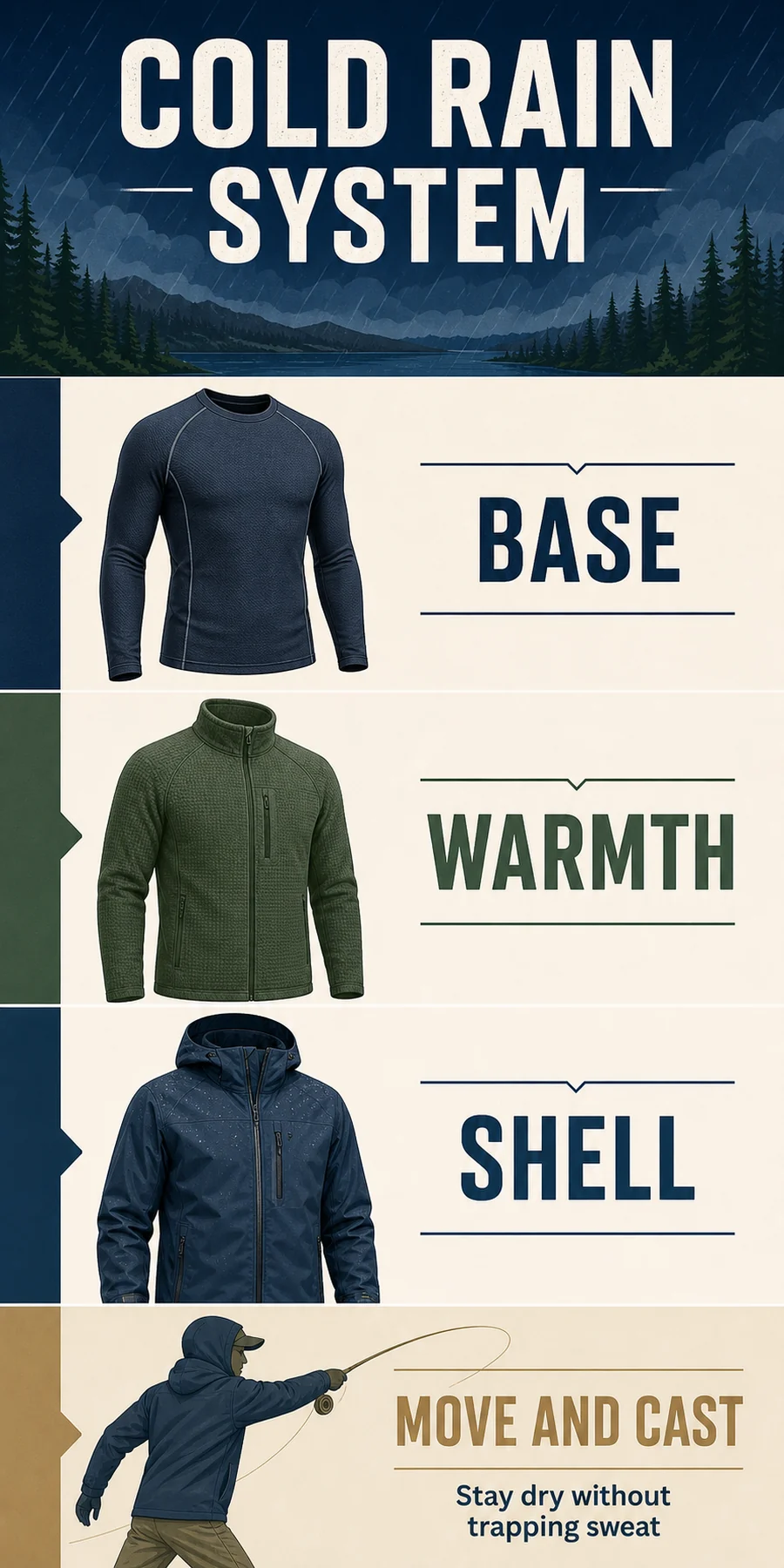
Start with a synthetic or wool base that moves moisture away from skin. Add insulation according to temperature and activity. Put the waterproof shell outside, leaving enough room for loft without excess fabric that catches wind.
For late-season hunting crossover, the Canadian base-layer guide explains moisture and insulation choices. For frozen-water conditions, compare purpose-built suits in StrikerICE Climate vs IceArmor Edge.
Check Environment and Climate Change Canada’s current marine forecasts and warnings before exposed-water trips. Clothing improves tolerance; it does not make unsafe conditions acceptable.
Rain Gear, PFDs and Immersion Risk
Wear an appropriate Canadian-approved lifejacket or PFD for the activity and conditions. Transport Canada’s lifejacket and PFD guidance explains fit, approval labels and maintenance.
Try the rain shell and insulation under the PFD before the trip. Bulky collars, chest pockets and hoods can interfere with comfort or access. The PFD must remain correctly fitted.
This guide is general information, not emergency or professional safety advice. Gear performance changes with wear, contamination, storage, fit and weather. Follow garment care instructions, carry a dry change of clothing and turn back when conditions exceed the boat, crew or forecast.
Care and Field Repair
- Wash with the detergent and cycle specified by the garment maker
- Restore the face fabric’s water-shedding treatment only with an approved product
- Inspect seam tape, cuffs, zipper teeth and high-wear seat areas
- Carry compatible repair tape on remote trips
- Dry garments fully before storage
- Keep hooks and fish spines away from thin shell fabric
Boat anglers can review spray protection and layout in our fishing-boat guide. Remote travellers should also read the planning and payload cautions in fly-in fishing and hunting lodges.
Compare the strongest alternatives by use case
These picks solve different problems. Match the product to your actual conditions instead of treating one model as universally best.

Simms Freestone stockingfoot chest waders
A wading-specific lower-body solution for river anglers who need waterproof coverage above the waist; pair with a suitable jacket and wading safety plan.
- Chest-height coverage suits wading rather than open-boat spray alone
- Stockingfoot design requires correctly sized wading boots
- Inspect seams and follow safe wading limits before every use
Verify the current listing, size or configuration before ordering.
Compare fishing rain jackets and bibs on Amazon.com →
Affiliate disclosure: Qualified purchases may earn CanadaFever a commission. Product availability and configurations can change.
✅ The Pre-Trip Protocol
- Step 1: Check the latest forecast and decide whether the trip is still within the crew and boat’s limits.
- Step 2: Dress in the full base, insulation, shell and PFD system; cast, sit, kneel and turn both ways.
- Step 3: Pack a dry layer, compatible repair tape and a waterproof location for communication and emergency gear.
Best Fishing Rain Gear Canada: Frequently Asked Questions
Do I need fishing-specific rain gear?
Not always, but fishing-specific jackets and bibs often improve hood control, cuff sealing, seat durability and mobility around rods, nets and boat seats.
Are rain pants or bibs better for boat fishing?
Bibs normally give better lower-back and chest coverage in spray and seated positions. Rain pants pack smaller and may be enough for shore fishing or brief showers.
Should rain gear fit loose?
It needs room for the layers you will actually wear without becoming baggy enough to catch wind, hooks or equipment. Test the full system before buying.
Is a higher waterproof rating always better?
No. Construction, seam sealing, breathability, fit, ventilation and garment condition all affect real use. A higher laboratory number cannot fix a poor hood or leaking cuff.
Can I wear an inflatable PFD over rain gear?
Only when the PFD is approved and used exactly as instructed for the activity. Verify fit over the complete clothing system and check any cold-weather or water-activity restrictions.
Bottom line: For most all-day Canadian boat fishing, a breathable jacket and high bibs over modular layers is the most adaptable system. Keep a compact backup for fair-weather trips, but do not confuse it with storm-ready gear.