

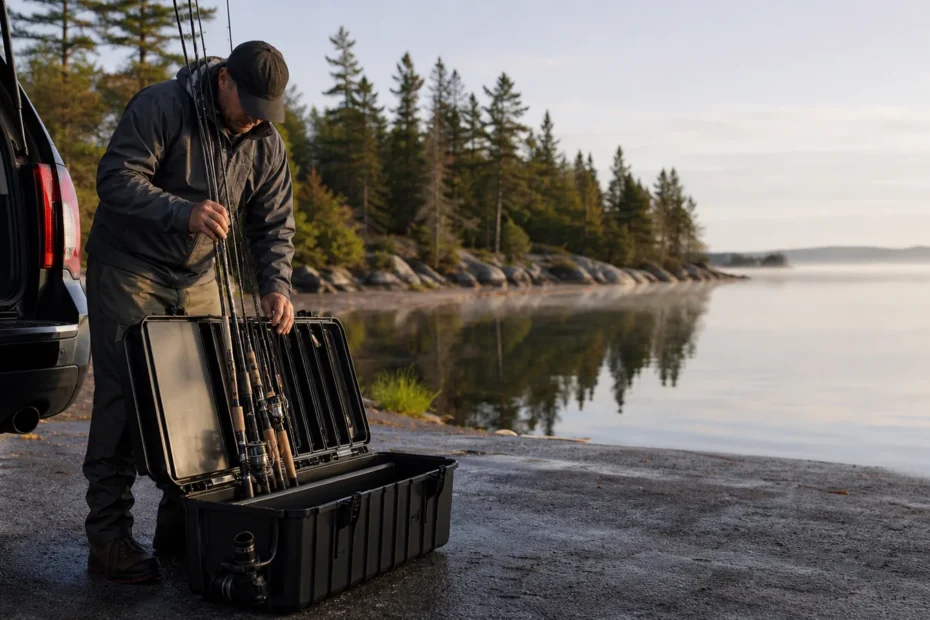
Compare fishing rod cases in Canada for car trips, airline travel, fly rods and ice rods. Choose the right length, protection and capacity.
- Use a rigid hard-shell container for airline travel; Air Canada specifically requires rods in a rigid or hard-shell shipping container.
- Measure the longest collapsed rod section, not the assembled length.
- Decide whether reels travel attached; reel clearance changes the case shape.
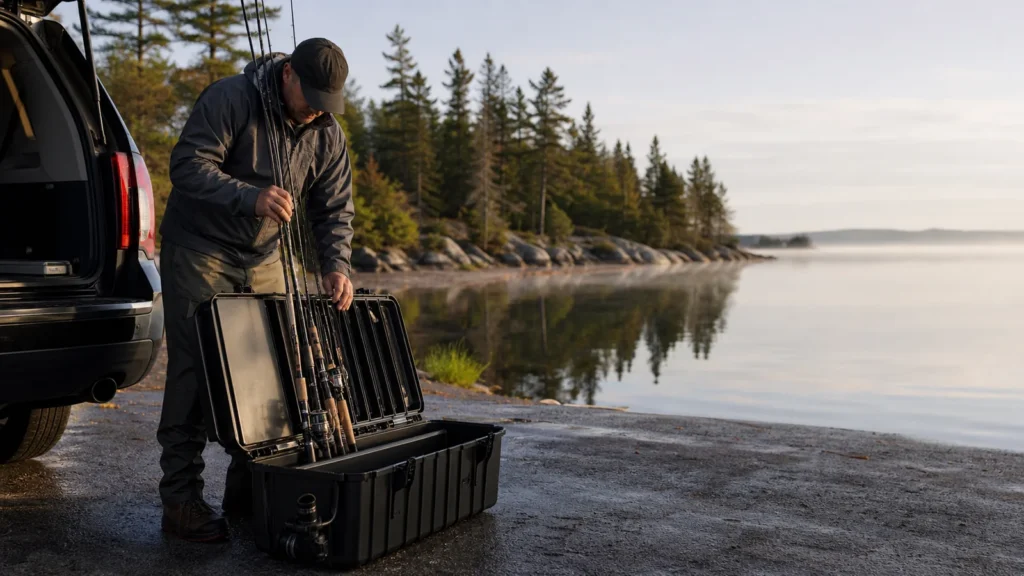
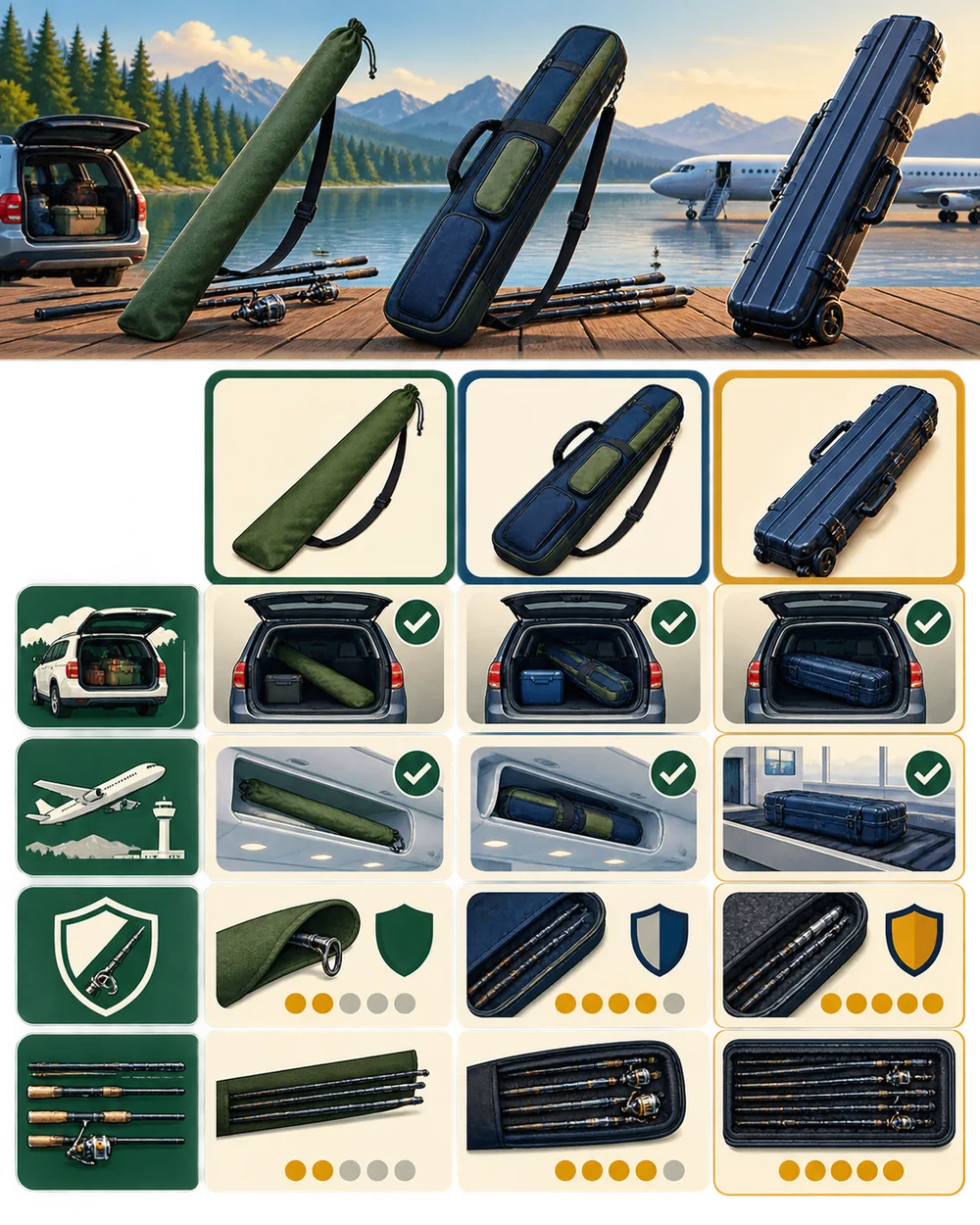
The best fishing rod cases Canada anglers can choose depend first on how the rods travel. A soft sleeve prevents tangles in a car, a padded bag organizes several combinations, and a rigid telescoping case is the defensible choice when airline or shared cargo handling introduces crushing and impact.
This guide turns rod length, reel storage, airline rules and winter use into a simple selection path. It also explains when convenience is being mistaken for protection.
Best Fishing Rod Cases Canada: Match the Transport
Build the case around the rods chosen in our best fishing rods guide or fly rod and reel guide. Keep a portable rod repair kit outside the sealed travel case for field access.
| Transport | Best case type | Reels attached? | Priority |
|---|---|---|---|
| Short car trip | Sleeve or padded bag | Optional | Tangle control and fast access |
| Roof rack or open truck bed | Rigid weather-conscious case | Usually removed | Tie-down and water protection |
| Airline | Rigid telescoping hard case | Usually removed and padded separately | Crush resistance and carrier compliance |
| Fly-in lodge | Rigid case sized to operator limits | Ask the operator | Weight, aircraft dimensions and transfers |
| Ice fishing | Short rigid rod box | Often yes | Reel clearance and cold-safe latches |
How We Compared Fishing Rod Cases
This shortlist is based on transport risk rather than a single best-case ranking. We compared the current product listings and matched each design to four pressures: crush exposure, rod-section length, reel clearance and the amount of handling outside the angler’s control. A hard airline tube, a short ice box and a padded fly-rod bag solve different problems.
We did not treat a fabric sleeve as flight protection or assume a rigid shell makes packing foolproof. Guides can still break when loose rod sections strike one another, a tip touches an end cap or a reel handle becomes a lever. Airline and charter policies also change, so the exact carrier and itinerary remain part of the buying decision.
Research limits
Product dimensions and stated capacity help build a shortlist, but tolerances vary with reel size, handle length and padding. CanadaFever has not claimed baggage-handler testing of these cases. Measure the exact combinations, confirm the seller’s current dimensions and test the closed case before travel.

CanadaFever fit-first pick
Plano Airliner Telescoping Rod Case
The rigid-case direction for air travel and vehicle cargo where crush protection matters more than compact storage.
- Telescoping hard-shell format adjusts to rod length
- Better crush protection than a fabric sleeve
- Measure the longest rod section and airline limits first
Confirm the exact model, size and Canadian availability before ordering.
Which of These Three Case Styles Fits Your Trip?
Plano Airliner: hard protection for flights and shared cargo
The telescoping Plano direction is the strongest fit when rods enter airline belts, lodge transfers or crowded vehicle cargo. Length adjustment helps one case serve several broken-down rod setups, while the rigid tube resists the broad crushing loads a soft bag cannot.
The trade-off is packing discipline. A long tube can allow sections to slide unless each blank is bundled and padded. Confirm the external length at the final setting, the closure and lock arrangement, and the carrier’s current oversize rules. Reels and loose tackle should be protected separately.
MTM Ice Fishing Rod Box: short, rigged winter combinations
The MTM box addresses a different geometry: compact ice rods often travel with reels attached. Reel cavities, handle depth and organized tackle space matter more than telescoping length. A rigid box can keep vehicle cargo away from delicate tips and small guides.
Fit the largest reel and longest handle you actually own. Cold plastic, snow around the latch and wet line can change how easily the box closes. Do not force a lid against reel handles or allow terminal tackle to move freely beside rod blanks.
Allen Cottonwood: organized vehicle and lodge transport
The Cottonwood padded bag suits anglers moving several fly rods and related gear through vehicles, cabins and controlled transfers. Its value is organization and lighter handling rather than hard-shell crush resistance.
That distinction matters. A structured padded bag can protect against abrasion and minor bumps, but heavy suitcases or coolers can still load the rod tubes and guides. Use the Allen direction when you control the cargo stack; move to a rigid outer shell when you do not.
Start With the Longest Rod Section
Break every rod down exactly as it will travel and measure the longest section from butt cap to tip guide. Add room for padding without allowing the sections to slide end-to-end. Telescoping rods need tip protection and a secure collapsed lock.
If the rod itself still needs choosing, our travel fishing rod comparison explains telescopic and separate-section designs before you match them to a case.
Soft sleeve versus padded bag
A sleeve is a fast anti-tangle tool for a few rods inside a protected vehicle. It does not stop a cooler, suitcase or tackle box from crushing guides. A padded multi-rod bag adds organization and modest impact resistance, but the zipper and soft walls still transmit heavy loads.
For a garage or cabin, our fishing rod storage rack guide covers wall, ceiling and floor arrangements. Check the loaded reel spacing and removal route as well as the number of slots.
Rigid cases for air and shared cargo
Air Canada’s current special-items policy says fishing rods must be packed in a rigid or hard-shell container designed for shipping. It also explains how a rod case and tackle box are counted, subject to the rest of the baggage rules. Policies can change, so check the exact carrier and itinerary before packing.
Protection Details That Matter
| Detail | Why it matters | Good check |
|---|---|---|
| Tip space | Rod tips fail when they take end impacts | No tip touches the cap when the case is shaken gently |
| Internal movement | Loose sections collide with guides and blanks | Use soft ties and non-abrasive padding |
| Closure | Zippers and latches take repeated load | Close with gloves and inspect hinge alignment |
| Drain/drying | Trapped water corrodes guides and reels | Open and dry fully after wet travel |
| Case length | Oversize rules and vehicle fit can change | Measure exterior, not only advertised interior |
Remove loose hooks, sinkers and tools. Protect each tip, separate blanks so guides do not bear weight, and avoid adhesive directly on finished rods. Reels often travel better in padded reel cases, with drags relaxed according to the manufacturer’s care instructions.
Ice rods need a different geometry
Short ice combinations often stay rigged. That makes reel pockets, handle depth and tackle separation more important than telescoping length. Test the largest reel, not the smallest, and confirm cold fingers can operate the latch.
For a full winter system, connect the case with our essential ice-fishing gear and best ice-fishing rods Canada. Travelling anglers should also review the fishing gear hub.
What we would not buy
- A case whose listed length equals the rod section exactly, leaving no padding room.
- A fabric sleeve marketed as airline protection without a rigid shell.
- A multi-rod case that forces guides to carry the stacked load.
- A lock solution that conflicts with current screening requirements.
Pack the Rods So the Case Can Do Its Job
Measure the transport configuration, not the assembled rod
Record the longest broken-down section, the diameter of every factory rod tube and the height of the largest attached reel. Add padding space at both ends. The interior measurement decides whether the rods fit; the exterior measurement decides whether the case fits the car, aircraft or operator limit.
A repeatable packing sequence
- Remove hooks, sinkers and tools that could strike a blank or guide.
- Use soft, non-abrasive ties to keep matching sections together without bending guides.
- Protect tips and ferrules, then prevent the bundles from sliding end to end.
- Keep reel handles and drag components from bearing the weight of other equipment.
- Close and gently rotate the case. Any hard movement or rattle means the internal packing needs work.
Air travel: verify every segment
A direct flight and a mixed itinerary may not follow identical baggage limits. Check the operating carrier for each segment, not only the ticketing airline. Air Canada’s published special-item guidance currently calls for rods to be packed in a rigid or hard-shell container designed for shipping, but the traveller must still confirm dimensions, fees and packing rules for the booked route.
Water and winter care
Open the case after wet travel. Dry the fabric, foam, rods and reels separately before storage, and inspect hardware for grit or road salt. On ice trips, clear snow from latches rather than forcing them. A case protects against impact; it should not become a sealed damp chamber that accelerates corrosion.
The fastest rejection tests
- The case length leaves no protected space beyond the rod tip.
- The lid presses on a reel handle or forces guides to carry weight.
- The closure cannot be operated with cold hands or aligned when lightly loaded.
- The case only fits the advertised capacity when rods touch or cross under pressure.
Alternatives for different use cases
These are not interchangeable. Choose the format that solves your transport, weather or capacity problem.

MTM Ice Fishing Rod Box
A compact hard box aimed at short ice rods and organized winter transport rather than long open-water rods.
- Listing describes storage for multiple ice rods
- Rigid latch-and-handle design protects vehicle cargo
- Confirm reel clearance with your exact ice combinations
Confirm the exact model, size and Canadian availability before ordering.
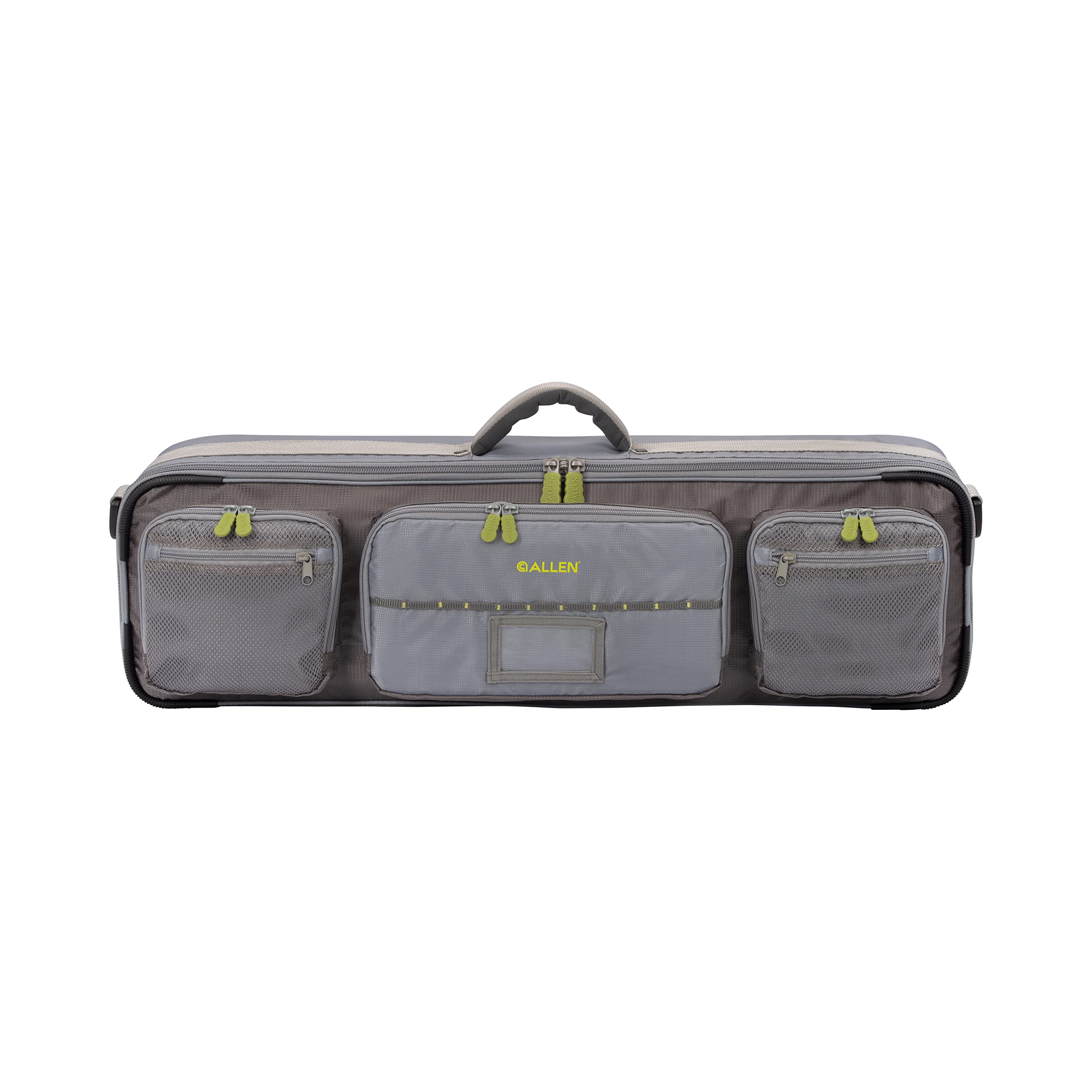
Allen Cottonwood Fly Rod & Gear Bag
A padded multi-rod travel bag for anglers who value organization and lighter vehicle transport over airline-level crush protection.
- Listing describes space for up to four rods
- Honeycomb frame adds structure around stored gear
- Use a rigid case instead when airline handling is expected
Confirm the exact model, size and Canadian availability before ordering.
Compare more best fishing rod cases Canada options on Amazon.com →
Listings, configurations and availability can change. Review the current seller page before purchase.
best fishing rod cases Canada: Frequently Asked Questions
Does Air Canada require a hard fishing rod case?
Its current special-items guidance says fishing rods must be in a rigid or hard-shell container designed for shipping. Recheck before travel because policies can change.
Should reels stay attached in a rod case?
For car trips they can if the case provides clearance. For flights, separate padded reel storage often reduces leverage and protects reel seats and handles.
How long should a fishing rod case be?
Longer than the longest collapsed rod section, with room for tip protection and padding. Measure the interior and exterior dimensions.
Are soft rod sleeves protective?
They prevent tangles and light abrasion but provide little crush protection. Use a rigid case when heavy cargo or airline handling is possible.
What is different about an ice-fishing rod box?
It is shorter and often stores rods with reels attached, so handle depth, reel clearance and cold-friendly latches matter most.
Bottom line: Choose the case by handling risk: sleeves for organization, padded bags for protected vehicle travel and rigid cases for airlines, open cargo and meaningful crush exposure.