

Compare hunting rangefinders in Canada by deer-range performance, angle compensation, optics, weather resistance and simple field controls.
- Compare deer- or tree-range specifications when available, not only reflective maximum range.
- Angle compensation is valuable on steep terrain, but users must understand what the displayed value means.
- A bright, simple display is more useful than a complex menu you cannot operate with gloves.
The best hunting rangefinders Canada hunters can use are the models that return a fast, readable distance on the actual target—not merely the longest reflective range printed on the box. Deer-sized targets, dark timber, rain, snow and steep angles are harder than a bright sign under ideal conditions.
This guide separates maximum range from useful field range and compares angle compensation, display, optics, weather protection and advanced ballistics without pretending every hunter needs every feature.
Best Hunting Rangefinders Canada: Three Buyer Profiles
A rangefinder complements—not replaces—the identification work covered in our hunting binoculars guide and scouting optics guide.
| Hunter profile | Best direction | Feature to prioritize | Skip when |
|---|---|---|---|
| Woodland hunter | Compact 5–6x unit | Fast close-to-midrange acquisition | Menus slow down the shot process |
| Mountain or steep terrain | Angle-aware model | Clear horizontal/angle output | You have not learned the mode |
| Open-country hunter | Longer deer/tree range and bright display | Target discrimination and stability | Only reflective maximum is published |
| Bowhunter | Close-range precision and bow mode | Angle handling and minimum range | Device is bulky or display too bright |
| Advanced rifle workflow | Ballistic-capable premium model | Correct profile setup and validation | You will not maintain the data |
How We Built This Rangefinder Shortlist
This guide uses a research-based comparison, not invented field testing. We verified the current listings and available manufacturer specifications, then separated five decision variables: readable range on natural targets, angle output, optical and display clarity, weather design and control complexity. Reflective maximum range was treated as context, not as the main ranking signal.
We also considered the workflow each unit creates. A compact angle-aware rangefinder can suit a woodland or bow hunter who wants a quick corrected distance. A premium ballistic model only creates value when the user maintains the profile, understands the output and validates the complete system before hunting.
What published specifications cannot prove
A specification sheet cannot reproduce dark fur against dark timber, drifting snow, hand shake, fogged eyewear or a partially screened target. CanadaFever does not claim that these three products were range-tested side by side. Use the shortlist to narrow the field, then confirm display readability, control logic, warranty and return conditions for the exact model.
CanadaFever fit-first pick
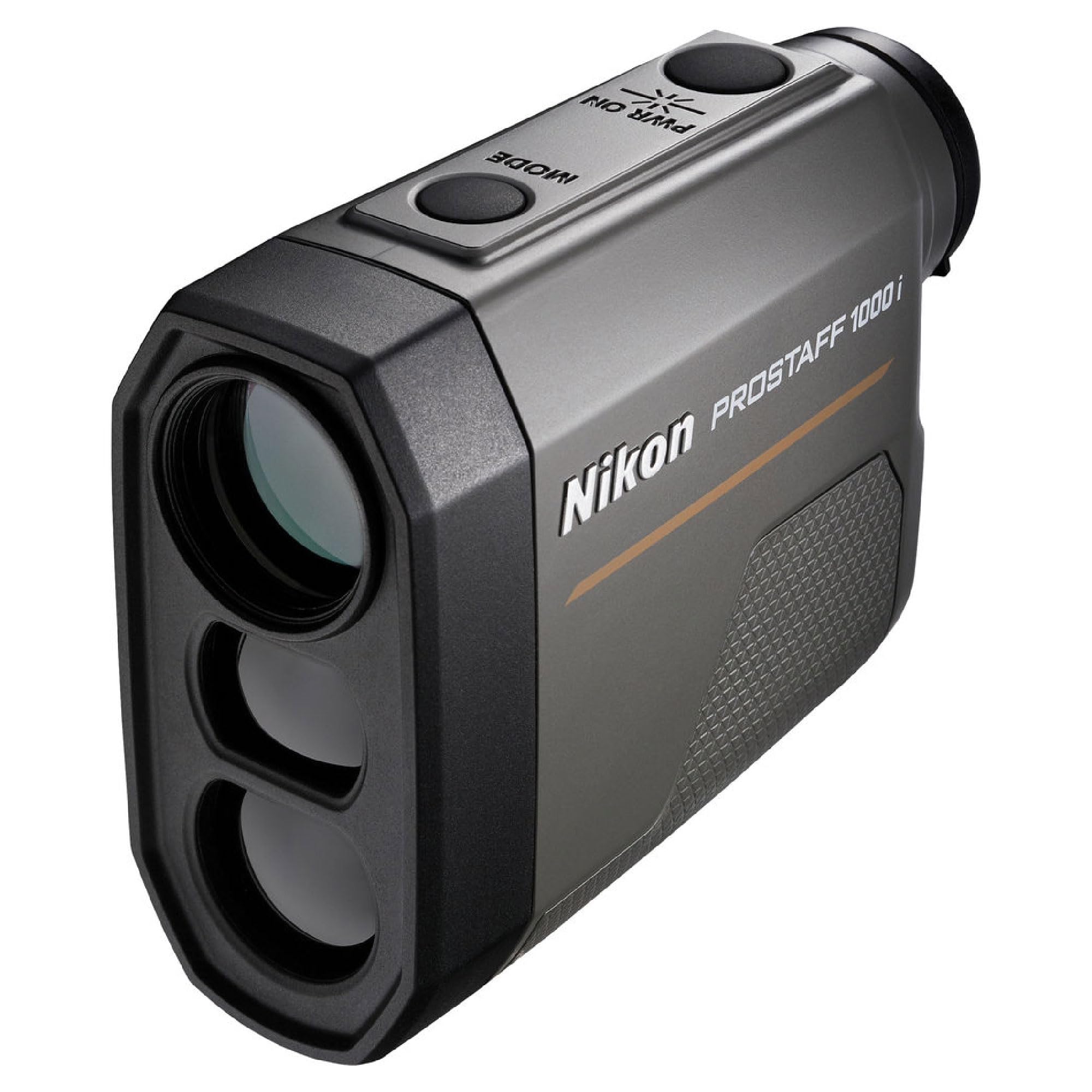
Nikon PROSTAFF 1000i
A compact angle-aware starting point for hunters who need practical field ranging without a large ballistic-computing feature set.
- Listing identifies 6×20 optics and incline/decline technology
- Nominal maximum range is not the same as deer-range performance
- Confirm display visibility with glasses and in low light
Confirm the exact model, size and Canadian availability before ordering.
Three Rangefinder Directions, Explained
Nikon PROSTAFF 1000i: compact angle-aware starting point
The PROSTAFF 1000i fits hunters who want a small 6x unit with incline/decline support and no requirement to manage a phone-linked ballistic platform. That narrower feature set can be an advantage when the priority is a quick range and a display that is easy to interpret.
The limitation is ambition. A nominal maximum does not describe dependable performance on a deer-sized, low-reflectivity target, and a compact objective may not satisfy buyers prioritizing premium low-light viewing. Confirm the reticle and readout are comfortable with your normal eyewear.
Bushnell R3 1200: published target ranges and straightforward ARC
The R3 provides a more transparent comparison because Bushnell publishes separate reflective, tree and deer figures alongside 6×25 optics and an IPX4 rating. Its ARC Bow mode is relevant for steep lines of sight when the user understands which distance the display presents.
IPX4 indicates a defined level of splash resistance; it is not permission to submerge the unit or ignore lens and battery-door care. The R3 is the middle direction for buyers who value disclosed target categories and simpler controls over a full ballistic ecosystem.
Leupold RX-5000 TBR/W: advanced workflow, higher setup burden
The RX-5000 direction is for a user who will genuinely use 8x optics, OLED display options, TBR/W functions and app-linked location tools. Those capabilities can support more complex planning, but only when profiles, units and outputs are configured correctly.
Feature depth increases the chance of mode confusion. Learn the display at home, verify the selected mode before the season and keep a simple fallback plan. Buyers who only need a fast distance at ordinary hunting ranges may be better served by a simpler unit.
Maximum Range Is Usually the Least Useful Number
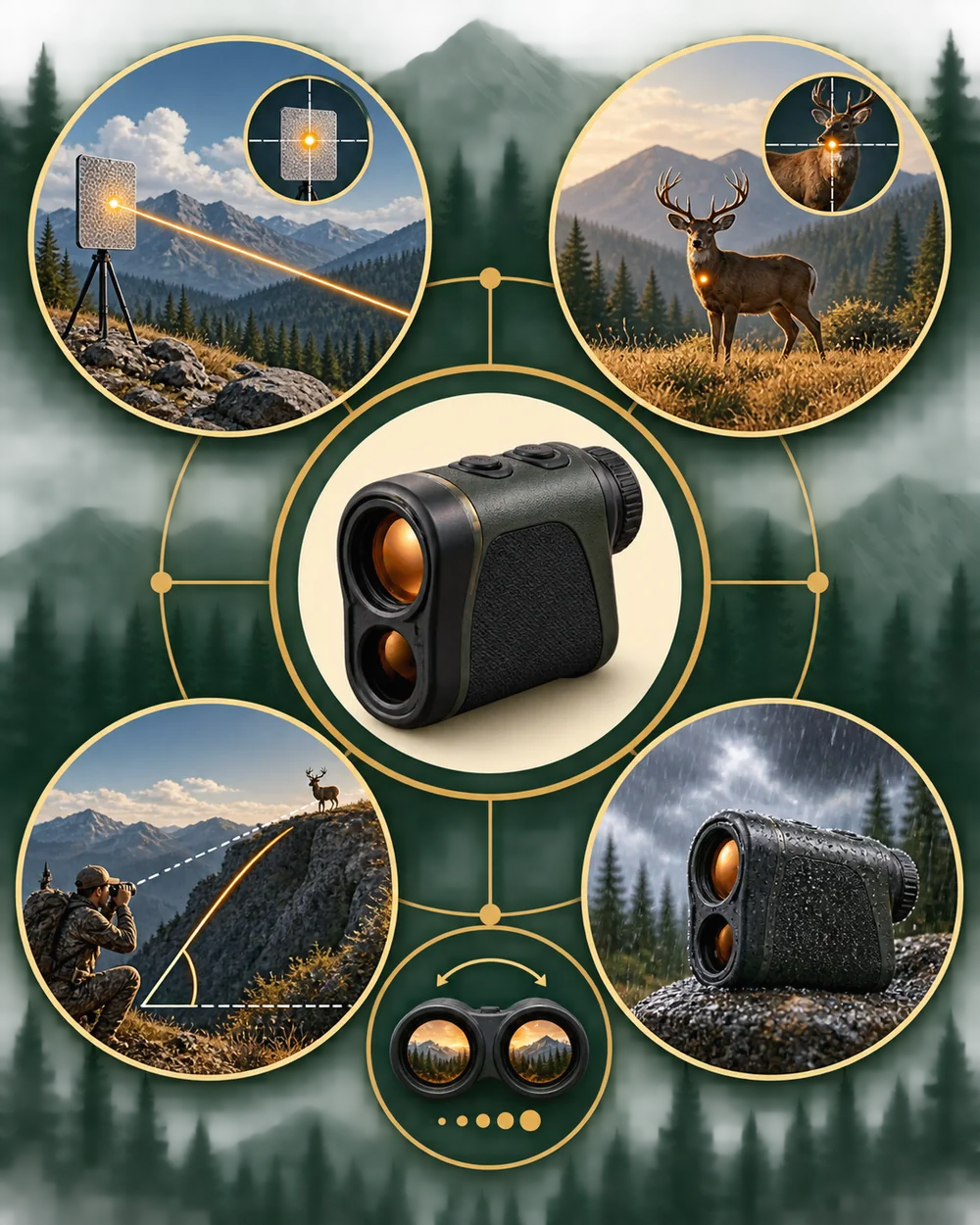
A reflective target such as a sign or building returns more laser energy than fur, vegetation or a shaded animal. Manufacturers that publish separate reflective, tree and deer ranges give buyers a more honest basis for comparison.
Bushnell’s official R3 1200 specifications list a 1,200-yard reflective maximum, 600 yards on trees and 450 yards on deer, plus 6×25 optics and IPX4 protection. Those categories illustrate why the biggest number should not be treated as universal field range.
Angle compensation: useful only when understood
On a steep uphill or downhill line of sight, gravity acts over the horizontal component rather than the full sloped distance. Angle modes can provide an adjusted value, but brands label and calculate outputs differently. Read the manual, practise on known distances and never improvise a ballistic correction in the field.
Optics, Display and Weather
| Feature | Why it matters | Decision test |
|---|---|---|
| Magnification | Helps isolate distant targets | Can you acquire quickly from an unsupported stance? |
| Objective size | Influences light and overall size | Is the display readable at legal low light? |
| OLED/LCD display | Controls contrast and clutter | Can brightness be set without menu hunting? |
| Scan mode | Tracks changing distance or moving targets | Does the update remain stable through branches? |
| Weather rating | Sets exposure expectations | Is an actual IP or waterproof claim published? |
Leupold’s official RX-5000 TBR/W page lists 8x magnification, OLED display, separate reflective/tree/deer ranges, waterproof and fogproof construction, ballistic modes and app-based GPS pinning. That is a substantial capability set—but it creates setup work and phone dependencies that a simple woodland hunter may not need.
Rangefinder versus binocular laser combination
A dedicated rangefinder is lighter and easier to operate one-handed. Rangefinding binoculars reduce equipment switching but cost more and become a single point of failure. Use the hunting gear guide to keep the full load balanced.
Field verification before season
- Range known markers at 20, 50, 100 and longer practical distances.
- Compare first return and scan mode through light branches.
- Check display brightness in dark timber and open sky.
- Practise with gloves and glasses.
- Carry a spare battery protected from cold and moisture.
Rangefinding supports ethical decision-making but cannot make an unsafe or low-confidence shot acceptable. Follow provincial or territorial regulations and the safety practices in our hunter education overview and hunting safety guide.
Field Readiness Matters More Than the Longest Number
Run a known-distance consistency check
Before relying on a new unit, range several stationary objects at known or independently measured distances. Repeat from supported and unsupported positions, then change the background from open sky to brush or dark timber. The goal is not to prove manufacturer accuracy in a laboratory; it is to learn when the device returns a stable reading and when it struggles.
Understand line-of-sight and corrected distance
On steep ground, the straight laser distance and the horizontal component are not identical. Angle modes may display corrected distance, angle, hold information or more than one value depending on the model. Read the manual until you can identify each number without guessing. Never let a display replace target identification, a safe backstop or personal distance limits.
Cold, moisture and battery discipline
Cold conditions can reduce battery performance and make small controls harder to operate. Start with the battery type specified by the manufacturer, carry a protected spare when appropriate and keep the compartment seal clean. Move the unit between warm and cold environments carefully; condensation on external lenses should be managed with proper lens care rather than a sleeve or glove.
Gloves, eyeglasses and one-hand use
Test whether you can find the primary button, steady the unit and read the display while wearing the same gloves and eyewear used in season. Higher magnification can reveal more target detail but also magnifies shake and narrows the view. A fast 6x reading can be more useful than an unstable 8x image for some hunters.
A safe pre-season checklist
- Confirm yards or metres, angle mode and any ballistic profile before leaving home.
- Clean lenses with optics-safe tools and inspect the battery-door seal.
- Compare repeated readings on natural and reflective objects.
- Practice returning to the basic range screen without looking at the controls.
- Review current provincial or territorial hunting rules and keep identification and shot decisions independent of the device.
Alternatives for different use cases
These are not interchangeable. Choose the format that solves your transport, weather or capacity problem.

Bushnell R3 1200
A mid-range choice with angle compensation and a published IPX4 weather rating for buyers who want straightforward controls.
- Official specification lists 6×25 optics and ARC Bow mode
- Manufacturer lists a 1,200-yard maximum on reflective targets
- Verify Canadian warranty and regional availability before purchase
Confirm the exact model, size and Canadian availability before ordering.
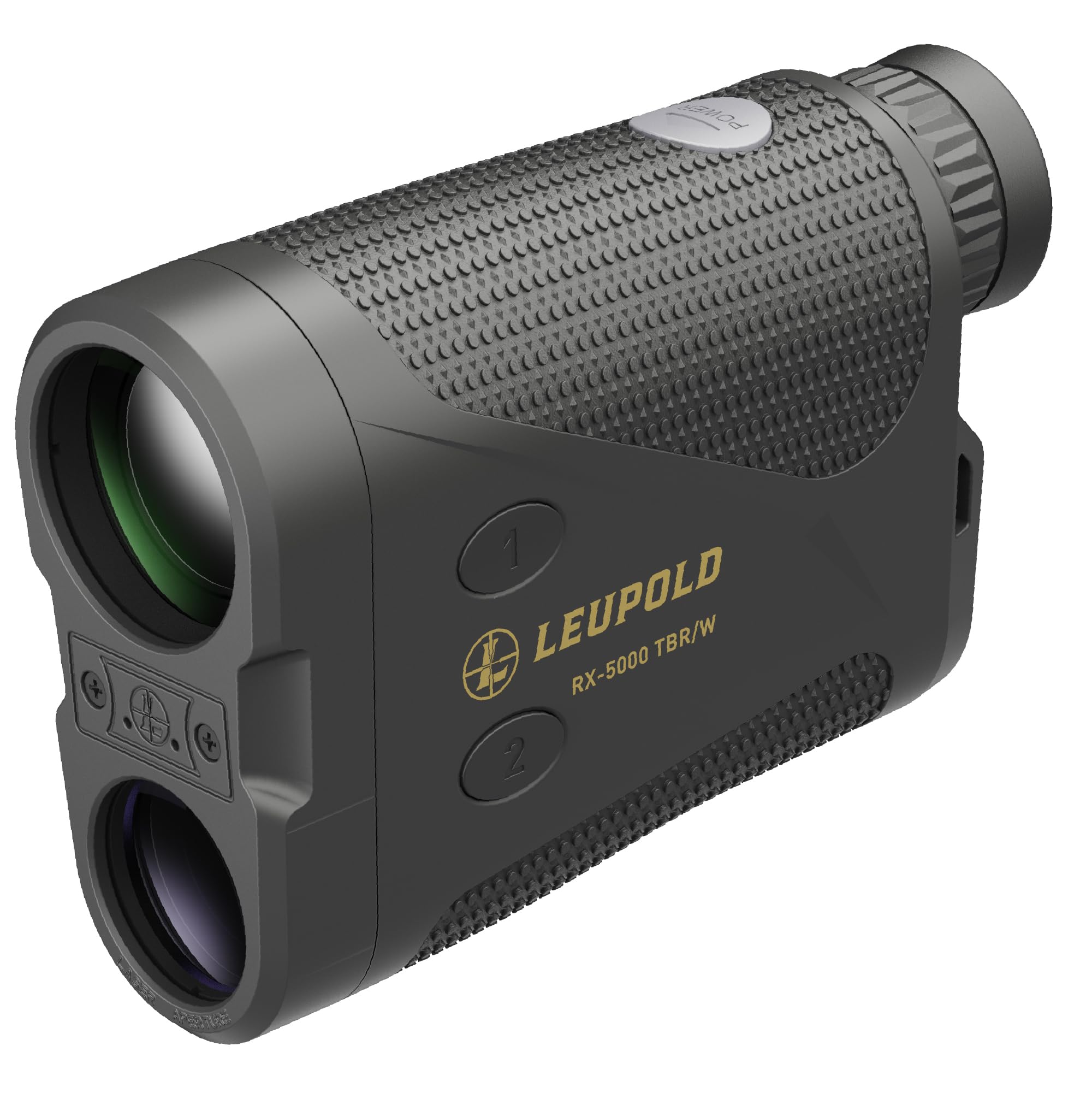
Leupold RX-5000 TBR/W
The premium direction for users who will genuinely use advanced ranging, ballistic modes and app-based GPS pinning.
- Official specification lists 8x magnification and OLED display
- TBR/W modes add capability but require correct setup
- App, calibration and phone workflows should be tested before the hunt
Confirm the exact model, size and Canadian availability before ordering.
Compare more best hunting rangefinders Canada options on Amazon.com →
Listings, configurations and availability can change. Review the current seller page before purchase.
best hunting rangefinders Canada: Frequently Asked Questions
How much range does a hunting rangefinder need?
Enough reliable range on deer-sized or natural targets for your terrain and personal ethical limit. Reflective maximum range is not the same as field performance.
Is angle compensation necessary?
It is valuable in steep country and for many bowhunting situations, provided the user understands the exact output and has practised with it.
What magnification is best?
Around 5x to 6x balances acquisition and detail for many hunters. Higher magnification can help at distance but also magnifies hand movement.
Are hunting rangefinders waterproof?
Some publish an IP or waterproof rating; others only use vague weather-resistant language. Check the exact model specification.
Do I need a ballistic rangefinder?
Only if you will configure and validate the ballistic workflow. A simpler fast-reading unit is often better for close and moderate ranges.
Bottom line: Prioritize repeatable readings on natural targets, a display you can understand instantly and controls that work with gloves. Buy advanced ballistics only when you will maintain and practise the complete workflow.