
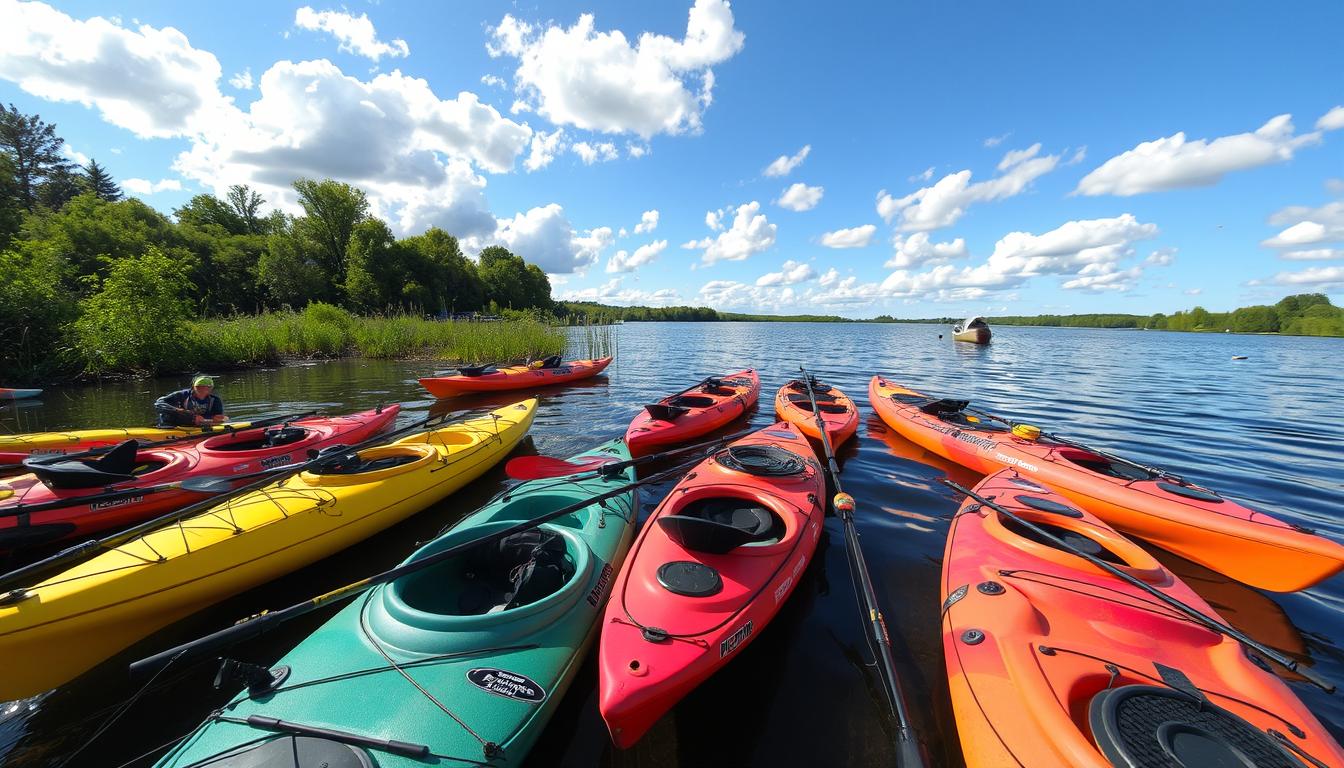
Discover the best kayak models for fishing with our comprehensive guide. We review top-rated options for Canadian waters, comparing features, stability, and value for every angler
- Match Kayak Models for Fishing to your water, season, boat size, and actual skill level instead of buying by specs alone
- Prioritize readable controls, durable construction, and Canada-relevant use cases before chasing premium features
- Use the guide to compare what matters in the field: setup time, reliability, safety, storage, and upgrade path
Bottom line The right Kayak Models for Fishing choice solves your real Canadian trip conditions without adding gear you will not use
Key Takeaways
- Sit-on-Top Preference: Sit-on-top hulls offer superior standing stability, flat decks for casting, and scupper drainage holes that prevent swamping.
- Drive Mechanics: Choose between traditional paddle propulsion, pedal-drive systems (hands-free fishing), and electric motor-integrated hulls.
- Hull Width & Length: Wider beam hulls (33-36 inches) offer standing stability but travel slower; longer hulls (12-14 ft) track better and glide faster.
- Weight Capacity: Confirm the hull holds at least 350-450 lbs. You must account for your own weight plus heavy battery and tackle loads.
🚣 Fishing Kayak Decision Wizard 🏆
Enter your budget, drive style, and water preferences to locate your ideal kayak class.
Selecting the right fishing kayak is the most important decision you will make as a kayak angler. A kayak is more than just a means of transportation; it is your casting deck, your gear command center, and your safety vessel. In Canada, where water styles range from small, quiet beaver ponds to massive, wind-swept basins like Lake Simcoe or the St. Lawrence River, choosing the wrong hull can lead to poor tracking, tipping risks, or sore backs.
Modern fishing kayaks are highly engineered sit-on-top hulls constructed of durable, rotomolded polyethylene. They are designed to be extremely stable, allowing you to stand up safely to cast. Let’s look at the best fishing kayak models, drive systems, and hull options for 2026.
1. Sit-on-Top vs. Sit-In Fishing Kayaks
While traditional recreational kayaks are sit-in models, the vast majority of dedicated fishing kayaks are **sit-on-top** hulls. Sit-on-top models have several critical advantages for anglers. First, they feature open, flat decks that make standing, casting, and gear access much easier. Second, they are self-bailing; any water that splashes onto the deck drains naturally through scupper holes. If you capsize a sit-on-top kayak, the hull does not fill with water, allowing for easy re-entry on open water.
2. Propulsion: Paddle, Pedal, or Motor?
Your choice of propulsion dictates your budget and how you fish. Traditional **paddle kayaks** are affordable, lightweight, and highly reliable, making them ideal for shallow rivers and remote backcountry waters. **Pedal-drive kayaks** utilize your legs to spin a propeller or kick fins under the hull. This keeps your hands completely free to cast and hold rods while steering with a side rudder. **Motorized kayaks** feature integrated trolling motors with GPS spot-lock, offering ultimate convenience but adding significant weight and battery charging requirements.
3. Hull Dimensions: Stability vs. Speed
Kayak design is a compromise between stability and speed. A kayak’s stability is determined by its width (beam). Wide kayaks (33 to 36 inches wide) offer rock-solid standing stability but are slow and heavy to paddle. Narrower kayaks (29 to 32 inches wide) are fast, track straight, and slice through chop easily, but they feel more ‘tippy’ and are harder to stand in. Choose a wider hull for shoreline casting and a longer, narrower hull if you plan to troll or cover long distances on open basins.
Top Rigging Accessories for Your Ride
Vetted, top-rated products that are highly recommended for Canadian paddlers and anglers.
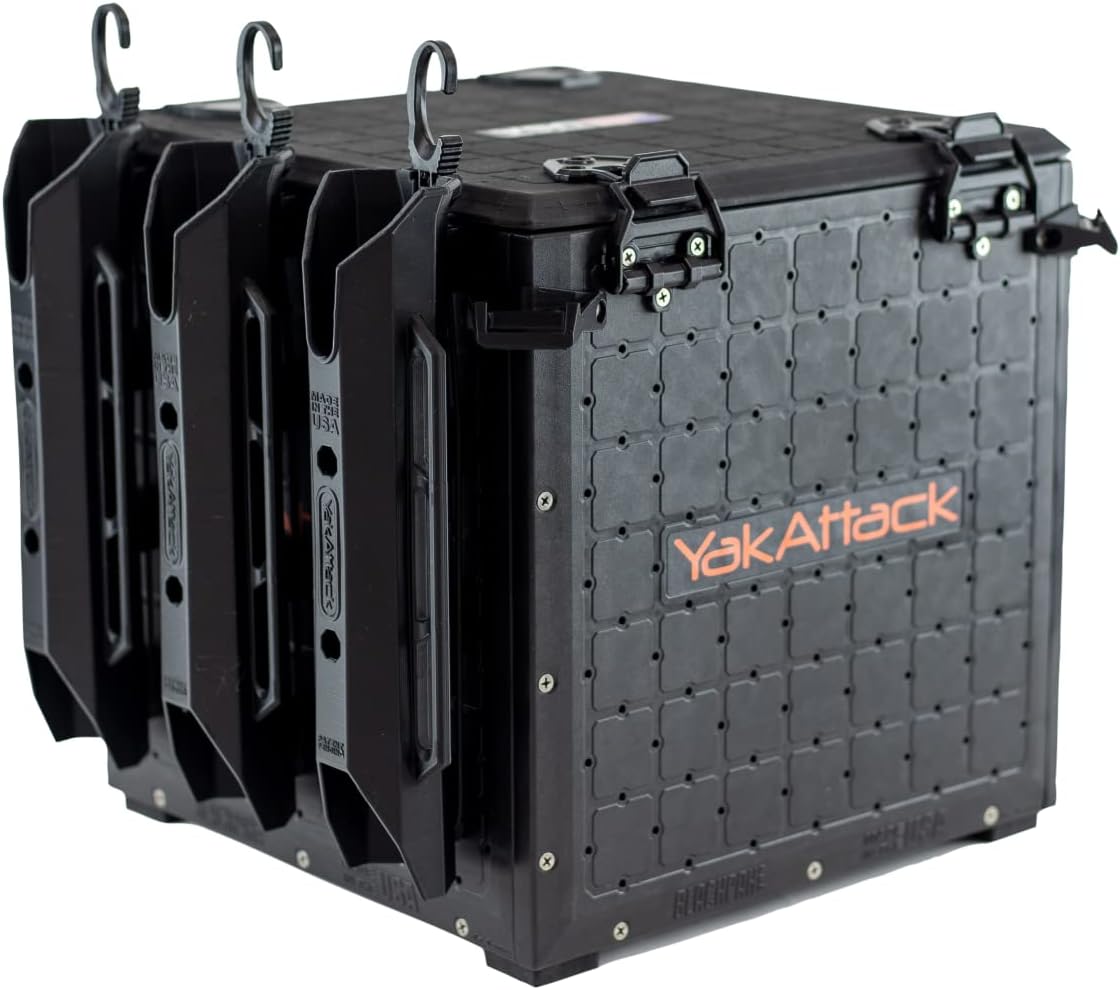
YakAttack BlackPak Pro Kayak Fishing Crate (13×13)
High-grade polymer crate featuring TetherTube rod holders, GridLoc attachment panels, and a locking hinged lid for secure storage.
- Premier Gear Storage: Heavy-duty, grid-walled crate organizes tackle boxes, tools, and safety gear securely in your kayak tankwell.
- Built-In Rod Holders: Includes three TetherTube rod holders with quick-release hook-and-loop straps to secure your rods.
- GridLoc Panels: Features customizable GridLoc panels that let you mount extra rod holders, pockets, or track mounts easily.

Bending Branches Angler Classic Kayak Paddle
Fiberglass reinforced blades with an integrated hook retrieval notch in the blade. Durable fiberglass shaft with built-in ruler tape.
- Lightweight Fiberglass: Durable fiberglass-reinforced blades and a lightweight shaft reduce fatigue during long paddling sessions.
- Built-In Hook Retrieval: Features a unique hook retrieval notch in the blade to help rescue snagged lures from branches or weeds.
- Integrated Measurement: Shaft has a laser-etched tape measure in both inches and centimeters for quick, on-deck fish measuring.

YakAttack Omega Pro Rod Holder
Highly adjustable rod holder with lock collar, compatible with spinning, casting, and fly rods. Mounts securely to gear tracks.
- Locking Security: LockDown system secures spinning, casting, or fly reels to prevent rod loss in heavy waves or trolling strikes.
- 360-Degree Adjustability: Easily rotate and tilt the rod holder to achieve the perfect angle for trolling or rod storage.
- Track Mounted: Designed for quick installation and removal on all standard kayak gear tracks without drilling.
Affiliate Disclaimer: As an Amazon Associate, CanadaFever earns commissions from qualifying purchases. This supports our free outdoor guides at no extra cost to you.
🌍 Explore Guided Fishing Trips in Canada
Want to fast-track your success on the water? Book a professional local guide through Viator to find the best spots, learn advanced paddling techniques, and hook into trophy fish.
*CanadaFever is a Viator Partner (ID: P00210641). We may earn a commission if you book through our links, at no extra cost to you.*
What is the difference between a sit-in and sit-on-top fishing kayak?
Sit-on-top kayaks feature an open, flat deck that allows for standing and easy gear access, with integrated scupper drainage holes that prevent the hull from flooding. Sit-in kayaks enclose your lower body inside a cockpit, keeping you drier but making standing and gear retrieval difficult.
Are pedal-drive kayaks worth the extra money?
For large lake anglers, yes. Pedal drives use your leg muscles (which are stronger than arms), allowing you to travel further with less fatigue, and they keep your hands completely free to hold rods, cast, and land fish.
What is the average weight limit of a fishing kayak?
Standard fishing kayaks have weight capacities ranging from 300 to 500 lbs. To maintain safe stability and tracking, you should never load a kayak past 75-80% of its maximum manufacturer rating.