

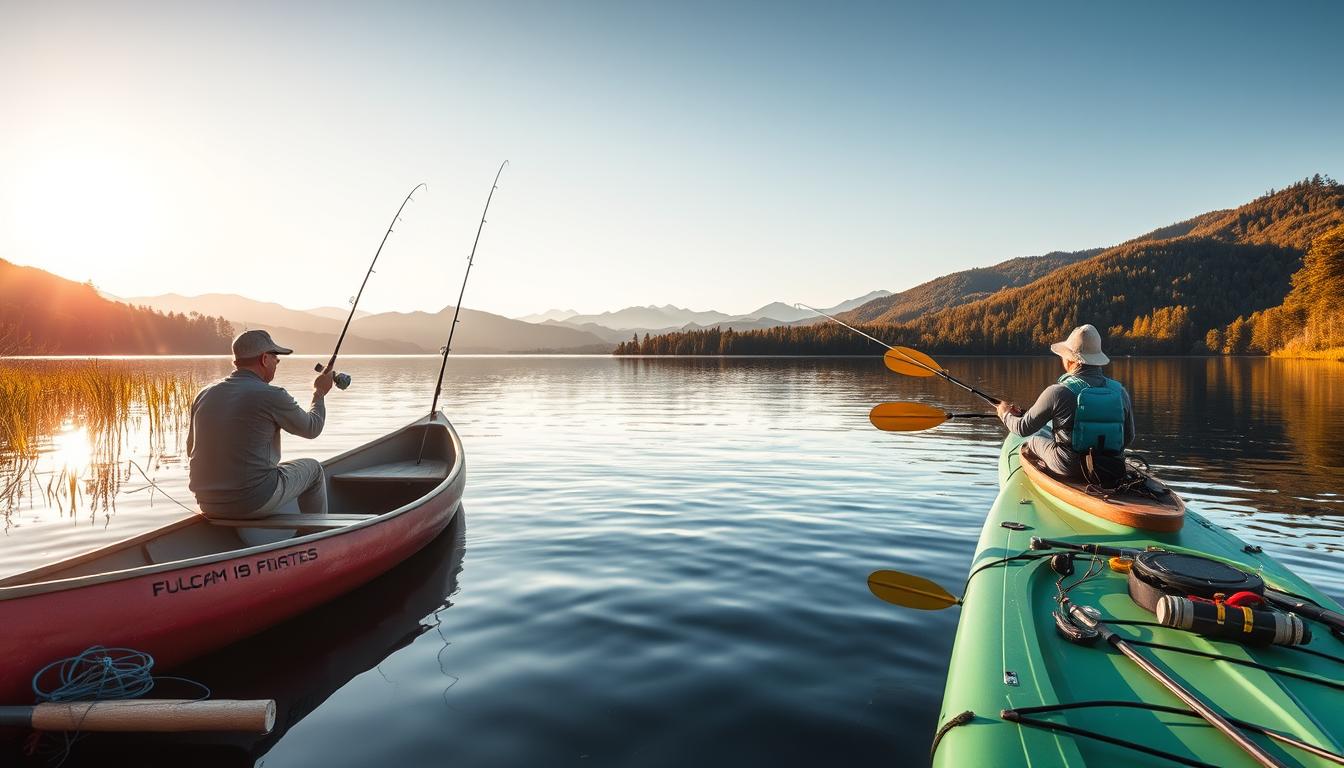
Discover the key differences between canoe vs. kayak fishing: pros and cons to help you choose the perfect vessel for your next Canadian angling adventure. Compare stability, storage, and costs.
- Match Canoe vs. Kayak Fishing to your water, season, boat size, and actual skill level instead of buying by specs alone
- Prioritize readable controls, durable construction, and Canada-relevant use cases before chasing premium features
- Use the guide to compare what matters in the field: setup time, reliability, safety, storage, and upgrade path
Bottom line The right Canoe vs. Kayak Fishing choice solves your real Canadian trip conditions without adding gear you will not use
Key Takeaways
- Stability & Hull Speed: Kayaks generally offer lower center of gravity and better wind tracking, while canoes offer superior secondary stability in flat water.
- Gear Capacity & Room: Canoes easily dominate in storage capacity, making them ideal for multi-day expeditions or tandem fishing.
- Portage Ease: Canoes are much easier to carry over land (portage) on your shoulders compared to heavy plastic fishing kayaks.
- Solo vs. Partner: Kayaks excel for dedicated solo anglers looking for high maneuverability; canoes are far better for taking a friend, child, or dog.
🛶 Canoe vs. Kayak Picker Wizard 🎣
Answer 4 quick questions to find your perfect hull match.
Deciding between a canoe and a kayak for fishing is one of the oldest debates in paddlesports. In Canada, where we are blessed with everything from rocky Canadian Shield lakes to fast-flowing wilderness rivers, choosing the wrong hull can lead to frustating outings, sore backs, or wind-blown struggles. Rebuilding our perspective for 2026, let’s dive into the core pros, cons, and performance matrices to help you make an informed choice.
The Canoe: The Backcountry Freighter
Canoes have been the backbone of Canadian water travel for centuries, and they remain a fantastic fishing platform today. A standard 16-foot canoe offers a vast amount of open storage space. This open deck allows you to bring along several rods, heavy tackle boxes, coolers, camping gear, and even a fishing partner, child, or dog.
Because you sit higher off the water on bench seats, canoes are incredibly comfortable for long days on the water. You can easily stretch your legs, adjust your seating position, or even stand up to sight-cast if the canoe has a wide, flat bottom. Carrying a canoe over portage trails is also remarkably easy; a lightweight Kevlar canoe weighs only 35 to 45 pounds and sits comfortably on your shoulders using a portage yoke.
Canoe Pros
-
Exceptional Capacity
Load up to 900 lbs of gear, coolers, and camping supplies. -
Tandem Friendly
The best option for fishing with a buddy, child, or pet. -
Portaging Ease
Lightweight Kevlar models are easy to lift and carry over backcountry trails.
Canoe Cons
-
Wind Sensitivity
High side walls act like sails, making windward paddling difficult. -
Maneuverability
Longer hulls require more effort to steer and navigate in tight creeks. -
Solo Difficulty
Paddling a large tandem canoe solo in a crosswind is highly challenging.
The Kayak: The Finesse Hunter
Modern fishing kayaks are highly specialized angling machines. Unlike traditional sit-in kayaks, fishing models are typically sit-on-top hulls made of durable polyethylene. They are incredibly stable, allowing anglers to stand up safely to cast. Kayaks ride low to the water, giving them a sleek profile that is highly wind-resistant compared to canoes.
One of the biggest revolutions in kayak fishing is the introduction of pedal-drive systems. By using your legs to pedal, you keep your hands completely free to cast, fish, and steer. Kayaks also feature extensive gear tracks for mounting fish finders, rod holders, camera poles, and anchor trolleys. However, fishing kayaks are heavy, often weighing between 90 and 140 pounds fully rigged, making portaging through remote wilderness trails virtually impossible without a wheeled cart.
Kayak Pros
-
Hands-Free Pedaling
Pedal drives allow you to keep fishing while maintaining position. -
Wind Resistance
Low profile tracks straight and cuts through high winds. -
Customization
Built-in gear tracks make mounting electronics and rod holders a breeze.
Kayak Cons
-
Heavy Hull Weight
Extremely heavy to lift, load, or carry over land. -
Limited Deck Space
Highly confined storage, making multi-day packing difficult. -
Wet Ride
Water splashing onto the deck is common, requiring quick-dry clothes.
Canoe vs. Kayak: Head-to-Head Comparison
To help you decide, let’s compare their performance across key factors on Canadian waters:
- Maneuverability: Kayaks win easily. Their shorter length and double-bladed paddles (or pedal drives) allow you to maneuver quickly around logs, weedlines, and rocky shorelines.
- Gear Management: Canoes win. The open cockpit of a canoe allows you to access any piece of gear instantly. In a kayak, gear must be secured inside hatches or packed in a crate behind your seat.
- Safety in Open Water: Kayaks win. If a sit-on-top kayak capsizes, it does not fill with water; scupper holes naturally drain it. A flipped canoe fills with water and can be highly difficult to rescue.
- Portability: Canoes win. For wilderness areas like Algonquin or Quetico Provincial Park, where portaging between lakes is regular, a lightweight canoe is the only practical option.
Gear to Upgrade Your Vessel Stability & Power
Vetted, top-rated products that are highly recommended for Canadian paddlers and anglers.
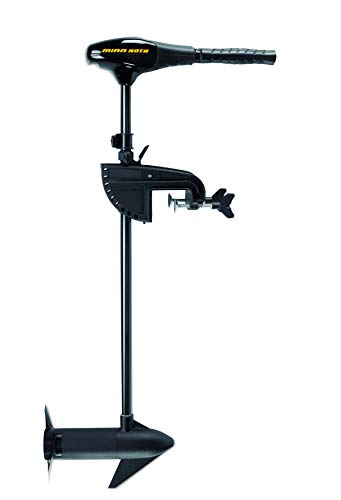
Minn Kota Endura C2 30 Trolling Motor
An ultra-reliable transom-mount trolling motor, perfect for mounting on canoes or square-stern boats to cover water effortlessly.
- Indestructible Composite Shaft: Backed by a lifetime warranty, the 30-inch shaft flexes on impact and will not warp, kink, or corrode.
- Cool, Quiet Power: Engineered to dissipate heat, extending motor life and battery runtime while remaining silent to prevent spooking fish.
- Telescoping Handle: Features an ergonomic, 6-inch telescoping tiller handle for easy, comfortable steering control.

Brocraft Kayak / Canoe Outriggers
Heavy-duty PVC outrigger stabilizers that attach to your vessel, providing rock-solid stability for standing and casting.
- Stand-Up Stability: Provides rock-solid buoyancy, allowing you to stand up safely to cast, sight-fish, or stretch on calm water.
- Rugged Construction: Built with heavy-duty anodized aluminum arms and durable molded PVC floats to withstand rough shorelines.
- Adjustable Design: Easily adjust the float height and angle with a quick-release locking mechanism to match your hull.

Earth Pak Waterproof Dry Bag (10L / 20L)
Keep your spare clothes, keys, licenses, and electronics 100% dry and safe from splashes or capsizes.
- 100% Waterproof Seal: Uses a secure roll-top closure system to keep spare clothes, keys, licenses, and phones dry in any downpour.
- Heavy-Duty PVC: Constructed from commercial-grade 500D PVC to resist punctures, tearing, and abrasion during rugged portages.
- Convenient Carry: Includes a comfortable, adjustable shoulder strap (and backpack straps on larger sizes) for hands-free transport.
Affiliate Disclaimer: As an Amazon Associate, CanadaFever earns commissions from qualifying purchases. This supports our free outdoor guides at no extra cost to you.
🌍 Explore Guided Fishing Trips in Canada
Want to fast-track your success on the water? Book a professional local guide through Viator to find the best spots, learn advanced paddling techniques, and hook into trophy fish.
*CanadaFever is a Viator Partner (ID: P00210641). We may earn a commission if you book through our links, at no extra cost to you.*
Is a canoe or kayak more stable for fishing?
Sit-on-top fishing kayaks generally have a lower center of gravity and feel more stable for standing up to cast. However, wide-beam canoes offer excellent secondary stability in flat water and allow for more natural sitting posture changes.
Can one person fish out of a tandem canoe?
Yes, you can paddle a tandem canoe solo by sitting backwards in the front seat (which places your weight closer to the center of the boat) and placing gear in the bow as ballast. However, wind tracking will still be more difficult than a solo kayak.
How do you transport a fishing kayak vs a canoe?
Canoes are usually easier to lift and carry upside down on car-top racks. Heavy fishing kayaks typically require a kayak cart to wheel them to the water, or a dedicated kayak trailer/truck bed extender.
Where this fits: If you are still choosing between platforms, use the Kayak and Canoe Fishing in Canada pillar to connect that choice with safety, gear, electronics, water type, and trip planning.