

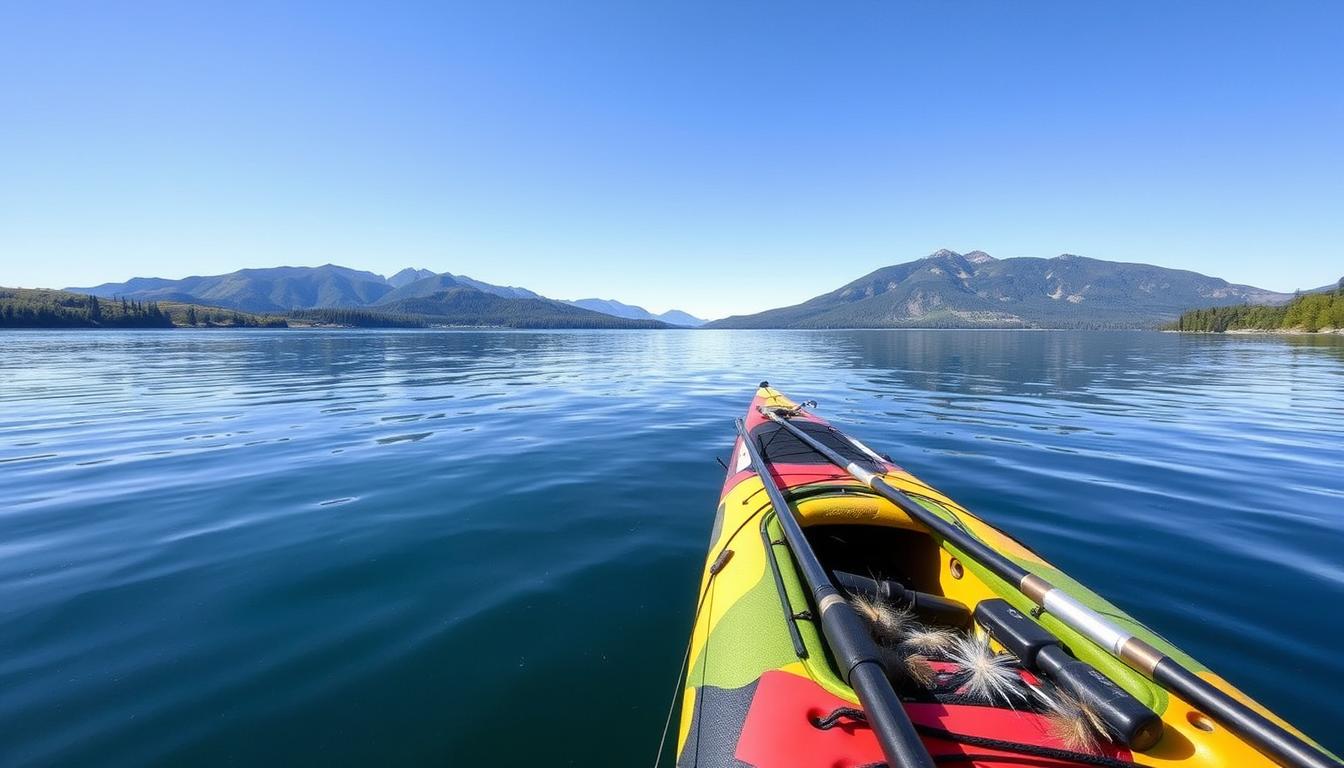
Discover expert tips and techniques for fly fishing from a kayak. Learn essential gear, safety measures, and proven strategies to enhance your angling success in Canadian waters
- Match Master Fly Fishing from a Kayak to your water, season, boat size, and actual skill level instead of buying by specs alone
- Prioritize readable controls, durable construction, and Canada-relevant use cases before chasing premium features
- Use the guide to compare what matters in the field: setup time, reliability, safety, storage, and upgrade path
Bottom line The right Master Fly Fishing from a Kayak choice solves your real Canadian trip conditions without adding gear you will not use
Key Takeaways
- Deck Cleared of Snags: Fly line will catch on anything. Clear your deck, cover footwells, or use a stripping basket to manage loose fly line.
- Seated Casting Angle: Casting from a kayak limits your vertical height. Keep your backcast high and adjust for a slightly sidearm haul.
- Anchoring for Seams: Position is everything. Anchor upstream or use a trolley to align yourself parallel to river seams and weed lines.
- Stealth Advantage: Kayaks drift silently, letting you approach shallow flats or pools without spooking skittish trout.
🎣 Kayak Fly Rig Matcher 🐠
Select your target and water style to generate the ideal fly fishing setup.
Fly fishing from a kayak is one of the most exciting challenges in paddlesports. It combines the stealth and accessibility of a kayak with the artistry and finesse of fly casting. By floating silently into shallow river pools or backwater bays, you can target feeding trout, aggressive bass, or spawning salmon that motorboats could never reach.
However, fly fishing from a kayak is not as simple as standing in a stream. Because you are seated low to the water and surrounded by gear, footrests, and tracks, fly line management becomes your greatest challenge. Understanding seated casting mechanics, deck management, and boat positioning is essential to catch fish instead of snags. Let’s look at the master techniques for fly fishing from a kayak in 2026.
1. Line Management: The Ultimate Challenge
In conventional spin fishing, line is stored neatly on a reel spool until cast. In fly fishing, you strip line onto the deck before casting. On a kayak, this loose fly line will seek out and tangle on every possible obstacle: scupper plugs, tackle boxes, rod holders, pedals, and your own feet. To combat this, keep your front deck completely bare. Use a flexible, mesh **stripping basket** or stripping apron placed over your lap to collect the retrieved line. Laying a wet towel over your footwells is another pro trick to cover up line-snagging foot pedals and brackets.
2. Seated Casting Dynamics
Casting a fly rod from a seated position limits your height above the water, which reduces the clearance of your backcast. If your backcast drops too low, the line will strike the water behind you, ruining the forward cast. To prevent this, focus on keeping your backcast high by terminating your backstroke at the 12 o’clock position instead of 2 o’clock. Incorporate a slightly sidearm casting stroke on your forward cast to steer the line clear of your kayak’s bow and paddle blades. When fishing tight rivers, master the roll cast, which requires no backcast clearance at all.
3. Rigging Your Kayak for Fly Fishing
Rigging a fly fishing kayak requires a minimalist approach. Ditch vertical rod holders placed in front of you; the tall rod tips will catch your fly line during double-hauls. Store rods horizontally along the gunwales. Position your anchor trolley so you can anchor from the bow or stern, allowing you to face downstream or parallel to bank currents. Avoid mounting tall camera poles or electronics arrays on the side you plan to cast from.
Kayak Fly Fishing Gear
Vetted, top-rated products that are highly recommended for Canadian paddlers and anglers.

Piscifun Fly Fishing Rod and Reel Combo Starter Kit
A complete 9ft, 5-weight graphite fly rod and die-cast aluminum fly reel combo, including backing, weight-forward line, leader, flies, and a protective carrying case.
- Complete Starter Kit: Includes a 9ft 5-weight graphite rod, die-cast aluminum reel pre-spooled with line, leader, flies, and case.
- Graphite Performance: High-performance slow-action graphite rod provides great sensitivity and smooth casting for beginners.
- Aluminum Reel: Lightweight, durable aluminum reel with smooth disc drag system to handle hard-fighting freshwater trout.

Scientific Anglers Frequency Trout Floating Fly Line
A premium floating fly line featuring a mid-length head designed for great control and delicate presentations. Built with an advanced slickness additive for longer casts.
- High Floating Performance: Mid-length head design provides excellent line control and delicate presentations on flat water.
- Advanced Slickness: Formulated with a special slickness additive to maximize casting distance and shoot through guides easily.
- Trout Specific Taper: Ideal for dry flies, nymphs, and streamers, making it the perfect line for Canadian river and lake trout.

SF Catch and Release Rubber Mesh Landing Net
A lightweight floating landing net featuring soft, fish-friendly rubber mesh that prevents fly hooks from snagging and protects the fish’s protective slime coat.
- Fish-Friendly Rubber: Soft, snag-free rubber mesh protects the fish’s protective slime coat and prevents injury during catch-and-release.
- Hook-Resistant Mesh: Prevents hooks and flies from tangling or snagging in the netting, allowing for quick fish releases.
- Floating Frame: Features a lightweight, buoyant frame with a safety wrist lanyard to prevent drop losses in deep water.
Affiliate Disclaimer: As an Amazon Associate, CanadaFever earns commissions from qualifying purchases. This supports our free outdoor guides at no extra cost to you.
🌍 Explore Guided Fishing Trips in Canada
Want to fast-track your success on the water? Book a professional local guide through Viator to find the best spots, learn advanced paddling techniques, and hook into trophy fish.
*CanadaFever is a Viator Partner (ID: P00210641). We may earn a commission if you book through our links, at no extra cost to you.*
Can you fly fish from a sit-in kayak?
Yes, but sit-on-top kayaks are highly preferred. Sit-on-top hulls provide a flat, open deck area that makes managing loose fly line much easier, whereas sit-in cockpits trap stripped line inside, causing frequent tangles.
What is the best fly rod size for kayak fishing?
A standard 9-foot rod is the best all-around choice. It provides enough length to keep your backcast high above the water while remaining manageable enough to land fish close to your kayak hull.
Do you need a stripping basket for kayak fly fishing?
Unless your kayak deck is completely bare and flat, a stripping basket is highly recommended. It keeps your fly line contained, clean, and prevents it from wrapping around scupper plugs, pedal systems, or gear tracks.