

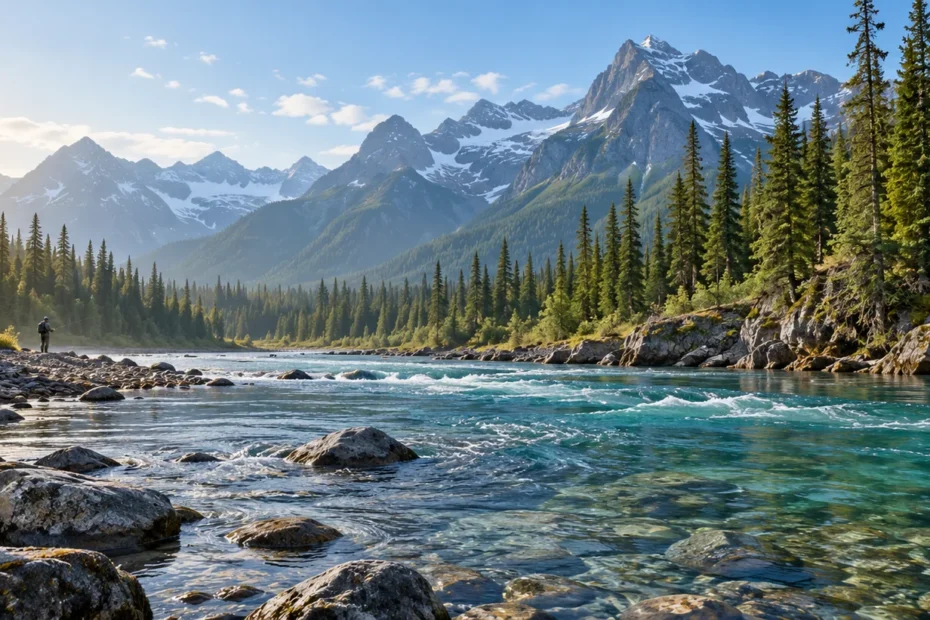
Bull trout fishing in Canada starts with a conservation decision: identify the exact water, find out whether the intended fishing is allowed, and check what must happen if a bull trout is caught. Rules differ by jurisdiction and water. A zero possession limit means a fish cannot be kept; it does not answer every question about targeting, a closed reach or the permitted method.
Why this char needs a careful approach
Bull trout (Salvelinus confluentus) are native char associated with cold water. Some live largely in streams, while others use connected rivers or lakes during different stages of life. Populations differ in their movements and conservation status. Canada’s 2026 Alberta native trout action plan describes threats to native trout and the importance of habitat and recovery measures.
Plan for the population and water: a fish found elsewhere in western Canada may have a different status or legal treatment. A broad species article cannot replace an official regulation. For an unfamiliar place, identify the provincial, territorial or national-park authority, the named water or reach, and the intended date. Then read the current rules and any updates together.
Identify the fish using more than one feature
Parks Canada’s Banff identification guide describes bull trout as having pale yellow to red or orange spots on a darker body, an unspotted dorsal fin, and a white leading edge on lower fins without the black line that can follow it in brook trout. The tail is slightly forked. These characteristics are a comparison, not a complete identification key for a fish briefly seen in moving water.
A bull trout's coloration varies with its environment and life stage. Do not judge a fish only by whether its sides look silvery or its spots appear red. Lighting, water and the view available to the angler can hide features. Before a trip, compare several features on the official illustrated key for the region; if a caught fish is uncertain, follow the authority's instructions and avoid prolonging handling to inspect it.
Bull trout and brook trout
Parks Canada notes that brook trout have light worm-like markings on the back and dorsal fin, while bull trout lack spots on the dorsal fin. Brook trout also commonly show a dark band behind the white front edge of the lower fins. These clues work together; a single indistinct fin or spot does not establish the answer. Hybridization and local variation can complicate field identification, so an uncertain fish should not become a retention decision based on a photograph taken at the bank.
Bull trout and lake trout
Lake trout are also char. The Banff guide describes a deeply forked tail and irregular pale markings, without the red or orange spots listed for bull trout. A tail seen only partially or a dark fish viewed underwater may not show the full pattern. Compare the tail, dorsal area and body markings in a regional key rather than using a single spot as a shortcut.
Bull trout and Dolly Varden
Bull trout and Dolly Varden are distinct species but can be difficult to distinguish, especially in small fish. The Northwest Territories fish guide and local fisheries officials can help with regional identification. Body shape, head proportions and where a fish was caught are clues that require context, not guarantees. Where both may occur, consult the applicable local key in advance and do not assume an uncertain fish is a species with a more permissive limit.
Three rule situations worth separating
Alberta: zero possession is a starting point
Alberta's bull trout page states that the province has a zero possession limit for bull trout. Check the current sportfishing rules for the specific water, season and method as well. A zero limit requires release when the fish is caught; it does not itself establish that all waters are open or that a particular targeting method is allowed. A water may be closed or subject to additional restrictions.
For a trip, write down the water name and reach before searching the current Alberta sportfishing guide. Read general rules and the relevant water-specific listing. If you cannot resolve whether your planned activity is permitted, ask the authority before fishing rather than treating a catch-and-release label as permission.
National parks: park rules and a separate permit
Parks Canada describes bull trout and their habitat as protected in Banff National Park, where possession is prohibited. Park boundaries and rules are separate from provincial fishing rules; check the relevant national park's current permit, open waters, closures and species restrictions. Do not infer that a provincial licence gives access to fishing in a national park.
Park conservation guidance also addresses the habitat around streams. Follow access restrictions, stay on permitted routes, and avoid damaging the bank or entering sensitive habitat. The rules can protect the fish before anyone casts; the site may close a water or restrict an activity to reduce harm.
British Columbia: a reach-specific example
BC's current regulation updates list an Alexander Creek amendment for the section downstream of the easternmost Highway 3 bridge. The update describes no fishing from September 1 to October 31, and bull trout catch-and-release with other gear and quota conditions during the stated June 15 to August 31 period. It also identifies classified-water requirements for non-residents when open. This is a dated example of a precisely bounded rule, not an opening or a complete summary for every date and angler.
Before relying on it, read the current synopsis, amendments and any emergency closures for the exact reach. Ask which licence and classification applies to your residency and the day. The upstream and downstream descriptions, dates, bait restriction and species rules all matter together; taking one line out of context can produce the wrong result. Do not extend this creek example to a different river or to a national park.
A practical rule check before you travel
- Name the water and date. Locate the precise lake, river reach or park and note the boundaries in the official description.
- Find the responsible authority. Use the provincial or territorial guide for its waters and the individual park's rules within a national park.
- Read the whole entry. Check whether fishing and the intended target are allowed, the open dates, method and gear, species limit and any local amendment.
- Check the licence and access. Some waters require a separate park permit, classified-water licence or other authorization. An outfitter's booking does not replace those requirements.
- Prepare for uncertainty. Save the official source for reference and recheck near departure. If the entry or species identification remains unclear, contact the authority and choose another lawful plan until it is resolved.
Our Canadian fishing regulations overview helps identify the responsible authority; the actual water rules control. A guide or lodge may help you identify the fishing area, but the published rules and current conditions still control the trip. Before booking, request the planned water, departure point, guide hours, equipment and cancellation terms. Ask what the operator will do if closures or unsuitable water conditions affect the itinerary. A fishing photograph or a past trip report is not evidence that the water is open today.
Find the right starting authority
Choose the jurisdiction to find an official starting point. A link does not determine whether a particular water, species or method is open.
Alberta provincial waters
Start with the Alberta sportfishing guide and the named water entry.
British Columbia provincial waters
Read the BC synopsis and amendments for the exact reach.
Banff National Park
Check the park’s fishing rules, permit and closed waters.
Northwest Territories
Begin with the territorial species limits and check current water-specific rules and licences.
How to read a water-specific entry
An entry may contain several separate instructions. The water name establishes the place; a parenthetical phrase can narrow it to a section upstream or downstream of a bridge. A date range applies to the activity named alongside it. A species limit answers what may be retained, while a bait ban or hook requirement describes the method. Check all of those lines as a set rather than selecting the least restrictive one.
For Alexander Creek, for example, the summer conditions and fall no-fishing period in the BC update are attached to the reach below the identified bridge. That spatial language matters as much as the dates. The classified-water reference and residency requirement are also part of planning: a standard licence may not be the only authorization needed. Check whether an update changes the printed synopsis, and use the agency's contact information if two sources appear to disagree.
Keep the result with your trip notes in plain language: “water and reach; date; whether fishing is open; intended species and method; licence and any additional authorization; release rule; source and date checked.” Do not turn a screenshot into a permanent permit. A later closure can change the answer before you arrive. For several anglers, have each person verify their own licence eligibility rather than assuming the guide's licence covers the group.
How cold, connected habitat shapes the species
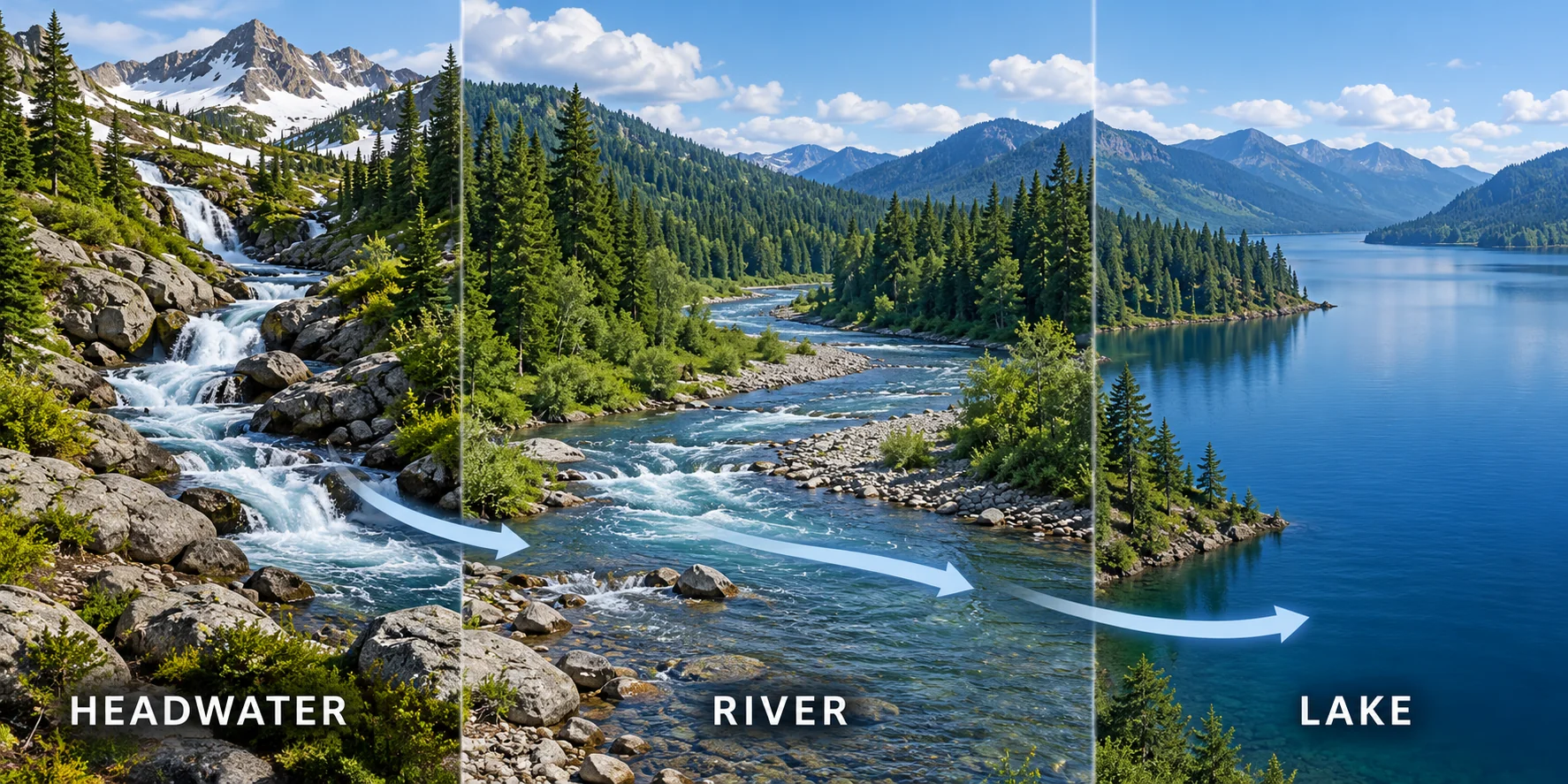
Bull trout may use different habitats across their life stages. The COSEWIC assessment describes resident fish as well as forms that move between streams, rivers and lakes. A headwater, river and lake may be connected by water, but a waterfall, dam or other barrier can limit fish movement. A diagram of water flowing downhill does not prove that fish can pass the same route.
Cold water, suitable spawning and rearing habitat, and access between habitats matter differently across populations. Warming, sediment, barriers, introduced species and other pressures can affect local recovery. Do not infer the health of a population from a clear-looking stream or one fish. Follow local closures and habitat protection rules, especially around spawning areas and sensitive banks.
When visiting a water, arrive with a plan that protects the area as well as the fish. Use established access where available, avoid trampling spawning habitat and leave vegetation in place. Clean, drain and dry equipment as directed for the jurisdiction and do not move live fish or water between waterbodies. Banff has specific restrictions, including a felt-sole boot ban; check the actual place rather than assuming that rule is identical across Canada.
Preparing for a lawful or incidental catch
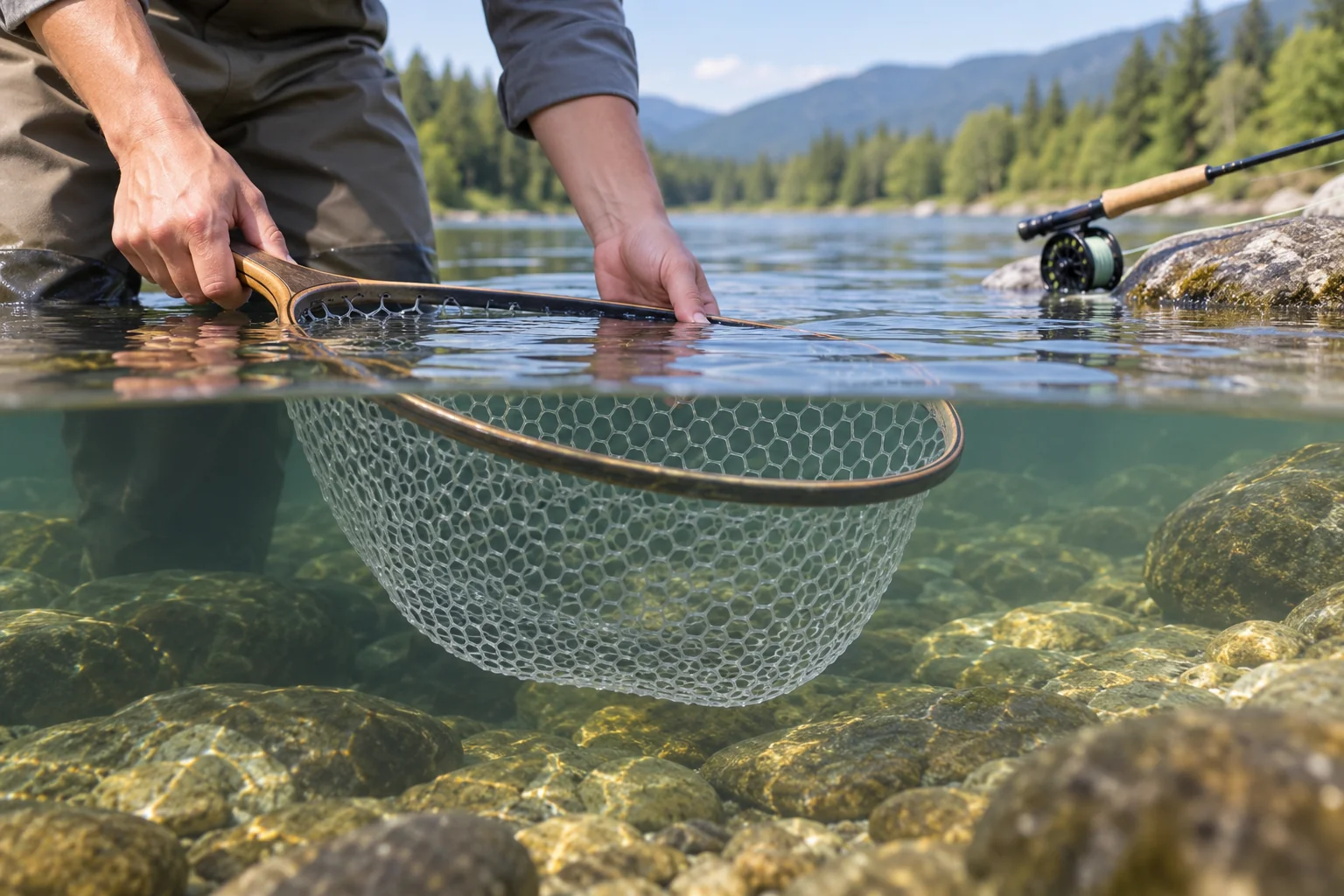
Have the release tools you need ready before fishing. If an incidental bull trout must be released, follow the exact local rule and the responsible authority's handling advice. Keep the fish in the water as much as practical, minimize handling, use wet hands if handling is necessary, support the body and keep fingers away from gills and eyes. A suitable rubberized net and long-nose pliers can help reduce the time spent handling, but neither guarantees survival.
Plan the release area before casting. A bank with poor footing or fast water may make landing and release more difficult. Avoid putting a fish on dry rocks or sand for a photograph. If the hook is deeply embedded, consult the relevant authority's advice rather than pulling forcefully. A fish that appears healthy when released may still experience stress; the goal is to reduce avoidable harm, not promise an outcome.
Water temperature, low flows or other conditions can increase risk. If conditions or the likely depth of capture make release difficult, reconsider the activity and ask local staff or a knowledgeable guide about a lower-impact alternative. Do not keep a fish simply because you are concerned it was injured where retention is prohibited. Ask the authority what to do in that situation.
A worked example: comparing two plans
Imagine an angler with two possible trips in late September. One is a provincial Alberta river; the other is the described downstream reach of Alexander Creek in BC. In Alberta, the angler checks the exact river entry and remembers the province's zero bull-trout possession limit. On the BC example, the published amendment lists no fishing September 1 to October 31 in the specified reach. That means the angler must not treat the summer catch-and-release description as permission for the September date.
This is a reading exercise using a real dated rule example, not a claim that the Alberta river is open or that the BC notice will remain unchanged. The angler still needs the latest notice, licence, access and water boundary before making any trip decision. If one plan is closed, an authorized alternate activity or another water with clearly confirmed rules is a better option than guessing.
One practical tool for a permitted fishery
For broader setup decisions, see our fishing equipment guide and beginner guide. If your guide does not supply suitable pliers, the Rapala 8½-inch Fisherman's Pliers are one specific listed tool to compare for reaching a hook. Ask whether the size suits the permitted fishery and the guide's handling plan. Do not force a deeply embedded hook; follow the authority's current advice.
A release tool for a permitted fishery
Affiliate links: We may earn a commission from qualifying purchases, at no extra cost to you. We have not field-tested these items. Check the selected model, current price and delivery options on Amazon.
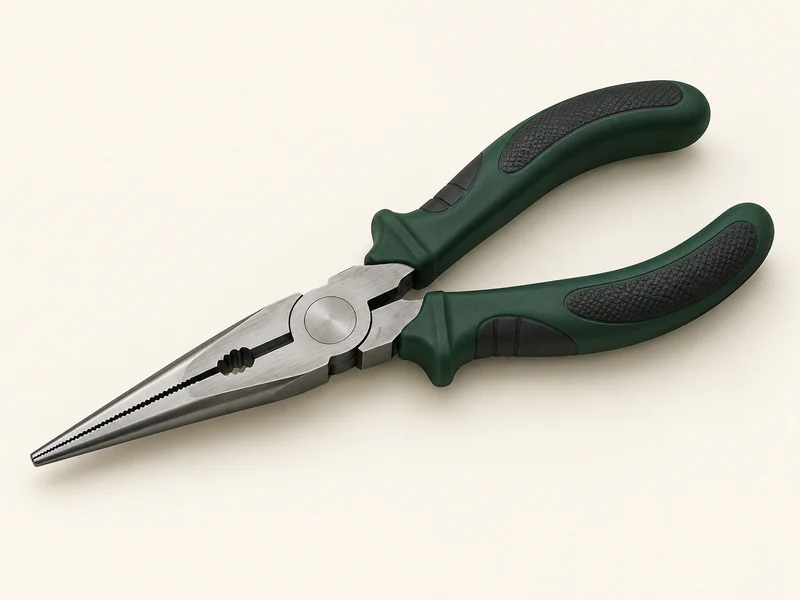
For handling hooks with a tool
Rapala 8½-inch Fisherman's Pliers
- Longer 8½-inch format for reaching a hook with a tool.
- Nickel-plated carbon steel and co-moulded grips.
- Choose a jaw size that suits the hook and fish; avoid unnecessary handling time.
Choose a size suited to accessible hooks and your fish. For a deeply embedded hook, follow local fish-handling guidance instead of pulling forcefully.
Check these pliers on AmazonCheck the exact listing, price and shipping before ordering. As an Amazon Associate, CanadaFever earns from qualifying purchases. We have not personally tested the pliers, and they do not authorize fishing or guarantee a safe release.
Frequently asked questions
Can I keep a bull trout in Alberta?
Alberta describes a province-wide zero possession limit. Check the current water-specific rules and release requirements for the location.
Does catch-and-release mean I can target bull trout everywhere?
No. Read the current water-specific season, closures and rules for the intended activity. A zero possession limit is not a general targeting permit.
Are bull trout and Dolly Varden the same species?
No. They are distinct char and may be difficult to distinguish, especially when small. Use an official regional identification guide and seek local advice if uncertain.
Can I use an Alberta licence in a national park?
Check the individual park's fishing permit and regulations. Provincial and national-park requirements are separate.
Does a rubber net guarantee survival after release?
No. Equipment can help reduce handling, but conditions and capture still affect a fish. Follow the local handling guidance and avoid fishing when responsible release is doubtful.