

Kokanee Salmon fishing in Canada guide with identification, habitat, seasonal patterns, gear, tactics, and official regulation checks.
- Use Kokanee Salmon Fishing in Canada to match species behaviour, habitat, season, and presentation to Canadian water conditions
- Check local regulations before fishing; limits, closures, bait rules, and licences can vary by province and waterbody
- Focus on practical setup: where to fish, what to cast or troll, how deep to work, and when to move
Bottom line Kokanee Salmon Fishing in Canada gets simpler when you pair current rules with the right habitat, timing, and presentation
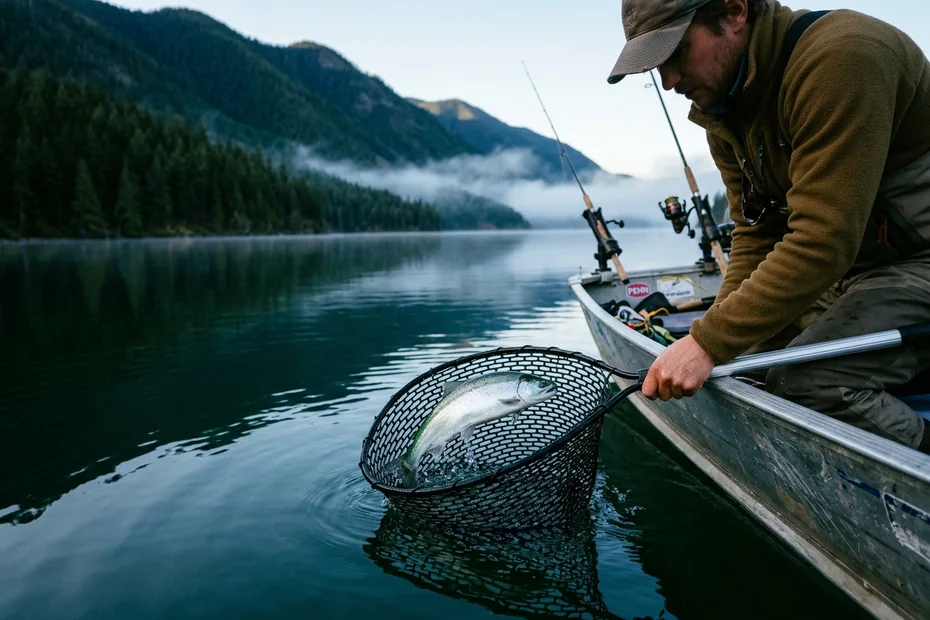
Kokanee salmon fishing offers Canadian anglers ocean-salmon speed, vivid crimson spawning colors, and rich sweet flaky fillets inside clear interior mountain lakes completely cut off from salt water. Known scientifically as Oncorhynchus nerka, kokanee are genetically identical landlocked sockeye salmon that stay inside deep pelagic basins feeding tightly on microscopic zooplankton from spring thaw through early autumn.
Success hinges cleanly on tracking exact thermocline bands between 15 and 60 feet deep, running ultra-slow 1.2 to 1.6 mph boat speeds, and rigging flexible shock snubbers ahead of delicate pink hoochies or wedding-ring spinners tipped with scented corn. Without careful drag discipline, razor-soft paper lips tear quickly right beside boat nets.
This manual links directly into our Fishing for Specific Species in Canada collection and pairs cleanly with Canada Outdoor Planning Tools for seasonal thermocline and launch checklists.
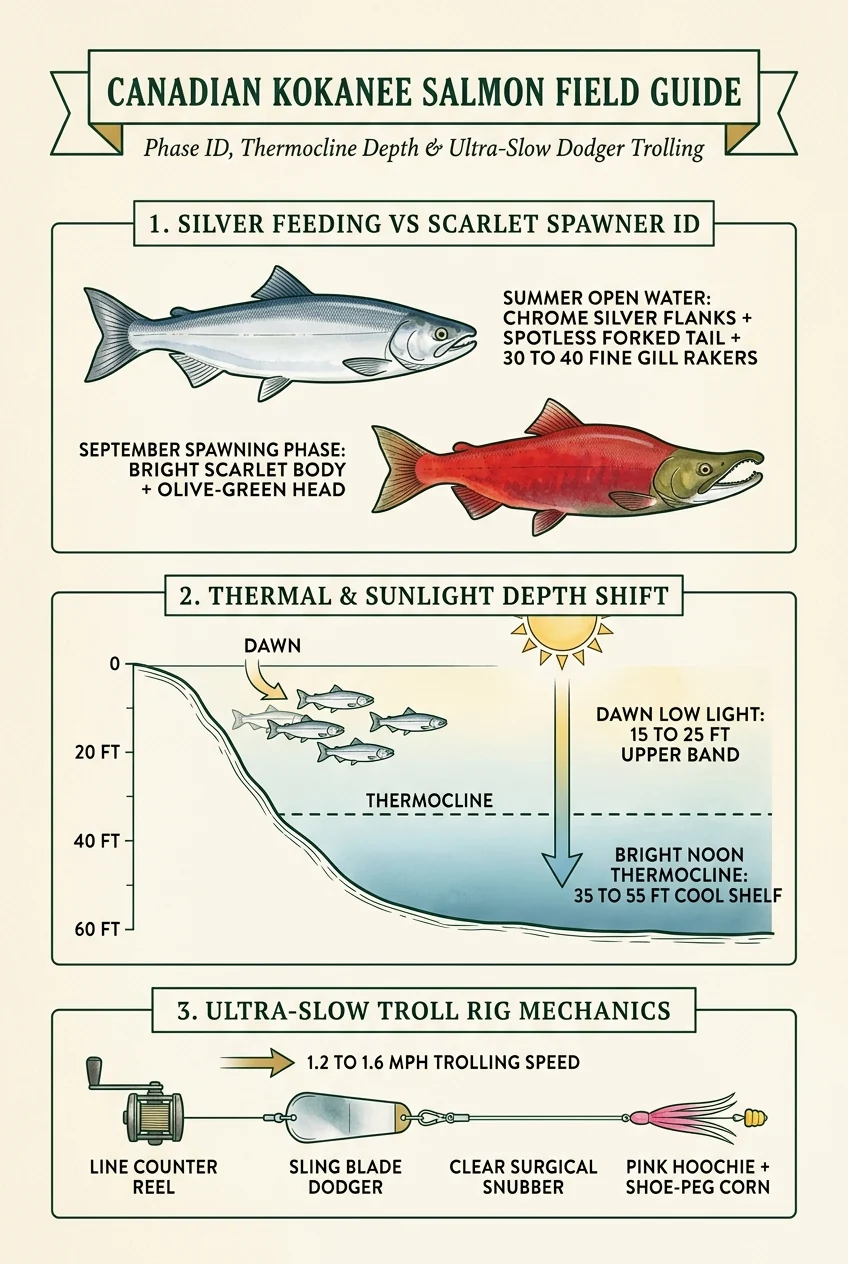
Open full-resolution kokanee diagram (WebP)
Biological Identification: Separating Kokanee From Rainbow Trout and Sea-Run Sockeye
Across vast Interior British Columbia lakes such as Okanagan, Shuswap, and Kootenay where rainbow trout share pelagic open water right beside kokanee pods, silver phase schools fool casual observers at boat-side. Meanwhile, inside lakes directly open to ocean migrations (such as Osoyoos or Sproat), tiny immature kokanee swim side by side with returning marine sockeye salmon.
Confirming clean white inner gums, spotless blue-silver backs, and deeply notched cloudless tails takes only two seconds before deciding possession retention.

Open 1024×559 kokanee identification plate
Four Decisive Field Checks
- Virtually Spotless Back & Tail: Unlike rainbow trout crowded with clear black tail dots, pelagic silver kokanee retain spotless clean silver-grey forked tails lacking black spot speckles.
- 13 to 18 Long Anal Fin Rays: Inspect the lower fin ahead of the tail; Pacific salmon (including kokanee) display long angled anal bases spanning 13 to 18 fin rays versus just 10 to 12 on true rainbow trout.
- Fine Combed Gill Rakers: Lifting the gill arch gently reveals 28 to 40 densely packed slender gill rakers adapted specifically to strain miniature plankton cells rather than sharp widely spaced predators teeth.
- Bright White Inner Gums: Lower jaw tissues gleam crisp white around tiny fine teeth, setting kokanee neatly apart from grey-mouthed coho or dark-gummed Chinook.
| Field Check | Kokanee Salmon (O. nerka) | Rainbow Trout (O. mykiss) | Anadromous Sockeye | Lake Whitefish |
|---|---|---|---|---|
| Tail Spots & Fork | Clean spotless deeply forked tail | Square edge jammed with tiny black dots | Spotless deeply forked (identical species) | Deeply forked plain dull olive-silver fin |
| Scale Texture & Size | Very fine loose metallic silvery scales | Smaller tightly fixed olive-silver scales | Loose marine-chrome scales | Large coarse tough diamond silver scales |
| Anal Fin Ray Count | 13 to 18 soft rays (long wide base) | 10 to 12 soft rays (narrow tall fin) | 13 to 18 soft rays | Small mouth without jaw teeth; 10 to 12 rays |
| Mature Spawning Dress | Fiery red sides capped by bright olive-green heads | Muted rose-red cheek stripe only | Deep bright crimson-red flanks, green head (3 to 8 lbs) | Dull smoky grey-bronze autumn nuptial bumps |
Tracking Thermal Columns and Pelagic Zooplankton Clouds
Chasing kokanee accurately means treating deep BC mountain lakes like open oceanic fish bowls rather than studying sunken submerged trees. Because kokanee eat primarily delicate tiny plankton (Daphnia and copepods) drifting smoothly down sunlit vertical bands, hungry schools follow narrow temperature bands between 10 C and 13 C across mid-lake basins miles away from shorelines.
Throughout May, hungry schools cruise cleanly across the top ten feet under cloudy morning skies. By hot late July afternoons, intense warm sun compresses plankton bands neatly onto razor-thin deeper thermoclines parked cleanly between 35 and 65 feet straight beneath downrigger balls.
| Season / Water Phase | Core Schooling Depth | Boat Spread Hardware | Top Color Palette |
|---|---|---|---|
| Early Spring Ice-Off (Apr to May) | Surface down to 18 ft across main bays | Flat-lined side planers, light slip lead (0.5 to 1 oz) | Bright chartreuse, silver-blue, copper spinner blades |
| Early Summer Clear (Jun) | 18 to 35 ft hovering mid-water | Compact 4-inch chrome-pink dodger + 30 ft setbacks | Flamingo pink, orange-pearl hoochies, UV pink corn |
| Peak Summer Heat (Jul to Aug) | 38 to 65 ft pressed straight onto thermocline | Downriggers or 2-color leadcore with 15 ft setbacks | Glow white, UV magenta, chartreuse wedding rings |
| Pre-Spawn Staging (Late Aug to Sep) | 15 to 30 ft outside cold tributary creeks | Ultra-slow jigging spoons or cast pink jigs off anchors | Bright fluorescent orange, crimson red, dark pink flash |
Slow Dodger Trolling, Micro Hoochies, Snubbers, and Vertical Jigging
Dragging salmon lures briskly at 2.5 mph cleanly sails straight over finicky kokanee schools without triggering a single sniff. Drop outboards cleanly into gentle intermittent electric-trolling speeds near 1.2 to 1.6 mph, weaving graceful wide S-turns across deep sonar clouds so inside rods stall slowly while outside dodgers dart briskly forward.
High-Confidence Kokanee Terminal Rigging Mechanics
- Small Teardrop Dodgers & Flash Blades: Use narrow flexible 4 to 5.5-inch nickel, ultraviolet, or pink-scale dodgers swinging gently side-to-side instead of massive stiff Pacific ocean flashers that exhaust tiny 14-inch fish instantly.
- Short Whip-Action Leader Setbacks: Keep delicate 1.5-inch micro squid hoochies or flashy wedding-ring spinners barely 8 to 14 inches behind the dodger eye on stiff 10 to 12 lb fluorocarbon so every wide side swing jerks the lure sideways tantalizingly.
- Sweetened Corn & Rubber Snubbers: Tip paired small size 4 tandem red octopus hooks with firm shoe-peg white corn kernels marinated lightly in tuna oil or anise shrimp gel, and insert a flexible six-inch clear surgical snubber directly ahead of thin leaders to buffer boat-side jolts.
- Vertical Kokanee Jigging Without Boats Moving: Whenever wind holds steady over thick 45-foot mid-lake schools shown boldly on fishfinders, drift silently vertically dropping 1/2 oz pink, white, or chartreuse darting spoons straight down into feeding marks.
Boatless Alternatives: Leadcore Lines, Diving Planers, and Scented Shoe-Peg Corn
Small boat, canoe, and kayak anglers lacking electric downriggers still reach prime summer thirty-to-fifty-foot kokanee thermocline paths effortlessly using compact slip weights, leadcore metered lines, or small round clear diving planers (“Deep Six” or Jet Divers). Five colors of thin 12 to 18 lb leadcore line unrolled neatly behind a drifting boat track smoothly down near 25 to 30 feet at steady 1.4 mph paddles, placing light four-inch dodgers straight through active summer feeding depths without expensive steel cables.
Preparing scented crisp bait kernels before dawn takes minutes yet makes noticeable differences during slow noon fishing spells. Drain ordinary canned white shoe-peg corn onto paper towels cleanly, shake kernels inside a small lidded jar coated with pink krill powder, pure tuna oil, and a pinch of salt to toughen corn skins cleanly against swift boat turns, keeping tiny hooks packed snugly even after two missed subtle nibbles.
Always stagger two distinct color bands across initial morning lines (running silver-pink dodgers on one side versus high-contrast UV chartreuse glow rigs opposite) until active pods tell you swiftly whether sunny noon glare or cloudy lake bloom wins bites today.
Choose limp shock-absorbing trolling rods cleanly inside our complete fishing gear guide, double check light knot hygiene in fishing for beginners in Canada, and book lakefront outings using guides featured inside fishing lodges in Canada and all-inclusive fishing lodges in Canada.
5-Step Clean Kokanee Land-and-Grill Protocol
Keep Steady Forward Boat Glide
Dropping trolling motors straight into idle neutral once a kokanee strikes immediately creates slack lines allowing thin barbless tandem hooks to tumble free. Hold steady 1.2 mph troll glide cleanly while clearing net access smoothly.
Never Reach High Above Fish Heads
Avoid pointing rod tips steeply upward when fish surge close to surface wakes where sudden cartwheels scatter lures sideways. Sweep your limp rod smoothly downward horizontally toward water corners.
Scoop Cleanly In One Wide Front Motion
Slip long-handled coated rubber mesh cleanly well underwater facing into oncoming kokanee instead of chasing thrashing silver fish from behind.
Bleed Harvested Fish Promptly Over Ice
Unlike thick greasy fatty trout, delicate kokanee flesh deteriorates cleanly fast under warm July decks. Clip gills swiftly and chill catches immediately inside crushed ice slush coolers to lock bright coral sweetness.
Respect Protected Spawners Outside Stream Mouths
Once coastal autumn colors stain kokanee scales crimson red beside shallow lake feeder creeks in late August, switch neatly away from spawning aggregations so healthy fertilized redds hatch strong next spring.
Canada’s Top Kokanee Salmon Lakes and Valleys
Interior British Columbia sits at the undisputed heart of wild native and stocked kokanee angling across North America thanks to steep cool fjord-style valley lakes teeming with summer zooplankton clouds. Check broad regional travel matches inside our central directory for the best fishing spots in Canada.
- Okanagan Corridor (Wood Lake, Kalamalka, Okanagan Lake): Crystal turquoise Okanagan valleys produce abundant bright 11-to-15-inch schools easily launched from Kelowna, Lake Country, and Vernon boat ramps from spring through late summer.
- Kamloops & Nicola Basins (Monte Lake, Stump Lake, Shuswap): Cool interior plateau reservoirs deliver non-stop high action near rocky narrows and broad pelagic mid-channel drops popular with weekend kayak and aluminum boats.
- Kootenay Lake & Arrow Lakes (Southeastern BC): Famous for wild massive red-phase giants pushing past two to four pounds historically alongside careful conservation stock cycles protecting native spawners.
- Fraser Valley & Harrison Area (Cultus Lake & Stave Reservoir): Accessible quick-day trip waters near Vancouver providing calm summer morning downrigger trolling runs close to regional campgrounds.
- Alberta & Yukon Fringe Lakes (Gleniffer, Upper Kananaskis, Kathleen Lake): Select cold mountain headwater reservoirs in Alberta and Kluane’s Kathleen Lake nurture cold native or introduced stocks yielding vivid autumn spawning views.
Seasonal Lake Limits, Sanctuary Closures, and Creek Mouth Rules
Kokanee populations swing sharply year-to-year with shifting lake fertility and predation cycles, causing Fisheries and Oceans Canada and British Columbia provincial authorities to shift daily bag quotas or seasonal conservation closures rapidly on select lakes like Kootenay or Okanagan. Always check region-by-region limits carefully inside fishing regulations and licences in Canada ahead of towing boats up steep mountain grades.
| Province / Region | Core Legal Rule Focus | Stream / Autumn Restrictions | Official Authority |
|---|---|---|---|
| BC Okanagan (Region 8) | Lake-specific daily quotas across Wood, Kal & Okanagan | Check in-season emergency updates & creek mouth boundaries | BC Freshwater Fishing Synopsis |
| BC Kootenays & Thompson (Regions 3 / 4) | Strict Kootenay Lake conservation closures vary yearly | All tributary spawning streams closed strictly to harvest | BC Freshwater Fishing Synopsis |
| Alberta Stocked Lakes | Combined sportfish limits vs selective zero-harvest waters | Verify bait bans on trout-managed cold mountain lakes | Alberta Sportfishing Regulations |
| Yukon / Parks Waters | Parks Canada Kluane National Park permits & barbless hooks | Zero lead weight bans inside federal park boundaries | Parks Canada / Yukon Environment |
Kokanee Troll Depth, Speed & Dodger Rig Selector
Dialing precise setback distance, flash size, and trolling velocity straight to current season depth gets lures humming right inside suspended 10 C to 13 C schools.
Interactive Canadian Kokanee Depth & Speed Setup Calculator
Select your seasonal sun depth window, lake clarity, and boat control tool to calculate exact troll speed, dodger setback length, hook setup, and presentation adjustments.
Recommended Canadian Kokanee Setup:
Fish high spring clouds carefully behind quiet side planers so outboard wash never scatters shallow cruising pods.
Recommended Kokanee Lines, Leaders, and Boat Tools
Shock-absorbing stretchy monofilament, invisible crisp dodger leaders, and slim release pliers reduce soft-mouth break-offs sharply along crowded summer boats.
CanadaFever participates in affiliate programs. We may earn a commission on qualifying purchases made through links on this page at no additional cost to you.
Reference illustration – check exact variant on Amazon.
Berkley Trilene XL Monofilament (8 lb Test, Clear)
- Controlled elastic stretch cushions frantic surface shakes so thin tandem hooks stay lodged cleanly inside soft kokanee lips.
- Smooth spool exit pays off cleanly while marking exact troll setbacks off side planers and downrigger clips.
- Neutral low visibility performs safely in gin-clear interior BC glacier lakes like Kalamalka and Okanagan.
Reference illustration – check exact variant on Amazon.
Seaguar Red Label Fluorocarbon Line
- Controlled stiffness transfers every sharp side-to-side dodger pulse cleanly across short 8-to-12-inch hoochie whips.
- Near-invisible clear profile hides knots cleanly behind metal flash blades under noon alpine sunshine.
- Tough outer abrasion coating withstands repeated split-shot clips and downrigger release jaws without slipping.
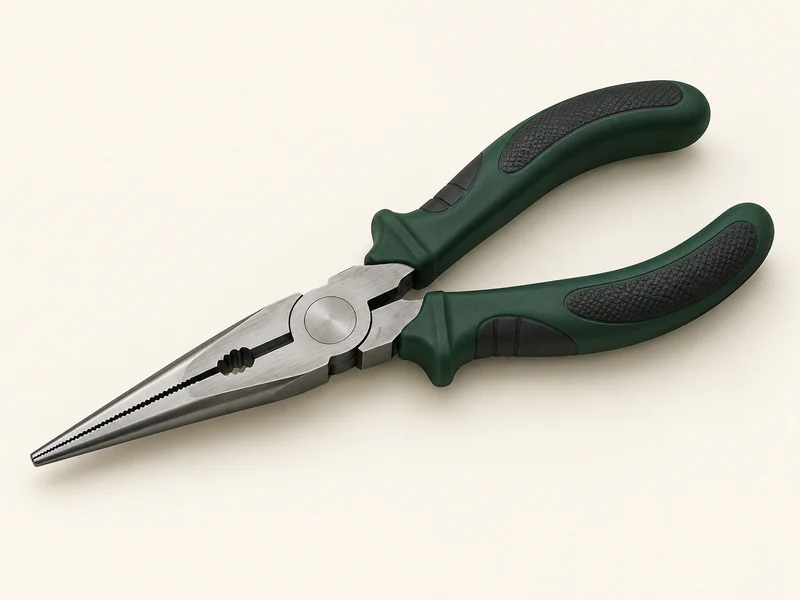
Reference illustration – check exact variant on Amazon.
Rapala 6½-inch Fisherman’s Pliers
- Precision needle tips back delicate size 4 octopus hooks out smoothly over cooler ice without crushing delicate fins.
- Quick split-ring jaw edge makes changing micro dodgers and wedding ring leaders effortless in bobbing boat wakes.
- Compact lanyard footprint rests quietly on boat console stations ready for instant double hookups.
Additional Verified Kokanee Gear Categories on Amazon:
Compare Trout & Salmon Fly Starter Kits • Browse Light Spinning & Trolling Lures • Review Rubber Trout Landing Nets
Frequently Asked Questions About Canadian Kokanee Salmon Fishing
Are kokanee salmon genuinely Pacific salmon or a variety of trout?
Kokanee are genuine landlocked sockeye salmon (Oncorhynchus nerka). Over millennia following glacial lakes separating from ocean outlets, non-migratory stocks adapted to complete their entire feeding and spawning cycle inside freshwater basins without ever swimming out to sea.
Why is boat trolling speed critical for kokanee fishing?
Kokanee respond dramatically to ultra-slow swimming baits dragged steadily between 1.2 and 1.6 mph. Trolling faster around standard walleye or trout speeds near 2.2 mph overruns schooling plankton-feeders and rips delicate hoochie lures clear out of natural dodger action.
Why do anglers tip small kokanee hooks with canned shoe-peg corn?
Crisp firm white shoe-peg corn kernels hold cleanly onto sharp size 4 tandem hooks under steady water drag while carrying strong sweet scent trails (especially dyed pink and marinated inside prawn or tuna oils). Corn entices tentative tail-nipping kokanee cleanly to bite deeply onto rear points.
How deep should I set downriggers for mid-summer BC kokanee?
Track exact lake thermocline depth between 35 and 60 feet deep once bright July and August afternoon sun heats surface bays over 20 C. Run one line slightly higher near 35 feet and a second rod down at 48 feet until active pods reveal their exact ceiling on sonar.
Can anglers catch kokanee vertically jigging without downriggers?
Yes. Whenever fishfinder arcs cluster thickly directly underneath quiet drifting boats or kayaks between 30 and 55 feet deep, drop 1/2 oz pink, white, or glow flutter spoons straight through the center of the school with soft rhythmic lifts.
Do kokanee die after autumn spawning just like ocean sockeye?
Yes. Just like anadromous sockeye salmon, maturing kokanee turn bright scarlet red with olive-green heads, climb rocky inlet streams or shallow shore shoals in September to lay eggs cleanly in gravel redds, and pass away soon afterward, enriching nutrients inside mountain watersheds.
Official Canadian Fisheries Resources and Related Guides
Fine-Tuning Drag Washers and Sonar Gain Settings
Setting proper trolling reel star drags marks the single cleanest safeguard saving frantic summer boat hookups. Pull slow line carefully by hand off your rod tip until smooth clicker tension slips cleanly well below two pounds of breaking strain, soft enough so violent headshakes glide effortlessly straight down the blank before ripping paper mouth skin loose.
Calibrate mechanical line counters on flat calm mornings before dropping dodgers into deep mountain basins. Reel spools lose effective circumference as backing fills up or braid compresses, which causes factory counters to misread actual drop distance by ten feet at deep summer depths. Zero your dial at the transom waterline and measure a fifty-foot pass along an open shoreline bench so every flatline and downrigger setback repeats accurately across cloudy days.
Morning low light draws active Okanagan and Kootenay pods near twelve to twenty feet under chopped surface waves, where bright ultraviolet wedding rings and small silver willow blades flash without washing out. By bright solar noon under glassy flat skies, kokanee drop briskly toward deeper chilled basins near forty-five feet and tighten their strike window against slow copper or matte red glow spoons. Tracking hourly surface brightness alongside chartplotter shade arches stops guesswork when mid-morning trolling stalls suddenly without a bite.
Meanwhile, tweak marine fishfinder sonar sensitivity cleanly until faint hazy scattered grain bands show horizontal thermocline layers clearly across screens between 25 and 60 feet deep, targeting narrow streaks of stacked slender fish arches cruising right along those sharp cool shelves.
Confirm up-to-date Pacific Salmonid regulations, Okanagan/Kootenay lake openings, and daily limits via official agencies:
- Fisheries and Oceans Canada (DFO Pacific): Sockeye and Salmonid Facts
- Government of Alberta: Official Game Fish Species Directory
- DFO Pacific Region: Recreational Fishing Licences and Management Portal
- Related CanadaFever Guides: Fishing for Specific Species in Canada · Canada Outdoor Planning Tools · Fishing Gear and Equipment · Fishing for Beginners in Canada · Fishing Regulations and Licences in Canada · Best Fishing Spots in Canada · Fishing Lodges in Canada · All-Inclusive Fishing Lodges Canada