

Pink salmon fishing in Canada starts with a particular water and an up-to-date rule, not a promise that a run or fishery will occur in a given year. British Columbia's tidal and non-tidal waters have different licences and may have different salmon restrictions. Check the exact area, date, species, current notices and gear requirements before planning a trip.
Recognize a pink salmon
The DFO identification guide describes pink salmon (Oncorhynchus gorbuscha) with a white mouth and black gums, a V-shaped tail with large oval spots on both lobes, and large spots on the back. They are the smallest of the Pacific salmon species in the guide. In freshwater a spawning male can develop a pronounced hump, but that feature is not present in the same way on every fish or at every life stage.
Compare the mouth, back, tail and overall features rather than deciding from a single spot or a hump. Light, water and movement can make features hard to see. Study the official guide before a trip and use its comparison for species you may encounter. If you cannot identify a caught fish, follow local release rules rather than keeping it while searching for an answer.
Pink compared with coho and chum
DFO describes coho as usually having tail spots on the upper lobe and spots on the upper body. Pink salmon have large oval spots on both tail lobes. Chum have no spots on the back or tail and may show vertical bars; their tail can show silver streaks. Individual features can be obscured, so combine them with the mouth and body description. A fish changing colour on a spawning migration does not become identifiable from colour alone.
Why runs and years vary
DFO describes pink salmon as generally maturing at two years. A DFO Fraser River assessment describes the odd-year Fraser population and negligible even-year returns there. Other systems have different cycles. That biological pattern is not a universal coastwide rule or a forecast that a particular water will be open. Local stocks, marine conditions and conservation decisions vary, and a visible run does not itself authorize recreational fishing.
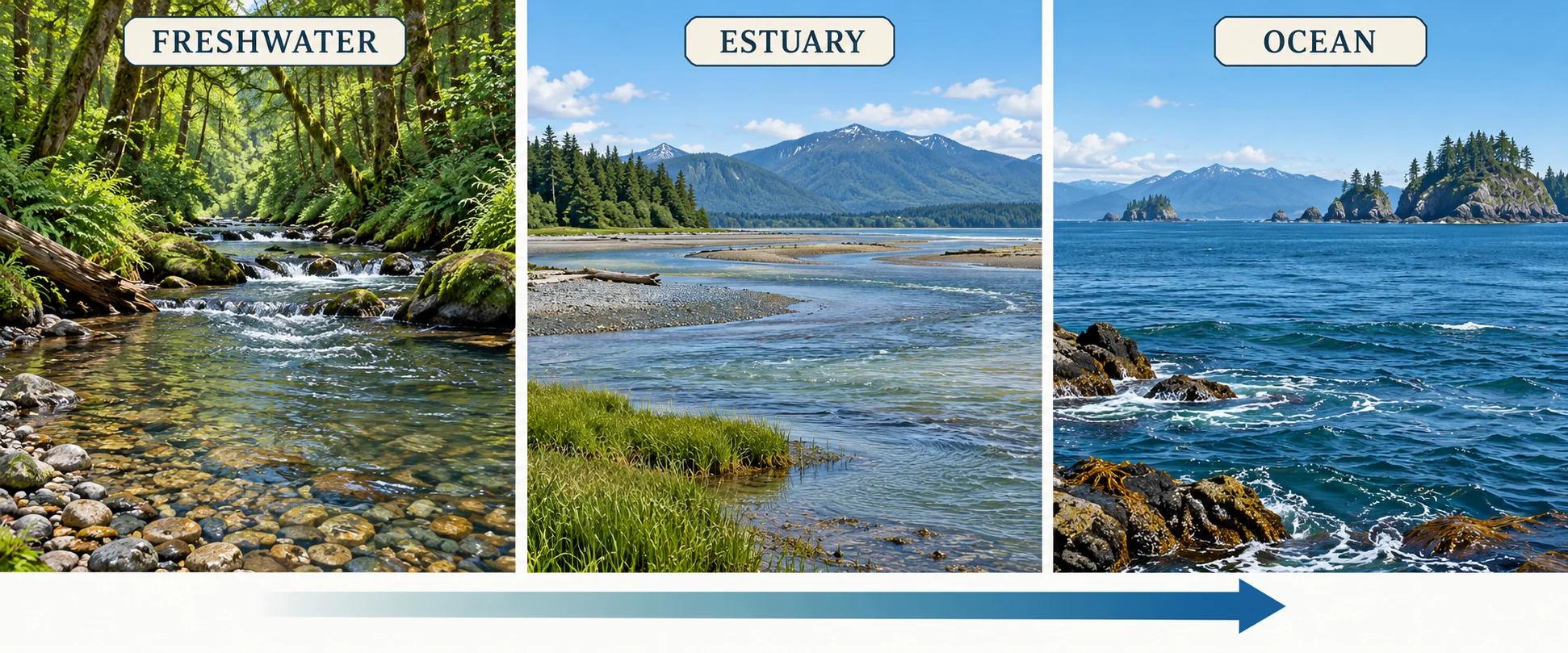
Pink salmon use freshwater, estuary and marine habitats over their life cycle and return to freshwater to spawn. The DFO salmon overview describes their life history. Watch from a permitted area if fishing is closed, and avoid disturbing spawning habitat. A past run report can help you understand a place but cannot establish this year's timing or legal status.
Separate tidal and non-tidal rules
BC tidal fishing uses the federal licence system; non-tidal fishing uses the provincial freshwater licence system along with federal salmon management measures. DFO's licence guidance explains the distinction. Check age and residency conditions, the applicable salmon conservation stamp for retention, and any recording requirements. Tidal and non-tidal stamps are separate; the DFO stamp page explains the current framework.
The legal boundary is defined by the authority, not by whether the water looks salty or a location appears close to the coast. Locate the tidal area or freshwater reach in the official description. Then read the current species line, local restrictions and any variation orders. The same licence does not turn a zero limit or closed reach into an open fishery.
Find the right BC starting point
Choose a water type and check the exact area or reach and the latest notices. This tool does not decide if fishing is open.
Tidal water
Start with the DFO sport fishing guide and current fishery notices.
Non-tidal water
Read the relevant DFO Region 2 example, find your own region in the DFO guide, and check the BC freshwater synopsis and updates.
Two real examples of how to read the rules
These examples were checked on 30 October 2026. They explain the structure of official information, not a guarantee of an opening for another date. Current area pages, later notices, local restrictions and the exact boundary can change the outcome.
Area 28: an area row plus local restrictions
The DFO Area 28 page covers the Vancouver, Bowen Island, Indian Arm and Squamish area. Its pink salmon row showed a 30 cm minimum, a daily limit of four and an open status when checked. The page also instructs anglers to review restrictions and protected areas. That row is a starting point; it does not prove every subarea, method or point is open without reading the remaining conditions and current notices.
For tidal salmon in the listed coastwide areas, FN0723 introduced single-point and hook-gap restrictions effective September 1, 2026. DFO also requires barbless hooks for salmon in BC tidal and non-tidal waters. A single-point hook and a barbless hook describe different features. Check the full notice, dates and any area-specific gear or protected-area rules before using a lure.
Adam and Eve Rivers: an expired 2026 notice
DFO notice FN0905 listed a four-pink daily limit for the Adam and Eve Rivers from August 25 through September 30, 2026. Those dates had passed when this guide was checked. The notice is a useful example of how a species, water, start time and end time fit together; it is not proof of an opening after September 30 or in a future year.
The same notice reminds anglers that salmon hooks must be barbless in BC tidal and non-tidal waters, and that a salmon accidentally foul-hooked in a lake or stream, including tidal parts of coastal streams, must be released immediately with the least possible harm. It also points to the non-tidal licence and surcharge. Read the entire current notice, rather than taking its daily limit as the whole rule.
A five-step check before booking or casting
- Name the exact water. Identify the tidal subarea or the freshwater river reach and the intended date.
- Find the current species rule. Read the pink salmon entry, size and daily and possession limits, and whether fishing or retention is open.
- Read restrictions and notices. Check protected areas, boundary signs, method and gear limits and newer variation orders.
- Confirm your licence. Use the proper tidal or non-tidal licence and any applicable conservation stamp; verify age, residency and recording requirements.
- Make a fallback plan. If the water or target is closed or unclear, choose another lawful activity. Ask DFO about a boundary rather than assuming a nearby opening applies.
Our Canadian fishing destinations guide can help with general travel ideas; current official rules control the chosen water. A guide's availability or a photograph from a previous run does not establish a legal opportunity today.
Choosing a presentation for a legal fishery
Pink salmon are often discussed with small lures and flies, but the exact method must match the water and rules. Ask a knowledgeable local guide which presentation is permitted, what the current is doing and whether equipment is supplied. The following situations are practical examples, not universal rig recipes or guarantees of a catch.
A shore retrieve
Where the legal water allows a lure, choose a clear casting lane and start with a short cast. Retrieve at a steady pace and watch how the current affects the line and lure. If the lure sinks into vegetation or repeatedly contacts the bottom, inspect it and adjust the lane or retrieve rather than pulling harder. A longer cast places more line in the water and can make contact more difficult in cross-current.
Check the hook configuration before departure. A factory lure may be fitted with a multi-point hook that is not suitable under the applicable tidal notice. Select a compliant hook for the exact water and date; a picture or product label does not decide legality. Respect other anglers' space and retrieve if your line drifts into their lane.
A river drift
Where a float or other drift setup is permitted, a controlled short drift allows you to see how the presentation moves through a seam. Watch for a float that stops at the same point repeatedly; retrieve and inspect for bottom contact or debris before changing the depth. The correct weight, leader and hook depend on flow and local rules. Do not assume a float is allowed on water restricted to fly fishing only.
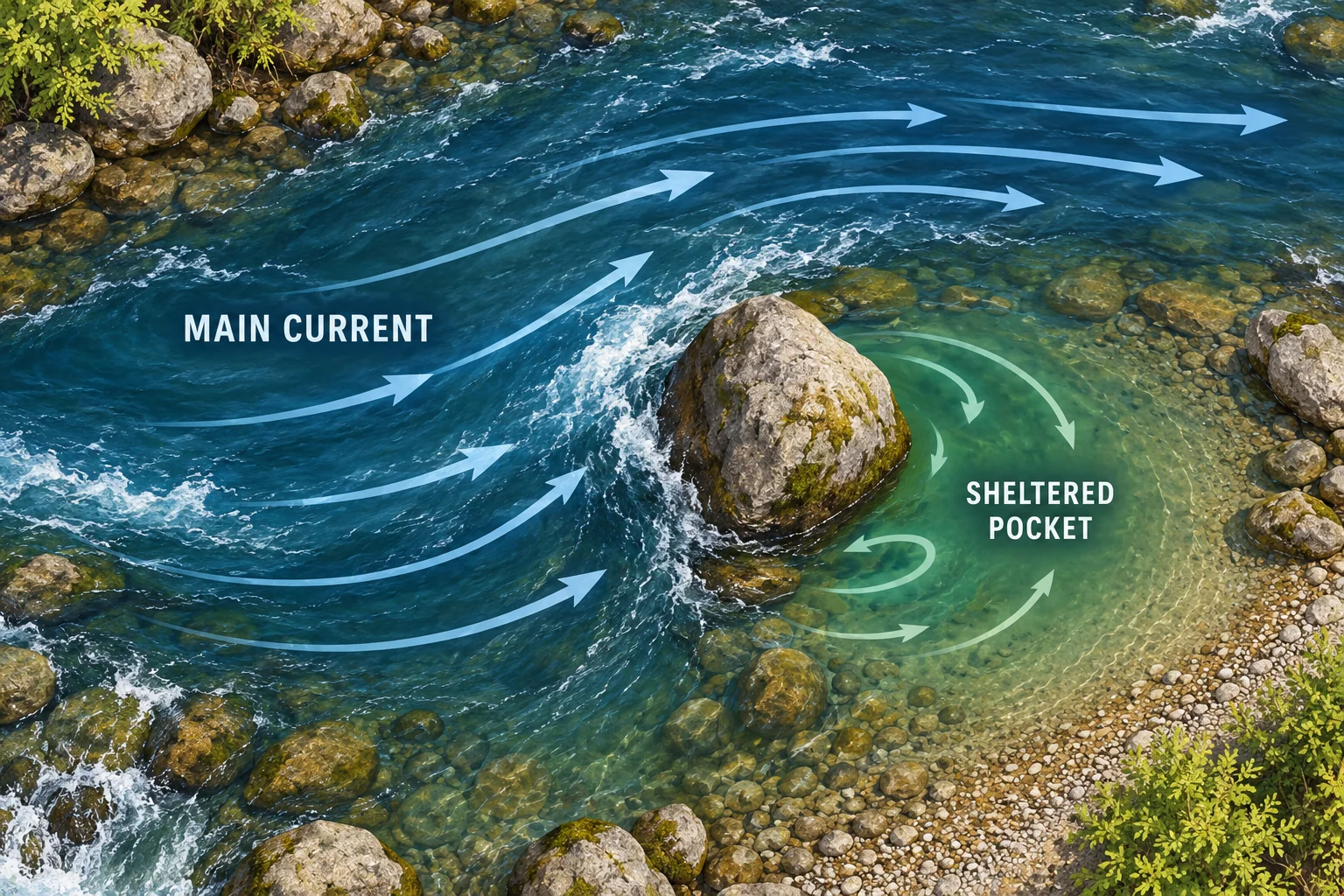
Look for a stable, permitted bank and a clear route back. River level and current can change with rain, dam operations or tide influence. A sheltered-looking pocket behind a boulder is a simplified flow concept, not a safe wading instruction or proof that fish are present. Avoid stepping into spawning areas or crossing fast water for a better cast.
A tidal boat outing
Ask the operator for the precise area and plan for weather, tide and local restrictions. A boat can cover different water but requires appropriate safety equipment and a route suited to conditions. Ask which tackle and licences are supplied, how non-target fish will be handled, and what happens if a closure changes the itinerary. A booking or a skipper's local experience does not replace the angler's licence obligations.
Diagnose the presentation, not the outcome
If the lure sweeps out of the chosen lane, shorten the cast or choose a different legal angle before adding more weight. If the line repeatedly crosses other anglers' lines, wait or change position where access is allowed. If the terminal gear returns covered in weed, identify where it contacted the bottom and adjust one element. A repeated tap can be bottom, debris or a fish; check the gear rather than assuming a bite.
Keep a short note of the water, time, current direction and presentation. A later outing can be compared with that observation, but it cannot be predicted from one previous day. A period without fish can be useful time to learn how your presentation moves and to confirm whether the access and release area remain suitable as conditions change.
Compare a guided trip with independent access
A guided day can include a boat, tackle, instruction or transport, but those services differ by operator. Ask whether the quoted time starts at the meeting point or on the water, how many people share the guide and whether a licence or stamp must be arranged separately. If your goal is a shore trip, ask where the group meets and whether walking or uneven ground is involved. Request the cancellation and weather terms before paying.
For independent fishing, identify public access and parking as well as the legal water. A river entry in a regulation does not grant permission to cross private land, and a tidal area can contain protected or closed subareas. Decide what you will do if the intended water is closed, too crowded or unsuitable for the group's experience. Compare the complete travel and equipment cost with the guide's written inclusions instead of comparing only a headline rate.
Handling a fish that must be released
Plan for non-target salmon before casting. DFO's salmon information advises keeping fish in the water as much as practical, using wet hands if handling is needed, and avoiding the gills and eyes. It advises cutting line near a deeply embedded hook rather than attempting a damaging removal. Follow the specific current rule, including any immediate-release requirement.
Have a suitable net, pliers and measuring device ready. Do not place a fish on dry rock to take a photograph or assume that a brief release guarantees survival. If conditions, depth or the bank make a careful release impractical, reconsider fishing that spot. Do not retain an unidentified fish or a fish outside the legal limit while you look for a rule.
Worked example: a date changes the answer
Imagine two plans on October 30, 2026. One angler reads the Area 28 pink salmon row, then checks its subarea restrictions, licence and current notices. Another has a copy of FN0905 for the Adam and Eve Rivers. The latter notice's stated period ended September 30, so its four-fish daily limit alone cannot establish an October opening. The correct next step is to read the current entry and any newer notice for those rivers.
This example teaches source reading, not a future opening forecast. Both anglers still need the precise water, permitted method, size and current restrictions before fishing. A later variation order can change the result.
A release tool to compare
If your guide does not supply pliers, the Rapala 8½-inch Fisherman's Pliers are one listed long-nose tool to compare. Check the exact variant and whether it suits the planned fishery. We have not personally tested it; equipment cannot guarantee survival after release. As an Amazon Associate, CanadaFever earns from qualifying purchases. Check current price and shipping before ordering.
A hook-handling tool to compare
Affiliate links: We may earn a commission from qualifying purchases, at no extra cost to you. We have not field-tested these items. Check the selected model, current price and delivery options on Amazon.
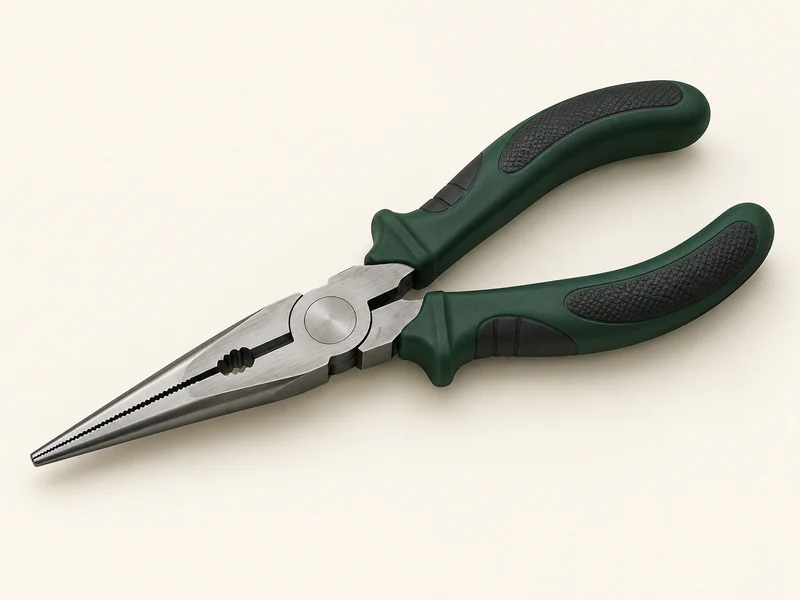
For handling hooks with a tool
Rapala 8½-inch Fisherman's Pliers
- Longer 8½-inch format for reaching a hook with a tool.
- Nickel-plated carbon steel and co-moulded grips.
- Choose a jaw size that suits the hook and fish; avoid unnecessary handling time.
Choose a size suited to accessible hooks and your fish. For a deeply embedded hook, follow local fish-handling guidance instead of pulling forcefully.
Check these pliers on AmazonFrequently asked questions
Do pink salmon only return in odd years?
Some populations show strong odd- and even-year differences, but timing and abundance differ by system. Check local information and current regulations rather than treating a year as a permit.
Can I retain a pink salmon anywhere in BC?
No. Retention depends on the current water, date, licence, limit and local restrictions. Check the official area or reach and any later notice.
Does a hump identify every pink salmon?
A pronounced hump can develop on a freshwater spawning male. Compare the DFO guide's mouth, back and tail features as well.
Is a salmon stamp enough to fish?
No. A stamp is part of the relevant licensing requirements for retention; it does not override a closure or a zero limit.
Are barbless and single-point the same requirement?
No. Barbless describes the absence of a barb; single-point limits the number of points. Check the actual tidal or freshwater rules and current notice.