

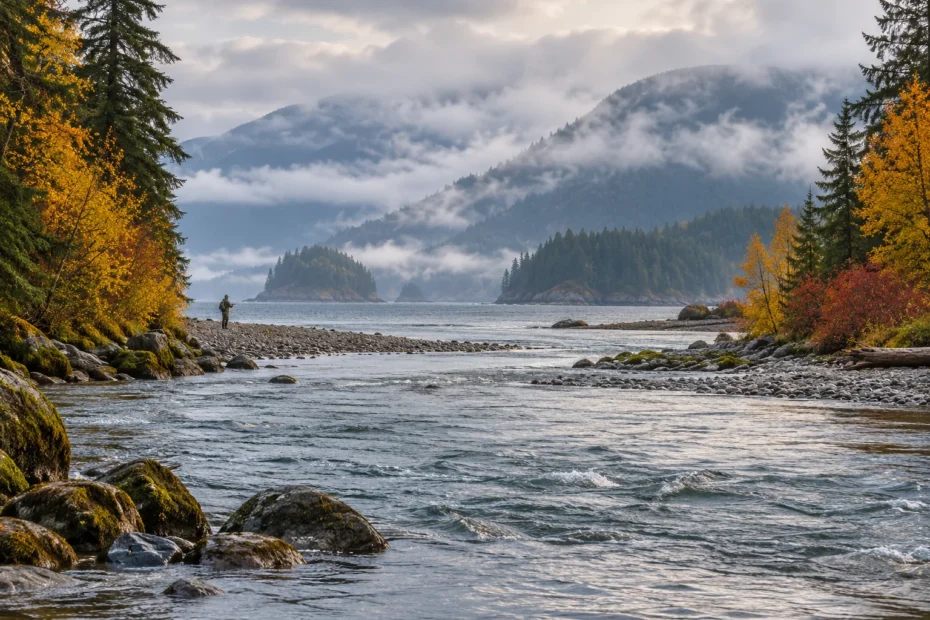
Chum salmon fishing in Canada begins with the exact water, date and current fishery notice. A salmon run may be visible without an open recreational fishery, and a permitted salmon fishery may have different retention rules for chum and other species. In British Columbia, identify the tidal area or non-tidal reach and check Fisheries and Oceans Canada (DFO) rules before choosing tackle.
Recognize chum using several features
The DFO identification guide describes chum as having a white mouth with a tongue that may be black, large teeth, a narrow tail base and no spots on the back or tail. Silver streaks cover about half the tail. A silver fish may show faint vertical bars; freshwater fish can develop vertical bands that may be reddish purple in males.
Colour changes with life stage and cannot be used alone to decide what species a fish is or whether it may be kept. The position and visibility of markings also depend on light and the view of the fish. Study the DFO guide before the trip, compare the full combination of features and follow local release rules if identification remains uncertain. Do not prolong handling on the bank to resolve a guess.
Chum compared with sockeye
Both chum and sockeye can lack spots on the back and tail. DFO describes sockeye with a white mouth and gum line, small teeth, a moderately forked tail and prominent glassy eyes. Chum may have large teeth, silver streaking on part of the tail and a narrow tail base. None of those features should be used as a stand-alone test, especially on a fish viewed underwater or briefly at the net. Read the official species guide and know the likely non-target species in the water before fishing.
Chum compared with coho and pink salmon
DFO describes coho with spots on the upper body and usually on the upper tail lobe, while pink salmon have large oval spots on the back and both tail lobes. A fish that is moving quickly, wet or partly obscured may not show every mark. Check the mouth, tail, spots and overall appearance together. A freshwater colour change does not make every red or dark salmon a chum.
Where chum fit in the Pacific salmon life cycle
Chum hatch in freshwater and move toward the sea during their early life. Adults later return to freshwater to spawn, but the timing depends on the population and river. BC's species summary describes distinct seasonal runs in some areas. A species' general migration pattern can help you understand why a river has seasonal management, but it cannot predict a particular day's run or authorize fishing.
Salmon may be present in a reach for reasons other than an opportunity to fish. Protect spawning habitat and obey closures; avoid stepping into redds or disturbing fish. If you want to watch rather than fish, use a public viewpoint and follow local access instructions. A crowded bank, a visible fish or a guide's earlier photograph does not tell you whether the current legal conditions have been met.
Find the correct BC rule first
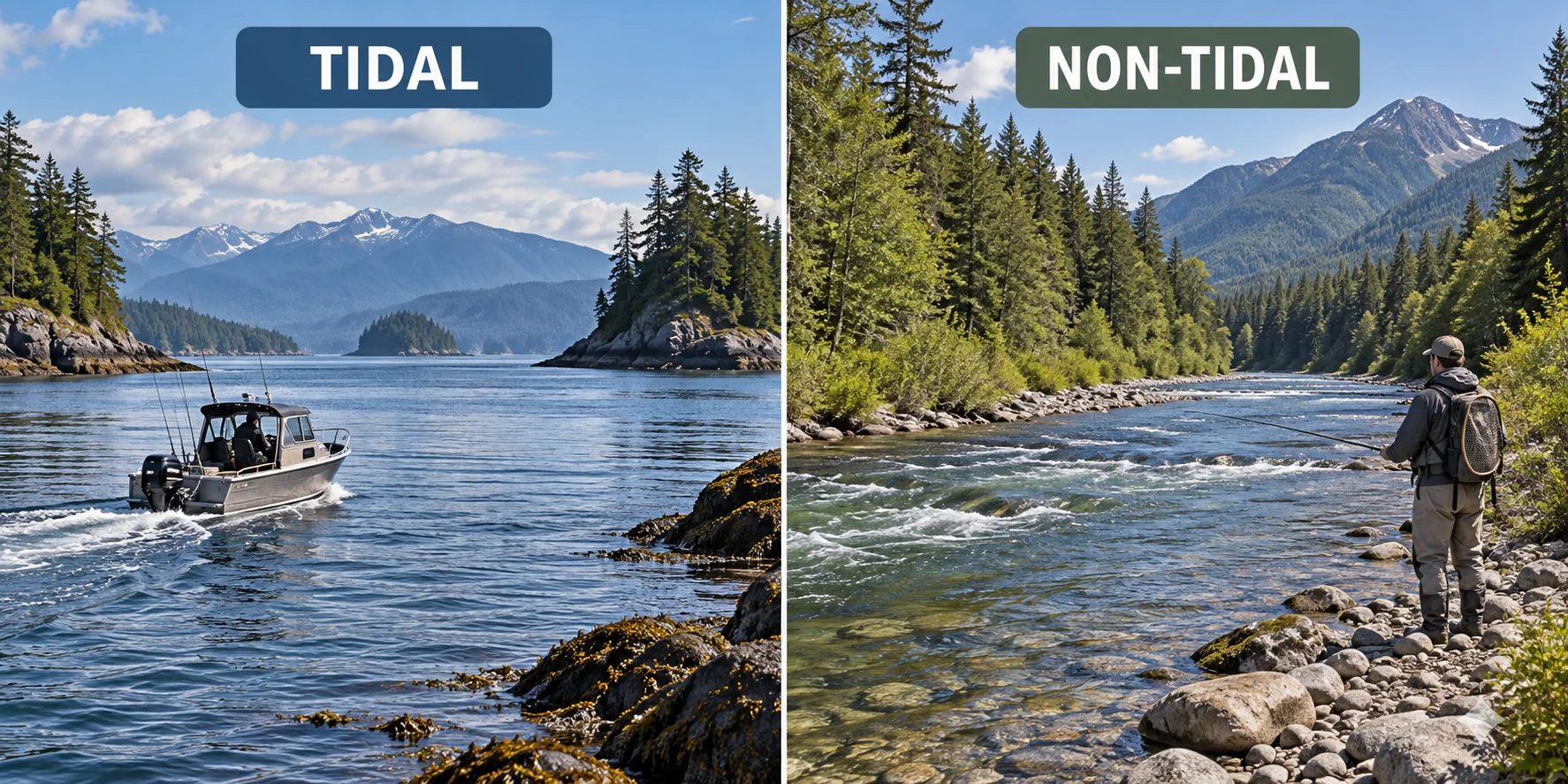
Tidal and non-tidal waters use different licensing arrangements. DFO's licence guidance explains the federal tidal licence and BC non-tidal licence distinction. A salmon conservation stamp is generally needed to retain Pacific salmon under the relevant licence system; DFO describes tidal and non-tidal stamps separately. Check the current stamp guidance, age rules, recording and exceptions for your circumstances.
A licence and stamp are necessary components of some trips, not permission to fish a closed water or retain a species with a zero limit. Find the official area or river reach, read the species entry and check current fishery notices and variation orders. A nearby town, guide's old report or previous year's opening is not a substitute for the current boundary and date.
Read a real 2026 notice: Chehalis River
DFO's FN1122 recreational notice announced a daily limit of two chum from October 17 through November 30, 2026 in specified Region 2 waters. One listed example is the Chehalis River downstream of the logging bridge 2.4 km downstream of Chehalis Lake, including tributaries to that part. The notice covers other precisely described reaches; it does not open every river or every part of the Chehalis.
The DFO Region 2 page lists the same dated Chehalis chum entry and says retained chum must be at least 30 cm. It also lists no fishing for salmon in the Fraser mainstem upstream of the CPR Bridge at Mission from April 1 until further notice. These are different waters and rules. Check current updates, general conditions and any later variation order before travelling; the October 30 snapshot is not a promise that the same opening will exist in another year.
What the notice says—and what it does not
The species line identifies the fish and daily limit. The reach text defines where the notice applies. The effective dates determine when the change operates. General licence, gear, size, recording and possession rules may still apply alongside it. An opening for chum does not automatically establish the limit for coho, sockeye or Chinook caught in the same water.
Write the reach, date, species, limit and source in your trip notes. If the description uses boundary signs or a bridge, identify those on the official map and ground, not only from an informal pin. If you cannot tell which side of the boundary you will fish, contact DFO. Recheck after you receive a guide's itinerary because a different meeting point can put the trip in another regulatory area.
Find the right BC starting point
Choose a water type and check the exact area or reach and the latest notices. This tool does not decide if fishing is open.
Tidal water
Start with the DFO sport fishing guide and current fishery notices.
Non-tidal water
Read the relevant DFO Region 2 example, find your own region in the DFO guide, and check the BC freshwater synopsis and updates.
Hook and method rules: keep the categories separate
DFO states that barbless hooks are required for salmon in BC tidal and non-tidal waters. Its FN0723 tidal notice introduced single-point and hook-gap restrictions effective September 1, 2026 for specified tidal areas. A barbless hook and a single-point hook describe different properties; one does not prove the other. Check the notice's listed tidal areas, dates and all local restrictions before using a lure.
Freshwater rules may impose additional method or bait restrictions. BC's freshwater synopsis distinguishes a water limited to artificial flies from one restricted to fly fishing only; the latter has its own restrictions on floats and sinkers. Check the exact reach and current provincial requirements in addition to DFO salmon measures. Do not copy a rig from a tidal trip to a freshwater reach without checking it.
Reading a river without guessing where fish are
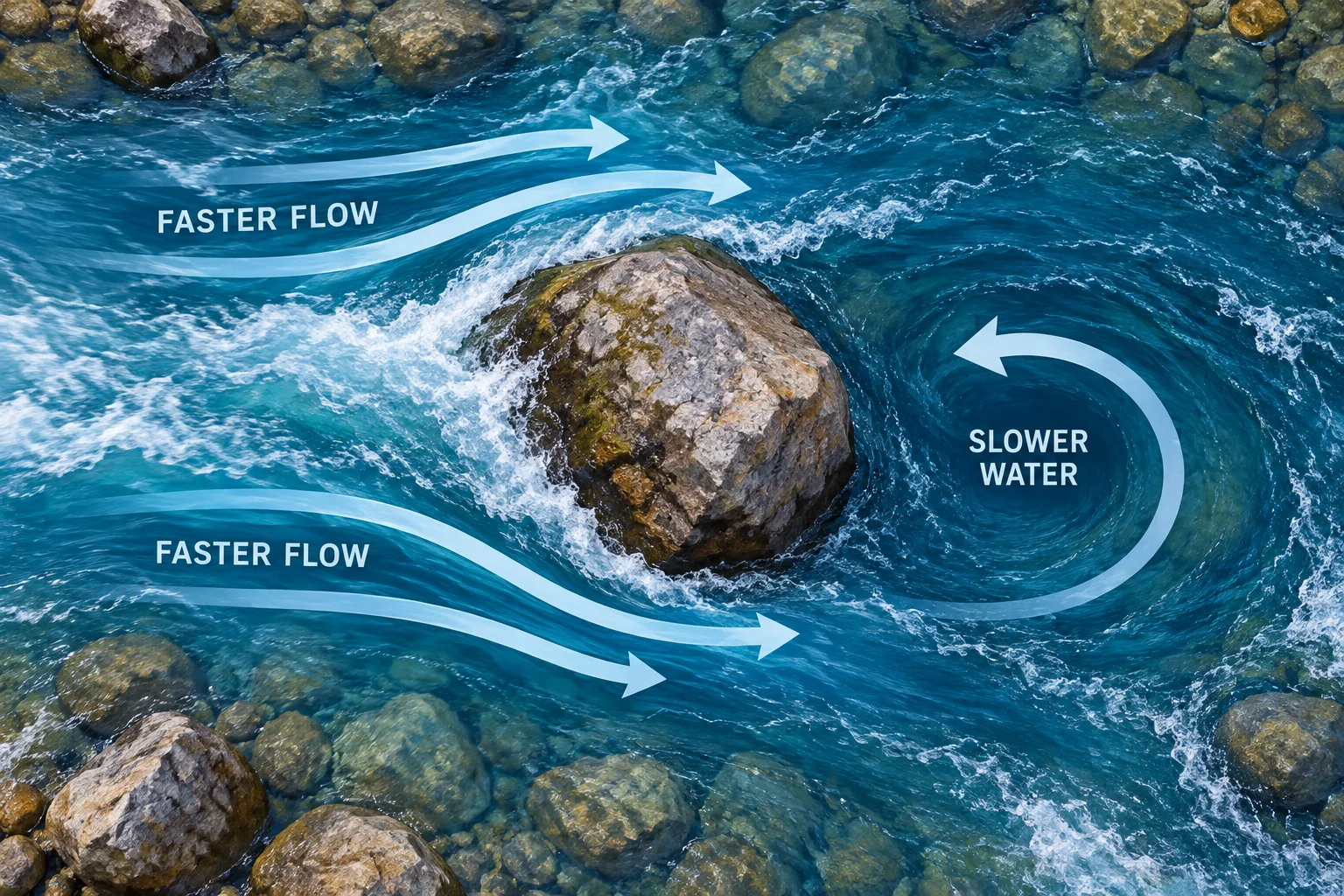
In flowing water, a boulder, bend or change in depth can create a seam between different current speeds. From a safe, permitted bank, watch how foam or surface ripples move and where the current changes direction. An eddy behind a boulder may circulate differently from the faster water beside it. This helps you see how a line will drift; it does not prove that chum are holding in a particular pocket.
Start with a short cast that you can control. Note whether the line bows downstream, whether your presentation reaches the intended lane and whether it repeatedly touches bottom. A longer cast can put more line in the current and make contact harder. If you cannot keep the presentation within a legal and unobstructed fishing lane, change your position only where access is allowed or select another spot.
A diagram of a seam is a simplified model. Actual flow changes with water level, rain, tide influence and submerged obstacles. High or fast water can make an otherwise familiar bank unsuitable. Choose a route back before entering the water, and do not cross a channel merely because the opposite bank looks productive.
Practical presentations for a legal opening
A guide can explain which method fits the open water, current and rules. The following are planning examples, not a claim that every method, hook or bait is legal in every chum fishery. Confirm the exact restriction and avoid intentional snagging or fishing through a closed area.
A controlled float drift
Where a float is permitted, set up for a drift that allows you to follow the float without dragging the terminal gear through the bottom. A short upstream or across-current cast gives you time to see the float's path. If it repeatedly stops in the same place, retrieve and inspect the terminal gear before changing the depth or lane. Weed or bottom contact can resemble a fish taking the presentation.
If the float moves much faster than the line can follow, the line can pull the presentation out of its lane. Reposition from a permitted bank or shorten the cast instead of adding several adjustments at once. The correct depth, weight, hook and bait are specific to the water and conditions. A fly-fishing-only restriction may prohibit a float even if a similar fly is permitted elsewhere.
A lure in a permitted lane
Where the current rules allow a lure, use a retrieve that maintains contact and keeps it in the intended water. The lure's action depends on flow as well as reel speed. If the line pulls into another angler's lane, shorten the cast or wait for space. If the lure catches bottom or collects debris, inspect its path and adjust rather than pulling hard through the obstruction.
Check the lure's hooks before the trip. Factory tackle may not meet a single-point or barbless rule for the planned tidal area. Read the full applicable rule and choose an appropriate legal configuration; no picture in this guide establishes that a particular lure is compliant.
Working with a guide
Ask whether the trip is on tidal or non-tidal water, which licence and stamp apply, what tackle is supplied and what the guide will do if the planned species or reach closes. An operator's availability is not an opening. A guided trip may help with access and local technique, but the angler remains responsible for the applicable rules.
A short plan for an incidental catch
Know which species may be retained and have the required measuring and release tools accessible. If a fish is foul-hooked or cannot be retained, follow the specific rule and DFO's handling advice. DFO's salmon information advises keeping fish in water as much as practical, handling them with wet hands if needed and avoiding gills and eyes. For a deeply embedded hook, it advises cutting the line close to the hook rather than attempting a damaging removal.
A release is not risk-free. Avoid placing a fish on dry rocks for a photograph and do not assume that a net or quick release guarantees survival. If the conditions make responsible handling difficult, stop and reconsider the fishing plan. Do not retain an uncertain fish while looking for a rule.
Compare two hypothetical trip decisions
Imagine two anglers on the same date. One has a non-tidal licence and plans the specifically described Chehalis reach during the dates of FN1122. The other plans the Fraser mainstem upstream of the CPR Bridge at Mission. The first checks the latest notice, the exact boundary, size and other rules before treating the dated chum limit as applicable. The second sees a no-salmon-fishing entry and must choose another lawful activity or water rather than borrowing the Chehalis limit.
This is an example of reading the sources, not a live opening forecast. Both anglers still need to check the current licence, stamp, gear, access and any newer order. If a guide changes the itinerary, the rule check must follow the new water.
Release equipment to consider
If the guide does not supply pliers, the Rapala 8½-inch Fisherman's Pliers are one specific listed tool to compare for hook access. Check the exact variant and whether it suits the fishery. We have not personally tested it, and it does not guarantee a safe release. As an Amazon Associate, CanadaFever earns from qualifying purchases. Check current price and shipping before ordering.
A release tool to compare before your trip
Affiliate links: We may earn a commission from qualifying purchases, at no extra cost to you. We have not field-tested these items. Check the selected model, current price and delivery options on Amazon.
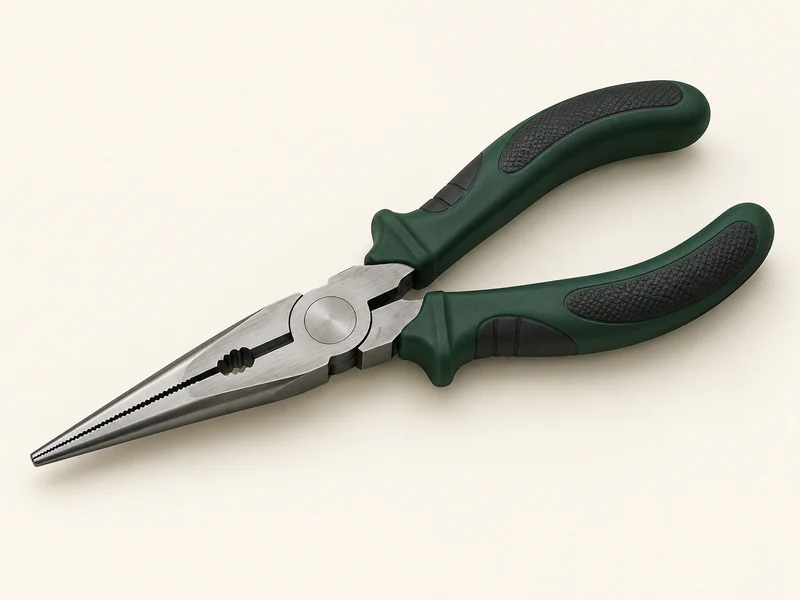
For handling hooks with a tool
Rapala 8½-inch Fisherman's Pliers
- Longer 8½-inch format for reaching a hook with a tool.
- Nickel-plated carbon steel and co-moulded grips.
- Choose a jaw size that suits the hook and fish; avoid unnecessary handling time.
Choose a size suited to accessible hooks and your fish. For a deeply embedded hook, follow local fish-handling guidance instead of pulling forcefully.
Check these pliers on AmazonFor broader preparation, see our BC fishing regulations guide and fishing techniques guide; the official current rules govern the particular water.
Frequently asked questions
Can I keep chum salmon in British Columbia?
Only if the current rules for the exact water, date and licence allow it. Check the species limit, size, stamp, recording and any local closures.
Are chum and sockeye easy to distinguish?
They can share individual features, including a lack of spots on the back and tail. Compare several features in DFO's identification guide and follow release rules if uncertain.
Does an opening on one river apply to its neighbour?
No. A notice defines the specific reaches and dates it changes. Check the actual water and any later order.
Are single-point hooks required everywhere?
DFO's FN0723 single-point and gap restrictions apply to specified BC tidal areas and dates. Barbless hooks are required for salmon in BC tidal and non-tidal waters; check local freshwater and tidal rules as well.
Does a salmon stamp guarantee retention?
No. A stamp is part of the applicable licensing requirements; it does not override a closure, species limit or local restriction.