

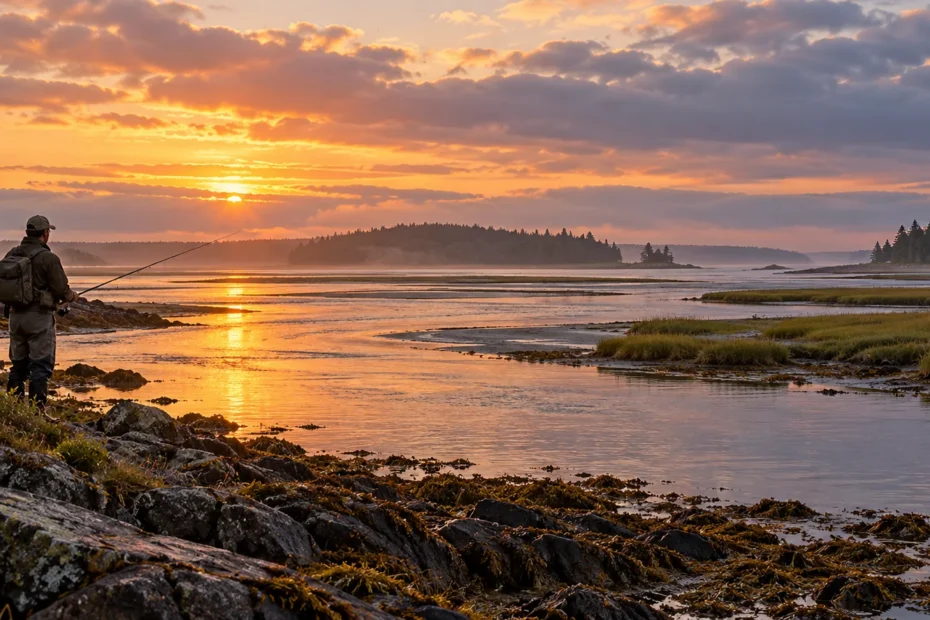
Striped bass fishing in Canada calls for two decisions before the first cast: identify the exact water and its rules, then plan a presentation that works with the local current. The southern Gulf of St. Lawrence and the Atlantic coast and Bay of Fundy are managed under different recreational rules. A season or size limit from one side of Nova Scotia is not a reliable rule for the other.

Identify the fish and the water
Striped bass (Morone saxatilis) are a migratory fish that use estuaries and coastal waters as well as some river systems. Their silvery sides and horizontal dark stripes are familiar clues, but the way stripes appear can vary with the fish and viewing conditions. Use the current regional authority's identification materials and do not keep a fish whose species or length you cannot establish under the applicable rule.
The words “tidal” and “inland” are regulatory categories as well as descriptions of the landscape. A bridge, river mouth or designated boundary may matter. Do not assume that the presence of salt water alone identifies the legal boundary. Identify the relevant management region and exact water before interpreting a licence, hour or bag-limit rule.
Two Atlantic management regions, two different examples
The following examples reflect DFO pages checked on 30 October 2026. They illustrate why a regional lookup matters; they are not a standing permit for a later trip. Rules, variation orders and local closures can change. Use the current official pages and contact the responsible authority if a boundary or restriction is unclear.
Southern Gulf: the 2026 recreational notice
The DFO southern Gulf notice for 2026 covers waters adjacent to the Maritime Provinces in the southern Gulf. For that notice, DFO lists a 50–65 cm total-length retention window and a maximum daily and possession limit of four striped bass. Total length is measured in a straight line from the tip of the nose to the tip of the tail. The same notice sets different seasons for tidal and inland waters and requires single barbless hooks for the methods it describes.
Those numbers belong to that region, notice and season. DFO lists tidal-water seasons in the specified Gulf-draining waters from April 15 through October 31, while inland seasons vary by province and include a Miramichi system exception. Fishing hours also differ: in the July–October tidal period the published hours are 04:00 to midnight, with a specific exception for tidal Miramichi waters upstream of the Centennial Bridge. Read the complete notice for the exact water and date; do not apply a summary from a nearby beach without checking the boundary.
The Northwest Miramichi spawning area has a mechanism for a temporary closure to all angling during spawning. DFO publishes a variation order when that closure takes effect and a notice when it changes. The existence of an annual season does not override an active local closure. The Gulf striped bass notice page is a starting point for current changes.
Atlantic coast and Bay of Fundy: a different DFO page
The DFO Maritimes diadromous page covers a defined area from Cape North along the Atlantic coast and Bay of Fundy to the New Brunswick–Maine border. Its striped bass section lists a general daily bag and possession limit of one and a 68–150 cm total-length range, with specific exceptions. It also describes tidal waters as open year-round, subject to listed closures and conditions, and inland seasons by reference to the relevant sport-fish season.
For example, the page lists a spring closure on a defined Annapolis River reach and special spring catch-and-release and gear rules on specified Shubenacadie and Stewiacke waters. Those are not province-wide rules for every estuary. Read the boundary language and dates on the official page, then check current orders. DFO states that a provincial licence is required for inland angling in that region and that no licence is required in its tidal waters; verify the current classification and any applicable exception for your own trip.
Find the right regional DFO source
Choose the water’s region, then check its exact boundary and current notices. This guide does not determine whether a location is open.
Southern Gulf waters
Start with DFO Gulf striped bass notices and the current variation orders.
Atlantic coast and Bay of Fundy
Read DFO Maritimes diadromous rules and the defined water-specific exceptions.
How to read an estuary before choosing a cast
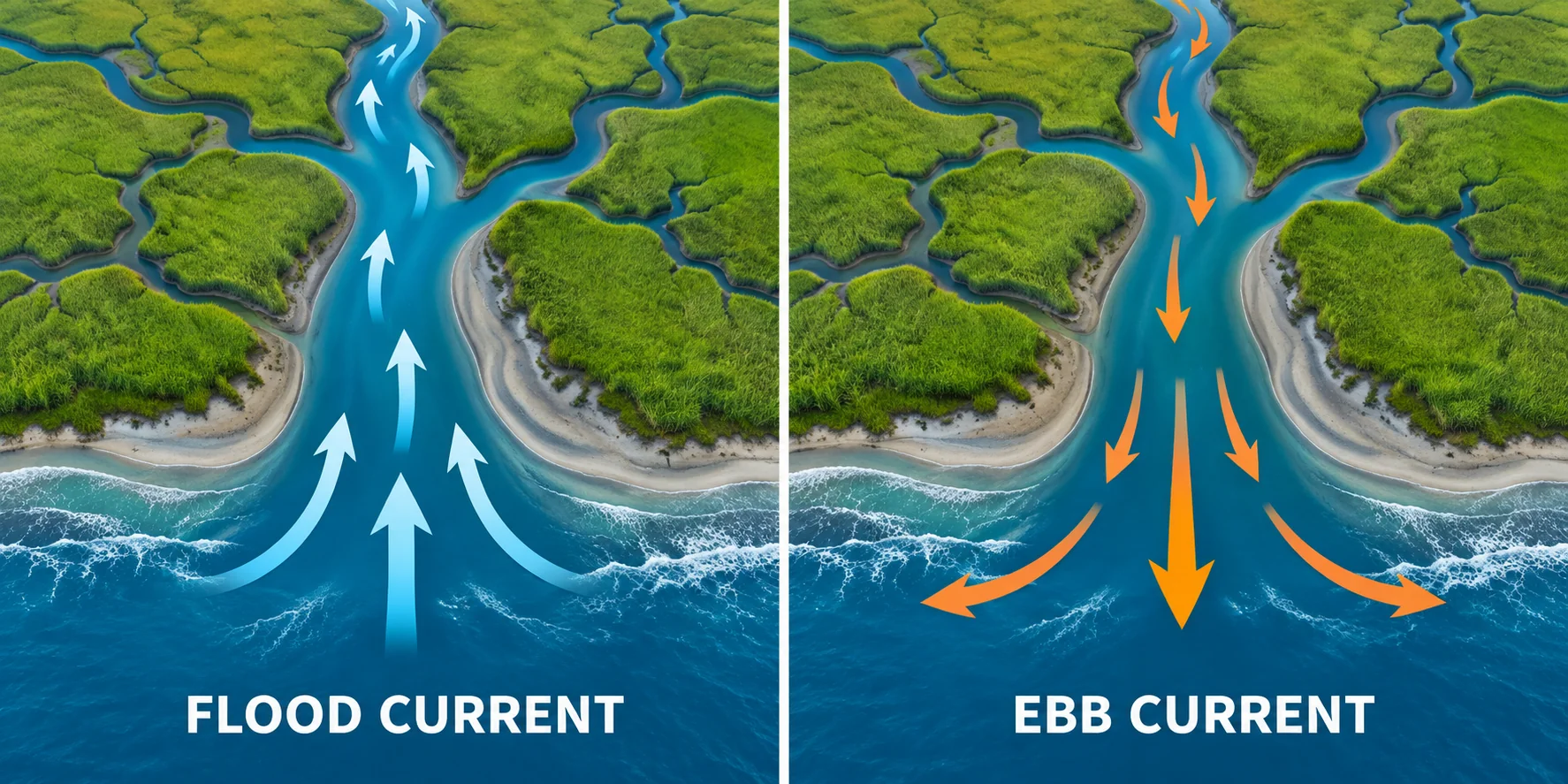
An estuary contains channels, shallows and edges that change as water moves. A flood current generally carries water landward, while an ebb current carries it seaward. Local channels, freshwater flow, wind and geography influence the actual direction and speed. The time of high or low water is not automatically the moment the current stops at every location; use local current and tide information and observe conditions on arrival.
Start from a legal, stable access point with a clear route back. Look for where a channel meets a shallow edge, where water speeds up through a narrowing, or where current slides past a point. These features can help an angler choose a casting lane, but none guarantees that fish are present. The same bank can be easy to reach at low water and cut off as the tide rises. Decide where you will exit before stepping onto an exposed flat or rock.
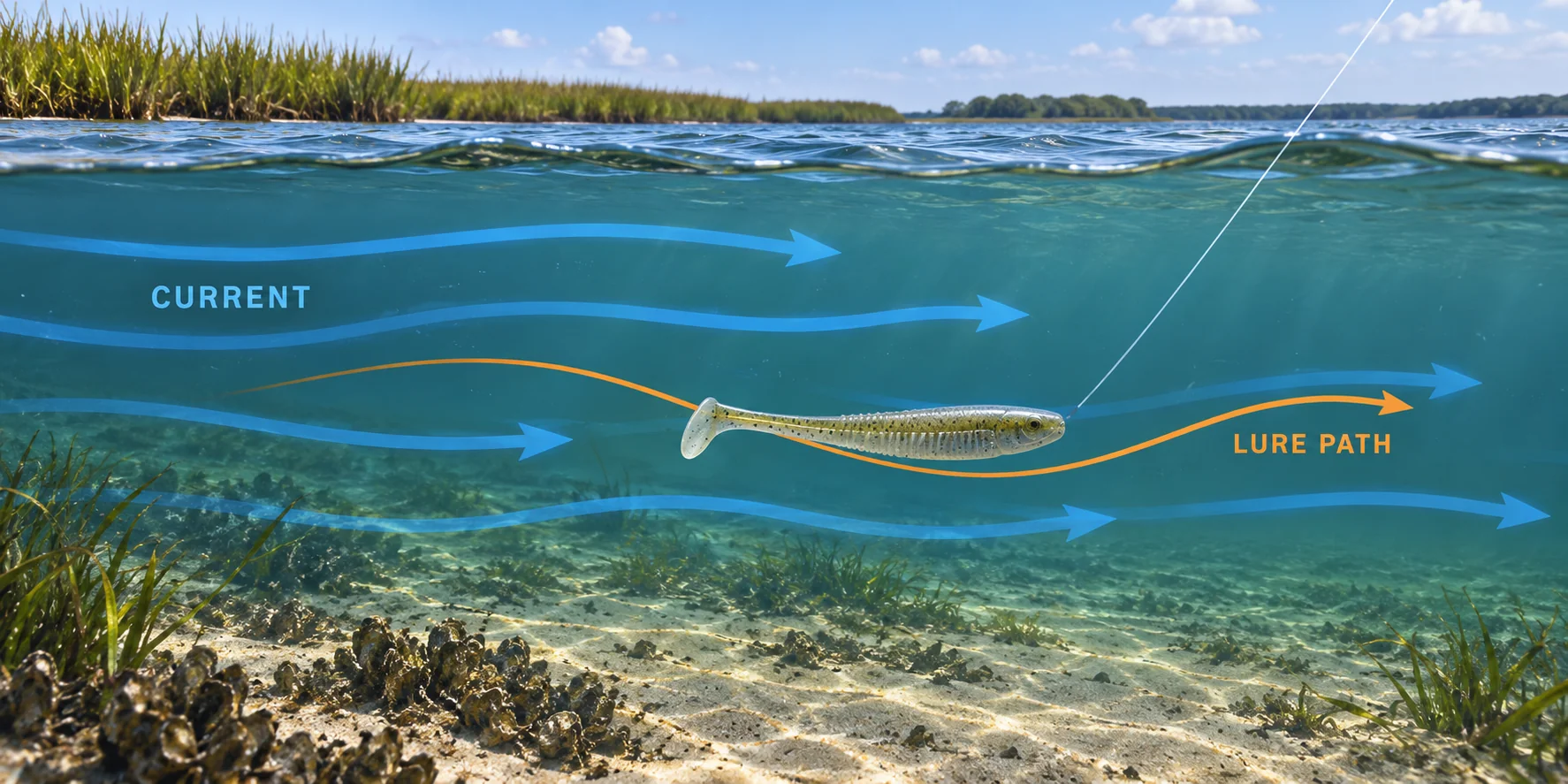
Watch the surface for the direction of drift. Floating material or the movement of a small patch of foam can indicate what the current is doing, though wind can also move the surface. Note whether the flow pushes the line into a bow, pulls a lure past the intended area too quickly or causes it to sink into vegetation. Make a short cast first and observe the actual presentation before casting farther.
Three practical presentations to discuss locally
The method, hook and bait must be legal on the water and date. These examples describe how to adjust a presentation where the chosen activity is permitted; they are not claims that any particular lure or bait is legal in every striped-bass fishery.
A soft plastic through a current edge
A weighted soft plastic can be cast across a current seam and retrieved with enough tension to maintain contact. Start with a retrieve that keeps the lure moving rather than repeatedly dragging through the bottom. If the current pushes the line into a large bow, shorten the cast or change your position on the bank. If the lure continually snags, check whether it is running too low or whether debris is crossing the lane. Change one element at a time so you can see what improved the presentation.
Weight and hook choice depend on current, depth and local rules. In the 2026 southern Gulf notice, a lure used in the described fishery must meet the single barbless hook requirement. A purchased lure may need a different legal hook; do not assume its original rig is automatically compliant. Avoid adding hooks merely to imitate a product photograph.
A surface lure when conditions allow
A surface presentation keeps the lure visible and can help an angler see how current and wind affect the retrieve. Make a controlled cast into open water, then retrieve steadily enough to stay in contact. If the lure is pushed into vegetation or too close to another angler, retrieve and reposition rather than forcing it through. A visible lure is not proof that fish are feeding, and surface activity does not establish that fish can be retained.
Inspect the lure before departure: factory trebles can conflict with a single-hook rule in the relevant fishery. The specific DFO notice, local water and date determine the legal configuration. If you cannot make the tackle compliant or are unsure how a restriction applies, ask an official or local guide before using it.
Natural bait where allowed
Where the exact water permits bait, choose a presentation and hook in accordance with current rules. DFO's southern Gulf notice recommends a barbless non-offset circle hook for bait to reduce mortality on live release. The notice also specifies mandatory single barbless hooks for the described fishery. Those two statements have different roles: read the actual mandatory rule and the recommendation for the setting rather than converting a recommendation into an invented universal requirement.
Use only bait permitted for that water and do not move live bait or water between waterbodies without checking the rules. A rod holder should not leave line unattended where that is prohibited. Be prepared to identify, measure and release a fish under the current rule; do not delay those decisions until a fish is landed.
Diagnose common problems without changing everything
The lure sweeps away too quickly: A long line in strong current creates more drag. Try a shorter cast or an angle that gives you better contact, provided the bank remains safe. Check whether the presentation is passing the edge you intended to fish rather than simply increasing weight.
You feel repeated taps but no steady contact: Bottom, vegetation, debris and a fish can all feel different through the rod. First examine the lure and hook after retrieving. If it carries weed or touches bottom every cast, adjust the retrieve or choose a clearer lane. Do not assume every tap is a bite.
Your line drifts into another angler's space: Move only where access is allowed and leave room for others. A shorter cast or waiting for a clear lane is more useful than crossing lines. If the current changes direction, reconsider the angle rather than repeating the same cast.
The tide changes your exit: Stop fishing and return while the route is still accessible. Tide tables and local knowledge aid planning, but neither makes an exposed flat, slippery rock or fast channel safe. Weather and current can change independently of a catch opportunity.
Planning a first shore session
Choose a named access point and look up the local tide and current information before leaving. Note the time and height of the tide, the weather and the legal fishing hours, but also identify the point at which you will turn back. A bridge, road or nearby beach can provide a landmark; it does not define the legal boundary unless the regulation says so. Ask the local authority if your access point falls on an uncertain boundary between regulatory waters.
Bring a compact selection of tackle you already know how to use, a measuring device and a way to keep your licence accessible if one is required. Before the first cast, check the route back from the bank, the angle of the current, your casting space and the hook configuration. If the spot is crowded, a different permitted access point may be easier to fish than a longer cast across another person's line.
After a few casts, record the conditions rather than assuming the fish should be present because the tide is moving. A later session can be compared against that note: water movement, visibility, wind and the presentation used. The record is useful even when no bass is caught. It cannot predict the next outing or replace current local notices.
Measure and release with care
Know the applicable limit and have an appropriate measuring device ready before fishing. In the DFO examples above, total length is a straight measurement from nose to tail, but the legal size window differs substantially by region. Do not keep a fish while you search for a rule or rely on a measurement from a photograph. If the fish must be released, follow the local authority's instructions and minimize handling and air exposure.
Have pliers and a suitable landing net accessible. Keep a fish in water as much as practical, use wet hands if handling is necessary and avoid gills and eyes. Do not force removal of a deeply embedded hook; follow the applicable authority's advice. Keep handling and air exposure brief; release does not guarantee survival. If strong current, surf or a high bank makes release difficult, choose a better lawful location or stop.
A worked regional comparison
Imagine two anglers planning separate trips on the same October date. One is visiting a southern Gulf tidal water covered by the 2026 DFO notice; the other is visiting the Atlantic-coast region covered by the Maritimes page. The first reads the specific Gulf notice's 50–65 cm window, daily and possession limit, hours and single-barbless-hook rule. The second reads the Maritimes regional rules, including its different general size and limit and any applicable local exception. Neither should copy the other's numbers without first establishing the region and exact water.
This is a rule-reading example, not a statement that both spots are open or that every licence condition has been met. A variation order, seasonal date, local closure or inland boundary can change the result. Save the correct source and recheck close to departure.
A release tool to consider
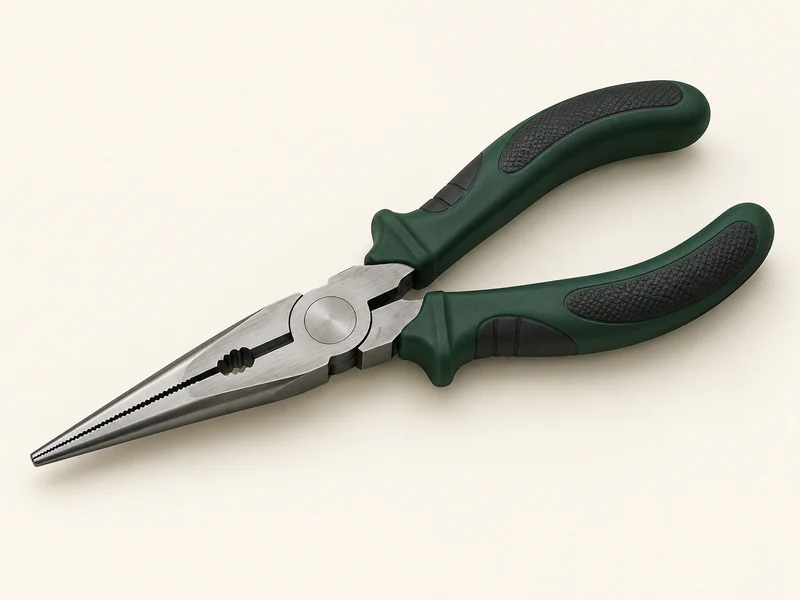
Our fishing gear guide covers general equipment choices. If you need pliers and your guide does not provide them, the Rapala 8½-inch Fisherman's Pliers are a specific listed long-nose tool to compare. Check the exact variant and whether it suits the hooks and conditions. We have not personally tested it, and it does not guarantee a safe release. As an Amazon Associate, CanadaFever earns from qualifying purchases. Check price and shipping before ordering.
A hook-handling tool for your bass kit
Affiliate links: We may earn a commission from qualifying purchases, at no extra cost to you. We have not field-tested these items. Check the selected model, current price and delivery options on Amazon.
For handling hooks with a tool
Rapala 8½-inch Fisherman's Pliers
- Longer 8½-inch format for reaching a hook with a tool.
- Nickel-plated carbon steel and co-moulded grips.
- Choose a jaw size that suits the hook and fish; avoid unnecessary handling time.
Choose a size suited to accessible hooks and your fish. For a deeply embedded hook, follow local fish-handling guidance instead of pulling forcefully.
Check these pliers on AmazonFrequently asked questions
Is the same striped bass limit used across Atlantic Canada?
No. DFO's southern Gulf and Maritimes regional pages describe different rules and exceptions. Check the exact region, water and current orders.
Does a tidal fishing season apply above every bridge?
No. Hours, boundaries and local exceptions can differ. Use the official description for the relevant river reach.
Are circle hooks mandatory everywhere?
Do not generalize a rule from one fishery. The 2026 southern Gulf notice requires single barbless hooks for the methods it describes and recommends barbless non-offset circle hooks with bait. Check the current rule for your water.
Is a rising tide always the best time to fish?
No single tide stage guarantees fish. Local current, weather, access and the legal hours matter. Plan a safe exit before fishing an exposed shore.
Can I keep a fish if it is close to the size limit?
Only if it meets the current legal size and other applicable conditions. Measure as required by the responsible authority; a photograph or estimate is not a substitute.