

Pacific Halibut fishing in Canada guide with identification, habitat, seasonal patterns, gear, tactics, and official regulation checks.
- Use Pacific Halibut Fishing in Canada to match species behaviour, habitat, season, and presentation to Canadian water conditions
- Check local regulations before fishing; limits, closures, bait rules, and licences can vary by province and waterbody
- Focus on practical setup: where to fish, what to cast or troll, how deep to work, and when to move
Bottom line Pacific Halibut Fishing in Canada gets simpler when you pair current rules with the right habitat, timing, and presentation
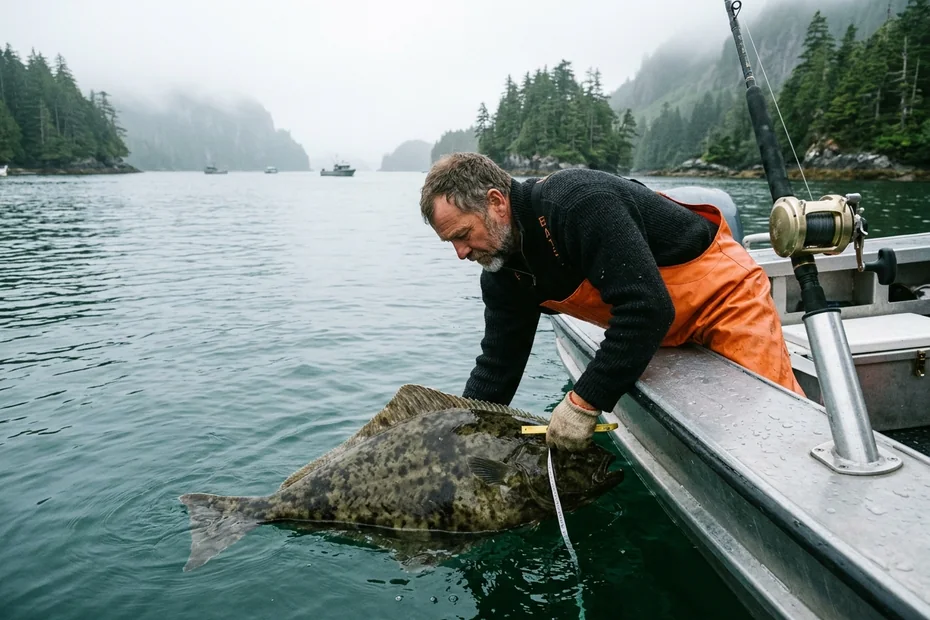
Pacific halibut fishing along Canada’s rugged British Columbia coast pits anglers against ocean-bottom flatfish weighing from firm twenty-pound “chickens” up to massive barn-door titans pushing past two hundred pounds. Known scientifically as Hippoglossus stenolepis, Pacific halibut hug deep rocky seamounts, sandy gravel trenches, and steep tidal Pinnacles between 120 and 450 feet down across Haida Gwaii, Vancouver Island, and Prince Rupert waters.
Consistent British Columbia halibut success hinges strictly on anchoring right beside slack-tide windows, rigging stout non-offset circle hooks cleanly with herring or octopus on heavy spreader bars, and complying meticulously with Fisheries and Oceans Canada (DFO) maximum length caps. Pulling a heavy barn door straight off kelp reefs without blowing gear or failing measurement checks separates reliable ocean crews from empty boxes.
This manual links directly into our Fishing for Specific Species in Canada resource, pairs cleanly with Canada Outdoor Planning Tools for marine swell and tide timing, and references current charter cost planning in Halibut Charters in BC Prices.
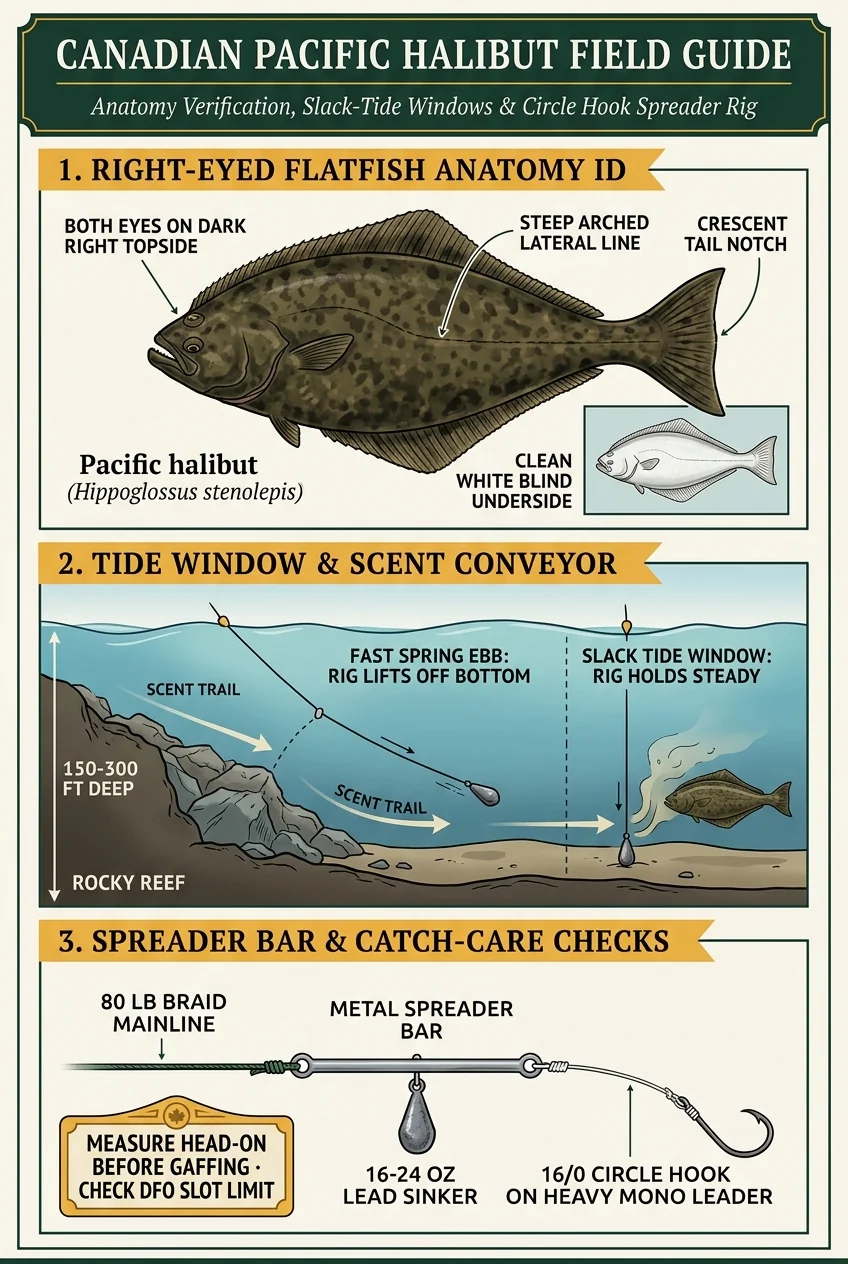
Open full-resolution Pacific halibut diagram (WebP)
Biological Identification: Separating Pacific Halibut From Arrowtooth Flounder and Petrale Sole
Pulling up lines from 250-foot British Columbia gravel troughs routinely uncovers several mixed groundfish flatfish species alongside true Pacific halibut. Mistaking arrowtooth flounder, Pacific sanddab, or starry flounder for small halibut wastes valuable halibut annual possession slots or risks violating provincial and federal retention limits.
Four unmistakable physical markers distinguish Hippoglossus stenolepis clearly before lifting heavy fish clear off the gunwale.

Open 1024×559 halibut identification plate
Four Decisive Flatfish Checks
- Steep Arched Lateral Line: Trace the sensory lateral line down from the tail toward the head: on Pacific halibut it bows high in a tall dramatic arch cleanly above the pectoral fin rather than running straight flat.
- Pure Bright White Blind Side: Flip gentle corners safely in water; healthy Pacific halibut undersides gleam bright opaque ivory-white without murky blotches or muddy grey slime typical on arrowtooth flounder.
- Wide Lunate Crescent Tail: The rear tail finishes crisp and mildly concave like a sweeping half-moon crescent whereas starry and rock soles carry blunt rounded fan tails.
- Right-Side Dual Eyes: Virtually 99 percent of Pacific halibut position both eyes cleanly onto the dark speckled olive right flank facing upward from bottom gravel.
| Anatomy Check | Pacific Halibut (H. stenolepis) | Arrowtooth Flounder | Starry Flounder | Lingcod (Bycatch) |
|---|---|---|---|---|
| Lateral Line Shape | High crisp semicircular arch over pectoral fin | Nearly straight line with minor gentle curve | Gentle straight run lacking tall high arch | Long mottled cigar-shaped reef predator |
| Underside Blind Belly | Clean bright snow-white skin | Dull dingy grey-white speckled scales | Often white with bold alternating black-orange fin bands | Light cream belly (round-bodied, non-flatfish) |
| Teeth & Mouth Size | Moderately symmetrical strong conical teeth; jaw ends under eye | Huge mouth past eye jammed with barbed arrowhead teeth | Tiny tiny small mouth aimed tightly left/right | Massive fang-filled jaw opening smoothly past eyes |
| Tail Shape | Broad stiff concave crescent lunate notch | Shallow rounded fan/double-truncate edge | Rounded blunt orange-and-black striped fin | Square broad fan tail |
Mastering BC Tidal Currents, Slack Windows, and Gravel Pinnacle Drop-Offs
Across exposed Vancouver Island banks and rushing Johnstone Strait narrows, coastal tides move massive walls of Pacific seawater reaching four to six knots every six hours. Fighting strong mid-tide current drags even two-pound lead sinkers horizontally off bottom reefs, tangling lines smoothly around nearby anglers and scaring bottom flatfish away from bait.
Seasoned Canadian skippers check tidal current tables closely every morning, launching cleanly to drop anchors fifteen minutes before scheduled slack water or running crisp short engine back-trolls along deep underwater sand channels during gentle current windows.
| Coastal Strategy | Ideal Tide Current Speed | Core Bottom Structure | Lead Sink Weight Range |
|---|---|---|---|
| Stationary Anchored Scent Spread | 0.5 to 2.5 knots steady gentle wash | Gravel shelves & deep mud channels (150 to 300 ft) | 24 to 48 oz cannonball sinker on spreader bar |
| Engine Back-Trolling / Power Drift | 0.8 to 1.8 knots vertical line control | Undulating hump banks (Swiftsure / Big Bank) | 16 to 32 oz lead jig head with curly-tail grub |
| Lazy Slack Drift Jigging | <0.8 knots tight slack-water window | Jagged pinnacle crowns (110 to 210 ft) | 12 to 20 oz vertical flutter iron or swimbait |
Spreader Bars, Non-Offset Circle Hooks, and Heavy Copper-Pipe Jigs
Dragging thin bass gear out onto deep BC offshore pinnacles fails immediately under razor-sharp dogfish teeth, abrasive shell shoals, and sudden freight-train dives when a ninety-pound female halibut realizes she is hooked. Keep rigging simple, rugged, and snag-resistant using abrasion-proof heavy monofilament leaders alongside zero-stretch braided mainlines.
Essential BC Halibut Rigging Components
- Heavy Stainless Spreader Bars & Circle Hooks: Clip 16 to 48 oz lead cannonballs off short bottom dropper legs onto stainless T-bars, keeping a 36-inch 130 lb mono leader trailing one crisp 12/0 to 16/0 non-offset circle hook pinned neatly through herring, salmon belly strips, or tough white octopus tentacles. Never jerk the rod to set circle hooks; let fish bend the rod tip completely toward gunwales first before winding fast steadily.
- Scent-Socked Mesh Bait Bags: Wrap thawed herring fillets, salmon heads, and oily sardine chunks neatly inside small porous nylon sock bags tethered right ahead of your spreader hook so picking dogfish cannot steal bait quickly while leaving thick scent dispersing downstream for hours.
- Massive Soft Grubs & Pipe Jigs: During slow slack currents over steep pinnacles, bounce 16 to 24 oz glowing white, pink-white, or chartreuse twister grubs rigged cleanly onto oversized single forged jig hooks six inches off reef shelves to avoid snapping off expensive gear into kelp caves.
- Safe Anchor Pull Buoys & Gaff Discipline: Run bright heavy anchor retrieval rings paired with quick-release surface fenders before dropping reef hooks in heavy swell, and never stick heavy steel gaffs into wild oversized halibut until legal maximum size limits are verified cleanly alongside your hull.
Safe Anchor Retrieval Systems and Swell Navigation Along Outer Banks
Anchoring a twenty-to-twenty-six-foot recreational aluminum boat over rocky 250-foot British Columbia swells demands flawless mechanical anchor recovery setups to avoid swamping sterns dangerously. Attach a heavy sliding stainless retrieval ring cleanly onto anchor line rode clipped onto a high-buoyancy inflatable scotchman buoy, paying out triple bottom depth in clean anchor rope cleanly ahead of selected pinnacle drop spots.
When shifting fishing stations or pulling lines rapidly ahead of rising afternoon chop, steer the boat smoothly at 45 degrees off bow line tension until floating rope sweeps aft cleanly beside hulls, allowing vessel horsepower to pop anchor claws straight off rocky reefs onto the floating ring cleanly before hauling weightless rope aboard calmly by hand.
Double check coastal marine weather forecasts closely via Environment Canada VHF stations before pushing six miles beyond rocky Vancouver Island headlands where rolling groundswells build abruptly over steep offshore edges.
Inspect proper offshore drag ratios and rod hardware via our fishing gear and equipment guide, study knot strength in fishing for beginners in Canada, and book protected coastal boats easily through fishing lodges in Canada, all-inclusive fishing lodges in Canada, and fly-in fishing lodges in Canada. Even winter hardwater readers comparing heavy vertical jig sensitivity in inland trips can explore cold vertical techniques inside our guide on ice fishing in Canada.
Checking wind-against-tide charts before clearing exposed coastal headlands prevents steep standing swells around shallow banks off Tofino and Haida Gwaii. When ebb current collides with an afternoon northwest breeze, drift speeds accelerate rapidly past three knots and lift heavy lead off rocky halibut trenches. Moving inside sheltered island passages or stepping up from 16 to 24 ounces keeps your circle hook within five feet of bottom structure.
Bring a wooden bat, brass priest, and stainless deck knife ready before sliding any keeper fish onto the stern floorboard. Large Pacific halibut deliver powerful tail slaps that easily snap unsecured rods or bruise shins when handled loose on wet fiberglass decks. Bleeding kept fish promptly in cold saltwater and packing gutted fillets under flaked ice preserves firm white meat for dockside vacuum sealing.
Double-check annual federal slot limits and head-on length rules from Fisheries and Oceans Canada before heading offshore with charter skippers. Measuring carefully beside a rigid fiberglass tape before gaffing prevents accidental retention of oversized breeding females on busy summer mornings.
5-Step Safe Boat-Side Measurement and Giant Release Protocol
Keep Giant Fish Calm Outside Inside Cold Sea Water
Dragging an active 90-pound barn-door halibut thrashing across fiberglass decks damages internal organs and risks broken ankles for crewmates. Leave suspect oversize catches floating quietly inside cool calm water tight against boat hulls first.
Measure Accurately Snout-to-Tail Fork Length
Hold calibrated DFO floating tape strips cleanly from tip of closed snout straight back to central tail fork notch beside the side gunwale before touching harvest gaffs or harpoons.
Pop Corner Circle Hooks Gently With Long Release Bars
If measured fish fall past DFO annual slot caps, grip large 14/0 circle bend wires cleanly with stainless dehookers or long pliers and flip cleanly free without slicing jaw muscles.
Dispatch Legal Chicken-Class Keepers Promptly
Only once verified cleanly within daily legal length windows, apply firm boat-side tail ropes, stunning cleanly ahead of swift gill-bleeding cuts inside chill slush boxes for snow-white fillets.
Record Harvest Immediately on Tidal Paper / App
Log exact catch length, area code, and date clearly straight onto your mandatory DFO Tidal Waters licence record immediately before swinging fresh hooks back down into salt water.
Canada’s Premier Pacific Halibut Ports in British Columbia
Every wild Canadian Pacific halibut trip launches along British Columbia’s scenic outer islands, sheltered mountain fjords, and continental shelf banks. Explore wider seasonal travel destinations inside our full directory for the best fishing spots in Canada.
- Haida Gwaii (Langara Island & Masset Sound): Remote northern archipelago flats combining booming Chinook feeding runs right beside abundant giant halibut lying close to accessible kelp benches.
- Prince Rupert & Chatham Sound: Protected northern inside passages let charters reach productive gravel troughs cleanly even when offshore Pacific swells roll steep down outer banks.
- Port Hardy & North Vancouver Island: Productive currents colliding between Queen Charlotte Strait and Cape Scott draw dense schools of crisp 20-to-60-pound keepers from May straight into September.
- Tofino, Ucluelet & Port Renfrew (West Coast Banks): Offshore shelf crowns like Big Bank, La Perouse, and Swiftsure Banks stand among British Columbia’s fastest drives from Vancouver/Victoria ports to dense offshore sandy flats.
- Victoria & Juan de Fuca Strait Shorelines: Famous winter and spring accessible strong-current anchoring zones right outside Oak Bay and Sooke harbors delivering nearby chicken-class halibut on ideal flat slack days.
DFO Tidal Licences, Halibut Length Caps, and Mandatory Rockfish Descenders
Pacific halibut harvests across Canada fall under strict annual international quota sharing managed firmly by Fisheries and Oceans Canada (DFO Pacific Region). Regulations adjust length limits cleanly every spring based on annual total allowable catch allocations, making pre-launch checks essential inside both fishing regulations and licences in Canada and our dedicated saltwater licensing breakdown on Canadian ocean fishing licences.
| Regulatory Requirement | Core Mandate in BC Tidal Waters | Why Enforcement Checks It | Verification Link |
|---|---|---|---|
| DFO Tidal Waters Licence | Required by every fisher in saltwater; must carry physical or official mobile copy | Contains mandatory halibut harvest logging table | DFO Pacific Portal |
| Annual Maximum Length Slot | Verify current annual cm cap (one large vs under-90 cm slot options annually) | Protects large mature spawning female brood stocks | DFO Finfish Limits |
| Rockfish Descender Device | Weighted descending clip / inverted hook system mandatory aboard vessels | Recompresses non-retained quillback and yelloweye rockfish cleanly | DFO Groundfish Rules |
| Single Barbless Rules & RCA Maps | Zero retention inside Rockfish Conservation Areas (RCAs); single hooks near salmon | Avoid heavy fines inside protected coastal marine reserves | DFO Pacific Fishery Notices |
Tidal Drift, Sink Weight & Halibut Rig Selector
Matching lead weight sharply to tidal flow speed keeps baits hugging flat bottom seams without wasting slack windows tangling vertical spreads down current.
Interactive Canadian Pacific Halibut Tidal & Lead Calculator
Select your coastal region depth, live current speed, and gear approach to display recommended lead sink weights, braided/leader line specs, and DFO compliance reminders.
Recommended Pacific Halibut Configuration:
Hold rod calmly inside gunwale holder until slow steady bites pull tip clear toward ocean waves before winding fast tightly.
Recommended Halibut Lines, Leaders, and Heavy Boat Pliers
Hauling deep heavy bottom fish across sharp basalt reefs requires thin-diameter zero-stretch braided mainlines, heavy abrasion-resistant monofilament topshots, and rugged stainless-gripping pliers.
CanadaFever participates in affiliate programs. We may earn a commission on qualifying purchases made through links on this page at no additional cost to you.
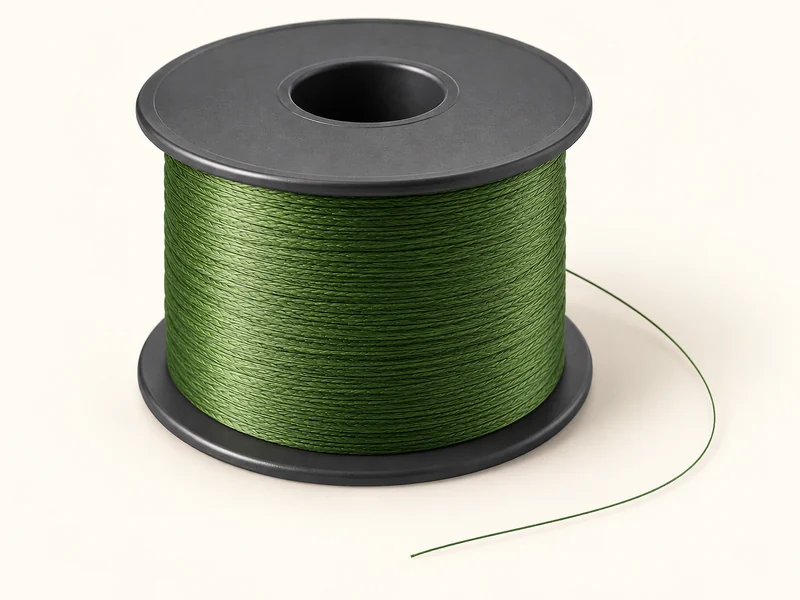
Reference illustration – check exact variant on Amazon.
Sufix 832 Advanced Superline Braid
- Compact thin diameter cuts smoothly straight through rapid four-knot Pacific tides without billowing wide off bottom ledges.
- Zero line stretch lets anglers feel light rockfish nibbles and tentative bottom halibut takes clearly at 300 feet.
- Tight GORE fiber weave resists sudden shell chafing cleanly along rugged Vancouver Island banks.
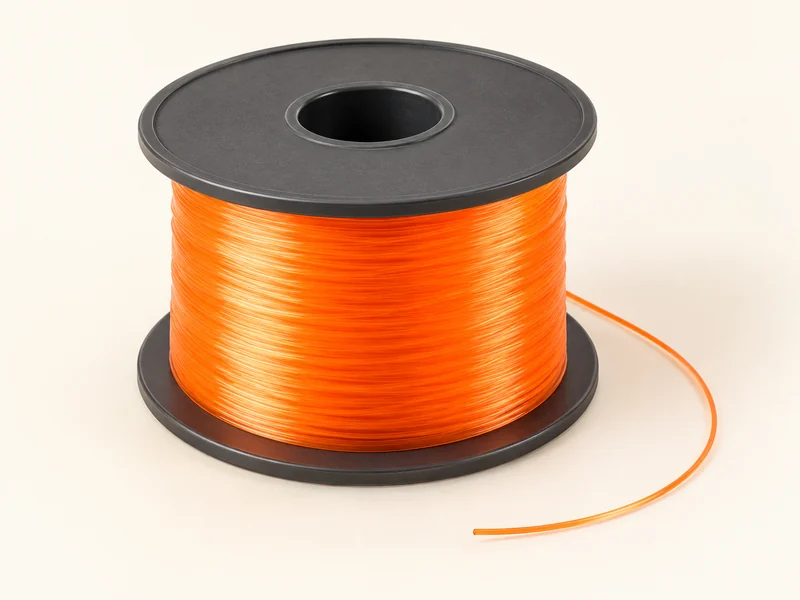
Reference illustration – check exact variant on Amazon.
Berkley Trilene Big Game Monofilament (Blaze Orange, 650 yd)
- High-contrast Blaze Orange topshot helps boat mates track tangled tidal spreader lines swiftly across rolling Pacific wakes.
- Tough outer abrasion sheath guards against sharp bottom basalt reefs and rough dogfish skins during long lifts.
- Bulk 650-yard service spool provides dependable heavy topshots or sturdy rigging reserve all season aboard.
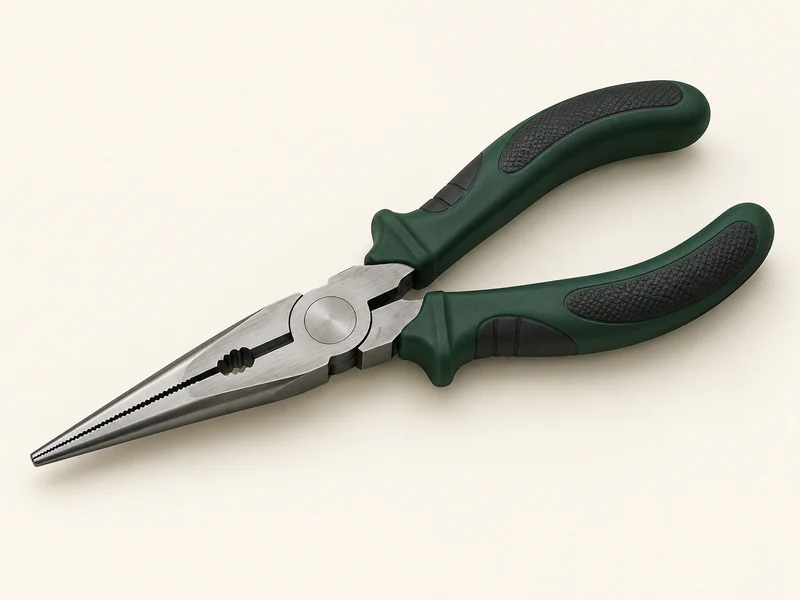
Reference illustration – check exact variant on Amazon.
Rapala 8½-inch Fisherman’s Pliers
- Extra-long 8½-inch steel reach keeps knuckles clear when backing out big 14/0 halibut circle hooks or sharp lingcod teeth.
- Robust crimp sleeves and split-ring tip tackle stubborn heavy offshore snaps smoothly in rolling seas.
- Non-slip co-molded grip maintains steady control over oily slimy baitfish hands and wet coastal rails.
Additional Verified Halibut Gear Categories on Amazon:
Compare Saltwater Rod & Reel Combos • Browse Heavy Saltwater Swimbaits & Lures • Review Halibut Spreader Jigs & Circle Hooks
Frequently Asked Questions About Canadian Pacific Halibut Fishing
Do I need a special Tidal Waters licence for BC Pacific halibut fishing?
Yes. Any angler targeting Pacific halibut in Canadian Pacific ocean waters must hold a valid federal Fisheries and Oceans Canada (DFO) Tidal Waters Sport Fishing Licence printed clearly to record retained catches instantly onboard.
What are the best tide windows to anchor for British Columbia halibut?
High slack and low slack current turns offer peak control. Anchoring fifteen minutes prior to slack slows strong two-to-four-knot coastal rushes down below one knot, letting spreader baits and jigs hang vertically cleanly over productive bottom channels.
How can I cleanly tell a small Pacific halibut apart from an arrowtooth flounder?
Look closely at the lateral line behind the head and flip the underside edge: Pacific halibut display a tall sharp semicircle arch curving up over the pectoral fin alongside a crisp bright snow-white underside without murky grey speckles or huge barbed fang jaws.
Why should anglers never swing big hooksets on circle hooks for halibut?
Non-offset circle hooks are engineered specifically to slide cleanly forward out of soft gullets until catching squarely around solid corner jaw cartilage when wound down gently tight. Violent upward yanks snap the curved point cleanly clear of lips completely.
Do BC anglers legally have to carry a rockfish descender device onboard?
Yes. DFO Pacific groundfish rules require any boat fishing tidal groundfish bottom structures to carry a functioning pressure recompression descender tool ready to send incidental yelloweye or quillback rockfish safely straight back down to deep pressure.
When does British Columbia’s recreational halibut season normally open and run?
Rec fishery seasons historically open between early February or spring and continue into late autumn depending cleanly on annual Canadian quota burn rates. Verify active DFO Fishery Notices weekly prior to planning summer charters.
Official Canadian Fisheries Resources and Related Guides
Quartering Clean Bone-Free Fillets Off Flatfish Sides
Butchering legal Pacific halibut flat sides properly yields four thick boneless slabs cleanly off top dark flesh and lower white belly ribs without wasting delicate sweet cheek medallions tucked neatly behind gill covers. Cut decisively down center dorsal backlines right to spine bones before sliding thin stiff blades smoothly flat outward along clean rib contours to clear translucent skin swiftly cleanly over wooden boat fillet boards.
Never rinse clean salted white fillets repeatedly in muddy coastal fresh tap water before vacuum sealing; dry white meats lightly on cold clean towels and wrap tightly flat inside cold freezer portions to hold crisp bright ocean texture cleanly past winter.
Confirm active length limits, Rockfish Conservation Areas (RCAs), and annual quota openings via official Fisheries and Oceans Canada bulletins before offshore launches:
- DFO Pacific Region: Recreational Pacific Halibut Fishery Notices & Limits
- DFO Pacific Region: BC Marine Finfish Limits and Species Rules
- DFO Pacific Region: Tidal Waters Sport Fishing Licences and Area Guides
- Related CanadaFever Guides: Fishing for Specific Species in Canada · Canada Outdoor Planning Tools · Halibut Charters in BC Prices · Ocean Fishing Licence in Canada · Fishing Gear and Equipment · Fishing for Beginners in Canada · Fishing Regulations and Licences in Canada · Best Fishing Spots in Canada · Ice Fishing in Canada · Fishing Lodges in Canada · All-Inclusive Fishing Lodges Canada · Fly-In Fishing Lodges in Canada