

Cutthroat Trout fishing in Canada guide with identification, habitat, seasonal patterns, gear, tactics, and official regulation checks.
- Use Cutthroat Trout Fishing in Canada to match species behaviour, habitat, season, and presentation to Canadian water conditions
- Check local regulations before fishing; limits, closures, bait rules, and licences can vary by province and waterbody
- Focus on practical setup: where to fish, what to cast or troll, how deep to work, and when to move
Bottom line Cutthroat Trout Fishing in Canada gets simpler when you pair current rules with the right habitat, timing, and presentation
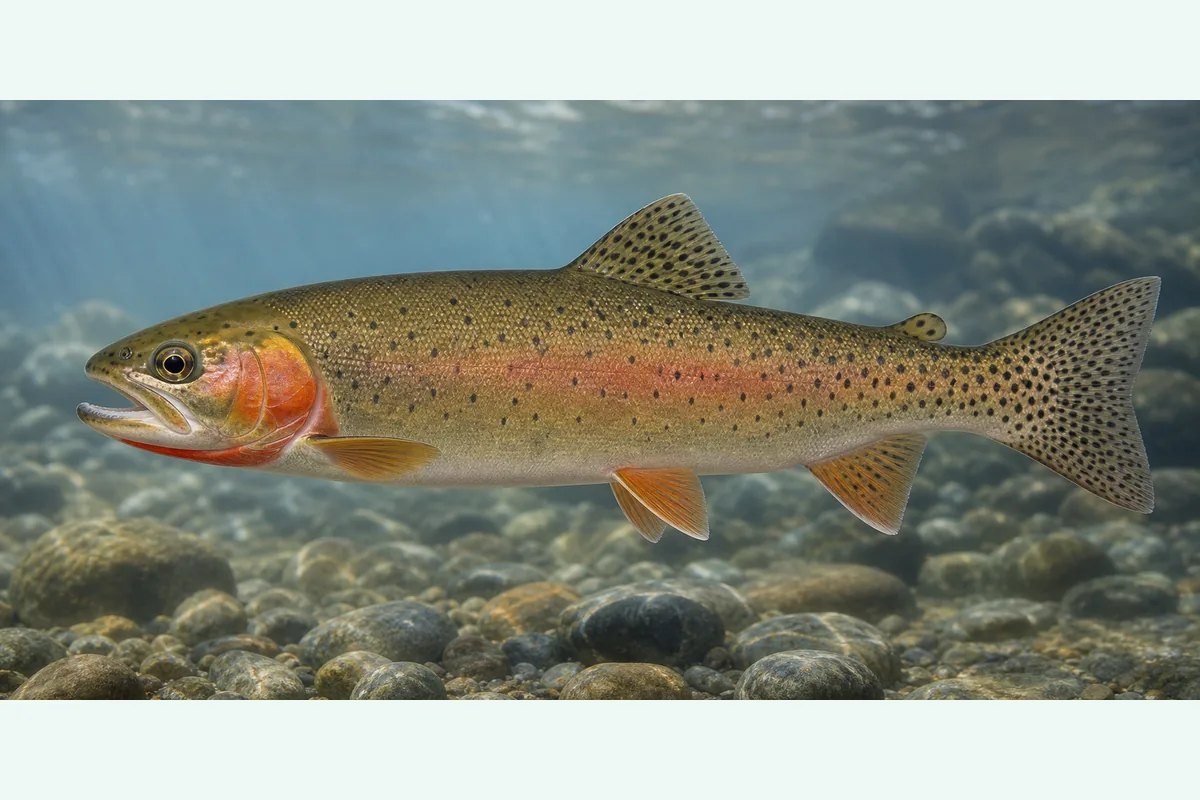
Quick Answer
Cutthroat Trout fishing in Canada is best planned by matching the species to the right water, season, gear, and official rule source. Start with identification and habitat, then verify province, zone, date, waterbody, size, retention, bait, and licence rules before fishing.
Where this fits: This profile is part of the Fishing for Specific Species in Canada hub. Use it with the Canada Outdoor Planning Tools species finder before checking the exact regulation source.
Cutthroat Trout Field Check Infographic
Use this visual checklist to confirm cutthroat trout ID, clean-water habitat, and handling cues before checking the local rules.
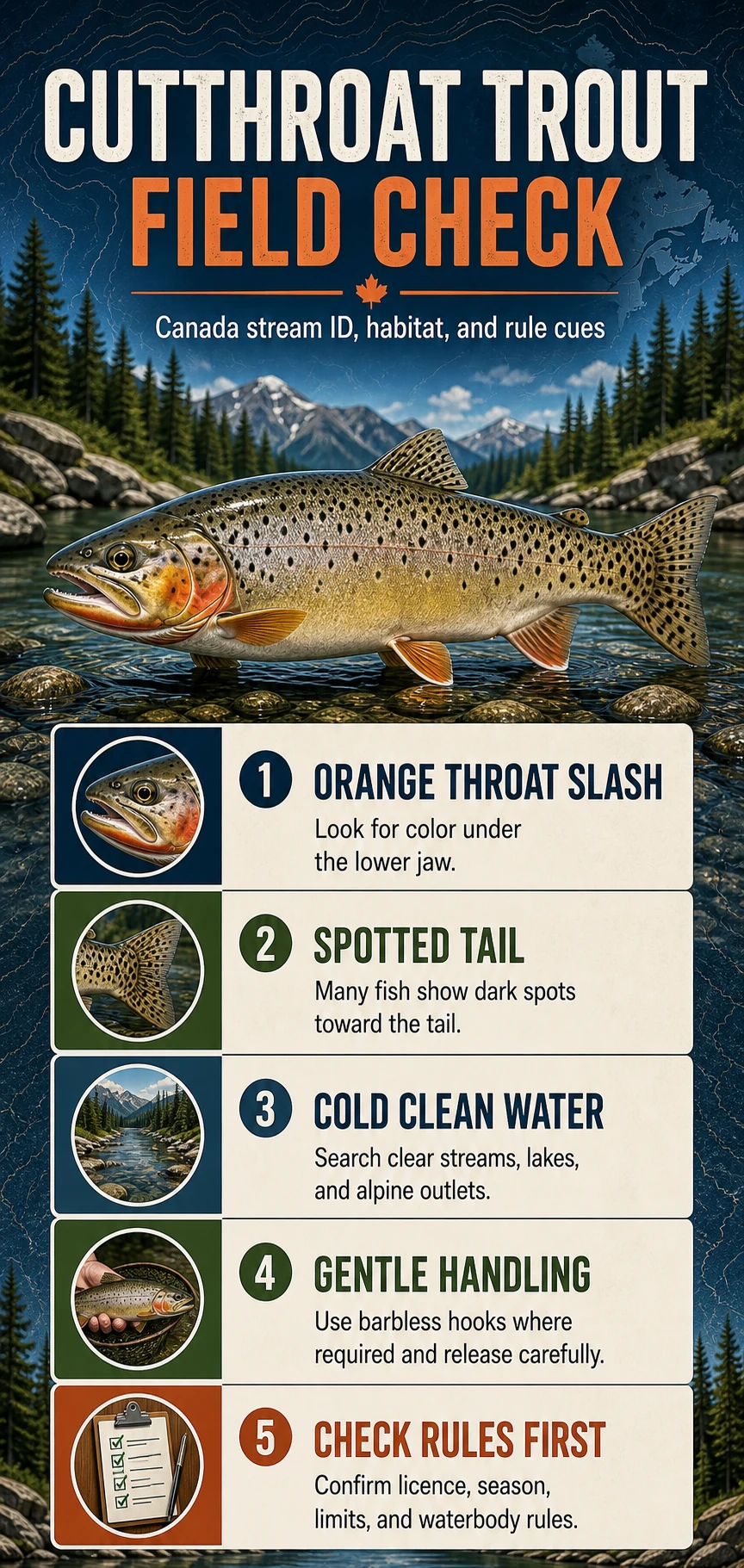
How to identify cutthroat trout
Cutthroat Trout identification matters because regulations, limits, and legal handling can depend on the exact species. Look for these field marks before keeping fish or comparing your catch to a rule table.
- orange-red slash under lower jaw
- black spots toward tail
- olive back
- trout body
- orange or red side tones
Where to Find Cutthroat Trout in Canada
Canadian cutthroat trout planning is mainly a western Canada topic, especially British Columbia and Alberta, with conservation context important for native strains.
Cutthroat trout use cold, clean mountain streams, clear lakes, riffles, pools, and cover where water temperatures stay suitable.
Start broad with province and water type, then narrow to the exact lake, river, zone, park boundary, or tidal area. A species can be common in a province and still closed, protected, stocked-only, or specially managed on a specific waterbody.
Best Provinces and Lakes
- British Columbia: mountain streams, alpine lakes, and western trout water with local species rules.
- Alberta: foothill and mountain cutthroat contexts where native-strain protection can matter.
- Cross-border western waters: local subspecies and waterbody checks are essential before fishing.
Use these as planning examples, not a final destination list. Access, stocking, closures, slot rules, park rules, and local conservation measures can change the best water for a trip.
Best Seasons
Mountain runoff, cold-water windows, spawning protection, and local closures control the planning. Do not assume all trout water is open or harvestable.
Regulation-safe planning: This section describes common fishing patterns, not legal open seasons. Always verify province, zone, date, waterbody, species, size, slot, bait, hook, and possession rules through official sources.
Best Techniques
The best starting pattern is the one that fits the fish, the water temperature, the structure, and your skill level. Keep the first kit tight before buying specialty tackle.
dry flies in suitable
dry flies in suitable summer windows
small nymphs in riffles
small nymphs in riffles
tiny spinners where legal
tiny spinners where legal
stealthy upstream casts in
stealthy upstream casts in clear water
Recommended Gear
Light fly or spinning gear, small dry flies, nymphs, spinners, fluorocarbon leaders, and careful catch-and-release tools fit most cutthroat plans.
- Light fly or spinning gear, small dry flies, nymphs, spinners, fluorocarbon leaders, and careful catch-and-release tools fit most cutthroat plans.
- Prioritize fish-care tools, a measuring plan, and safe handling gear before buying specialty tackle.
- Buy gear by water type and presentation, not by a generic species label alone.
Trout Fly Fishing Kit
Compare category options after matching the gear to cutthroat trout, water type, season, and safe fish handling needs.
View category on AmazonLight Spinning Trout Lures
Compare category options after matching the gear to cutthroat trout, water type, season, and safe fish handling needs.
View category on AmazonRubber Trout Landing Net
Compare category options after matching the gear to cutthroat trout, water type, season, and safe fish handling needs.
View category on AmazonThese are broad Amazon category links for comparison, not product-performance guarantees. For a broader buying path, use the Fishing Gear and Equipment hub and the Fishing for Beginners in Canada guide before upgrading rods, reels, line, electronics, or platform-specific gear.
Licence and Regulation Notes
Cutthroat trout can be tied to native-strain protection, bait bans, catch-and-release rules, and sensitive stream closures. Verify the exact water before fishing.
Use the Fishing Regulations and Licences in Canada hub first, then open the official province, territory, federal, or park source for the exact water. When trip planning turns into destination research, move to Best Fishing Spots in Canada.
Related Spots
Use these CanadaFever guides to move from species research into water, access, platform, and trip planning.
Best Fishing Spots in Canada
Use the national spots hub to match cutthroat trout with province, access, season, and trip style.
Best Fishing Spots in CanadaKayak and Canoe Fishing
For smaller water, check whether a paddle craft fits the species, weather, landing plan, and safety setup.
Kayak and Canoe FishingRelated Lodges
Use lodge research only after the species target, licence path, season window, and realistic travel style are clear.
Fishing Lodges in Canada
Compare lodge styles after the cutthroat trout target and rule check are clear.
Fishing Lodges in CanadaAll-Inclusive Fishing Lodges
Use this path when boats, meals, guides, and logistics should be bundled into one trip plan.
All-Inclusive Fishing LodgesBest Fishing Spots in Canada
Use destination research before choosing between a lodge, day trip, shoreline plan, or guided charter.
Best Fishing Spots in CanadaFAQ
Is cutthroat trout a good fish for beginners in Canada?
Good in simple legal water, more sensitive in native or protected systems
What is the simplest way to start cutthroat trout fishing?
Start with one legal waterbody, one season window, and a simple presentation such as dry flies in suitable summer windows. Keep the kit narrow until you understand the fish and local rules.
Can I keep cutthroat trout in Canada?
Maybe, but only the official rule source can answer that for your exact province, zone, waterbody, date, licence, fish size, and possession situation.
Official sources for cutthroat trout research
CanadaFever helps with planning and plain-English context. Official sources control the final rules, seasons, closures, licence products, and species-specific exceptions.
DFO aquatic species browser
Federal species browser for Canadian aquatic species, habitat descriptions, and conservation context.
Open sourceAlberta game fish species
Official Alberta game-fish species index with descriptions for many freshwater sport fish.
Open sourceDFO recreational fishing regulations
Federal entry point for recreational fishing rules, especially marine, salmon, and coastal fisheries.
Open source