

Embark on the ultimate Caribou Hunting adventure with essential tips, peak season insights, and advice on top gear for success in the Canadian wilds.
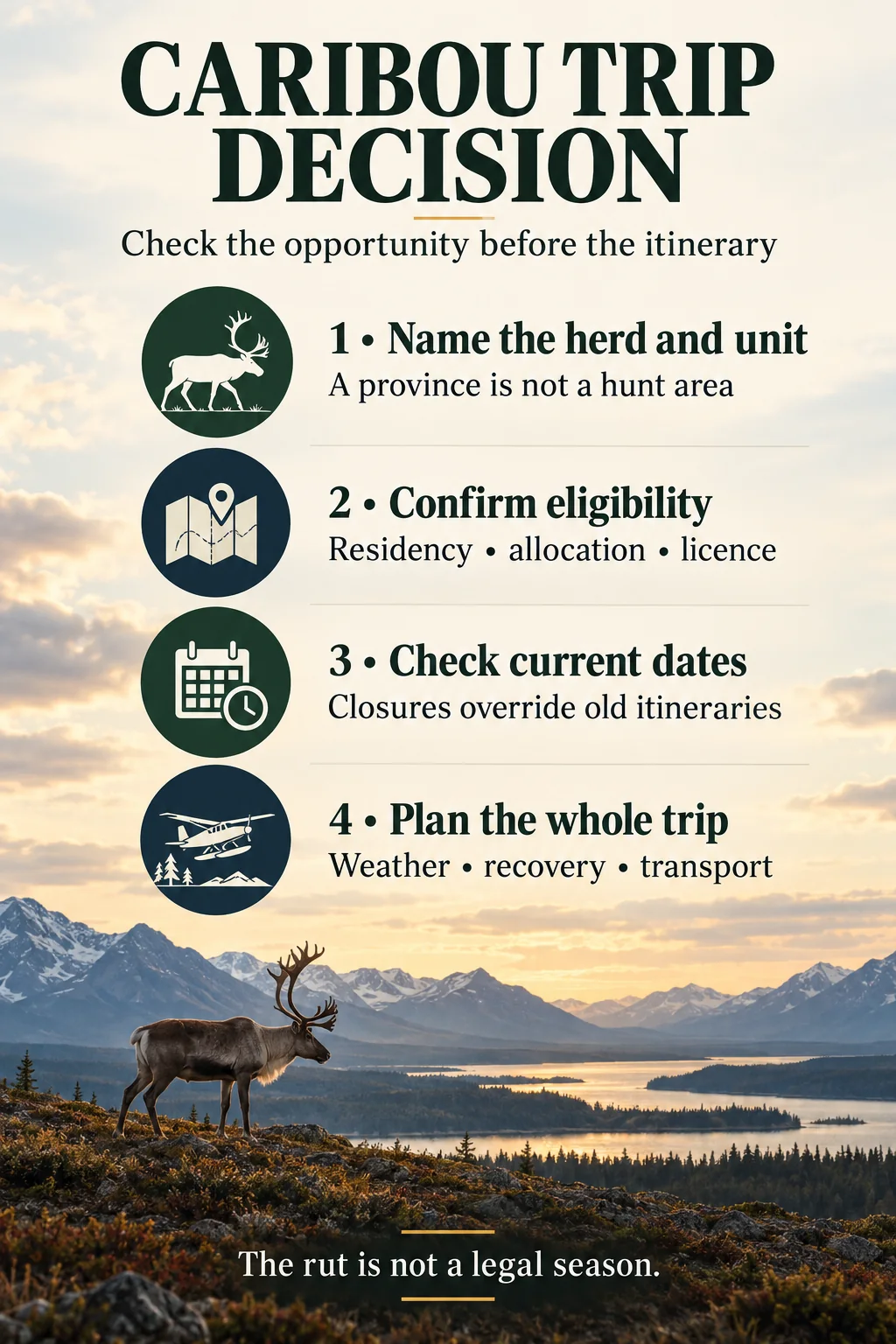
- Name the herd and management unit
- Confirm eligibility and allocation
- Plan weather, recovery and transport
Bottom line The current herd and unit rules decide whether an itinerary works.
Canadian hunting & conservation
Caribou hunting in Canada starts with a named herd and management area. Use current allocations and closures to choose a real opportunity, then match the terrain, timing and travel plan to the trip you can responsibly complete.
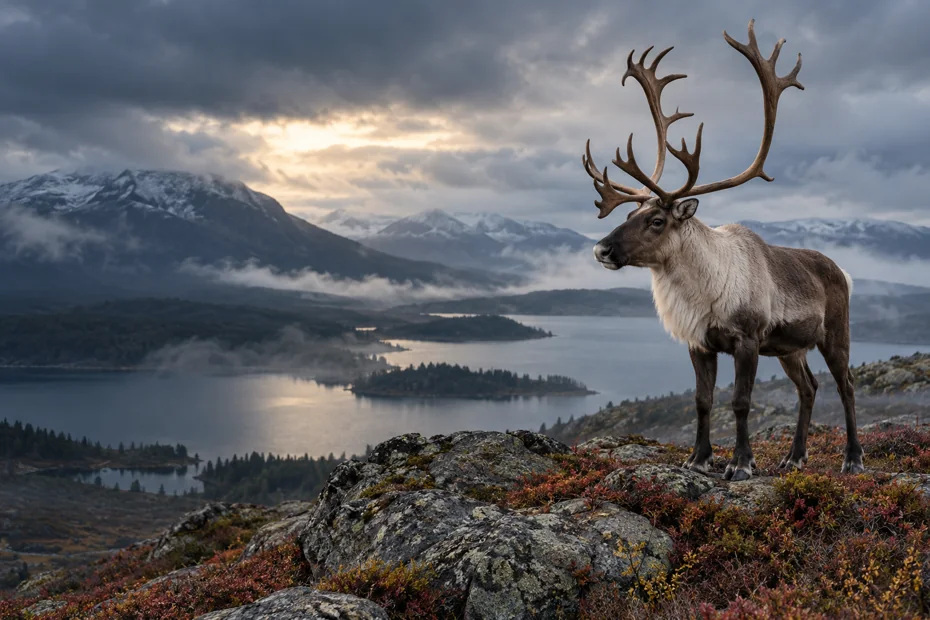
Reviewed October 2, 2026 · Official rules override summaries · Header is a generated editorial illustration, not a documented sighting.
A useful plan connects the rules with the decisions you make next. The approach below keeps those decisions in order.
Caribou hunting regulations: where to begin
| Jurisdiction or situation | Verified information | Your next step |
|---|---|---|
| Québec forest caribou | Québec’s protected-caribou guidance states that hunting forest caribou has been prohibited since 2001. | Do not plan a recreational forest-caribou hunt. |
| Québec migratory caribou | Sport hunting closed February 1, 2018; the official Ulittaniujalik park plan records the closure throughout Nunavik. | Do not rely on older outfitters’ itineraries or historic seasons as a current opportunity. |
| Newfoundland and Labrador | The province publishes a 2026–27 Hunting and Trapping Guide; non-resident big-game applicants must apply through an outfitting company. | Confirm the exact caribou management area and current allocation using official non-resident guidance. |
| Other provinces and territories | Rules and access depend on location, herd and hunter category. | Ask the responsible agency for the current unit, eligibility, allocation and closure information. |
The Québec sport-hunting closure is not a statement that all Indigenous subsistence harvest is prohibited. Treaty and Indigenous harvesting rights operate under distinct frameworks. Do not treat those rights as permission available through an ordinary recreational package.
Choose a herd and area before choosing dates
Caribou movements and conservation status differ between populations. A historical article about a northern migration may describe a herd that is now closed to recreational hunting. The rut also does not create an open season.
Ask the authority or authorized outfitter to identify the current management area on a map, the legal animal classification and the document that authorizes your hunt. If those details are not available, pause the booking. Use our hunting in Canada planning guide for the broader licensing and travel sequence.
The 2026 Newfoundland caribou table illustrates why location matters: it lists Grey River and Avalon Peninsula as closed, while other areas have differing seasons and allocations. It also advises against harvesting adult males during the peak rut, generally the first three weeks of October, because the meat may be unpalatable. Do not use the rut as a universal “best time” recommendation.
What to confirm with a caribou outfitter
- Exact species or herd, management area and current authorization or allocation.
- Eligibility for your residency category and who applies for each licence.
- How many guided days and travel days are included, with weather contingencies.
- The walking, boat or air transport involved and any baggage limits.
- Recovery, meat care, documentation and onward transport arrangements.
- Deposit, refund, cancellation and unsuccessful-hunt terms in writing.
An outfitter can explain logistics, but its brochure does not override a closure. Request an itemized quote instead of relying on a national average package price. Clarify whether flights, licences, equipment rental, processing and gratuities are included.
Ethics and conservation
A lawful opportunity is a defined permission, not a general entitlement to pursue every herd. Respect closures, private and Indigenous lands, local travel guidance and protected areas. Do not disturb animals to stage photographs or redirect a herd.
Be prepared to decline a shot when identification or recovery is uncertain. Discuss the operator’s recovery plan before the trip; difficult terrain and weather can make the aftermath harder than the approach. Use current official instructions for tags, retained evidence, reporting and transport instead of assuming all regions use the same procedure.
Understand the animal and the population
Caribou are members of the deer family. Environment and Climate Change Canada’s caribou overview explains that both males and females can grow antlers and that populations differ in habitat and behaviour. Antlers alone therefore do not establish the legal sex class for your authorization.
A woodland-caribou trip on the island of Newfoundland is not interchangeable with a barren-ground or mountain-caribou itinerary elsewhere. The unit, access, rules and daily effort differ. Treat the herd name as an essential trip detail, not decorative wording on a brochure.
Newfoundland and Labrador’s 2026–27 conservation guidance maintains the George River herd hunting ban in Labrador and identifies protected boreal populations. Do not confuse an island allocation with permission to hunt a Labrador herd. Old northern travel stories are poor evidence of current availability.
Compare realistic Canadian routes
Swipe the table on a narrow screen.
| Route | What can be established now | What still needs confirmation |
|---|---|---|
| Island of Newfoundland | Current 2026 unit and allocation table plus non-resident outfitter pathway. | Your exact CMA, legal animal class, current available allocation and operator arrangements. |
| Yukon | Official licence and current regulation services include caribou planning. | Residency, guide pathway, area restrictions and any permit or closure. |
| Northwest Territories | Official licence services distinguish resident, non-resident and non-resident-alien hunters. | Current 2026–27 caribou unit rules, eligible population, guide arrangement and local closure notices. |
| Québec / Labrador closed populations | Sport closure/protection guidance rules out historical itineraries as evidence. | Any distinct Indigenous harvesting framework is not a recreational-package permission. |
Use Yukon’s current hunting rules and the NWT licence service as official starting points. Neither a licence application page nor a guide’s availability calendar alone proves that your proposed herd and unit are open. For the territories, check the current summary and notices together.
Walking, wet ground and an honest fitness match
Ask the operator for a typical day described in distances and terrain. “Moderate walking” can hide bog, uneven rock and repeated climbs. A route that sounds short on a map may be demanding when footing is soft and you carry a day pack.
Tell the operator about mobility limits and the pace you can sustain. Ask whether plans can change without shifting the hunt into an area outside the allocation. Train with your intended footwear and a realistic pack on comparable ground; build up gradually rather than making the trip your first long walk.
Match waterproof hunting footwear to the operator’s terrain description, and use a suitable hunting pack for the actual carrying requirement. An image of tundra does not tell you whether the day involves bog, rock or a lengthy boat transfer.
| Planning risk | Question to ask | Useful preparation |
|---|---|---|
| Weather delay | Where will we wait, and who pays for extra accommodation or transport? | Flexible connections and agreed contingency terms. |
| Difficult terrain | How far will we walk, and what assistance is available? | Terrain-specific fitness and footwear preparation. |
| Remote communication | What works beyond mobile coverage? | A tested communication device and check-in plan. |
| Recovery and transport | How will the animal be recovered, cooled and moved lawfully? | A documented plan before entering the field. |
Build a packing list around the itinerary
Rain and wind protection, adjustable insulation and a protected dry change belong near the top of the list. A single heavy layer may be uncomfortable during exertion and insufficient once wet. Compare rain gear by coverage and ventilation, then plan base layers around effort and camp drying arrangements.
Optics help with observation and classification from an appropriate position. Read the binoculars guide for practical viewing choices. Your guide and training still determine identification, legal class and whether a situation is suitable. No item on the equipment list turns uncertainty into a responsible shot.
Ask for flight baggage limits before packing, including weight, dimensions and how any regulated equipment must be transported. Use a written inventory and protect essential medication, documents and communication equipment from wet conditions. Coordinate air travel with the operator and carrier rather than relying on another hunter’s past baggage allowance.
Recovery, processing and the weather buffer
Ask who will recover an animal from the terrain you will actually hunt. How many people are available? What transport is allowed? Where is meat handled, and what happens if the flight home is delayed? These details should be resolved before departure, not after a successful encounter.
Confirm the applicable tag and evidence requirements, processing arrangements and the airline or cargo rules for the return journey. If a second country is involved, check its import requirements as well as Canadian export obligations. A camp freezer does not answer every transport question.
Leave room between remote transfers and important onward commitments. Ask how often weather changes the operator’s schedule and who pays for extra nights; do not convert that answer into a guaranteed delay estimate. Save a contact plan for the person meeting you or expecting your return.
For camp and transfer comparisons, the fly-in lodge planning guide can help frame the questions. Judge the exact contract and current authorization, not a destination’s overall reputation.
If your operator offers an optional fishing day, confirm the species, access and local fishing requirements separately from the hunt. Our char-fishing guide can help with preparation where char actually occur on the proposed itinerary; a hunting licence does not authorize fishing.
This is general planning information, not legal advice or a replacement for hunter education. Exact seasons, fees and limits are deliberately not generalized across Canada; consult the current rules for the trip you are actually considering.
Frequently asked questions
Can I book a recreational caribou hunt in Québec?
Do not treat Québec as an open caribou-hunting destination. Forest-caribou hunting is prohibited, and migratory-caribou sport hunting closed in 2018. Indigenous harvesting rights are a separate framework.
What is the best caribou hunting season in Canada?
There is no national season. Check the named herd, management area, hunter category and current open dates before considering weather or rut timing.
Can a non-resident hunt caribou in Newfoundland and Labrador?
The province requires non-resident big-game applicants to apply through an outfitting company. Availability still depends on the current caribou allocation and management-area rules; confirm those before booking.
Is the caribou bag limit one or two animals?
A national number would be misleading. Your authorization and current regional rules determine the lawful limit and any animal classification restrictions.
What should a caribou hunting package include?
Get a written description of guiding, accommodation, transport, licences, weather contingencies, recovery and processing. Confirm exclusions, refund terms and your own reporting responsibilities.