

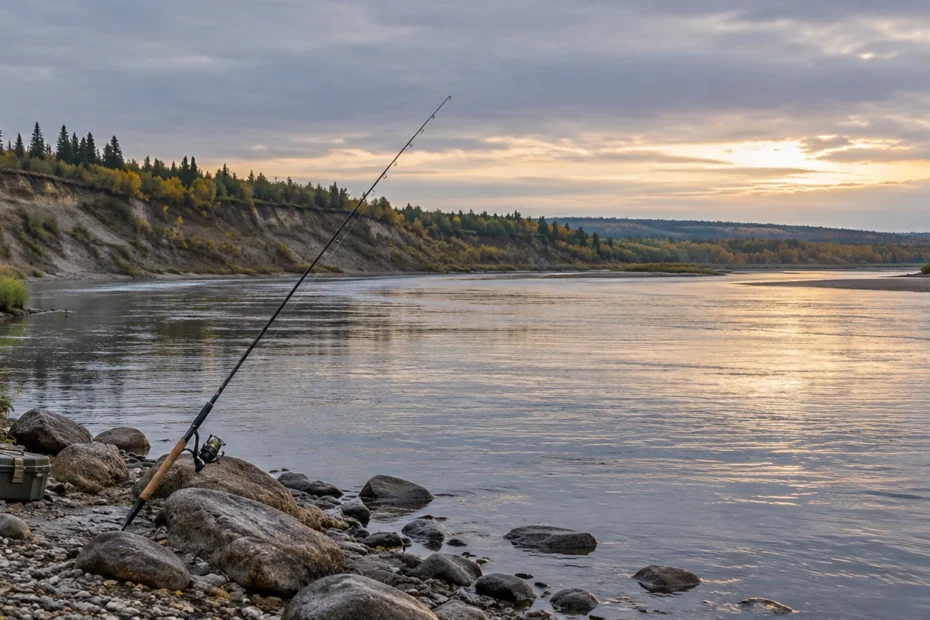
Channel catfish fishing in Canada can begin with a legal bottom rig near a river current seam. Choose safe access, check which bait is permitted, use enough weight to hold the rig, and prepare to handle a fish around its sharp fins. Start with the exact water and current provincial rules.
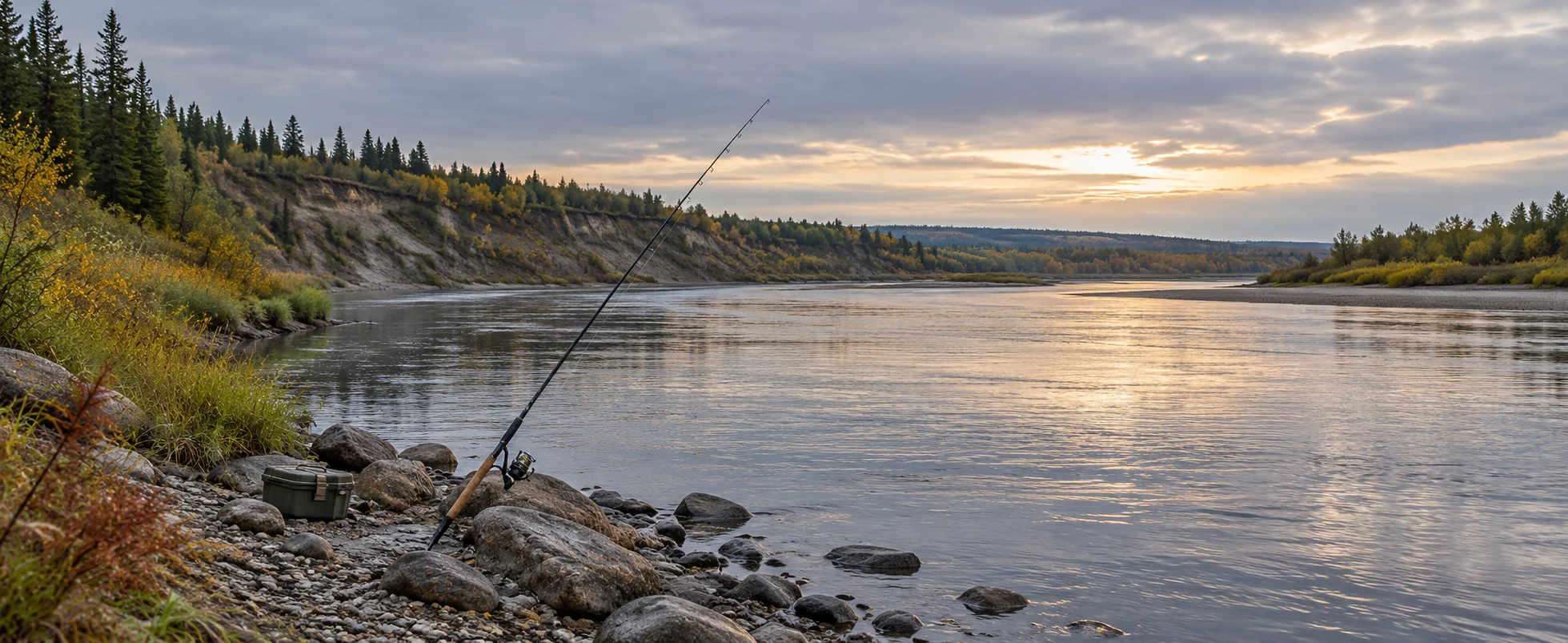
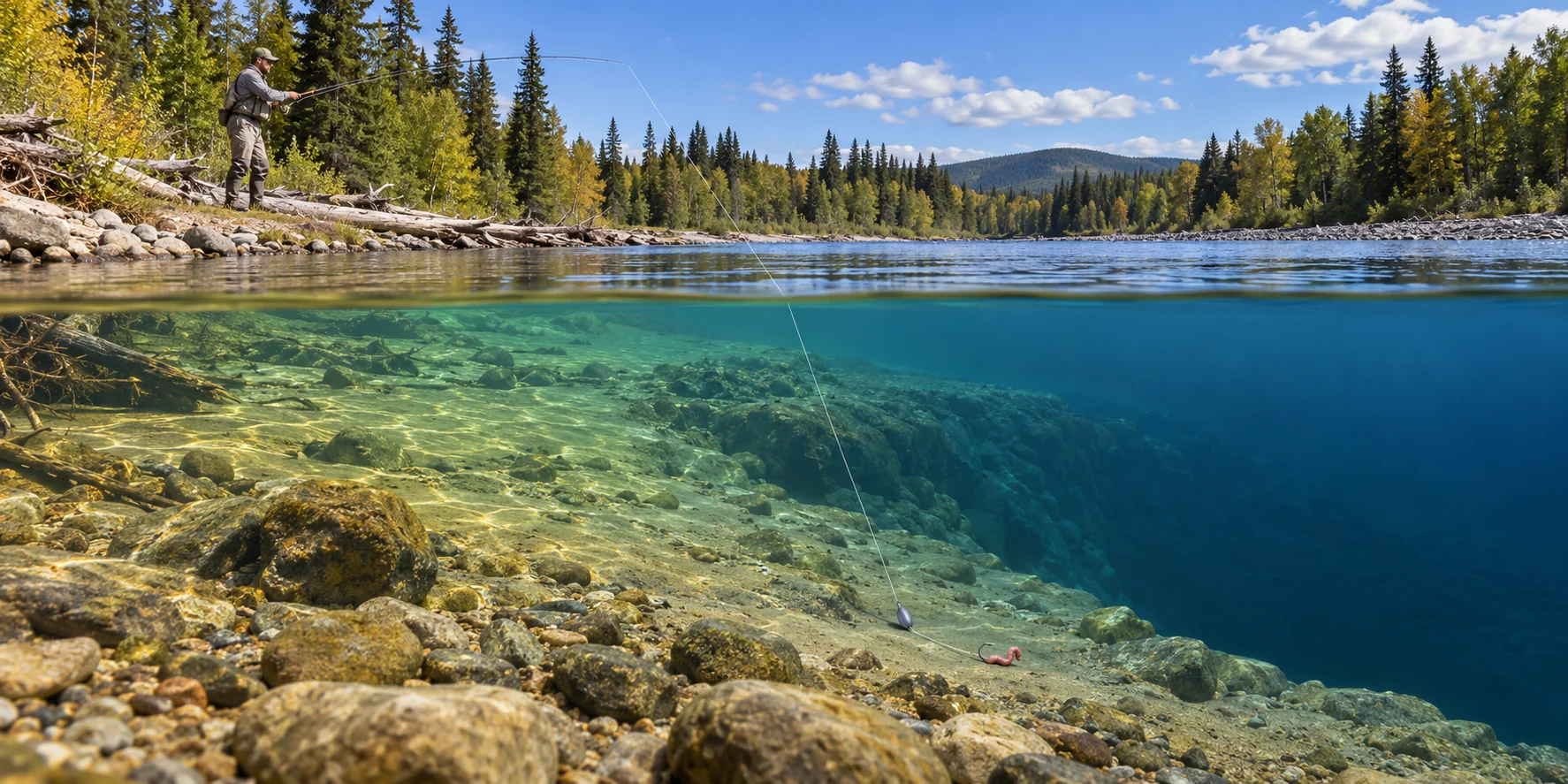
The Guide’s Log: a hypothetical river session
I would begin a hypothetical channel catfish outing by choosing an accessible riverbank with room to cast and a safe route back. I would read the current provincial guide for that exact water and date, then check the licence, species season, limits, permitted bait and local exceptions. A popular bank or an old fishing report would not establish that the same rules still apply.
Once at the water, I would look for a manageable current seam beside a slower pocket, without standing on unstable or flooded ground. I would start with one legal bottom rig, a weight heavy enough to hold without constantly rolling and bait allowed on that water. If the rig repeatedly snags or the current makes the line impossible to control, I would change position or weight instead of adding more gear.
I would set the net and pliers within reach before the first cast. If a fish were hooked, I would use tackle appropriate to its size, land it promptly and keep it in the water as much as practical. I would avoid the dorsal and pectoral spines, support the body and follow current release or retention rules. A difficult hook or unsafe footing would take priority over a photograph.
This is a hypothetical planning example, not an account of a completed trip. River level, weather, access and current rules could make a different plan necessary; I would check them again before leaving.
Identify the fish before deciding to keep it
Channel catfish (Ictalurus punctatus) have a scaleless, elongated body and four pairs of barbels around the mouth. Ontario describes a tail more forked than a brown bullhead’s, often with dark spots on lighter sides. Spotting and colour vary; use multiple features and the Ontario species profile, which includes an identification illustration. Do not identify a fish solely by a single feature or an illustrative image.
- Tail: compare its fork with official photos and similar species.
- Body: look for the smooth, scaleless shape and barbels.
- Decision: if uncertain, use official guidance and follow applicable release rules.
Choose a Canadian river or lake
Ontario lists warm lakes and larger rivers as channel catfish habitat; its profile also describes protected holes, overhanging banks and water below riffles. Manitoba identifies the Red River as a channel catfish fishery, and its Lockport-to-Highway-4 map lists the species. The map is for angling information, not navigation or a guarantee of access, current conditions or an opening.
| Water feature | What to test | When to move |
|---|---|---|
| Current seam | Place a bottom rig near the transition to slower water. | The rig rolls continually or snags. |
| Protected hole or bend | Use safe public access and check depth gradually. | Bank, flow or boat position becomes unsafe. |
| Quiet lake edge | Try a controlled cast toward a bottom transition. | Weeds or debris make the presentation hard to retrieve. |
Ontario notes feeding can occur throughout the day and in low light. Dawn, dusk and night are possibilities, not guarantees; confirm access restrictions and carry lighting. Water levels can change quickly after rain or around dams. The Grand River Conservation Authority advises anglers never to fish near dams or other water structures, where dangerous currents can occur. Respect signs and booms and check local warnings.
Read a river before you cast
Start by looking at the river from a stable access point. The fast centre, a sheltered bank and a gravel bar can sit only a short distance apart, but they ask for different casts. Foam, floating leaves and small surface ripples can show changes in speed. They do not reveal the whole current below the surface or prove that fish are present. Treat them as clues to test, not as a map of a fish’s exact position.
A seam is the transition between water moving at different speeds. Beside a point or a shoreline obstruction, you may see a strip of relatively smooth water meeting rougher flow. A first cast can land in the slower side where you can keep the rig under control. Give the weight time to reach bottom, take up slack and watch the rod tip. If the sinker rolls continually, reposition or change the weight. If it holds but repeatedly catches, a shorter cast to a cleaner line may work better.
On an outside bend, a deeper pocket may occur close to stronger current. Depth, however, varies with the particular river and water level. Do not assume every bend has a hole or that it is reachable safely from shore. If you can see an underwater obstruction or feel repeated contact, plan the retrieve before casting. Leaving a snagged rig in the water is harmful to fish and wildlife; avoid casting into cover you cannot reasonably retrieve from.
In a lake, the test changes. A gentle bottom transition, a channel edge or a protected bank can be easier to cover than featureless open water. Start at a range you can reach consistently. Test one distance, then another, rather than scattering casts and changing both bait and position at the same time. A flat spot without a bite can still teach you whether the bottom is weedy, rocky or clean enough for the rig.
Build and test a sliding-sinker rig
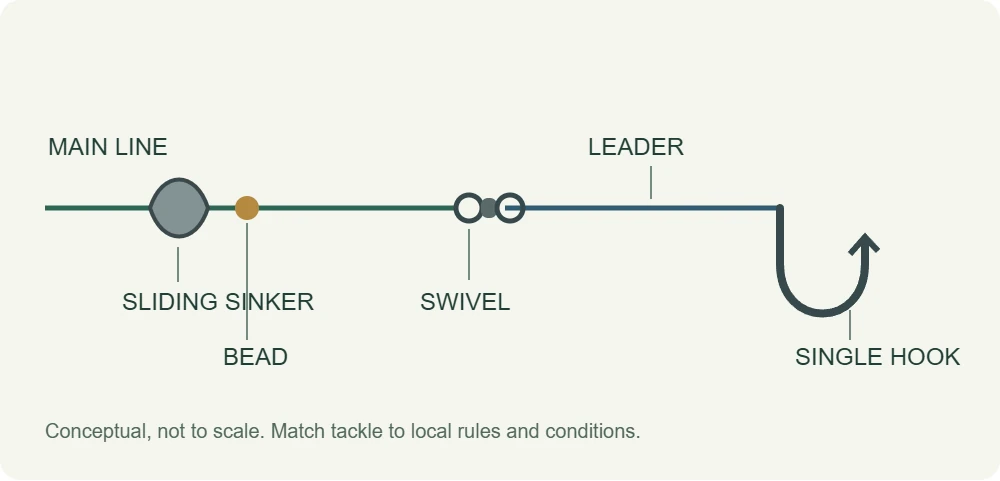
A simple sliding-sinker rig has a main line running through a sliding weight, a swivel, a separate leader and a single hook. A bead between the weight and swivel can protect the knot from repeated contact. The leader keeps the hook away from the weight, while the swivel joins the two line sections. The order matters: thread the sinker and bead onto the main line before tying the swivel; then attach the leader and hook. Check each knot and ensure the sinker can move freely.
Choose the hook to fit the bait and local hook rules. Leave the point exposed enough to work; a large clump of bait can conceal it. A circle hook is one option where legal. It is designed differently from a conventional J hook, so read the manufacturer’s guidance and avoid assuming the same hook-setting motion works for both. Hooks and rigs cannot guarantee a lip hook. Attend the line and act promptly when a fish takes the bait.
Start with a sinker that allows a controlled cast and holds in the selected current. There is no useful universal ounce figure: line diameter, current, cast angle and bottom shape all affect drag. If the sinker moves downriver immediately, try a more sheltered position or a modest increase in weight. If a weight catches between rocks, change the angle or sinker shape rather than simply adding more mass. Never exceed the rod’s stated casting-weight range for the combined rig and bait.
Check the leader after dragging it over rock or wood. A rough section, a damaged knot or a bent hook is a reason to retie before the next cast. If several adjustments still leave the rig snagging, fish a different bottom. A practical test is to change one factor at a time: keep the bait and position constant while testing weight, or keep the same weight while moving to a slower seam.
From a bite to a safe landing
Before fishing, lay out a net and long-nose pliers so they can be reached without leaving a fish on the bank. Place the rod securely while keeping it attended. A tap on the line may be current, debris, a small fish or a bite; the correct response depends on the hook and rig. Keep contact with the line and use the technique suited to the hook instead of applying a dramatic strike to every movement.
When a fish is hooked, keep steady pressure and lead it away from avoidable obstructions. Do not use a grip or technique that puts fingers near the mouth, gills or sharp dorsal and pectoral spines. A soft, suitably sized net can support a larger fish; keep it in the water when practical. Wet hands before touching the fish, support the body horizontally and remove the hook promptly with pliers.
Check the current legal requirements before keeping or releasing a fish. Ontario requires immediate release at the place of capture for fish unlawfully caught or illegal to possess, including closed-season, size and limit cases. Its general regulations make an exception for regulated invasive species, which must not be returned to the water. Ontario also recommends cutting the line if a hook is too deep to remove quickly. Fish care begins before the cast: avoid prolonged handling, keep the tools accessible and do not delay a required release for a photograph. If a fish is deeply hooked, follow the applicable local guidance rather than trying to force a hook free.
Choose bait for the place, not just the species
Earthworms and permitted baitfish are familiar catfish options, but a bait that is common in one region may be restricted elsewhere. Ontario divides much of the province into bait management zones: live or dead baitfish and leeches generally cannot be transported into or out of a zone, with limited exceptions. When using baitfish or leeches in a zone outside your primary residence, the rules can require a commercial-source receipt and impose a time limit. Ontario’s bait guidance distinguishes these requirements from other bait such as worms. Check the official current text, its exceptions and the precise water before travelling.
Manitoba has separate bait and aquatic invasive species rules. Its provincial guidance warns against buying frozen grocery-store fish or invertebrates for bait and directs anglers to the current Anglers’ Guide for permitted species. Do not carry a bait rule across provincial lines. Disposal matters too: follow the relevant local instructions and never empty leftover bait into the water simply because a trip is over.
After confirming legality, keep the test practical. Select a bait that fits the hook and stays attached through the cast, use a modest presentation you can replace easily, and note whether it remains on the hook when retrieved. If a bait is stripped repeatedly, consider the hook-bait match or the presence of smaller fish before assuming the location holds no catfish. Keep unused bait cool as appropriate, avoid contaminating other food and pack out packaging and waste.
Two practical trip examples
Manitoba riverbank: A reader planning the Red River near Lockport should begin with the current Manitoba guide, the exact reach and local access restrictions. The province’s Lockport-to-Highway-4 map lists channel catfish among common species, but expressly says the map is not for navigation and features cannot be guaranteed. Look for a safe bank away from dams and marked danger areas. High water or a sudden rise is a reason to postpone, not to fish closer to the edge.
After checking the rules and conditions, choose a controlled current edge and test whether a legal rig holds. A rod holder can keep the setup organised, but it does not replace attending the line. If the sinker rolls, try a quieter pocket or adjust the weight. If the bank is too steep for a safe landing, move before casting; a good-looking seam does not make a poor landing point safe.
Ontario lake or large river: Ontario’s species profile lists several southern lakes and larger rivers, including Lake Erie and the Ottawa River. These are species-distribution examples, not promises that every access point or season is open. The angler should identify the specific fisheries management zone and local exceptions, check the current summary and verify bait rules before selecting a spot.
On a calm lake, a lighter weight may be enough to present the bait on a clean bottom. On a river with strong flow, the same rig may move continuously. Rather than buying a completely different outfit at once, change one variable and watch the result. If conditions require more weight than the rod is rated to cast, use an appropriate setup or select calmer water.
Bottom-rig troubleshooting: choose what you observe
Open the situation that matches your test. These are practical starting points; adjust to your water, tackle and local rules.
The sinker keeps rolling downstream
Take up excess slack and check the cast angle. Try a slower seam or a modest increase in weight within the rod rating. If the current prevents safe control, move.
The rig repeatedly lodges between rocks
Shorten the cast or change the retrieve angle. A different sinker shape may help, but adding weight alone can make wedging worse. Move to cleaner bottom if it keeps snagging.
The bait is gone when I retrieve
Check that the bait is secured and the hook point remains exposed. Smaller fish may also remove bait; observe the line and check the rig without leaving it unattended.
I have a bite but no safe place to land a fish
Choose a stable landing spot before the next cast. If one is not available, move or stop; do not approach a dangerous bank to recover a fish.
Common problems and useful adjustments
- The rig keeps moving: check for excessive slack, then move toward a slower seam or adjust the weight within the rod rating.
- The sinker wedges in rocks: shorten the cast, change the retrieve angle or move to cleaner bottom. More weight alone may make the problem worse.
- Bait comes back missing: check how it is attached and whether the hook remains exposed; smaller fish may also be responsible.
- No bites after a careful test: change distance or position while keeping the presentation consistent long enough to learn from the result.
- The landing spot is unsafe: move before fishing, even if the current seam looks promising.
Rules, safety and fish care
Use the current Ontario Fishing Regulations Summary or Manitoba Angling Guide as appropriate, including the exact zone and waterbody exceptions. Check licences, open seasons, size and possession limits, tackle and bait. National parks and other jurisdictions can have different rules. In Ontario it is unlawful to target a species during its closed season even when you intend to release it.
Have a rubberized net and long-nose pliers ready. Keep the fish in the water where practical, handle with wet hands and support its body horizontally; avoid the sharp dorsal and pectoral spines and never put fingers in its gills. Ontario’s catch-and-release guidance recommends limiting air exposure and cutting the line if a hook is too deep rather than struggling with it. Follow the applicable legal requirements for an unlawfully caught fish.
Gear choices for a controlled presentation
These products address different parts of a trip: selecting line and removing hooks. Choose equipment to fit your rod, reel, water and local rules. We have not field-tested these items. Availability and delivery to Canada vary.
Affiliate disclosure: CanadaFever may earn from qualifying purchases through the links below, at no extra cost to you.
Line and pliers for a catfish setup
Affiliate links: We may earn a commission from qualifying purchases, at no extra cost to you. We have not field-tested these items. Check the selected model, current price and delivery options on Amazon.
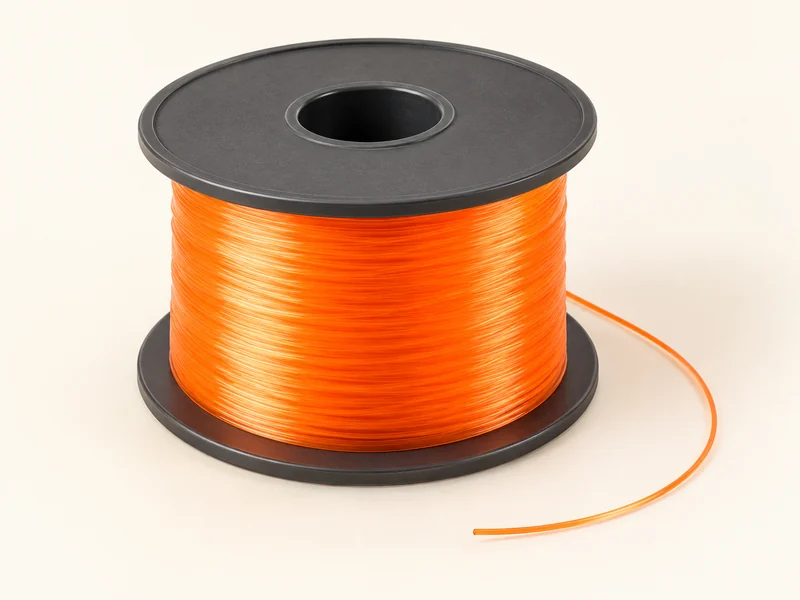
For a compatible mono setup
Berkley Trilene Big Game Monofilament
- Selected variant: 20 lb, 650 yards, Blaze Orange.
- A larger monofilament spool for refilling compatible reels.
- Match reel capacity and terminal tackle to the chosen strength and fishing conditions.
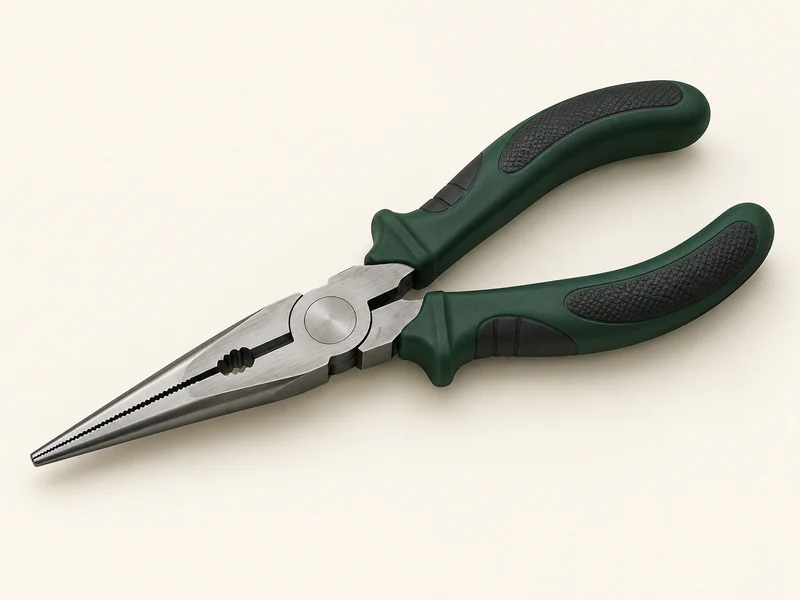
For handling hooks with a tool
Rapala 8½-inch Fisherman's Pliers
- Longer 8½-inch format for reaching a hook with a tool.
- Nickel-plated carbon steel and co-moulded grips.
- Choose a jaw size that suits the hook and fish; avoid unnecessary handling time.
Choose a size suited to accessible hooks and your fish. For a deeply embedded hook, follow local fish-handling guidance instead of pulling forcefully.
For a broader comparison, browse catfish hooks and sinkers and spinning rod combinations.
Frequently asked questions
How can I distinguish a channel catfish from a bullhead?
Compare several features with official identification material. Ontario notes that the channel catfish tail is more forked than a brown bullhead’s.
Do channel catfish feed only at night?
No. Ontario describes feeding throughout the day as well as low-light activity.
What bait is legal?
It depends on the jurisdiction and water. Check current rules for bait type, capture and transport before fishing.
Can I fish the Red River anywhere?
Not automatically. Check the exact reach, public access, provincial rules and any local or safety restrictions.
How should I handle a channel catfish?
Keep it wet, support its body and avoid sharp fin spines. Use a net and pliers and follow current release or retention rules.
Related reading: Fishing for specific species and Canadian fishing licences and rules.