

Compare four Indigenous-operated BC lodges by ownership, community, access, meals and activities. Plan respectful visits and check the full booking quote.
- Four operators with published ownership or operating statements
- Different road, boat and air arrival requirements
- Concrete inclusion and guest-protocol questions
Bottom line Verify ownership and the actual stay format before comparing a room with a remote package.
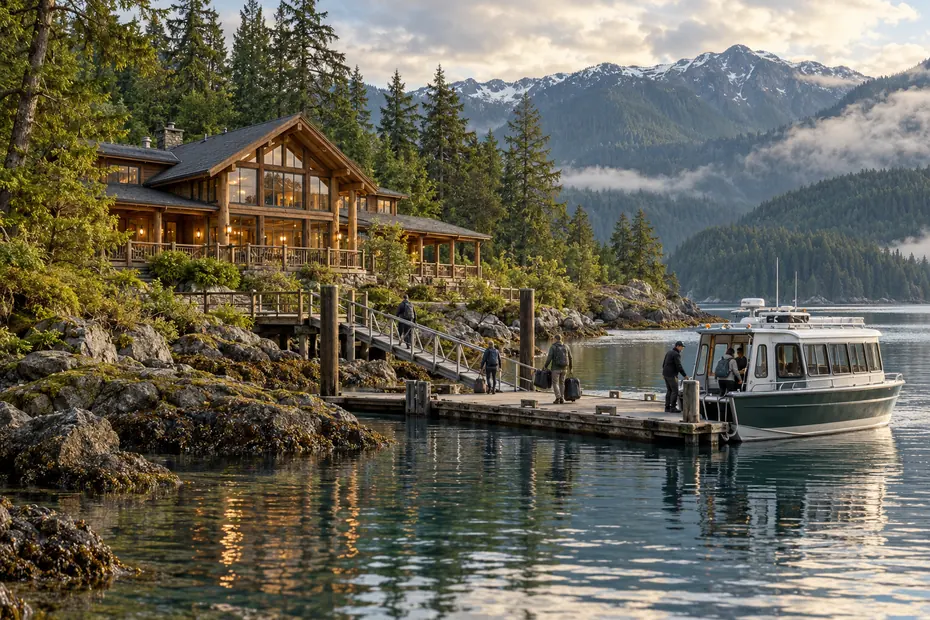
Updated 28 October 2026.
Indigenous-operated lodges in Canada range from road-access rooms to remote, multi-night wildlife packages. Check the named owner, host community and kind of stay you can book. Indigenous ownership alone does not tell you whether meals, boat transfers, cultural activities or wildlife excursions come with the room.
The four British Columbia operators below publish clear ownership or operating statements and identify the communities connected with their stays. Their access and booking formats differ: a coastal resort reached by boat, a lodge in Klemtu, off-grid Chilcotin cabins and a Highway 16 lodge and campground. This is a practical shortlist, not an exhaustive ranking of Indigenous accommodation across Canada.
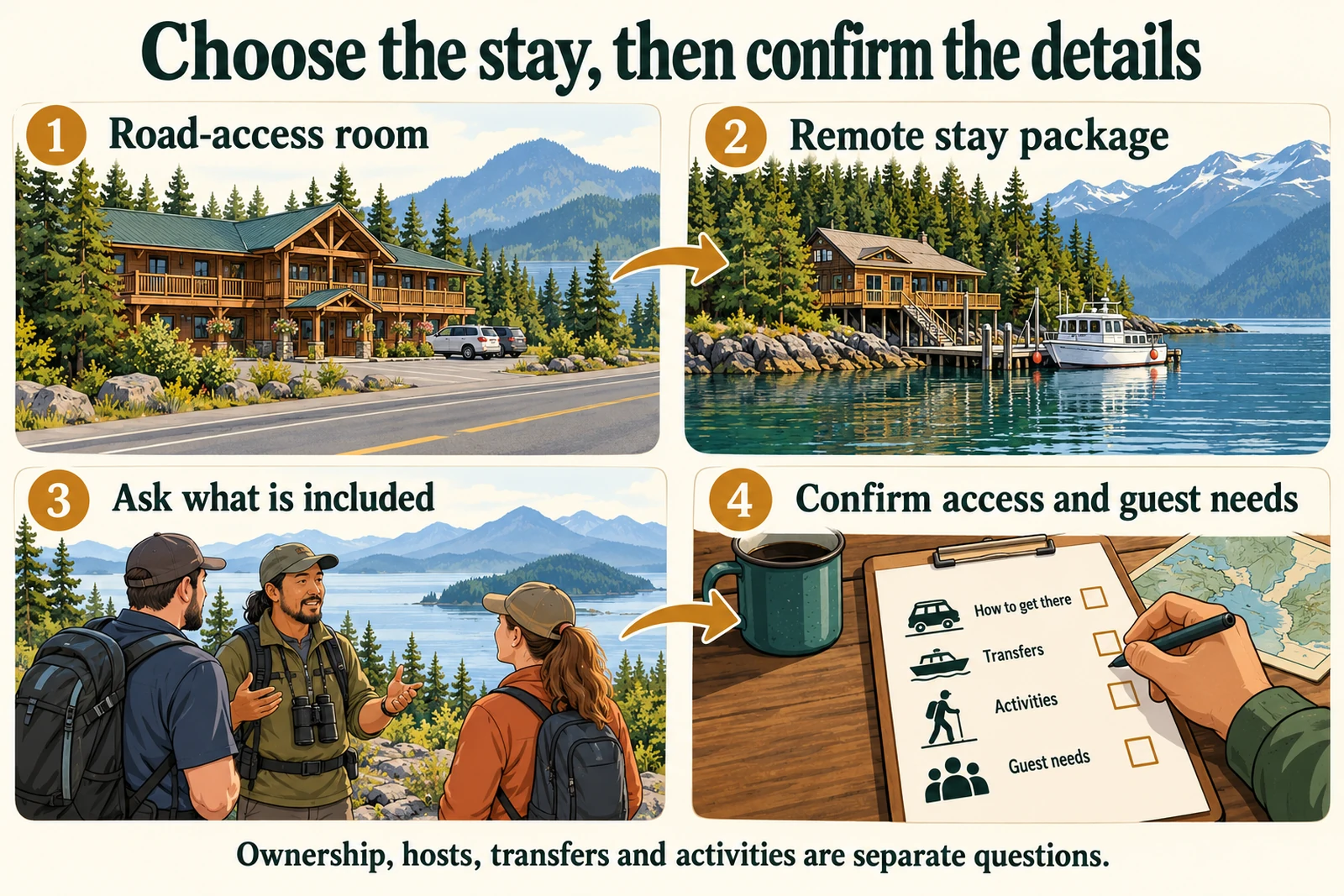
Four Indigenous-operated lodges with different trip requirements
Ownership and community information was checked against operator pages on 28 October 2026. Names and descriptions below follow those sources. Book through each operator’s official site and ask for the conditions attached to your dates; a published overview is not a room-availability check.
| Stay and community connection | Useful fit | Booking distinction |
|---|---|---|
| Klahoose Wilderness Resort; owned by Klahoose First Nation | Multi-night coastal wildlife and cultural packages in Desolation Sound | Scheduled boat access from Lund; flights are a separate part of the journey |
| Spirit Bear Lodge; owned and operated by Kitasoo Xai’xais First Nation | Multi-day Great Bear Rainforest visits based in Klemtu | Package includes Vancouver South–Bella Bella flights booked by the lodge, followed by local connections; allow for disruption |
| Nemiah Valley Lodge; Indigenous-owned and operated, with Xeni Gwet’in hosts and community affiliation | Off-grid log cabins and adventure or wellness packages in the Chilcotin | Long gravel-road approach or arranged air access; confirm the complete package |
| Kasiks Wilderness Resort; owned and operated by Kitsumkalum | Road-trip lodge rooms, camping and a café between Terrace and Prince Rupert | A room booking does not automatically include a cultural tour or dinner |
Klahoose Wilderness Resort: a package with a boat connection
Klahoose’s ownership statement identifies Klahoose First Nation as the owner and Qathen Xwegus Management Corporation as the manager. The resort is on Homfray Channel in Desolation Sound, within the traditional territory of the Klahoose People.
The operator sells three-, four- and seven-night packages. Its current FAQ distinguishes the spring and summer Discover Klahoose experience from the late-summer and fall Grizzly Bears of Toba Inlet experience. Choose the actual seasonal itinerary rather than assuming that a bear-viewing image describes every departure.
The package FAQ lists accommodation, meals, scheduled boat transfers and season-dependent activities. Flights and alcohol are excluded from the general package description. The arrival page explains the Lund meeting point and options through Powell River; confirm which airport shuttle matches your booking before purchasing a flight.
This is a strong format when you want the lodge to organize much of the on-site stay. It is a weaker fit if you need arbitrary arrival times or want to improvise a one-night stop. Ask about missed connections, luggage limits, dietary needs and boat boarding before paying.
Spirit Bear Lodge: a Klemtu base with a longer transfer chain
Spirit Bear Lodge states that it is owned and operated by Kitasoo Xai’xais First Nation. Its accommodation is in Klemtu, and its multi-day experiences operate in Kitasoo Xai’xais Traditional Territory. Its packages combine accommodation with the scheduled experiences.
The official getting-here instructions describe a flight from Vancouver’s South Terminal to Bella Bella, a shuttle to the dock and a boat journey to Klemtu. The operator says flights from Vancouver’s South Terminal are included in its packages and booked by the lodge. Confirm the itinerary on your quote and who handles changes if the airline cancels.
The lodge recommends a Vancouver overnight on each side of the trip because coastal flights can be delayed or cancelled. Budget those hotel nights and meals as part of the journey, not as an unexpected extra after choosing the lodge rate. Wildlife itineraries also respond to conditions, so no particular bear, whale or cultural-site visit should be treated as guaranteed.
For a broader comparison of coastal viewing formats, our Canada bear-watching guide separates lodge packages, day boats, refuge visits and Churchill trips. Use those formats to compare what each rate covers.
Nemiah Valley Lodge: off-grid cabins in Xeni Gwet’in country
Nemiah Valley Lodge describes itself as Indigenous-owned and operated, with off-grid log cabins and all-inclusive adventure and wellness packages. Its community page identifies the Xeni Gwet’in as part of the Tŝilhqot’in Nation and explains their relationship with the valley.
Its access instructions describe the final 95 kilometres as gravel road with no cell service. That makes the driving plan a booking question: ask about current road conditions, your vehicle or rental agreement, arrival in daylight and how to communicate a delay.
Williams Lake is a useful travel gateway, not the lodge’s address. Transfers and charter-air options need advance coordination. Ask about charging capacity, connectivity and any medical-equipment requirements before choosing an off-grid stay.
The community page sets out permission and permit expectations for visiting the Nemiah Wilderness Preserve. Have the lodge explain what is covered by your guided itinerary and what permission you need for any independent outing. A room reservation does not create unrestricted access to surrounding lands or give visitors community hunting or fishing rights.
Kasiks: a road-access stay without an assumed tour package
Kasiks Wilderness Resort states that it is owned and operated by Kitsumkalum, one of the original tribes of the Tsimshian Nation. It is on Highway 16 between Terrace and Prince Rupert, with lodge rooms, campsites and café service.
The current operator description says lodge guests receive continental breakfast and may request dinner in advance. It describes cultural experiences as seasonal and bookable when offered. These details make Kasiks useful for travellers who need a road overnight, while explaining why a room price should not be compared directly with a remote, fully programmed wildlife package.
Confirm your room or campsite type, meal arrangements and any separately offered experience before arrival. If a cultural tour is central to your trip, obtain confirmation of that activity as well as the bed. Staying at an Indigenous-owned property and buying an Indigenous-led excursion are related decisions, but they are separate bookings unless the operator combines them.
Locate the arrival gateway before choosing a stay
These public town markers orient the four journeys. Only Klemtu is the lodge’s base town; Lund is Klahoose’s scheduled boat departure, while Terrace and Williams Lake orient onward travel. The map does not plot private property entrances, air routes or roads you can assume are open.
Open the full-size arrival map
Map: CanadaFever. Natural Earth geography is public domain. Town coordinates are from Natural Resources Canada’s CGNDB and contain information licensed under the Open Government Licence – Canada. Confirm directions with the operator.
Match the stay format to your available days
A remote lodge may make excellent use of four nights on site while taking considerably more than four days door to door. A road lodge may fit a single overnight, but leave activities and transport for you to organize. Compare the complete trip rather than dividing a headline package amount by its nights.
| Your constraint | Start with | Resolve before booking |
|---|---|---|
| One flexible night during a Highway 16 drive | A room or campsite at Kasiks | Meal availability and separate cultural-experience dates |
| A fixed multi-night coastal holiday | Klahoose or Spirit Bear Lodge | Arrival pattern, which flights and transfers are included, and disruption arrangements |
| A Chilcotin cabin holiday with organized activities | Nemiah Valley Lodge | Current package schedule, access and independent-outing permissions |
Describe the actual group when asking about suitability:
- Give children’s ages and the room arrangement you need.
- Explain walking or boarding requirements for boats, docks and excursions.
- Confirm food needs and how the kitchen can accommodate them.
- Ask what alternative is available if someone cannot join the principal excursion.
A general family-friendly or accessible label does not answer all of those questions.
Be a guest in the place your hosts choose to share
There is no single welcome ceremony, photography rule or role for an Elder that applies to every Indigenous lodge. Follow the protocols given by the named host community. A tourism booking is an invitation to the scheduled experience, not access to ceremonies, homes or knowledge outside it.
- Ask before photographing or recording people, cultural sharing, artwork or a site. Ask separately before publishing material, and accept a request to stop.
- Use the community and Nation names your hosts provide. Ask how to pronounce them instead of replacing distinct identities with a generic label.
- Let hosts decide which stories and practices to share. Do not ask staff to stage something that was never part of the visit.
- Stay on the agreed route and ask before exploring independently. Follow closures and permissions even when a map or social-media post suggests a shortcut.
- When buying art or craftwork, ask who made it and how the seller describes its origin. Follow the artist’s directions about reproducing images.
Some stays centre on wildlife, food or time outdoors, with cultural sharing woven into the visit. Others may offer a particular workshop on specific dates. Ask what your itinerary includes without treating a person’s identity as a promise to provide an unscheduled performance.
A worked comparison: room booking versus lodge package
Use two real descriptions to ask better questions. Kasiks currently describes a room-and-hospitality stop; Klahoose describes a scheduled package. Neither description establishes a final price for your group. The comparison below shows what you would need to reconcile before calling one better value.
| Quote line | Kasiks room enquiry | Klahoose package enquiry |
|---|---|---|
| Meals | Continental breakfast described; request dinner in advance and confirm its charge | Meals described as included; confirm your dietary requirements and excluded drinks |
| Arrival | Drive to the Highway 16 property; budget your vehicle journey | Scheduled Lund boat transfer described as included; confirm flights and any shuttle arrangement separately |
| Activities | Ask which seasonal experiences are actually offered and bookable | Check the itinerary for the selected season and package |
| Cancellation or delay | Read the room or campsite terms you are accepting | Read package and transport terms, including a missed connection |
Sources: Kasiks’ current stay and dining description and Klahoose’s package FAQ, checked 28 October 2026. This is a comparison of booking responsibilities, not a comparison of advertised prices.
Repeat this exercise for any two lodges you shortlist. Request a total for the same dates, guest count and room occupancy, including taxes and any mandatory charges. Add travel nights, excluded meals, transfers and rental equipment before deciding what you can afford.
The guide’s log: the questions I would send first
I would start the enquiry with the dates and the people who are travelling. A family needing a particular room arrangement and a guest needing help at a dock should not wait until after paying a deposit to raise those details. I would describe the requirement plainly and ask what the staff can confirm.
The enquiry would name the reason for the visit. If the priority is a cultural activity, I would ask whether it is scheduled during those dates and who normally leads it. If the priority is wildlife, I would ask about the viewing format and the alternative when weather changes the plan. Neither question needs a promise of a sighting.
Then I would work backward through the journey: final transfer, meeting time, feeder flight or drive, and an overnight if the connection needs one. The booking is easier to assess when the party responsible for each leg is clear. An airline’s delay policy and a lodge’s arrival policy can both apply to the same disrupted day.
Finally, I would keep the written reply beside the quote. It should show what is included, what needs a separate reservation and what remains unresolved. I would settle an unresolved essential requirement before booking, even if the landscape photographs already make the stay appealing.
Book the confirmed stay in three steps
- Verify the operator. Read the current ownership statement, community affiliation and accommodation description. Use Indigenous Tourism BC’s Authentic Indigenous listings as a further research route, then return to the operator for the actual booking.
- Resolve the itinerary. Confirm arrival dates, transfers, activity eligibility, food and access needs. If you plan independent angling, check the relevant licence and local permission; a host’s Indigenous rights do not transfer to a visiting angler. Our freshwater fishing planning guide explains the wider jurisdiction check.
- Review the complete commitment. Read the dated quote, deposit and cancellation terms. Book the essential transport in the correct order and keep the operator’s contact details available offline.
What to pack after the operator replies
- Clothing and footwear suited to the confirmed outdoor activities, with any rental items removed from your shopping list.
- Your required medication, charging plan and dietary arrangements, discussed in advance for remote or off-grid stays.
- Offline directions, the actual meeting instructions and a contact plan for a delayed arrival.
- A camera or binoculars if useful, subject to the host’s recording and wildlife-viewing instructions.
For a Canadian lodge holiday built around aurora viewing, compare the access and season choices in our northern lights lodge guide. The same habit of confirming the full journey remains useful, even though the operators and activities differ.
Questions about Indigenous-operated lodges
How can I verify that a lodge is Indigenous-owned?
Start with a current statement from the operator or owning Nation, then check a relevant Indigenous tourism organization. Record the named owner and community connection separately from who leads one activity. A location on traditional territory alone does not establish Indigenous ownership.
Are cultural activities included at all Indigenous-operated lodges?
No. Ask what is scheduled on your dates and included in your rate. Kasiks, for example, describes seasonal experiences when offered, while Klahoose’s packages describe cultural sharing and season-dependent activities. Hosts choose what they share.
Can I book a lodge for one night?
It depends on the property and booking type. A road-access room is a different format from a fixed multi-night package. Klahoose lists three-, four- and seven-night stays; ask Kasiks or another room-based operator about the nights you need.
Does all-inclusive cover the trip from my home?
Read the included services line by line. A package may include local boat transfers but exclude flights, alcohol or a gateway hotel. Ask who books each transport leg and which terms apply if it is delayed.
Do I need permission to explore outside the lodge itinerary?
Ask the host before setting out. Land access, community protocols, protected-area rules and activity licences may apply separately. Nemiah’s community information explicitly discusses permission and permits; do not assume a room booking covers every independent visit.