

Plan perch fishing in Canada with 2026 advice on seasonal patterns, yellow perch locations, open-water and ice tactics, light gear, rules, CTAs and trip planning.
- Use Perch Fishing in Canada to match destination, season, access, and budget to the kind of trip you actually want
- Check licences, local rules, travel logistics, weather, and booking windows before locking in dates
- Compare locations by practical fit: target species or activity, remoteness, services, safety, and backup options
Bottom line Perch Fishing in Canada becomes easier when you choose the destination around timing, access, rules, and your real trip style
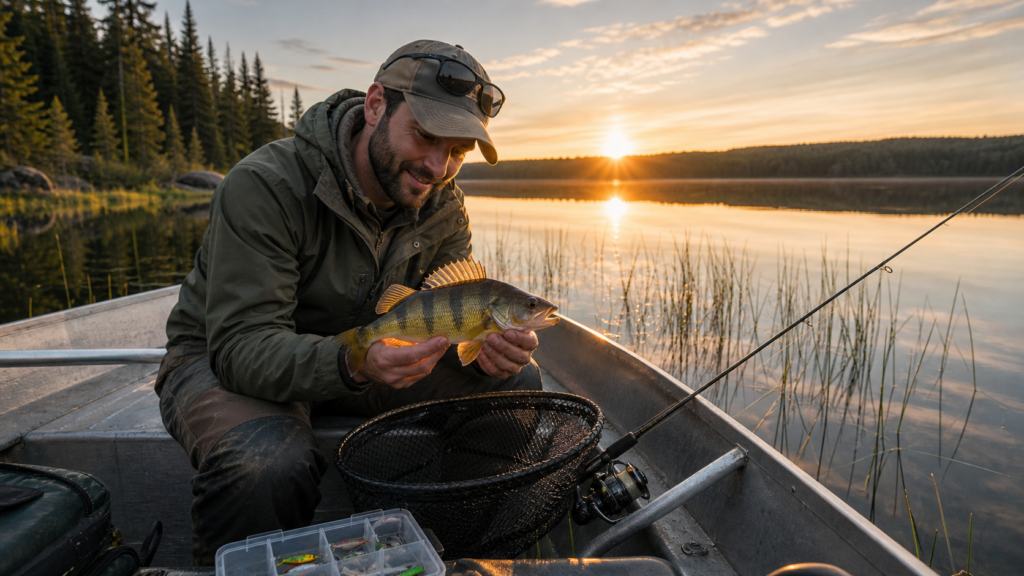
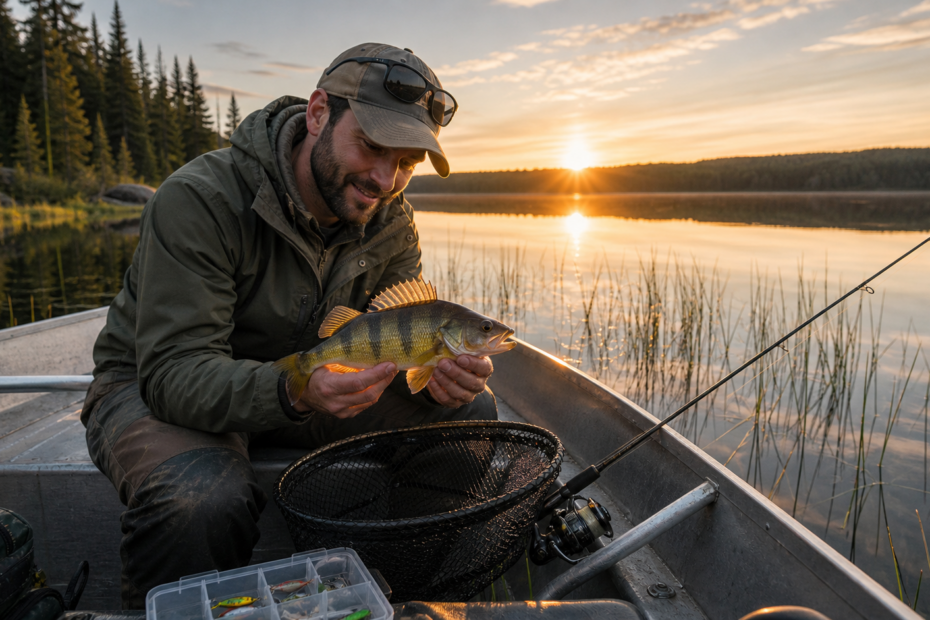
Perch fishing in Canada is one of the best ways to build a reliable day on the water: simple tackle, schooling fish, family-friendly action, and enough seasonal puzzle to keep experienced anglers interested.
This 2026 guide is the broad perch fishing hub. It covers where perch hold, how seasons change the bite, which tackle actually matters, how to plan ice-fishing and open-water trips, and where to check official rules before keeping fish. For species identification and the dedicated yellow perch profile, use our Yellow Perch Fishing in Canada guide.
Quick takeaways
- Best beginner setup: ultralight or light spinning rod, 4-6 lb line, small jigs, slip floats, and a simple tackle tray.
- Best open-water pattern: weed edges, shallow flats, soft-bottom transitions, docks, and points near deeper water.
- Best ice pattern: basin edges, weedlines that stay green, and schools roaming just off bottom.
- Biggest mistake: chasing old hotspot lists before checking current access, ice safety, limits, bait rules, and waterbody exceptions.
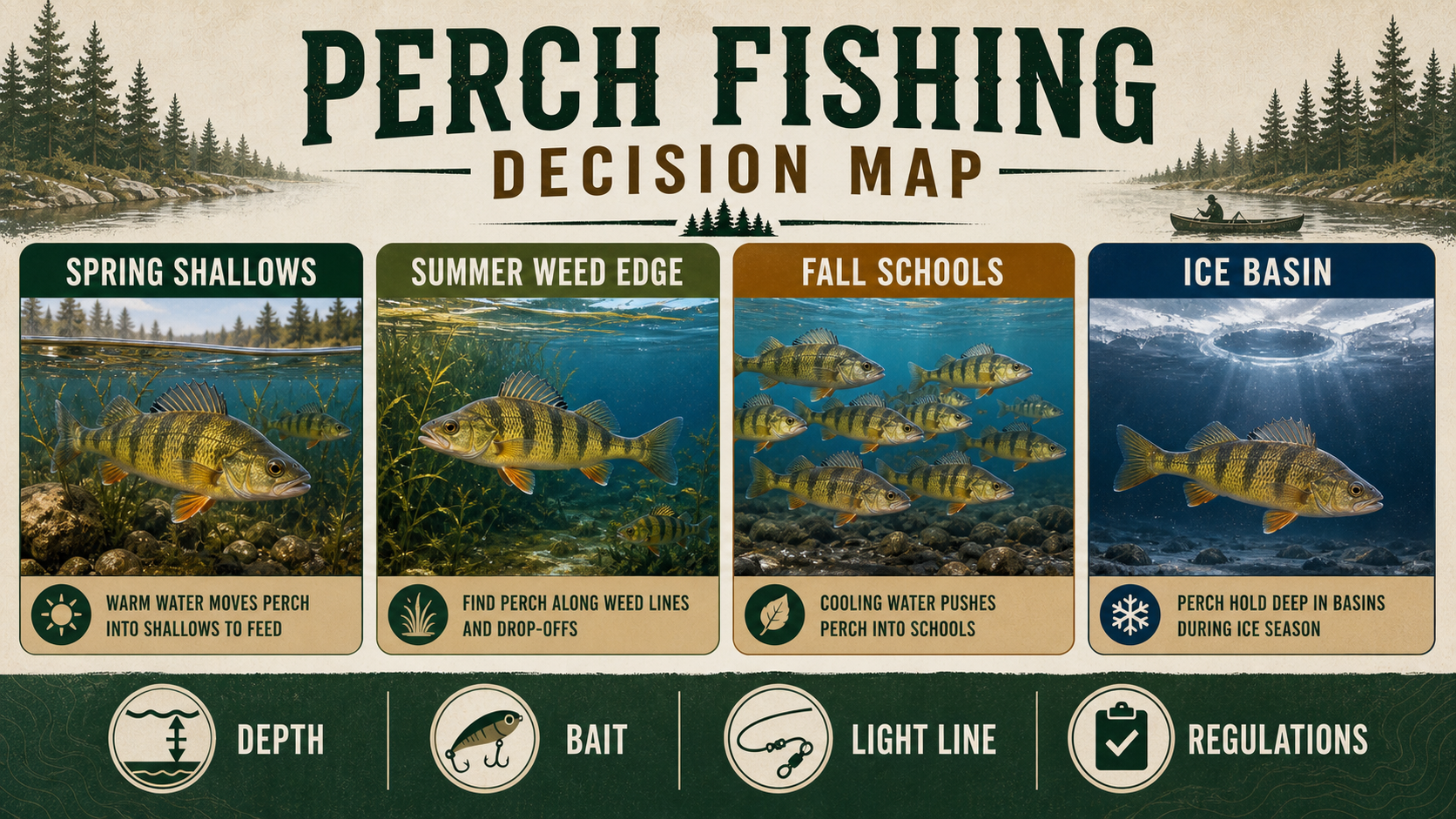
Perch Fishing Decision Map
Why Perch Fishing Works So Well in Canada
Perch are approachable because they school, feed during daylight, and respond to small presentations. They are also a good teaching fish because mistakes show up fast. Use tackle that is too heavy and the bites feel like nothing. Fish the wrong depth and the school disappears. Ignore rules and the day can become expensive.
That mix makes perch perfect for Canadian anglers who want action without turning the trip into a gear arms race. A dock, a weed edge, a canoe, an ice hut, or a small aluminum boat can all produce if the season and water line up.
The Guide’s Log: Find the School Before You Change the Lure
The trap with perch is changing lures too quickly. Perch are often not scattered evenly across a lake. They are bunched by food, weeds, bottom type, temperature, and light. When you find them, fishing can feel easy. When you miss the school by 50 yards, it can feel like the lake is empty.
That is why the first job is not picking the perfect colour. The first job is coverage. In open water, move along weed edges, small points, and soft-bottom transitions until you contact fish. Through the ice, drill enough holes to learn whether the fish are tight to weeds, roaming a basin, or sliding along a breakline.
Once you find fish, then finesse matters. Drop line size. Tip a tiny jig. Pause longer. Raise the bait above the school instead of burying it in bottom debris. Perch will often tell you what they want, but only after you find where they are actually living that day.
Where to Find Perch in Canada
Most perch fishing starts with structure and food. Yellow perch often relate to weeds, flats, shoals, soft-bottom areas, docks, basin edges, and small baitfish. Bigger perch may sit just outside the obvious small-fish schools, especially in clear water or pressured lakes.
| Water type | Why perch use it | Best first move |
|---|---|---|
| Weed edge | Food, cover, and ambush lanes | Cast small jigs or drift slip floats along the outside edge |
| Shallow flat | Spring feeding and warm-water movement | Fan-cast and move until small fish or bites confirm life |
| Soft-bottom transition | Invertebrates and roaming schools | Use tiny jigs, dropper rigs, or electronics where legal and practical |
| Ice basin | Winter schools move over deeper food zones | Drill a grid and fish just off bottom before changing baits |
Best Seasons for Perch Fishing
Perch can be caught in every season where regulations and access allow it, but the pattern changes. The same lake that gives up perch around shallow weeds in spring may require deeper basin fishing in winter.
- Spring: look shallow when water warms and perch move toward protected bays, flats, and spawning areas.
- Summer: work weed edges, docks, shaded pockets, and deeper transitions near food.
- Fall: schools often tighten again as water cools and baitfish movement changes.
- Winter: perch may roam basins, weedlines, and breaklines. Safety and local ice knowledge matter more than any lure.
The Local Secret
Small Perch Can Hide Bigger Perch
If every fish is tiny, do not just change bait. Slide slightly deeper, fish the outer edge of the school, or move to the next transition. Bigger perch often sit close enough to share the food source but far enough away to avoid the chaos.
Best Perch Fishing Techniques
Good perch fishing is usually simple. Use small presentations, light line, and enough movement to stay with the school. If the fish are active, do not overcomplicate it. If they are tentative, slow down and fish cleaner.
| Technique | Use it when | Mistake to avoid |
|---|---|---|
| Tiny jig and bait | Perch are close to bottom or weeds | Using a jig too heavy for light bites |
| Slip float | Fish are suspended near docks, weeds, or shallow flats | Setting the bait below the strike zone |
| Small spoon through ice | You need flash to call fish in | Jigging too aggressively once fish arrive |
| Dropper rig | Perch are picky but grouped | Making the rig too bulky for small mouths |
Perch Fishing Gear That Actually Matters
You do not need a large tackle box for perch. You need light enough gear to detect bites and small enough presentations to match the fish. Start with one open-water kit and one ice-fishing kit only if you actually fish both seasons.
Affiliate gear picks
Useful Perch Fishing Gear to Compare
CanadaFever may earn a commission if you buy through these links, at no extra cost to you. Check local bait and gear rules before buying or packing.
Ice Fishing for Perch
Ice fishing can be one of the best perch patterns in Canada, but it is also where planning mistakes carry the most risk. Ice thickness, current, pressure cracks, snow cover, wind, access routes, and local conditions control the decision.
For winter planning, pair this page with our Ice Fishing in Canada guide and the Best Ice Fishing Gear Canada guide. Electronics can help once you are on safe ice, but they do not replace local safety checks.
Perch Fishing Hot Spots in Canada
Hotspot lists are useful for ideas, not guarantees. Perch populations, access, harvest pressure, ice conditions, and local rules change. Use the examples below as starting points, then verify the current rules and local conditions.
- Ontario: Lake Simcoe, Lake Erie, Lake Nipissing, Lake Couchiching, and many smaller family lakes can produce perch when access and rules line up.
- Manitoba: prairie and shield lakes can offer winter and open-water perch patterns, but local access and regulation checks matter.
- Saskatchewan: reservoirs and prairie lakes can hold perch schools around weeds, flats, and basin transitions.
- British Columbia: check freshwater regulations carefully because local species management and regional rules vary.
If you are still choosing a province or lake, start with Best Fishing Spots in Canada. If you are new to fishing, use Fishing for Beginners in Canada before buying tackle.
Perch Fishing Regulations and Licence Checks
Perch regulations are not the same everywhere. A province may have broad rules, zone rules, waterbody exceptions, bait restrictions, ice-fishing rules, size rules, and possession limits. Parks and conservation areas may add another layer.
The Pre-Trip Protocol
Perch Trip Rule Checklist
- Confirm the province, zone, exact lake or river, and date.
- Check whether perch are open, protected, or managed with local exceptions.
- Verify possession limits, size rules, bait rules, live bait rules, and ice-fishing rules.
- Check access, parking, launch rules, ice conditions, and local safety notices.
- Carry the right licence and keep a measuring tool where you can use it quickly.
Guided Add-Ons Around a Perch Trip
Perch trips are often self-guided, but travellers can add fishing charters, lake tours, or outdoor experiences around a Canada trip. Use these only as add-ons, not as substitutes for checking licences and local fishing rules.
Sponsored experience links
Add a Guided Outdoor Day Around Your Fishing Trip
Use these links for guided add-ons near travel days. Availability does not guarantee perch fishing access, legal harvest, or safe conditions.
CanadaFever may earn a commission if you book through sponsored Viator links, at no extra cost to you.
Official Sources
Use these official sources as starting points. The final answer depends on your exact province, zone, waterbody, date, licence, and activity.
- Ontario Fishing Regulations Summary
- Manitoba fisheries and angling information
- Saskatchewan angling information
- British Columbia freshwater fishing regulations
FAQ
What is the best bait for perch fishing?
Small live bait can work well where legal, but tiny jigs, small spoons, and soft plastics also catch perch. Match the bait to depth, water clarity, season, and local bait rules.
What is the best time of year to fish for perch in Canada?
Spring, fall, and safe-ice periods can all be strong. Summer can still produce around weeds, docks, and deeper transitions. Always separate fishing pattern advice from legal open-season rules.
What line should I use for perch?
Many perch anglers use 4-6 lb line in open water and lighter line for some ice-fishing situations. Go light enough to detect bites but strong enough for the cover, ice, and accidental larger fish in the same water.
Can you keep perch in Canada?
Sometimes, but the answer depends on the province, zone, waterbody, date, licence, size rules, possession limits, and exceptions. Check the official regulation source before keeping fish.
Is perch fishing good for beginners?
Yes. Perch are one of the better beginner fish because the tackle can be simple and the action can be steady. Beginners should still learn fish identification, local rules, safe handling, and ice or boating safety before the trip.
Final Advice
The best perch fishing days are built on simple decisions: find the school, fish light, stay mobile, and verify the rules. Do that before chasing another lure colour or another old hotspot name.
For the next step, use the Yellow Perch Fishing in Canada species guide for identification, then pair this article with your province’s official regulation source before fishing.