
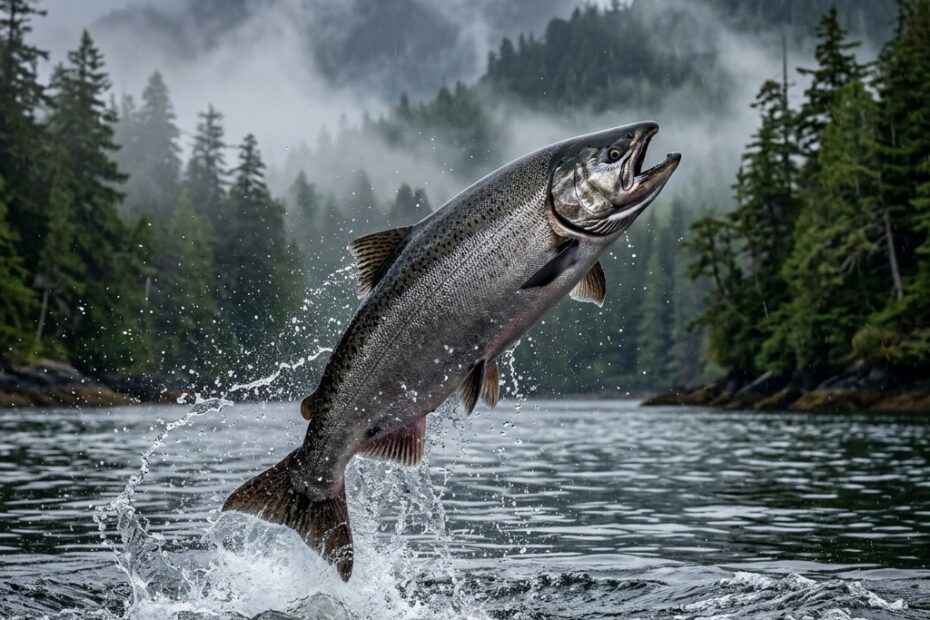
Discover the best salmon fishing lodges in British Columbia. Expert guide to fly-in camps in Haida Gwaii, saltwater trolling gear, ocean regulations, and booking tips.
- Use Salmon Lodges in British Columbia to match destination, season, access, and budget to the kind of trip you actually want
- Check licences, local rules, travel logistics, weather, and booking windows before locking in dates
- Compare locations by practical fit: target species or activity, remoteness, services, safety, and backup options
Bottom line Salmon Lodges in British Columbia becomes easier when you choose the destination around timing, access, rules, and your real trip style
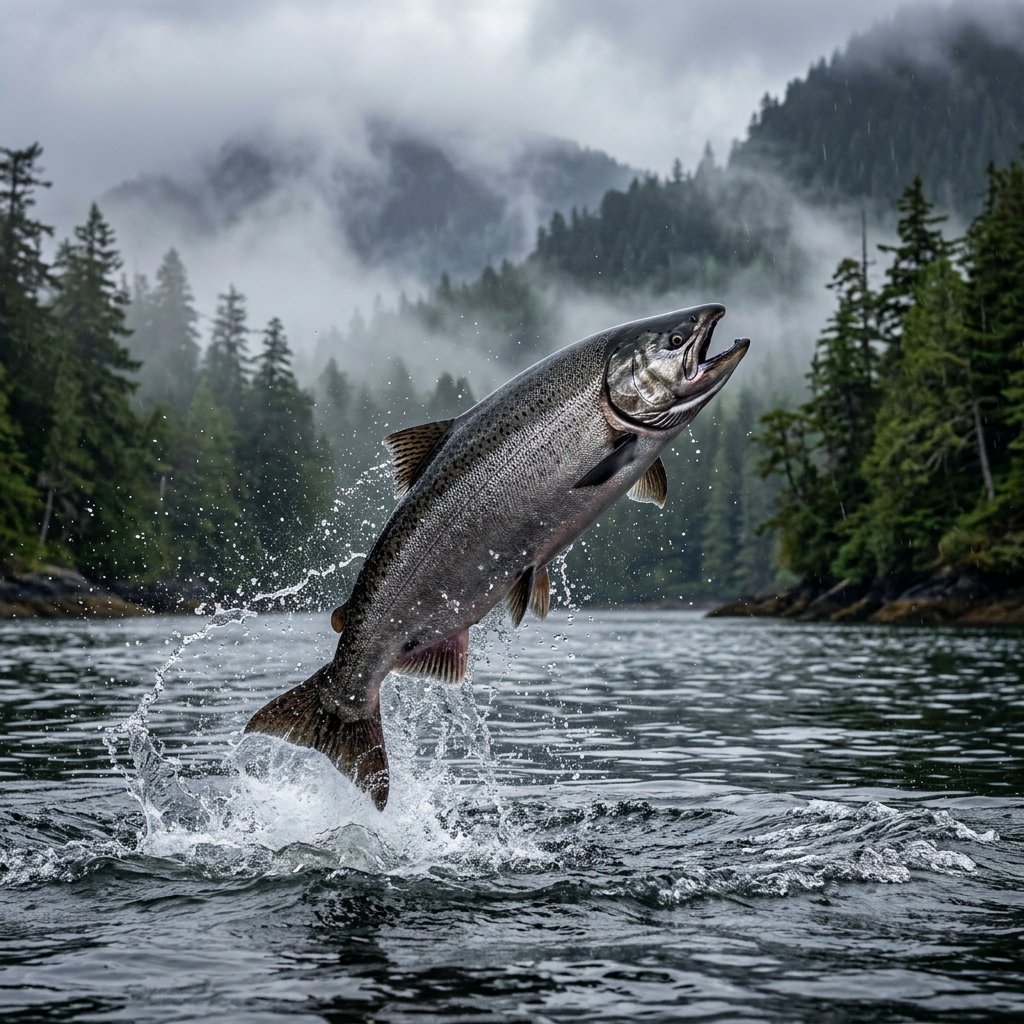
When it comes to saltwater salmon fishing, British Columbia is the undisputed premier destination in North America. The rugged coastline of the Pacific Northwest, with its maze of deep fjords, tidal passages, and isolated islands, serves as the primary highway for millions of migrating Pacific salmon. Here, Chinook (King), Coho (Silver), Sockeye, Pink, and Chum salmon return year after year, offering anglers some of the most exciting sportfishing on earth.
To truly experience this wilderness fishery, serious anglers seek out BC’s legendary salmon fishing lodges. These outfitters range from remote, fly-in floating resorts in subarctic channels to historic coastal estates. A stay at a BC salmon lodge is a unique package: all-inclusive luxury, gourmet dining, helicopter or floatplane access, and professional guiding using heavy downriggers to target fish that regularly exceed 30, 40, or even 50 pounds.
However, because the coastline is so vast and lodging packages represent a significant investment, picking the right outfitter is critical. In this guide, we break down the best salmon lodges in British Columbia for 2026, the specific gear you need, and the tidal patterns and regulations you must master to land a legendary trophy salmon.
⚡ Key Takeaways: BC Salmon Lodges
- Location is Key: Remote northern regions like Haida Gwaii and Milbanke Sound offer the earliest run timings and the largest average size of Chinook salmon, while southern Vancouver Island is more accessible.
- The Tyee Club: A “Tyee” is a Chinook salmon weighing over 30 pounds. Landing a Tyee on traditional tackle is the ultimate badge of honor for a BC salmon angler.
- Attractors & Gear: Trolling with heavy-duty electric downriggers, 11-inch flashers, and spoons or herring is the primary tactical presentation.
- New Affiliate ID: For all gear purchases, use the updated tracking ID `nehir-canadafever-20` on Amazon.
Where this fits: Use the main lodge pillar first if you are comparing BC salmon lodges against inland fishing lodges, fly-in trips, family resorts, and licence needs. Start with the Fishing Lodges in Canada pillar when you need the broader framework for region, species, access, season, budget, licence rules, and lodge style.
The Core Salmon Regions of British Columbia
BC’s coastline can be divided into three primary fishing sectors, each with its own target species, optimal seasons, and travel logistics.
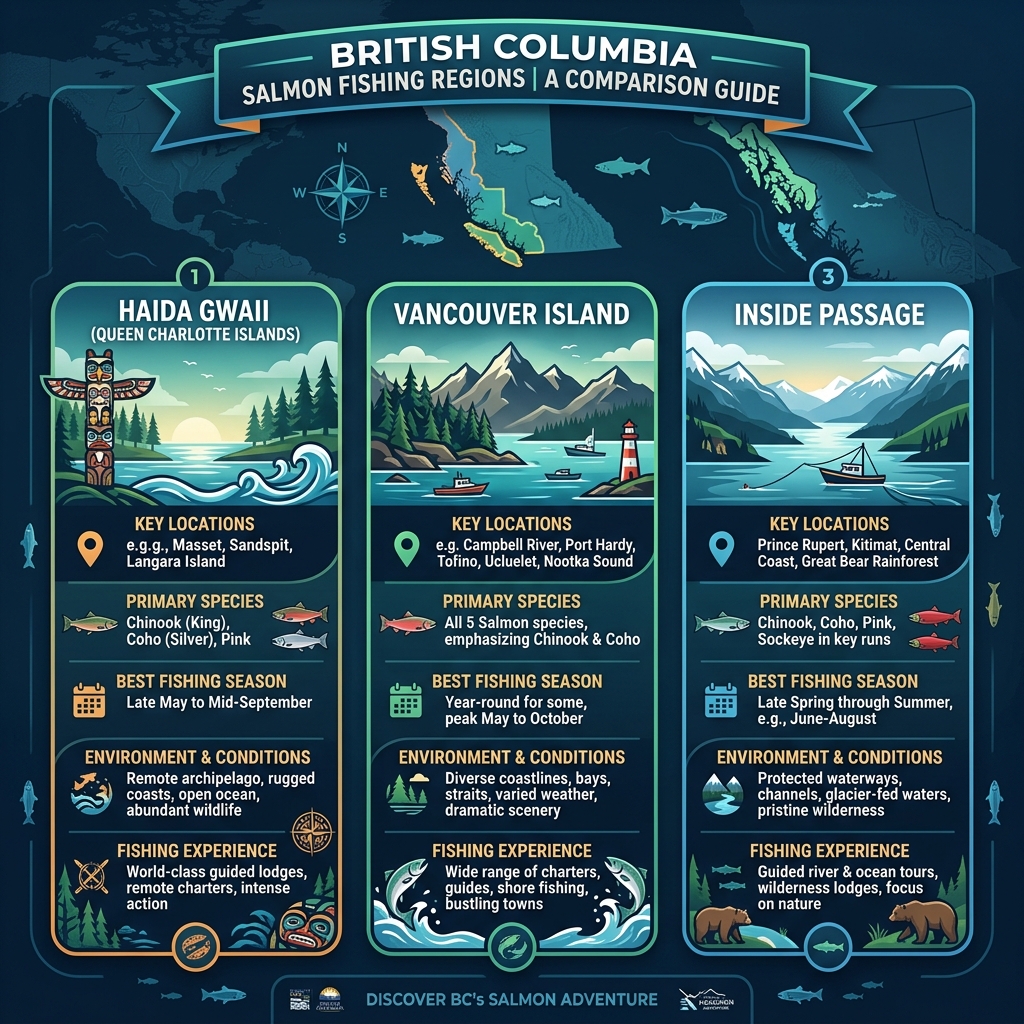
Choosing your region determines what months you should book and the realistic size of the salmon you will catch.
1. Haida Gwaii (The Queen Charlotte Islands)
Positioned on the edge of the continental shelf, Haida Gwaii is the first intercept point for salmon migrating south from Alaska. The nutrient-rich ocean currents attract massive schools of baitfish, which in turn hold giant Chinook and Coho salmon. Lodges here are remote, fly-in only, and open from late May to early September. It is the premier region for catching giant Chinook over 40 pounds.
2. The Central Coast (Milbanke Sound & Bella Bella)
The “Great Bear Rainforest” region is characterized by deep fjords and islands sheltered from the open Pacific. The fishing here is highly consistent, targeting salmon traveling through inside passages. It offers excellent halibut and groundfish opportunities alongside salmon, with lodges typically operating on floating barges anchored in calm wilderness bays.
3. Vancouver Island (Campbell River & Nootka Sound)
More accessible but no less productive. Campbell River is historic, known as the “Salmon Capital of the World,” where anglers have targeted salmon since the late 1800s. Nootka Sound, on the rugged west coast of the island, offers deep water trolling inside sheltered sounds as well as open ocean fishing. Access ranges from drive-to resorts to fly-in outposts.
The Guide’s Log
We were trolling near Cape St. James in southern Haida Gwaii under a low fog. The downrigger cables were humming, set at 110 feet in deep water. Suddenly, the port-side rod loaded with a heavy mooching reel snapped straight up—the release clip had popped. Before the client could even touch the rod, the blank bent double in a violent, pulsating arc. The line counter on my reel was dropping at an alarming speed: 150 feet, 250 feet, 400 feet.
For forty minutes, it was a battle of attrition. The fish made three long runs, keeping us on our toes in the heavy swells. When the silver flank finally rolled near the boat and we slid the net under it, the scale confirmed a 42-pound Tyee Chinook. That silence right after a big salmon hits, followed by the sound of the line peeling, is the ultimate drug for a BC saltwater angler.
The Best Salmon Lodges in British Columbia (2026 Rankings)
After auditing the top saltwater outfitters across the province, we have selected the four best salmon fishing lodges in British Columbia, chosen for their fishing grounds, professional guides, lodging comfort, and accessibility.
1. Queen Charlotte Lodge (Haida Gwaii)
Situated in Naden Harbour on the northern tip of Graham Island, Queen Charlotte Lodge (QCL) is the gold standard of fly-in wilderness luxury. QCL is famous for its immediate access to the rich fishing grounds of Cape Edenshaw and Bird 2, where migrating Chinook must pass as they enter Hecate Strait.
QCL offers a turnkey experience: you fly from Vancouver on a private charter jet to Masset, followed by a scenic helicopter flight directly to the lodge. Guests fish from custom-built, 22-foot aluminum boats equipped with high-end GPS electronics and Scotty electric downriggers. After a long day on the water, the lodge provides fine dining, a luxury spa, and open bars. It is the premier choice for corporate groups and anglers seeking a high-end, guided adventure.
- Location: Naden Harbour, Haida Gwaii
- Access: Private jet from Vancouver, then helicopter charter
- Target Species: Giant Chinook (King) and Coho (Silver)
- Lodging Style: Five-star wilderness lodge and private log chalets
2. King Pacific Lodge (Milbanke Sound)
For those who want a pure wilderness experience in the heart of the Great Bear Rainforest, King Pacific Lodge is unmatched. This unique floating lodge is towed into Milbanke Sound every summer, positioning guests directly on the migration route of the legendary “Bella Coola” Chinook run.
The fishing here is characterized by calm waters, deep fjords, and immediate access to bait balls. King Pacific Lodge offers both guided and self-guided fishing packages, allowing experienced anglers to run their own boats. The lodge itself features comfortable, wood-finished rooms, a large dining room serving local seafood, and a massive dock where guides prepare your catch for custom processing (vacuum sealing and flash freezing for travel).
- Location: Milbanke Sound, Central Coast
- Access: Floatplane from Vancouver or Prince Rupert
- Target Species: Chinook, Coho, Halibut, and Lingcod
- Lodging Style: Floating wilderness resort anchored in a sheltered bay
3. Toba Wilderness Lodge (Toba Inlet)
If you are looking for dramatic mountain scenery, deep fjords, and a drive-to/boat-in option, Toba Wilderness Lodge is the premier destination. Toba Inlet is a stunning glacial fjord on the mainland coast, surrounded by towering waterfalls and snow-capped peaks.
The lodge is situated near the mouth of Toba River, which attracts massive runs of Sockeye, Coho, and Pink salmon during late summer. Toba Wilderness Lodge features high-end wooden cabins, a private marina, and expert guides who target salmon in the fjord seams. It is an exceptional lodge for couples and families who want a mix of world-class salmon fishing, wildlife viewing (including grizzly bears), and luxury wilderness accommodation.
- Location: Toba Inlet, Sunshine Coast / Inside Passage
- Access: Drive to Campbell River, followed by water taxi or floatplane
- Target Species: Chinook, Coho, Pink, and Sockeye
- Lodging Style: All-inclusive coastal log cabins and private chalets
4. Painters Lodge (Campbell River)
For a historic, accessible, and iconic salmon experience, Painters Lodge in Campbell River is unparalleled. Since 1938, this historic resort has hosted legendary anglers, celebrities, and royalty. It sits directly on the banks of Discovery Passage, where massive schools of salmon must squeeze through a narrow channel on their way south.
Painters Lodge is the home of the famous **Tyee Club of British Columbia**. Guests can book traditional Tyee trips: fishing from small wooden rowboats (no motors allowed) in the Tyee pool during August and September, using light tackle to target Chinook over 30 pounds. The lodge also offers standard downrigger charters in Discovery Passage, a large heated pool, ocean-view dining, and easy drive-to access, making it the most cost-effective and flexible option on our list.
- Location: Campbell River, Vancouver Island
- Access: Drive-to (3-hour drive from Victoria, or fly directly to Campbell River)
- Target Species: Chinook (Tyee pool), Coho, and Pink salmon
- Lodging Style: Historic coastal resort with full amenities and ocean-front rooms
Tactical Breakdown: Saltwater Downrigger Trolling
How electric downriggers control depth and present lures to deep ocean salmon.
Animation: The mechanics of ocean salmon downrigger trolling, showing the strike and subsequent line release.
Essential Gear for BC Salmon Trolling
Saltwater salmon fishing is highly demanding on tackle. The combination of heavy downrigger weights, large flashers, and the explosive power of migrating salmon means that cheap gear will break or seize up in the salt environment. Professional guides rely on heavy-duty, saltwater-rated reels and rods. For a comprehensive overview of the rods, reels, and rigging, consult our detailed guide to the best salmon trolling setup in BC.
The Level-Wind Line Counter Reel
While some traditionalists prefer single-action mooching reels (often called “knuckle-busters” due to their 1:1 direct drive spools), modern charter boats rely almost exclusively on heavy-duty conventional reels equipped with line counters.
The line counter is critical for depth control. It allows you to track the exact “setback”—the distance your flasher trails behind the downrigger cannonball. If you hit a school of Chinook at a 30-foot setback, you can instantly replicate that exact distance on your other rods, maximizing your time in the strike zone.
🎣 The Professional Standard
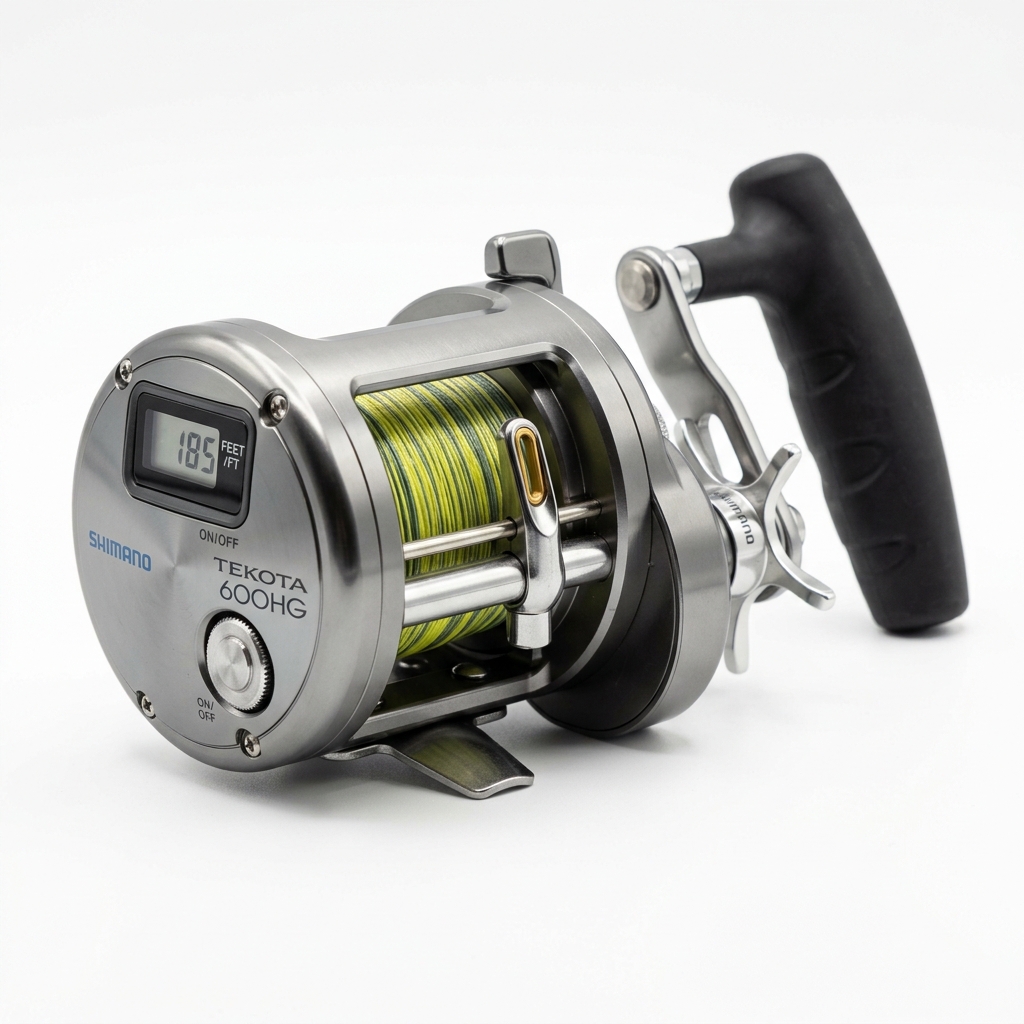
Shimano Tekota 600A Line Counter Reel
The Shimano Tekota 600A is the undisputed king of Pacific Northwest trolling reels. It features a rigid metal frame, a silky-smooth drag system designed to handle the blistering runs of mature Chinook, and an analog line counter that stays accurate in all weather conditions. Plated and sealed to withstand saltwater environments, it is the exact reel found on the decks of BC’s premier charter fleets.
Affiliate Disclaimer: As an Amazon Associate, CanadaFever earns from qualifying purchases. This helps support our Canadian ocean research at no extra cost to you.
Trolling Attractors & Lures
To consistently attract salmon at depth, you need an attractor system:
- The Flasher: An 11-inch angled plastic blade (like the Hot Spot Flasher) that rotates in wide circles. The flash and low-frequency vibration mimic a feeding salmon, drawing fish in from distance. Use “Glow” or “UV” green splatter patterns for deep water.
- The Leader: A stiff 30 lb fluorocarbon leader is required. The stiffness is essential to transfer the rolling motion of the flasher down to the trailing lure.
- The Lures: Standard spoons (like the Gibbs Skinny G or Silver Horde) in sizes 3 to 4.5 inches are highly effective. Alternatively, a “hoochie” (plastic squid skirt) or frozen anchovy rigged in a plastic teaser head provides a natural roll that salmon find irresistible.
Licensing, Regulations, and Ocean Conservation
Saltwater fishing in British Columbia is managed by the federal **Fisheries and Oceans Canada (DFO)**. Salish Sea and coastal regulations are highly complex, with frequent updates to protect wild salmon stocks, rockfish, and marine mammals.
Tidal Waters Sport Fishing License
All saltwater anglers must have a valid BC Tidal Waters Sport Fishing License. If you are keeping any Chinook salmon, you must also purchase a **Pacific Salmon Conservation Stamp** and attach it to your license. Licenses must be printed and carried at all times, and all Chinook catches must be recorded immediately in ink on the license. To understand how licensing works across Canada, consult our guide on how to obtain a fishing license in Canada.
Barbless Hook Mandate
To facilitate the safe release of wild or undersized fish, **all saltwater salmon fishing in British Columbia must be done with barbless hooks**. If you buy lures or bait rigs that come with barbed hooks, use pliers to pinch the barbs completely flat before fishing. DFO officers perform frequent hook audits on the water.
The Pre-Trip Protocol: Saltwater Salmon Conservation
- Verify RCA Boundaries: BC has established numerous Rockfish Conservation Areas (RCAs) where all fishing is strictly banned to protect slow-growing rockfish. Check the DFO maps before you deploy downriggers.
- Identify Hatchery Fish: Many regions only allow the retention of “hatchery” salmon. Hatchery fish have their small adipose fin (on the back near the tail) clipped off as juveniles. If the adipose fin is intact, it is a wild salmon and must be released immediately.
- Orca Buffer Zones: Saltwater vessels must maintain a minimum distance of 400 meters from Killer Whales (Orcas) in BC coastal waters. If Orcas approach your boat, reel up your gear and slow down.
- Catch & Release Safety: Use a landing net with rubber-coated mesh to prevent scale loss, and keep the fish in the water as much as possible during unhooking. Read more tips in our Catch & Release Guide.
If you are planning to fish for other species in fresh water, check out our Ontario Fishing License Guide to compare provincial fresh water rules.
Book a Vancouver Island Charter Excursion
Want to combine a luxury lodge stay with an expert day-charter out of Campbell River or Victoria? Check out top-rated guided salmon charters on Vancouver Island for immediate booking.
CanadaFever is a Viator Partner (ID: P00210641). We may earn a commission if you book through our links, at no extra cost to you.
Frequently Asked Questions (FAQ)
When is the peak season for BC salmon lodges?
Peak season is July and August. This is when the largest runs of Chinook (King) and Coho (Silver) salmon travel down the coast. Northern lodges (Haida Gwaii) start catching big fish in June, while southern Vancouver Island peaks in late August and September.
What is a Tyee?
A Tyee is a Chinook (King) salmon that weighs 30 pounds or more. Tyees are the breeding giants of the species, and catching one is considered the pinnacle of BC saltwater angling. The famous Tyee Club of BC in Campbell River enforces strict rules for landing these giants, including using a rowboat and single barbless hooks.
Do I need to bring my own fishing gear to a BC salmon lodge?
No. All-inclusive lodges provide top-of-the-line saltwater gear, including mooching rods, line counter reels (like the Shimano Tekota), flashers, lures, and premium bait. Guides handle all the rigging and boat operations. You only need to bring warm, waterproof clothing and personal items.
What is the difference between hatchery and wild salmon?
Hatchery salmon are raised in rearing facilities and released as smolts. Before release, their small adipose fin (on the back near the tail) is clipped off. Wild salmon retain their adipose fin. Many BC ocean regulations require the immediate release of all wild salmon, only allowing retention of adipose-clipped hatchery fish.
Is a fishing license included in the lodge package price?
Usually no. While lodges help you register, you must purchase and print your federal BC Tidal Waters Sport Fishing License and Pacific Salmon Conservation Stamp online before your trip. The cost is paid directly to the government.
BC salmon lodges can feel expensive until you compare what the package actually handles. Use the best all-inclusive fishing lodges in Canada guide to check guide time, transfers, fish processing, meals, weather policy and hidden costs across Canada.
Conclusion
From the wild, mist-shrouded reefs of Haida Gwaii to the historic Tyee pool of Campbell River, a trip to a British Columbia salmon lodge is a bucket-list experience for every serious sportfisherman. By selecting the right outfitter for your target run timing, equipping your rods with line counter reels like the Shimano Tekota, and respecting local conservation rules, you will experience the greatest saltwater salmon fishery on Earth.
Prepare your saltwater gear, purchase your salmon stamp, and book your wilderness flight to hook the silver giant of your dreams on the spectacular Pacific coast of British Columbia.
Affiliate & Expert Disclaimer: CanadaFever is a participant in the Amazon Services LLC Associates Program and a Viator Partner. We may earn a commission if you purchase or book through our links, at no extra cost to you. This content is intended for informational purposes and reflects field-tested tactics. Always adhere to local fishing regulations and safe boating practices. (Assisted by AI for research formatting).