
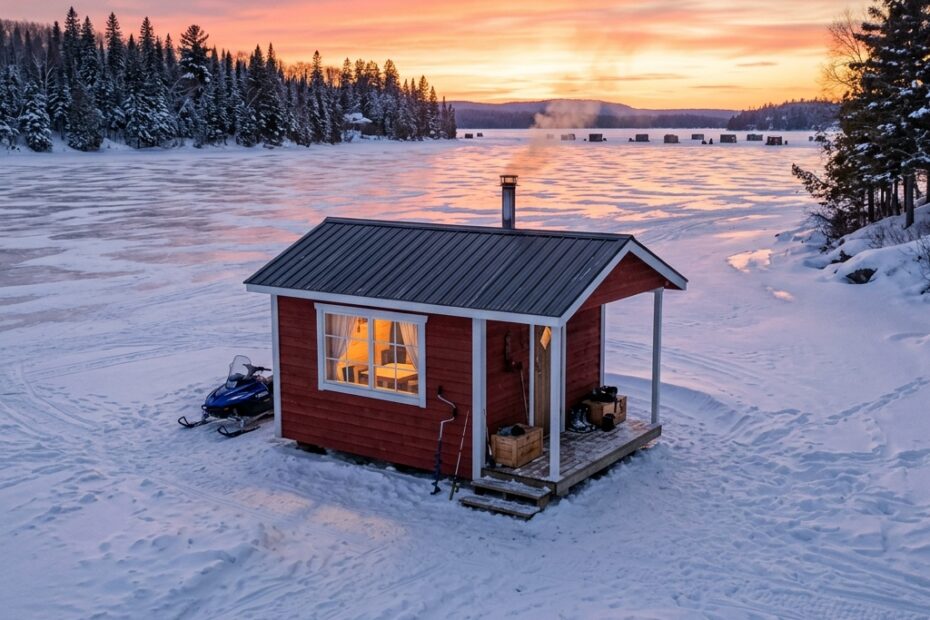
Discover average ice fishing hut rental prices in Ontario. Detailed price comparison for Lake Simcoe, Lake Nipissing sleeper bungalows, and Bay of Quinte.
- Use Ice Fishing Hut Rental Prices in Ontario to match destination, season, access, and budget to the kind of trip you actually want
- Check licences, local rules, travel logistics, weather, and booking windows before locking in dates
- Compare locations by practical fit: target species or activity, remoteness, services, safety, and backup options
Bottom line Ice Fishing Hut Rental Prices in Ontario becomes easier when you choose the destination around timing, access, rules, and your real trip style
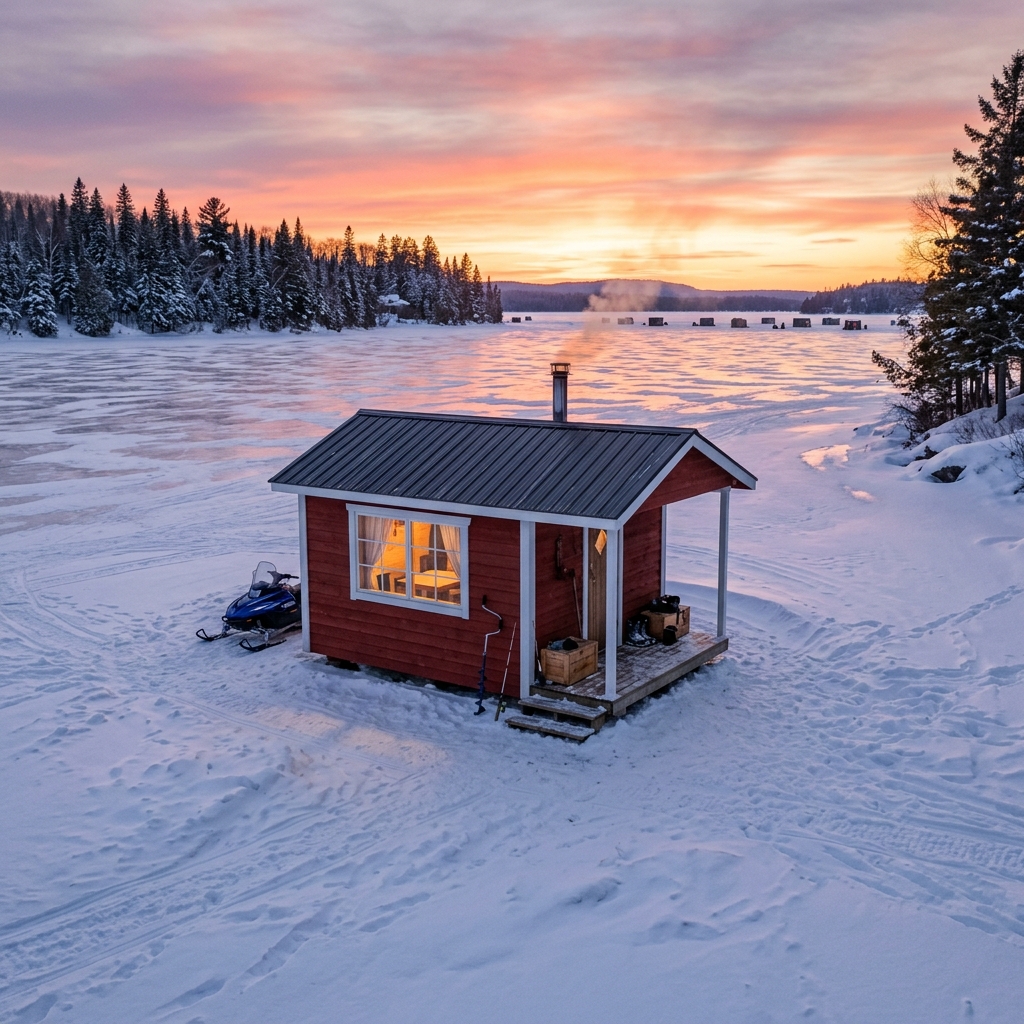
When the cold winds of December sweep across Ontario, the province’s lakes undergo a spectacular transformation. By early January, massive bodies of water like Lake Simcoe, Lake Nipissing, and the Bay of Quinte freeze over, forming a thick sheet of ice that supports a thriving hardwater fishing culture. For many anglers, the ultimate way to experience this season is by renting an ice fishing hut.
Match the rod to shelter space and target species with the Canada ice-rod buyer guide.
Renting a hut removes the barriers to entry for ice fishing. Instead of buying expensive augers, thermal shelters, heaters, and specialized sleds, you can simply walk or ride out to a pre-heated, pre-drilled shelter. However, because rates and services vary significantly between day-use huts and overnight sleeper bungalows, understanding the pricing structures is essential for planning your trip.
In this guide, we break down average ice fishing hut rental prices in Ontario for 2026, compare the top destinations, explain what is typically included, and provide a critical safety guide for ice thickness.
⚡ Key Takeaways: Ontario Ice Hut Rentals
- Day Huts vs. Sleepers: Day huts average $60 to $100 per person per day. Overnight sleeper bungalows (common on Lake Nipissing) average $200 to $250 per person for a full weekend package (2 nights).
- Inclusions: Most rental packages include heated transit to the hut (via snowcat, bombardier, or snowmobile sled), pre-drilled fishing holes, propane heating, and live bait.
- Ice Safety Limits: A minimum of 4 inches of clear blue ice is required for foot travel, 5 inches for snowmobiles or ATVs, and 8 to 12 inches for small cars. Use our interactive calculator below to evaluate safety limits.
- Removal Deadlines: The Ontario Ministry of Natural Resources (MNRF) enforces strict ice hut removal dates in March (ranging from March 1 to March 31 depending on the Fisheries Management Zone).
Ontario Ice Fishing Hut Pricing by Region
Ontario’s ice fishing scene is concentrated on a few major lake systems, each offering a distinct style of outfitting. Day-trip operators dominate in the south, while overnight sleeper bungalows are a cultural staple in northern regions.
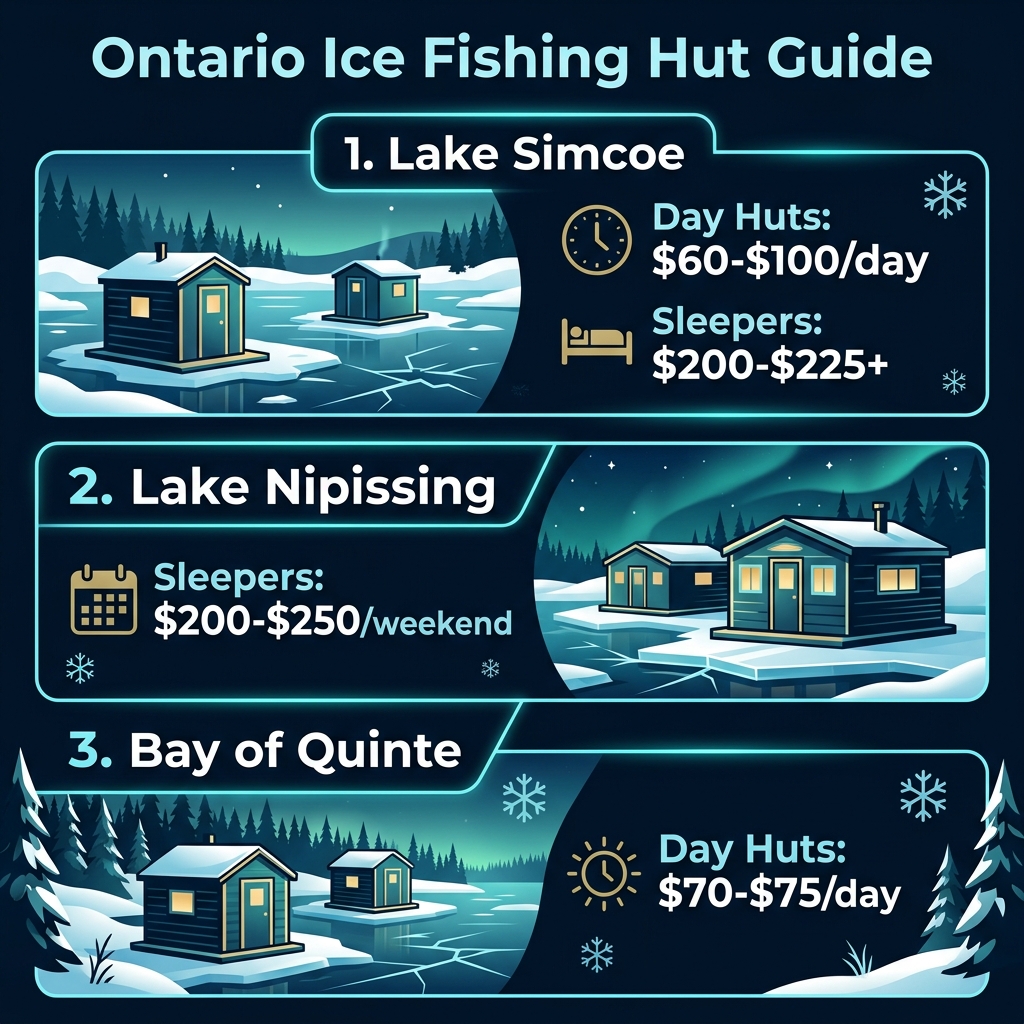
Here is a detailed breakdown of the three top ice fishing hubs in Ontario and their average rental costs:
1. Lake Simcoe (The Hardwater Capital)
Located just an hour north of Toronto, Lake Simcoe is widely considered the ice fishing capital of North America. It is famous for its prolific yellow perch fishery, as well as lake trout and lake whitefish. Because of its proximity to the Greater Toronto Area (GTA), Simcoe has a highly developed outfitting industry, concentrated around Georgina, Beaverton, and Barrie.
- Day Hut Rates: $60 to $100 per person per day. Weekend and holiday rates sit at the higher end ($90–$100), while midweek discounts are common ($60–$75).
- Sleeper Bungalow Rates: $200 to $225+ per person for a weekend package (usually Friday noon to Sunday noon). Some operators charge flat rates per bungalow (e.g., $1,200 to $1,400 for a 4-person cabin).
- Popular Operators: Floyd Hale’s Fish Huts (Beaverton), Terry Goy Blue Ice Huts (Sutton).
2. Lake Nipissing (Sleeper Bungalow Central)
Located in northern Ontario near North Bay, Lake Nipissing is famous for its “ice bungalow” culture. These are large, insulated wooden cabins set up on the ice, featuring bunk beds, propane stoves, kitchen counters, and pre-drilled fishing holes directly inside the cabin. Anglers sleep, cook, and fish in comfort for days without stepping outside.
- Sleeper Bungalow Rates: $200 to $250 per person for a 2-night weekend package (based on minimum 4-person occupancy). Midweek rates are cheaper, averaging $90 to $110 per person per day.
- Target Species: Walleye, Northern Pike, Yellow Perch, Lake Whitefish.
- Popular Operators: Glen Echo Cottages, Lake Nipissing Ice Bungalows, South River Resort.
3. Bay of Quinte (Trophy Walleye Day Huts)
The Bay of Quinte, located on the northern shore of Lake Ontario, is world-famous for its massive trophy walleye. During the winter, migratory walleye weighing 10 to 14 pounds move through these channels, making it a bucket-list destination. Outfitting here is focused almost entirely on day-use huts placed along key current channels and drop-offs.
- Day Hut Rates: $70 to $80 per person per day. Because currents in the bay make the ice volatile, operators closely monitor ice safety and guide guests to active spots.
- Guided Fishing Packages: Fully guided experiences including electronic sonars (flashers) and premium rods average $450 to $500 per day for 1 to 2 anglers.
- Popular Operators: Merland Park Resort, Sunset Farms and Cabins.
| Destination | Hut Type | Average Cost (CAD) | Target Species | Peak Season |
|---|---|---|---|---|
| Lake Simcoe | Day Huts / Sleepers | $60 – $100 / day | Yellow Perch, Lake Trout, Whitefish | Mid-Jan to Mid-March |
| Lake Nipissing | Sleeper Bungalows | $200 – $250 / weekend | Walleye, Northern Pike, Perch | Jan to Early March |
| Bay of Quinte | Day Huts | $70 – $80 / day | Trophy Walleye | Jan to Mid-Feb |
The Guide’s Log
It was 6:00 AM on Lake Nipissing, and the temperature outside was a biting -22°C. Inside our 4-person sleeper bungalow, however, it was a warm 20°C thanks to the quiet hiss of the propane furnace. I sat on my bunk, holding a steaming mug of coffee, looking down at a 10-inch hole drilled directly through the insulated wooden floor and the 16 inches of clear ice beneath it.
I dropped a gold-and-black jigging spoon tipped with a live minnow head down the hole. On my portable sonar screen, I watched the digital line representing my lure settle two feet off the muddy bottom in 22 feet of water. Within minutes, a thick red band detached from the bottom and moved steadily toward my lure. I gave the rod tip a soft, rhythmic twitch, then paused. The red band merged with my lure, the rod tip bowed, and I set the hook.
A lively battle ensued, with the fish circling headfirst beneath the floor. A moment later, I guided a fat, golden 19-inch Nipissing walleye up through the hole and onto the floor. By 8:00 AM, we had landed three keeper walleyes for a fresh shore lunch, all while wearing t-shirts and slippers inside our heated hut. That unique blend of boreal comfort and hardwater action is why ice bungalow trips are a legendary Ontario winter tradition.
Interactive Tool: Ontario Ice Safety & Thickness Calculator
Select your planned activity and slide the thickness bar to evaluate ice safety thresholds based on official guidelines.
4 Inches
Interactive Simulator: Adjust the slider to test safety levels for walking, ATVs, and passenger cars.
What is Typically Included in a Hut Rental?
Before booking, it is important to know exactly what you are paying for. Most operators offer packages that handle the heavy labor, but inclusions can vary:
1. Standard Day Hut Inclusions
Day-use fish huts are rented from sunrise to late afternoon. When you arrive at the operator's base dock, you will receive:
- Transit: Heated transit to and from the hut, typically in a covered sleigh towed by a snowmobile or an enclosed ATV side-by-side. On large lakes like Simcoe, huts are often placed 2 to 4 miles offshore.
- The Hut: An insulated wooden or composite plastic structure equipped with benches, windows, pre-drilled fishing holes, and a propane heater.
- Propane Heat: The operator starts the propane heater before you arrive, ensuring the cabin is warm when you step inside.
- Bait: Standard packages include a scoop of live minnows (often emerald shiners or fatheads) placed in a bucket inside your cabin.
2. Sleeper Bungalow Inclusions
Overnight sleeper bungalows function as self-contained wilderness cabins on the ice. These are popular for weekend getaways and include:
- Bunk Beds: Padded bunks (typically sleeping 4, 6, or 8 people).
- Kitchenette: A small propane stove or burner top for cooking, basic pots/pans, and table counters.
- Holes: Pre-drilled holes in the floor, complete with safety covers.
- Lights: 12V LED lights powered by a marine battery provided by the outfitter.
- Toilets: Access to a private, chemical toilet housed in a small enclosed shed adjacent to or connected to the bungalow.
Essential Gear to Pack for Your Trip
While the outfitter provides the shelter, heat, and holes, you must bring the specialized gear to catch fish and stay comfortable on the ice.
⚠️ The Mandatory Safety Tool
Frabill Ice Safety Picks (B002ZG3QEC)
Safety should always be your number one priority on the ice. The Frabill Ice Safety Picks feature heavy-duty plastic handles with hardened steel spikes, connected by a stretchable cord. Designed to be worn around your neck, these spikes allow you to pull yourself back onto the ice sheet in the event of an accidental breakthrough. Every Ontario outfitter recommends wearing a pair at all times.

Affiliate Disclaimer: As an Amazon Associate, CanadaFever earns from qualifying purchases. This helps support our Canadian outdoor research at no extra cost to you.
🔥 The Day-Hut Heat Back-up
Mr. Heater Portable Buddy Propane Heater (B002G51BZU)
While outfitters provide heating, having your own Portable Buddy heater is highly recommended. It connects directly to a 1 lb propane canister and delivers 4,000 to 9,000 BTUs of clean heat. Featuring an auto-shutoff tip-over switch and an oxygen depletion sensor (ODS), it is certified indoor-safe. Perfect for heating portable pop-up shelters or as a backup when rental stoves fail.

Affiliate Disclaimer: As an Amazon Associate, CanadaFever earns from qualifying purchases. This helps support our Canadian outdoor research at no extra cost to you.
Personal Checklist for Sleeper Bungalows
If you have booked an overnight sleeper bungalow on Nipissing, treat it like winter camping. You must pack:
- Bedding: A cold-weather sleeping bag (rated to -10°C or colder) and a camp pillow.
- Cooking Gear: Food, bottled water, matches/lighter, paper towels, and a cooler for food storage.
- Flashlights: Headlamps and lanterns. While LED ceiling lights are provided, headlamps are essential for stepping outside at night.
- Sled / Tackle: Bring your own ice fishing rods, jigging spoons, split shot, and a plastic scoop to clear slush from your holes. Review our guides to the best ice fishing shelters and best ice fishing gear for advanced setups.
Licensing, Regulations, and Ontario Conservation
Sport fishing in Ontario is regulated by the Ministry of Natural Resources and Forestry (MNRF). To fish legally, you must carry a valid Ontario fishing license and adhere to strict season dates and possession limits.
Ontario Outdoors Card & Fishing License
All anglers aged 18 to 64 must hold a valid Ontario Outdoors Card and a fishing license. You can purchase these online through the official MNRF licensing portal. Anglers can choose between a **Sport Fishing License** (standard limits) and a **Conservation Fishing License** (reduced limits at a lower cost). For non-residents, temporary 1-day, 3-day, or 7-day licenses are available. For a full guide on fees and registration, consult our Ontario Fishing License Guide and our national overview on how to obtain a fishing license in Canada.
Fisheries Management Zones (FMZs) & Hut Removal Deadlines
Ontario is divided into 20 Fisheries Management Zones. Each zone has distinct catch limits and seasons. Additionally, the MNRF enforces strict dates by which all ice huts must be removed from the ice to prevent them from sinking during the spring thaw. Here are the 2026 deadlines:
- Zone 17 (Lake Simcoe): March 15
- Zone 11 (Lake Nipissing): March 15
- Zone 20 (Bay of Quinte / Lake Ontario): March 31
Failing to remove a shelter before the deadline results in substantial fines, and the owner is liable for any salvage costs.
Book a Guided Ontario Winter Adventure
Planning your winter getaway in Ontario? Enhance your hardwater fishing vacation with top-rated guided outdoor excursions, snowmobile tours, and winter parks tours across the province.
CanadaFever is a Viator Partner (ID: P00210641). We may earn a commission if you book through our links, at no extra cost to you.
Frequently Asked Questions (FAQ)
Do ice fishing hut rentals include rods and reels?
Typically, standard hut rentals do not include rods, reels, and tackle. Outfitters provide the shelter, heat, bait, and holes. You are expected to bring your own rods and lures. However, some full-service day hut operators and luxury packages offer tackle rentals for an additional fee ($10–$20/day); always confirm this when booking.
Are sleeper bungalows safe during strong winter winds?
Yes. Sleeper bungalows are heavy, solid wooden structures that are securely frozen into the ice sheet. Unlike lightweight canvas pop-up shelters, they do not flap or move, even in wind gusts exceeding 80 km/h. Propane furnaces are vented and designed to operate safely in extreme sub-zero weather.
Do I need to drill my own holes?
No. The outfitter will drill all required fishing holes inside and outside your hut before your arrival. For overnight sleepers, the holes are positioned through hatch doors in the floor. You will only need to use a plastic ice ladle (slush skimmer) to clear away any light ice skin that forms overnight.
Can I drive my own car to the ice hut?
Generally, no. For safety and liability reasons, outfitters transport you to and from the huts using their own snowmobiles, side-by-sides, or airboats. While some seasoned locals drive cars on Lake Simcoe once ice thickness exceeds 12 inches, outfitter guidelines and insurance policies mandate that clients use the provided outfitter shuttle transit.
Is there cell service inside the overnight bungalows?
Yes. Huts on Lake Simcoe, Lake Nipissing, and the Bay of Quinte are typically placed within a few miles of shore, meaning cell service is generally excellent. You can easily charge devices using portable power banks (recommended to pack for sleeper trips).
Conclusion
From the bustling perch metropolis of Lake Simcoe to the comfortable sleeper bungalows of Lake Nipissing, renting an ice fishing hut is the most convenient way to experience Ontario's hardwater season. By matching your goals with the right hut style, packing crucial safety gear like ice picks, and staying informed about ice safety limits, you will enjoy a safe and memorable winter adventure.
Prepare your warm winter layers, purchase your outdoors card, and book your heated ice cabin to experience one of Canada's most celebrated outdoor traditions.
Affiliate & Expert Disclaimer: CanadaFever is a participant in the Amazon Services LLC Associates Program and a Viator Partner. We may earn a commission if you purchase or book through our links, at no extra cost to you. This content is intended for informational purposes and reflects field-tested tactics. Always adhere to local fishing regulations and safe boating practices. (Assisted by AI for research formatting).