
Choose the best ice fishing rod for Canada by species, lure weight, shelter space, power, action and reel setup, with a practical buyer checklist.
- Best all-round starting point: a 28- to 32-inch medium-light or medium rod for mixed walleye and perch use.
- Tiny jigs need a soft tip: light power helps load the blank and show subtle bites.
- Longer rods help outside: they move more line and cushion fish, but need room in a shelter.
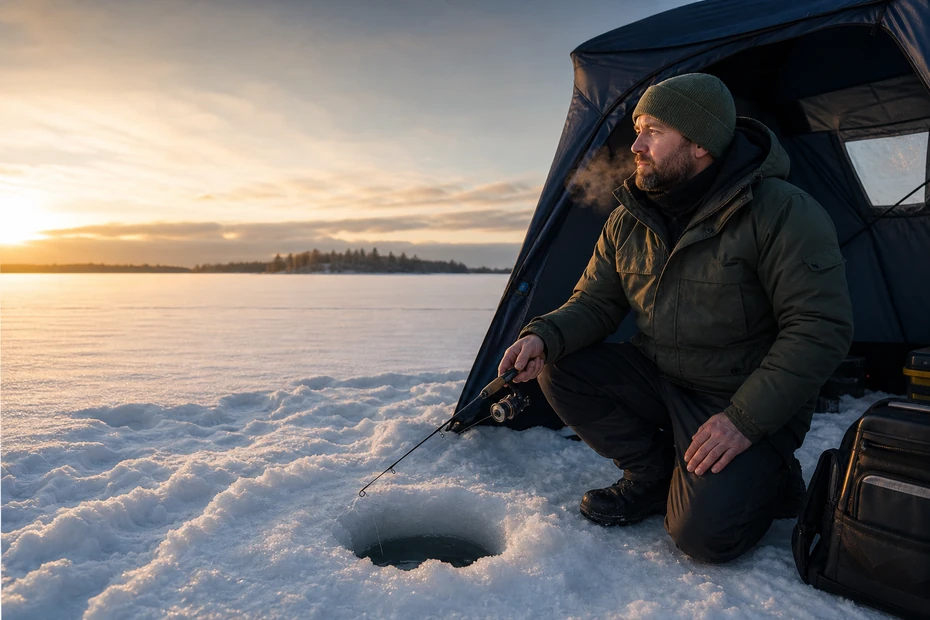
The best ice fishing rods Canada anglers can buy are rods matched to lure weight, target species and the space available above the hole. A 26-inch light rod can make tiny panfish jigs easy to animate inside a shelter, while a longer medium-heavy rod gives a lake-trout angler more sweep and control outside.
This guide separates length, power and action so you can choose a useful tool instead of buying a generic combo that is too stiff for the lure or too short for the hook-set.
Key Takeaways
- Best all-round starting point: a 28- to 32-inch medium-light or medium rod for mixed walleye and perch use.
- Tiny jigs need a soft tip: light power helps load the blank and show subtle bites.
- Longer rods help outside: they move more line and cushion fish, but need room in a shelter.
- Power is not action: power describes load; action describes where the blank bends.
- Ice safety comes first: current conditions and local rules matter more than any rod choice.
Choose the presentation first. Once lure weight, species and fishing position are known, the useful length and power range becomes surprisingly narrow.
🌲 The Guide’s Log
When I sort ice rods, I do not begin by shaking every blank in the aisle. I begin with the lure. A tiny tungsten jig carrying one maggot has almost nothing in common with a heavy tube jig for lake trout, even though both may be lowered through the same diameter hole. The rod has to load under the lure, transmit or display a light bite, and still control the fish close to the hole. Shelter space changes the answer again. A long rod feels smooth outside, where there is room for a wide hook-set and a longer leader. Inside a compact flip-over, the same rod can hit the roof, heater or partner. I also look at the guide train and handle with gloves on. Small guides freeze faster, an exposed reel seat can feel cold, and a handle that seems elegant bare-handed can be clumsy in mitts. For walleye and perch, a 28- to 32-inch medium-light or medium rod is a reasonable first lane, not a universal truth. Panfish specialists often go lighter; pike and lake-trout anglers go heavier and frequently longer. The mistake is buying stiffness as insurance. A rod that never loads makes a light lure harder to control and can tear small hooks free. The right ice rod bends enough to work, then recovers cleanly.
Best Ice Fishing Rods Canada: Quick Picks by Species
Match the normal lure and fish, then adjust length for shelter or open-ice use. Pair the rod with the safety and electronics planning in our complete ice-fishing gear guide.
| Primary target | Useful starting length | Power/action direction | Why |
|---|---|---|---|
| Perch and crappie | 24–30 in | Light or ultra-light, fast tip | Loads tiny jigs and displays subtle takes |
| Mixed perch and walleye | 28–32 in | Medium-light or medium, fast | Useful all-round control without excessive stiffness |
| Walleye with spoons | 30–36 in | Medium, fast | More sweep and hook-setting authority |
| Pike | 32–42 in | Medium-heavy | Controls larger baits and stronger fish |
| Lake trout | 36–48+ in | Medium-heavy to heavy | Moves line and cushions surging fish outside |

CanadaFever top pick
Clam Katana Ice Combo
A practical ready-to-fish reference point for anglers who want a matched ice rod and reel instead of building the first setup from separate parts.
- Confirm the exact length and power shown in the selected variant
- Match the spool with cold-weather line appropriate to the lure
- Treat the combo as a use-case choice, not one rod for every species
Verify the current listing and exact configuration before ordering.
Affiliate disclosure: As an Amazon Associate, CanadaFever earns from qualifying purchases at no extra cost to you.
Compare the wider category
Compare exact length, power and reel configuration. Do not assume every variant on a shared listing is the same rod.
Compare ice fishing rod combos on Amazon.com →
Availability and configurations can change. Match the exact listing to the decision criteria in this guide.
Length, Power and Action: Three Different Decisions
Length changes line control and shelter fit
A longer rod moves more line during a hook-set and usually cushions head shakes over a wider arc. That is valuable for lake trout, larger walleye and open-ice fishing. A short rod is easier inside a shelter and keeps the reel close to the hole, but it can encourage abrupt hook-sets.
Measure the real fishing position. Sit on the bucket or shelter seat, hold the rod at a normal angle and make sure the tip clears roof fabric, electronics and a partner.
Power must match lure load
Power describes how much force is required to bend the blank. A light rod loads under a tiny jig; a medium-heavy rod resists that load and suits larger baits or fish. If the lure cannot bend the tip slightly, bite detection and cadence often suffer.
Action controls where the bend begins
Fast-action rods bend mainly toward the tip and recover quickly. Moderate actions bend deeper, which can keep small hooks pinned. Neither is automatically better: match recovery and bend to presentation, line stretch and hook size.
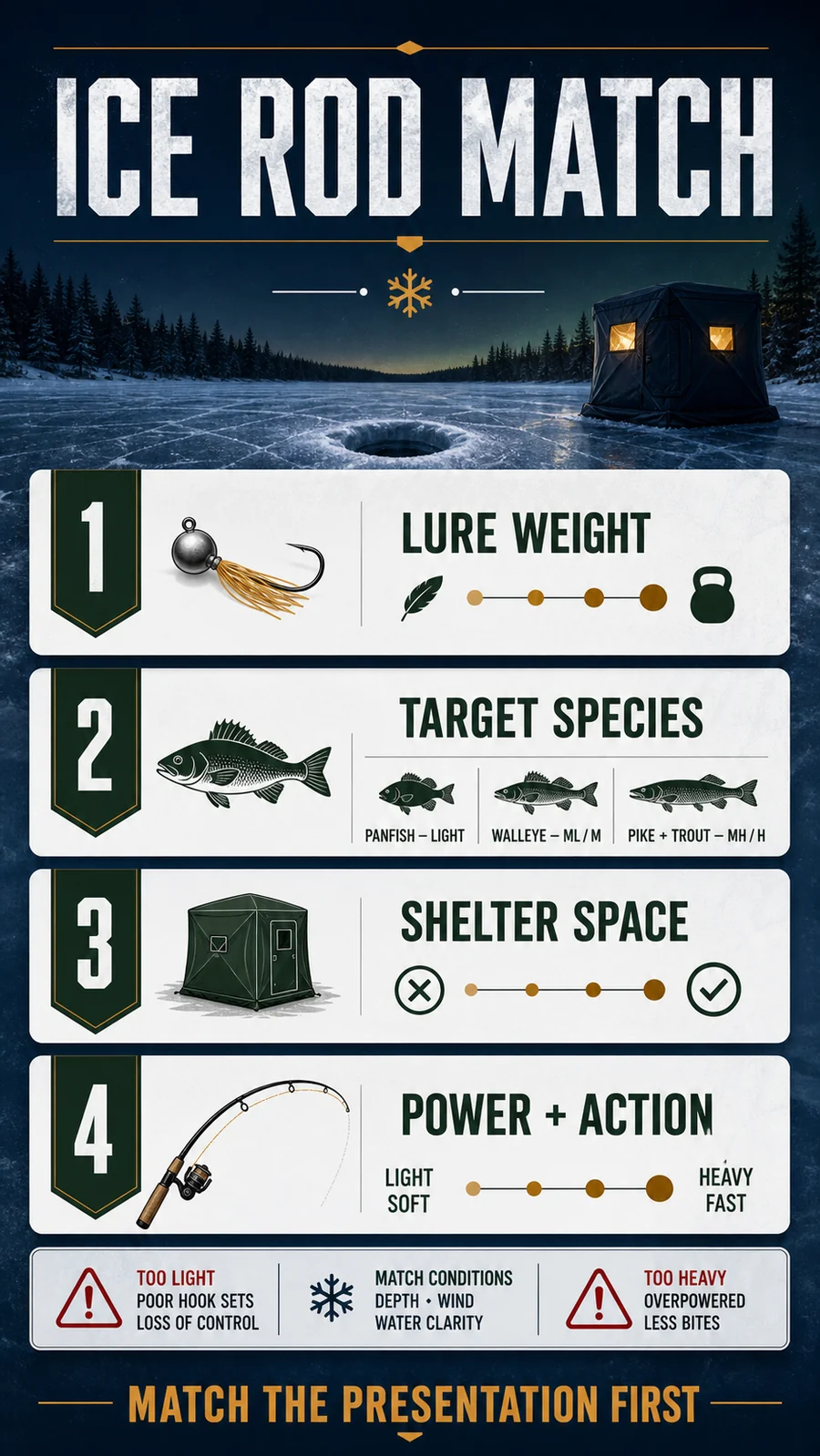
Build the Rod, Reel and Line as One System
Reel size and cold performance
A compact spinning reel balances most ice rods, but the drag needs to start smoothly in the cold. Oversized spools add weight; extremely small spools increase line coils. Test the drag after the outfit has cooled, not only indoors.
Line choice changes sensitivity
Low-stretch braid transmits well but absorbs water and can freeze. Monofilament remains simple and forgiving. Fluorocarbon can be useful as a leader or main line, but stiffness increases in the cold. Use our Canada fishing gear hub to compare line roles.
Guides and handles matter with gloves
Large guides resist icing longer than micro guides. Cork and foam both work; shape and glove clearance matter more than appearance. Check the reel-seat hardware for sharp edges and easy tightening.
| Check | Pass condition | Red flag |
|---|---|---|
| Lure load | Tip shows the lure without collapsing | Blank stays rigid with normal jig |
| Shelter fit | Full jig and hook-set clear the roof | Tip repeatedly strikes fabric or gear |
| Drag | Starts smoothly after cooling | Sticky startup or pulsing |
| Guide train | Aligned with enough clearance for expected icing | Bent frames or tiny guides for wet line |
| Transport | Rod fits protected in sled and vehicle | Exposed tip under loose equipment |
Species and Presentation Matching
Panfish
Tiny tungsten jigs and soft bites reward a light tip, visible load and smooth drag. Spring bobbers add another visual signal, but they must match lure weight or they stay bent and uninformative.
Walleye
Medium-light and medium rods cover many spoons, minnow baits and dead-stick situations. Use more power only when lure weight, depth or fish size justifies it. A second softer dead-stick rod can outperform forcing one stiff jigging rod into both jobs.
Pike and lake trout
Larger fish require blank strength, line capacity and terminal tackle that work together. Outside, longer rods help absorb surges. Inside, verify clearance before choosing length. Provincial seasons, limits and bait rules always override tackle preference.
🍁 The Local Secret
If you fish both inside and outside, do not split the difference blindly. A compact shelter rod and a longer open-ice rod often cost less in frustration than one compromised rod expected to excel in both spaces.
Ice Safety and Final Buying Checks
Conditions change faster than equipment lists
Ontario states clearly that ice conditions can vary and that ice is never completely safe. Review the province’s ice-fishing safety guidance, local advisories and access rules before every trip.
Carry appropriate flotation, ice picks and communication equipment, travel conservatively, and do not treat another vehicle track as proof. Our ice-fishing destinations guide helps with location planning, not same-day ice assessment.
Inspect the complete outfit
Check blank straightness, guide alignment, reel-seat fit, drag startup, handle comfort and transport length. Add a hard or structured rod case if sled travel and vehicle loading expose tips to damage.
For electronics and power, connect this decision to fish finders and fishing electronics and the battery-system guide.
✅ The Pre-Trip Protocol
- Step 1: Check current ice, weather, access and regulations before packing tackle.
- Step 2: Tie on the normal lure and confirm that the rod loads, the drag starts smoothly and the line behaves in the cold.
- Step 3: Protect the rod in transport and keep ice picks, flotation and communication gear accessible.
Best Ice Fishing Rods Canada: Frequently Asked Questions
What length ice fishing rod is best for walleye?
A 28- to 36-inch medium-light or medium rod covers many walleye presentations. Use the shorter end inside small shelters and the longer end outside or in deeper water.
Is a medium-light rod good for ice fishing?
Yes for many perch and walleye presentations. It is not the best answer for the smallest panfish jigs or the heaviest pike and lake-trout baits.
What is the difference between rod power and action?
Power is the force required to bend the blank. Action describes where the blank bends first. Both affect lure control and fish fighting.
Can I use a regular fishing rod for ice fishing?
It can catch fish, but normal rods are often too long for a shelter and may not handle small ice lures or cold-weather ergonomics well.
How many ice rods do I need?
One well-matched rod can start. Add a second only when you need a different job, such as a soft dead-stick setup or a heavy lake-trout rod.
Bottom line: A 28- to 32-inch medium-light or medium rod is a useful mixed-species starting point, but lure weight and shelter space should make the final decision.