

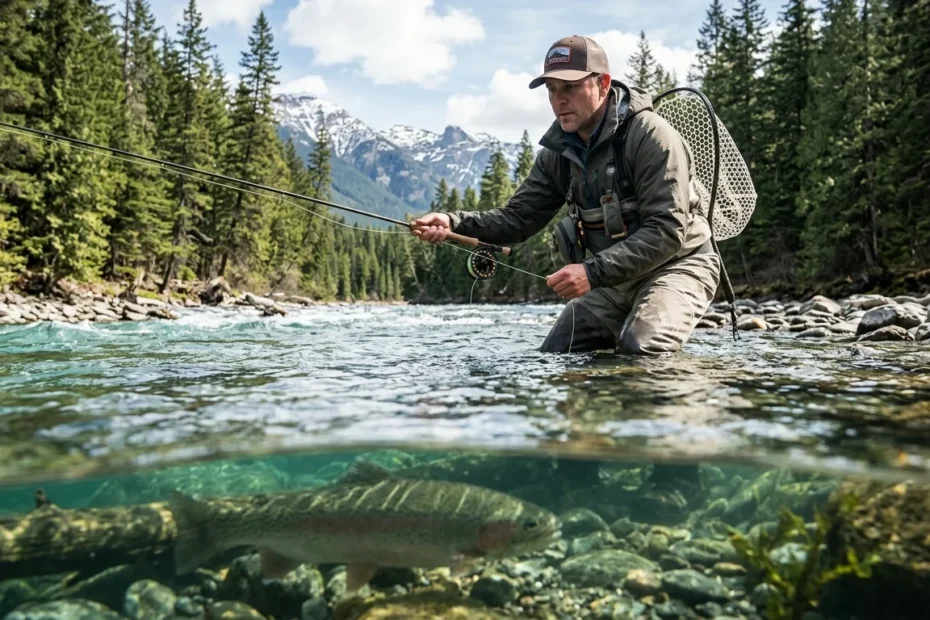
Learn river fishing in Canada with species targets, current-reading tips, seasonal patterns, gear, safety checks, and official licence links.
- Use River Fishing in Canada to match destination, season, access, and budget to the kind of trip you actually want
- Check licences, local rules, travel logistics, weather, and booking windows before locking in dates
- Compare locations by practical fit: target species or activity, remoteness, services, safety, and backup options
Bottom line River Fishing in Canada becomes easier when you choose the destination around timing, access, rules, and your real trip style
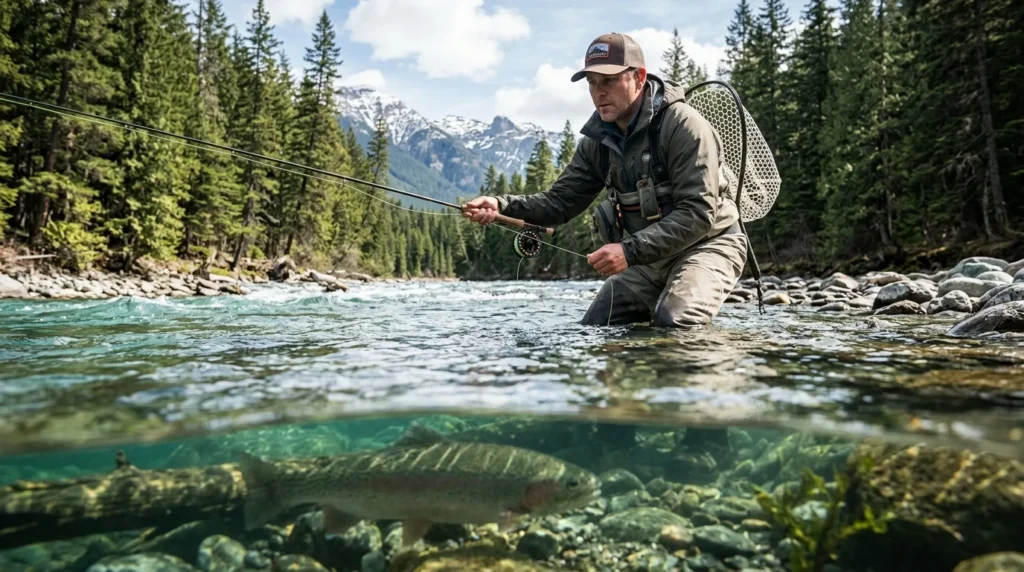
River fishing guide advice in Canada only works when it helps you read current, choose the right presentation, and stay upright in water that can change faster than beginners expect. Rivers reward anglers who pay attention to seams, depth shifts, bottom texture, and the safe angle of approach.
That is why a good river day usually starts before the first cast. You need to understand where fish rest, where they feed, and what the current is doing to your bait or lure.
Quick Answer: How to Start River Fishing in Canada
River fishing in Canada starts with four checks: choose a target species, read the current, match your presentation to the river feature, and verify the exact province, zone, river, species, date, and licence rules before you fish. A good first plan is to fish slower seams, eddies, riffle tails, undercut banks, and safe bank-access spots before wading deep or covering random water.
- Best beginner targets: smallmouth bass, walleye, trout, pike, perch, and stocked river opportunities where legal.
- Best first water: visible current breaks, bridge-access stretches, slower bends, and riffle-to-pool transitions.
- Big Canada check: rules can change by province, waterbody, season, species, salmon status, park boundary, and access point.
Key Takeaways
- The best river anglers read current first, then choose the cast and lure second.
- Seams, eddies, riffle tails, undercut banks, and deeper pockets usually matter more than random water coverage.
- River fishing in Canada demands extra attention to footing, wading safety, and province-specific rules.
- Bank fishing, wading, and drift presentations each need a slightly different tool and positioning mindset.
The fastest way to improve is to stop asking where fish “should” be and start asking what part of the flow gives them rest, food, or cover. Once you see that, river fishing gets much less random.
The Guide’s Log
A river can humble you in ten seconds. One early fall morning, the water looked simple from the bank: one obvious run, one visible seam, and just enough chop to make the whole stretch feel fishy. The first mistake was casting too fast. The second was stepping too far. The current looked friendly until it pushed hard against the shin and turned a stable stance into a sideways correction. That was the real lesson. River fishing is not just about getting a lure in front of fish. It is about pace, angle, footing, and learning what the water is trying to do to you and your presentation at the same time. Once I backed out, slowed down, and started fishing the softer edge where the main push met slower inside water, the whole stretch made sense. The fish were not everywhere. They were exactly where the river gave them a place to hold without burning energy. Since then, every new river starts the same way for me: watch the current, map the safe path, and only then decide where the first cast belongs.
River Fishing Guide: Start by Reading Current
The current is the whole story in a river. Fish use it, dodge it, and feed from it.
If you are new to this, pair this page with river fishing techniques. The short version is simple: look for water that delivers food while giving fish a place to hold without fighting the full force of the river.
When you learn to spot seams, pocket water, and transition edges, you start fishing the river the way fish use it. That matters whether you are after trout, bass, walleye, salmon, or steelhead in Canadian water.
Where Fish Hold in a River and Why
Fish rarely sit in the hardest current unless they are actively feeding in a very specific window. Most of the time, they want nearby food with less effort.
- Smallmouth and walleye often sit near current breaks, deeper holes, boulder edges, and softer water beside the main push.
- Trout often favour riffle tails, undercut banks, shaded runs, and oxygen-rich transitions.
- Salmon and steelhead often use travelling lanes, resting pockets, and holding water near structure or depth change.
If you already fish moving water for chrome, drift fishing techniques for river steelhead and drift fishing techniques are the next pages worth reading with this guide.
Best River Fish in Canada by Species
The biggest missing piece in many river fishing guides is species intent. A trout stream, a prairie walleye river, a smallmouth river, and a salmon river do not fish the same way. Start with the fish you are researching, then choose river features and gear around that species.
| Target | River water to research first | Simple presentation direction | CanadaFever next step |
|---|---|---|---|
| Trout | Cold riffles, shaded runs, undercut banks, spring-fed creeks, and mountain streams. | Small spinners, spoons, nymphs, streamers, and careful upstream approaches. | Brook trout, rainbow trout, brown trout |
| Walleye | Current breaks, deeper holes, bridge edges, confluences, and evening feeding lanes. | Jigs, soft plastics, live-bait-style presentations where legal, and slow crankbaits. | Walleye fishing in Canada |
| Smallmouth bass | Rocky runs, boulder pockets, ledges, warm tailouts, and current beside islands. | Tubes, Ned rigs, small crankbaits, topwater at low light, and finesse plastics. | Smallmouth bass fishing |
| Salmon and steelhead | Migratory corridors, resting pools, tailouts, and regulated coastal or Great Lakes tributaries. | Drift presentations, spoons, spinners, flies, and local single-hook or bait restrictions where applicable. | Chinook, coho, steelhead context |
| Pike and muskie | Slower river bays, weed edges, backwaters, current mouths, and ambush cover. | Wire leaders, spoons, spinnerbaits, swimbaits, and careful release tools. | Northern pike, muskie |
Use the Canada fish species hub and the interactive fish range planner when you are not sure which species to research for a province, river type, or season.
Best Seasons for River Fishing in Canada
Seasonal advice is only a planning pattern, not an open-season claim. Rivers change fast with snowmelt, summer heat, storms, fall migrations, and winter ice. Before you fish, verify the official season, species rules, closures, and waterbody exceptions.
- Spring: focus on safety first. Snowmelt and high water can make good-looking banks dangerous. Research walleye, pike, steelhead, trout, or stocked opportunities only where legal.
- Summer: smallmouth, walleye, trout in cold-water systems, and mixed river species can be active, but warm water may require gentler fish handling or avoiding stressed cold-water fish.
- Fall: salmon, steelhead, trout, walleye, and predator fish can become high-interest targets, but many rivers also carry special closures, gear rules, and conservation restrictions.
- Winter: open-water river fishing can exist in some areas, but ice shelves, cold water, and changing flows raise the safety bar. Do not treat river ice like lake ice.
Best River Fishing Presentations for Common Scenarios
The river feature should tell you how to present, not just where to stand. This is where many anglers waste time by throwing the right lure the wrong way.
If you mainly fish moving presentations, night fishing techniques and signs of fish activity can also sharpen the way you read feeding windows and fish positioning.
Bank Fishing, Wading, and Small-Craft Choices
Do not treat every river the same. The way you approach water from shore is not the way you should approach it while wading, and neither one behaves like a small drift or controlled canoe pass.
- Bank fishing: stay low, cast from below the target when possible, and avoid skylining yourself on exposed banks.
- Wading: move slower than you think, shuffle on slick bottoms, and never wade blind into current that looks stronger mid-channel than it felt at shore.
- Small craft: focus on angle control, drift control, and maintaining a clean presentation through the feature instead of just floating past it.
If wading is part of your normal river pattern, best waders for fishing belongs in the same planning stack. If you fish with others often, fishing etiquette matters too, especially on tighter rivers where crowding a run can ruin water for everyone.
The Local Secret
On many Canadian rivers, the best fish-holding water is not the loudest or deepest part you notice first. It is often the softer edge beside it: the walking-speed seam, the short pocket below a riffle, or the protected inside turn that looks too simple until you watch the drift line closely.
River Fishing Safety and Rules in Canada
This is where many generic river guides fail. They talk about fish but not enough about footing, current, and the fact that rules change by province and waterbody.
- Check province-specific licence and regulation pages before the trip, not after you reach the bank. On rivers where Indigenous, treaty, salmon, conservation, or community-specific fisheries are part of the context, use the Indigenous fishing rights guide for respectful background before making assumptions.
- Assume cold water is more dangerous than it looks, especially in shoulder seasons.
- Use a wading staff or skip the crossing if the bottom is slick, depth is uncertain, or current is pushing above your comfort level.
- Watch for posted seasonal closures, tackle restrictions, and species-specific rules on rivers with trout, salmon, or steelhead pressure.
River Fishing by Province: What to Check Before You Go
Canada does not have one simple river fishing rulebook. Provincial and territorial rules usually control inland freshwater angling, DFO controls many tidal, salmon, and coastal contexts, and national parks can require separate park permits. Treat every river plan as a checklist, not a guess.
Check zone, species, sanctuary, Great Lakes tributary, steelhead/salmon, and waterbody exceptions.
Separate freshwater, tidal, salmon, steelhead, classified water, in-season change, and national park contexts.
Check watershed, fish management zone, stocked water, bait rules, possession limits, and river closures.
Check zones, special territories, salmon rivers, access rules, and federal or provincial overlap.
For a broader legal planning path, use Fishing Regulations and Licences in Canada and the Canada Outdoor Planning Tools before narrowing to your exact river.
Official Canadian River Fishing Sources
Use these sources as starting points only. The final answer is always the current official rule for the exact province, river, species, date, licence type, park boundary, and waterbody exception.
Ontario fishing rules
Provincial fishing information, licences, and regulations for Ontario waters.
Open Ontario sourceB.C. freshwater fishing
B.C. states freshwater fishing is regulated by law and points anglers to its regulations synopsis and in-season changes.
Open B.C. sourceAlberta sportfishing regulations
Alberta publishes annual regulations and guides for anglers.
Open Alberta sourceQuebec sport fishing
Quebec explains zone-based rules, species, limits, special areas, and access considerations.
Open Quebec sourceDFO recreational fishing
Federal starting point for recreational fishing rules, especially marine, salmon, and coastal fisheries.
Open DFO sourceParks Canada example
National parks can require separate permits and special rules; provincial licences may not apply inside park waters.
Open Parks Canada sourceRiver Fishing Mistakes That Cost Fish
- Fishing the obvious fast water and skipping the softer holding edge beside it.
- Approaching from the wrong angle and sending wakes or shadows into the target water.
- Using the right lure with the wrong drift speed.
- Standing in the water you should have fished first.
- Ignoring safety because the crossing “looks fine from here.”
Most of those mistakes shrink once you slow down and read the river before you cast. That is usually the biggest jump from random river fishing to repeatable river fishing.
The Pre-Trip Protocol
- Step 1: Check the current regulation page for the exact province and river system you plan to fish.
- Step 2: Pick one or two river features to target first instead of trying to fish every metre of visible water.
- Step 3: Decide before you launch or wade how far you are willing to cross and where your safe exit line is.
Next CanadaFever River Fishing Guides
If this page helped you choose the water to fish, use these next guides to choose the target, rules, and setup:
- Fishing for Beginners in Canada for the full beginner path.
- Fishing for Specific Species in Canada for species-by-species planning.
- Best Fishing Spots in Canada for destination research.
- Fishing Gear and Equipment for rods, line, lures, and safety gear.
- River Fishing Techniques for a more tactical moving-water follow-up.
River Fishing Guide FAQ
Where should I cast first in a river?
Start with the seam, current break, or pocket that gives fish soft holding water beside food. Those transition areas usually matter more than the centre of the fastest flow.
Is river fishing better from the bank or while wading?
Both can work well. Bank fishing is often safer and quieter at first, while wading can open better angles if you already understand current, bottom footing, and safe crossing limits.
What is the biggest beginner mistake in river fishing?
Most beginners fish obvious fast water too hard and move too quickly. The better move is to slow down, watch the flow, and fish the softer edge where fish can hold efficiently.
Do river fishing rules stay the same across Canada?
No. Rules vary by province, waterbody, season, and target species. Always verify the current official regulation page for the exact river system you plan to fish.
What gear matters most for river fishing?
A balanced rod and reel matter, but so do the support pieces: line choice, waders or stable footwear when needed, a net, pliers, and a presentation that matches the current speed and depth.
River habitat note: Riffles, pools, banks, culverts, temperature and spawning areas are conservation issues as much as fishing clues. Use Fishing Conservation Organizations in Canada to find stream, salmon, trout and watershed groups that work on fish habitat.