
Beginner Fly Fishing Guide for 2026: a 4-week roadmap, budget tiers, simple rigs, and first-trip checklists to land your first fish.
- Use Beginner Fly Fishing Guide in Canada to match destination, season, access, and budget to the kind of trip you actually want
- Check licences, local rules, travel logistics, weather, and booking windows before locking in dates
- Compare locations by practical fit: target species or activity, remoteness, services, safety, and backup options
Bottom line Beginner Fly Fishing Guide in Canada becomes easier when you choose the destination around timing, access, rules, and your real trip style
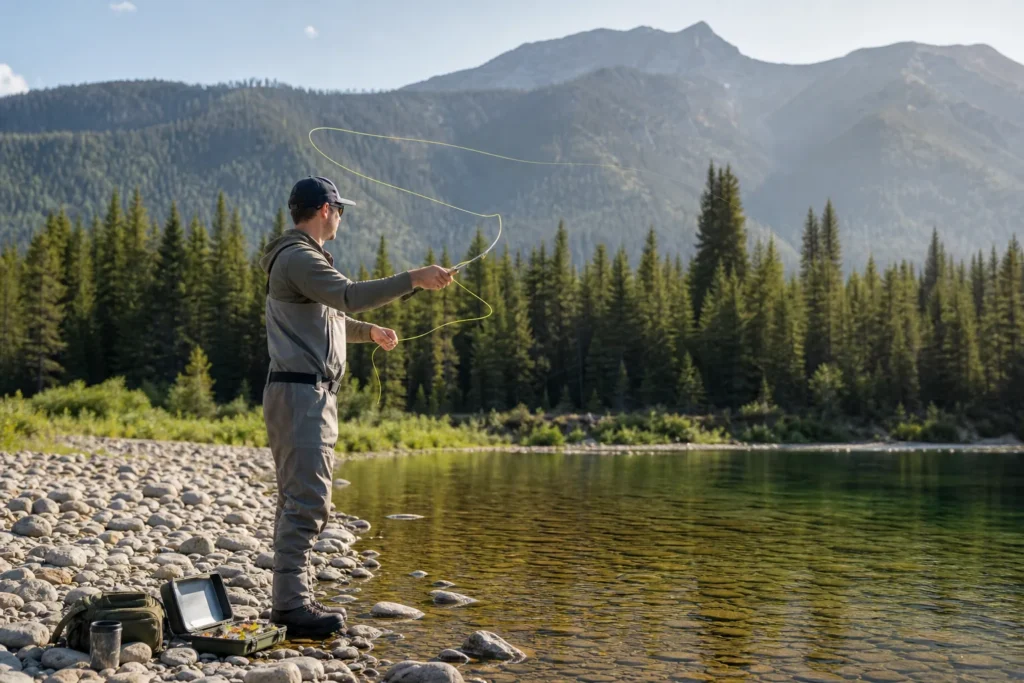
This Beginner Fly Fishing Guide for 2026 is your no-fluff roadmap from “I own nothing” to “I can rig up, cast, and land my first fish” — without getting overwhelmed or overspending.
Choose a complete first outfit with the best fly rods and reels Canada guide.
Fly fishing looks complicated because people explain it like a science project. It’s not. It’s a system. Learn the system, then repeat the basics until they feel normal.
Quick safety + rules note: Fishing regulations and licensing change by province/state and even by river. Always check the official rules for your exact area before you fish.
What fly fishing actually is (and why beginners love it)
Key Takeaways
- Weighted Line System: Unlike conventional fishing where you cast a weighted lure, fly fishing relies on casting a weighted line to deliver an almost weightless fly.
- Rigging Chain: The fly setup is a chain: Rod → Reel → Fly Line → Leader → Tippet → Fly. Each component must be balanced.
- Keep It Simple: A 9-foot, 5-weight setup and just three simple fly patterns (Caddis, Pheasant Tail, Woolly Bugger) are all you need to start.
- Drift Beats Distance: Short, controlled casts under 30 feet result in better line control and far more fish than long, messy casts.
Beginner fly fishing first-trip decision map
Use this Canada-first map before you buy more gear or pick your first water. The fastest path is simple: choose easy access, verify the rules, match your first outfit to the fish, and practice one cast before chasing advanced tactics.
Most fishing casts a weighted lure. Fly fishing casts a weighted line.
That’s it.
The “fly” (the little fake bug) is light. The fly line is heavy. The line loads the rod, the rod unloads the line, and the line delivers the fly.
Why people get hooked:
- You can fish water other people ignore. Shallow riffles, tight seams, skinny shorelines.
- You feel the process. You’re not just throwing a bait and waiting.
- It’s simple once you strip the jargon. You don’t need 50 flies or 8 knots.
If you want a broader overview of the sport, start here: How to Fly Fish and come back to this roadmap when you’re ready to gear up.
Week 1: Budget + plan like a pro
Most beginner frustration comes from two things:
- buying the wrong stuff, and
- showing up to the river with no plan.
Fix those and you jump ahead of 80% of “new” anglers.
The real cost: what you actually need vs. what you can skip
Here’s the truth: you can start fly fishing for less than most people spend on a single ‘premium’ rod. The trick is knowing what matters.
Table 1 — Beginner budget tiers (what you get at each level)
| Budget Tier | Typical Spend | What’s Included | Who It’s For |
|---|---|---|---|
| Bare-Bones Starter | $200–$300 | Combo outfit + basic fly box + nippers & forceps | You want to try it out with minimal financial risk. |
| Quality Starter | $400–$650 | Name-brand combo + upgraded fly line + decent wading gear | You plan on fishing more than 5 times a year. |
| “Buy Once” Starter | $700–$1,200 | Premium rod & reel + high-comfort breathable waders + polarized sunglasses | You already know you love the outdoors and want gear that lasts. |
Where beginners waste money:
The Canadian polarized fishing sunglasses guide explains how grey, copper and low-light lenses change visibility on open water and shaded streams.
- buying a super fancy reel (the reel is mostly a line holder early on)
- buying 30 fly patterns instead of 3 that work everywhere
- buying waders when they only fish warmwater ponds
Where you should spend more (if you can):
- fly line (it changes how everything feels)
- polarized sunglasses (safety + seeing fish/structure)
- wading boots (if you’re wading in rivers)
Want a deeper “gear-first” breakdown? This page goes wider: Fly Fishing Gear and Equipment.
Licensing + rules: don’t skip the boring part
This is the #1 thing competitor guides quietly ignore: you can’t “just go fish.” You need to be legal.
Start here: How to Obtain a Fishing License in Canada.
Also use official resources for your area:
- Fisheries and Oceans Canada — recreational fishing
- Government of British Columbia — freshwater fishing
If you’re outside Canada, your state/province wildlife agency is the source of truth.
Finding your first water (where success is easiest)
Beginners do best on:
- slow rivers with clear seams (easy drifts)
- stocked lakes (predictable fish)
- ponds with bluegill/bass (tons of action)
You don’t need “legendary” water. You need accessible water.
If you want ideas for trips later, bookmark: Best Fly Fishing Spots in Canada.
Your secret weapon: the local fly shop (even if you don’t buy much)
A big-box store sells gear. A fly shop sells answers.
Walk in with this short script:
- “I’m brand new. What’s the easiest water nearby to learn on?”
- “What’s one fly I should start with right now?”
- “Any closures or special regulations I should know about?”
- “Can you check that my line/leader setup makes sense?”
Even if you only buy a pack of flies, you leave with local intel that saves you hours.
✅ 1: 4-Week Roadmap Checklist (paste this where your theme allows)
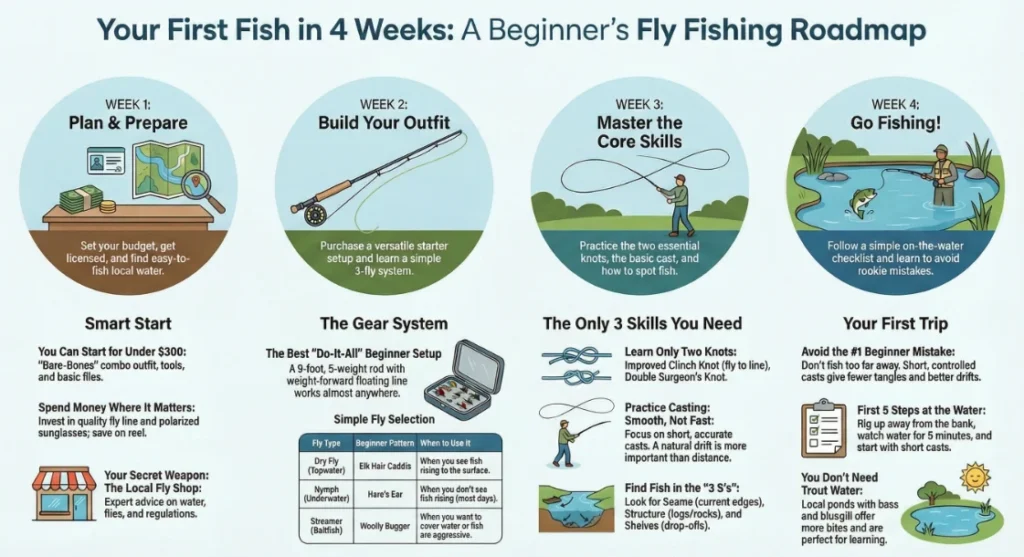
Your 4-Week “First Fish” Roadmap
Follow this step-by-step framework to eliminate 90% of beginner frustration.
Planning & Legals
- Establish your starter budget
- Purchase local freshwater licensing
- Locate 1 highly accessible pond/stream
Gear & Rigs
- Acquire a balanced 5-weight combo
- Construct your first tapered rig
- Keep accessories to a minimum
Knots & Casts
- Master Clinch & Surgeon’s knots
- Practice basic overhead casts on grass
- Learn to identify river seams
The First Trip
- Observe the water for rises first
- Start with short, controlled casts
- Focus on drift quality over distance
Week 2: Build your first outfit (the full system)
Fly fishing is like building a chain. If one link is weak, everything breaks.
Here’s the chain:
Rod → Reel → Fly Line → Leader → Tippet → Fly
The best “default” setup for most beginners
If you want one setup that works almost anywhere:
- Rod: 9′ 5-weight, medium-fast
- Reel: matched to the rod (nothing fancy)
- Line: weight-forward floating line (WF-F)
- Leader: 9′ tapered leader
- Tippet: 4X–6X (start with 5X)
Why this works:
- casts well in wind, but still feels light
- handles dries, nymphs, and small streamers
- fits trout and a lot of warmwater fish
If you fish bigger water or bigger fish (bigger bass, light salmon/steelhead), move up to a 6–7 weight.
Table 2 — Quick “what should I buy?” gear cheat sheet
| Target Species & Water | Recommended Rod | Line Type | Starter Tippet |
|---|---|---|---|
| Trout (Rivers & Lakes) | 9-foot, 5-weight (versatile) | Weight-forward floating (WF-F) | 5X Monofilament |
| Small Brooks & Creeks | 7.5 to 8.5-foot, 3 or 4-weight | WF or Double Taper (DT) floating | 5X–6X Monofilament |
| Bass & Panfish (Ponds) | 9-foot, 5 or 6-weight | Weight-forward floating (WF-F) | 3X–4X Monofilament |
| Windy Rivers & Larger Lakes | 9-foot, 6-weight | WF floating or sink-tip | 3X–4X Fluorocarbon |
Your first 3 flies (the “don’t overthink it” system)
Beginners get stuck here: “Which fly do I tie on?”
Stop. Use this 3-fly system and you’ll be fine.
Table 3 — Your first 3 flies and when to use them
Elk Hair Caddis
Imitates adult caddisflies. High buoyancy and extremely visible. Best used when you see trout actively rising or splashing on the water surface.
Pheasant Tail Nymph
Imitates aquatic insects crawling along the riverbed. Sinks quickly. Best fished under a indicator when you don’t see surface activity (this is how fish feed 90% of the time).
Woolly Bugger
Imitates baitfish, leeches, or large nymphs. Fished by casting across current and stripping the line back. Highly effective for aggressive trout, bass, and panfish.
Want more tactics once you’re rolling? Here’s a great next step: Fly Fishing Techniques.
✅ Beginner Rig Builder
Beginner Rig Builder
Select your water type, rig it exactly as described, and practice until it becomes muscle memory.
1. Rod & Reel
2. Main Line
3. Leader & Tippet
4. Key Rule
Rig Recipes by Scenario
- Trout River (Nymphing): 5wt Rod + Floating line + 9ft 5X tapered leader + strike indicator + Pheasant Tail Nymph (size 14-16) + split shot if deep.
- Trout Lake (Stripping): 5wt Rod + Floating line + 9ft 4X leader + Woolly Bugger (size 8-10, olive or black). Slow, steady line strips.
- Pond Bass/Panfish (Surface): 5wt or 6wt Rod + Floating line + 7.5ft 3X leader + foam surface popper (size 6-8). Pop gently and pause.
Week 3: The 3 skills that unlock everything
You don’t need ten skills. You need three.
1) Rigging (so you spend time fishing, not untangling)
Simple rig order:
- attach reel
- thread line through guides
- loop on leader
- add tippet
- tie on fly
If you’re new to knots, this is still a good foundation: How to Tie a Hook on a Fishing Line.
2) Two knots (yes, only two)
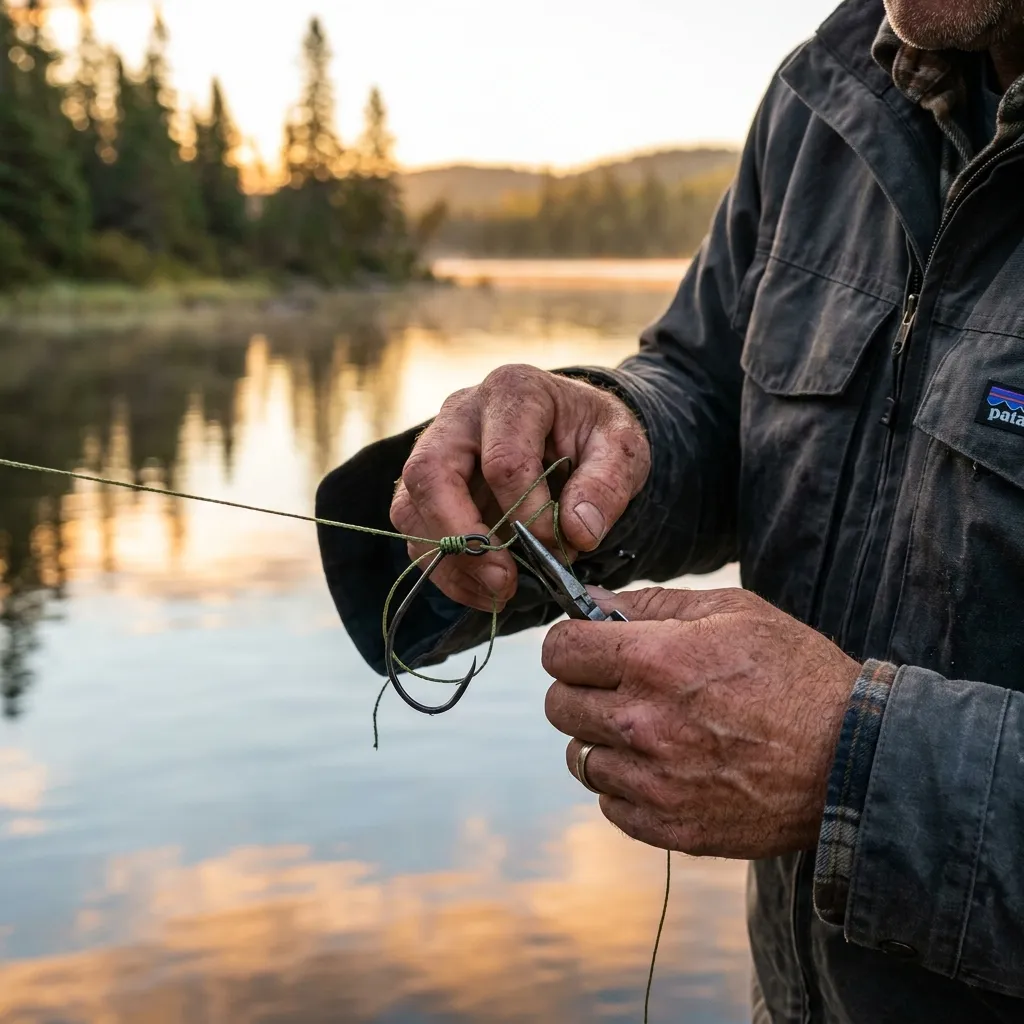
- Improved Clinch Knot: tie the fly to the tippet
- Double Surgeon’s Knot: add tippet to leader
Practice them at home. Five minutes. Every day for a week. You’ll be shocked how fast you level up.
3) The cast (but not the way people teach it)
Most beginners “whip” the rod. That’s what causes tangles and wind knots.
A better cue:
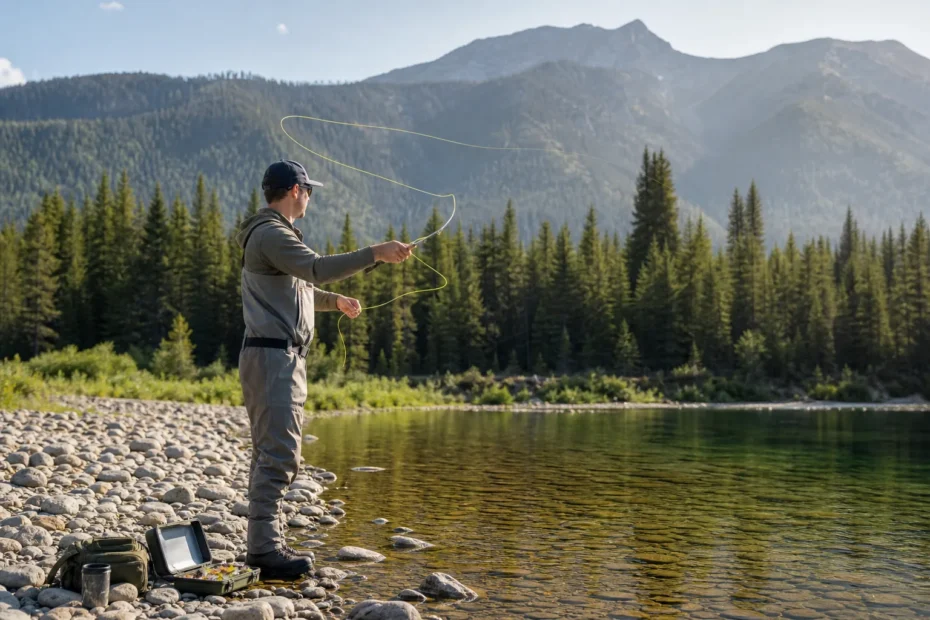
- smooth back cast
- pause
- smooth forward cast
- stop the rod (don’t follow through like a baseball bat)
Practice plan that works:
- Day 1–3: 15–20 feet, accuracy over distance
- Day 4–7: 25–35 feet, focus on clean loops
- Week 2 of practice: add gentle roll casts
If you want a legit skills hub, Fly Fishers International has a solid learning section: FFI Learn.
Read water like a beginner (the 3 S’s)
Fish want three things: food, safety, and an easy current. That usually shows up as:
- Seams: where fast water meets slow water. Fish sit on the edge and eat drifting food.
- Structure: logs, boulders, undercut banks, weed edges. Anything that breaks current or hides fish.
- Shelves: sudden depth changes. Shallow to deep, deep to shallow, or a drop-off near shore.
Beginner rule: if the water looks like a swimming pool, keep walking. If you see “texture” (ripples, current lines, edges), you’re in business.
Week 4: Your first trip (step-by-step)
This is where most guides fail you. They teach gear. They teach casting. Then they dump you at the river like: “Good luck.”
Here’s what to do.
The “first 5 steps at the water” checklist
- Rig up away from the water. Don’t stomp on the bank while you’re building your rig.
- Watch for 5 minutes. Look for rises, seams, bugs, baitfish, and shadows.
- Start short. First casts should be 15–25 feet.
- Fish the easy water first. Seams and soft edges beat raging currents.
- Move with intention. If nothing happens after 10–15 good drifts, take a few steps.
Want to get better at “where fish actually sit” in moving water? Read: River Fishing Guide.
First-trip packing list (so you don’t forget the important stuff)
Must-have
- license + rules for the water you’re fishing
- rod/reel/line + 2 leaders + 1 spool of tippet
- nippers + forceps/hemostats
- polarized sunglasses
- water + a snack
Nice-to-have
- small net
- bug spray + sunscreen
- a simple chest pack or small sling bag
Safety
- basic first aid (hook removal tools, bandage)
- a wading belt (if using waders)
- a dry layer in the car in case you get wet
You hooked a fish — now land it
Keep it simple:
- rod tip up
- let the rod absorb head shakes
- don’t clamp down on the line with death-grip pressure
- guide the fish into the net (don’t chase it)
Handling matters:
- wet your hands before touching fish
- keep fish in water as much as possible
- release fast and gentle
Wading safety (don’t gamble)
Wading looks chill until it’s not.
Basics:
- shuffle, don’t step (slippery rocks)
- use a wading staff if current is strong
- never wade above your comfort zone
- wear a belt on waders (helps if you fall)
Beginner mistakes that waste the most time
Mistake #1: You fish too far
Distance is not skill. Drift is skill. Short casts get you:
- fewer tangles
- better control
- more natural presentations
Mistake #2: You change flies every 5 minutes
Stop. Fish one fly with confidence until you know it’s wrong.
Use the 3-fly system:
- no rises → nymph
- chasing/active fish → streamer
- steady rises → dry
Mistake #3: You ignore line control
In rivers, the fly drags unless you manage line.
Simple fix: small upstream “mends” to let the fly drift naturally.
Beyond trout: bass, panfish, and “near-home” fly fishing
Here’s a giant opportunity most “beginner fly fishing” guides miss: you don’t need trout water.
If you have a pond with bluegill or bass, you have fly fishing.
Why this matters:
- more bites = faster learning
- easier access = more practice
- less pressure = less stress
For conventional bass tactics that still help you understand fish behavior, see: Bass Fishing Tips and Techniques.
What’s “new” for 2026 (what matters, what to ignore)
The basics won’t change in 2026. But the experience is getting easier.
What matters
- Better beginner combo outfits: more “ready to fish” systems that are actually balanced
- More warmwater fly fishing: bass/panfish/carp are getting more popular because they’re accessible
- More focus on conservation: cleaning gear, invasive species prevention, and river etiquette
For a conservation mindset (and to understand why catch-and-release matters), Trout Unlimited Canada is worth reading: Trout Unlimited Canada.
What to ignore (for now)
- hyper-specialized euro-nymphing gear
- ultra-light, ultra-expensive reels
- “match the hatch” obsession before you can cast and drift
Frequently Asked Questions (Beginner-Friendly)
1. What is the best all-around fly rod for a total beginner?
A 9-foot, 5-weight rod is the absolute best “do-almost-everything” choice. It is highly versatile, forgiving for learning casting loops, and easily handles dry flies, nymphs, and small streamers for trout, bass, and panfish.
2. How much money do I need to start fly fishing?
You can start for about $200–$300 with a basic complete starter combo package, a few basic fly patterns, and simple tools (forceps/nippers). If you have a larger budget, prioritize upgrading your fly line first, as it is the single most important component for cast feel.
3. Can I teach myself fly fishing?
Yes, absolutely. By practicing basic casting loop mechanics on a grass lawn and mastering just two simple knots (Improved Clinch and Double Surgeon’s), you can teach yourself. However, a single casting class or one guided day on the water can shortcut months of trial and error.
4. Do I need waders to start?
No. You can easily fish from banks, docks, or float tubes on warm water ponds and lakes. Waders and wading boots are only essential when you are wading into cold-water streams or rivers where rocky bottoms require high ankle support and cold temperatures require thermal insulation.
If your chosen water allows wading, our wading boots buying guide explains rubber soles, stockingfoot sizing and the checks to make before ordering.
5. What’s the difference between a leader and tippet?
The leader is a 7.5 to 9-foot tapered piece of monofilament or fluorocarbon that connects your heavy fly line to your fly, designed to transfer energy and turn the cast over smoothly. The tippet is a level, ultra-thin section of line that you tie to the end of the leader. You replace the tippet as it gets shortened from changing flies, extending the life of your tapered leader.
Official Canada fly fishing rule sources
This guide helps you learn the system, but official province, territory, federal, park and waterbody sources control final licence, open-season, gear, species and possession rules.
Ontario fishing portal
Official Ontario starting point for fishing rules, licences, seasons and regulation summaries.
Open official sourceOntario licence page
Official Ontario licence path for Ontario and Canadian residents before a freshwater trip.
Open official sourceB.C. freshwater regulations
Official British Columbia freshwater fishing regulations for rivers, streams, lakes and regional rule checks.
Open official sourceAlberta fishing regulations
Official Alberta landing page for fishing, hunting and trapping regulation resources.
Open official sourceParks Canada fishing example
National park fishing can require separate permits and park-specific rules. Banff is a useful official example.
Open official sourceDFO recreational fishing
Federal recreational fishing context for tidal, salmon and other federally managed fishing situations.
Open official sourceOptional shortcut: book a guided beginner day
A lesson or guided day is not required, but it can help if you are travelling, nervous about moving water, or want someone to correct your cast before bad habits set in. Confirm licence responsibility, included gear, target species, meeting point and current rules before booking.
Browse guided fly fishing options Affiliate disclosure: CanadaFever may earn a commission if you book through this Viator link, at no extra cost to you.Recommended Fly Fishing Gear for Beginners
Vetted, highly-rated starter gear to get you on the water safely and effectively.
Wild Water Fly Fishing Starter Combo
A complete 9-foot, 5-weight IM8 graphite fly rod with die-cast aluminum reel, pre-spooled floating fly line, backing, leader, fly box with flies, and a protective carrying case.
Check Price on Amazon
Croch Fly Fishing Flies Assortment Kit
A comprehensive 120-piece assortment of classic dry flies, wet flies, nymphs, and Woolly Bugger streamers. Includes a waterproof, double-sided silicone fly box.
Check Price on Amazon
SF Wood Fly Fishing Landing Net
A premium laminated bamboo and hardwood landing net featuring a soft, clear rubber mesh basket that protects the fish’s slime coat for safe catch-and-release.
Check Price on Amazon
Piscifun Fishing Backpack Tackle Bag
A highly-rated, water-resistant sling bag with two rod holders, multi-compartment storage, and a comfortable shoulder strap. Perfect for trekking along riverbanks.
Check Price on Amazon
SAMSFX Quick Knot Tying Nipper Tool
All-in-one nipper tool featuring a built-in eye cleaner, hook sharpener, knot-tying tool, and a retractable zinger to keep it secure on your sling pack or vest.
Check Price on Amazon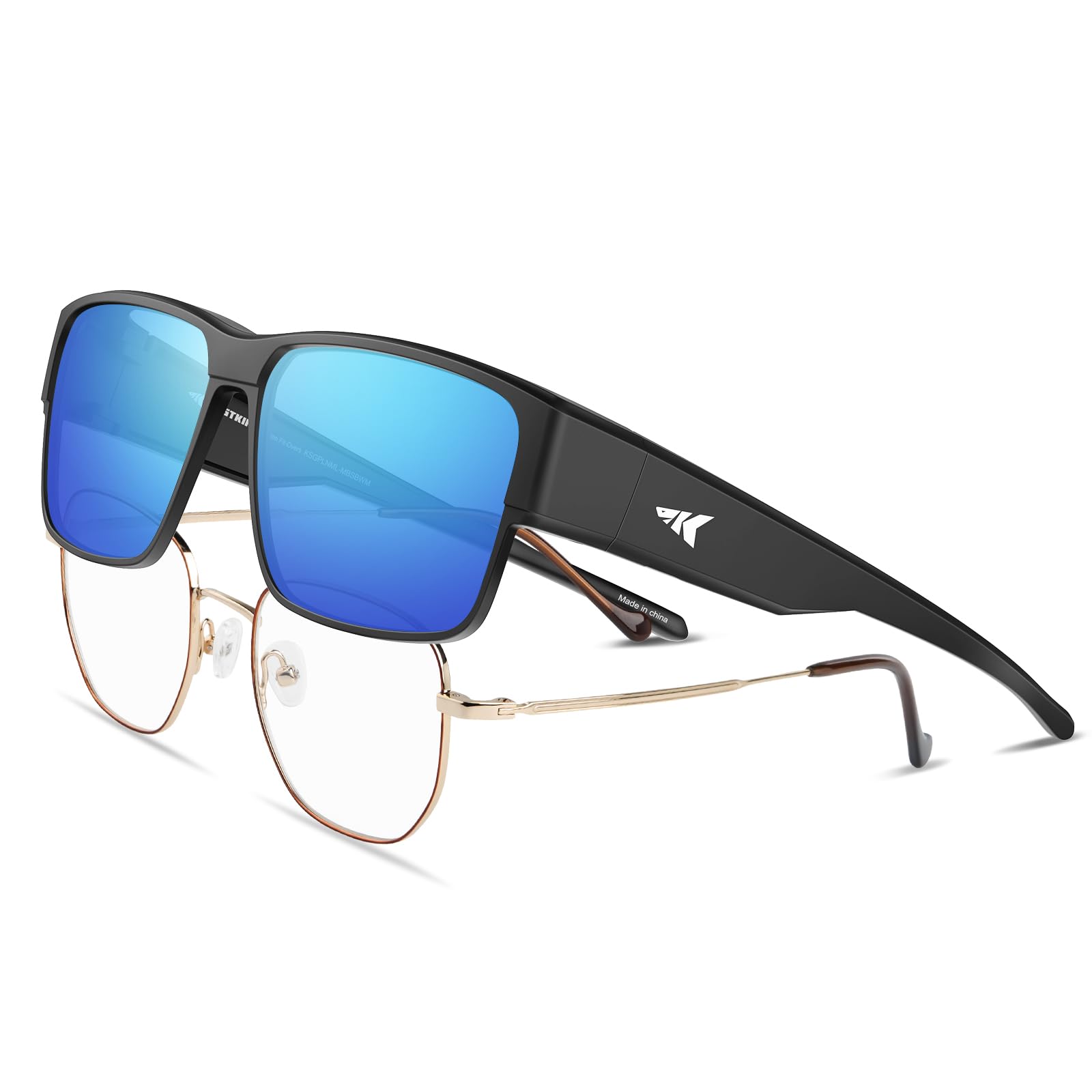
KastKing Skidaway Polarized Sunglasses
Lightweight, impact-resistant polarized glasses that block 100% of UV rays, protect your eyes from stray casts, and eliminate surface glare to help you spot fish.
Check Price on Amazon
Scientific Anglers Frequency Trout Line
A premium weight-forward floating fly line. Improves rod loading and casting turnover compared to cheap lines, helping beginners learn casting mechanics faster.
Check Price on Amazon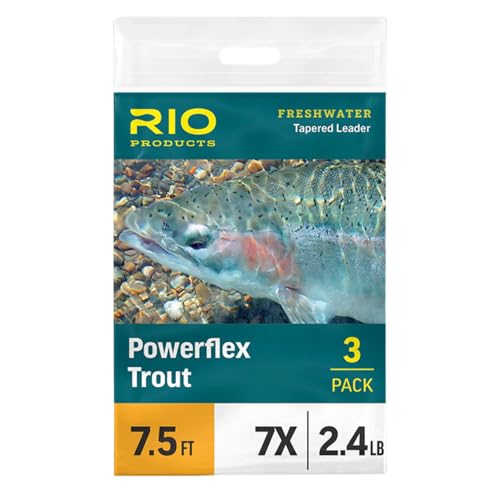
RIO Products Powerflex Trout Leader 3-Pack
A 3-pack of high-performance tapered leaders. Features high knot strength and excellent abrasion resistance, allowing you to drift dry flies naturally.
Check Price on AmazonAffiliate Disclaimer: As an Amazon Associate, CanadaFever earns from qualifying purchases. This helps support our Canadian outdoor research at no extra cost to you.
Wrap-up: your first fish is closer than you think
If you do only one thing after reading this: follow the 4-week roadmap and keep your setup simple.
You don’t need perfect casting. You need consistent reps.
And when you’re ready for the next level, browse our deeper guides on gear, techniques, and destinations.