

Brook Trout fishing in Canada guide with identification, habitat, seasonal patterns, gear, tactics, and official regulation checks.
- Use Brook Trout Fishing in Canada to match species behaviour, habitat, season, and presentation to Canadian water conditions
- Check local regulations before fishing; limits, closures, bait rules, and licences can vary by province and waterbody
- Focus on practical setup: where to fish, what to cast or troll, how deep to work, and when to move
Bottom line Brook Trout Fishing in Canada gets simpler when you pair current rules with the right habitat, timing, and presentation
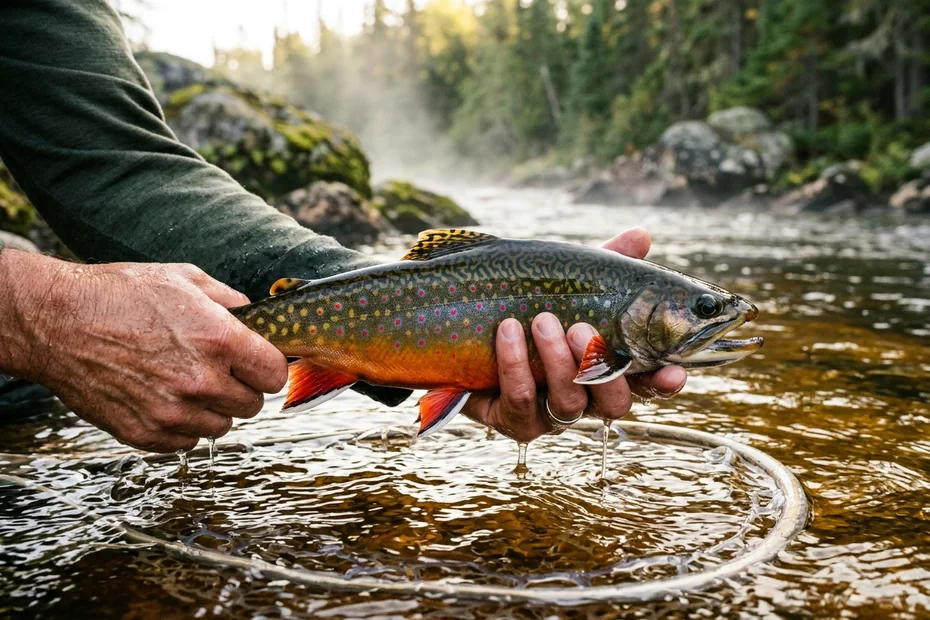
Brook trout fishing connects Canadian anglers with cold spring creeks, black-water Shield rivers, coastal Maritime estuaries, and remote Labrador rapids where native char grow well past five pounds. Known scientifically as Salvelinus fontinalis, the brook trout is biologically a char rather than a true trout and thrives only in clean, chilly water rich in dissolved oxygen.
Matching your tackle and presentation to local water type decides almost every outing across central and eastern Canada. A two-ounce brookie holding beneath overhanging alder roots on a narrow Quebec headwater behaves completely differently from a four-pound coaster cruising Lake Superior bedrock reefs or an ocean-bright salter pushing up a Nova Scotia tidal run.
This manual belongs to our Fishing for Specific Species in Canada collection and pairs with our Canada Outdoor Planning Tools for seasonal trip preparation. You can also explore freshwater fishing across Canada before narrowing down regional waters.
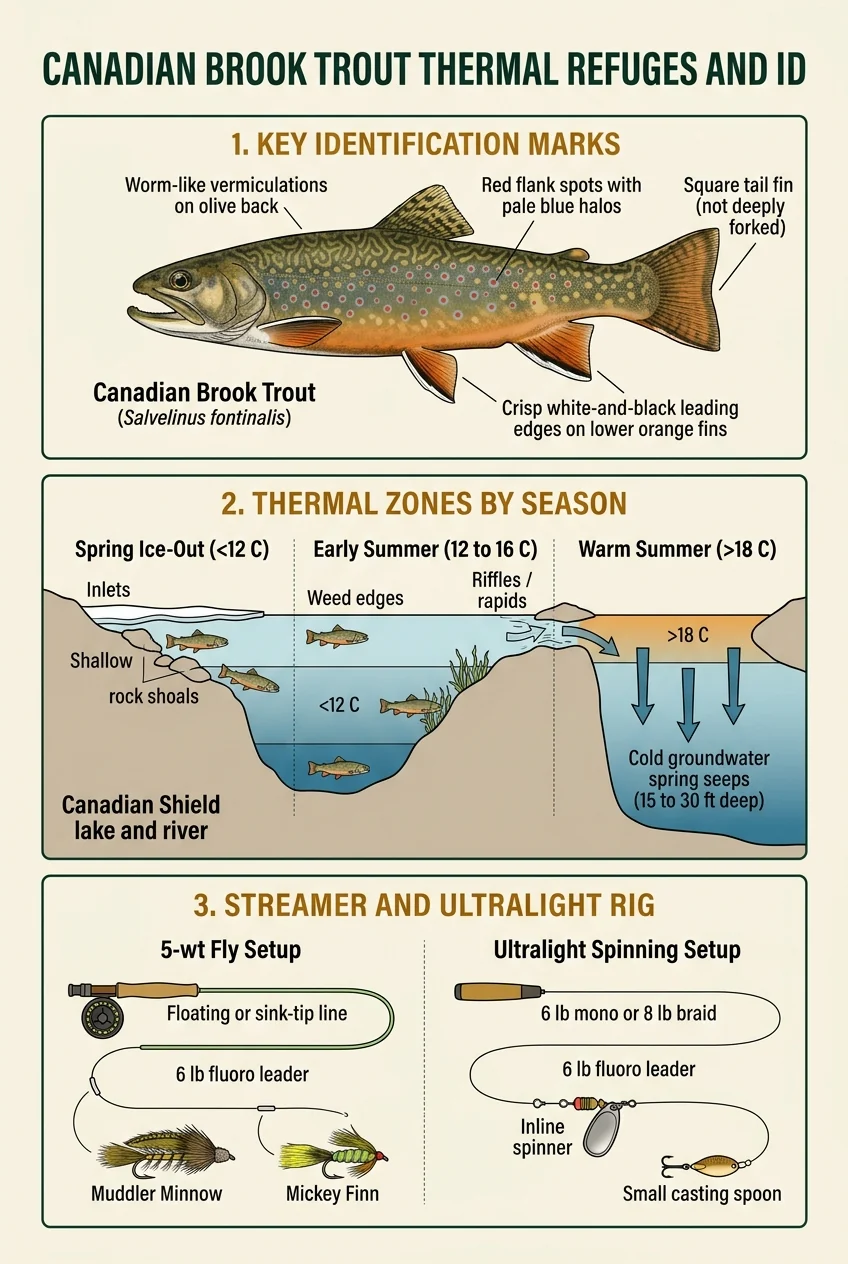
Open full-resolution brook trout diagram (848×1264 WebP)
Biological Identification: Separating Brook Trout From Lookalikes
Clear recognition protects vulnerable brook trout populations across mixed Canadian watersheds where splake (brook trout crossed with lake trout), brown trout, bull trout, and Arctic char share seasonal spawning tributaries. Regulations in Ontario, Manitoba, and the Maritimes frequently protect native brook trout with tight slot windows or zero-harvest zones while permitting broader harvest on stocked brown trout or rainbow trout.
Even coastal Nova Scotia and Newfoundland rivers hold brightly silvered sea-run brook trout alongside juvenile Atlantic salmon parr, making tail profile and fin trim far better field clues than overall flank brightness.

Open 1024×559 brook trout identification plate
Five Instant Field Checks
- Worm-Like Back Markings: Irregular pale cream or olive squiggles cover the back and dorsal fin. Neither Arctic char nor Atlantic salmon show true vermiculated back patterns.
- Blue-Ringed Red Spots: Small red spots along the greenish flank sit neatly inside delicate pale-blue halos, paired with scattered golden-yellow dots higher up the sides.
- Black-Backed White Fin Stripes: Pectoral, pelvic, and anal fins carry bright snow-white front margins underlined directly by crisp black ink stripes.
- Square Tail Edge: The tail fin finishes nearly straight across with rounded corners rather than forming a deep sharp V fork.
- Absence of Teeth on Vomer Shaft: Inside the mouth, teeth appear only on the front head of the roof plate, separating char cleanly from brown trout.
| Trait | Brook Trout (Salvelinus fontinalis) | Brown Trout (Salmo trutta) | Splake Hybrid (Brook x Lake) | Atlantic Salmon Parr |
|---|---|---|---|---|
| Back Pattern | Dark olive with pale worm-like squiggles | Olive-tan with black dots and blotches | Broken faint mottling or pale blobs | Dark vertical thumbprint parr bars |
| Lateral Spots | Red dots inside blue halos plus yellow dots | Dark X spots and orange-red spots in pale rings | Yellow-orange dots without vivid blue halos | Single small red dot centered between dark bars |
| Lower Fin Edges | Bright white edge backed by crisp black line | Plain amber or cream edge without black line | Soft white edge with faded dusky tint | Large wing-like pale pectoral fins |
| Tail Shape | Nearly square across outer margin | Square with blunt corners, few spots | Noticeably notched or shallowly forked | Deeply forked tail with narrow wrist |
| Canadian Distribution | NL, Maritimes, QC, ON, MB, plus stocked AB/SK | ON, QC, Maritimes, AB Bow drainage | Stocked cold lakes in ON, QC, AB, SK | Atlantic provinces and eastern Quebec rivers |
Three Canadian Ecotypes: Creek Residents, Coasters, and Sea-Run Salters
Brook trout adapt extraordinarily well to diverse habitats across Canada, splitting into distinct behavioral strains tied closely to food supply and thermal structure. Understanding which strain swims in front of you keeps lure profiles, line strength, and hook choices properly calibrated.
Small headwater creeks fed by forest groundwater produce brightly colored 7-to-12-inch fish that hit tiny dry flies and compact spinners greedily. Meanwhile, vast cold northern rivers, Lake Superior boulders, and Maritime tidal lagoons grow bulky predators feeding heavily on sculpins, smelt, leeches, and marine amphipods.
| Canadian Ecotype | Average Trophy Weight | Core Seasonal Habitat | Primary Forage Diet | Ideal Line & Hook |
|---|---|---|---|---|
| Headwater Creek Residents | 0.3 to 1.2 lb | Cold cedar bends, log jams, gravel riffles | Caddis larvae, terrestrial ants, small dace | 2 to 4 lb fluorocarbon; size 12 to 16 single hook |
| Boreal Shield Lake Residents | 1.5 to 4.0 lb | Spring-seep bays, submerged boulder shoals | Burrowing mayflies, freshwater shrimp, minnows | 6 lb fluorocarbon; size 4 to 8 barbless lures |
| Great Lakes Coasters | 2.5 to 6.5 lb | Lake Superior windward points and cobble reefs | Slimy sculpins, emerald shiners, aquatic insects | 8 lb mainline + 8 lb leader; size 2 to 6 hooks |
| Labrador & Quebec River Runners | 3.5 to 9.0 lb | Broad boulder rapids, lake outlets, waterfall plunge pools | Mice, voles, stoneflies, whitefish fry | 8 to 12 lb leader; 2 to 6/0 streamer and mouse hooks |
| Maritime Sea-Run Salters | 1.5 to 4.5 lb | Tidal eelgrass channels, estuary current seams | Mummichogs, sand shrimp, silversides, sticklebacks | 6 to 8 lb fluorocarbon; stainless size 4 to 8 flies |
Flies, Inline Spinners, Small Spoons, and Bank-Shadow Stealth
Brook trout spook readily from boot thumps, heavy splashdown casts, and gleaming bright sunlight over shallow clear water. Keep your rod low against green bank willow edges, stand back off undercut shelves whenever approaching small streams, and work cleanly upstream so trout facing into the flow look away from your boots.
Whether casting an unweighted foam mouse across a shadowy Labrador eddy or hovering a copper spinner beside sunken Quebec timber, matching presentation speed to water chill decides strike conversion.
Spinning Gear: Compact Blades, Tiny Jigs, and Wobbling Spoons
- Inline French Spinners: Size 1 and size 2 gold, copper, or red-spot blades spun just fast enough to turn smoothly through dark cedar pools trigger effortless reaction bites from sheltered brookies. Swap bottom trebles cleanly for single Siwash hooks.
- Lightweight Flutter Spoons: Thin 1/8 oz to 3/8 oz red-and-white, orange-dot, or hammered brass spoons sink steadily into Shield lake drop-offs and river mouths where coasters and northern brookies hunt baitfish schools.
- Marabou Hair Jigs & Micro Plastics: Olive, black, and white 1/16 oz to 1/4 oz marabou jigs swim naturally underneath deep clear lakes when worked with faint wrist twitches close to spring-cooled gravel beds.
Fly Fishing: Dry Flies, Streamers, and Cold Spring Nymphs
Start brushing up on roll casts and pocket drifts with our complete how to fly fish guide before squeezing along tight eastern stream corridors. On tight bush creeks, a 7 ft 6 in 3-wt or 4-wt glass or moderate-action graphite rod lets you flick a size 14 Elk Hair Caddis, Parachute Adams, or Stimulator under low spruce limbs with zero backcast snagging.
Across expansive northern rivers in Labrador, northern Ontario, and Quebec, step directly to a 6-wt floating line paired with deer-hair mice, sculpin Muddlers, and weighted black wooly buggers worked along dark boulder eddies. Check proven all-around setups inside our fishing gear and equipment overview and review knots in fishing for beginners in Canada.
5-Step Safe Handling Method for Delicate Brook Trout
Use Rubber Mesh Nets and Single Barbless Points
Standard knotted nylon bags strip mucous layers off delicate char skins within seconds. Scoop tired fish inside a smooth flat-bottomed silicone rubber landing net fitted with soft mesh.
Keep Every Fish Inside Cool Shaded Water While Unhooking
Pinch barbs flat beforehand so single size 4 to 14 hooks slide out quickly using slim forceps without tearing fragile corner jaw membranes.
Soak Bare Hands Completely Before Touching Scales
Warm dry cotton gloves or dry fingers sear cold slime coatings instantly. Submerge both hands completely in the stream before gently cradling the chest behind pectoral fins.
Check Stream Thermometers Before Scheduling Summer Photos
Once stream temperatures rise past 19 C, leave fish submerged inside the net rim without lifting them into hot summer air. Reserve horizontal quick snaps strictly for sub-17 C mornings.
Allow Full Recovery Facing Quiet Upstream Current
Point the trout straight into steady, gentle oxygenated flow away from sandy eddies until tail beats pull cleanly out of your loose palm.
Top Canadian Brook Trout Destinations by Province
Brook trout natively inhabit eastern Canada from the Atlantic coast through northern Ontario and Manitoba’s Hudson Bay lowlands, plus thriving stocked mountain lakes across Alberta and Saskatchewan. Comparing access styles from roadside provincial parks to boat-in camps helps narrow options within the best fishing spots in Canada or our kayak routes in the ultimate guide to kayak and canoe fishing in Canada.
Atlantic Canada and Sea-Run Salter Estuaries
- Newfoundland and Labrador Trophy Watersheds: Labrador’s Minipi, Eagle, and Flowers river drainages consistently yield Canada’s heaviest wild brook trout from 4 to over 8 pounds hammering topwater mouse patterns. Explore access hubs inside best fishing spots in Newfoundland and Labrador.
- New Brunswick Spring Streams & Miramichi Tributaries: Cold limestone springs and clear tributaries feeding the Miramichi, Restigouche, and Cains rivers produce spring and early summer sea-run coasters alongside bright resident stream trout; study regional timing via best fishing spots in New Brunswick.
- Nova Scotia Estuaries & Cape Breton Waters: Tidal runs including the Margaree estuary, St. Mary’s River, and Mabou harbour host bright coastal salters feeding on shrimp and silversides during May and June; plan tide lines through best fishing spots in Nova Scotia.
Ontario, Quebec, Manitoba, and Outfitted Camps
Ontario’s Lake Superior north shore, Nipigon River system, and Sutton River flow past world-class trophy sanctuaries where four-to-six-pound fish stalk whitewater boulder pockets. Manitoba’s cold Gods River watershed also ranks high among wild fly-in trophy char waters; check access details in best fishing spots in Manitoba.
Winter Hardwater Brook Trout and Boreal Ice Safety
Across central Ontario, northern Quebec, and stocked Manitoba parklands, midwinter trout action continues cleanly underneath frozen bay ice between January and late March. Brook trout cruise shallow littoral shelves between 4 and 14 feet rather than hugging bottom trenches, patrolling sunken shoreline timber and decaying reed edges for dragonfly nymphs and fathead minnows.
Sight-fishing through shaded eight-inch ice holes reveals sudden strikes before rods even nod. Suspended tiny tungstens, tear-drop ice jigs tipped with maggots, and feather-light micro spoons gently pulsed two feet beneath the ice underside pull crisp winter hits from plump speckled trout.
Verify early freeze thresholds carefully whenever crossing spring-fed bays where underwater warm groundwater upwellings weaken snow-covered ice plates unexpectedly. Pack ice picks around your jacket collar and consult established regional operators listed inside our winter lodge directories prior to heading far past plowed winter trails.
Across Quebec’s Charlevoix, Laurentian wildlife reserves (ZECs and SEPAQ parks), and Mauricie backcountry lakes, portage canoes unlock quiet speckled trout lakes rarely pressured on foot. Compare guided basecamps inside fishing lodges in Canada and all-inclusive fishing lodges in Canada, or verify winter hardwater hut rules inside lodges for ice fishing and ice fishing in Canada.
Canadian Regulations, Thermal Ethics, and Coaster Conservation
Native brook trout populations depend heavily on spring gravel redds dug between late September and November where fertilized eggs incubate underneath protective winter ice until April melt. Protecting spawning pairs and conserving old large fish has prompted strict provincial regulations across eastern Canada.
Always double check zone-specific open dates, size minimums, and artificial-lure mandates inside fishing regulations and licences in Canada before tying on live bait or barbed hooks.
| Province / Region | Core Brook Trout Season Window | Key Tackle & Slot Nuances | Primary Authority |
|---|---|---|---|
| Ontario (Shield & Superior) | Last Saturday in April to mid-September (most FMZs) | Nipigon minimum 56 cm slot rules; winter open seasons on stocked lakes | Ontario MNRF FMZ Regulations |
| Quebec (SEPAQ / ZECs) | Late April through Labour Day (varies by zone) | Wildlife reserve daily quota envelopes and strict boat-motor rules | Quebec MELCCFP Zone Tables |
| Newfoundland & Labrador | Scheduled season opens winter/spring by zone | High-trophy Labrador fly waters enforce barbless catch-and-release caps | DFO / NL Angling Guide |
| Nova Scotia & New Brunswick | April 15 through August 31 / September 30 by river | Thermal warm-water river notices and scheduled Atlantic salmon pool rules | Maritime Provincial Angling Summaries |
| Manitoba (North Region) | Seasonal spring opening across northern rivers | Gods River barbless conservation harvest limits and fly-in lodge rules | Manitoba Anglers Guide |
Brook Trout Tackle & Ecotype Setup Selector
Matching rod power, leader strength, and lure weight cleanly to water size prevents lost trophy fish in heavy northern boulder current while keeping small forest creeks exciting on ultralight tackle.
Interactive Canadian Brook Trout Setup Calculator
Select your Canadian water type, season temperature condition, and preferred tackle style to display recommended line weight, top patterns, retrieve pace, and handling guidance.
Recommended Canadian Brook Trout Setup:
Cast quietly from downstream bank angles so wary creek trout never see your shadow cross gravel pockets.
Recommended Brook Trout Lines and Terminal Hardware
Crisp clear Shield water and rugged alder creek pockets require dependable low-visibility fishing lines alongside slim forceps tools for clean hook release.
CanadaFever participates in affiliate programs. We may earn a commission on qualifying purchases made through links on this page at no additional cost to you.
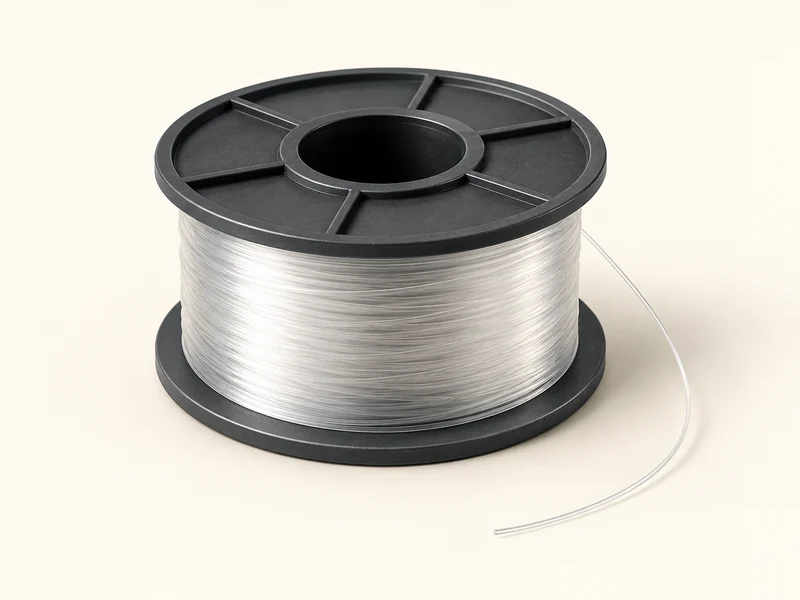
Reference illustration - check exact variant on Amazon.
Berkley Trilene XL Monofilament (8 lb Test, Clear)
- Low memory coils glide cleanly off compact spinning spools for accurate short-range casts under low alder cover.
- Built-in shock stretch absorbs sudden thrashing surges from heavy spring brookies close to boat gunwales.
- Clear low-visibility profile performs well for small spinners, floating lures, and slow drift floats.
Reference illustration - check exact variant on Amazon.
Seaguar Red Label Fluorocarbon Line
- Near-invisible underwater refraction conceals leaders neatly when sight-fishing calm Canadian lake shores.
- Tough outer surface guards against sharp granite rocks and sunken cedar deadfalls during hooked runs.
- Consistent knot strength holds double-uni and clinch connections securely across cold northern temperatures.
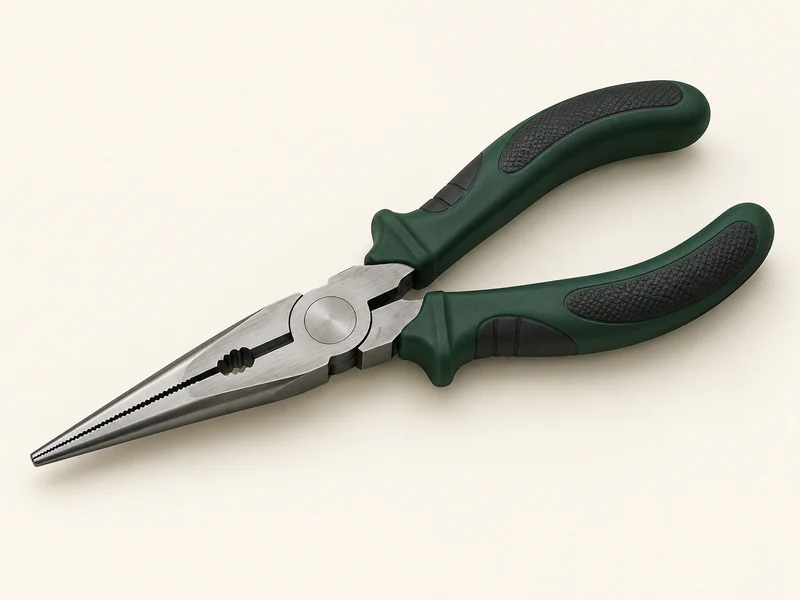
Reference illustration - check exact variant on Amazon.
Rapala 6½-inch Fisherman's Pliers
- Slim tapered carbon steel tips crush small spoon and fly barbs neatly flat before sliding lures free inside your net.
- Compact 6½-inch size slips smoothly into damp wading vest holsters along brushy creek paths.
- Built-in side wire cutter trims fluorocarbon leader tags quickly during cold early spring sessions.
Additional Verified Brook Trout Gear Categories on Amazon:
Compare Trout & Salmon Casting Spoons • Browse Salmon & Trout Rubber Nets • Review Fluorocarbon Leader Spools
Frequently Asked Questions About Canadian Brook Trout Fishing
Is a Canadian brook trout really a trout or a char?
Biologically, Salvelinus fontinalis belongs to the char genus alongside lake trout and Arctic char rather than rainbow or brown trout. Look for light pale dots and worm-like lines over dark flanks instead of dark black spots over a bright background.
What water temperature shuts down safe brook trout catch and release?
Keep catches brief when water rests near 17 C to 18 C, and avoid targeting native brook trout completely once water temperatures reach 19 C to 20 C. Warm water lacks oxygen, making survival after prolonged fights difficult for cold-adapted char.
Where can anglers find four-pound-plus trophy brook trout in Canada?
Wild 4-to-8-pound brook trout thrive in Labrador watersheds like the Minipi and Eagle rivers, Ontario's Lake Nipigon and Lake Superior north shore tributaries, and Manitoba's remote Gods River. Many accessible southern Shield lakes also grow plump residents around stocked spring basins.
What are the best lures for clear northern Canadian brook trout lakes?
Gold or copper French inline spinners in sizes 1 and 2, thin 1/8 to 3/8 oz wobbling spoons in silver or red-and-white, and 1/16 oz olive or black marabou jigs consistently produce action. Always pinch hook barbs down cleanly so small mouths unhook without damage.
Do sea-run Maritime salters turn bright silver in saltwater?
Yes. When brook trout drop into coastal Atlantic estuaries around Nova Scotia, New Brunswick, Prince Edward Island, and Newfoundland during spring, backs fade pale olive-silver while flanks gleam metallic white. Inspect the white-and-black lower fin stripe and square tail to avoid confusion with salmon smolts.
What fly rod weight works best across Canadian brook trout water?
Pack a short 7 ft 6 in 3-wt or 4-wt rod for canopy creeks, bush streams, and cedar beaver ponds. Switch up to a fast 9 ft 6-wt rod across big Labrador rivers or windy Shield shores where turning heavy streamers and foam mice into wind matters.
Official Canadian Fisheries Resources and Related Guides
Confirm seasonal dates, slot minimums, and warm-water river advisories through official Canadian resources prior to launching:
- Fisheries and Oceans Canada (DFO): Aquatic Species Identification Guide
- Government of Ontario: Brook Trout Species Biology and Sanctuary Profile
- Government of Alberta: Official Game Fish Species Identification Portal
- Related CanadaFever Guides: Fishing for Specific Species in Canada · Canada Outdoor Planning Tools · Freshwater Fishing in Canada · Best Fishing Spots in Canada · Fishing Regulations and Licences in Canada · Fishing Gear and Equipment · Fishing for Beginners in Canada · Ice Fishing in Canada · Kayak and Canoe Fishing in Canada · Fishing Lodges in Canada · All-Inclusive Fishing Lodges Canada · Lodges for Ice Fishing · Newfoundland & Labrador Fishing · New Brunswick Fishing · Nova Scotia Fishing · Manitoba Fishing · How to Fly Fish