

Discover essential bear hunting tips, techniques, and regulations to ensure a successful and safe adventure in Canada's wilderness.
- Identify a legally open species
- Match the method to your fitness
- Plan recovery and reporting
Bottom line Choose the unit, documents and daily routine before booking.
Canadian hunting & conservation
Bear hunting in Canada asks you to choose more than a destination. Build a black-bear trip around a legally open unit, reliable identification, a method that fits your ability and a clear plan for recovery and transport.
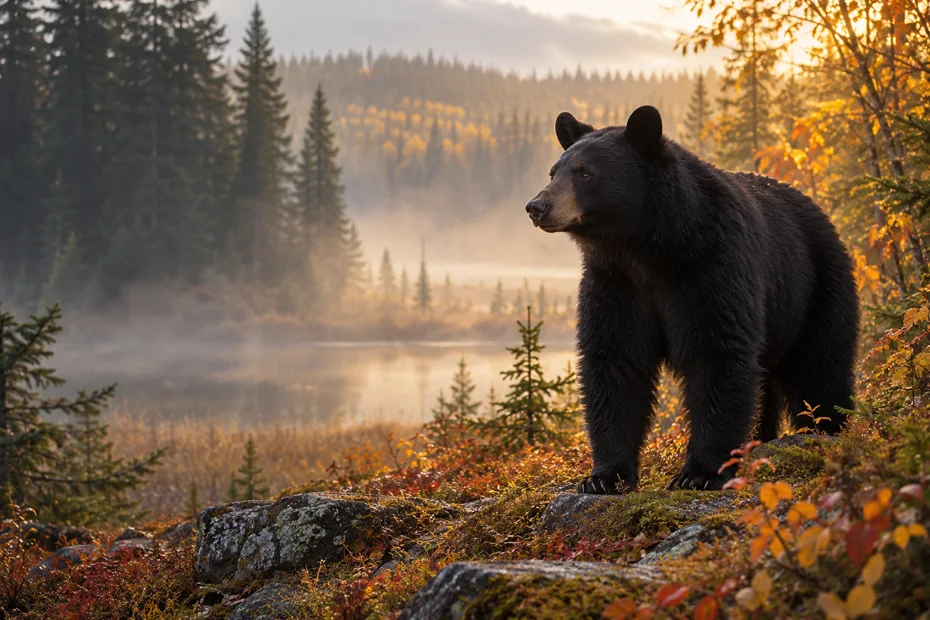
Reviewed October 2, 2026 · Official rules override summaries · Header is a generated editorial illustration, not a documented sighting.
A useful plan connects the rules with the decisions you make next. The approach below keeps those decisions in order.
Bear species and identification
Canada has black bears, grizzly bears and polar bears. This is a planning guide for black-bear hunting where it is legally open, not a guide to taking all three species. Polar-bear harvest involves distinct northern management systems and is outside this guide’s scope.
Do not identify a bear by colour alone. Black bears can be brown or cinnamon. In country where black and grizzly bears overlap, learn the distinguishing features through recognized training and local guidance. If identification is uncertain, do not shoot. Confirm whether cubs or accompanying females are protected by the applicable rules.
Bear hunting regulations: two important examples
| Location | Rule to establish | Planning implication |
|---|---|---|
| British Columbia | The province ended licensed grizzly-bear hunting in December 2017. | Plan only for a species with a current open season and appropriate licence; consult the current hunting synopsis and updates for black-bear units. |
| Ontario | The 2026 black-bear regulations list an Outdoors Card, bear licence, bear tag or applicable party-hunting arrangement, and firearm accreditation when hunting with a gun. | A small-game licence is not a substitute. Non-residents have additional operator and validation-certificate requirements. |
| Other provinces and territories | Species, units, residency, tags, methods and reporting vary. | Use that jurisdiction’s current official rules; neither of the examples above transfers automatically. |
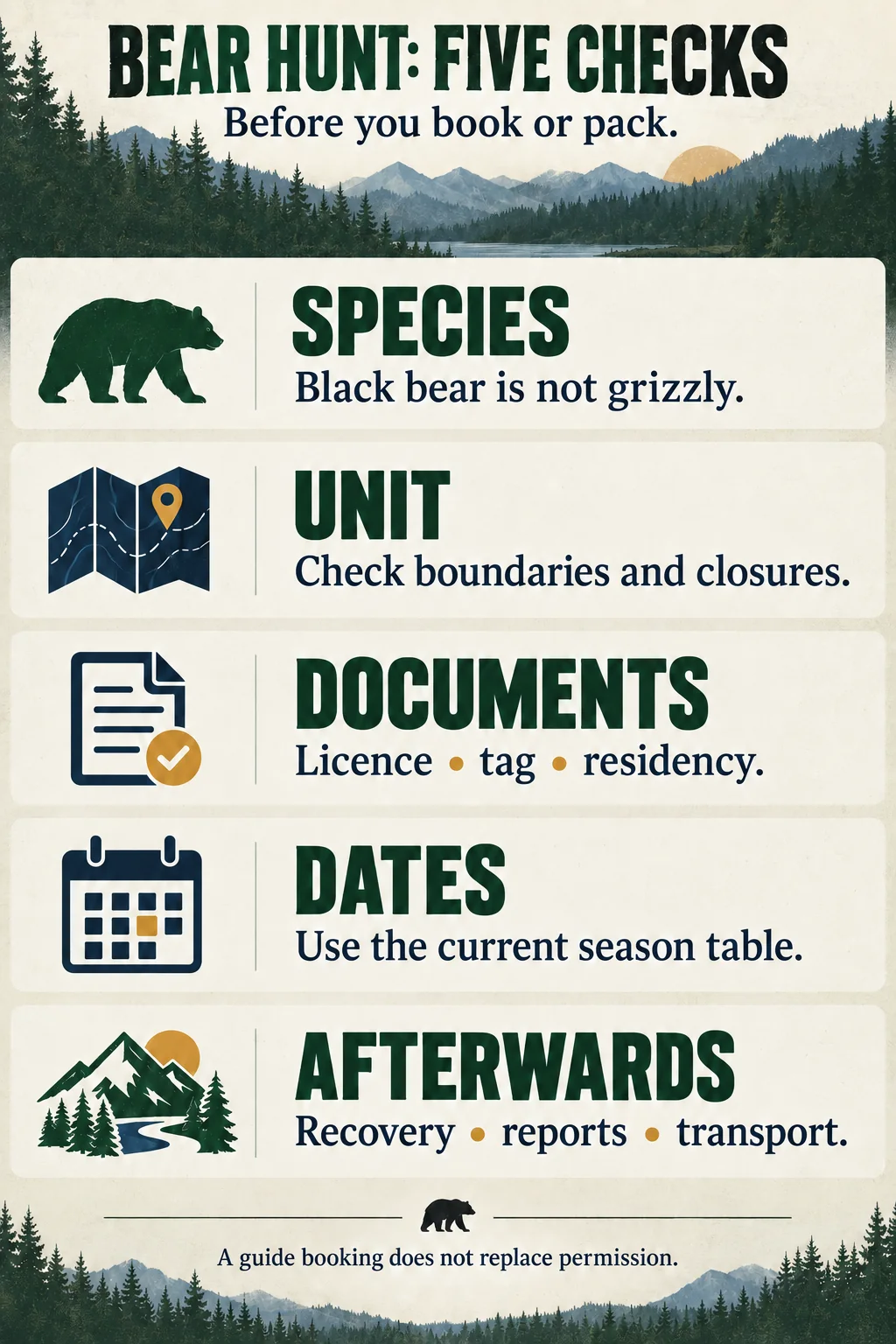
Ontario requires non-resident black-bear hunters to hunt through an operator licensed to provide black-bear hunting services. Check the current rules for the validation certificate, licence and tag before paying a deposit. Do not assume a Canadian address automatically qualifies you as a resident of the province you are visiting.
Choose legal access before choosing scenery
Maps must show the management unit, property boundaries and closures. Confirm permission on private land and the rules for any public land. A nearby population of bears does not make a park or reserve a hunting area.
Parks Canada’s visitor rules state that hunting and firearms are generally not allowed in national parks. Do not plan a recreational bear hunt in Banff or Jasper. Provincial parks and other protected areas have their own rules, so confirm the specific designation and authorization rather than treating every forest as open hunting land.
Choose dates from the current season table
Spring and fall are common planning terms, not national legal seasons. Ontario’s 2026 tables, for example, list different fall openings among units and additional restrictions in particular areas. Read the notes as well as the dates.
Before booking, record the unit, open dates, legal method, protected animals and reporting duties. Recheck notices shortly before departure. Weather can delay travel or affect visibility, but it never extends a closed season.
Equipment and preparation for bear hunting
Choose clothing and footwear for the terrain and expected wet or cold conditions. Carry navigation with a backup, first aid, communication suitable for the coverage area and a trip plan left with a responsible contact.
For lawful hunting equipment, work with qualified instructors and follow current provincial method restrictions and federal firearm requirements. A calibre name alone cannot establish suitability or a humane outcome. Practise under instruction, understand your limits and decline a shot when identification, visibility or the background is uncertain.
| Before departure | What to confirm | Common mistake |
|---|---|---|
| Documents | Correct licence, tag, residency evidence, guide requirements and any firearm documentation. | Buying a generic hunting product and assuming all bears are covered. |
| Access | Unit boundaries, permission, closures and road or trail restrictions. | Using a wildlife-viewing location as a hunting recommendation. |
| Safety | Emergency communication, first aid, bear-aware camp practices and trained deterrent use. | Relying on a weapon or spray as a guarantee. |
| After harvest | Current tagging, reporting, evidence and transport requirements. | Assuming every province has the same tag procedure or deadline. |
Bear-country safety is a separate skill
Read Parks Canada’s bear-spray guidance and the manufacturer’s instructions before travel. Carry appropriate spray where it can be reached promptly, check its expiry and understand transport restrictions. Do not spray tents or clothing as a preventive treatment.
Keep food and other attractants managed at camp. Hunting techniques are not encounter-response instructions: do not approach an unidentified bear, follow it into dense cover or try cub-distress calls based on a generic online tip.
This article is general planning information, not legal advice or a substitute for hunter education or emergency-response training. Deterrent effectiveness varies with condition, storage, training, weather and use. Follow current official guidance and manufacturer instructions.
If your aim is to see bears
Choose a viewing trip when photography or observation is your goal. Our Canadian bear-watching guide describes that separate experience. Wildlife viewing does not require or justify approaching bears at close range.
Identify the bear before deciding anything else
Parks Canada’s bear-identification guidance, updated September 2026, emphasizes shape rather than coat colour. A black bear can be brown; a grizzly can be very dark. Look at a combination of features, not one impression from a moving animal.
Swipe the table on a narrow screen.
| Feature | Black bear | Grizzly bear |
|---|---|---|
| Shoulders | No prominent shoulder hump; rump is often higher. | Distinct muscular shoulder hump. |
| Face and ears | Flatter snout profile and taller ears. | Scooped profile and shorter, rounded ears. |
| Claws | Shorter claws. | Long claws specialized for digging. |
These cues help explain why identification training matters. Distance, angle, posture and vegetation can hide them. The correct decision when species, accompanying cubs or legal animal class remains uncertain is to pass, not to move into a risky encounter for a closer look. Our hunting-binoculars guide explains observation choices without treating optics as a substitute for judgement.
Match the method to the day you want
Ask the operator what a normal day involves. A hunt described as “guided” can involve many hours sitting still, extensive walking or a combination. The meaningful comparison is workload, conditions, observation time and recovery access—not which method sounds more exciting.
A stationary setup demands patience and clothing that stays comfortable without much movement. A walking-and-glassing itinerary demands fitness, secure footing and layers you can adjust as effort changes. Either can involve a long day with no suitable animal.
Method legality is province-specific. British Columbia’s Hunting Regulation, consolidated September 29, 2026, prohibits hunting a bear by placing bait or using a dead animal or part of it as bait. Québec’s black-bear guidance specifies baiting restrictions by zone and period. Do not transplant an operator’s setup from one province to another.
Budget for the entire bear trip
Compare quotes on the same basis. A five-day hunt can mean five calendar days including transfers or five full guided days. Guide ratio, transport and processing can change the value more than the advertised base price. Get the currency and taxes written down, and treat gratuities as a separate planning question.
- Ask whether airport transfers, camp transport, meals and accommodation are included.
- Identify licence, tag, validation and permit costs without assuming they are bundled.
- Confirm who pays for extra nights caused by weather or transport delays.
- Get wounded-animal, cancellation and no-harvest policies in writing.
- Ask how success figures were measured: sightings, opportunities or completed harvests, over which years and how many clients.
The big-game lodge planning guide can help you compare accommodation and access. Use the operator’s current contract for the actual purchase. This guide supplies no national package price and makes no claim that a listed business was tested by CanadaFever.
Pack for motion, waiting and wet weather
Separate active layers from insulation for waiting. A breathable layer that works on an uphill walk may leave you cold once you stop. Keep one dry layer protected, and ask what camp drying facilities are available rather than assuming clothing will recover overnight.
For equipment decisions, start with base layers and hunting rain gear. Pick footwear around the described terrain; waterproof hunting boots address a different need from insulation for a long stationary wait. Break footwear in before travel.
A day pack should carry navigation, water, food, first aid, a light and emergency communication without making the day harder than necessary. Our hunting-backpack comparison helps distinguish day-use storage from heavier carrying needs. Ask which recovery equipment the guide supplies before duplicating it.
Agree on the communication plan before leaving camp: check-in time, rendezvous point, device coverage and who acts if you are overdue. A downloaded map is useful, but it does not tell another person where you are. Check batteries and charging arrangements in the same conversation as the itinerary.
Keep the last day in the first conversation
Ask for the whole recovery and transport workflow, including a trip that produces no harvest. Who organizes processing? What evidence must remain attached or retained? Where are the official reporting instructions stored? Who checks the requirements at your final destination?
Export rules can differ by traveller, destination and the parts carried. Ontario’s official bear guidance describes specific CITES circumstances and exemptions; do not turn those into a Canada-wide assumption. If a border is involved, confirm the applicable requirements directly with the responsible authorities before travel. An outfitter’s packing service does not replace your documents.
Frequently asked questions
Can I hunt grizzly bears in British Columbia?
No licensed grizzly-bear hunt is available. British Columbia ended resident and non-resident grizzly hunting in 2017. Indigenous harvest rights are a distinct legal framework, not a recreational licence exception.
Is an Ontario small-game licence enough for bear hunting?
No. Black-bear hunting has bear-specific licence and tag requirements, along with an Outdoors Card and other applicable documents. Non-residents also face licensed-operator and validation requirements.
What is the best bear hunting season in Canada?
There is no national season. Choose a legal unit and species first, then consult its current open dates and restrictions. Spring or fall activity patterns do not replace those tables.
Are national parks good bear hunting locations?
Banff and Jasper are not recreational hunting destinations. Check the specific protected-area rules elsewhere; presence of bears does not establish legal access.
What should a beginner check before a guided bear hunt?
Confirm the operator’s authorization, exact species and unit, your documents, cancellation terms, safety arrangements and reporting responsibilities. Complete the relevant training before travel.