

Compare three kids fishing combos by grip, reel controls and rod length. Choose a first outfit for Canadian lakes, with setup advice and licence checks.
- Choose by fit and fishing method
- Check the exact model and supplied parts
- Compare limits before buying
Bottom line Compare three kids fishing combos by grip, reel controls and rod length. Choose a first outfit for Canadian lakes, with setup advice and licence checks.
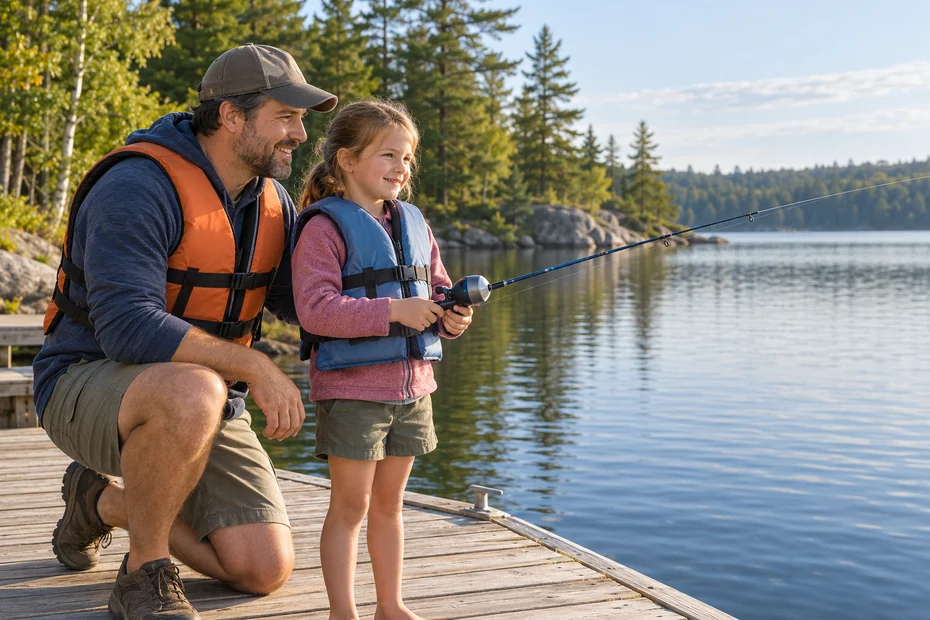
The best fishing rods for kids let a child hold the grip, work the reel and aim a short cast without an adult taking over every time. For a first Canadian cottage or lakeshore trip, choose by those abilities and the water you will fish. An age printed on a package is only a starting point.
A 29-inch push-button combo and a 5-foot-6 spinning outfit solve different problems. The short outfit keeps the controls close; the longer one gives a capable learner more room to develop casting and line control. Neither needs a huge tackle collection to get started.
As an Amazon Associate, CanadaFever earns from qualifying purchases. Product links below lead to Amazon.com. Check delivery to your Canadian address, currency, shipping and any import charges before paying.
Best fishing rods for kids: three different starting points
These are recommendations based on published specifications and the job each outfit suits. CanadaFever has not conducted a hands-on comparison of these combos. Use the shortlist to check grip and coordination. No measured durability or casting-distance scores are available from our review.
| Exact combo | Choose it for | Reason to choose something else |
|---|---|---|
| Zebco Splash Floating, 29-inch, pink, spincast | A compact push-button first outfit; manufacturer includes a practice plug | The child already controls a longer rod or wants to cast small lures farther from shore |
| Zebco Dock Demon, 30-inch, purple, spincast | Close fishing where a short rod and conventional grip suit the child | You need left-hand retrieve or useful reach over bankside plants |
| Ugly Stik GX2 Youth, 5-foot-6, medium, two-piece, size-30 spinning reel | A learner ready to control line with a finger and operate a bail | A small child struggles with the length, or tiny panfish jigs fall below its lure rating |
Zebco Splash: best fishing rod for kids starting with a small grip
The Splash Floating pairs a 29-inch rod with a closed-face push-button reel. Zebco specifies a light-power fiberglass rod, pre-spooled 6-pound line and an included casting plug. The pink single-combo listing is linked here; Splash Jr. and bundle listings can contain different outfits.
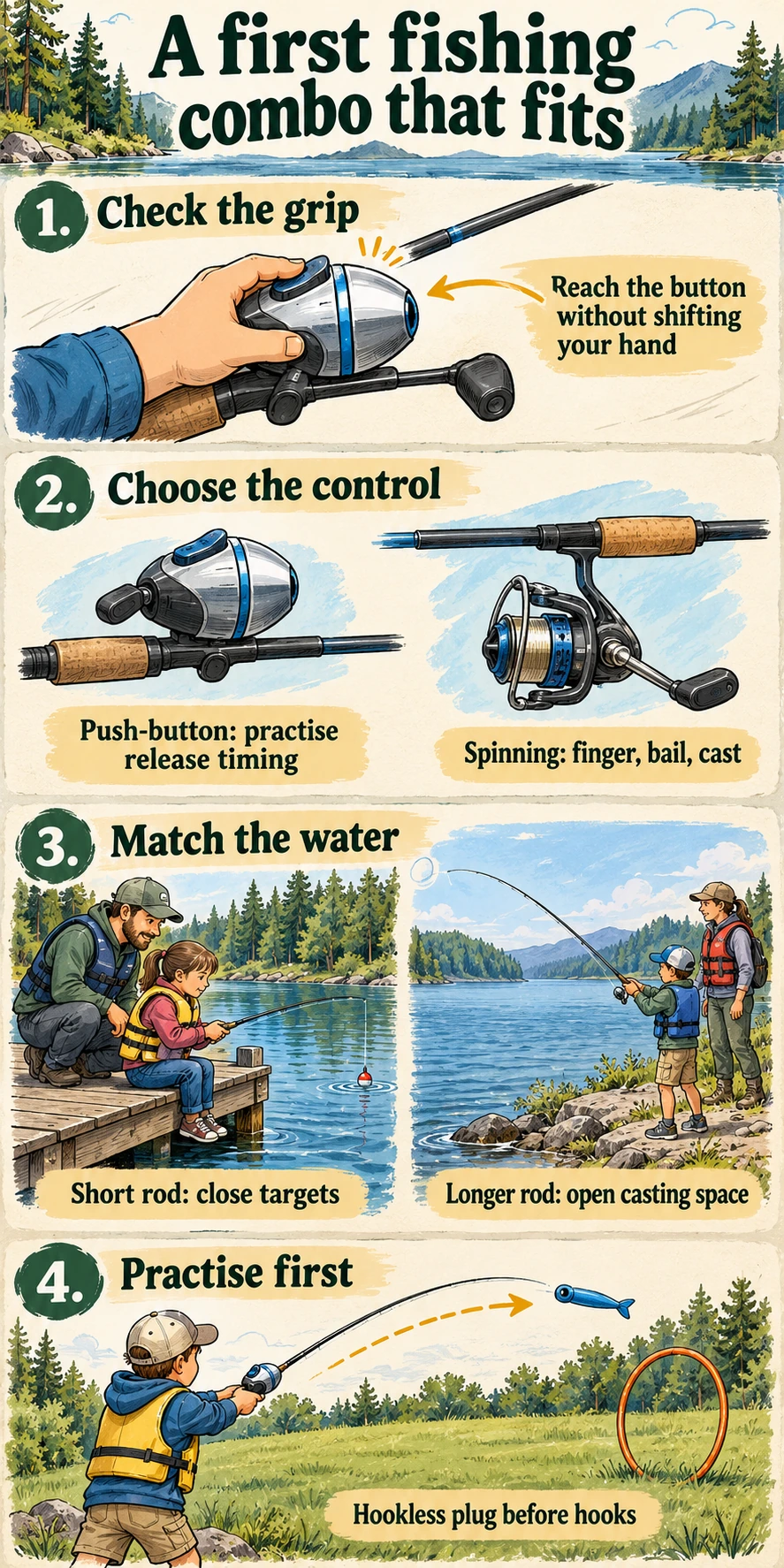
Consider this outfit when reaching the controls is the main difficulty. Hold the rod as the child would, with the reel above the handle. The thumb should press and release the button while the fingers keep a comfortable hold. If reaching requires sliding the hand forward each cast, a small-looking outfit can still be a poor fit.
The floating design may help recover a dropped outfit, although a child should never reach or jump into the water after it. An adult manages any retrieval. Floating tackle also does not reduce the need for close supervision beside water.
Choose the Splash for short practice sessions and nearby legal freshwater targets. Its compact size is a limitation when a bait must clear shoreline weeds or reach well beyond a dock. A child who can already control a longer setup may have little use for this intermediate purchase.

Zebco Splash Floating, 29-inch
- Compact push-button outfit for checking thumb reach.
- Manufacturer includes a hookless practice plug.
- Short reach; check that the grip suits the actual child.
Zebco Dock Demon: for close targets with a push-button reel
The Dock Demon is available with different reel types. This comparison uses the purple 30-inch spincast version, with a fiberglass rod, EVA handle and right-hand retrieve. Zebco lists a dial-adjustable drag and a locking reel seat for this spincast family.
Use it for close fishing, such as lowering a bait into suitable open water or making short casts where rod space is limited. A short rod does not automatically make an unsafe, crowded dock appropriate. The child still needs a clear area around the rod and a safe place to stand or sit.
The handle shape provides a different fit from the all-in-one Splash grip. If both fit the budget, the child’s ability to hold and use each control should decide between them. A conventional grip can work well for one child and leave another reaching awkwardly for the button.
The spincast reel retrieves with the right hand. Let the child simulate holding the rod with the left hand and turning the handle with the right. If that feels awkward, check another outfit’s actual retrieve options. The spinning Dock Demon is a separate configuration with different controls, so do not rely on a shared listing title or review score.

Zebco Dock Demon, spincast
- 30-inch rod for nearby targets and restricted rod space.
- EVA grip with a separate push-button reel.
- Right-hand retrieve; choose the spincast purple variant.
Ugly Stik GX2 Youth: for a child ready to learn spinning
The GX2 Youth recommendation is the 5-foot-6, two-piece, medium-power spinning combo with a size-30 reel. The manufacturer specifies a 6 to 12-pound line rating and 1/8 to 5/8-ounce lure rating. It has a graphite-and-fiberglass rod and a grip designed for smaller hands.
Choose it when a child can hold the longer rod steady and wants to learn the spinning sequence: hold the line with a finger, open the bail, release the line during the cast and close the bail before retrieving. Willingness to practise matters more than reaching a particular birthday.
This medium-power youth combo is not an ultralight panfish outfit. If the planned fishing revolves around very small jigs, compare their complete weight with the printed lure rating. A lighter-rated spinning combo may make more sense than choosing this one for the youth branding.
The two-piece construction helps with car transport, but keep the tip protected and assemble the joint firmly without forcing it. Check the exact model before ordering: GX2 listings include adult lengths, travel versions and other reel sizes. Our beginner gear guide explains how a general spinning combo fits into a complete starter setup.

Ugly Stik GX2 Youth spinning combo
- 5-foot-6, two-piece medium rod with size-30 reel.
- For learning bail and finger control in open casting space.
- Check the 1/8 to 5/8-ounce lure range against your intended rigs.
Check fit before choosing an age band
Start with the outfit assembled and the child standing comfortably. Ask them to point the rod toward an imaginary float for a short time, then turn the handle. Watch the hand and wrist. A grip that slowly rotates, a butt that catches clothing or a rod tip that keeps dropping can reveal a problem that a length chart misses.
Repeat the check while the child wears the lifejacket and clothing intended for the trip. A long handle can catch the jacket. Cold fingers or bulky sleeves may make a small control harder to use. If possible, compare the assembled outfits in a shop; an online measurement cannot show how the reel balances in that child’s hand.
- Check thumb or finger reach while the hand keeps its hold.
- Check the retrieve hand before buying a fixed-hand reel.
- Look for enough space between the handle butt and the child’s body.
- Ask the child to aim the tip without leaning backwards or lifting a shoulder.
- Choose a rod the supervising adult can also rig, untangle and maintain.
Shorter rods reduce the length a child has to manoeuvre, but they cannot reach around bankside plants as easily. Longer rods offer more reach and demand more clear space. A reasonably sheltered location with fish close enough to reach can be a better first-trip decision than buying extra rod length for a difficult bank.
Spincast or spinning: choose the lesson the child can practise
A spincast reel mounts above the rod and keeps the spool inside a cover. The child presses the release button, makes a controlled casting movement and releases the button to send out line. Early or late release is still possible. Practise with a hookless plug and a short target until the movement becomes familiar.
A spinning reel hangs below the rod. A finger holds the line while the bail is opened; releasing that finger lets the line leave the spool during the cast. Close the bail by hand and check that the line is on the roller before winding. Walk through these actions slowly before asking for distance.
For families already familiar with spinning equipment, teaching that system may be easier than learning an unfamiliar reel themselves. For a child who becomes frustrated by several actions at once, a push-button reel can reduce the number of controls to manage. Both systems can tangle if loose line is wound onto the spool.
| What you notice | Useful choice or adjustment | Avoid |
|---|---|---|
| Child cannot reach the release button while gripping | Try a different handle/reel shape | Buying the same design in a favourite colour |
| Child holds line and operates the bail confidently | Compare a suitably sized spinning combo | Buying a very short push-button outfit solely by age |
| Rig lands at their feet or goes sharply upward | Practise release timing with a hookless plug | Adding heavier tackle to compensate |
| Child becomes tired holding the assembled outfit | Check balance, length and grip; shorten the session | Assuming all youth combos are light enough |
Set up the first trip in three steps
Fit the outfit and practise on grass
Read the exact reel instructions, tighten the reel seat and thread line through every guide if required. Use a hookless casting plug within the rod’s rating. Pick an open area away from people, pets, roads and overhead lines. Agree where everyone stands before each cast.
A nearby target is enough. Let the child repeat one movement without changing the grip, target and instruction every attempt. End the practice before frustration takes over; distance can wait.
Prepare one suitable fishing rig
For legal stillwater bait fishing, a small float rig can make the bite visible. Match the hook, float and weight to the permitted bait and target fish. The float should support the rig without being so large that small bites are difficult to see. Keep the complete casting load within the rod’s printed rating.
An adult should handle hooks, cut line ends and check knots. Start from our hook-tying guide if you need to practise before the trip. Bait rules vary by waterbody; a tackle kit’s contents are not permission to use them.
Choose a reachable, safe target
Use a stable, permitted fishing spot with clear casting space and conditions you can supervise. Put the lifejacket on before going near the edge. Bring the landing net and unhooking tools within the adult’s reach, keep spare hooks closed away and check the weather before setting out.
Pick fishing that suits the outfit. A nearby perch or bluegill opportunity may suit a first float session where those species occur and the season is open. Heavy current, steep banks and distant fish add problems that a more expensive combo will not solve. Our beginner lake-fishing guide helps with choosing water and a simple presentation.
What to buy with the combo, and what can wait
A rod-and-reel combo is not necessarily a complete fishing kit. Check whether the selected version includes line, a practice plug and any terminal tackle. Even a pre-spooled reel needs a line check before use. Look for damage, loose loops and line wrapped around the rod tip; an adult should test the drag with the hook safely secured.
Compare the complete cost of getting one child fishing. Add any missing line, suitable hooks, a float and permitted weights to the outfit price. Include shipping and currency conversion when buying from a US listing. Count the tackle you need for the planned trip. The family may already own enough to pair with a bare combo.
- Have a properly fitted lifejacket, adult-held pliers and a landing net appropriate to the fish.
- Pack a hookless practice plug if the combo does not include one.
- Bring a few replacements for the single rig you actually plan to use.
- Keep snacks, sun protection and dry layers accessible.
- Leave specialised lures and a second outfit until the child needs them.
For replacement line, use the exact rod and reel guidance together. Heavier line is not automatically easier to cast or stronger at a poorly tied knot. Our fishing-line guide explains the material choices for a replacement spool.
Fix a simple problem before replacing the outfit
If a cast suddenly stops, look for line around the rod tip or a caught float before touching the reel. Do not pull harder against a jam. Set the outfit down safely and let an adult inspect it with hooks kept away from hands and faces.
Loose coils on a spinning reel call for a pause. Remove slack before retrieving, check the line roller and watch whether the child keeps winding while no line is being recovered. If a fish is taking line through the drag, stop winding and keep a manageable bend in the rod. A locked drag is not a cure for a difficult fish.
A bent or damaged guide, persistent reel fault or worn line requires repair or replacement. Rod toughness claims do not make a tip safe to close in a car door. Rinse and dry equipment as the manufacturer instructs, check that it is dry before storage, and keep hooks covered and away from children.
Upgrade when a specific limitation is recurring: the rod is too short to clear the bank, the controls no longer suit the child or the chosen lure falls outside the outfit’s rating. If the existing combo works comfortably for the planned fishing, there is no need to replace it simply because another season has passed.
Check the child’s Canadian fishing rules
Canada does not have one national child-licence exemption. Age, residency and the water you fish matter. Under Ontario’s rules for Ontario and Canadian residents, those under 18 do not purchase an Outdoors Card or fishing licence, but must carry government-issued identification showing their name and date of birth.
Visitors to Ontario and families fishing elsewhere need to check their own licence category. In British Columbia tidal waters, DFO requires a tidal fishing licence at all ages; juvenile licences are free for children under 16. Additional requirements apply when retaining salmon.
Follow the rules for the actual waterbody, including open seasons, tackle and bait restrictions, fish identification and catch limits. Check the child’s entitlement separately from the adult’s. Use our Canadian regulations and licence guide to find the appropriate authority, then read current notices before leaving.
Best fishing rods for kids FAQ
What size fishing rod should I buy for a five-year-old?
Try a compact outfit first, then check button reach, grip and the child’s ability to hold it steady. The 29-inch Splash and 30-inch Dock Demon are short options here. Age alone cannot tell you whether the handle, reel controls or balance will fit.
Is a push-button reel always better for kids?
It is a useful first choice when a child can manage pressing and releasing one button. A child who comfortably holds line with a finger and operates a bail can start with spinning gear. Use a hookless plug to practise either sequence.
Does a kids’ fishing combo come ready to fish?
Some include line and a practice plug; others need line and terminal tackle. Check the exact variant, then inspect the supplied line and follow its instructions. You still need suitable legal tackle, supervision and appropriate safety equipment.
Is the GX2 Youth an ultralight fishing combo?
The 5-foot-6 version compared here is medium power, with a listed 1/8 to 5/8-ounce lure rating. Compare that with the complete rig you intend to cast. A lighter-rated outfit may suit tiny panfish jigs better.
Do children need a fishing licence in Canada?
Requirements differ by jurisdiction, age, residency and freshwater or tidal water. Canadian-resident children under 18 have an Ontario identification-based exemption; B.C. tidal anglers need a licence at all ages. Check the current authority for your destination and the child’s catch entitlement.