

Crappie fishing in Canada guide with identification, habitat, seasonal patterns, gear, tactics, and official regulation checks.
- Use Crappie Fishing in Canada to match species behaviour, habitat, season, and presentation to Canadian water conditions
- Check local regulations before fishing; limits, closures, bait rules, and licences can vary by province and waterbody
- Focus on practical setup: where to fish, what to cast or troll, how deep to work, and when to move
Bottom line Crappie Fishing in Canada gets simpler when you pair current rules with the right habitat, timing, and presentation
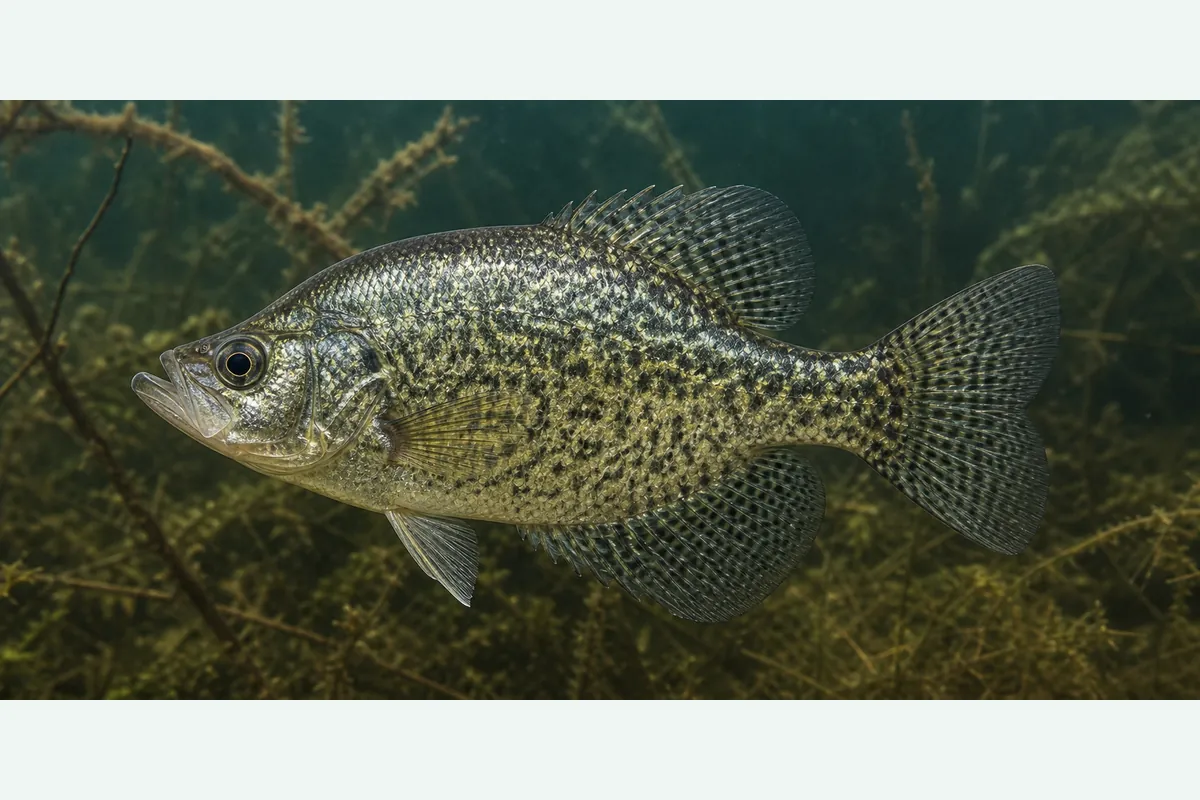
Quick Answer
Crappie fishing in Canada is best planned by matching the species to the right water, season, gear, and official rule source. Start with identification and habitat, then verify province, zone, date, waterbody, size, retention, bait, and licence rules before fishing.
Where this fits: This profile is part of the Fishing for Specific Species in Canada hub. Use it with the Canada Outdoor Planning Tools species finder before checking the exact regulation source.
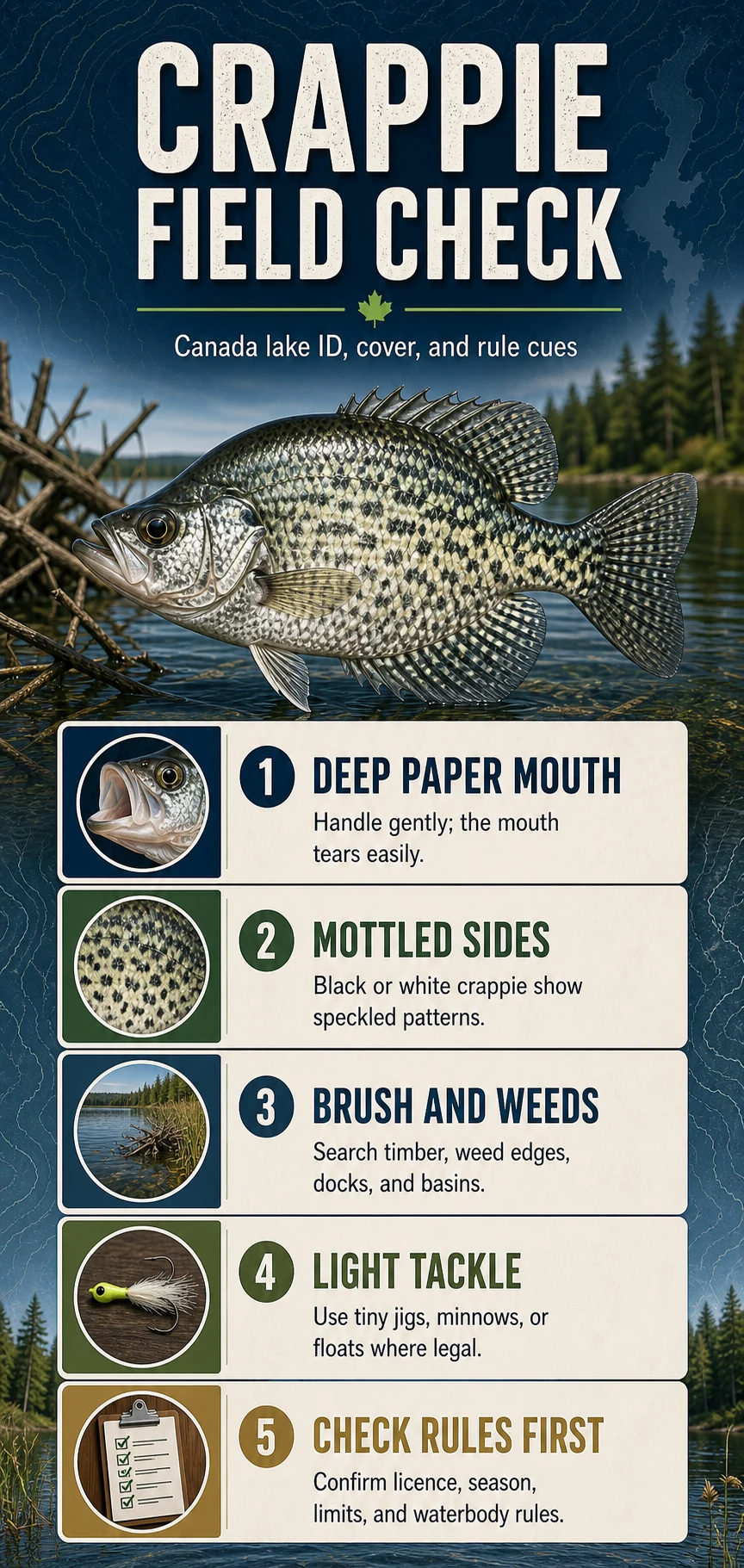
Crappie Field Check Infographic
Use this visual checklist to confirm crappie ID, cover, and light-tackle cues before checking the local rules.
How to identify crappie
Crappie identification matters because regulations, limits, and legal handling can depend on the exact species. Look for these field marks before keeping fish or comparing your catch to a rule table.
- deep panfish body
- large paper-thin mouth
- mottled dark markings
- long dorsal and anal fins
- schooling behavior
Where to Find Crappie in Canada
Crappie fisheries are local rather than universal in Canada, but they create strong family and panfish intent where established. If you are comparing panfish options for easier action, also read the perch fishing in Canada guide.
Crappie use weeds, wood, docks, suspended basin schools, and warmer protected bays. They can be shallow in spring and suspended or cover-oriented later.
Start broad with province and water type, then narrow to the exact lake, river, zone, park boundary, or tidal area. A species can be common in a province and still closed, protected, stocked-only, or specially managed on a specific waterbody.
Best Provinces and Lakes
- Ontario: warm bays, dock lakes, brush, weeds, and local panfish systems.
- Quebec and Manitoba: selected lakes and reservoirs where crappie populations are established.
- New Brunswick and Nova Scotia: local warm-water lakes that need waterbody-level rule checks.
Use these as planning examples, not a final destination list. Access, stocking, closures, slot rules, park rules, and local conservation measures can change the best water for a trip.
Best Seasons
Spring can bring fish shallow, while summer and fall often require finding schools near weeds, basins, or cover. Ice crappie can be excellent where local rules and safe ice align.
Regulation-safe planning: This section describes common fishing patterns, not legal open seasons. Always verify province, zone, date, waterbody, species, size, slot, bait, hook, and possession rules through official sources.
Best Techniques
The best starting pattern is the one that fits the fish, the water temperature, the structure, and your skill level. Keep the first kit tight before buying specialty tackle.
tiny jigs under floats
tiny jigs under floats
small plastics around docks
small plastics around docks and weeds
vertical ice jigs for
vertical ice jigs for suspended fish
slow retrieves for cold
slow retrieves for cold water
light line for pressured
light line for pressured schools
Recommended Gear
Ultralight to light spinning gear, 4-6 lb line, tiny jigheads, floats, small plastics, and a hook remover suit crappie best.
- Ultralight to light spinning gear, 4-6 lb line, tiny jigheads, floats, small plastics, and a hook remover suit crappie best.
- Prioritize fish-care tools, a measuring plan, and safe handling gear before buying specialty tackle.
- Buy gear by water type and presentation, not by a generic species label alone.
Bass Finesse Lure Kit
Compare category options after matching the gear to crappie, water type, season, and safe fish handling needs.
View category on AmazonMedium Spinning Fishing Rod Combo
Compare category options after matching the gear to crappie, water type, season, and safe fish handling needs.
View category on AmazonFishing Tackle Box Pliers
Compare category options after matching the gear to crappie, water type, season, and safe fish handling needs.
View category on AmazonThese are broad Amazon category links for comparison, not product-performance guarantees. For a broader buying path, use the Fishing Gear and Equipment hub and the Fishing for Beginners in Canada guide before upgrading rods, reels, line, electronics, or platform-specific gear.
Licence and Regulation Notes
Crappie can have specific panfish limits, possession rules, and local exceptions. Confirm whether the water has black crappie, white crappie, or other panfish rules.
Use the Fishing Regulations and Licences in Canada hub first, then open the official province, territory, federal, or park source for the exact water. When trip planning turns into destination research, move to Best Fishing Spots in Canada.
Related Spots
Use these CanadaFever guides to move from species research into water, access, platform, and trip planning.
Best Fishing Spots in Canada
Use the national spots hub to match crappie with province, access, season, and trip style.
Best Fishing Spots in CanadaIce Fishing in Canada
If crappie is part of a winter plan, start with ice safety, access, and local winter rules.
Ice Fishing in CanadaKayak and Canoe Fishing
For smaller water, check whether a paddle craft fits the species, weather, landing plan, and safety setup.
Kayak and Canoe FishingRelated Lodges
Use lodge research only after the species target, licence path, season window, and realistic travel style are clear.
Fishing Lodges in Canada
Compare lodge styles after the crappie target and rule check are clear.
Fishing Lodges in CanadaAll-Inclusive Fishing Lodges
Use this path when boats, meals, guides, and logistics should be bundled into one trip plan.
All-Inclusive Fishing LodgesIce Fishing Lodges
Winter lodge plans should start with local ice access, shelter, guide, and safety checks.
Ice Fishing LodgesFAQ
Is crappie a good fish for beginners in Canada?
Good if schools are found and local limits are checked
What is the simplest way to start crappie fishing?
Start with one legal waterbody, one season window, and a simple presentation such as tiny jigs under floats. Keep the kit narrow until you understand the fish and local rules.
Can I keep crappie in Canada?
Maybe, but only the official rule source can answer that for your exact province, zone, waterbody, date, licence, fish size, and possession situation.
Official sources for crappie research
CanadaFever helps with planning and plain-English context. Official sources control the final rules, seasons, closures, licence products, and species-specific exceptions.
DFO aquatic species browser
Federal species browser for Canadian aquatic species, habitat descriptions, and conservation context.
Open sourceOntario Fishing Regulations Summary
Province-level example of why zone, waterbody, species, and date rules must be checked before fishing.
Open source