


Lake whitefish fishing in Canada starts with identifying the fish and the water, then checking the local season and rules. Lake whitefish have an overhanging snout and a small mouth, but similar-looking cisco and round whitefish require careful comparison. Ice fishing can be an option where lawful and conditions permit; a frozen-looking lake is not proof of safe ice.

Identify lake whitefish
Lake whitefish (Coregonus clupeaformis) are silvery freshwater fish whose snout extends over the lower jaw. Larger fish can develop a hump behind a relatively small-looking head, according to the Northwest Territories species guide. Colour and body shape vary with the fish and water, so compare several features and consult the authority’s regional guide.
Cisco (Coregonus artedi) can look similar. An Ontario recovery strategy notes that cisco has a more terminal snout that does not overhang the mouth, while lake whitefish has an overhanging snout. Round whitefish are another separate species. A quick look at one feature may not settle every identification; do not keep a fish if the species and applicable rule remain uncertain.
| Clue | Lake whitefish starting point | Limit of the clue |
|---|---|---|
| Mouth and snout | Snout overhangs the lower jaw | Compare the whole fish and a regional guide. |
| Body | Silvery; some larger fish have a hump behind the head | Colour and shape vary with age and conditions. |
| Water | Cold freshwater lakes and connected systems | Presence does not establish an opening or legal access. |
| Local regulations | Identify the water, date and species | A whitefish rule elsewhere may not apply here. |
For a useful comparison, note:
- The snout and mouth position together with the body and fins.
- The exact water and the local species that might look similar.
- Any uncertainty before deciding whether retention is permitted.
How habitat changes the plan
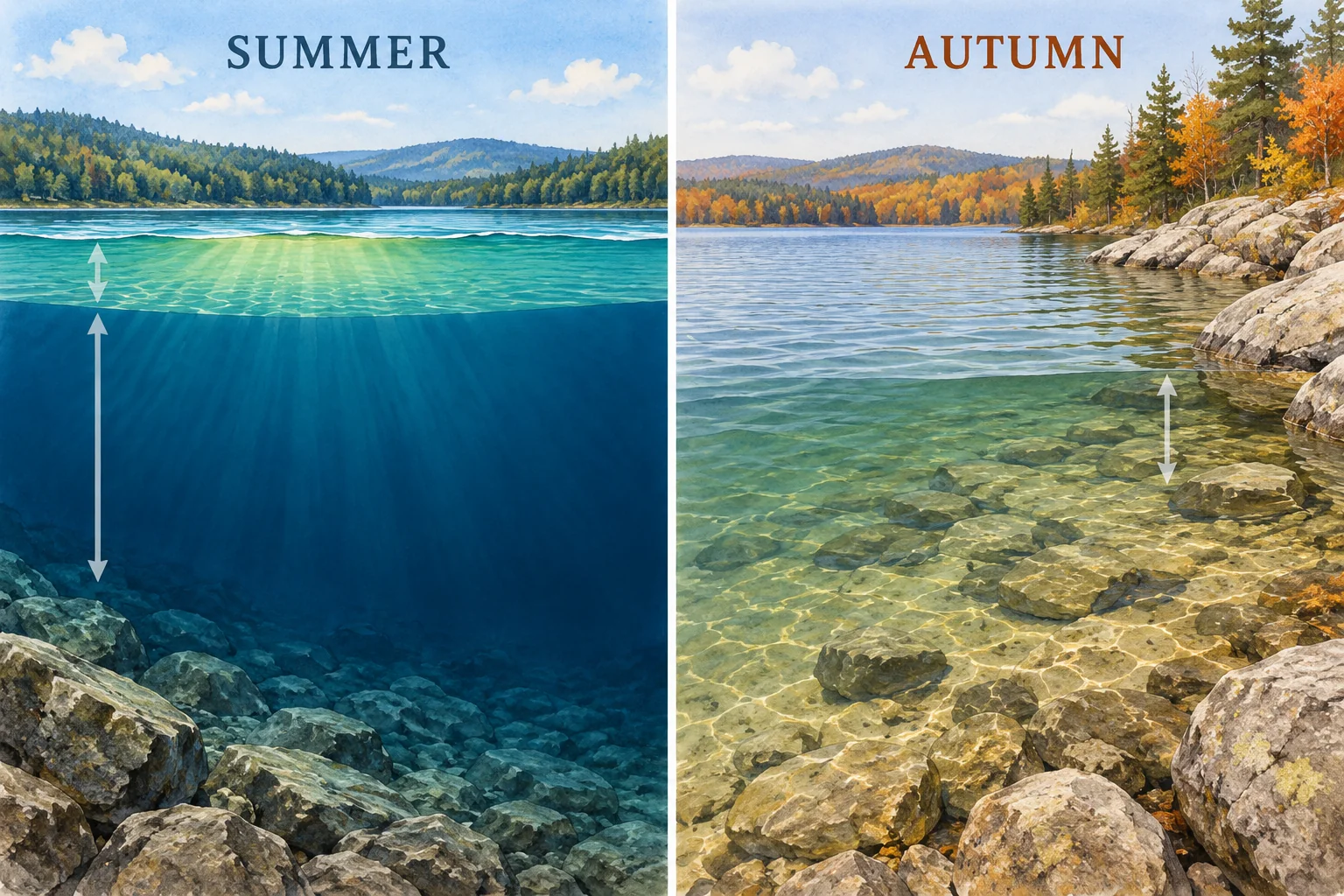
Lake whitefish can use different parts of a lake across the year and among populations. Fisheries and Oceans Canada’s species profile describes cooler, deeper summer habitat in the southern part of the range and fall spawning that often takes place in shallower water. These are broad biological patterns, not a fishing calendar or a guarantee that a specific depth will hold fish.
On unfamiliar water, begin with a current map, access information and the relevant regulations. Ask a local authority or knowledgeable guide about permitted access and current conditions. Fish location and legal access can change with season, weather and local management; do not rely on an old online report as a current opening.
Some lake whitefish populations need particular conservation attention. Ontario’s recovery strategy concerns the large- and small-bodied populations in Lake Opeongo. Ontario’s Fisheries Management Zone 15 rules list lake whitefish fishing in Lake Opeongo as closed all year. The lake is a conservation example here, not a suggested fishing destination. Check current rules for any water you visit.
Licences, seasons and retention
The authority and rules depend on the province, territory and water. Check the current licence requirements, open season, daily and possession limits, size limits, bait and hook rules, and any special waterbody exceptions. Check the applicable retention rule after identifying the fish.
Ontario’s fishing regulations summary is organized by fisheries management zone and includes exceptions. Ontario also explains that there is no separate province-wide ice-fishing season: the species season applies whether fishing from ice, boat or shore. See Ontario ice-fishing guidance and check the exact zone and water.
In the NWT, the species and catch limits page lists different lake whitefish limits for different management areas. The NWT licence page also identifies special authorizations and national-park distinctions. Do not carry an Ontario rule into the NWT or apply an NWT limit to another water without checking the current table and boundaries.
Winter fishing and ice conditions
Lake whitefish are sometimes pursued through the ice, but the fishery and the ice are separate decisions. First establish that the local season, method and access are lawful; then assess conditions with local authorities or operators. Ontario notes that ice does not freeze uniformly and can be weaker near flowing water, springs, cracks and river mouths. The Canadian Red Cross ice-safety guidance also stresses that ice conditions require caution.
A measurement at one point does not establish the safety of a whole route. Conditions change and a hut or track on the ice does not guarantee safe access. Tell someone your plan and expected return, dress for the conditions, carry appropriate safety equipment and follow current local closures. If conditions are uncertain, stay off the ice and choose another activity.
A small, legally permitted presentation can be a practical starting point for a fish with a small mouth, but there is no universally successful lure or depth. Ask a local tackle shop or guide about the current water and permitted method; check bait rules before purchase. A sensitive rod and a way to control depth may help detect subtle bites, but use the setup that fits your conditions and the regulations.
Build a simple whitefish ice setup
Start with a compact rod that fits the space in your shelter or next to the hole. A responsive tip helps you notice a light movement, but there is no single correct rod rating: lure weight, depth, current and your own preference matter. Pair it with a reel and line suited to that rod, then test how the lure falls before adding more equipment. A medium-powered rod may be useful for a range of lake species, but a lighter tip may make a tiny presentation easier to read. If you already own a suitable outfit, you do not need a second rod just because it is labelled for whitefish.
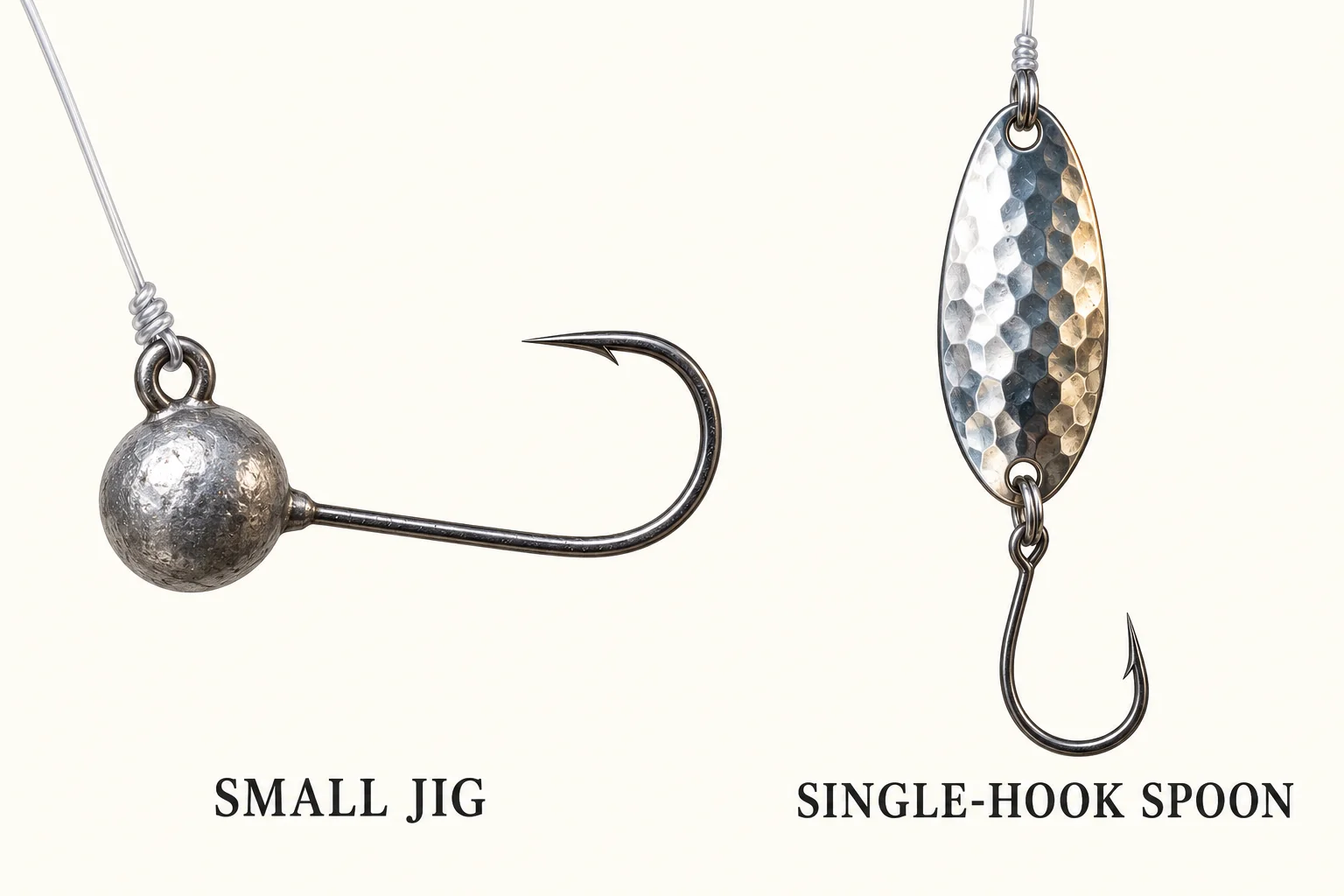
A small jig or a compact spoon can provide a starting presentation where its hook configuration is legal. Check the local limits on hooks and bait before adding anything. A single-hook option can simplify unhooking where permitted; do not assume that swapping a hook is legal or appropriate in every water. Keep pliers available and handle sharp hooks carefully. The NWT and Ontario have different rules, and individual waters can have extra restrictions.
If you use bait, verify both the type and its source for your precise water. Ontario bait management zones and local rules matter; moving live or dead baitfish or leeches across a boundary may be restricted. Consult Ontario's bait guidance and the applicable regulations before the trip. A lure without bait avoids one decision but does not remove other rules.
A repeatable lift, fall and pause
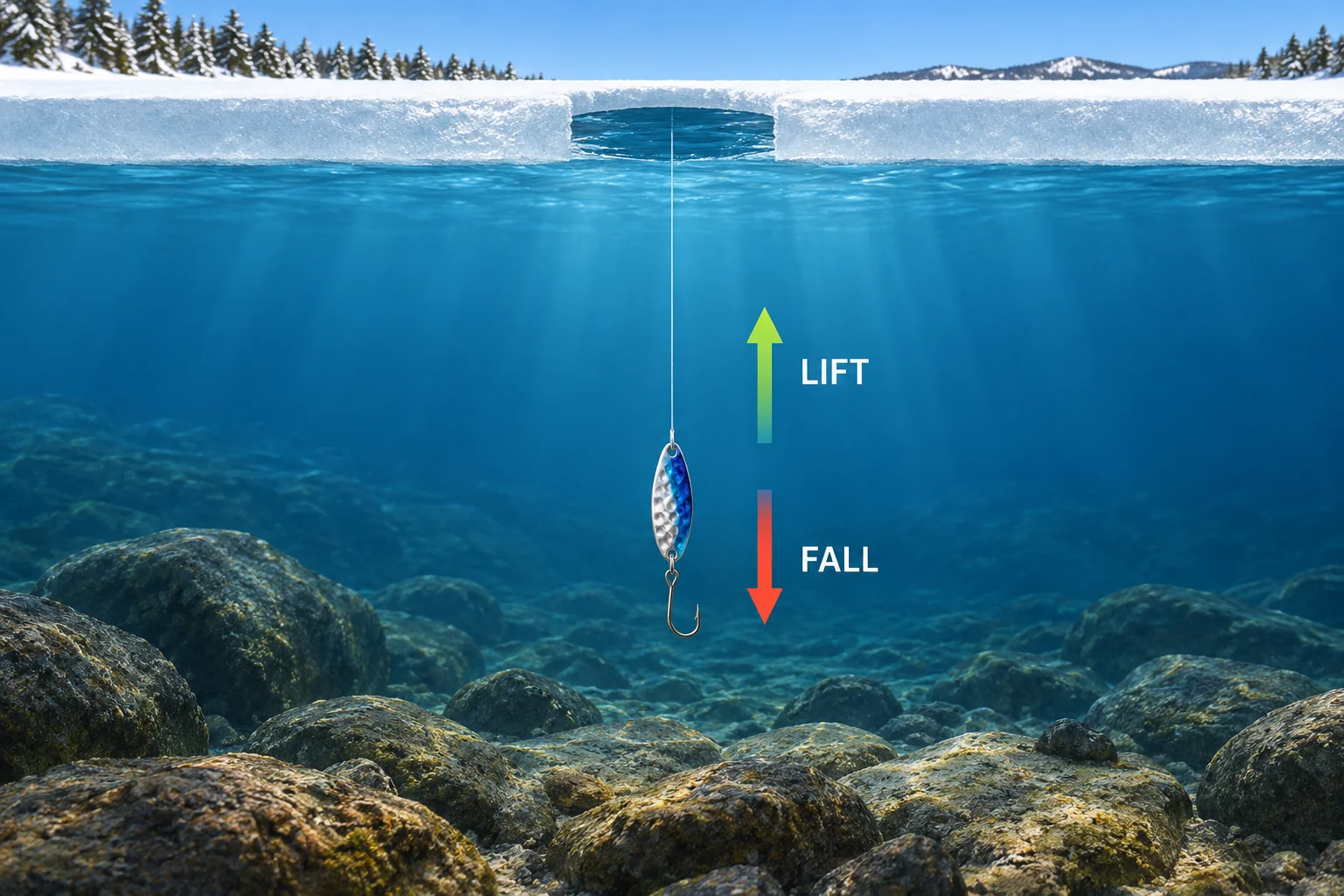
A vertical presentation is easier to control when the line drops close to straight beneath the hole. Lower the lure until you know where it is relative to the bottom or an observed fish, without assuming every whitefish feeds at the same depth. Lift the rod gently, allow the lure to fall under control and pause. Watch the tip and line on both the fall and the pause; a small change in tension may be more useful information than a dramatic strike.
- Find your reference. Determine the depth with your line or electronics if you have them. Fish finders show targets, not species identification.
- Start small. Make a modest lift and let the lure settle rather than repeatedly pulling it far above the fish.
- Pause and observe. Give a following fish a chance to approach; vary the length of the pause if the response changes.
- Change one thing. Try a different lure or movement, but keep a note of what changed. Switching everything at once makes the result difficult to interpret.
- Handle a catch promptly. Identify it before deciding whether it may be retained and follow current release guidance where required.
Use these as a starting sequence and adjust to the water. In current or deeper water, choose enough weight to maintain control without assuming that the heaviest spoon is best. If you cannot tell whether the lure is near the bottom, reset and measure instead of guessing. An underwater camera can add information, but water clarity and the camera's field of view limit what it can show; it does not establish safe ice or the identity of every fish.
Troubleshoot the presentation
The lure keeps hitting bottom: Raise it slightly and watch the line. Repeatedly resting it in sediment can hide the hook and make the fall difficult to see. A short pause close to bottom can be a deliberate choice, but distinguish a planned pause from losing contact. In a current, use a weight you can control or choose another position; do not guess that every tap is a fish.
A mark appears above the lure: A sonar mark is not a confirmed whitefish. Bring the lure to the observed depth gradually and stop; watch whether the mark moves and then try a short lift or pause. A fish that follows may turn away, so a smaller movement is one reasonable experiment. If several fish remain higher in the water, continuing to tap only the bottom may leave your presentation below them.
You feel weight but cannot see a bite: Keep contact during the fall and use a rod tip and line you can read. The lure, bottom, ice edge and fish can all change tension. A gentle response and a controlled retrieve provide more information than a violent hookset. Check the lure after retrieval for damage, debris or a bent hook. If you change lure, note what happened before the change so the next attempt is meaningful.
Nothing responds: Before moving, consider whether your lure is visible in the water and whether you can control it at depth. Try a different pause or a smaller profile, and ask a local expert about seasonal habitat. A lack of marks may reflect the electronics' limited coverage rather than an empty lake. Never cross uncertain ice merely because a distant spot looks promising.
An open-water approach
Where fishing is open, the same vertical jigging sequence can work from a properly equipped boat over a suitable bottom contour. Wind and drift change the angle of the line: if the lure moves away from vertical and you lose contact, use a controlled drift or reposition rather than assuming the fish stopped biting. Check navigation and access conditions and wear a fitted PFD. A shore angler may need a different presentation to reach suitable water, and access must be lawful. Do not infer a specific productive depth from a schematic or one old report.
Choose a water and a season
Ontario's lake whitefish species page describes a cold-water species, and Ontario's Sibbald Point management plan identifies Lake Simcoe as supporting a winter lake whitefish fishery. That historical management context establishes why the lake is relevant; it does not confirm a current opening, ice conditions or a specific access point. Look up the current FMZ and any lake-specific exceptions before choosing dates.
Lake Simcoe rule example, 2026: The Ontario fishing regulations summary for FMZ 16 and its 2026 printed summary list a special Lake Simcoe and connected-waters exception: lake whitefish season January 1–March 15 and the second Saturday in May–September 30, with limits of two under a sport licence and one under a conservation licence. The exception describes specific connected waters and boundaries. Check the current edition, exact location, licence and any further closures before fishing; the zone-wide table alone is not sufficient. An opening does not establish safe ice or access. The 2026 PDF is the dated reference for this example.
For a northern alternative, the NWT sport-fishing guide describes lake whitefish and distinguishes them from related species. Access, licence and catch rules depend on the actual management area and any special authorizations. Compare the region's current guide and land permissions before selecting a lodge, community or launch. Check road conditions and permission to cross the land before you travel.
In the southern part of their range, Fisheries and Oceans Canada describes lake whitefish using cooler deeper habitat in summer and often moving to shallower areas to spawn in fall. Treat this as a biological overview, not a timetable for locating fish. Weather, lake depth, population and local rules all matter. A depth that worked on a neighbouring lake last week may be a poor starting point today. During spawning or on a sensitive water, restrictions can be particularly important; consult the current authority before targeting fish.
Matching tackle to the task
A small jig offers a compact presentation with a hook attached to a weighted head. A spoon is a separate piece of shaped metal that can flash or move as it falls. Both can be fished vertically, but their action and weight vary. Choose a legal hook configuration and check that the lure descends in a controlled way. A tiny hook does not make an unsuitable fishing method legal, and a light lure is not useful if current prevents you from maintaining contact.
For ice fishing, a sled can help organize a shelter, tackle and safety equipment. Match its size and load to the route and your ability to pull it; no sled makes a frozen route safe. For a hand auger, consider the hole size, blade maintenance and effort, and check the actual product's specifications. Avoid buying an auger simply because another angler uses one: a guide or hut operator may already provide access and equipment.
Equipment examples — affiliate links: CanadaFever may earn a commission if you purchase through these links, at no additional cost. Confirm the selected model, delivery, price and suitability before buying.
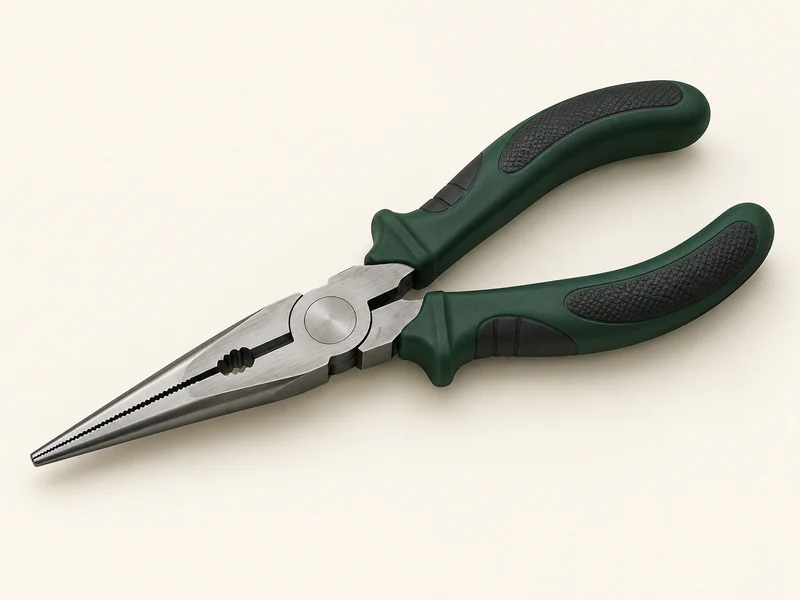
- Rapala 8.5-inch Fisherman’s Pliers: pliers to consider for controlling hooks when appropriate to the hook and fish; check the exact listing, dimensions and handling method. Keep fish in the water when possible and follow local release guidance.
- StrikeMaster Mora 6-inch hand auger: a manual hole-cutting option. Check the selected diameter, your physical needs and local rules; it does not establish safe ice.
Equipment for your chosen whitefish outing
Affiliate links: We may earn a commission from qualifying purchases, at no extra cost to you. We have not field-tested these items. Check the selected model, current price and delivery options on Amazon.
For handling hooks with a tool
Rapala 8½-inch Fisherman's Pliers
- Longer 8½-inch format for reaching a hook with a tool.
- Nickel-plated carbon steel and co-moulded grips.
- Choose a jaw size that suits the hook and fish; avoid unnecessary handling time.
Choose a size suited to accessible hooks and your fish. For a deeply embedded hook, follow local fish-handling guidance instead of pulling forcefully.
Check these pliers on Amazon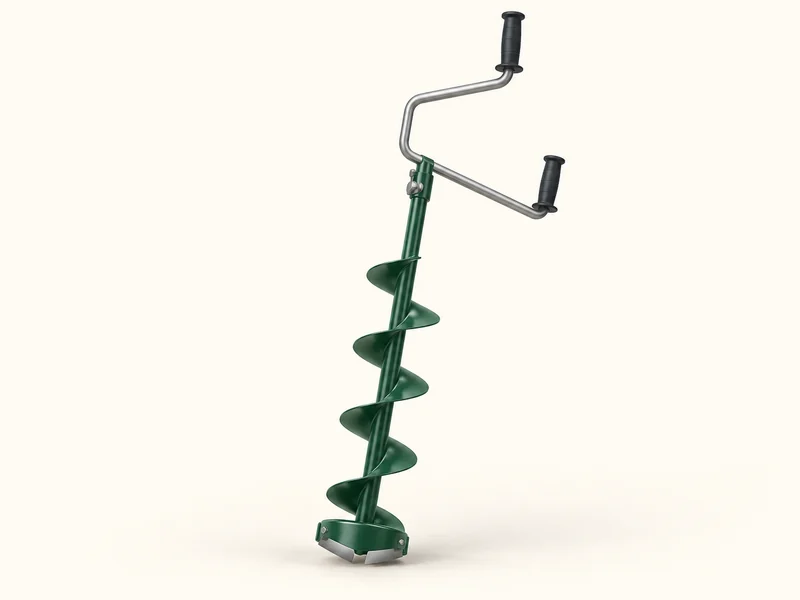
For a hand-drilling setup
StrikeMaster Mora 6-inch Hand Auger
- Manual two-piece auger with an adjustable handle.
- This ASIN maps to the six-inch option; confirm the chosen size.
- Allow for the physical effort of hand drilling; an auger does not establish safe ice.
Prices and Canadian delivery were not confirmed. These examples do not replace local ice advice or the fishing rules for the water.
Open-water planning and handling
When open-water fishing is allowed, account for weather, cold water, boat traffic and access. Wear a properly fitted PFD and follow the Transport Canada human-powered craft guidance if using a kayak or canoe. Choose tackle according to the legal method and water rather than applying an ice setup automatically to every trip.
If a fish must be released, minimize handling and time out of water. The NWT general fishing regulations recommend avoiding the gills and eyes, not squeezing the fish and keeping it in the water if possible. Follow the current guidance for your water. Release is not risk-free and does not make fishing in a closed area lawful.
For broader preparation, the Canadian fishing licence guide and ice hut rental guide provide context. The official authority for your exact water remains the source for current rules.
Frequently asked questions
How do I distinguish lake whitefish from cisco?
The lake whitefish’s snout overhangs its lower jaw; Ontario’s recovery strategy describes cisco as having a more terminal snout. Compare several features with a regional guide, and do not retain an uncertain fish on an assumption.
Is there one Canadian whitefish season?
No. Seasons and limits differ by jurisdiction, water and date. Check the current local regulations and any water-specific exception.
Does Ontario have a separate ice-fishing season?
Ontario says it has fishing seasons for species, not a separate ice-fishing season. Whether ice access is possible depends on local conditions and the species season.
Can I trust one ice-thickness measurement?
No. Ice can vary across the same waterbody and change over time. Check current local guidance and conditions, and do not infer that a complete route is safe from one reading.
What tackle is best for lake whitefish?
There is no universal choice. Start with the legal methods and bait for the actual water, consider the fish’s small mouth and ask a local expert about current conditions.
What should I do if I cannot identify a fish?
Do not retain it based on a guess. Follow the applicable release rules and seek advice from the responsible authority or a reliable regional identification guide.