
Compare the best trolling motors for Canadian boats by thrust, shaft length, voltage, steering, batteries and real fishing conditions.
- Best simple default: a 12-volt transom motor for a light canoe, inflatable or small utility boat.
- Best control upgrade: a bow-mounted motor with variable speed and GPS functions for boat-position work.
- Shaft length is a fit decision: the propeller must stay properly submerged in chop without hanging unnecessarily deep.
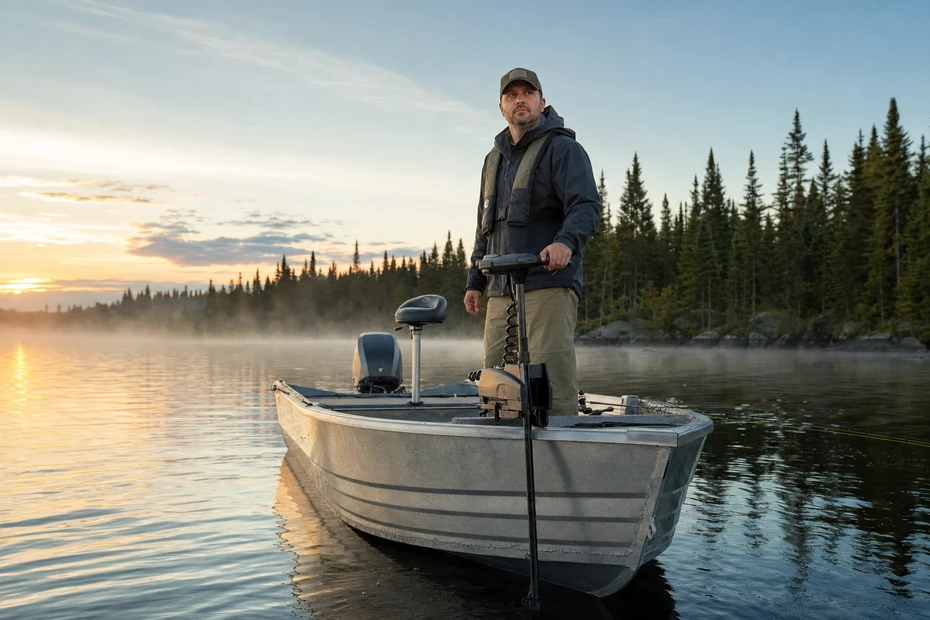
The best trolling motors Canada anglers can buy are the motors that match the boat’s loaded weight, mounting position, shaft depth and battery system. A compact transom motor can be ideal on a canoe or utility boat, while a GPS bow mount earns its weight on a windy multi-species rig.
This guide starts with fit, not brand hype. It explains which motor type belongs on which Canadian boat, how to avoid weak thrust and short shafts, and what the electrical system must support before the motor ever reaches the water.
Key Takeaways
- Best simple default: a 12-volt transom motor for a light canoe, inflatable or small utility boat.
- Best control upgrade: a bow-mounted motor with variable speed and GPS functions for boat-position work.
- Buy by loaded weight: count people, fuel, batteries and gear—not the bare hull alone.
- Shaft length is a fit decision: the propeller must stay properly submerged in chop without hanging unnecessarily deep.
- The motor is one system: voltage, breaker, cable gauge, connectors, charger and battery chemistry must agree.
The quickest way to waste money is to choose thrust first and solve the mount, shaft and battery later. Work through the boat as a complete system and the shortlist becomes much smaller.
🌲 The Guide’s Log
When I assess a trolling-motor setup on paper, I picture the least flattering part of the day: the boat is loaded, the wind is quartering across the lake, and the angler is trying to hold a productive edge without burning through the battery before lunch. That scene exposes weak planning. A motor that looks powerful beside an empty showroom hull can feel undersized once two adults, a starting battery, tackle, a cooler and a livewell are aboard. A shaft that works at the ramp can ventilate in chop. A convenient plug can become the hottest component in the circuit if the wiring and protection were treated as afterthoughts. I also separate boat control from speed. More thrust mainly gives the motor authority over weight, wind and current; it does not turn a displacement hull into a fast boat. The best setup is usually the quiet one the owner can deploy, steer and recharge without drama. For a small craft, that may be a plain tiller motor and a modest battery. For a larger fishing boat, GPS anchoring and precise bow control may change how the boat fishes. My rule is to spend on control only after the mount, shaft, voltage and wiring are right. Electronics cannot rescue a badly matched physical system.
Best Trolling Motors Canada: Quick Picks by Boat
Start with your boat and normal water. If you are still choosing the platform, compare our best fishing boats for Canada and the lighter options in the kayak and canoe fishing hub.
| Boat and use | Starting motor type | Main fit check | Why it works |
|---|---|---|---|
| Canoe or very light utility boat | 12 V transom mount | Clamp space and balanced battery placement | Simple, portable and easy to remove |
| Inflatable or small jon boat | 12 V transom mount with adjustable shaft | Transom strength and prop clearance | Good low-speed control without a permanent bow install |
| 16–18 ft multi-species boat | Bow mount, often 24 V | Loaded weight, deck space and shaft length | Better control in wind and along structure |
| Larger or wind-exposed boat | Higher-voltage bow mount | Manufacturer sizing chart and electrical capacity | More sustained control margin |
| Kayak | Kayak-rated stern or bow system | Weight, steering and local registration rules | Compact propulsion when legally and safely installed |

CanadaFever top pick
Minn Kota Endura C2 30
A strong simple starting point for a light freshwater craft when portability and uncomplicated tiller control matter more than GPS features.
- Best suited to light canoes, inflatables and small utility boats
- 12-volt system keeps charging and wiring straightforward
- Confirm transom fit, shaft depth and loaded boat weight before buying
Verify the current listing, size or configuration before ordering.
Affiliate disclosure: As an Amazon Associate, CanadaFever earns from qualifying purchases at no extra cost to you.
Choose the Motor Type Before the Feature List
Transom mount: simple and portable
A transom mount is usually the cleanest answer for a canoe, inflatable or small aluminum boat. The tiller is direct, the motor removes easily, and the electrical system can remain modest.
Its limits appear when you need precise bow-first boat control. Pushing or pulling from the stern can make it harder to hold a line in gusty wind, particularly when casting along a weed edge.
Bow mount: control for active fishing
A bow mount pulls the boat and normally gives finer control while casting. Foot pedals, wireless remotes, variable speed and GPS anchoring can reduce steering work on walleye structure, bass cover and current seams.
The trade-off is a permanent deck footprint, more weight and a more demanding electrical system. Confirm that the bow is strong enough for the bracket and that the unit can deploy without hitting a rail, windshield or trailer post.
Engine mount and specialized systems
Engine-mounted or kayak-integrated systems can solve unusual space problems, but they are not the first choice for most buyers. Steering geometry, service access and compatibility matter more than the clean look.
🍁 The Local Secret
On many Canadian lakes, the decisive upgrade is not maximum thrust—it is variable speed. Fine speed control can stretch battery use and keep the boat moving naturally along a contour instead of lurching between fixed settings. That matters most during long drifts and cold-front fishing.
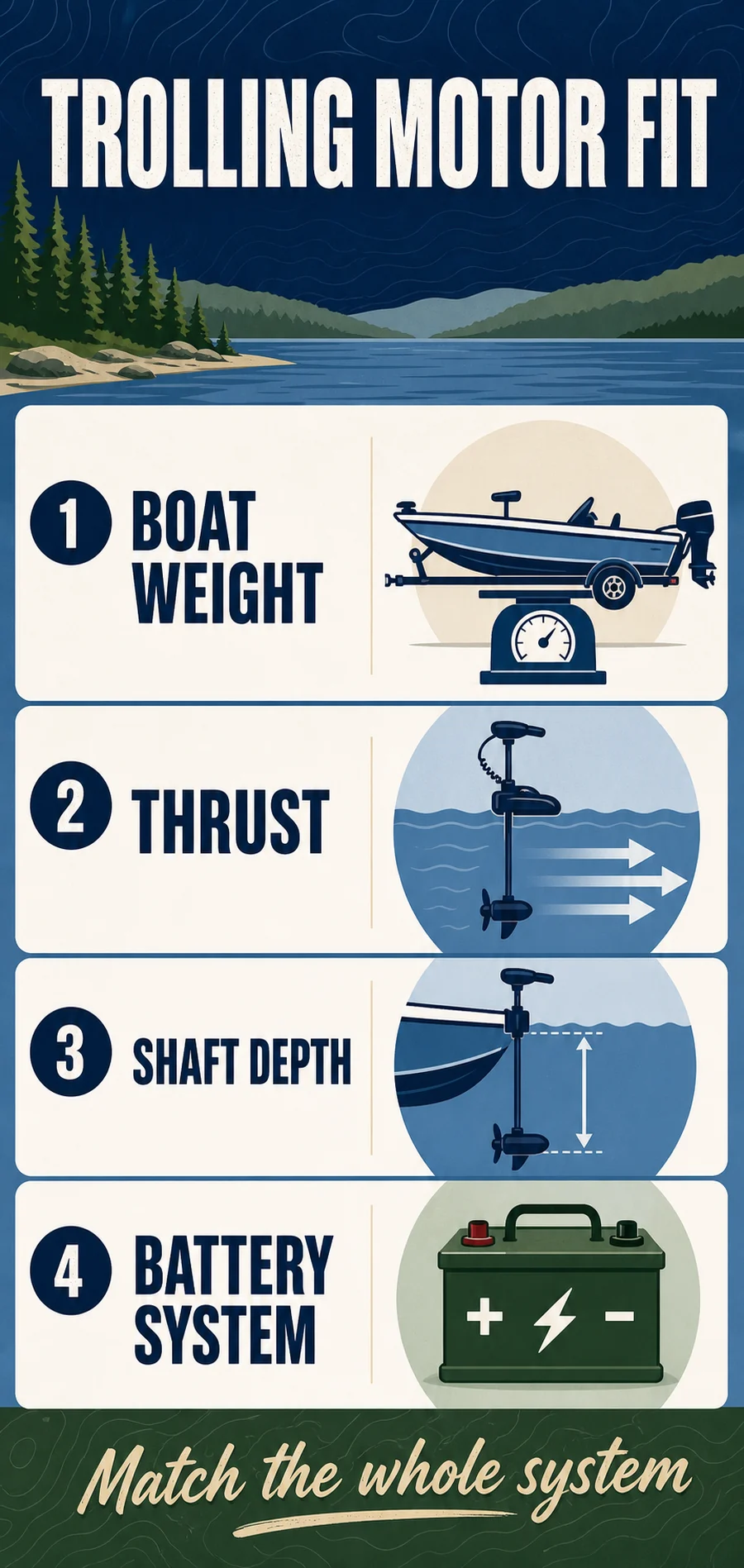
How to Size Thrust, Shaft and Voltage
Use loaded weight, then leave control margin
Manufacturer sizing charts are the right starting point because motor families, hull shapes and use cases differ. Minn Kota’s current trolling-motor selection guide frames the choice around boat weight, length, water conditions and mounting location.
Do not size from the bare hull specification. Add the outboard, people, fuel, batteries, anchors and the gear that actually goes fishing. Windage from a deep windshield or canvas also raises the control load even when scale weight barely changes.
| Decision | Best move | Mistake to avoid |
|---|---|---|
| Thrust | Use the maker chart with fully loaded boat weight and normal wind/current | Buying from boat length alone |
| Shaft | Measure from mounting surface to waterline and follow the motor maker’s depth guidance | Assuming one shaft fits every bow height |
| Voltage | Choose 12, 24 or 36 V as a complete bank-and-charger system | Mixing batteries or improvising series wiring |
| Control | Match tiller, pedal or remote to how you actually fish | Paying for GPS features you will not use |
| Mount | Dry-fit deployment path and trailer clearance | Discovering interference after drilling the deck |
Shaft length: measure the real mount height
Measure the vertical distance from the mounting surface to the waterline with the boat loaded normally. Then follow the specific manufacturer’s table. A bow rises and falls more than a transom, so bow-mount shafts commonly need extra depth margin.
Too short allows the prop to draw air in chop. Too long can put the lower unit unnecessarily deep and may create storage or shallow-water problems.
Voltage: decide before buying batteries
A 12-volt system uses one nominal 12-volt battery. A 24-volt or 36-volt motor normally uses matched batteries wired as a bank, unless the manufacturer specifies a different approved solution.
If batteries are the uncertain part, use our kayak trolling-motor battery guide for small-craft context and the broader marine batteries and chargers guide for full boat systems.
Battery, Wiring and Canadian Safety Checks
The best trolling motors Canada buyers choose still need correct wiring
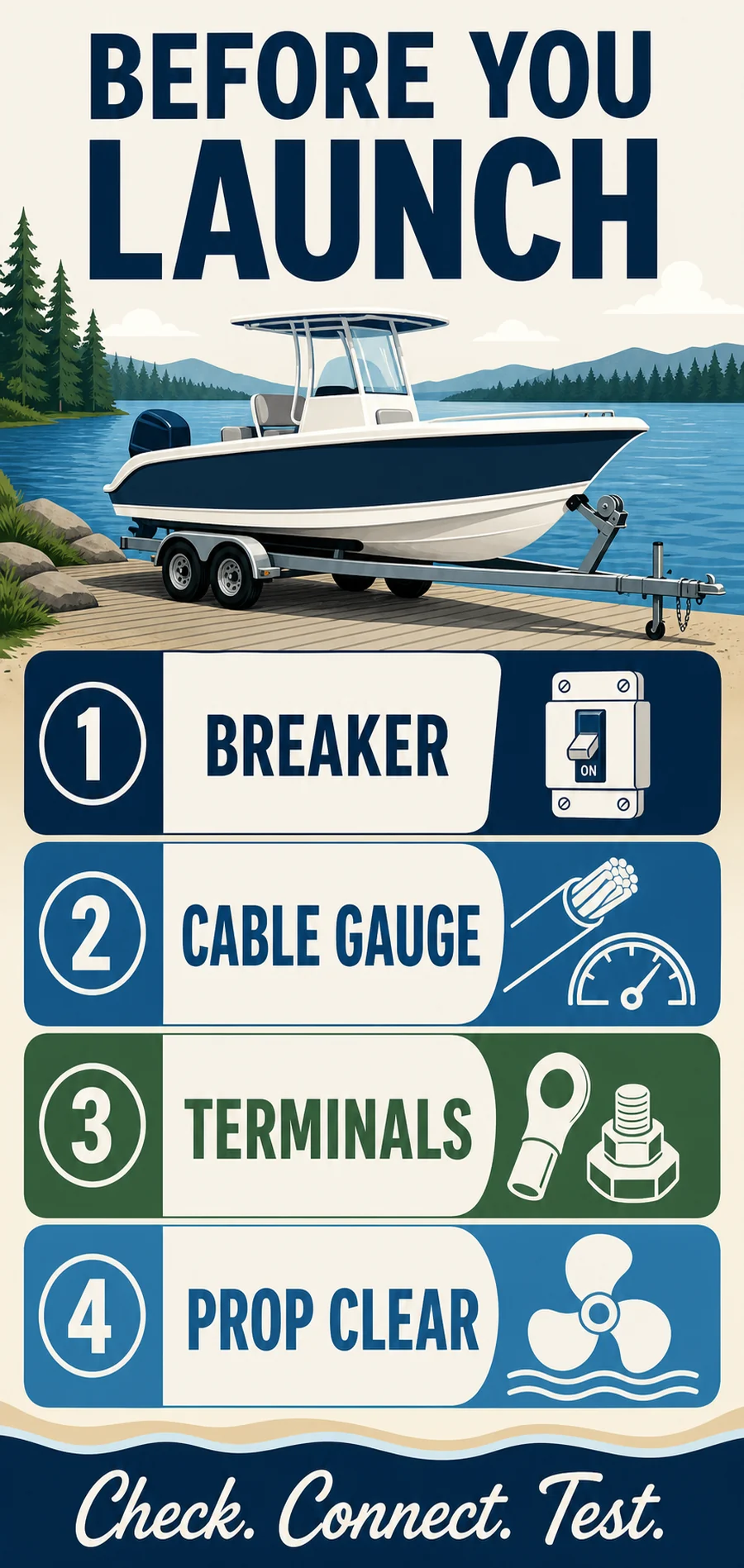
Follow the motor maker’s instructions for wire gauge, circuit protection and connectors. Minn Kota’s wiring and battery guide provides model-specific starting points. Long cable runs and high current make shortcuts risky.
This article is general information, not electrical or marine-safety advice. Installation quality, corrosion, battery condition, storage and operating conditions all affect performance. Follow the current manufacturer instructions and use a qualified marine technician when the system is outside your competence.
Power does not replace legal and safe operation
Transport Canada treats powered craft differently from unpowered craft in several contexts. Review the current Safe Boating Guide, carry the required safety equipment and confirm registration or licensing rules for your vessel and motor.
Every person still needs an appropriate lifejacket or PFD. Our fishing-friendly lifejacket guide helps match mobility and pockets without treating a PFD as optional.
Final Buying Checklist
- Loaded boat weight and length written down
- Bow or transom mounting surface measured
- Shaft length checked against the maker’s chart
- Voltage, battery chemistry and charger planned together
- Breaker, cable gauge, plug and terminal protection specified
- Deployment, stowage and trailer clearance confirmed
- Service access and warranty support considered
For sonar integration and power planning, compare the best fish finders and fishing electronics in Canada. Kayak anglers should also review kayak fishing with electronics before adding another high-draw device.
Compare the strongest alternatives by use case
These picks solve different problems. Match the product to your actual conditions instead of treating one model as universally best.

Newport NV-Series 55 lb
A higher-thrust transom option for anglers who need more control authority while keeping a tiller-style installation.
- Freshwater and saltwater-rated product family
- Useful step up for heavier small boats and wind exposure
- Match the exact thrust variant to its required voltage and shaft
Verify the current listing, size or configuration before ordering.
Compare bow-mount GPS trolling motors on Amazon.com →
Affiliate disclosure: Qualified purchases may earn CanadaFever a commission. Product availability and configurations can change.
✅ The Pre-Trip Protocol
- Step 1: Record the fully loaded boat weight, mounting height and normal water conditions.
- Step 2: Confirm the exact motor’s shaft, voltage, breaker and cable requirements in the current manual.
- Step 3: Dry-fit the mount, protect the circuit and test steering, deployment and emergency shutoff before launch.
Best Trolling Motors Canada: Frequently Asked Questions
How much trolling-motor thrust do I need?
Use the manufacturer’s sizing chart with the boat’s fully loaded weight, hull length and typical wind or current. Add people, fuel, batteries and gear before choosing.
Is a bow-mount or transom-mount motor better?
A transom mount is simpler and more portable. A bow mount normally gives better casting control and can add GPS positioning, but it needs deck space and a larger electrical plan.
Do I need a 24-volt trolling motor?
Not automatically. Higher-voltage systems suit heavier boats and longer control demands, but they require a matched battery bank, charger, wiring and protection.
Can I use a car battery for a trolling motor?
A starting battery is not designed for repeated deep discharge. Use a battery type approved for the motor and duty cycle, and follow both battery and motor instructions.
Do electric trolling motors require a boating licence in Canada?
Rules depend on the craft and how it is powered. Check Transport Canada’s current requirements for operator competency, vessel licensing or registration and required safety equipment.
Bottom line: For a light craft, a simple 12-volt transom motor is often the smartest buy. For a larger fishing boat, choose a bow mount only after loaded weight, shaft length and the complete electrical system are settled.