

Compare telescopic and multi-piece travel fishing rods, complete kits and rod-only options. Check lure ratings, case fit and Canadian flight packing.
- Choose by fit and fishing method
- Check the exact model and supplied parts
- Compare limits before buying
Bottom line Compare telescopic and multi-piece travel fishing rods, complete kits and rod-only options. Check lure ratings, case fit and Canadian flight packing.
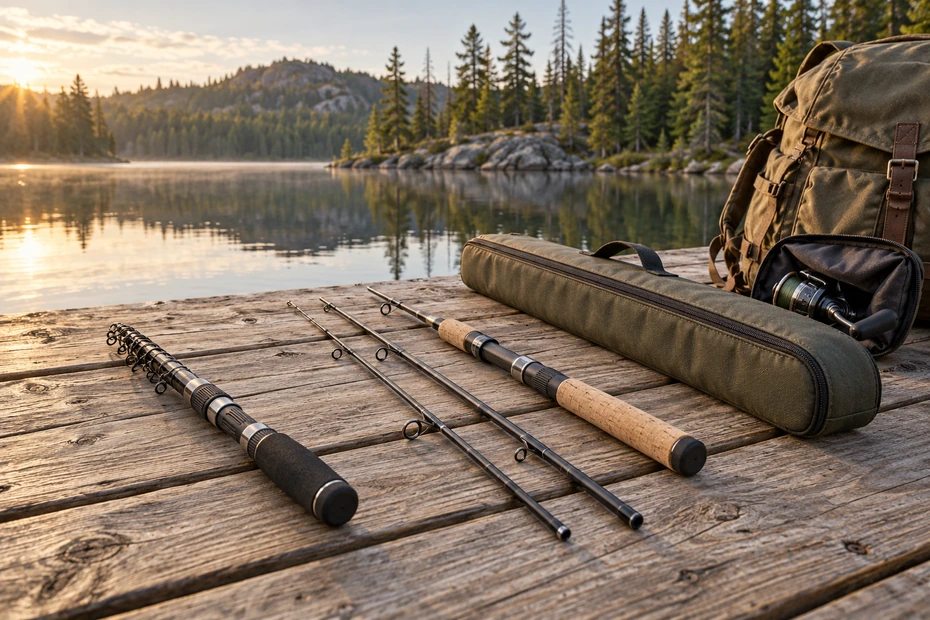
The best travel fishing rods fit both your luggage and the fishing you plan to do. For a Canadian road trip, a compact telescopic kit can make sense as a spare. For a week spent casting jigs and spoons, start by comparing conventional multi-piece spinning rods that match those lures.
A rod advertised as portable can still be too long inside its case, too stiff for a small trout spinner, or sold without the reel shown beside it. Measure the space you have and choose the lure range before comparing models.
Best travel fishing rods: telescopic or multi-piece?
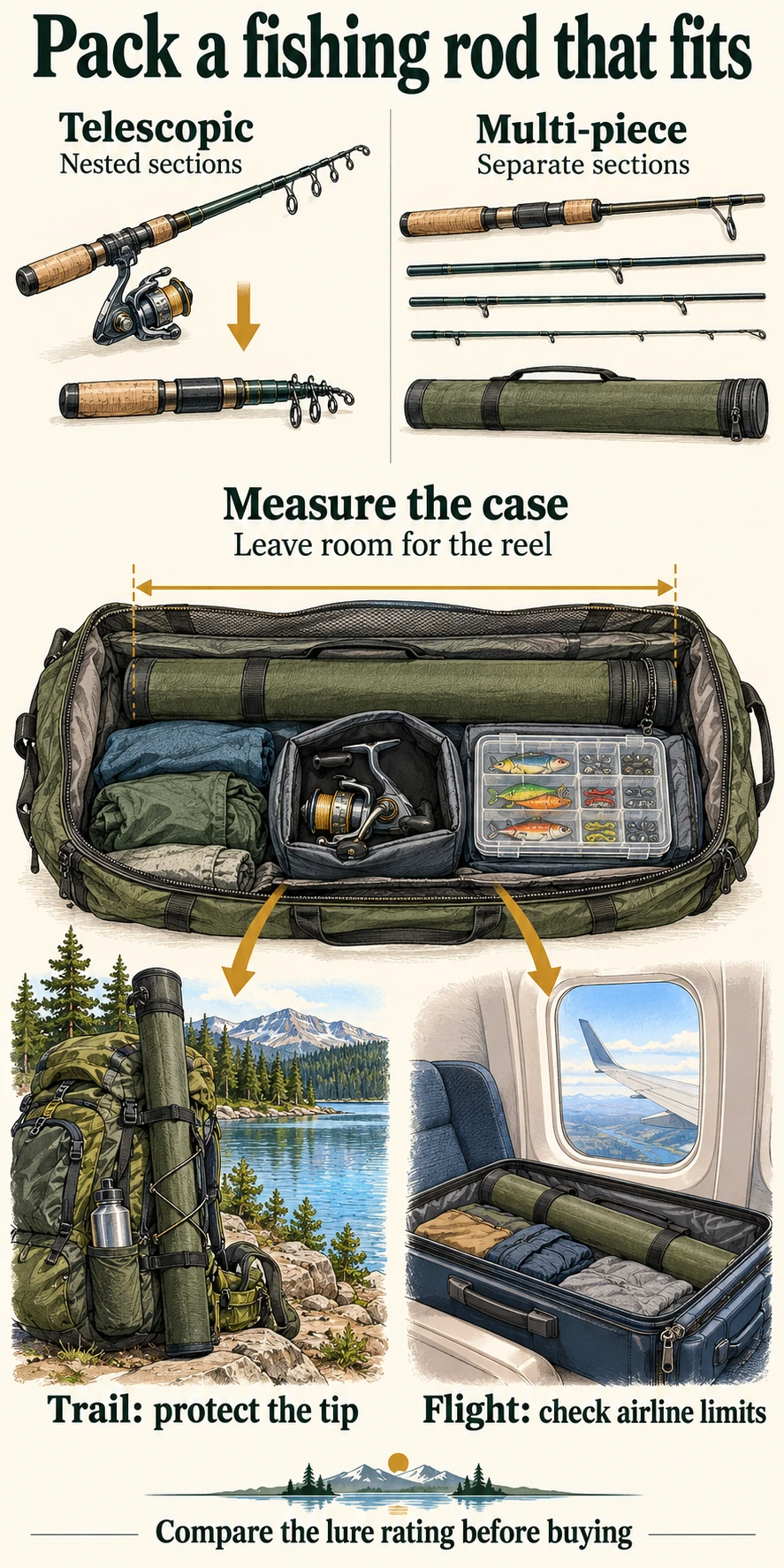
A telescopic rod collapses by sliding smaller blank sections inside larger ones. A conventional multi-piece rod comes apart into separate lengths that join at ferrules. Both are travel rods. A two-piece rod is also easier to transport than a one-piece, but its longest section may still be awkward on a flight or a brushy trail.
Telescopic designs keep the sections together, which reduces the loose parts to manage beside the water. Some let you leave the line threaded through the guides between sessions. Remove the lure before packing: an exposed hook can snag the case, clothing or your hand even when the rod itself is protected.
Multi-piece designs give you separate sections to wipe down and inspect. Their joints need careful seating and alignment. Buy for the specific blank, lure rating and fishing job rather than assuming every multi-piece rod is sensitive or every telescopic rod is fragile. Construction alone does not establish either claim.
| Design | Useful when | Check before buying |
|---|---|---|
| Telescopic | You want a short collapsed bundle and fewer loose sections. | Closed length, tip protection, guide alignment and a clear lure rating. |
| Three-piece | You can accommodate longer sections and already know the rod action you want. | The longest section and the outside length of its protective case. |
| Four- or five-piece | Your suitcase or backpack needs shorter separate sections. | Case dimensions, section identification and the assembly instructions. |
| Two-piece | Travel is mainly by car and you have safe storage for longer sections. | Whether you actually need a new travel rod at all. |
A travel rod is not automatically a folding rod
Searches for collapsible fishing rods, retractable rods and folding fishing rods often lead to the same listings. Look at how the product actually closes. Most rods here either telescope or separate; they do not bend in the middle on a hinge. A hinge-style gadget and a multi-piece graphite blank solve different problems.
The general fishing rod guide explains power, action and reel types. For travel, add one more question: can you carry the assembled package safely through every stage of the journey? A compact rod with a bulky reel bag can occupy more useful luggage space than a longer, narrow tube.
Three travel-rod options for different trips
These recommendations use published specifications. CanadaFever has not tested these rods on the water. Choose between a fitted freshwater combo, a telescopic starter bundle and a rod-only upgrade according to the tackle you already own and the space available.
As an Amazon Associate, CanadaFever earns from qualifying purchases. The buttons open Amazon.com. Confirm the selected model, delivery destination, seller and return terms before ordering; prices and availability can change.
| Exact option | What you get | Who should compare it |
|---|---|---|
| Okuma Voyager VS-605-20 | 6 ft, five-piece medium-light spinning rod, size-20 reel, small tackle box and fitted case. | Occasional freshwater anglers who need a compact rod-and-reel package. |
| PLUSINNO 1.8 m / 5.91 ft full kit, ASIN B01M32X90K | Telescopic spinning rod and reel, starter tackle and carrier case in the selected full-kit option. | Travellers prioritizing a collapsible bundle for occasional sessions. |
| Daiwa Ardito ARDT703MFS-TR | 7 ft, three-piece medium/fast spinning rod and semi-hard case; reel separate. | Anglers with a suitable reel who cast 1/4–3/4 oz lures. |

Okuma Voyager: a fitted freshwater combo
Compare the Voyager when you need the reel as well as the rod. Its five separate sections and fitted storage layout keep the main components together. The included tackle box gives small items a defined place instead of leaving hooks loose among the rod sections.
- The 6 ft medium-light rod suits a lighter freshwater setup.
- A size-20 spinning reel is included, so compare the complete package cost.
- The fitted case helps organize the sections; confirm its outside dimensions for your bag.
A short medium-light combo is a poor starting point for heavy pike lures, deep trolling weights or long float presentations. Buy fishing line and appropriate terminal tackle for the water you will visit. Check the supplied reel and case dimensions against the space you can give them.
Check the Okuma Voyager on Amazon
PLUSINNO 1.8 m full kit: telescopic option for occasional fishing
This is the option to compare when you want the rod to collapse into one short bundle. The linked selection is the 1.8 m full kit with carrier case. Longer rods, rod-only options and two-rod bundles also appear in the product family, so check the selection before adding anything to your basket.
- The telescopic design avoids carrying loose blank sections.
- The selected kit includes a spinning reel and starter tackle.
- The carrier case keeps the bundle together; add protection if the tip can move against hard items.
Choose this for an occasional lakeside session rather than as an assumed replacement for specialized tackle. The accessory count says little about the usefulness of the included lures at your destination. If the listing does not provide a clear casting range for the selected rod, ask the seller before pairing it with a heavier rig.
Check the PLUSINNO 1.8 m kit on Amazon
Daiwa Ardito: three-piece rod for an existing spinning setup
The ARDT703MFS-TR is the rod-only choice here. Its medium power, fast action and 1/4–3/4 oz lure range make it a candidate for a trip built around those weights. In metric terms, that range is approximately 7–21 g. Include the hook and soft plastic when weighing a jig presentation.
- The 7 ft blank separates into three pieces.
- The 6–15 lb line rating helps you check the rest of the setup.
- A semi-hard case is supplied; a spinning reel is a separate purchase.
Its longer sections can be awkward in a small backpack. Measure the case instead of dividing seven feet by three: joints overlap and section lengths need not be identical. Compare the exact ARDT703MFS-TR code; Daiwa also sells other Ardito constructions and powers. Check available sellers carefully before committing to this model.
Check Ardito model and sellers on AmazonIf most of your fishing is local and your current two-piece rod fits the car, keeping it may be the better purchase decision. The broader fishing rod comparison covers uses where small packed size is less important.
Match the rod to the Canadian fishing you will do
Trout and panfish on a camping trip
Start with the smallest lure you expect to cast regularly. A light spoon or spinner needs enough rod flex to load during a controlled cast. A rod chosen for its strength claims can feel clumsy if the lure sits below the printed casting range. More line strength will not fix that mismatch.
Shorter rods are easier to move through close cover, but reach still matters when brush lines the bank. Think about the place you can actually stand and cast from. A compact packed length solves the walk in; the assembled length needs to solve the fishing once you arrive.
For a first freshwater trip, the beginner gear guide helps you complete the kit. Keep the travel-rod purchase separate from the temptation to buy every lure in the same order. A few suitable presentations leave more room for the gear you need to land and release a fish.
Bass and walleye trips with repeated lure casting
Write down the complete weights of two or three presentations you actually use. A jig head is only part of a rig’s casting weight. The plastic, hook, added weight and any other hardware also contribute. Compare the total with the exact rod’s range before deciding that a medium or medium-heavy label is appropriate.
Action and power describe different things. Power describes the blank’s resistance to bending; action describes where it bends under load. Neither term guarantees a particular feel across brands. If a trip centres on one technique, compare the travel option with the criteria in the walleye jigging rod guide or smallmouth spinning rod guide.
Pike, salmon and coastal fishing
Do not turn a general travel combo into heavy tackle by fitting stronger line. Large lures, heavy sinkers and demanding presentations can exceed the rod’s limits before a fish is hooked. For those trips, look for a purpose-built travel model with the required lure range, suitable reel capacity and clearly stated intended use.
A mixed-species holiday may justify two setups or rented tackle for one day. That can be more practical than forcing a light camping rod to cover every outing. If the trip is mainly fly fishing, compare fly rod and reel outfits; spinning travel rods are not substitutes for them.
How to choose the best travel fishing rods for your lures
- Model code and reel type: spinning and casting versions may share a page.
- Usable fishing length, closed length and the longest separate section.
- Outside case dimensions and whether a protective tube is included.
- Printed lure and line ranges for that exact variant.
- Rod-only, rod-and-reel, full-kit or multi-rod bundle contents.
- Delivered cost, seller identity and return process for your Canadian address.
Keep a copy of the selected variant in your order record. When the parcel arrives, compare the model printed on the blank with the order before removing tags or discarding packaging. A similar-looking rod in another power is still the wrong purchase if it cannot cast your planned lures.
Decide how much of the holiday depends on fishing
For a family road trip with one or two short fishing stops, convenience may matter more than owning a rod tailored to a single technique. A fitted combo reduces the separate purchases. Check that its tackle can be adapted to the destination, then keep the small kit together so you can find the reel, line and tools when there is time to fish.
A dedicated fishing holiday changes that calculation. If you expect to cast for several hours a day, prioritize the lure range, comfortable grip and compatibility with the reel you prefer. A rod-only model may be worth the extra assembly and packing space. You will use those characteristics on every cast; a bag of unsuitable accessories adds little.
For a fly-in lodge, ask the operator what tackle is supplied before ordering. Confirm the species, usual lure weights and any baggage constraints for the actual transfer. If the operator lends suitable equipment, carrying a compact spare may be enough. If you must supply everything, make a complete packing list before choosing the rod so a missing reel or landing tool does not become a surprise.
For a trip on foot, compare the whole carried load. The rod, tube, reel, line, tackle, tools and landing equipment all occupy space. Weigh your packed setup if you are deciding between two arrangements. A few grams saved in the blank matter less if one option requires a much heavier case or encourages you to bring duplicate tackle.
Where spending more can help
Pay for a useful difference you can identify:
- A protective case that fits your bag and holds the sections securely.
- A grip that feels comfortable with the reel you intend to use.
- A documented lure range that covers your actual presentations.
- A replacement-section service with terms that apply to a Canadian buyer.
Ask the manufacturer about warranty shipping and replacement costs before assigning extra value to that service.
Compare rod-only prices with rod-only prices. Add a suitable reel, line and protection when comparing one with a combo. Conversely, do not assign much value to kit pieces you will immediately replace. If you already own a reel, an extra entry-level reel may stay in a drawer while you still need to buy the rod you wanted.
Handle the intended reel on the rod when possible. Check whether the locking hardware presses against your fingers, whether the grip gives you enough room for your usual casting motion, and whether the outfit feels comfortable with your hand in its normal position. A short rear grip can pack neatly but feel unfamiliar if you usually cast with two hands.
Check the seller’s return window against the date you can inspect the parcel. Order early enough to assemble the outfit and resolve a wrong variant, damaged guide or missing section before departure. Keeping the packaging until that inspection is complete makes a return easier to arrange.
If two options both fit the bag and the lure range, choose the one that fits the tackle you already use. Familiar line handling and reel controls reduce the amount you need to learn beside unfamiliar water. Buy a different travel format when it solves a real carrying problem, rather than replacing a working setup solely because another rod has more sections.
Measure and protect the whole travel setup
Suitcase, backpack or vehicle storage?
Measure usable internal space with the bag partly packed. Wheel housings, rounded corners and lining can reduce the space suggested by the luggage’s advertised outside dimensions. If a case fits only on a diagonal, check that clothes and other equipment will not push sideways against it when the bag is zipped shut.
Allow room around the guides, not just the bare blank. A narrow tube that accepts the sections only when you force the zipper or lid is a poor fit. Separate sections so metal guide frames cannot rub repeatedly against a neighbouring blank. Keep the tip away from the end cap and other hard objects.
For a backpack, secure the case at two points so it cannot swing with every step. Keep it from extending where it repeatedly catches branches. In a car, choose a place where luggage, doors and folding seats cannot trap the rod. A soft sleeve prevents scuffs; it does little against a heavy suitcase dropped on top.
The rod case buying guide covers protection separately. You may already own a case that fits a new rod, or discover that buying a different case makes your current rod practical for the trip.
Assemble without stressing the joints
Follow the manufacturer’s instructions for the exact design. With a conventional multi-piece rod, inspect and wipe the joining surfaces before fitting the sections. Align the guides, seat the joints securely without forcing them, and check them again during fishing. Some ferrule designs intentionally leave a visible gap; do not try to remove it by pushing harder.
For a telescopic rod, support the blank rather than pulling on a guide ring. Extend and align the sections in the order specified by the manufacturer. If a section sticks, stop and check the instructions. Sideways force, improvised pliers and a harder tug can turn a packing inconvenience into damage.
Keep sand and grit off the joints. After a wet outing, let the rod and case dry before long storage. Clean away salt after coastal use according to the maker’s care instructions, and dry the reel separately. A corrosion-resistant component does not make an assembled rod-and-reel outfit maintenance-free.
Inspect the rod while a return is still practical
Unpack at home so there is time to resolve a problem. Work on a clean surface and inspect the parts before threading the line:
- Look for chips or rough edges inside each guide ring.
- Inspect the ferrules for cracks and check that the correct sections are present.
- Mount the intended reel and check that its foot seats securely without excessive force on the locking nut.
Run line through the guides and make controlled casts with a suitable practice weight in a safe space. This checks assembly, line path and basic fit; it is not a destructive strength test. Keep people, pets and overhead hazards clear. Stop if a joint moves, a guide rotates unexpectedly or you hear cracking.
Pack a few useful spares rather than a large repair kit you cannot use. Replacement line, a suitable leader and the correct terminal tackle may solve common trip interruptions. The portable rod repair guide explains the limits of field fixes; a damaged blank or ferrule may mean stopping for the day.
Before fishing unfamiliar water, check the current rules for the province and waterbody. Start with the Canadian fishing licence and regulation guide, then follow the official local source for your destination.
Travel fishing rod questions
Are telescopic fishing rods good enough for a holiday?
They can suit occasional fishing when the exact rod matches your lure weights and intended use. Check closed length, guide alignment, tip protection and care instructions. For a trip built around repeated lure casting, compare a conventional multi-piece option as well; the travel design alone does not establish quality.
Will a three-piece rod fit in carry-on luggage?
Sometimes, but section count is not a luggage measurement. Check the longest section, outside case dimensions and each airline’s allowance. CATSA screening permission is a separate question from whether your operating airline accepts the case in the cabin.
Can I leave a reel and line on a telescopic rod?
Some designs allow it. Follow the maker’s instructions and remove the lure. Leave enough slack that collapsing the rod does not pull against the tip. Check the line path after extending it again. Remove and pad the reel if leaving it attached makes the package vulnerable or too bulky.
Is a travel combo better value than a rod alone?
A combo can make sense if you need both components and its included case fits your trip. A rod alone may be better value when you already own a suitable reel. Compare the usable package, including line and protection, rather than the number of bundled accessories.
Can one compact travel rod handle trout, bass and pike?
Some presentations overlap, but species names alone are too broad. Match the complete lure or rig weight, fishing conditions, line and leader to the rod. A light trout setup is not suitable for heavy pike lures simply because both fish appear in a listing.
Specifications and travel sources
- Okuma: Voyager VS-605-20 construction and kit contents
- PLUSINNO: 1.8 m telescopic full-kit model and contents
- Daiwa: Ardito-TR design and protective case
- CATSA: fishing rods and hooks at Canadian airport screening
Product and travel-source review: October 17, 2026. Recommendations use published specifications; no hands-on test is claimed.