

Discover essential Top Paddle Techniques for Stability to enhance your fishing experience. Learn how to maintain balance and control on Canadian waters for better catches
- Use Top Paddle Techniques for Stability While Fishing to match species behaviour, habitat, season, and presentation to Canadian water conditions
- Check local regulations before fishing; limits, closures, bait rules, and licences can vary by province and waterbody
- Focus on practical setup: where to fish, what to cast or troll, how deep to work, and when to move
Bottom line Top Paddle Techniques for Stability While Fishing gets simpler when you pair current rules with the right habitat, timing, and presentation
Key Takeaways
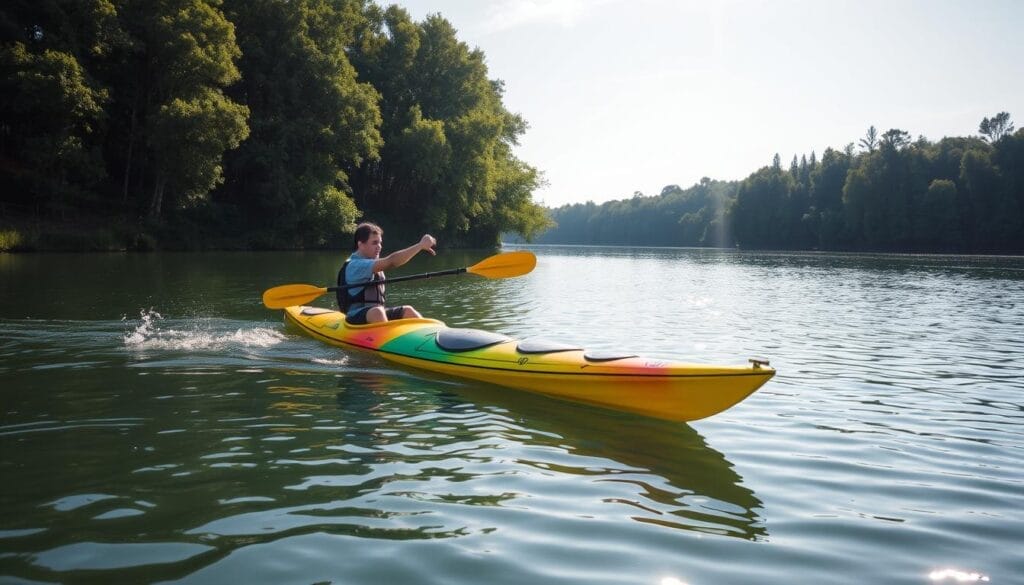
- The Low Brace Stroke: The primary survival stroke. Use the flat back of your paddle blade pressed against the water surface to pull yourself upright during a tip.
- Low Angle vs High Angle: Low-angle strokes are relaxed and keep the kayak stable; high-angle strokes are vertical, fast, and best for cutting through currents.
- Anchor Trolley Integration: Never anchor from the side of a kayak. Use an anchor trolley to slide your anchor rope to the bow or stern, aligning the hull with wind.
- Sweep Strokes for Steering: Wide, sweeping strokes on one side turn the kayak efficiently without sacrificing forward momentum or stability.
📏 Paddle Length Calculator 🛶
Calculate the recommended kayak paddle length based on your height and kayak width.
Unlike standard recreational paddlers, kayak anglers have a lot of variables to coordinate. You are holding a rod, managing line drift, adjusting lures, and monitoring fish finder screens, all while floating on a small, responsive piece of plastic. Because fishing kayaks are wide (often 31 to 35 inches) to allow standing, proper paddling technique is critical to avoid fatigue, stay straight, and prevent capsizing.
Many anglers rely purely on upper body strength to force the kayak forward, which leads to sore shoulders, slow hull speed, and zero stability. By mastering three fundamental paddle strokes and understanding how to engage your core, you can paddle further, steer silently, and save yourself from capsizing when wind or current tries to flip you. Let’s look at the top stability-focused paddle techniques for 2026.
1. The Core Forward Stroke
The forward stroke is the most basic stroke, but most beginners execute it incorrectly. Instead of pulling the paddle purely with your arms, you should engage your core and leg muscles:
- The Setup: Insert the paddle blade fully into the water near your feet. Keep your top arm relaxed at shoulder height.
- The Power Phase: Twist your torso and press your foot against the kayak’s foot peg on the same side as the blade. Use this leg pressure and torso rotation to pull the kayak past the blade, rather than pulling the blade through the water.
- The Release: Slice the blade out of the water once it reaches your hip. Pulling the blade further back only drags water and slows you down.
2. The Sweep Stroke (Maneuvering Without Tipping)
Standard turning strokes can lean a wide fishing kayak. To turn safely while maintaining rock-solid stability, use the sweep stroke:
Place the paddle blade into the water near your toes, and sweep it out wide in a large, curving half-circle arc all the way to the stern of the kayak. Doing this wide sweep leverages the kayak’s secondary stability, rotating the hull quickly without causing it to lean or tip. Sweep on the left to turn right, and sweep on the right to turn left.
3. The Low Brace (Survival Stroke)
If you take a wave broadside, catch your paddle on a rock, or lean too far to net a big fish, you might feel the kayak start to tip. The **Low Brace** is your emergency survival stroke to prevent a capsize:
Hold the paddle shaft low over your lap. Keep the back of the paddle blade flat against the water surface. Push down firmly against the water. This momentary flat contact acts like a temporary outrigger, giving you a solid support to pull your hips and kayak back upright. Practice this stroke until it becomes muscle memory.
Never tie an anchor rope directly to the side (cleat) of your kayak. If current or wind pulls on it, the side load will instantly flip you. Always use an **Anchor Trolley System**. This is a pulley loop along the side of the kayak that allows you to slide the anchor attachment point to the absolute bow (front) or stern (back), keeping your kayak aligned safely with wind and current.
Paddle & Control Gear
Vetted, top-rated products that are highly recommended for Canadian paddlers and anglers.

Bending Branches Angler Classic Fiberglass Paddle
A premium, lightweight fiberglass paddle designed specifically for fishing. Features a built-in hook retrieval notch and a tape measure on the shaft.
- Lightweight Fiberglass: Durable fiberglass-reinforced blades and a lightweight shaft reduce fatigue during long paddling sessions.
- Built-In Hook Retrieval: Features a unique hook retrieval notch in the blade to help rescue snagged lures from branches or weeds.
- Integrated Measurement: Shaft has a laser-etched tape measure in both inches and centimeters for quick, on-deck fish measuring.
Seattle Sports Coiled Paddle Leash
Keep your paddle secured to your kayak hull. Essential for preventing your paddle from drifting away while you are busy fighting or netting a fish.
- Zero-Loss Security: Keeps your paddle securely tethered to your vessel, preventing it from drifting away while you are landing a fish.
- Coiled Safety Cord: Coiled urethane cord stretches up to 6 feet for full paddling range, then retracts to stay out of your way.
- Quick-Release Clip: Sturdy brass snap hook clips easily onto kayak gear loops, D-rings, or tracks in seconds.

YakAttack Omega Pro Track Mount Rod Holder
Attach your rod securely to the gear track. Allows you to store your rod safely while paddling or navigating fast water currents.
- Locking Security: LockDown system secures spinning, casting, or fly reels to prevent rod loss in heavy waves or trolling strikes.
- 360-Degree Adjustability: Easily rotate and tilt the rod holder to achieve the perfect angle for trolling or rod storage.
- Track Mounted: Designed for quick installation and removal on all standard kayak gear tracks without drilling.
Affiliate Disclaimer: As an Amazon Associate, CanadaFever earns commissions from qualifying purchases. This supports our free outdoor guides at no extra cost to you.
🌍 Explore Guided Fishing Trips in Canada
Want to fast-track your success on the water? Book a professional local guide through Viator to find the best spots, learn advanced paddling techniques, and hook into trophy fish.
*CanadaFever is a Viator Partner (ID: P00210641). We may earn a commission if you book through our links, at no extra cost to you.*
How do you sit in a kayak for maximum stability?
Adjust your seat back so you are sitting upright or leaning slightly forward. Keep your feet firmly pressed against the foot pegs with a slight bend in your knees. This engages your core muscles, letting your hips rock naturally with the waves.
What should I do if my kayak starts to tip over?
Stay calm and immediately execute a low brace stroke: press the flat back of your paddle blade down against the water surface while keeping your head low and snapping your hips to pull the hull upright.
Do you need a paddle leash for kayak fishing?
Yes. Kayak fishing involves constantly putting the paddle down to handle fishing rods, nets, and tackle. A paddle leash ensures that a sudden gust of wind or drop doesn’t leave you stranded without a paddle.