

Compare Frabill thermal and wood tip-ups with Beaver Dam Northern Light. Choose by hole coverage, flag visibility, setup checks and local fishing rules.
- Cold, exposed holes: start with a covered thermal design, while continuing to check for ice buildup.
- Simple mechanical operation: a wood rail makes the basic spool-and-flag arrangement easy to inspect.
- Dusk visibility: an integrated light can supplement the flag; it does not replace attendance.
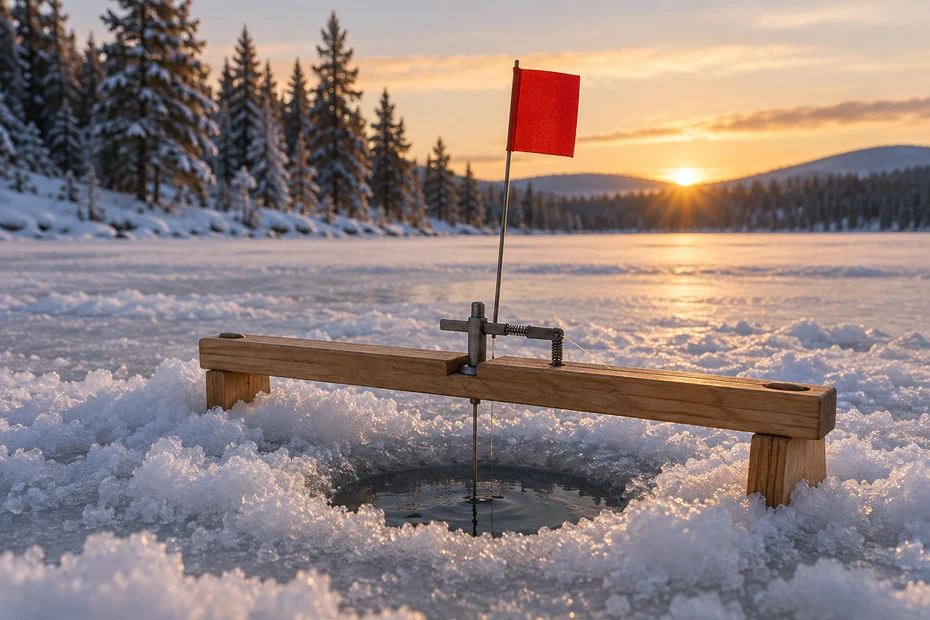
The best ice fishing tip-ups match the problem at your hole: keeping windblown snow out, giving you a simple mechanical flag, or making that flag easier to notice in fading light. Buying the most elaborate model does not fix an unsuitable line, a frozen shaft or a setup you cannot legally watch.
For US shoppers fishing the northern states, Great Lakes and Canadian destinations, this guide compares the Frabill Pro Thermal 1660, Frabill Classic Wood 1664 and Beaver Dam Northern Light. It is a researched equipment comparison, not a CanadaFever field test.
As an Amazon Associate, CanadaFever earns from qualifying purchases. Links open Amazon.com. Confirm the exact style, seller and contents before checkout; prices and delivery vary by offer.
Best ice fishing tip-ups: three different buying decisions
A tip-up holds a baited line and signals movement with a flag. In these conventional designs, you retrieve the fish using the line rather than a fishing rod. If you want to play fish on a rod, compare a suitable rod-based system with our ice fishing rod guide before buying conventional tip-ups.
| Pick | Best reason to choose it | Main compromise |
|---|---|---|
| Frabill Pro Thermal 1660 | Covered hole design for exposed winter sessions; packs into a bucket. | The cover can conceal developing ice; it does not guarantee a freeze-free hole. |
| Frabill Classic Wood 1664 | Traditional rail and mechanical flag without a lighting routine. | Rail does not provide a full insulated hole cover. |
| Beaver Dam Northern Light | Integrated light supplements the raised flag in low light. | Adds a lighting check and still requires direct monitoring. |
Shop the shortlist
Three distinct uses. Compare the fit and limitations below, then check the exact offer on Amazon.com.

Frabill Pro Thermal Tip-Up 1660
- Insulated circular base covers the hole
- Light/heavy trip settings for setup adjustment
- Bucket-friendly format; check the opening regularly
Consider before buying: A cover does not guarantee a freeze-free hole; this is the standard model rather than a ready-to-fish or lighted bundle.
Check options on Amazon : Frabill Pro Thermal Tip-Up 1660Amazon.com · Choose the exact model and variant

Frabill Classic Wood Tip-Up 1664
- Hardwood rail with a mechanical flag
- Removable spool shaft for model-specific service
- Choose Classic Wood; hole cover is a separate decision
Consider before buying: Open rail does not provide a full insulated hole cover; follow the manufacturer’s maintenance instructions.
Check options on Amazon : Frabill Classic Wood Tip-Up 1664Amazon.com · Choose the exact model and variant

Beaver Dam Northern Light Tip-Up BDTP-NL
- Integrated LED supplements the raised flag
- Light activates with the raised flag when switched on
- Test light and release together before each trip
Consider before buying: Illumination does not replace attendance; verify selected offer contents and power instructions. No remote-notification claim.
Check options on Amazon : Beaver Dam Northern Light Tip-Up BDTP-NLAmazon.com · Choose the exact model and variant
For a first purchase, choose one design for your usual conditions and learn its trip mechanism. A matching set can simplify packing and maintenance later, but local rules decide how many lines you may fish, not the number of units in the cart.
Where each tip-up belongs in your kit
Best ice fishing tip-ups for exposed holes: Frabill Pro Thermal
The Pro Thermal 1660 is our default starting point when hole coverage and bucket packing matter. Frabill specifies an insulated circular base sized to cover a 10-inch hole, light/heavy trip settings and a removable spool shaft. Its Pro Thermal product details identify model 1660.
The cover can help limit windblown snow and exposure at the hole. The cover provides no heat. The manufacturer’s temperature-based freeze-prevention claim does not guarantee an open hole in your conditions.
Check how the base sits over your actual hole before deploying it. An uneven rim or packed slush can affect seating. Lift the cover during checks so you can inspect the opening and moving parts rather than judging operation from the flag alone.
Buy it for: a covered conventional tip-up that fits your packing routine. Pass if: you mainly want an exposed rail, an included light or an already-spooled package. Those are different purchase choices, not automatic features of this model.
Frabill Classic Wood: a simple mechanical rail option
The Classic Wood 1664 suits buyers who prefer a traditional hardwood rail and visible mechanical arrangement. Frabill lists a 17.5-inch flag shaft, removable spool shaft and light/heavy trip settings in its Classic Wood specifications.
Its attraction is straightforward inspection and a familiar layout. You still need to check how the shaft rotates and how the flag engages; wood construction does not establish a lifetime of maintenance-free use.
The open rail does not do the same job as a full thermal cover. If surface ice is your recurring problem, consider whether a compatible separate cover makes sense or whether the Pro Thermal is the cleaner purchase.
Buy it for: a non-lighted rail with model-specific service information. Pass if: you need integrated illumination or want full hole coverage in one unit. Before checkout, choose “Classic Wood Tip-up,” not “Wood Stick Tip-up,” in the Amazon family selector.
Beaver Dam Northern Light: for watching flags in low light
The Northern Light’s specific advantage is its integrated light system. Acme identifies model BDTP-NL and explains that the raised flag and LED activate when triggered after the system is switched on. See the Northern Light product description.
Consider it when dusk is part of your usual fishing routine and you want the illumination built into the unit. Do not buy it expecting a remote phone notification: this recommendation is for the Northern Light, not a separate wireless alarm accessory.
Test the light and mechanical flag together before the trip. Check the supplied instructions for the power source, service procedure and storage requirements; do not assume batteries, line or accessories are included unless the selected offer lists them.
Buy it for: a visible light supplement to a flag you actively watch. Pass if: daylight use makes lighting unnecessary, or you want to avoid the extra pre-trip check. We have not verified visibility range or battery runtime.
What a raised flag tells you
The flag tells you that the mechanism has tripped. It does not tell you the fish species, whether the bait remains attached or whether the line is free of ice. That distinction helps you diagnose a flag without immediately blaming the device.
A covered base addresses the hole environment. Trip adjustment addresses release. Line and leader address handling, abrasion and the target fish. Treat those as separate checks in your complete ice fishing kit.
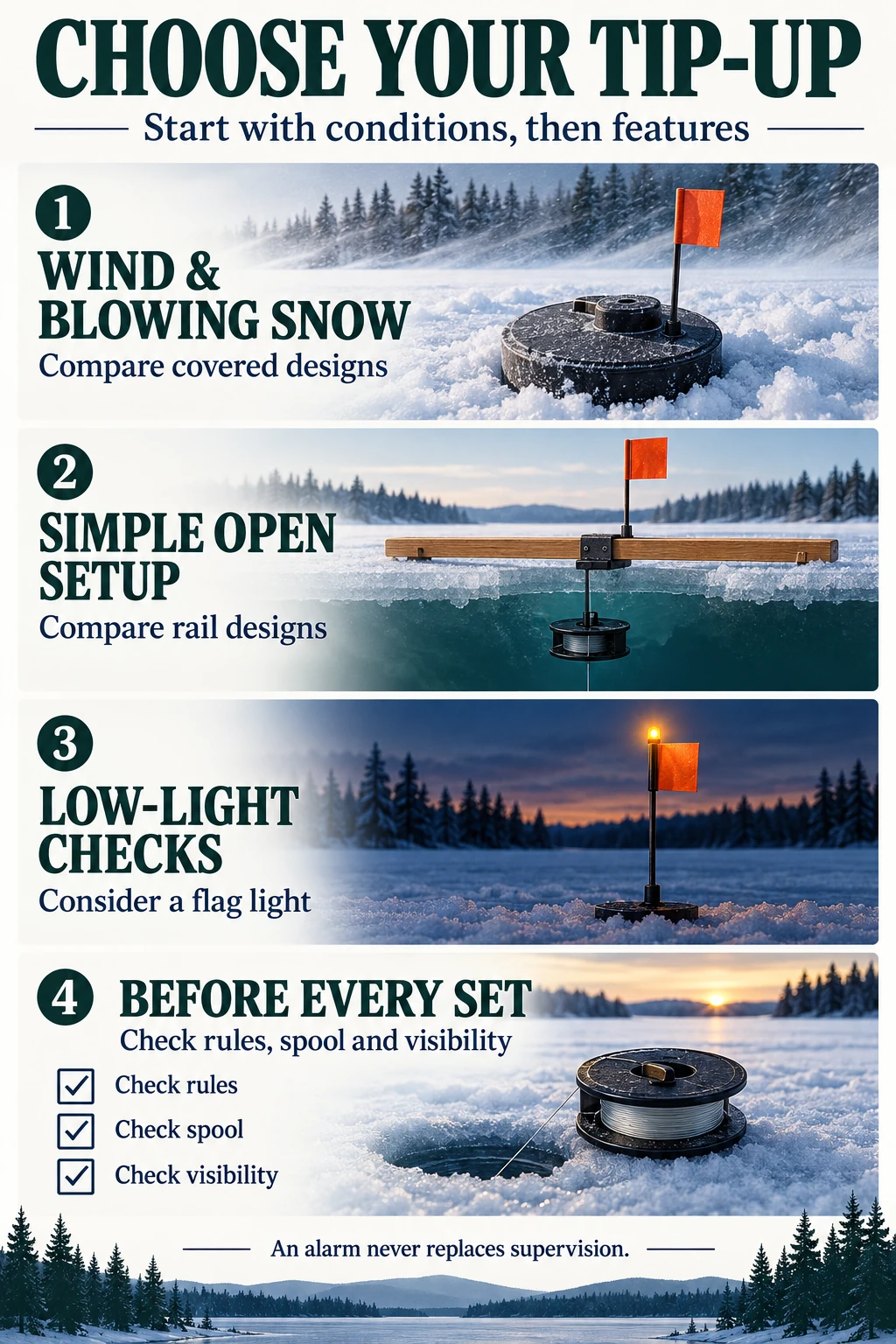
Conventional tip-ups versus rod-based devices
These picks use their own spool. A rod holder, tip-down or automatic hook-setting device may operate differently and may fall under different rules. Shop by the mechanism you actually want, not just the words “tip-up” in a product title.
If keeping a rod and reel in hand matters to you, compare that setup first. There is little value in buying several conventional tip-ups and then discovering you dislike handling the line directly.
Set up one complete unit before fishing a spread
Use the instructions supplied with your exact model. Frabill’s setup and maintenance FAQ covers its basic braided-line, leader, depth-marker and flag-setting sequence. The checks below apply that sequence to a practical rehearsal.
- Prepare the spool. Load compatible tip-up line evenly, keeping it clear of the shaft and mechanism. Check capacity before choosing a line diameter.
- Build the terminal rig. Match leader, connections, hook and weight to the species and permitted bait. Keep exposed hooks covered while transporting the unit.
- Check depth. Measure rather than guessing. Set the bait’s position and use a suitable marker so you can return to it after a check.
- Seat the unit. Clear enough slush for proper operation and make sure the base or rail spans the hole securely.
- Set and test the flag. Use the intended trip position, pull line in the normal direction of travel and confirm the flag releases.
- Recheck with the bait. Bait movement and rig weight can change the practical setup. Adjust only through the model’s intended controls.
Test with your fishing gloves on. You need to manage the spool, trip and connections in the equipment you will wear, not just with warm bare hands at the kitchen table.
Make the first on-ice check a controlled one: watch the unit, confirm the line remains free and check the bait. Do not spread equipment farther apart until you know you can monitor and reach it within the local rules.
Line, leader and bait: the purchase details people miss
Choose line for handling as well as strength
Conventional tip-up line must suit the spool and the way you retrieve it. Do not treat thin spinning-reel braid as an automatic substitute for purpose-suited tip-up line. Check handling with gloves, capacity and the line maker’s cold-weather guidance.
Line strength needs to suit the target species, depth and rig. Build the line system for the target fish, likely abrasion and the device’s capacity. Inspect wear at the hole edge and connections rather than judging only the label on the package.
Pike need a deliberate leader decision
For toothy fish, use a leader selected for that application, not an ordinary light walleye leader carried over without thought. Our pike leader and wire-rig comparison explains the alternatives.
Rig choice also affects bait presentation and hook removal. Discuss a suitable legal rig with a local tackle shop if you are new to northern pike fishing. Do not copy a fixed “wait this many seconds” rule from a roundup; respond promptly and use appropriate handling and release practices.
Separate depth from the purchase decision
Use known structure, local information and depth checks to decide where the bait belongs. Record changes so you can tell whether a result followed a location, depth or bait adjustment.
If you prefer a rod-based stationary presentation for walleye, compare deadsticking for winter walleye. A conventional tip-up is one tool, not the necessary answer to every quiet bite.
Diagnose false flags before replacing the unit
Change one thing at a time. A flag can rise because of line movement without a hooked fish; a fish can also drop the bait. Inspect the setup before deciding you need a different brand.
| What you notice | First check | Avoid this shortcut |
|---|---|---|
| Repeated trips without a fish | Check bait movement, rig weight and correct trip engagement; inspect after each flag. | Making the trigger so stiff that the normal line-pull test no longer releases it. |
| Flag remains down during your pull test | Inspect line routing, engagement and free shaft movement. | Assuming cold-weather lubricant makes inspection unnecessary. |
| Ice develops around the opening | Lift the cover and check the opening, shaft and line. | Trusting an insulated cover as a freeze-proof promise. |
| Light fails during rehearsal | Follow the power and activation instructions; verify mechanical release too. | Using the LED as the only way to monitor the rig. |
Spool care and storage between outings
After fishing, inspect the line and connections, remove tangles and let equipment dry before enclosing it for storage. Keep hooks secured so they cannot catch another unit’s flag or line in the bucket.
Follow the manufacturer’s shaft-service procedure and approved lubricant guidance. Do not pour a convenient oil into the mechanism or force apart a sealed assembly. For either Frabill model, use the model-specific removable-shaft information when arranging maintenance.
Check flag springs, fasteners and the base before the season and again after damage. An apparent bargain needs the same moving-part checks as a premium device. For the Northern Light, follow the electronics storage instructions as well.
US and Canadian rules: check the lake before the shopping cart
Tip-ups are not permission to set unlimited lines or leave them behind while you warm up. Confirm device legality, attendance requirements, line and hook limits, species season and bait restrictions for the specific water you plan to fish.
Minnesota illustrates why older advice can mislead: the DNR announced a change permitting specified non-motorized automatic hook-setting devices for the 2025–26 ice season, while retaining attendance rules. Its dated rule-change notice does not make every automatic device legal everywhere.
For a cross-border trip, review our Ontario fishing regulations guide alongside the official rules. Do not assume bait purchased in the US can be transported into Ontario; check the province’s bait rules before travel.
This is equipment guidance, not a substitute for official regulations or local ice assessment. A working flag, light or cover says nothing about the ice’s ability to support you.
Final buying check: one correct unit beats the wrong bundle
Check model number, style and pack quantity together. The Pro Thermal 1660 should not be confused with a ready-to-fish or lighted Frabill variant. The Classic Wood 1664 is not the family’s separate Wood Stick style. For Beaver Dam, verify BDTP-NL.
Read what the selected offer includes. Budget separately for compatible line, leaders, terminal tackle and any required light power source. A product-family photo or a “tip-up kit” title is not an inventory of everything in your box.
Use the CanadaFever ice fishing hub to connect these equipment choices with trip planning. Your fishing technique and setup checks remain more important than adding another feature to the cart.
Best ice fishing tip-ups FAQ
Is a thermal tip-up better than a wooden one?
A thermal cover suits buyers who need hole coverage; a wood rail suits buyers who prefer an exposed mechanical arrangement. Both still need operating checks. Choose by the hole environment and packing routine rather than assuming either material is universally superior.
Do insulated tip-ups stop holes freezing?
A covered design can reduce exposure, but this guide does not guarantee a freeze-free hole. Check the opening, line and shaft during fishing, especially when conditions change. A concealed opening still needs inspection.
Do these tip-ups include line?
Do not assume so. Amazon families may group bare units, ready-to-fish products and lighted versions. Read the selected style’s contents and plan compatible line and terminal tackle before your trip.
Can I leave a lighted tip-up outside while I go away?
No light or alarm creates permission to leave a rig unattended. Attendance and viewing rules depend on the jurisdiction and water. Plan monitoring and shelter placement around the official requirements.
How many tip-ups should a beginner buy?
Start with the number you can legally fish and actively manage. Learning one complete setup before buying a larger matching set can prevent mistakes with trip adjustment, line handling and bait depth. Count other lines you fish when checking the local limit.
Research reviewed October 1, 2026. Manufacturer model descriptions and Amazon style identities informed this shortlist. CanadaFever has not field-tested these units; no prices, stock guarantees, fixed detection ranges or freeze-proof results are claimed.