

Complete guide to Canadian fishing licences for non-residents and tourists 2026. Province-by-province fees, where to buy online, and what US visitors need to know.
- Start with the current official rules for Canada Fishing Licence for Non; seasons, permits, and limits can change by province or management zone
- Check the date, location, species, and licence requirements before using any checklist or trip plan
- Use the guide to spot practical risks: closures, gear restrictions, local exceptions, and proof you may need in the field
Bottom line Canada Fishing Licence for Non is safest when you verify the current official rule first, then plan gear, timing, and travel around that rule
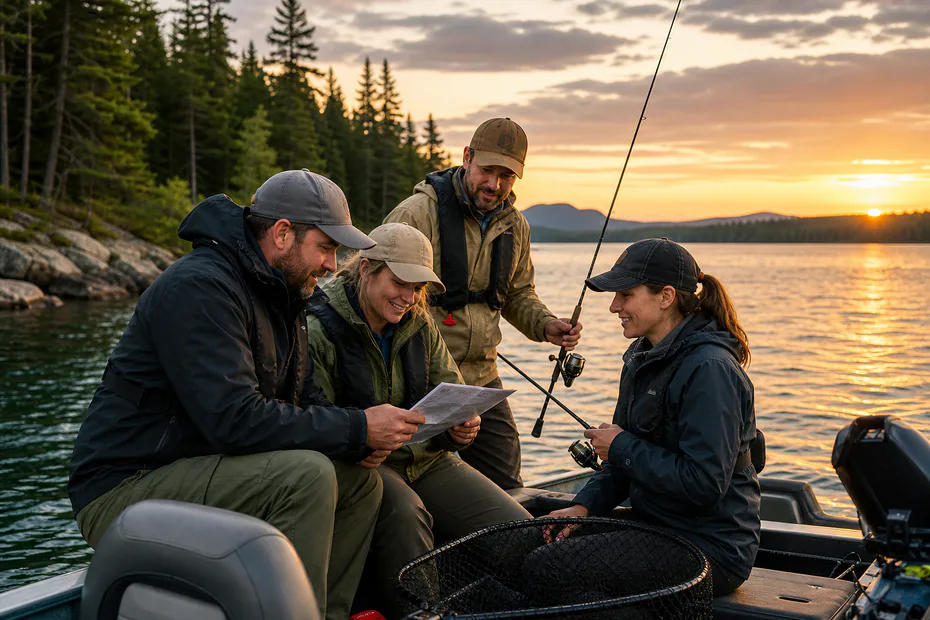
Canada is a dream destination for international anglers. From the world-class walleye fisheries of Ontario’s Sunset Country, to the trophy rainbow trout rivers of British Columbia, to the vast pike and lake trout lakes of Saskatchewan and Manitoba, no country on earth offers; our Manitoba fishing regulations guide covers current licence fees and dates the same combination of sheer variety, wilderness access, and trophy-class fish. Every year, hundreds of thousands of visitors from the United States, Europe, Australia, and beyond make the trip — rods in hand.
Visitors heading to Québec should continue with the Québec non-resident fishing licence guide for licence types, zone checks and the northern outfitter rule.
But before you can legally cast a line in Canadian waters, you need a fishing licence. And unlike some countries with a single national fishing licence, Canada has no federal recreational fishing licence. Instead, each province and territory issues its own licence, with its own fees, residency categories, and regulations. For non-residents and international visitors, this means understanding which province you are fishing in, how much that province charges non-residents, and where to buy before you arrive.
This guide explains how non-resident fishing licences work in Canada, highlights officially verified 2026 fees for major destination provinces, and links you to the provincial pages where you should confirm the final product before buying.
For the full national planning map, pair this visitor guide with our Fishing Regulations and Licences in Canada pillar, which explains province-by-province rule checks, national park exceptions, and official-source verification.
Last verified: June 4, 2026
The fee snapshot below uses official provincial sources for the largest CanadaFever licence-guide destinations. Provinces define residency differently, so always confirm the exact product at the official checkout before fishing.
⚡ Key Takeaways: Non-Resident Fishing in Canada
- No Federal Licence: Canada has no single national recreational fishing licence. You must purchase the licence from the specific province where you plan to fish.
- Non-Resident = Not a Permanent Resident of That Province: In most provinces, “non-resident” means you are not a permanent resident of that province — it applies to both Americans/internationals AND Canadians visiting from other provinces.
- Short-Term Options Available: Every province offers short-term licences (1-day, 3-day, 5-day, 7-day, or 8-day) ideal for destination fishing trips.
- Buy Online Before You Arrive: All provinces offer online purchasing. Buy before crossing the border — some remote areas have no vendors nearby.
- Carry It Always: You must carry your licence (printed or digital) at all times while fishing. Conservation Officers can demand to see it.
- National Parks Separate: Fishing inside a National Park (Banff, Jasper, etc.) requires a Parks Canada permit regardless of your provincial licence.
Understanding “Non-Resident” in Canadian Fishing Law
The term “non-resident” has a specific legal meaning in each province that often surprises visitors. In most Canadian provinces, “non-resident” does not simply mean “foreign citizen.” Instead, it refers to anyone who is not a permanent resident of that specific province. This means:
- An American tourist visiting Ontario must buy an Ontario non-resident licence ✅
- A British Columbia resident visiting Ontario must also buy an Ontario non-resident licence ✅
- A permanent Ontario resident visiting Ontario buys an Ontario resident licence ✅
The practical implication: if you are planning a cross-Canada fishing road trip hitting multiple provinces, you may need to purchase a separate non-resident licence in each province you fish. However, within each province, the non-resident licence covers all your fishing for the duration selected — there is no per-species or per-water surcharge in most provinces. For a complete national overview, see our guide on how to obtain a fishing licence in Canada.
Non-Resident Fishing Licence Fees in Canada: 2026 Verified Snapshot
The table below is a verified planning snapshot for major destination provinces. It is not a checkout screen. Taxes, habitat certificates, Outdoors Cards, salmon stamps, classified waters, national parks, tidal waters and age/residency exemptions can change the final product you need.
| Province | International visitor annual | Short option | Important add-on or note | Official route |
|---|---|---|---|---|
| Ontario | $83.19 sport / $52.71 conservation | $54.38 8-day sport / $24.86 1-day sport | Outdoors Card $8.57 for most multi-day products; 1-day sport does not require it. | Ontario.ca |
| British Columbia freshwater | $91.44 non-resident alien | 1-day and 8-day options available in WILD | Freshwater salmon surcharge and DFO tidal licence/stamp are separate. | B.C. WILD/FWID |
| Alberta | $87.00 | $57.00 7-day / $29.00 1-day | WiN required; national parks such as Banff and Jasper need Parks Canada permits. | Alberta regulations |
| Saskatchewan | $115 | $57 3-day / $28 1-day | Fisheries Habitat Certificate: $21 annual or $5.25 short-term unless exempt. | Saskatchewan HAL |
| Manitoba | $72.45 | $27.30 1-day | Annual cycle: May 1, 2026 to April 30, 2027. National parks are separate. | Manitoba eLicensing |
Canadian residents visiting another province often pay a different rate than international visitors. If you live in Canada but outside the destination province, choose the Canadian-resident/non-provincial category at checkout instead of the international non-resident category.
Province-by-Province Guide for Non-Resident Anglers
Ontario: The Non-Resident Destination of Choice
Ontario is by far the most visited province for non-resident fishing. With over 250,000 lakes, world-class walleye and musky fisheries, and excellent infrastructure for visiting anglers, it is a top choice for Americans from Michigan, Minnesota, Ohio, New York, and Pennsylvania. Non-residents pay $62.09 for an annual licence or $29.57 for an 8-day licence — excellent value given the quality of fishing. Buy online at ontario.ca. Our guide to the best walleye lodges in Ontario is an excellent starting point for planning your trip.
British Columbia: Pacific Salmon and Trophy Trout
BC requires non-residents to purchase a provincial freshwater licence ($54.27/year) for inland fishing, plus a separate federal DFO Tidal Waters Licence if fishing in the ocean or coastal waters. If you plan to target Pacific salmon in saltwater, you also need a Tidal Waters Salmon Conservation Stamp. Our salmon fishing charters Vancouver Island guide covers how charter operators handle licensing on your behalf — most include the federal licence in their charter fee.
Alberta: Mountain Rivers and Northern Trophy Lakes
Alberta’s non-resident fee ($54.27/annual, $32.56/5-day) is among the most straightforward in Canada. Note that bull trout, cutthroat trout, and Arctic grayling are all catch-and-release only province-wide. If fishing in Banff or Jasper National Park, you need a separate Parks Canada permit instead of — or in addition to — the provincial licence. See our full Alberta fishing licence guide for complete details.
Saskatchewan: Premium Prices for Trophy Lake Trout
Saskatchewan has the highest non-resident annual fee in Canada ($75.00), but also some of the most untouched, trophy-class lake trout and walleye fisheries on the continent. Reindeer Lake, Wollaston Lake, and Lac La Ronge are legendary for producing lake trout in the 20–40 lb class. Most non-resident anglers access these waters via fly-in fishing lodges — check our guide to fly-in fishing adventures in Canada for outfitter recommendations.
Quebec: ZEC Zones and World-Class Brook Trout
Quebec’s fee structure ($53.31/annual) is reasonable, but the province’s unique ZEC (controlled exploitation zone) system means many of the best fishing areas require advance reservation and zone-specific permits beyond the base licence. For non-residents targeting Atlantic salmon on the Gaspésie rivers or trophy brook trout in northern Quebec, working with a licensed outfitter is strongly recommended. Our guide to the best brook trout lodges in Quebec lists outfitters who handle all permitting for non-resident guests.
CanadaFever Licence Check
We removed the old anecdotal field story from this national guide and replaced it with a source-backed warning: there is no single Canada fishing licence for recreational angling.
Buy directly from the province, territory or Parks Canada system that controls the water you will fish. Be especially careful with third-party pages that claim to sell a generic Canadian fishing licence.
How to Buy Your Canadian Non-Resident Fishing Licence: Step-by-Step
- Determine which province you are fishing in. If crossing multiple provinces, you need a separate licence for each one.
- Go directly to the official provincial government website (links in the fee table above). Do not use third-party sites.
- Select “Non-Resident” or “Visitor” category. American and international visitors both fall under this category in every province.
- Choose your duration. For a 5–10 day fishing trip, the short-term licence (5-Day, 7-Day, or 8-Day depending on province) almost always offers the best value vs. the annual licence.
- Pay by credit card. Visa, Mastercard, and American Express are accepted at all provincial portals. Note: fees are in Canadian dollars — your card will handle the currency conversion.
- Download and print your licence, or save the PDF to your phone. You must be able to show it to a Conservation Officer on demand.
- Know your regulations. Download the current fishing regulation booklet for your province — it will list catch limits, size limits, and any special rules for the waters you plan to fish.
All provincial government portals accept international credit cards and can issue your licence instantly online. Buy the day before you travel. Remote fishing lodges in northern Ontario, Manitoba, and Saskatchewan may be an hour or more from the nearest town — arriving without a licence means a full day of not fishing. Some remote fly-in lodges offer to arrange your licence in advance through their booking process — always ask.
What Gear Should Non-Resident Anglers Bring to Canada?
Once your licence is sorted, the other common question from visiting international anglers is what gear to bring. Canadian waters — especially in Ontario, Manitoba, and Saskatchewan — reward anglers who come prepared with the right tackle. Our guide to the best ice fishing gear in Canada is a useful reference even for summer anglers, since many of the rod and reel combinations are versatile. For bass and walleye specifically, our guide to the best spinning rods for smallmouth bass covers the top setups used on Canadian shield lakes.
Frequently Asked Questions About Non-Resident Fishing Licences in Canada
Is there one fishing licence for all of Canada?
No. Canada does not have one national recreational freshwater fishing licence. Buy the licence for the province or territory where you will fish. National park waters and coastal/tidal waters can require separate federal permits or licences.
Do Americans and international visitors need a Canadian fishing licence?
Yes, if they are fishing in Canadian waters where a recreational licence is required. Most visitors from outside Canada buy the province’s non-resident or non-Canadian resident product, then follow that province’s limits and waterbody rules.
Can Canadian residents from another province use resident rates?
Usually no. Many provinces separate residents of that province from Canadian residents who live elsewhere. A Canadian visitor may pay less than an international visitor but more than a local provincial resident.
Is a provincial fishing licence valid in national parks?
No. National park waters are managed federally by Parks Canada. If you fish in places such as Banff, Jasper, Waterton, Prince Albert National Park or Riding Mountain National Park, check Parks Canada permit rules for that park.
Can I bring fish home from Canada after my trip?
Sometimes, but you must stay within the Canadian province’s possession and transport rules and follow your destination country’s import rules. Keep fish identifiable where required, declare your catch at the border when required, and check both Canadian and U.S. border guidance before travelling.
Plan Your Non-Resident Fishing Trip to Canada
Canada remains one of the world’s great fishing destinations, and the licensing system — while decentralized — is logical once you understand the provincial structure. The key steps are simple: know which province you are fishing in, buy the correct licence from the official government portal before you arrive, carry it at all times, and follow the provincial regulations for the specific water body you are fishing.
If you are planning your first Canadian fishing trip and not sure where to start, begin with our Fishing for Beginners in Canada hub, then use the best fishing lakes in Canada guide for destination-by-destination planning. For family trips, the family fishing trips in Canada guide covers the most accessible and rewarding options for anglers of all ages. And for the ultimate remote experience, our fly-in fishing adventures guide details how to book a fly-in lodge deep in Ontario, Manitoba, or Saskatchewan’s wilderness.
Canada’s fish and waters are a national treasure — fish responsibly, respect the regulations, and you will find world-class angling that keeps you coming back year after year.
Visitor coastal note: Non-residents planning saltwater, tidal-water or coastal salmon trips should also read Ocean Fishing Licence in Canada for BC tidal waters, salmon stamp, catch record and Atlantic rule checks.