
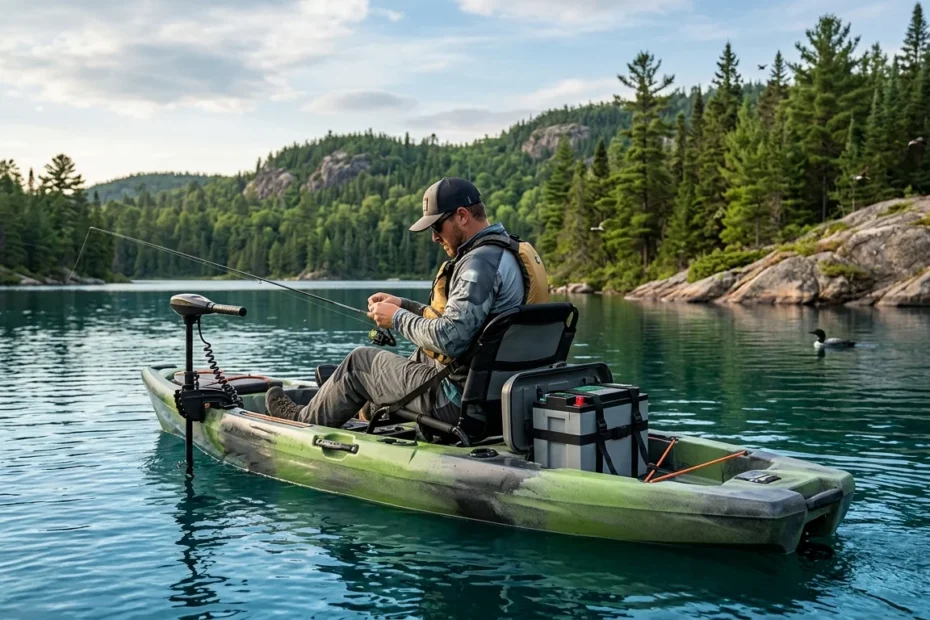
Looking for the best trolling motor battery for kayak fishing in Canada? Compare 50Ah, 60Ah, and 100Ah options by weight, runtime, and real kayak practicality before you buy.
- Match Trolling Motor Battery for Kayak Fishing in Canada to your water, season, boat size, and actual skill level instead of buying by specs alone
- Prioritize readable controls, durable construction, and Canada-relevant use cases before chasing premium features
- Use the guide to compare what matters in the field: setup time, reliability, safety, storage, and upgrade path
Bottom line The right Trolling Motor Battery for Kayak Fishing in Canada choice solves your real Canadian trip conditions without adding gear you will not use
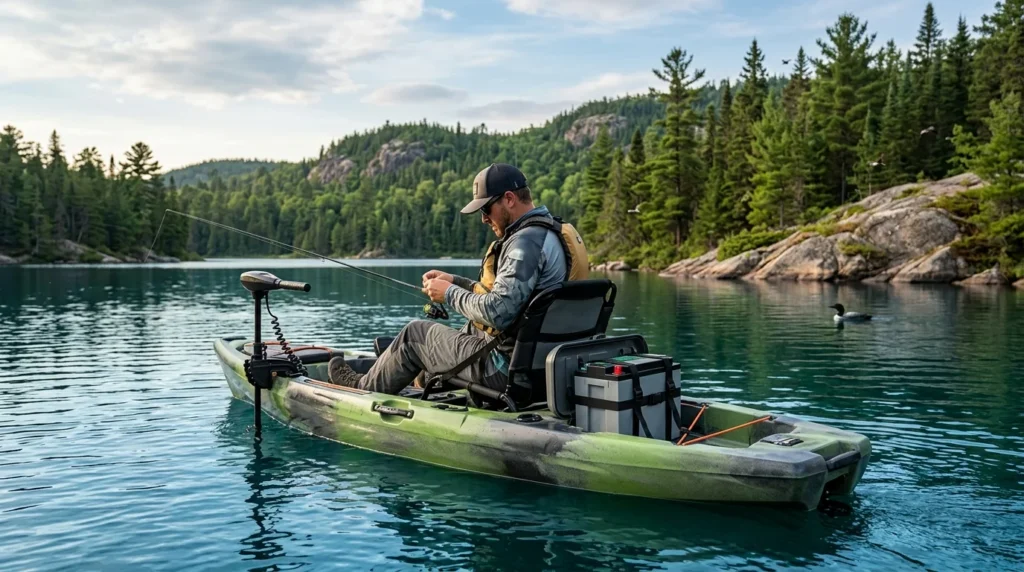
Best trolling motor battery for kayak fishing is rarely the biggest battery you can buy.
Battery capacity only makes sense after the motor is sized. Use the best trolling motors Canada guide to settle thrust, shaft depth and voltage before choosing the battery.
It is the battery that gives you enough runtime for the way you actually fish, without turning your kayak into a heavier, harder, less enjoyable platform to launch, load, and control.
That matters in Canada because kayak anglers here often deal with longer freshwater days, rougher launches, bigger inland lakes, and colder shoulder-season mornings that punish bad battery decisions faster than you expect.
Key Takeaways
- For most kayak anglers, a 12V lithium battery in the 50Ah to 60Ah range is the best starting point.
- 100Ah lithium only makes sense when you run longer days, heavier motors, or extra electronics and can still manage the extra cost and space.
- AGM can still work on a budget, but weight becomes the main penalty on a fishing kayak.
- The smartest battery choice is usually the one that balances runtime with hull practicality, not the one with the biggest number on the label.
If you only want the short answer, most Canadian kayak anglers should start by comparing a 12V 50Ah or 60Ah lithium battery before they even think about a 100Ah pack.
For multi-bank boat systems and cold-season storage, continue with the marine battery and charger system guide.
The Guide’s Log
Battery mistakes on a kayak usually start on land, not on the water. The spec sheet looks impressive, the runtime estimate sounds comforting, and the battery seems like “extra insurance” until you lift it, try to fit it cleanly into the hull, and realize you have just changed how the whole boat handles. That problem gets bigger in Canada because a lot of kayak fishing here means longer carries, rougher launch points, bigger inland water, and days where you want both a motor and electronics without turning the kayak into a barge. The wrong battery does not just add weight. It changes trim, deck space, storage, and how much energy you still have left before the day even starts. Good kayak-battery buying is not about chasing the largest amp-hour number in the category. It is about choosing the lightest battery that still gives honest runtime for your motor, your day length, and your style of fishing. On a kayak, that tradeoff is the whole game.
Best Trolling Motor Battery for Kayak Fishing: Quick Picks
If you want the fastest buying summary, start here.
- Best overall for most kayak anglers: 12V 50Ah or 60Ah lithium.
- Best for weight-sensitive kayaks: compact 50Ah lithium.
- Best for longer day trips and more electronics: 100Ah lithium, but only if the kayak and launch style justify it.
- Best budget route: AGM only when price matters more than carry weight and deck efficiency.
- Best buyer rule: size the battery for your actual runtime and hull, not for abstract “just in case” thinking.
For most buyers, the real decision is not simply lithium versus AGM. It is whether your kayak should carry 50Ah efficiency, 60Ah breathing room, or a much bigger battery that starts changing the whole boat.
Top Recommendation
Best Overall Pick for Most Buyers: 12V 50Ah to 60Ah Lithium Battery
If you want the strongest all-round answer, start with a 12V lithium battery in the 50Ah to 60Ah range. That is the cleanest default because it gives serious runtime without making a fishing kayak feel unnecessarily heavy, cramped, or awkward to launch.
- Best for most freshwater kayak anglers in Canada
- Strong fit for day trips, moderate thrust motors, and electronics pairing
- Smarter balance of runtime, weight, and hull practicality than jumping straight to 100Ah
As an Amazon Associate, we earn from qualifying purchases.
Amazon.com Picks
Build a Kayak Battery Shortlist That Fits Your Hull
Most kayak buyers should think in three lanes: compact 50Ah lithium, all-round 60Ah lithium, or bigger 100Ah battery power for longer heavier setups. If you choose the lane first, the shopping gets much cleaner.
Compact Lithium Batteries
Best when kayak weight, carry burden, and clean deck balance matter as much as runtime.
See Category
All-Round Lithium Batteries
Best for buyers who want more breathing room without moving all the way into full-size heavy battery territory.
See Category
Long-Day and Heavy-Load Batteries
Best when longer runs, bigger motors, or extra electronics make the added size and cost actually worthwhile.
See Category
As an Amazon Associate, we earn from qualifying purchases.
| Battery Type | Typical CAD Range | Best For | Why It Stands Out |
|---|---|---|---|
| 12V 50Ah lithium | About C$250-C$450 | Most lightweight kayak setups | Best starting point for weight-conscious buyers |
| 12V 60Ah lithium | About C$320-C$520 | All-round kayak anglers who want more runtime margin | Strong balance of runtime and still-manageable weight |
| 12V 100Ah lithium | About C$500-C$900 and up | Longer heavy-use days and electronics-heavy builds | Big runtime if the kayak can honestly handle it well |
| AGM | Often cheaper up front | Budget buyers who accept more weight | Works on cost, loses badly on kayak portability |
How to Choose the Best Trolling Motor Battery for Kayak Fishing
The biggest buying mistake in this category is using bass-boat battery logic on a kayak.
Kayaks punish extra battery weight much faster. More battery does not just add runtime. It changes hull trim, carry burden, storage space, and how cleanly the whole rig works.
- Choose 50Ah lithium if you want the lightest smart starting point.
- Choose 60Ah lithium if you want more runtime margin without moving too far into oversized territory.
- Choose 100Ah lithium only if your motor, electronics load, and trip style truly justify it.
- Choose AGM only if budget is the main priority and you are willing to absorb the weight penalty.
The Local Secret
The hidden Canadian wrinkle is launch friction. A battery that looks manageable in your garage can start feeling like the wrong choice once you add longer carries, rough shoreline launches, and shoulder-season cold to the day.
50Ah vs 100Ah for Kayak Fishing
This is the choice that cleans up most battery buying mistakes.
| Battery Size | Best Use | Best Move | Mistake to Avoid |
|---|---|---|---|
| 50Ah lithium | Lightweight day-trip setups | Choose it when portability matters as much as runtime | Assuming you need far more capacity just because it exists |
| 60Ah lithium | Most all-round kayak anglers | Use it when you want runtime margin without overcommitting to a bigger battery | Skipping it and jumping straight from 50Ah to 100Ah thinking only in extremes |
| 100Ah lithium | Longer heavy-use days and bigger loads | Only choose it if your kayak, space, and handling still make sense with it installed | Buying it for reassurance instead of real need |
Best Kayak Battery Picks by Use Case
If you buy by use case instead of hype, the shortlist gets much cleaner.
- Best overall: 12V 50Ah to 60Ah lithium.
- Best for compact kayaks: lighter 50Ah lithium.
- Best for all-day anglers with electronics: 60Ah lithium.
- Best for longer motor-heavy days: 100Ah lithium, but only when the hull and load plan justify it.
- Best budget route: AGM only if the up-front savings truly outweigh the extra weight for your setup.
For CanadaFever readers, this page fits naturally beside best portable fish finders for kayak fishing in canada, kayak fishing with electronics, essential gear for kayak fishing, and kayak and canoe fishing gear.
Where This Fits in Your Kayak System
A trolling motor battery only makes sense as part of the full kayak system. Storage, electronics, hull shape, launch style, and trip length all affect the right answer.
If you are building the broader system, this guide also belongs beside advanced kayak fishing rigging and techniques, fishing tackle setup for kayaks, storage solutions for kayak fishers, and best kayak models for fishing.
The Pre-Trip Protocol
- Step 1: Decide whether your main problem is runtime or weight before you buy.
- Step 2: Match the battery to the actual motor, electronics load, and trip length you run most often.
- Step 3: If you launch rough or carry solo, value lighter lithium weight more aggressively than you would on a larger boat.
Before You Buy a Kayak Trolling Motor Battery
Before You Buy
- Do not buy the biggest battery by default. Buy the lightest battery that still meets your real runtime.
- Lithium usually makes far more sense on a kayak than AGM once you factor in carrying and hull balance.
- If your kayak already feels crowded, a smaller smarter battery is often the real upgrade.
Best Trolling Motor Battery for Kayak Fishing FAQ
What is the best battery size for a kayak trolling motor?
For most kayak anglers, a 12V 50Ah or 60Ah lithium battery is the strongest starting point because it balances useful runtime with manageable weight.
Is 100Ah too much battery for kayak fishing?
Sometimes yes. It can make sense for longer heavier-use setups, but many kayak anglers do better with a lighter 50Ah or 60Ah lithium battery.
Is lithium worth it for a kayak trolling motor battery?
Usually yes. On a kayak, lower battery weight changes carrying, trim, and storage enough that lithium often justifies the higher price more clearly than it does on larger boats.
Can AGM still work for kayak fishing?
Yes, especially on a tighter budget, but the weight penalty is real. On a kayak, that extra mass often hurts usability more than buyers expect.
What matters more: amp-hours or battery weight?
On a kayak, both matter, but weight deserves much more respect than most buyers give it. The best battery is the one that fits your runtime and still keeps the kayak practical.