

Compare Muck Arctic Pro, Baffin Impact and Kamik Greenbay 4 ice fishing boots. Choose by waterproofing, stationary warmth, sock fit and drying needs.
- Wet snow and slush: start with the Arctic Pro's waterproof neoprene construction.
- Long periods sitting still: consider the Impact, accepting substantial bulk.
- Occasional outings: compare the Greenbay 4 with your existing winter boots before buying more boot than you need.
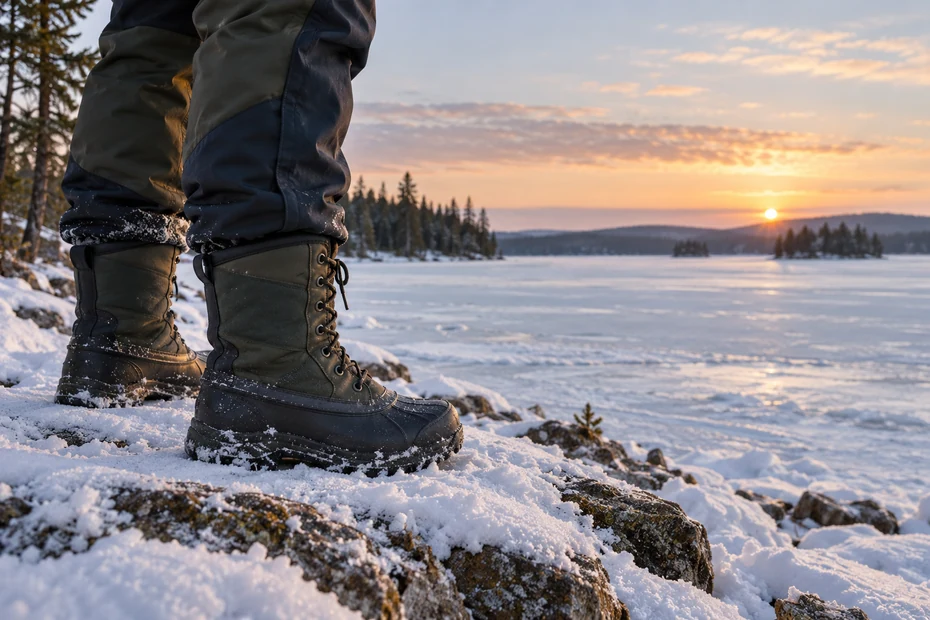
The best ice fishing boots keep slush outside, give your toes room and suit the time you spend sitting still. A boot that feels comfortable walking to a hole can become the wrong choice once you stop moving.
This guide compares three practical options for US shoppers fishing the northern states, Great Lakes and Canadian lakes: Muck Arctic Pro for wet conditions, Baffin Impact for stationary cold-weather use, and Kamik Greenbay 4 for a simpler removable-liner setup. These are researched recommendations, not a CanadaFever field test.
As an Amazon Associate, CanadaFever earns from qualifying purchases. Shopping links open Amazon.com; select your size, colour and seller before buying. Prices, delivery and returns depend on the selected offer.
Best ice fishing boots: choose by the day you actually fish
Start with your main problem rather than the lowest printed temperature. For the rest of your setup, our ice fishing gear guide puts footwear alongside clothing, shelter and tackle.
| Boot | Best reason to choose it | Reason to pass |
|---|---|---|
| Muck Arctic Pro | Wet approaches and slushy hole areas; waterproof bootie and pull-on format. | Fixed insulation is less convenient to dry than a removable inner boot. |
| Baffin Impact | Cold-weather sessions where sitting or standing dominates; removable multi-layer inner boot. | Bulky for frequent walking; waterproof base is not a claim that the entire shaft can be submerged. |
| Kamik Greenbay 4 | Occasional winter outings with easy liner removal and a midfoot strap. | Waterproof-bottom classification requires attention to wet upper exposure. |
Shop the shortlist
Three distinct uses. Compare the fit and limitations below, then check the exact offer on Amazon.com.
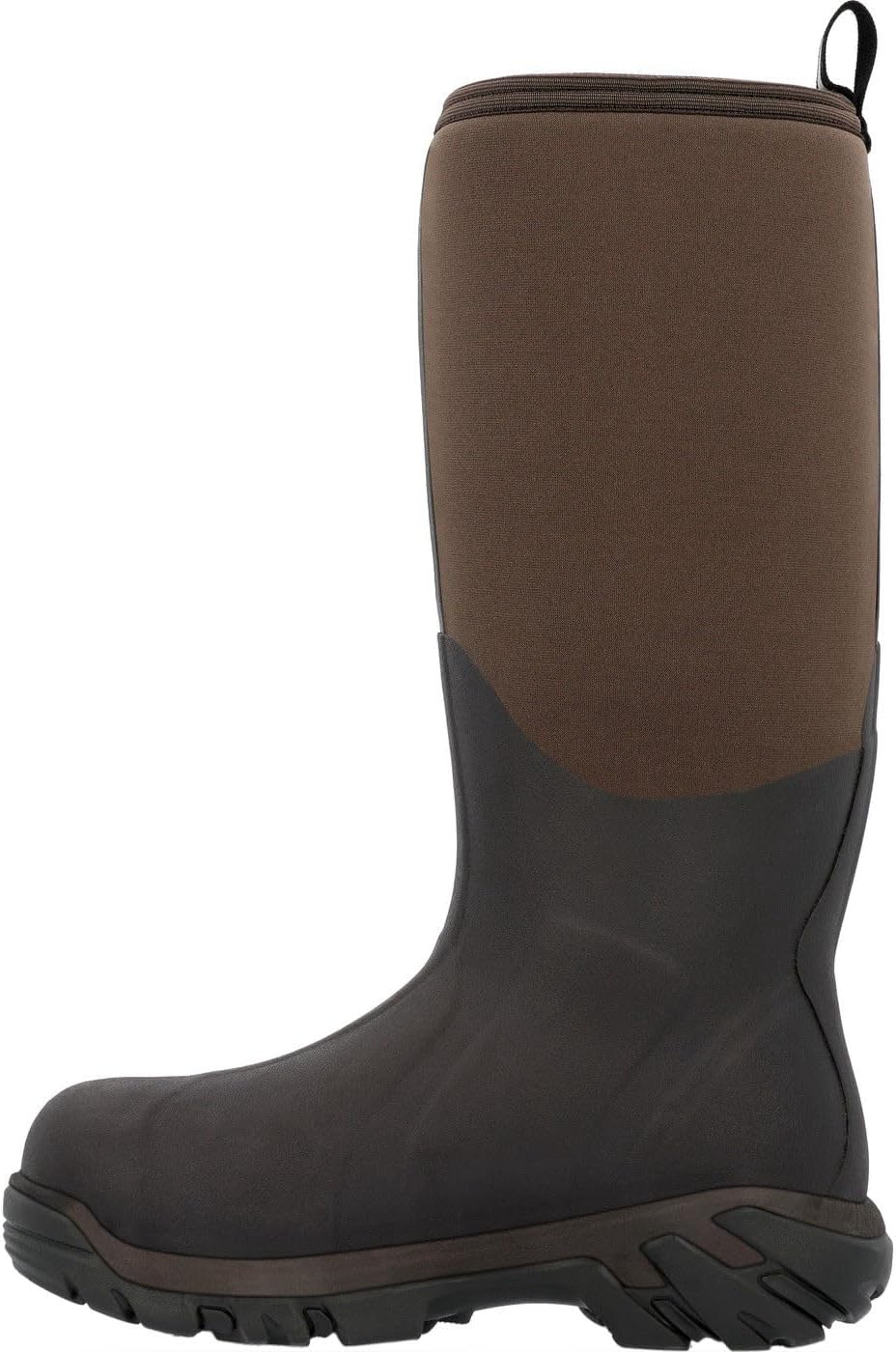
Muck Men’s Arctic Pro Insulated Boot
- Waterproof neoprene bootie for wet winter conditions
- Pull-on format for a simple footwear routine
- 8mm neoprene, fleece lining and foam beneath the footbed
Consider before buying: Fixed insulation is less convenient to dry than a removable inner boot; confirm heel and calf fit.
Check options on Amazon : Muck Men’s Arctic Pro Insulated BootAmazon.com · Choose the exact model and variant

Baffin Impact Men’s Boots
- Removable inner boot simplifies separate drying
- Buckles and a snow collar provide adjustable closure
- Designed for low-to-moderate activity in cold conditions
Consider before buying: Waterproof-base classification is not full-shaft immersion protection; bulky for frequent walking.
Check options on Amazon : Baffin Impact Men’s BootsAmazon.com · Choose the exact model and variant
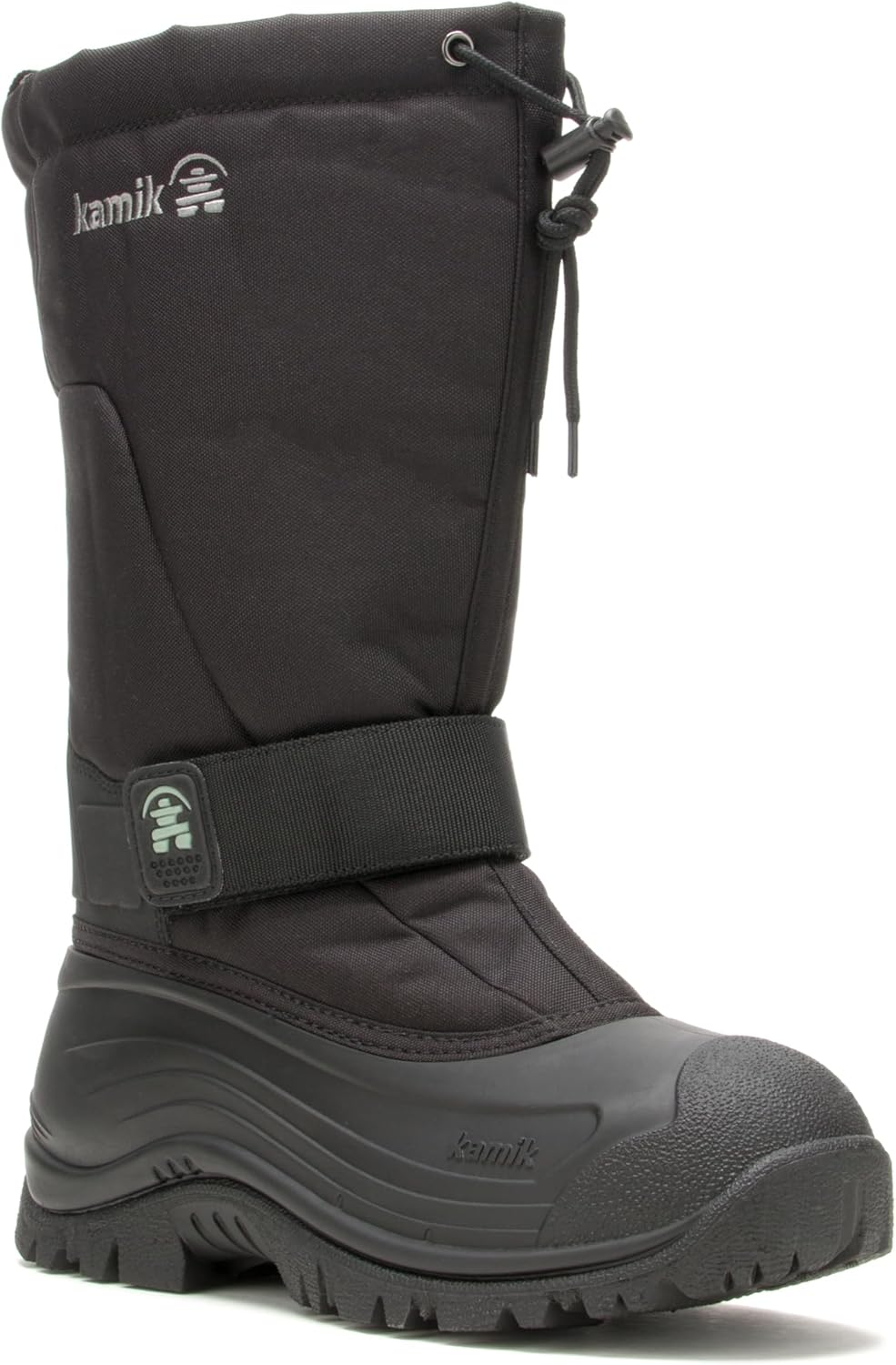
Kamik Greenbay 4 Men’s Winter Boots
- Removable Thermal Guard liner for separate drying
- Midfoot strap helps adjust the boot around your sock
- Waterproof bottom; assess wet exposure above the shell
Consider before buying: Waterproof-bottom classification requires care with wet upper exposure; confirm liner on selected variant.
Check options on Amazon : Kamik Greenbay 4 Men’s Winter BootsAmazon.com · Choose the exact model and variant
A heated hut, a walk hauling a sled and a windy open-ice session place different demands on footwear. Choose among these three boots according to the conditions and activity you expect.
Where each recommendation makes sense
Muck Arctic Pro: the best starting point for wet, slushy days
The Arctic Pro is our starting recommendation when wet snow, splashes and slush are the main footwear problem. Muck specifies an 8mm neoprene bootie, fleece lining, 2mm thermal foam below the footbed and waterproof construction. Its pull-on opening avoids a separate lacing routine. Muck’s Arctic Pro construction details explain the design.
Choose it if you want a dedicated wet-weather winter boot and your foot feels secure in the pull-on shape. Pass if you need precise ankle adjustment or prefer to remove an entire insulated liner for overnight drying.
Do not confuse Arctic Pro with Arctic Sport, Arctic Ice or a steel-toe version. Similar names do not establish identical insulation or outsoles. The shopping link identifies the soft-toe Arctic Pro; check the selected variant again after changing size.
Before checkout: test the calf opening with your usual trouser arrangement. Confirm the heel stays controlled when you walk, then crouch as you would to clear a hole. A comfortable shaft alone does not establish a good foot fit.
Baffin Impact: for stationary sessions where bulk is acceptable
The Impact earns its place when your plan involves extended sitting or standing and you are willing to carry a substantial boot. Baffin identifies a removable multi-layer inner boot, two buckles, a locking snow collar and a waterproof base. The manufacturer positions it for low-to-moderate activity in extreme cold. Baffin’s Impact specifications are the basis for this recommendation.
The removable inner boot is easier to inspect and dry separately. This helps on consecutive fishing days, when moisture from one outing can remain for the next.
The tradeoff is bulk. Check how the boot works with your shelter entrance, chair and packed sled before treating it as an everyday winter purchase. Frequent hole hopping may make a less cumbersome fit more useful than maximum insulation.
Before checkout: Baffin currently advises one full size up for the Impact. Use that model-specific advice as a starting point, then check fit with your actual sock. It does not establish a universal rule for Baffin’s other models or every foot shape.
Kamik Greenbay 4: a straightforward option for occasional trips
The Greenbay 4 is worth comparing when you want a winter boot with an accessible removable liner and a simple midfoot adjustment. Kamik’s detailed specification lists an 8mm Thermal Guard removable liner, hook-and-loop strap and waterproof bottom. See the Greenbay 4 details before choosing a size.
For occasional outings, compare the Greenbay 4’s removable-liner setup with the other two boots and the winter footwear you already own. Check the current offers before judging value; this recommendation does not establish it as the lowest-priced option.
The waterproof-bottom classification is the important limitation. Avoid reading a waterproof headline as permission to stand in water above the shell. A textile upper and snow collar need a different exposure assessment from a tall waterproof bootie.
Before checkout: check the exact men’s or women’s listing and liner description. Kamik’s current page has inconsistent short copy about fixed versus removable lining; its detailed specification says removable. Confirm the selected product matches that specification rather than relying on a search-result title.
Fit, socks and moisture: buy the whole system
Fit can change the result more than moving to a more heavily insulated model. The Canadian Centre for Occupational Health and Safety’s cold-environment guidance explains why overly thick socks can compress insulation and restrict circulation, while waterproof footwear can trap perspiration.
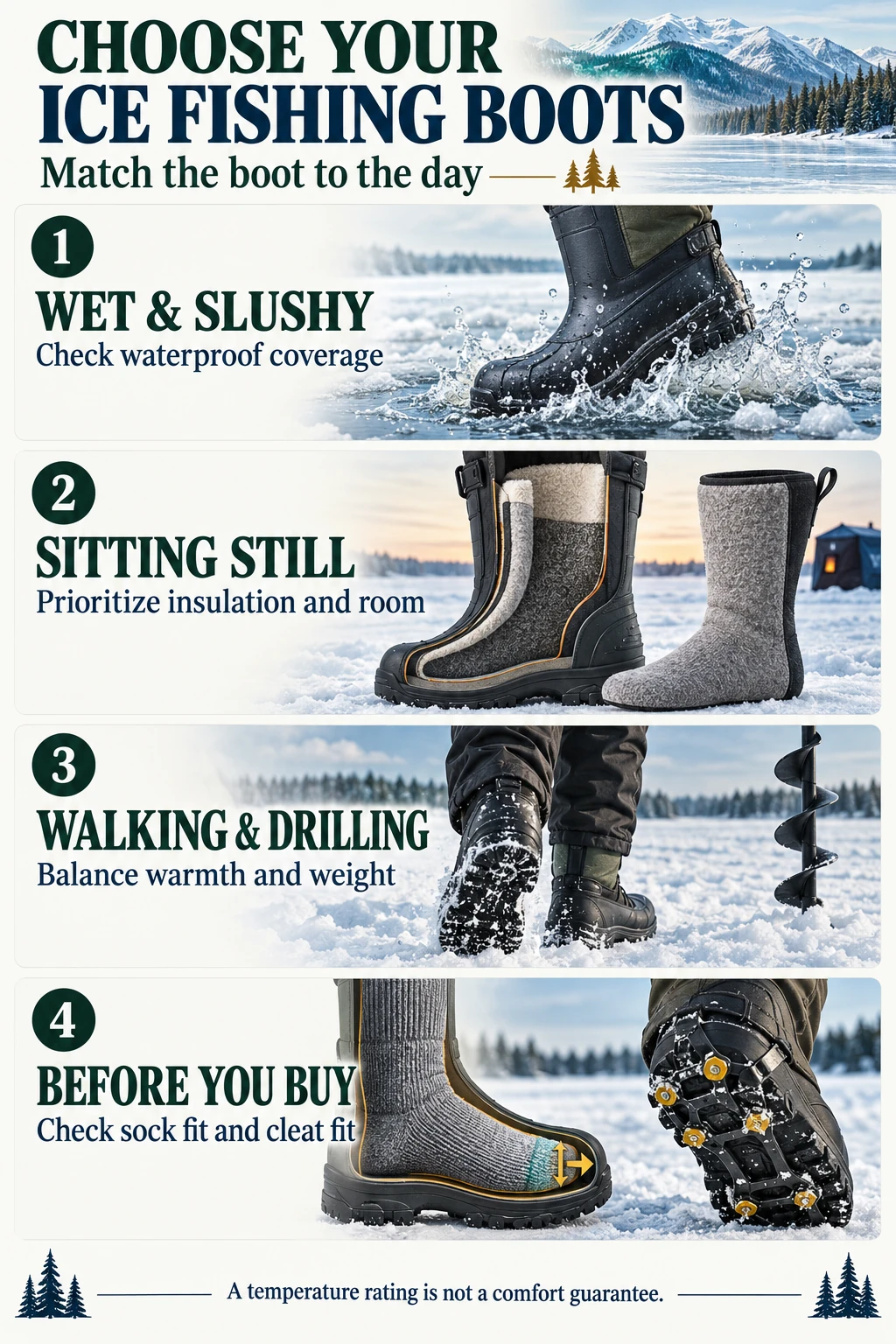
Start your indoor trial with the sock you intend to fish in. Look for toe movement without pressure across the forefoot, along with enough heel control to walk without rubbing. Two pairs only make sense if they fit without crowding.
A dry spare pair provides a way to change a damp sock during a sheltered break. Avoid solving dampness by immediately adding another thick layer. First check whether moisture entered from outside or built up inside.
Best ice fishing boots for wide feet: check width, not just length
None of these recommendations is a guarantee of wide-foot comfort. A larger size may add unwanted length while leaving the forefoot or instep poorly matched. Look for the exact width designation and use a returnable indoor trial when practical.
Stand, walk, crouch and sit in the boot. Pressure that appears only when you bend the ankle still matters while fishing. If the heel slides but the forefoot feels tight, adding socks is unlikely to create a better shape match.
Women’s fit deserves its own check
Use the listing’s men’s, women’s or unisex chart, not a conversion guessed from your everyday shoes. Foot length, heel volume and calf fit all matter. A men’s boot in a smaller size may work for some readers, but it is not automatically the best women’s option.
If none of the available sizes fits, look beyond this shortlist. The recommendation only applies when the individual fit works for you.
Match waterproofing and warmth to your fishing routine
Your ice fishing approach affects what you need from a boot. Moving between holes adds walking and bending; deadsticking for winter walleye can involve much longer waits in one place.
| Your routine | Prioritize | Check before buying |
|---|---|---|
| Wet snow and splash-prone holes | Waterproof construction and a suitable shaft opening. | Where the waterproof coverage ends; damaged seams or shell areas. |
| Long open-ice waits | Insulation around and beneath the foot, with a comfortable stationary fit. | Toe room after your fishing sock is added; access to a warming break. |
| Frequent walking and hole hopping | Heel control, ankle movement and manageable bulk. | Whether the boot rubs or traps excessive moisture during your indoor trial. |
| Consecutive fishing days | A drying method you can actually use. | Removable liner availability and manufacturer care instructions. |
A suitable ice fishing shelter changes your exposure, but a heater does not make wet socks or a poor fit irrelevant. Likewise, do not assume a boot that works in a sheltered session will suit hours outside.
Temperature ratings cannot rank these boots for your feet
Manufacturer comfort labels can help you understand a model’s intended role. They are not a standardized head-to-head test reported by CanadaFever. Activity, exposure time, moisture, fit and individual cold tolerance all change the result.
Do not multiply a forecast temperature to invent a required boot rating. Negative Fahrenheit and Celsius values make that shortcut especially misleading. If warmth is uncertain, plan a shorter outing with an accessible warming option rather than relying on the label.
Traction is a separate purchase check
These boots have winter outsoles, but this guide does not establish their grip on glare ice. Do not equate deep lugs with a verified slip-resistance result. Evaluate an appropriate traction device for the surface and follow its instructions.
Check the traction maker’s sizing against the actual boot, especially for a large pac boot. Fit the device at home and confirm it stays seated around the toe and heel without twisting. Nominal shoe size alone may not capture a bulky insulated shell.
Also check where traction can be worn: shelter floors, steps and indoor surfaces may require removal. Keep it reachable for the return walk rather than buried beneath the auger.
Ice safety: footwear provides no evidence that a lake can support you. Follow local advisories and the Canadian Red Cross’s ice-safety guidance; ice conditions vary within a waterbody. This is a shopping guide, not a substitute for local assessment or emergency training.
Drying and care: the check that matters on day two
After an outing, separate removable liners from shells and inspect both. Follow the manufacturer’s drying instructions; do not place footwear beside a stove or on a radiator simply to speed the process.
For fixed-lined boots, give the opening airflow and enough time to dry. A dryer is an option only when its temperature and use are compatible with the boot maker’s instructions. Never assume every rubber, adhesive or lining tolerates the same heat.
Before the next trip, check for shell damage, worn outsole areas and dampness inside. Replacement liners must match the model and size. An unrelated liner can change the fit even if it appears to fit inside the shell.
Do not apply a dressing or conditioner to the outsole unless the manufacturer expressly permits it. Muck specifically warns that outsole conditioning can make it slick.
Before you buy: avoid the wrong variant
Amazon size changes can open a different offer or child listing. Check the model name, colour, size, toe type and seller together. The product image identifies the linked option; other colours may look different without being different models.
For Canadian travel, order early enough to try the boots indoors and resolve a fit problem before departure. Review the actual seller’s shipping destination and return terms. Neither an Amazon.com link nor a brand-wide policy establishes the terms of your particular purchase.
New to hardwater fishing? Our beginner ice fishing guide covers the wider setup. The CanadaFever ice fishing hub connects equipment choices with planning and techniques.
Best ice fishing boots FAQ
Are Muck boots good for ice fishing?
The Arctic Pro is a reasonable shortlist option when wet conditions are the main problem. Check its fit, drying needs and traction separately. Muck’s other models have different designs; the brand name alone does not identify an appropriate winter boot.
Should I size up ice fishing boots?
Follow the exact model’s chart first. Baffin currently advises one full size up for Impact, but that is not a rule for every boot. Try the intended fishing sock indoors and reject a fit that pinches or lets the heel slide excessively.
Can I use regular winter boots for ice fishing?
Possibly, if their waterproof coverage, fit and insulation suit the planned exposure. Assess the boots you already own before buying another pair. A city-walking boot may be a poor match for long stationary sessions or wet hole areas.
Do waterproof boots prevent sweaty feet?
No. Waterproofing addresses water entering from outside, while perspiration forms inside. Check socks and lining during breaks, change damp socks when practical and dry the boots before another outing.
Are ice cleats needed with insulated boots?
Insulation and traction solve different problems. Consider a suitable traction device for bare or slippery ice and verify that it fits the actual boot. Neither boots nor cleats establish that the ice is safe to travel on.
Research reviewed October 1, 2026. Product construction and listing identity were checked against manufacturer and Amazon pages. No prices, stock promises, star ratings or CanadaFever hands-on test results are used.